

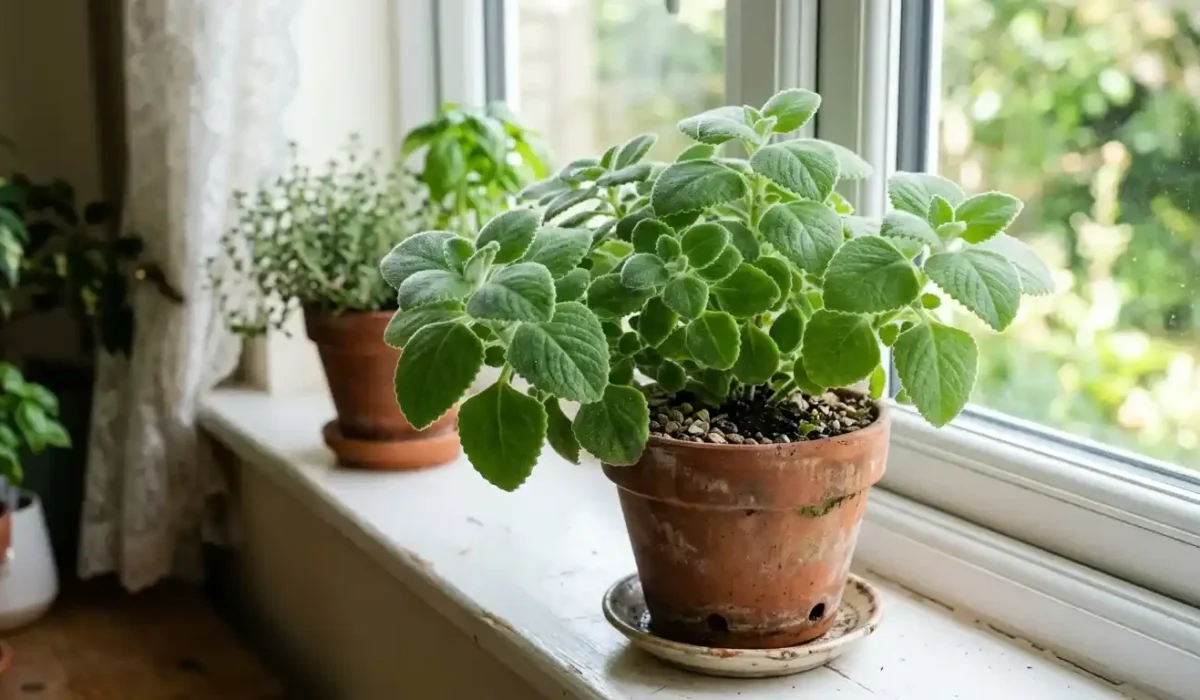
Vicks Plant Benefits: What This Fragrant Herb Can Do for You
Introduction
The Vicks plant, scientifically known as Plectranthus tomentosa, is a fragrant herb valued for its distinctive camphor-like scent that resembles Vicks VapoRub. Because of this aroma, many gardeners grow it as a natural household plant for respiratory comfort, aromatherapy, and ornamental appeal. The plant is sometimes called the Vicks tree or vicks vaporub plant, although it is actually a soft-stemmed semi-succulent herb rather than a true tree. This guide explores vicks plant benefits, medicinal uses, indoor advantages, skin applications, tea uses, and essential care tips to help gardeners understand and grow this unique aromatic plant successfully.
Quick Summary
- The Vicks plant (Plectranthus tomentosa) releases a menthol-camphor aroma that may help relieve nasal congestion and respiratory discomfort.
- Its leaves can be used to brew herbal tea, applied topically to skin, or used as a natural aromatherapy remedy indoors.
- The plant offers indoor air-freshening qualities and may support respiratory wellness when kept in living spaces.
- It is easy to propagate and care for, making it suitable for beginner and experienced gardeners.
- Its traditional medicinal uses are largely based on folk practices and the aromatic properties of its volatile oils.
What Is the Vicks Plant?
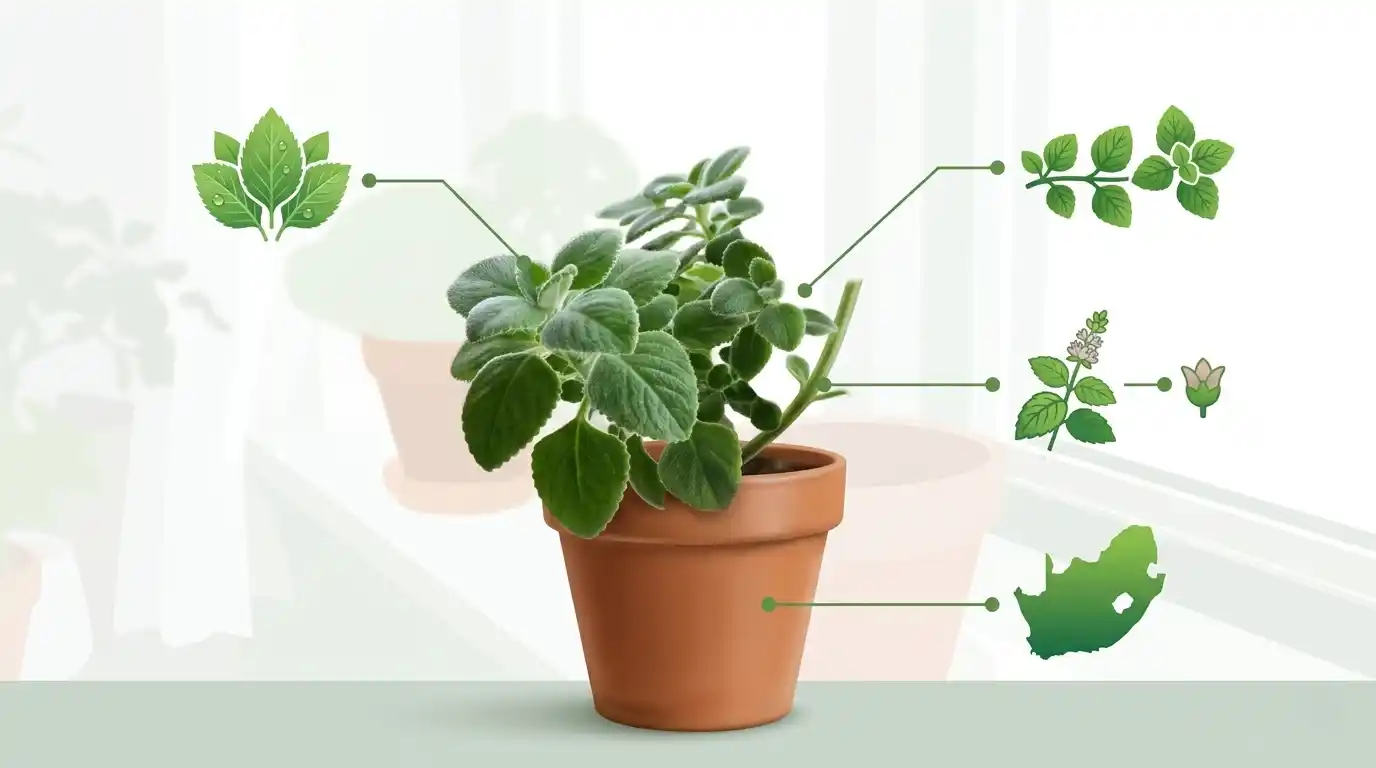
The Vicks plant (Plectranthus tomentosa), also referenced as Plectranthus hadiensis var. tomentosus, is a member of the mint family (Lamiaceae). It is widely recognized for its fuzzy leaves and strong menthol-camphor fragrance that resembles the scent of Vicks VapoRub.
The plant is commonly called the Vicks plant, Vicks tree, or Vicks vaporub plant because crushing its leaves releases aromatic oils that produce a cooling scent similar to commercial vapor rub products.
Native to South Africa, the Vicks plant naturally grows in warm, dry environments. It develops soft, velvety leaves with a semi-succulent structure that helps store moisture. Although many gardeners refer to it as a succulent, it is more accurately described as a semi-succulent herb because it does not possess all the characteristics of true succulents.
In our experience growing Vicks plants indoors, the plant remains compact, highly fragrant, and exceptionally easy to maintain when provided with bright indirect light and moderate watering.
Vicks Plant vs. Vicks Tree — Is There a Difference?
No, the Vicks plant and Vicks tree generally refer to the same plant species.
The term “Vicks tree” developed because mature specimens can form thicker, woody stems that resemble miniature shrubs or small trees. Younger plants maintain a softer, herb-like appearance with flexible stems.
For most gardeners and plant sellers, the names Vicks plant and Vicks tree are used interchangeably to describe Plectranthus tomentosa.
Plectranthus Tomentosa vs. Vicks Tulsi — Key Differences
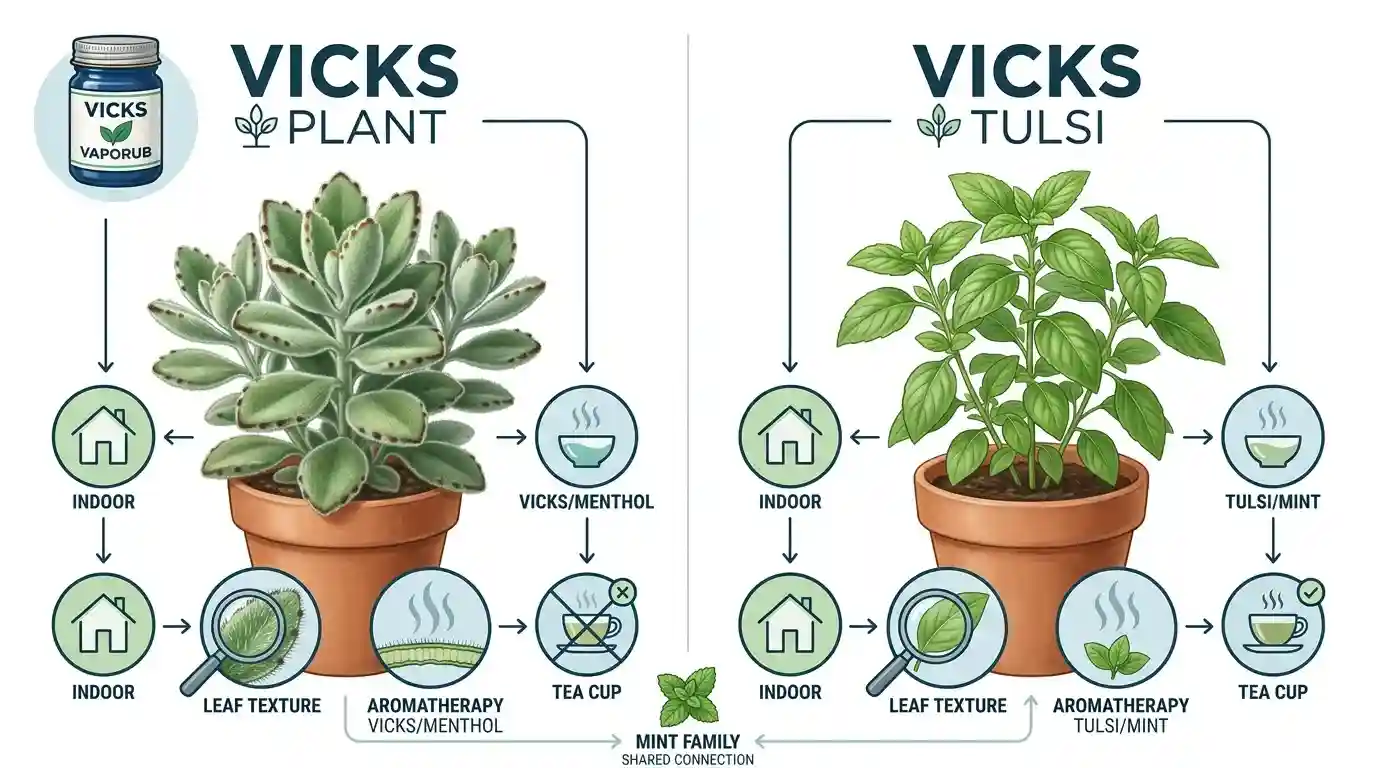
Although both plants produce aromatic foliage associated with respiratory comfort, they are different species with distinct characteristics.
| Feature | Vicks Plant (P. tomentosa) | Vicks Tulsi |
| Scientific Family | Lamiaceae | Lamiaceae |
| Leaf Texture | Fuzzy, succulent-like | Smooth, basil-like |
| Primary Use | Aromatherapy, topical, tea | Herbal tea, respiratory relief |
| Native Region | South Africa | Hybrid cultivar (South Asia) |
| Indoor Suitability | High | Moderate |
Vicks Tulsi plant benefits are often associated with herbal tea preparation and traditional respiratory remedies, especially in Tamil Nadu and other parts of South India. The Vicks plant, on the other hand, is more commonly grown as an aromatic indoor plant and topical herbal remedy. For a deeper side-by-side look, our Aromatic Medicinal Houseplant Comparison Database breaks down leaf texture, traditional uses, and safety notes across dozens of scented medicinal species, including both Plectranthus varieties covered here.
It’s a useful reference if you’re comparing the Vicks plant against other aromatic herbs before deciding what to grow.
Vicks Plant Benefits — What Science and Traditional Use Say
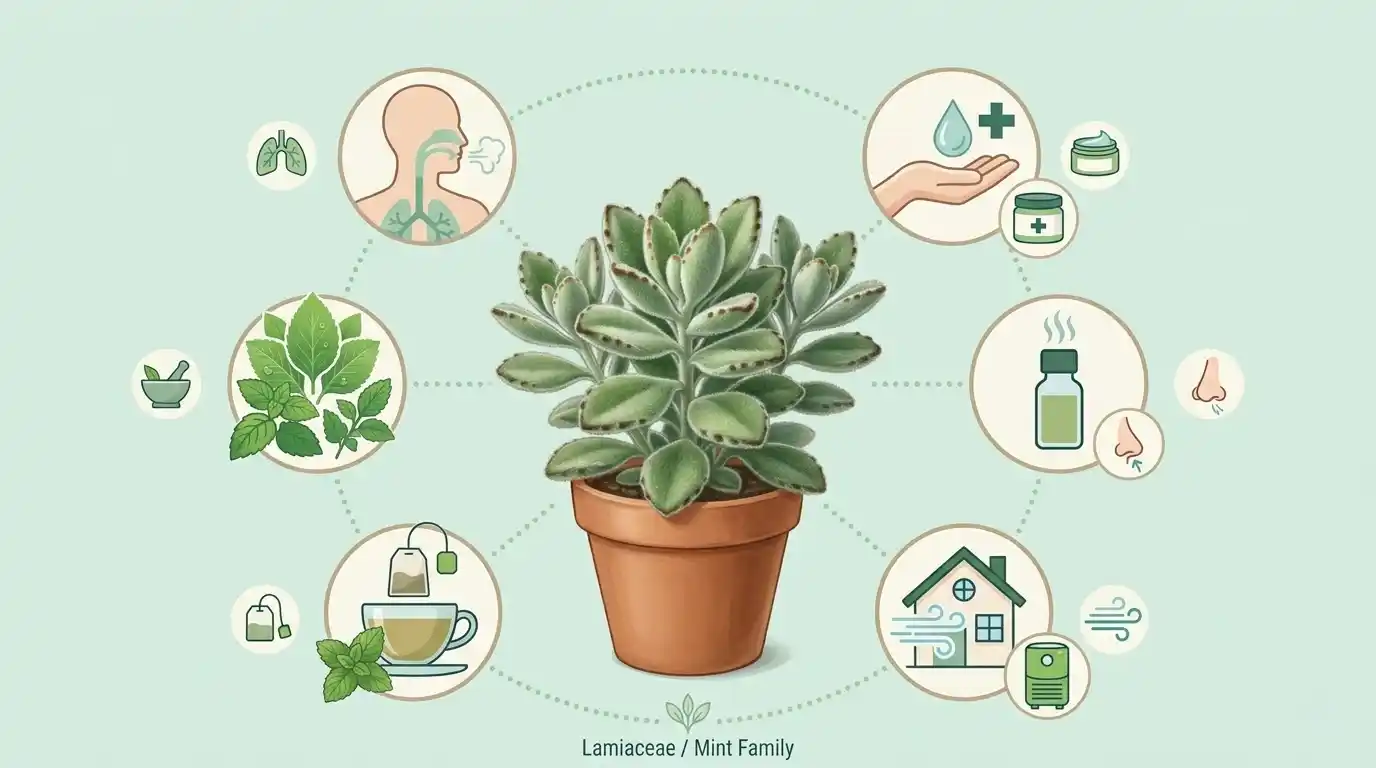
The primary vicks plant benefits are linked to aromatic compounds such as camphor, menthol-like volatile oils, and thymol. These compounds contribute to the plant’s distinctive scent and many of its traditional applications.
It is important to distinguish between traditional use and scientific evidence. While studies support the respiratory and antimicrobial properties of certain aromatic compounds found in similar plants, large-scale clinical trials specifically focused on Plectranthus tomentosa remain limited.
Most reported benefits are based on traditional practices, anecdotal experiences, and research on related aromatic plant compounds.
Vicks Plant Benefits for Respiratory Health
The Vicks plant may help support respiratory comfort through inhalation of its aromatic oils.
When leaves are gently crushed, they release menthol-like compounds that can create a sensation of easier breathing and temporary nasal openness. Traditional users often inhale the aroma during periods of mild congestion.
A common method for using the Vicks plant for a cold includes:
- Crushing several fresh leaves
- Adding them to a bowl of hot water
- Covering the head with a towel
- Inhaling the steam for several minutes
Elemo Baker recommends using this method as a complementary home remedy rather than a replacement for professional medical treatment.
Vicks Plant Benefits for Skin
Traditional vicks plant benefits for skin include topical use for minor irritation, insect bites, and temporary relief from discomfort.
The plant contains volatile oils that may exhibit mild anti-inflammatory and antimicrobial properties. Folk medicine practitioners have historically used crushed leaves as a simple herbal poultice.
Potential traditional applications include:
- Minor insect bites
- Mild skin irritation
- Temporary headache relief when applied to temples
- Aromatic chest rub preparations
Always perform a patch test before applying plant material to the skin. Avoid use on open wounds, broken skin, or highly sensitive areas.
Vicks Plant Benefits Indoors
Vicks plant benefits indoors extend beyond its pleasant fragrance.
The plant acts as a natural air freshener because its foliage continuously releases aromatic compounds. Many gardeners place it in living rooms, bedrooms, offices, and sunrooms where the scent can be enjoyed daily. Similar to the Vicks plant, lavender is valued for its calming fragrance and indoor wellness benefits. Discover the Benefits of Lavender Plant at Home and how it can help create a more relaxing environment. For a broader look at how houseplants can support wellbeing, air quality, comfort and the home environment, see our guide to Benefits of Indoor Plants: 10 Science-Backed Reasons.
Indoor advantages include:
- Natural menthol-like fragrance
- Potential insect-deterrent qualities
- Aromatherapy benefits
- Decorative ornamental value
- Low-maintenance growth habit
If you’re building a fragrant indoor collection beyond the Vicks plant, our free Aromatic Foliage Plant Finder tool lets you filter dozens of scented houseplants by fragrance type, light needs, and pet safety.
It’s a handy way to shortlist companion plants that share the Vicks plant’s air-freshening qualities without duplicating its exact care requirements.
As of 2026, many indoor gardeners continue to favor aromatic herbs such as the Vicks plant as alternatives to artificial air fresheners. Looking for another easy-care houseplant with wellness benefits? Explore the 10 Benefits of Snake Plant for Home and Health to learn how this popular indoor plant can improve your living space while requiring minimal maintenance.
Vicks Plant Medicinal Uses
The medicinal uses and benefits of the Vicks plant are largely rooted in traditional herbal practices rather than modern clinical medicine.
Traditional and Folk Medicine Applications
Across South Africa, India, and parts of Southeast Asia, the Vicks plant has been used traditionally for various household remedies.
Common traditional applications include:
- Steam inhalation for colds
- Leaf poultices for headaches
- Aromatic chest congestion remedies
- Topical use for minor skin discomfort
- Herbal tea preparation
These applications represent traditional practices and should not be considered medically prescribed treatments.
Is the Vicks Plant Edible?
Yes, the Vicks plant is generally considered edible in small amounts and is commonly used as a herbal infusion.
Its leaves are not typically consumed as a vegetable or food ingredient, but they are often brewed into tea due to their aromatic properties.
Before consuming the plant regularly:
- Consult a healthcare professional
- Exercise caution during pregnancy
- Consider possible interactions with medications
- Avoid excessive consumption
Moderation remains the safest approach when using any herbal plant internally.
Vicks Plant Tea — Benefits and How to Make It
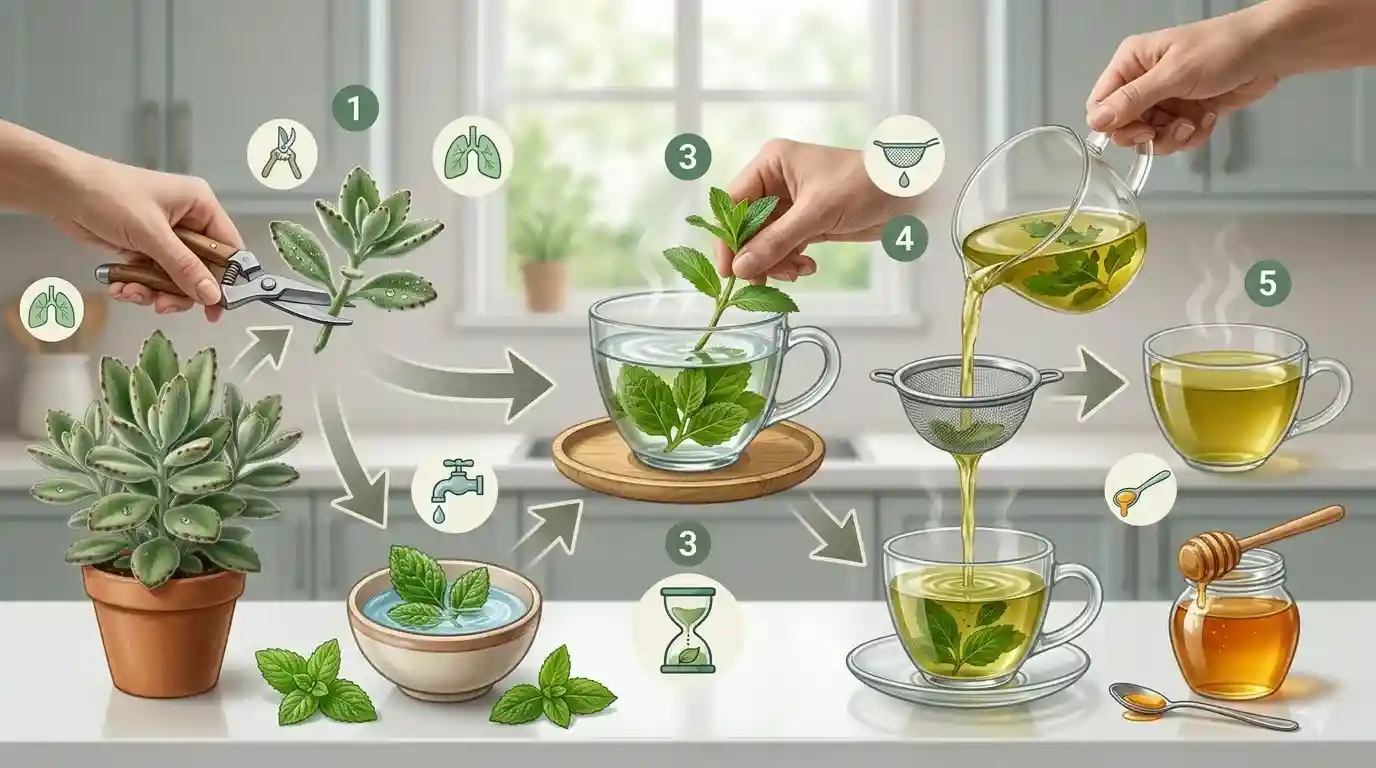
Yes, you can drink Vicks plant tea.
Vicks plant tea benefits are commonly associated with soothing throat irritation, supporting respiratory comfort, and providing a calming herbal beverage.
To prepare Vicks plant tea:
Step 1: Pick 2–3 fresh Vicks plant leaves
Step 2: Rinse thoroughly
Step 3: Steep in hot (not boiling) water for 5–7 minutes
Step 4: Strain and optionally add honey
Many gardeners report enjoying the refreshing aroma and mild flavor of the tea. Limit consumption to occasional use and discontinue if any adverse reactions occur. If you enjoy growing medicinal herbs for herbal infusions, you may also like the Leaf of Life Plant Benefits, Uses, Tea & Care Guide, which covers another traditional plant commonly used for wellness and tea preparation.
How to Use the Vicks Plant — Practical Methods
The Vicks plant can be used in several practical ways.
Aromatherapy
- Place the plant in a bedroom or living room
- Gently crush a leaf to release fragrance
- Allow the aroma to circulate naturally
Steam Inhalation
- Crush several leaves
- Add them to hot water
- Inhale the steam carefully
Topical Application
- Crush fresh leaves into a paste
- Apply gently to affected areas
- Avoid broken skin
Herbal Tea
- Brew leaves as described in the tea section
- Consume occasionally and in moderation
Indoor Air Freshener
- Keep the plant in decorative containers
- Position near bright windows
- Enjoy continuous natural fragrance
Vicks Plant Care Guide
The Vicks plant is relatively easy to grow and maintain.
Light, Water, and Soil Requirements
| Care Factor | Requirement |
| Sunlight | Bright indirect light; tolerates partial shade |
| Watering | Allow soil to dry between waterings; drought-tolerant |
| Soil Type | Well-draining, slightly sandy or succulent mix |
| Humidity | Moderate; avoid waterlogging |
| Temperature | Prefers 60–85°F (15–30°C); not frost-hardy |
| Fertilizer | Light feeding during growing season |
In our experience, overwatering is the most common mistake that affects plant health. For gardeners tracking multiple aromatic plants, our Aromatic Plant Care Requirements Tracker lists light, water, and soil needs for the Vicks plant alongside similar species in one sortable sheet.
It’s a practical companion if you’re managing a mixed collection and want quick-reference care specs without digging through separate articles.
Vicks Plant Propagation
Vicks plant propagation is simple and beginner-friendly.
Follow these steps:
- Take a 4–6 inch stem cutting below a node.
- Remove lower leaves.
- Allow the cut end to callous for 1–2 days.
- Plant in moist, well-draining soil or place in water.
Spring and early summer are the best seasons for propagation. Roots typically develop within 2–3 weeks under favorable conditions.
Plant Size and Growth Rate
The Vicks plant generally reaches:
- Height: 12–24 inches
- Width: 12–18 inches
Its growth rate is moderate and becomes faster in warm temperatures with adequate light.
Indoor plants usually remain more compact than outdoor specimens. Light intensity, watering frequency, and container size all influence overall growth performance. Vicks Plant is one option for a home collection; our Australian Plants Guide: Indoor Houseplants & Garden Design covers more ideas for choosing plants for different spaces.
Common Problems with the Vicks Plant and How to Fix Them
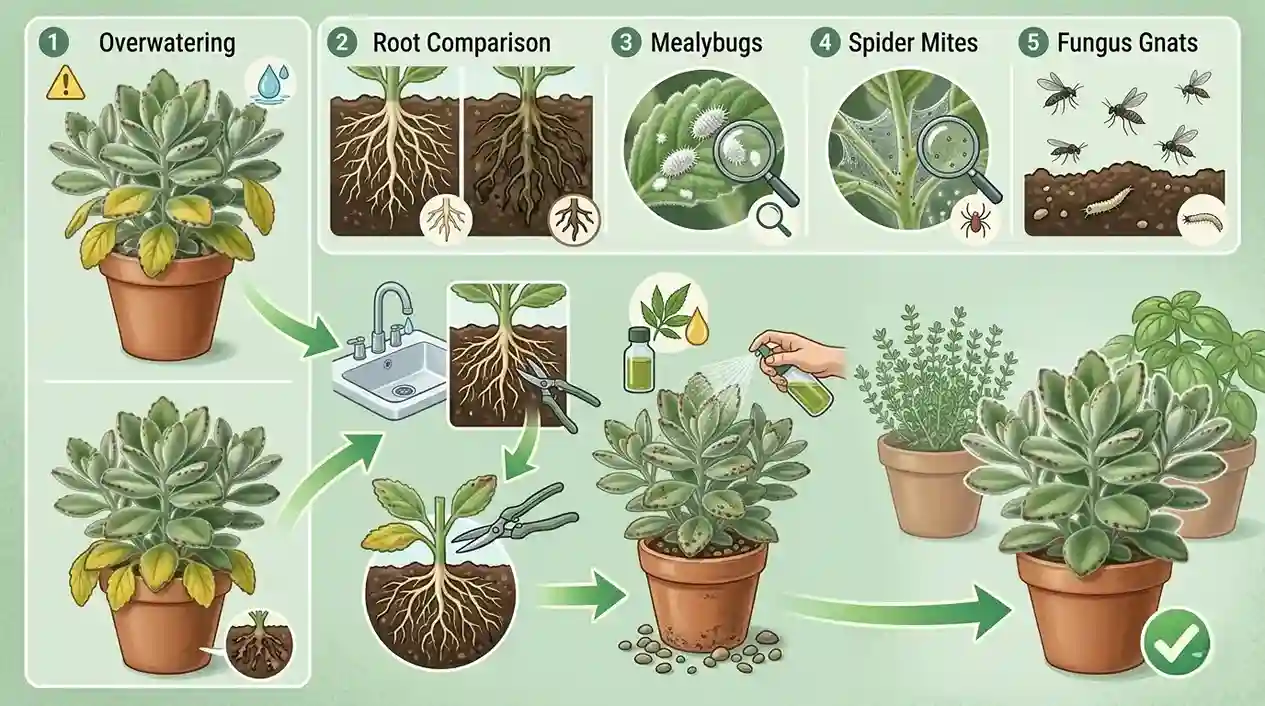
Like most houseplants, the Vicks plant can develop occasional issues.
Why Are My Vicks Plant Leaves Turning Yellow?
The most common cause is overwatering.
Cause:
- Excess moisture
- Poor drainage
- Root stress
Fix:
- Reduce watering frequency
- Improve drainage
- Allow soil to dry partially
Prevention:
- Use well-draining soil
- Water only when the top inch feels dry
Why Is My Vicks Plant Losing Its Scent?
Loss of fragrance is often linked to environmental stress.
Causes:
- Insufficient light
- Root-bound conditions
- Aging foliage
Fix:
- Move to brighter indirect light
- Repot if roots are crowded
- Remove older leaves
Prevention:
- Refresh soil annually
- Maintain consistent lighting conditions
Common Pests on the Vicks Plant
Common pests include:
- Mealybugs
- Spider mites
- Fungus gnats
Fix:
- Apply neem oil spray
- Use insecticidal soap
- Remove heavily infested foliage
Prevention:
- Avoid overwatering
- Inspect new plants before introducing them indoors
- Maintain good airflow around containers
Beginner Mistakes When Growing the Vicks Plant
Many growing problems can be avoided by understanding a few common mistakes.
- Overwatering: The plant’s semi-succulent nature makes it vulnerable to root rot.
- Low Light Placement: Poor light reduces growth and fragrance production.
- Skipping Propagation: Many gardeners overlook how easily the plant multiplies from cuttings.
- Harvesting Too Aggressively: Removing excessive foliage can weaken growth.
- Ignoring Frost Sensitivity: Exposure to freezing temperatures can quickly damage the plant.
Elemo Baker recommends moving outdoor containers indoors before temperatures drop below safe growing levels.
Conclusion
The Vicks plant (Plectranthus tomentosa) offers a range of practical benefits, including respiratory support, soothing skin applications, indoor air freshening, and herbal tea preparation. Its distinctive camphor-like fragrance, low-maintenance nature, and easy propagation make it a valuable addition to many homes and gardens. Whether you grow it for traditional medicinal uses or simply enjoy its refreshing scent, understanding vicks plant benefits and proper care helps you enjoy this aromatic herb throughout the year.
Vicks plant is just one of many houseplants thought to offer a calming presence indoors — if you’re keen to explore the wider world of plant benefits and natural wellness, there’s a lot more to discover.
Frequently Asked Questions (FAQs)
What is the Vicks plant used for?
The Vicks plant is commonly used for aromatherapy, respiratory comfort, herbal tea preparation, topical applications, and indoor air freshening. Many gardeners grow it for its distinctive menthol-like fragrance and traditional medicinal uses.
Can you drink Vicks plant tea?
Yes, Vicks plant tea can be prepared by steeping a few fresh leaves in hot water. It is traditionally used for throat comfort and respiratory support. Consult a healthcare professional before frequent use.
How do you use the Vicks plant for a cold?
The most common method is steam inhalation. Crush several leaves, place them in a bowl of hot water, and inhale the aromatic steam carefully. Many people also keep the plant nearby to enjoy its fragrance.
Is the Vicks plant safe to use on skin?
The plant is traditionally used on skin for minor irritation and insect bites. Always perform a patch test first and avoid applying it to open wounds or sensitive skin.
What is the difference between the Vicks plant and Vicks Tulsi?
The Vicks plant (Plectranthus tomentosa) has fuzzy, semi-succulent leaves and is commonly used for aromatherapy. Vicks Tulsi has smoother basil-like leaves and is more frequently used in herbal teas and traditional remedies in South Asia.
How fast does the Vicks plant grow indoors?
The plant grows at a moderate rate indoors. Under bright indirect light and proper watering, it can reach 12–24 inches tall while maintaining a compact shape in containers.
What are the medicinal uses of Plectranthus tomentosa?
Traditional medicinal uses of Plectranthus tomentosa include steam inhalation for respiratory discomfort, herbal tea preparation, topical applications for minor skin irritation, and aromatherapy for household wellness.
3 Comments