
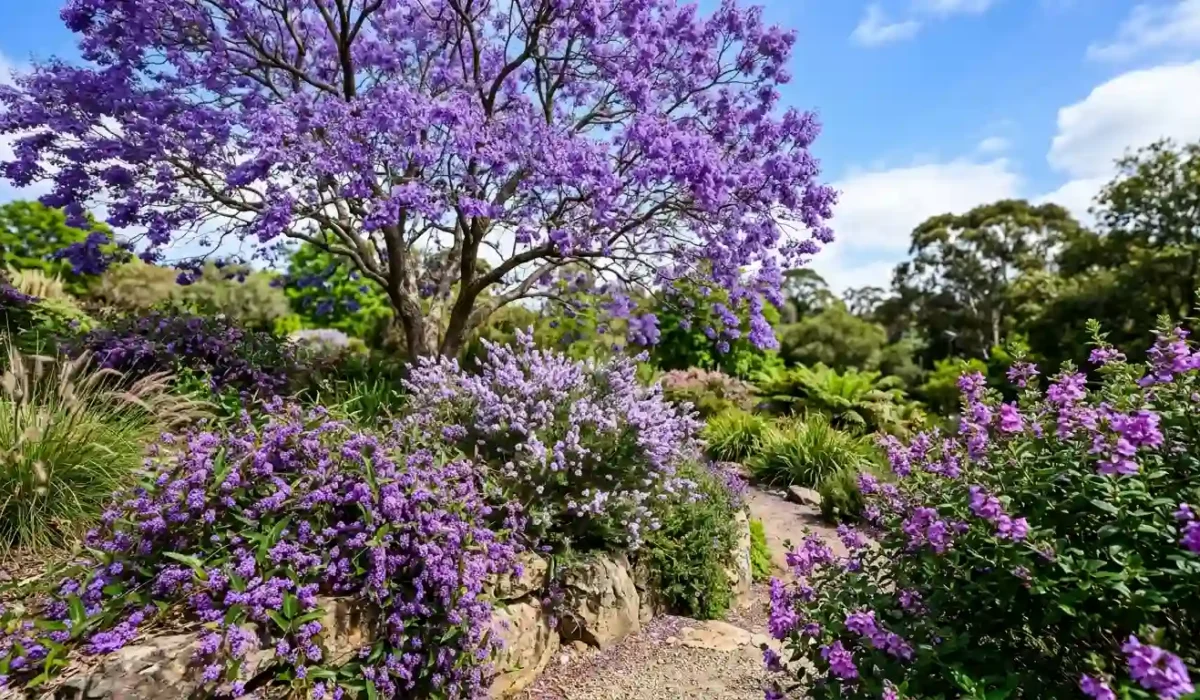
Purple Flower Tree Australia: Native & Popular Species Guide
Introduction
Australia is home to some of the world’s most spectacular purple flowering trees, from the iconic jacaranda lining city streets to a rich range of native species found across the continent. When people search for a purple flower tree Australia guide, they are often trying to identify a tree covered in violet blooms and determine whether it is native or introduced.
Many Australians see purple blooming trees during spring and summer but are unsure of their names or origins. This guide explains the most common purple flowering trees, native Australian purple flowering species, flowering seasons, identification features, and care requirements. Whether you’re asking “what tree has purple flowers?” or “what are the purple trees in Australia?”, this guide provides clear and practical answers.
Quick Summary
- The jacaranda (Jacaranda mimosifolia) is the most recognised purple flower tree in Australia, but it originates from South America rather than Australia.
- Australia has several native purple flowering plants, including Hovea, Hardenbergia violacea, Prostanthera, and some Melaleuca species.
- Purple flowering trees bloom at different times, with jacarandas peaking during spring and many native species flowering from late winter to spring.
- Both large canopy trees and compact purple flowering shrubs are available for Australian gardens.
- Native purple flowering species generally provide greater benefits for local pollinators and wildlife.
What Is the Purple Flower Tree Commonly Seen in Australia?
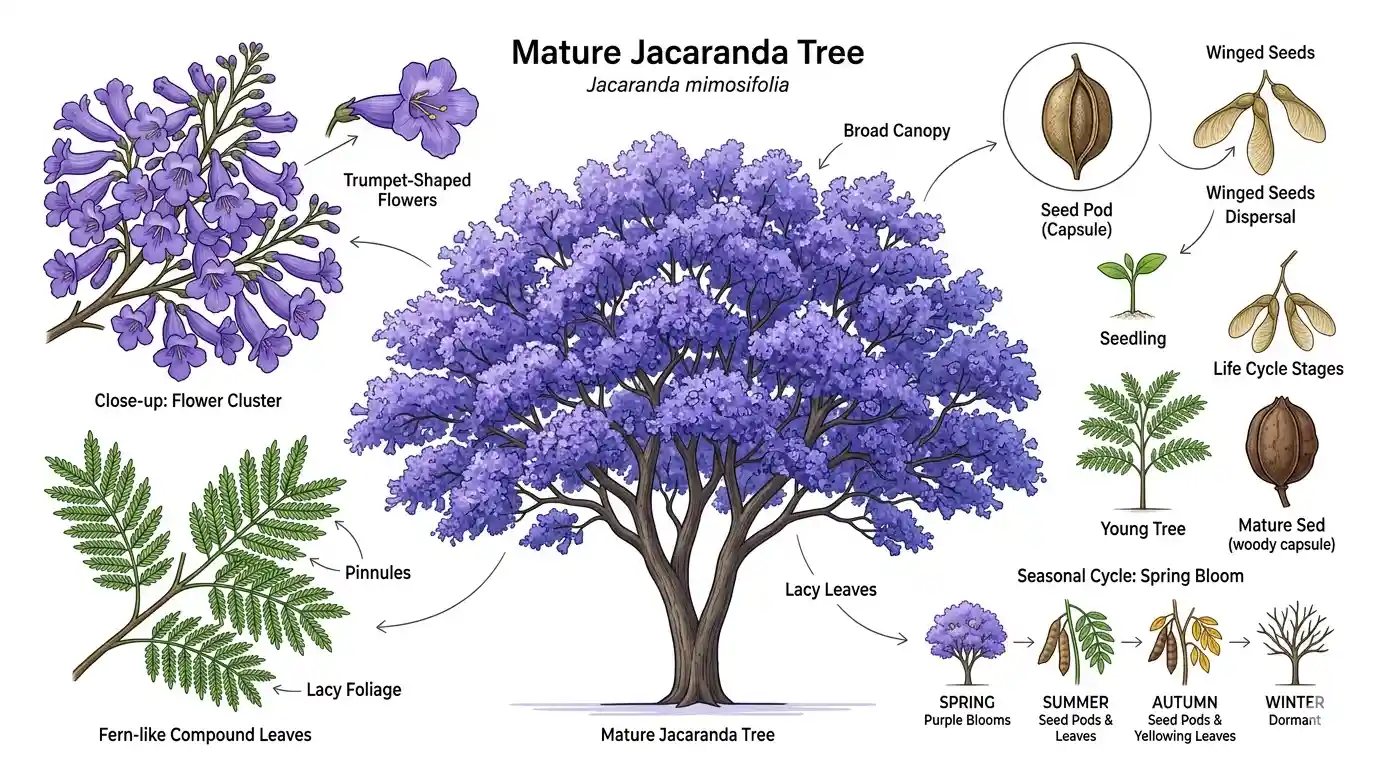
The purple tree most commonly seen throughout Australia is the jacaranda (Jacaranda mimosifolia). When people ask, “What is the name of the purple tree in Australia?” the answer is usually jacaranda.
Originally from South America, jacarandas have become a defining feature of many Australian cities and towns. Their striking violet-purple flowers cover entire canopies during spring, creating some of Australia’s most recognisable seasonal displays.
For readers interested in the botanical history, classification, and global distribution of the jacaranda, the Wikipedia article on Jacaranda mimosifolia provides additional background about this iconic purple-flowering tree.
Jacarandas are particularly associated with:
- Grafton, New South Wales
- Brisbane
- Sydney
- Melbourne
- Perth
Their popularity comes from their large size, vibrant blooms, and dramatic flowering habit. Because jacarandas are partially deciduous, their flowers often appear before or alongside fresh foliage, making the display even more noticeable.
Is the Jacaranda an Australian Native?
No, the jacaranda is not an Australian native.
Jacaranda mimosifolia is native to north-western Argentina and Bolivia. It was introduced to Australia during the nineteenth century and became widely cultivated as an ornamental street and garden tree.
Although jacarandas are extremely common throughout Australia, they should not be confused with native Australian purple flowering trees. Being widely grown does not make a species native. Fortunately, jacarandas are generally not considered invasive in most Australian states.
What Is the English Name for a Jacaranda Tree?
The English name for Jacaranda mimosifolia is simply “jacaranda.”
In some regions it may also be referred to as:
- Blue jacaranda
- Fern tree
- Black poui
However, in Australia the term “jacaranda” almost always refers specifically to Jacaranda mimosifolia.
Australian Native Purple Flowering Trees
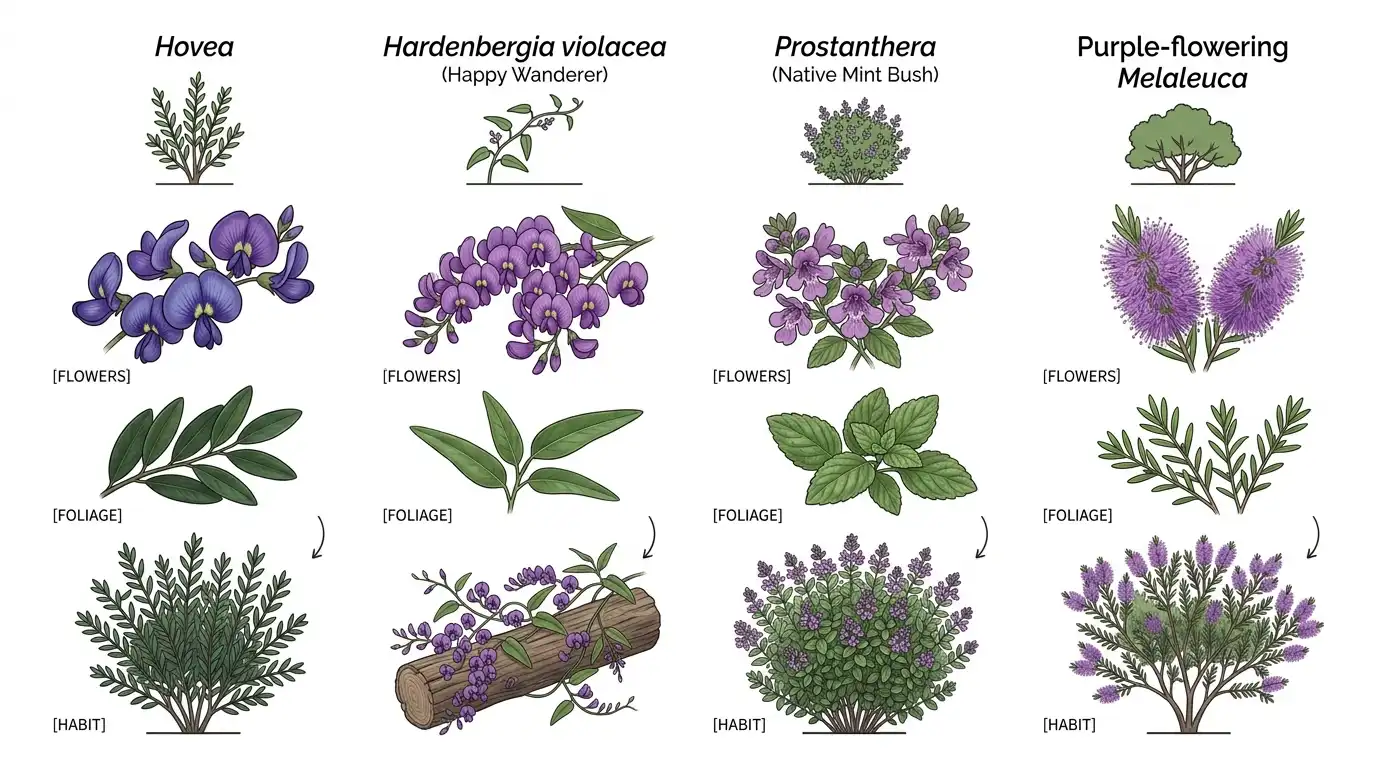
Australia has many native plants that produce purple or violet flowers, although not all are large canopy trees like jacarandas.
Important native purple flowering species include:
- Hovea species
- Hardenbergia violacea (Purple coral pea)
- Prostanthera species (Mint bush)
- Purple-flowering Melaleuca species
It is worth noting that Tibouchina, often mistaken for a native species, actually originates from Brazil despite its popularity in Australian gardens.
Hovea — A True Native Purple Flowering Tree
The Hovea genus is entirely native to Australia and contains numerous species with attractive blue-purple to violet pea-shaped flowers.
Popular examples include:
- Hovea acutifolia
- Hovea elliptica (Tree Hovea)
These plants range from shrubs to small trees and are particularly valuable in bushland gardens. They typically flower from late winter to early spring and provide nectar and habitat for native insects. For a deeper, continuously updated breakdown of every native species mentioned here — including Hovea, Prostanthera, and Hardenbergia — see our full Purple Flowering Trees in Australia reference database.
It organises each species by growth habit, flowering period, and wildlife value in one browsable place.
In our experience growing native Australian plants, Tree Hovea performs particularly well in low-maintenance gardens where drainage is good and soil fertility is moderate.
Prostanthera (Mint Bush) — Native Purple Flowering Shrub
Prostanthera, commonly called Mint Bush, is a highly regarded Australian native genus containing around 100 species.
Its key features include:
- Aromatic foliage
- Purple to lavender flowers
- Wildlife-friendly blooms
- Adaptability to various climates
Many species remain compact shrubs, while others develop into small tree-like forms.
Elemo Baker recommends planting Mint Bush in well-drained soil with full sun or partial shade. Once established, many species show good drought tolerance and require minimal maintenance.
Types of Purple Flowering Trees in Australia (By Size)
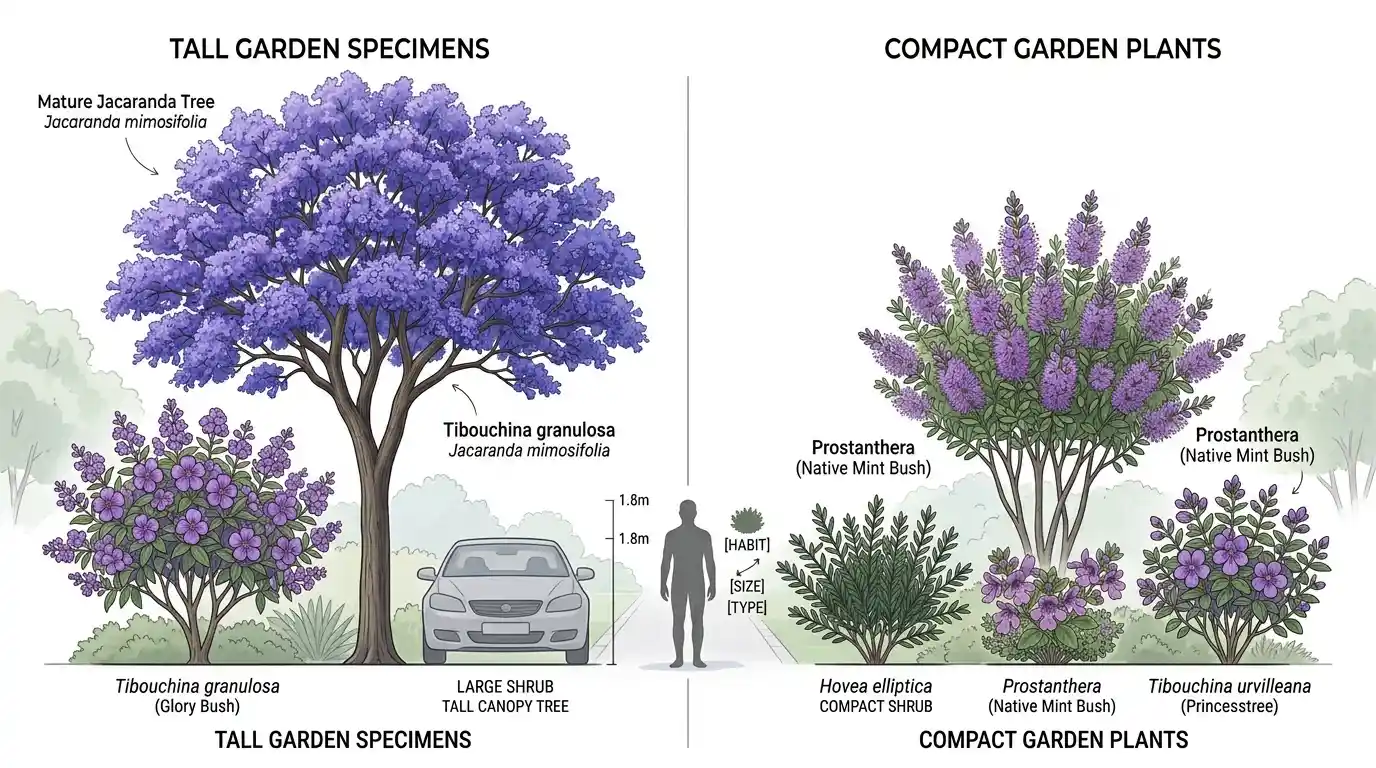
Purple flowering trees come in a range of sizes suitable for different landscapes.
Tall Purple Flower Trees in Australia
Large gardens and streetscapes often benefit from taller species.
| Species | Typical Height |
| Jacaranda (Jacaranda mimosifolia) | 12–15 metres |
| Tibouchina granulosa | 8–10 metres |
| Paulownia species | 10–15 metres |
Jacaranda remains the dominant large purple flowering tree, while Paulownia offers rapid growth and lavender-purple blooms.
Small Purple Flower Trees in Australia
Smaller gardens often require more compact species.
| Species | Typical Height |
| Tibouchina urvilleana | 2–4 metres |
| Hovea elliptica | 2–4 metres |
| Hardenbergia standards | 2–3 metres |
| Prostanthera lasianthos | 3–5 metres |
These species provide colour without overwhelming smaller landscapes.
Purple Flowering Shrubs and Plants in Australia
Many searches for purple flowering trees actually relate to shrubs and ornamental plants. Australian gardeners often combine flowering ornamentals with fragrant herbs to create sensory gardens. Vicks Plant Benefits: What This Fragrant Herb Can Do for You explains why this aromatic plant is becoming increasingly popular in home landscapes.
Native Purple Flowering Shrubs
Popular native purple flowering shrubs include:
- Hardenbergia violacea
- Hovea species
- Prostanthera species
- Lechenaultia biloba
- Scaevola varieties
These plants range from ground covers and climbers to medium-sized shrubs and small trees. Purple foliage and flowers are prized features in many ornamental plants. If you enjoy unique purple-toned species, see Purple Passion Plant Benefits: Health, Care & Uses to learn about another striking plant known for its vibrant purple appearance.
Introduced Purple Flowering Shrubs Common in Australian Gardens
Common introduced species include:
- Tibouchina urvilleana (Princess Flower)
- Duranta erecta
- Purple-flowering Salvia varieties
- Agapanthus cultivars
While attractive, some introduced plants such as Duranta may be considered invasive in certain regions and should be checked against local regulations before planting. Many gardeners who enjoy purple-flowering ornamentals also appreciate aromatic species for their visual appeal and fragrance. Exploring the Benefits of Lavender Plant at Home can help you discover another popular purple-flowering plant valued in landscapes and cottage gardens.
When Do Purple Flowering Trees Bloom in Australia?
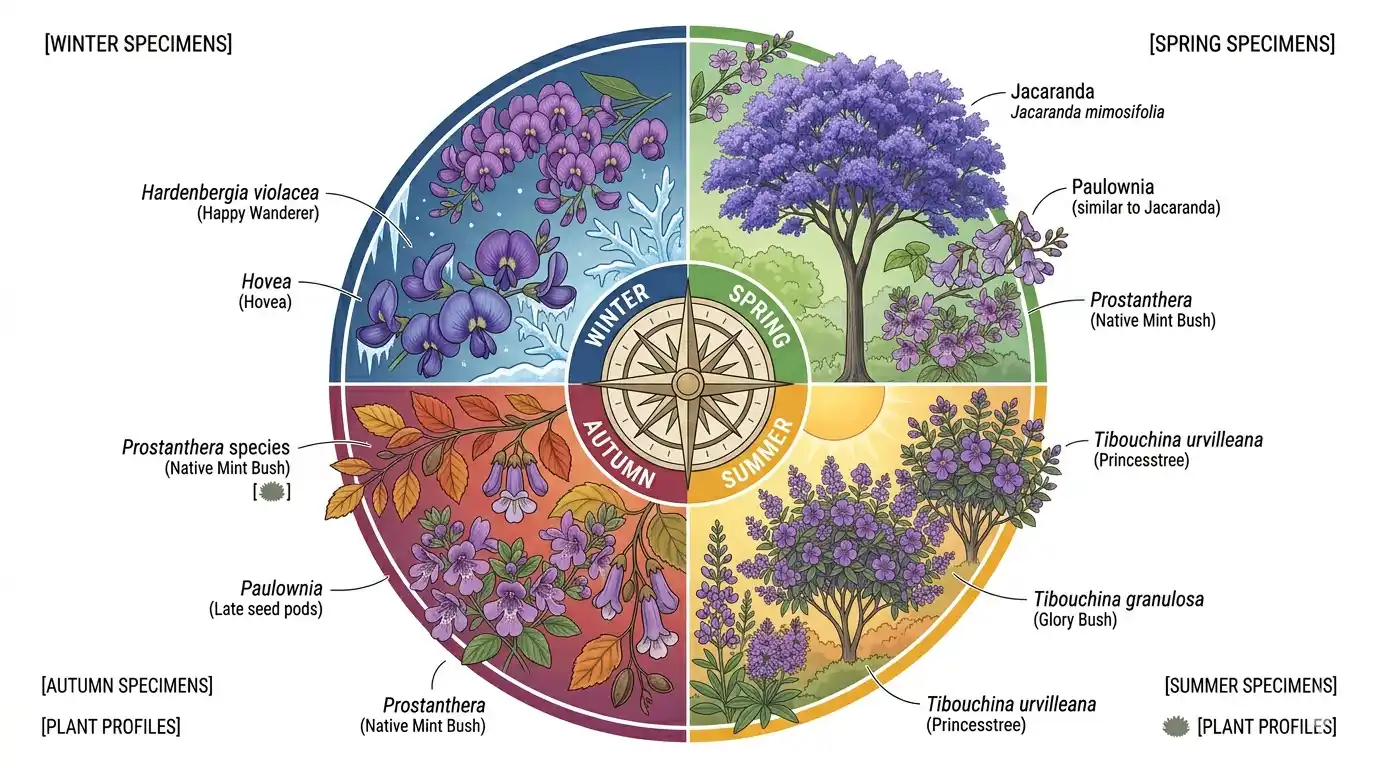
Bloom times vary significantly between species.
| Species | Bloom Season | Region |
| Jacaranda | October–December | QLD, NSW, VIC, WA |
| Tibouchina | December–April | QLD, NSW |
| Hovea | August–October | Australia-wide |
| Prostanthera | September–November | Southern Australia |
| Hardenbergia | July–September | Australia-wide |
| Paulownia | September–October | Temperate regions |
Jacarandas attract the most attention because entire streets often bloom simultaneously. Native species frequently flower earlier, providing valuable resources for pollinators during late winter and early spring.
As of 2026, native plant specialists continue to encourage gardeners to include winter-flowering native species to support pollinator activity throughout the year.
Purple Flower Tree Australia — Not Jacaranda: Other Species to Know
Many gardeners specifically seek alternatives to jacarandas.
Popular options include:
- Tibouchina granulosa
- Tibouchina urvilleana
- Hovea elliptica
- Prostanthera lasianthos
- Purple-flowering Crepe Myrtle (Lagerstroemia)
- Paulownia tomentosa
Native options such as Hovea and Prostanthera are often preferred in wildlife-friendly landscapes, while Tibouchina and Crepe Myrtle remain popular ornamental choices.
Comparison — Jacaranda vs Native Australian Purple Flowering Trees
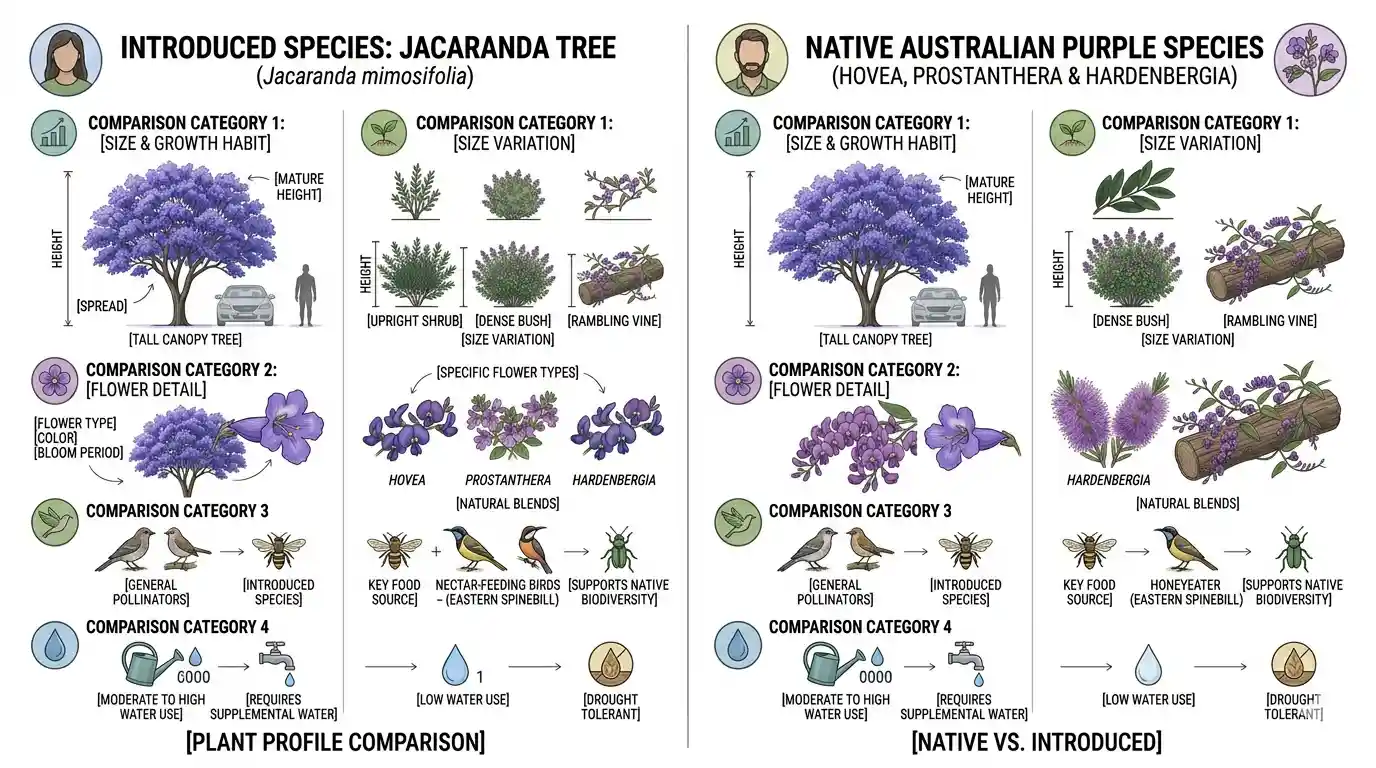
| Feature | Jacaranda | Native Purple Trees |
| Native to Australia? | No | Yes |
| Mature Height | 10–15 metres | 1–5 metres |
| Bloom Season | Spring (Oct–Nov) | Late Winter–Spring |
| Water Needs | Moderate | Low–Moderate |
| Wildlife Value | Low–Moderate | High |
| Garden Suitability | Large gardens | Most garden sizes |
| Climate Range | Warm temperate to subtropical | Species dependent |
| Invasive Risk | Low | None |
For gardeners focused on biodiversity, native species generally offer greater ecological benefits.
Growing a Purple Flowering Tree in Australia — Care Guide
Soil and Planting Requirements
Most purple flowering trees prefer free-draining soil.
Jacarandas grow best in:
- Well-drained soil
- Slightly acidic conditions
- Locations without waterlogging
Native species such as Hovea and Prostanthera prefer:
- Low-nutrient soils
- Excellent drainage
- Minimal soil disturbance
Sunlight and Climate Needs
Sunlight requirements vary slightly by species.
- Jacaranda: Full sun
- Tibouchina: Full sun to part shade
- Hovea: Full sun to light shade
- Prostanthera: Sun to part shade
Young jacarandas can be sensitive to frost, while many native species tolerate a wider range of Australian climates.
Watering and Fertilising
Jacarandas benefit from regular watering during establishment but become reasonably drought tolerant over time.
Native species generally require:
- Less frequent watering
- Low-phosphorus native fertilisers
- Good drainage
One of the most common mistakes we see is overwatering native shrubs growing in heavy clay soils.
Pruning Purple Flowering Trees and Shrubs
Pruning requirements vary.
- Jacaranda: Remove dead or crossing branches only
- Tibouchina: Light tip pruning after flowering
- Prostanthera: Prune lightly after flowering
- Hovea: Minimal pruning required
Avoid excessive pruning, which can reduce flowering performance.
Common Problems With Purple Flowering Trees in Australia
Why Is My Jacaranda Not Flowering?
A jacaranda may fail to flower because:
- The tree is too young
- Excess nitrogen fertiliser has been applied
- The location lacks sufficient sunlight
- Frost has damaged flower buds
Improving sunlight exposure and reducing fertiliser applications often helps.
Why Are My Purple Flowering Tree’s Leaves Turning Yellow?
Yellow leaves may indicate:
- Overwatering
- Poor drainage
- Iron deficiency
- Magnesium deficiency
- Seasonal leaf drop
Jacarandas naturally shed leaves before flowering, so some yellowing may be normal.
Pests Affecting Purple Flowering Trees in Australia
Common pest issues include:
- Aphids
- Spider mites
- Caterpillars
- Powdery mildew on Tibouchina
Most native species show excellent resistance to pests. Organic controls such as horticultural oils can help manage minor infestations.
Purple Flowering Trees for Different Australian Regions
| Region | Recommended Species |
| Tropical North (QLD, NT) | Jacaranda, Tibouchina granulosa |
| Subtropical Coast | Jacaranda, Tibouchina, Hardenbergia |
| Temperate Regions | Hovea elliptica, Prostanthera |
| Semi-arid Inland | Hardenbergia violacea, drought-tolerant Prostanthera |
| Tasmania | Prostanthera lasianthos, Hovea species |
Matching the plant to the local climate significantly improves long-term performance. If you’d like to filter species by region, bloom season, and height all at once, our downloadable purple flowering trees Australia data sheet breaks this table down further.
It’s especially useful for gardeners comparing recommendations across multiple climate zones at once.
How to Identify a Purple Flowering Tree in Australia
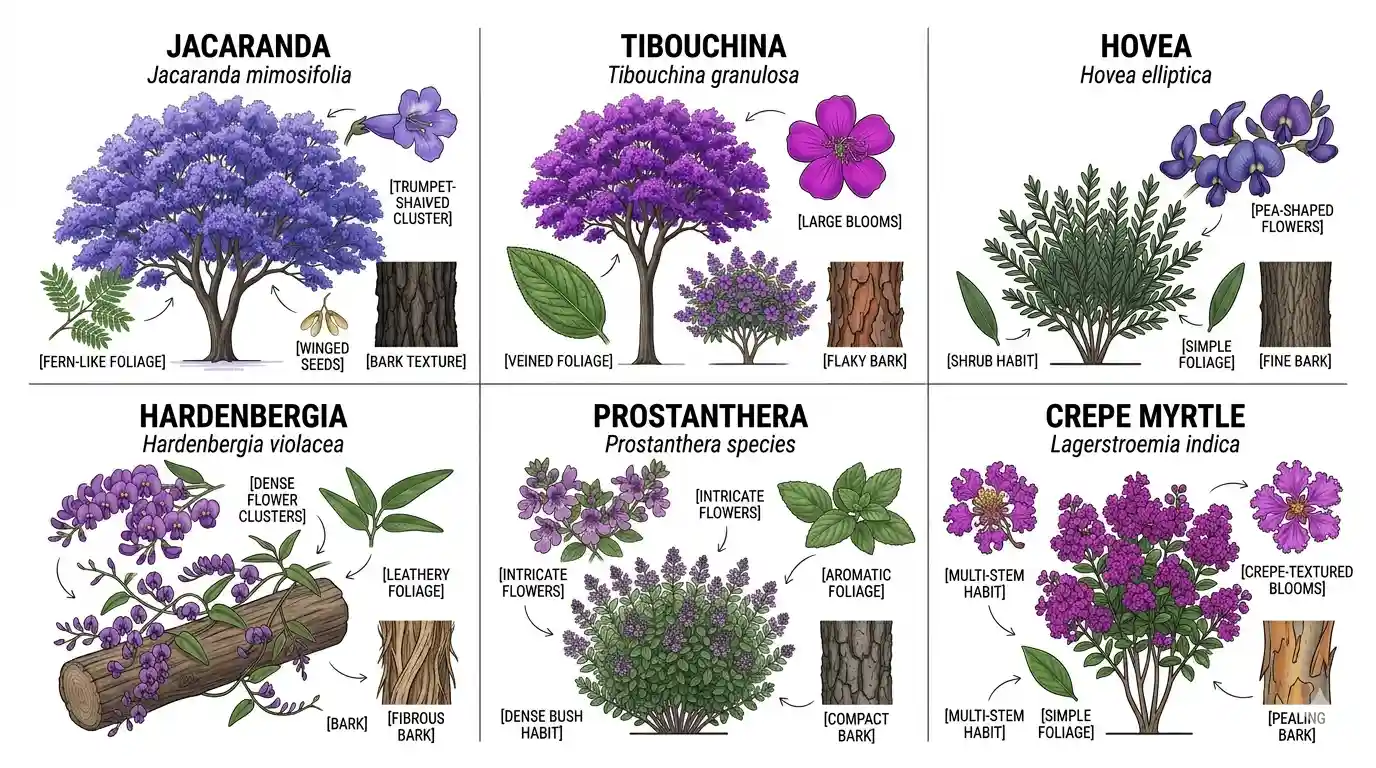
Identifying a purple flowering tree involves examining:
- Leaf shape
- Flower structure
- Bloom season
- Bark characteristics
- Growth habit
Helpful identification resources include:
- iNaturalist
- PlantNet
- Local council tree registers
- Native plant societies
Quick Identification Guide — Purple Flowering Trees and Shrubs
- Jacaranda: Fern-like compound leaves, trumpet-shaped violet flowers, large deciduous canopy.
- Tibouchina: Velvety leaves with visible veins, large five-petalled flowers.
- Hovea: Narrow leaves and purple pea-shaped flowers.
- Hardenbergia violacea: Glossy leaves and clustered pea flowers on climbers.
- Prostanthera: Aromatic leaves and small tubular purple flowers.
- Crepe Myrtle: Smooth peeling bark and crinkled purple flowers.
For a faster way to cross-check leaf shape, flower structure, and bloom season side-by-side, our free purple flowering trees Australia lookup tool lets you search species instantly.
It’s built specifically to help you match what you’re seeing in your garden or street to the correct native or introduced species. For more Australian plant ideas covering both ornamental gardens and home greenery, explore our Australian Plants Guide: Indoor Houseplants & Garden Design.
Conclusion
Australia offers an impressive diversity of purple flowering plants, ranging from the iconic jacaranda to numerous native species that support local ecosystems. While jacaranda remains the most recognised purple flower tree Australia gardeners encounter, native plants such as Hovea, Prostanthera, and Hardenbergia provide equally attractive alternatives with greater wildlife value.
Whether you prefer a large statement tree, a compact native shrub, or a low-maintenance flowering plant, there is a purple flowering species suited to almost every Australian climate and garden. For the best results, choose a species that matches your local conditions, available space, and preference for native or ornamental plants.
For a broader guide to choosing and growing flowering species across different Australian climates, see our Flowering Trees Australia guide.
Frequently Asked Questions (FAQs)
What is the name of the purple tree in Australia?
The most commonly recognised purple tree in Australia is the jacaranda (Jacaranda mimosifolia). Other purple flowering trees and shrubs include Hovea, Tibouchina, and Prostanthera species.
What native Australian plant has purple flowers?
Popular native Australian purple flowering plants include Hardenbergia violacea, Hovea species, Prostanthera species, Lechenaultia biloba, and various Scaevola and Melaleuca species.
Is a jacaranda an Australian native?
No. Jacaranda is native to Argentina and Bolivia in South America. Although widely grown throughout Australia, it is not an Australian native species.
What purple flowering trees grow well in Australian native gardens?
Excellent choices include Hovea elliptica, Prostanthera lasianthos, Hardenbergia violacea, and other native Mint Bush species. These plants support local wildlife and are generally low maintenance.
When do purple flowering trees bloom in Australia?
Bloom times vary. Jacarandas flower mainly from October to December, while native species such as Hardenbergia and Hovea often bloom from July to October. Tibouchina typically flowers from summer into autumn.
What is the small purple flower tree in Australia?
Popular small purple flowering trees include Tibouchina urvilleana, Hovea elliptica, compact Prostanthera varieties, and purple-flowering Crepe Myrtle cultivars.
What are the purple trees blooming right now in Australia?
The answer depends on the season. During spring, jacarandas, Hovea, and Hardenbergia are commonly flowering. During summer, Tibouchina often becomes the dominant purple-flowering species in many Australian gardens.
14 Comments