

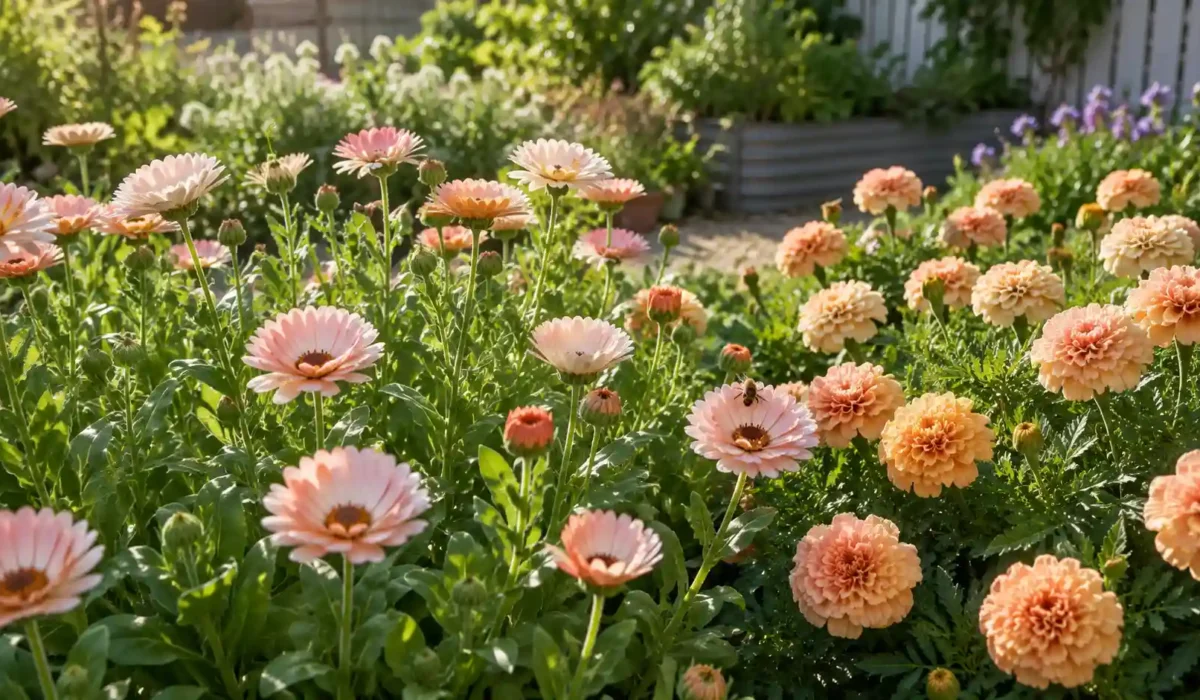
Pink Marigold Flower Guide for Australian Gardeners
Introduction
The pink marigold flower is one of the most misunderstood flowers among Australian gardeners. While the name suggests that marigolds naturally bloom in shades of pink, true pink-petalled Tagetes marigolds do not exist. Instead, the term is commonly used for blush-coloured cultivars of Calendula officinalis, often called the English marigold, or for peach-toned Tagetes varieties such as ‘Strawberry Blonde’. Understanding the difference helps gardeners choose the right plant for their landscape. This guide explains the true colour range of marigolds, identifies popular cultivars, explores flower symbolism, and provides practical growing advice suited to Australian conditions. If you enjoy soft pink blooms in the garden, you may also like our guide to Purple Flower Tree Australia: Native & Popular Species Guide, which explores colourful flowering trees suited to Australian landscapes
By Elemo Baker | Plant Care & Gardening Expert
In our experience growing both Calendula and Tagetes in Australian gardens, the confusion between these two plants is extremely common. Knowing their botanical differences makes selecting the right variety much easier.
Quick Summary
- True Tagetes marigolds do not produce naturally pink flowers; their colours are limited to yellow, gold, orange, bronze, and deep red-mahogany.
- The term pink marigold flower usually refers to Calendula officinalis cultivars such as ‘Pink Surprise’, which display soft blush, cream, and peach-pink blooms.
- In floriography, pink marigolds symbolise grace, admiration, gentle affection, and warmth.
- Calendula and Tagetes are different genera within the daisy family, although both share the common name “marigold.”
- Australian gardeners can successfully grow both plants, provided they choose varieties suited to their local climate.
Are There Actually Pink Marigolds?
The Truth About Marigold Colour Range
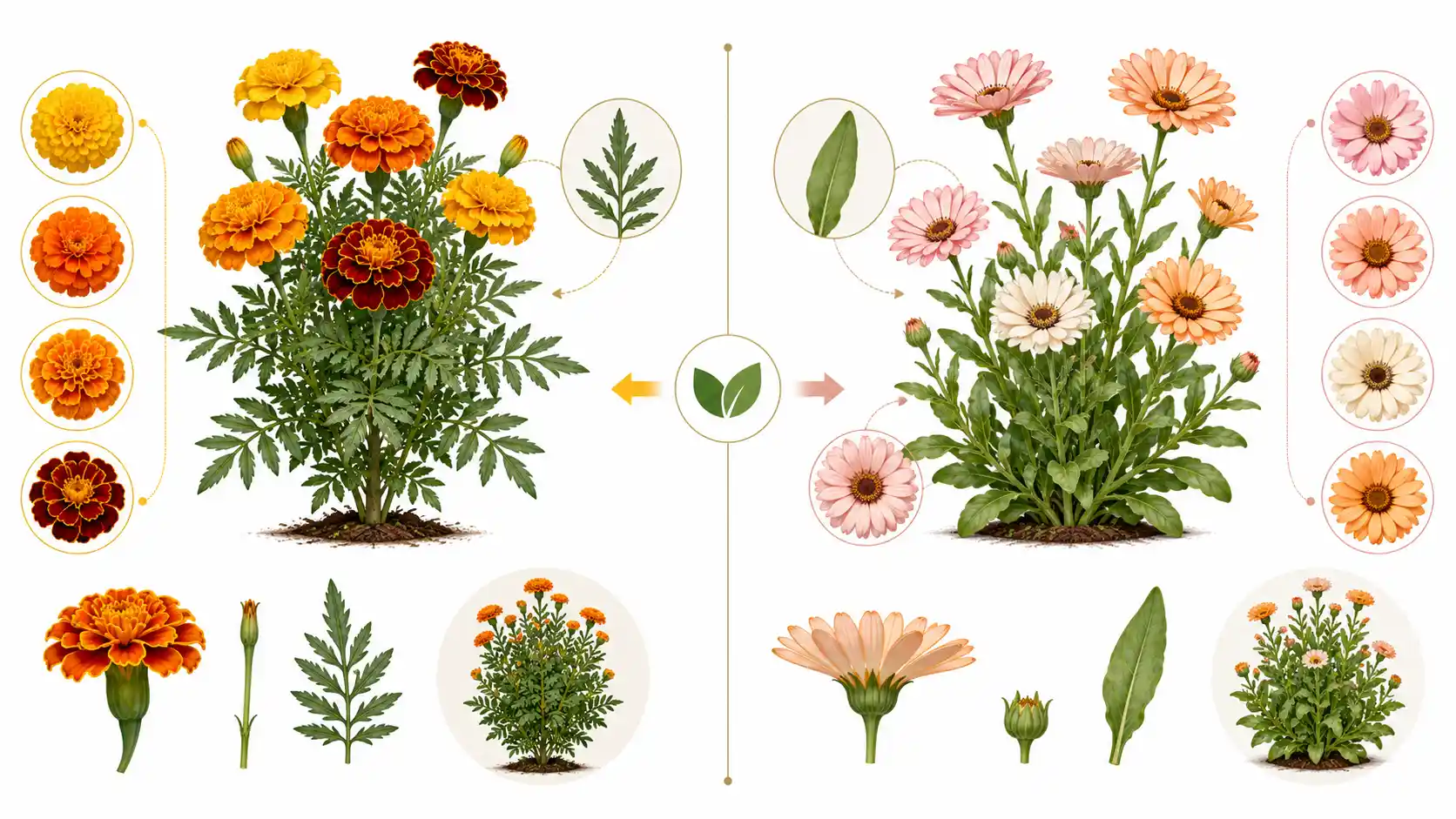
No, true Tagetes marigolds do not naturally produce pink flowers. Their flower colours are genetically limited to shades of yellow, gold, orange, bronze, and deep red-mahogany. This includes the three most common garden groups—French marigolds (Tagetes patula), African marigolds (Tagetes erecta), and signet marigolds (Tagetes tenuifolia).
The reason pink flowers do not occur in Tagetes lies in plant genetics. These species lack the delphinidin-based anthocyanin pigments responsible for producing true blue, purple, and pink flower colours in many ornamental plants. Instead, Tagetes flowers are coloured primarily by carotenoid pigments, which naturally create warm yellow, orange, and red hues.
For gardeners asking, “Are there pink marigolds?”, the direct answer is no if referring to Tagetes species. Plant breeders have developed many attractive colour combinations, but none produce genuine pink petals.
The closest example is ‘Strawberry Blonde’, an award-winning French marigold cultivar. Rather than true pink, its blooms display changing blends of peach, rose-gold, cream, apricot, and soft bronze depending on temperature and sunlight. Cooler weather often enhances the blush tones, making it the closest Tagetes variety to a pink appearance.
Elemo Baker recommends planting Strawberry Blonde during Australia’s cooler growing seasons, as the softer blush colouring is generally more noticeable than during periods of intense summer heat.
What Is Sold as a Pink Marigold Flower?
Most plants marketed as a pink marigold flower are actually cultivars of Calendula officinalis, commonly known as the English marigold or pot marigold. Unlike Tagetes, Calendula naturally produces flowers in a broader range of soft colours, including cream, apricot, peach, salmon, and blush-pink.
One of the best-known cultivars is ‘Pink Surprise’, valued for its semi-double blooms featuring pale pink petals with creamy undertones and golden centres. Depending on growing conditions, flower colour may vary from soft blush to peachy cream.
Garden centres and seed suppliers frequently market these plants simply as “pink marigolds” because both Calendula and Tagetes share the common name marigold. This overlap often leads gardeners to believe they belong to the same plant group, despite being botanically distinct.
Marigold flower colours vary considerably depending on species and cultivar:
- Calendula officinalis: cream, yellow, apricot, peach, blush, salmon, orange.
- Tagetes species: yellow, gold, orange, bronze, mahogany, red-orange bicolours.
- Strawberry Blonde Tagetes: cream, peach, apricot, rose-gold, bronze bicolours.
Understanding which genus a plant belongs to helps ensure you select the appearance and growing habit best suited to your garden.
Calendula vs Tagetes — Understanding the Two “Marigolds”
What Is Calendula?
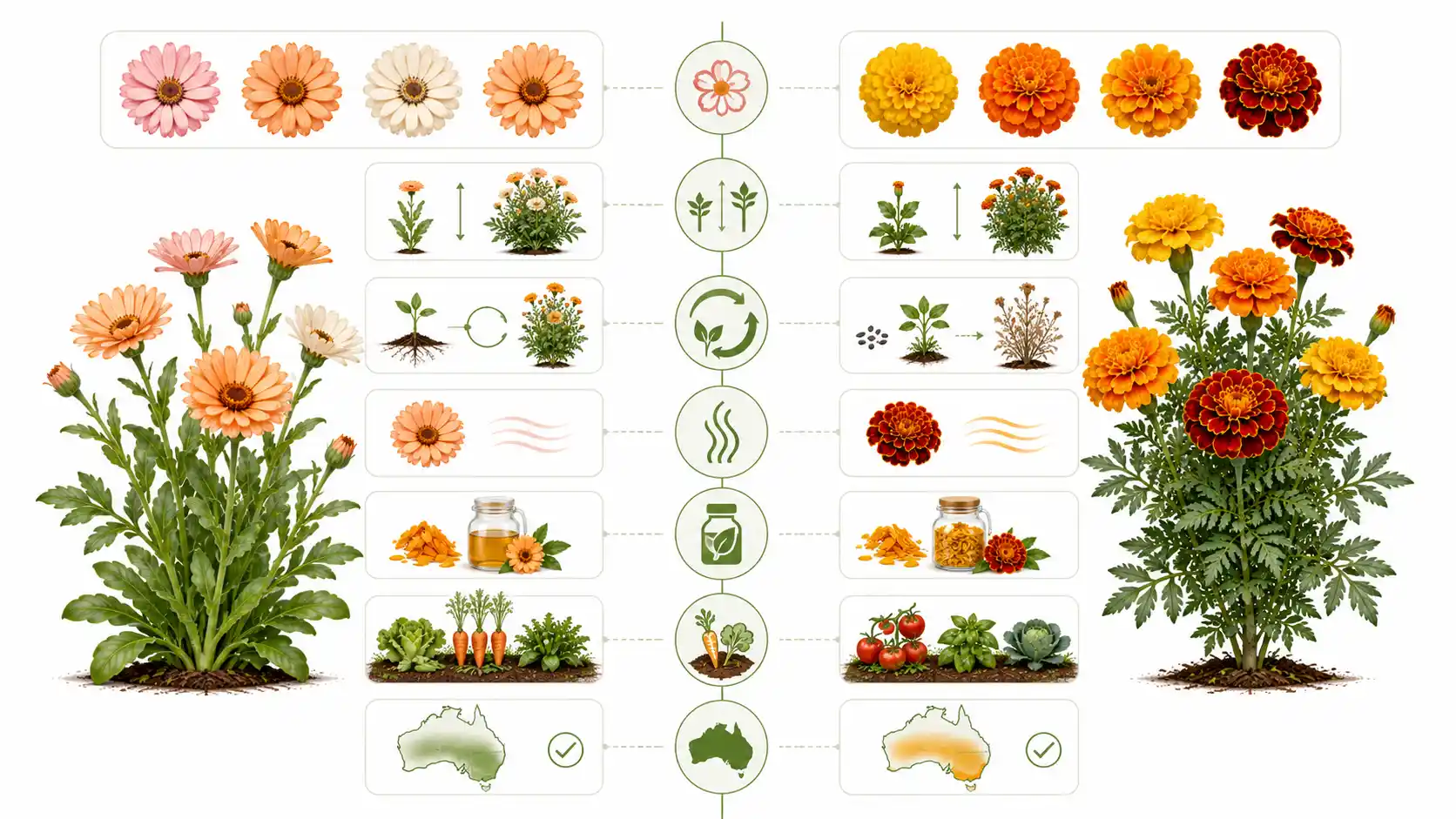
Calendula officinalis is a flowering annual belonging to the Asteraceae family. Native to southern Europe and the Mediterranean region, it has been cultivated for centuries as both an ornamental garden flower and a medicinal herb.
For readers interested in the botanical history and classification of Calendula officinalis, the Wikipedia article provides additional background on its taxonomy, origin, and traditional uses.
Although commonly called the English marigold or pot marigold, Calendula is not closely related to Tagetes. The two genera simply share a common name due to historical usage.
Calendula plants typically grow between 30 and 60 centimetres tall, producing branching stems topped with daisy-like flowers. Their foliage is soft, slightly sticky, and light green, while the blooms range from single to double forms in warm pastel shades.
Compared with Tagetes, Calendula offers several distinctive characteristics:
- Softer, less pungent foliage.
- Larger, daisy-like flower heads.
- Cooler-season flowering habit.
- Greater tolerance of mild winter conditions.
- Broad colour range including blush and peach tones.
In our experience, Calendula performs exceptionally well across much of southern Australia when planted in autumn, producing flowers continuously through winter and spring.
Tagetes Species — French, Mexican, and African Marigolds
The genus Tagetes contains numerous species, but Australian gardeners most commonly encounter three main groups.
French marigold (Tagetes patula)
French marigolds are compact annual bedding plants that generally reach 20–35 centimetres in height. They produce masses of colourful flowers and are popular for borders, pots, and companion planting in vegetable gardens.
African marigold (Tagetes erecta)
Despite the common name, African marigolds originated in Central America. They grow taller than French marigolds, often reaching 60–90 centimetres, and produce large, globe-shaped blooms in vibrant yellow and orange shades.
Mexican marigold (Tagetes lemmonii)
Unlike the annual bedding marigolds, Tagetes lemmonii, also known as mountain marigold or tree marigold, is a perennial shrub. It can grow between 1.5 and 2.5 metres tall and is well suited to many Australian climates with mild winters.
Tagetes lemmonii features finely divided aromatic foliage and clusters of bright golden flowers that appear from autumn into winter. It is valued for its drought tolerance, long flowering period, and suitability for informal hedges or wildlife gardens.
Australian gardeners searching for Tagetes lemmonii Australia will find it increasingly available through specialist nurseries and selected garden centres.
Comparison Table — Calendula vs Tagetes
| Feature | Calendula officinalis | Tagetes species |
| Common names | English marigold, Pot marigold | French, African, Mexican marigolds |
| Botanical genus | Calendula | Tagetes |
| Flower colours | Yellow, cream, apricot, peach, blush-pink | Yellow, orange, gold, bronze, mahogany |
| Plant type | Usually annual | Mostly annual; Tagetes lemmonii is perennial |
| Fragrance | Mild, herbal | Strong aromatic foliage |
| Typical height | 30–60 cm | 20 cm–2.5 m depending on species |
| Primary uses | Ornamental, medicinal, edible flowers | Bedding displays, companion planting, landscaping |
| Australian availability | Widely available as seeds and seedlings | Widely available; perennial species stocked by specialist nurseries |
Pink Marigold Flower Varieties Worth Growing in Australia
Calendula ‘Pink Surprise’ — The Closest True Pink
Among all marigold relatives, Calendula ‘Pink Surprise’ remains the closest option for gardeners seeking a genuine pink marigold flower appearance.
This cultivar produces attractive semi-double blooms featuring delicate blush-pink petals, creamy highlights, and contrasting golden centres. Flower colour often becomes richer during cool weather, while warmer conditions may produce softer peach tones.
Typical characteristics include:
- Height: 40–60 cm
- Spread: 30–45 cm
- Flowering season: Autumn through spring in most Australian climates
- Position: Full sun to light afternoon shade
- Suitable for borders, cottage gardens, containers, and cutting gardens
Seeds are available through numerous Australian online seed suppliers, while seasonal seedlings may also appear at local nurseries.
Strawberry Blonde Marigold — The Pink-Adjacent Tagetes
For gardeners who specifically want a Tagetes variety with unusual colouring, Strawberry Blonde remains one of the finest choices.
Its flowers open in changing shades of cream, apricot, peach, bronze, rose-gold, and soft blush, with colours shifting throughout the growing season depending on temperature.
Plants generally grow:
- Height: 25–35 cm
- Width: 25–30 cm
- Habit: Compact and bushy
- Flowering: Late spring through autumn
Although not truly pink, Strawberry Blonde creates a warm pastel effect rarely seen in traditional marigolds, making it especially popular in modern ornamental gardens.
What Is the Prettiest Marigold? — Popular Cultivars Ranked
The prettiest marigold depends on personal preference, but several cultivars are consistently admired for their colour, flower form, and garden performance.
Popular choices include:
- Calendula ‘Pink Surprise’ – soft blush blooms and elegant cottage-garden appeal.
- Strawberry Blonde – unique peach and rose-gold bicolour flowers.
- Vanilla (Tagetes erecta) – creamy ivory blooms that stand out from traditional orange marigolds.
- Durango Orange – compact plants covered with vivid orange flowers.
- Bonanza Deep Orange – reliable bedding marigold with large double blooms.
For Australian gardeners wanting an unusual display, combining Pink Surprise Calendula with Strawberry Blonde Tagetes provides complementary pastel tones while extending flowering across the growing season.
What Does the Pink Marigold Flower Symbolise?
A pink marigold flower symbolises grace, gentle admiration, romantic affection, kindness, and emotional warmth. While true pink Tagetes marigolds do not exist, blush-toned Calendula cultivars such as ‘Pink Surprise’ are often associated with these meanings in modern floriography (the language of flowers). Their soft colouring represents tenderness and appreciation, making them popular in cottage gardens and floral arrangements. If you’re interested in meaningful ornamental plants, you may also enjoy reading about the Benefits of Lavender Plant at Home, another favourite for Australian gardens. Gardeners interested in plant symbolism may also enjoy our Money Tree Australia: Care, Meaning & Buying Guide, which explores another plant with strong cultural significance.
Traditional marigolds carry broader symbolism that varies between cultures. Bright yellow and orange marigolds commonly represent:
- Devotion and loyalty
- Positivity and optimism
- The warmth and energy of the sun
- Remembrance and honour
- Celebration and protection
Because pink shades are softer than the traditional golden colours, they are often linked with more personal emotions such as gratitude, admiration, and gentle affection. For another flower with delicate pink blooms and rich symbolism, see our Pink Lily of the Valley Flower: Meaning, Care & Facts guide.
What Do Pink Marigolds Symbolise?
Pink marigolds symbolise grace, admiration, romantic affection, compassion, and femininity. Their delicate pastel colours convey gentler emotions than the bold oranges and yellows associated with traditional marigolds.
They are often chosen for:
- Thank-you bouquets
- Friendship gifts
- Mother’s Day arrangements
- Cottage-style floral displays
- Romantic gardens
Although these meanings are primarily associated with blush-coloured Calendula cultivars rather than true Tagetes marigolds, they have become widely accepted among gardeners and flower enthusiasts.
By contrast, traditional marigold symbolism includes remembrance, resilience, prosperity, and celebration, particularly in cultural festivals around the world.
Which Flower Is Not Offered to God?
This question depends entirely on the religious tradition being discussed.
In Hindu worship, marigolds are among the most commonly offered flowers because they symbolise purity, devotion, and positive energy. Their bright colours make them a popular choice for temple decorations, festivals, and religious ceremonies throughout India and many other countries.
Certain flowers may be avoided in specific traditions or when offered to particular deities due to cultural or scriptural customs. For example, flowers that are wilted, damaged, or considered ritually impure are generally not used for worship. However, there is no universal rule that marigolds should not be offered to God.
Australian gardeners who grow Calendula or Tagetes can appreciate these flowers for both their ornamental beauty and their long-standing cultural significance.
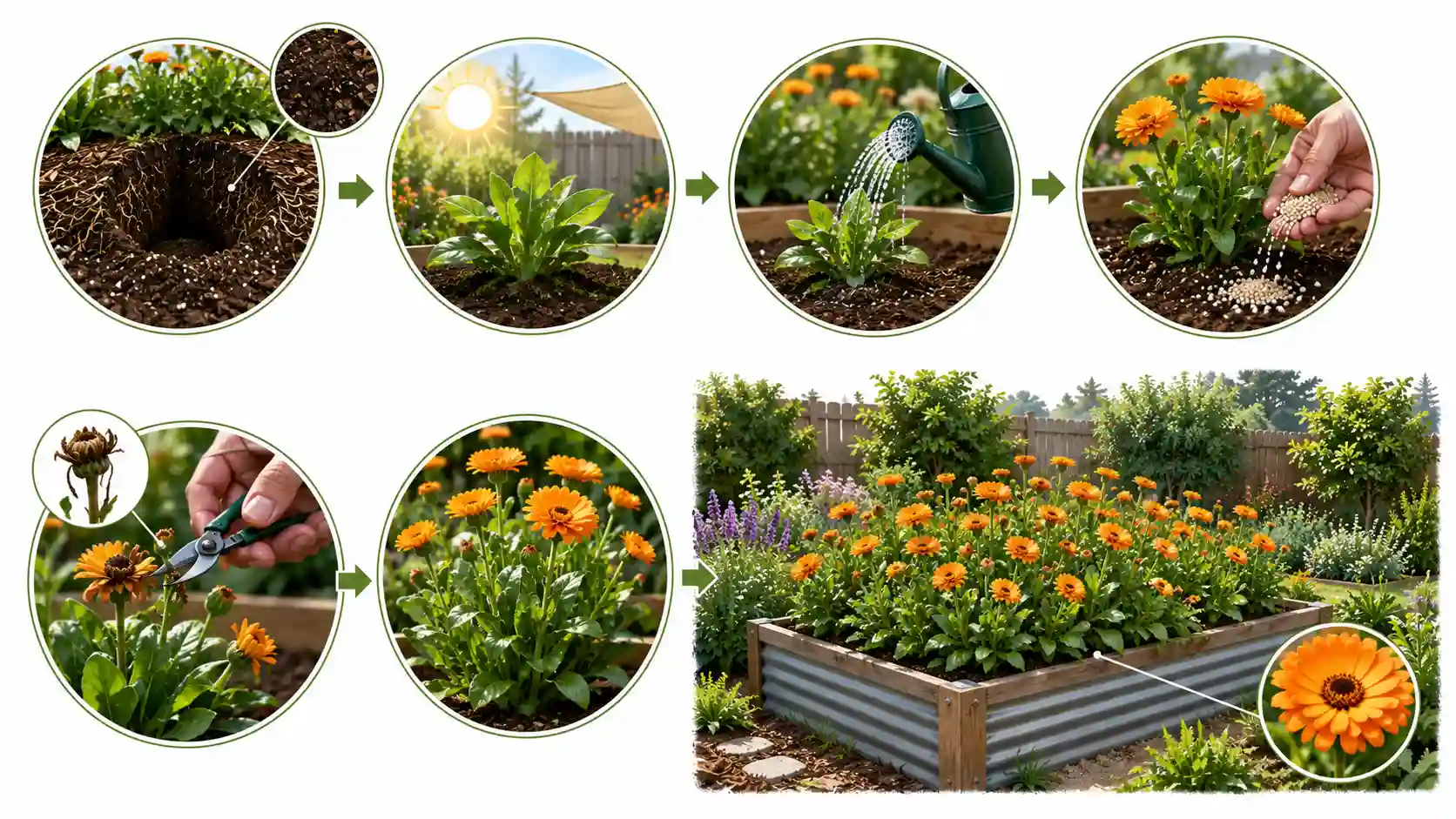
How to Grow Calendula (Pink Marigold Flower) in Australia
For continuous colour beyond the Calendula season, see our All Year Round Flowering Plants Australia Guide for plants that bloom across multiple seasons.
When to Plant Calendula in Australia
Calendula is generally grown as a cool-season annual throughout Australia. It performs best during the cooler months and produces abundant flowers from autumn through spring before declining in prolonged summer heat.
Recommended planting times include:
| Australian Climate | Best Planting Time |
| Cool-temperate | Autumn or early spring |
| Mediterranean | Autumn |
| Subtropical | Late autumn to early winter |
| Arid and inland | Autumn after extreme heat has eased |
Most Australian gardeners achieve the longest flowering season by sowing seeds during autumn.
As of the 2026 growing season, many Australian growers continue to recommend autumn sowing because it allows plants to establish before winter and flower continuously through spring.
In our experience, autumn-sown Calendula develops stronger root systems and significantly longer flowering periods than plants started during warmer weather.
Soil, Sun, and Watering Requirements
Calendula is relatively easy to grow provided its basic needs are met.
Soil
The plant prefers:
- Well-drained soil
- Moderately fertile conditions
- Neutral to slightly acidic pH
- Soil enriched with compost or organic matter
Heavy clay soils should be improved with compost to enhance drainage.
Sunlight
Calendula grows best in:
- Full sun in cooler regions
- Full morning sun with light afternoon shade in warmer Australian climates
Too much intense summer heat may shorten flowering.
Watering
Water deeply but only when the top few centimetres of soil become dry.
General watering guide:
- Seedlings: 2–3 times each week
- Established plants: Once or twice weekly depending on rainfall
- Containers: Water more frequently because potting mix dries faster
Avoid constantly wet soil, as excessive moisture can encourage root diseases.
Calendula also performs exceptionally well in:
- Raised garden beds
- Cottage gardens
- Vegetable gardens
- Containers
- Pollinator-friendly landscapes
Fertilising and Pruning Calendula
Calendula is not a heavy feeder.
A light application of balanced organic fertiliser during planting is usually sufficient. Excessive nitrogen encourages leafy growth while reducing flower production.
For continuous flowering:
- Remove faded blooms regularly.
- Trim leggy stems during mid-season.
- Remove damaged foliage promptly.
- Water consistently during dry periods.
Deadheading is one of the simplest ways to extend flowering by encouraging the plant to continue producing new buds instead of setting seed.
Elemo Baker recommends spending just a few minutes each week removing spent flowers. This small maintenance task can noticeably increase blooming throughout the season.
Growing Mexican Marigold (Tagetes lemmonii) in Australia
Unlike annual bedding marigolds, Tagetes lemmonii is a long-lived perennial shrub that thrives in many Australian regions. Also known as Mexican marigold, mountain marigold, or tree marigold, it forms a dense aromatic shrub with bright golden flowers during autumn and winter. Mexican marigold also pairs well with other hardy species featured in our Low-Maintenance Plants for Fence Line in Australia guide.
Typical growing characteristics include:
- Height: 1.5–2.5 metres
- Width: 1.5–2 metres
- Position: Full sun
- Soil: Well-drained
- Water needs: Low once established
- Frost tolerance: Light frost only
Its aromatic foliage naturally deters some browsing animals and makes it suitable for informal hedges, wildlife gardens, and low-maintenance landscapes.
Because of its drought tolerance, Tagetes lemmonii has become increasingly popular in Australian water-wise gardens.
Plants are now stocked by many specialist nurseries, and selected Bunnings stores also carry this species during the gardening season, although availability varies by location.
Medicinal and Healing Properties of Marigold (Calendula)
What Does Marigold Heal?
Calendula officinalis has a long history in traditional herbal medicine and remains one of the best-studied medicinal flowers. Research suggests that Calendula extracts possess anti-inflammatory, antioxidant, and wound-supporting properties, making them common ingredients in topical skincare products.
Calendula is most commonly used to support:
- Minor cuts and scrapes
- Small burns
- Dry or irritated skin
- Mild eczema symptoms
- Insect bites
- Chafing
- Wound healing
Its beneficial effects are largely attributed to naturally occurring compounds such as flavonoids, triterpenoids, carotenoids, and essential oils.
Although Calendula may assist normal skin repair, it should not replace professional medical treatment for serious wounds or infections.
Is Marigold Good for Scars?
Yes. Calendula-based creams, ointments, and herbal extracts are widely used to help improve the appearance of scars by supporting healthy skin healing and reducing inflammation.
Current evidence suggests Calendula may help:
- Keep healing skin moisturised.
- Reduce irritation.
- Support collagen formation during repair.
- Improve skin texture over time.
For older scars, including scars that are two years old or more, topical Calendula products may gradually improve skin softness and appearance. However, complete scar removal is unlikely, and results vary depending on scar type and individual skin characteristics.
People seeking evidence-based wound care often use Calendula alongside other well-known herbs such as:
- Aloe vera
- Centella asiatica (Gotu kola)
- Chamomile
- Comfrey (used cautiously in topical preparations)
Calendula remains one of the most widely recommended botanical ingredients for supporting minor wound recovery.
Can Marigolds Cause Allergies?
Yes. Both Calendula and Tagetes belong to the Asteraceae (daisy) family, which contains several plants known to trigger allergic reactions in sensitive individuals.
People who are allergic to ragweed, chrysanthemums, daisies, or sunflowers may also react to marigolds.
Possible symptoms include:
- Skin irritation
- Contact dermatitis
- Itching
- Redness
- Mild respiratory irritation from pollen in susceptible individuals
Before applying Calendula creams to large areas of skin, it is sensible to perform a small patch test.
Some of the more common allergy-triggering plants in Australia include:
- Ragweed
- Parthenium weed
- Chrysanthemums
- Certain daisies
- Sunflowers
- Marigolds (Calendula and Tagetes) in sensitive individuals
Most gardeners can safely grow marigolds without problems, but anyone with known Asteraceae allergies should exercise appropriate caution.
Common Problems When Growing Pink Marigold Flowers
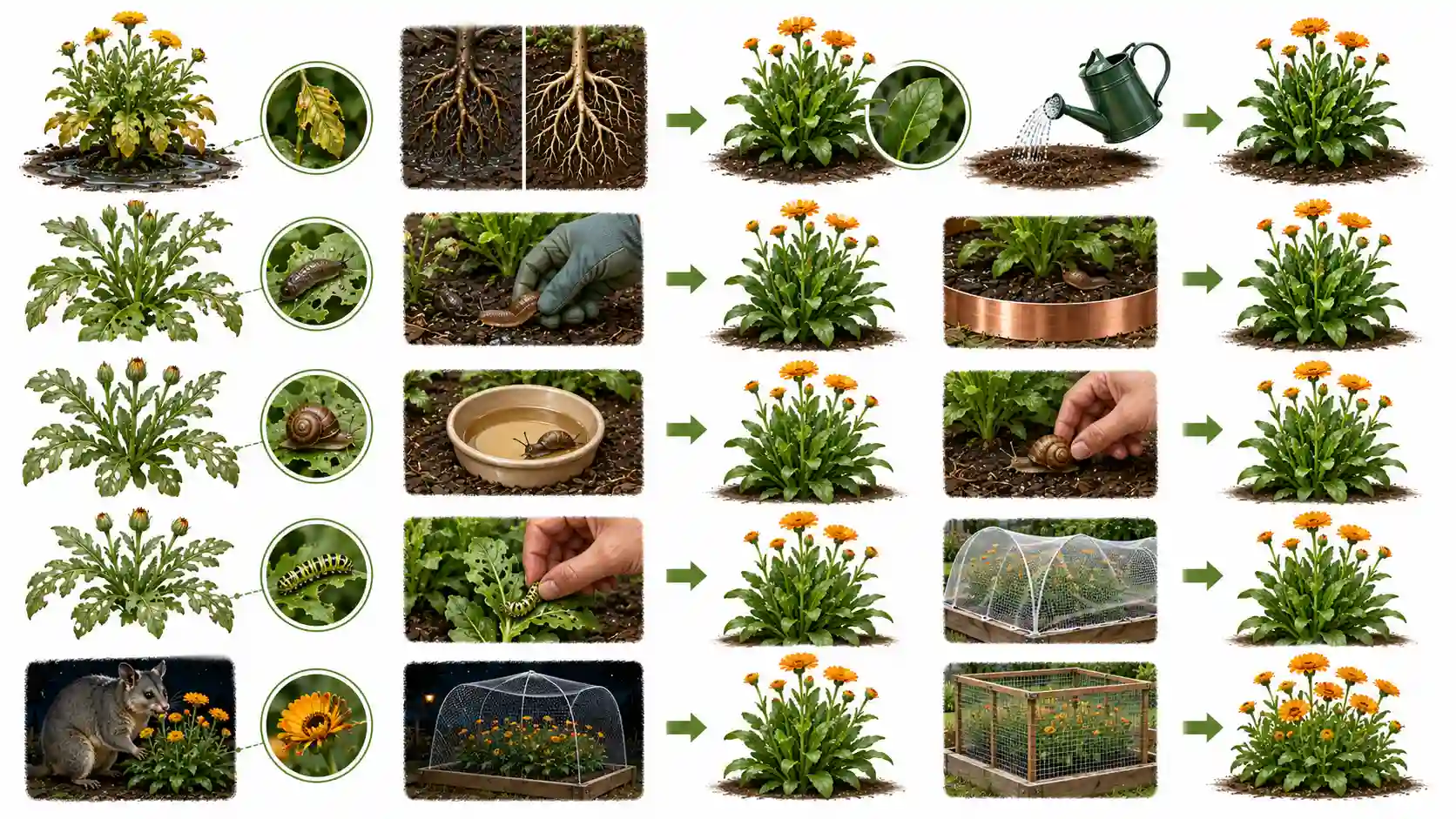
Why Are My Calendula Leaves Turning Yellow?
Yellowing leaves are one of the most common problems when growing Calendula. In most cases, the issue relates to watering, soil conditions, or nutrient availability rather than disease.
Common causes include:
- Overwatering: Constantly wet soil deprives roots of oxygen, leading to yellow foliage and root rot.
- Poor drainage: Heavy clay or compacted soil can trap excess moisture around the roots.
- Nutrient deficiency: A lack of nitrogen or other essential nutrients may cause older leaves to yellow.
- Heat stress: Extended periods of hot weather can weaken plants and accelerate leaf yellowing.
- Natural ageing: Lower leaves naturally yellow as the plant matures.
To prevent yellow leaves:
- Water only when the top layer of soil begins to dry.
- Improve drainage with compost or coarse organic matter.
- Apply a light, balanced fertiliser if nutrient deficiency is suspected.
- Remove yellow leaves to improve airflow and reduce disease risk.
- Avoid planting Calendula in waterlogged locations.
In our experience, overwatering is the most frequent cause of yellowing Calendula leaves, especially during cool or wet Australian winters.
Pests and Wildlife — What Eats Marigolds at Night?
Several animals and garden pests feed on marigolds after dark. If flowers or leaves disappear overnight, the damage is often caused by nocturnal visitors. If you’re unsure which pest is damaging your flowers, our Garden Pest Identification Guide for Australian Gardens can help you identify common Australian garden pests.
Common culprits in Australian gardens include:
- Slugs – chew irregular holes in leaves and young seedlings.
- Snails – feed on foliage, particularly after rain.
- Caterpillars – consume flower buds and leaves.
- Possums – may browse flowers and tender shoots.
- Earwigs – occasionally feed on petals and young growth.
Low-impact control methods include:
- Hand-picking pests during the evening.
- Using beer traps or copper barriers for slugs and snails.
- Encouraging birds and beneficial insects.
- Applying iron-based slug baits where necessary.
- Protecting plants with netting if possums are causing repeated damage.
Inspecting plants shortly after sunset often helps identify the responsible pest before significant damage occurs.
Why Isn’t My Calendula Flowering?
Poor flowering usually indicates that one or more growing conditions need adjustment.
The most common reasons include:
- Heat stress: Calendula naturally slows flowering during hot weather.
- Incorrect planting season: Plants established too late in spring often struggle through summer.
- Insufficient sunlight: Too much shade reduces flower production.
- Failure to deadhead: Old flowers divert energy into seed production.
- Excess nitrogen: High-nitrogen fertilisers encourage leafy growth instead of blooms.
To encourage more flowers:
- Grow Calendula during the cooler months.
- Plant in full sun or light afternoon shade.
- Remove spent flowers regularly.
- Apply only light fertiliser.
- Maintain even soil moisture without overwatering.
With proper seasonal timing and routine deadheading, most Australian gardeners enjoy continuous flowering from autumn through spring.
Where to Buy Pink Marigold Flowers and Seeds in Australia
Australian gardeners have several reliable options when purchasing pink marigold flowers, Calendula seeds, and Tagetes varieties.
Online seed suppliers
Online retailers usually offer the widest selection of cultivars, including:
- Calendula ‘Pink Surprise’
- Strawberry Blonde Tagetes
- Traditional French marigolds
- African marigolds
- Heirloom and specialty varieties
Because specialist suppliers focus on seed diversity, blush-coloured Calendula cultivars are generally easier to source online than through local stores.
Local nurseries
Independent garden centres often stock seasonal seedlings during autumn and spring. Availability varies by region, but many nurseries carry both Calendula and Tagetes during their peak planting seasons.
Staff can also recommend varieties best suited to local growing conditions.
Bunnings Garden Centres
Many Bunnings stores stock:
- Marigold seeds
- French marigold seedlings
- African marigolds
- Seasonal Calendula plants
- Potting mixes and companion planting supplies
Stock changes throughout the year, so availability may differ between locations.
Tagetes lemmonii
The perennial Mexican marigold (Tagetes lemmonii) is becoming increasingly available in Australia. While not every Bunnings store carries it, many specialist nurseries and selected garden centres stock established plants during the gardening season.
If you’re specifically searching for Calendula ‘Pink Surprise’, online seed suppliers usually provide the most consistent availability.
Conclusion
The pink marigold flower is best understood as a common name rather than a true botanical category. Genuine Tagetes marigolds do not produce naturally pink flowers because their genetics limit them to warm shades of yellow, gold, orange, bronze, and mahogany. Instead, gardeners seeking soft blush blooms should look to Calendula officinalis cultivars such as ‘Pink Surprise’, while Strawberry Blonde remains the closest pink-inspired option within the Tagetes genus.
For Australian gardeners, both Calendula and Tagetes offer excellent ornamental value, although they differ in appearance, growth habits, and ideal growing seasons. Calendula also provides a long history of medicinal use, while perennial Tagetes lemmonii adds year-round structure to many drought-tolerant landscapes. To create a healthier indoor and outdoor environment, combine flowering plants with easy-care species highlighted in our 10 Benefits of Snake Plant for Home and Health guide.
For the best results, source quality Calendula seeds during autumn, plant them in well-drained soil, and enjoy months of colourful blooms that combine beauty, symbolism, and practical garden value. If you’re planning a colourful Australian garden, our Australian Native Purple Flowers: Types, Care & Guide is an excellent companion resource alongside this pink marigold flower guide.
Frequently Asked Questions
Do pink marigolds actually exist?
True pink Tagetes marigolds do not exist. The closest alternatives are Calendula officinalis cultivars such as ‘Pink Surprise’, which produce blush and peach-toned flowers, and Strawberry Blonde Tagetes, which displays changing shades of cream, apricot, peach, and rose-gold.
What is the difference between Calendula and a marigold?
Calendula officinalis, commonly known as the English marigold, belongs to the genus Calendula. French, African, and Mexican marigolds belong to the genus Tagetes. Although both are members of the Asteraceae family and share the common name “marigold,” they differ in appearance, fragrance, flower colours, and growing habits.
When should I plant Calendula in Australia?
In most Australian regions, Calendula should be planted during autumn for flowering throughout winter and spring. In cooler alpine or highland areas, early spring planting is also suitable. The plant generally performs poorly during humid subtropical summers.
Is Calendula safe for people with allergies?
Calendula belongs to the Asteraceae family, which includes daisies, chrysanthemums, and ragweed. People with known allergies to these plants may experience skin irritation or contact dermatitis when handling Calendula or using topical products containing its extracts. A patch test is recommended before widespread use.
What does a pink marigold flower symbolise?
A pink marigold flower symbolises grace, admiration, gentle affection, compassion, and romantic warmth. More broadly, marigolds represent devotion, remembrance, resilience, and the life-giving energy of the sun in many cultural traditions.
Is marigold (Calendula) good for the skin?
Yes. Calendula officinalis is widely used in creams, balms, and herbal skincare products because of its recognised anti-inflammatory and wound-supporting properties. It is commonly applied to soothe irritated skin, support minor wound healing, and improve the appearance of scars over time.
Can I grow Mexican marigold (Tagetes lemmonii) in Australia?
Yes. Tagetes lemmonii is a drought-tolerant perennial shrub that grows well in many Australian climates with mild winters. It prefers full sun and well-drained soil and is available through specialist nurseries and selected Bunnings Garden Centres, depending on seasonal stock.
1 Comment