

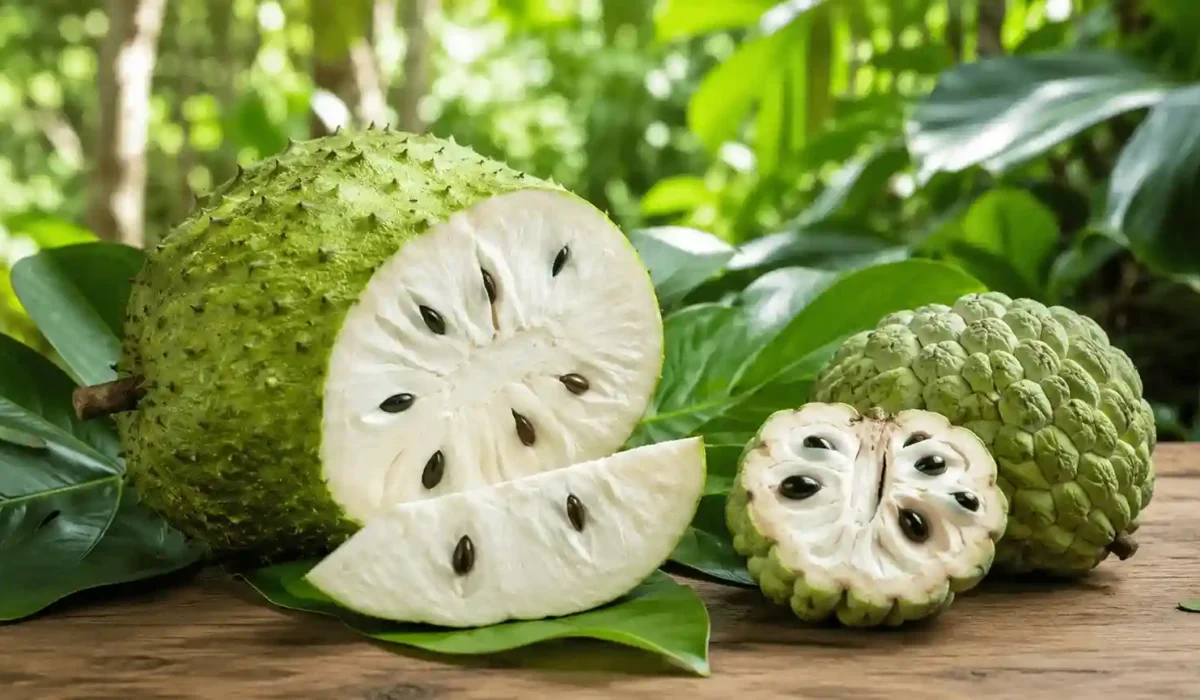
Soursop vs Custard Apple: Key Differences Explained
Introduction
Soursop vs custard apple is a common comparison because both fruits belong to the Annona genus and share several botanical similarities. However, they are not the same fruit. Soursop, custard apple, sugar apple, sweetsop, and cherimoya are closely related species with distinct appearances, flavors, nutritional profiles, and culinary uses. Understanding these differences helps consumers choose the right fruit for their dietary preferences and gardening interests. This guide explains how soursop and custard apple differ in taste, nutrition, health benefits, appearance, and how they compare with other Annona relatives such as sugar apple and cherimoya.
Quick Summary
- Soursop (Graviola) and custard apple are related but different fruits from the Annona genus.
- Soursop is larger, tangier, and spikier, while custard apple is sweeter, smaller, and has bumpy skin.
- Both fruits offer valuable nutrients and health benefits but differ in calories, flavor, and traditional uses.
- Sugar apple (sweetsop) and cherimoya are additional Annona relatives with their own unique characteristics.
- The fruits are often confused because of overlapping regional names and similar botanical origins.
What Is Soursop? (Botanical Identity and Overview)
Soursop Fruit — Appearance, Origin, and Common Names
Soursop (Annona muricata) is a tropical fruit native to Central and South America. It is widely cultivated throughout the Caribbean, Southeast Asia, Africa, and other tropical regions.
Soursop is known by several names, including:
- Graviola
- Guanabana
- Brazilian pawpaw
The fruit is typically large, elongated, and dark green. Its skin is covered with soft spines, making it easy to distinguish from other Annona fruits. Mature fruits can weigh several pounds, with some reaching up to 15 pounds under ideal growing conditions.
Soursop Taste Profile
Soursop has a distinctive tropical flavor often described as a blend of pineapple, strawberry, and coconut with a tangy, slightly acidic finish.
The flesh is white, juicy, and creamy while remaining slightly fibrous. Large black seeds are distributed throughout the pulp and should not be consumed.
When comparing soursop vs custard apple taste, soursop is noticeably more tart and refreshing. Like many tropical species valued for their ornamental and practical uses, soursop shares some characteristics with plants discussed in our Leaf of Life Plant Benefits, Uses, Tea & Care Guide.
What Is Custard Apple? (Botanical Identity and Overview)
Custard Apple Fruit — Appearance, Origin, and Common Names
True custard apple refers to Annona reticulata. The fruit is usually round or heart-shaped and features greenish-brown, bumpy skin.
Common regional names include:
- Custard apple
- Bullock’s heart
- Sitaphal (in some regions, though this often refers to sugar apple)
Many people ask what does a custard apple look like. The fruit is generally smaller than soursop and lacks spines. Inside, it contains creamy white flesh surrounding multiple brown seeds.
The custard apple tree is a medium-sized deciduous tree adapted to tropical and subtropical climates. Gardeners interested in useful tropical plants may also enjoy learning about the benefits and cultivation of the Vicks Plant Benefits: What This Fragrant Herb Can Do for You.
Types of Custard Apple
Regional naming conventions often create confusion among Annona species.
Commonly associated types include:
- Annona reticulata — True custard apple
- Annona squamosa — Sugar apple or sweetsop
- Annona cherimola — Cherimoya
A useful identification tip involves the foliage. Custard apple tree leaves tend to be narrower and less glossy than soursop leaves, which are larger, darker, and shinier.
Custard Apple Taste Profile
Custard apple has a sweet, mild flavor and a creamy texture similar to vanilla custard. Depending on the variety, the flesh may be smooth or slightly granular.
Compared with soursop, custard apple is significantly less acidic and often preferred by people who enjoy sweeter fruits.
Is Soursop the Same as Custard Apple?
No, soursop and custard apple are not the same fruit. Although both belong to the Annona family, they are separate species with different physical characteristics, flavors, and nutritional profiles. Both fruits belong to the broader Annona genus, a group of tropical fruit-bearing species with several closely related members.
The confusion exists because:
- They belong to the same botanical genus.
- Regional naming varies widely.
- Several Annona fruits are marketed under the general term “custard apple.”
Many people ask, “Is soursop custard apple?” or “Is custard apple the same as soursop?” The answer is no.
Similarly, are soursop and sitaphal the same? In most Indian usage, sitaphal refers to sugar apple (Annona squamosa), not soursop.
Soursop vs Custard Apple — Side-by-Side Comparison
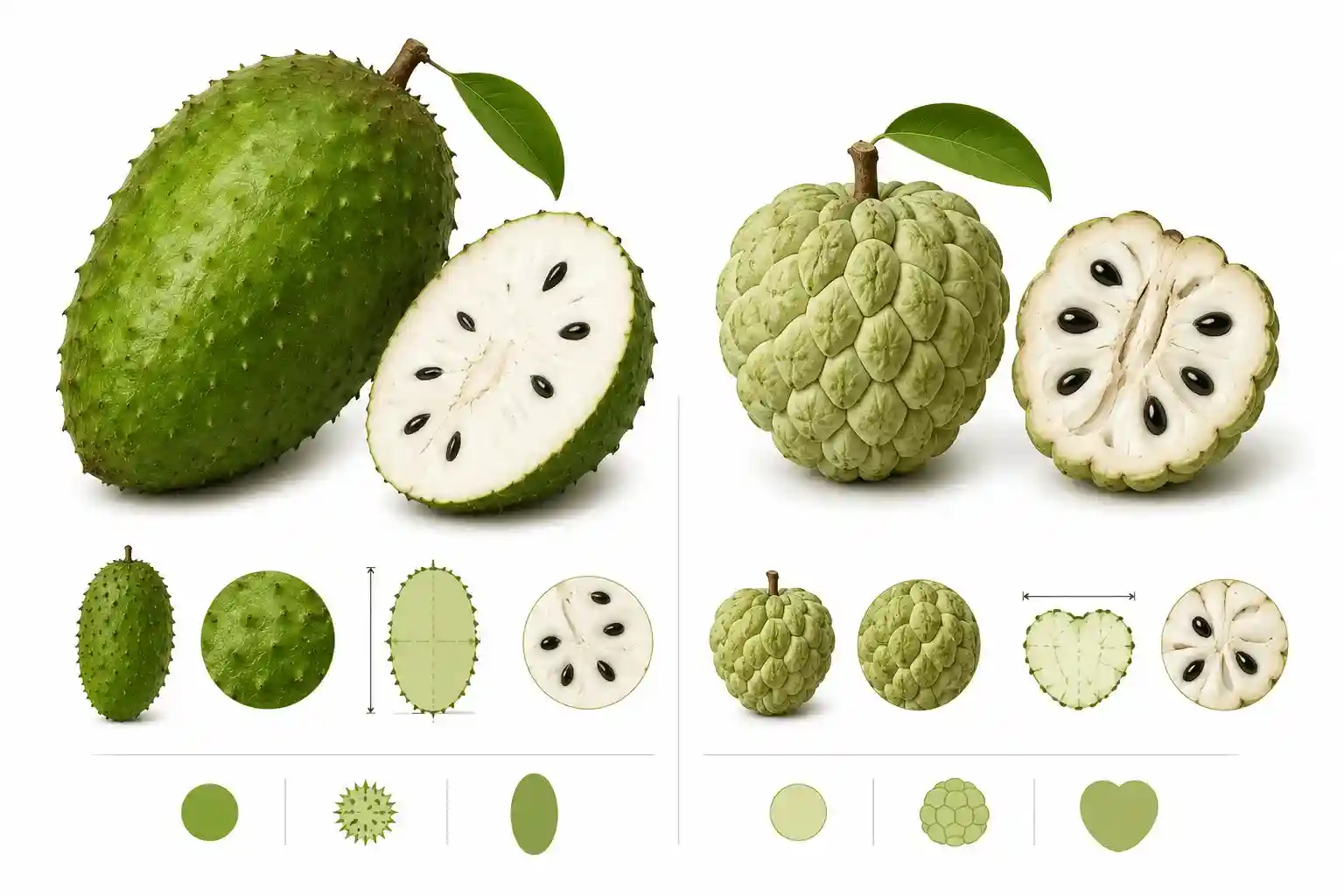
| Feature | Soursop | Custard Apple |
| Scientific Name | Annona muricata | Annona reticulata |
| Size | Large (up to 15 lbs) | Small to medium |
| Skin Texture | Spiny, dark green | Bumpy, greenish-brown |
| Taste | Tangy, acidic, tropical | Sweet, mild, custard-like |
| Pulp Color | White, fibrous | Creamy white |
| Seeds | Black, inedible | Brown, inedible |
| Calories (100g) | ~66 kcal | ~101 kcal |
| Common Names | Graviola, guanabana | Sitaphal, bullock’s heart |
| Primary Region | Caribbean, Latin America | South Asia, Africa |
Both fruits are edible only when the pulp is consumed. Seeds should always be discarded.
Soursop vs Custard Apple Nutrition Comparison
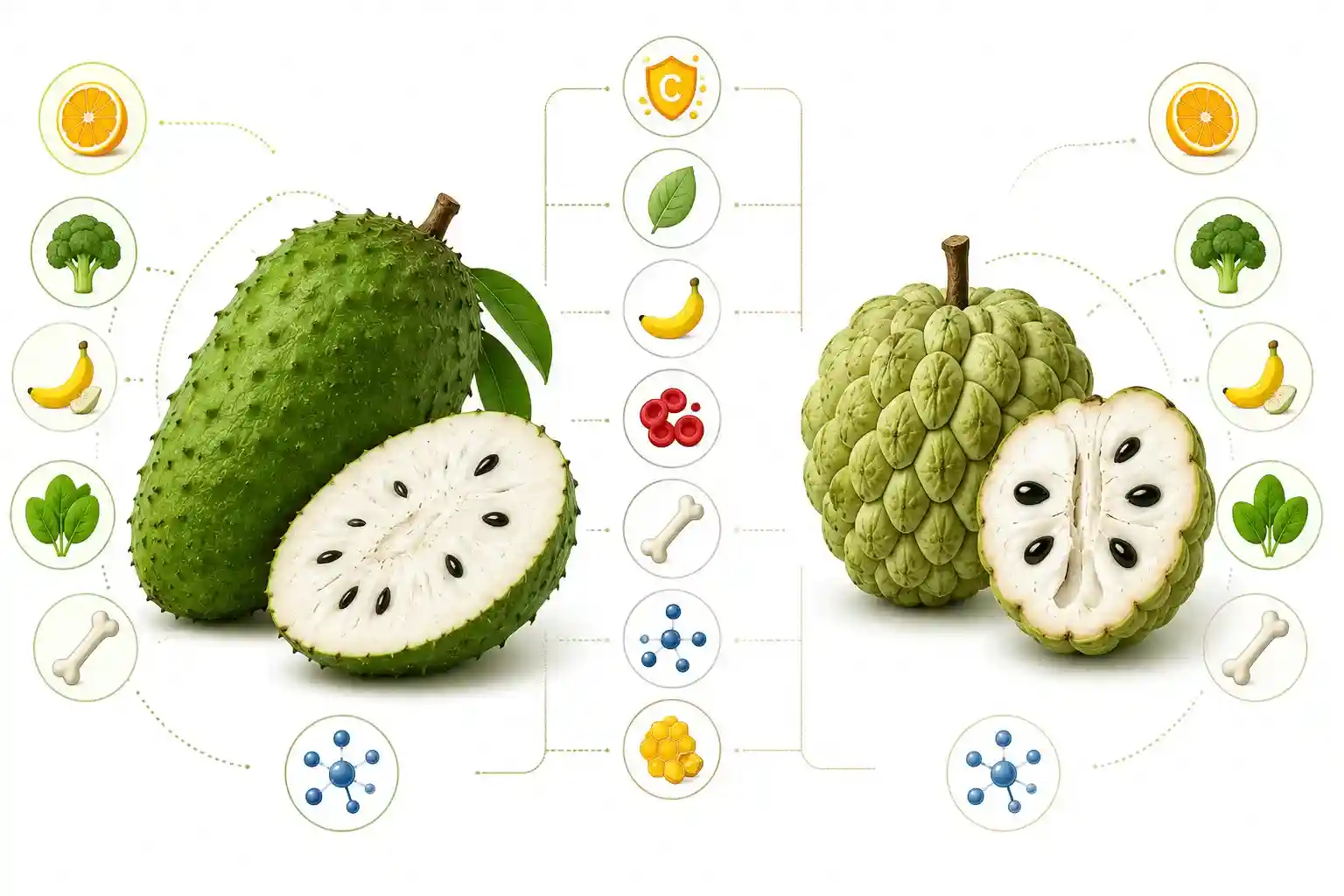
Soursop Nutritional Profile
Soursop is valued for its nutrient density and relatively low calorie content.
Key nutrients include:
- Vitamin C
- Dietary fiber
- Potassium
- Magnesium
- B vitamins
Its high water content makes it a refreshing tropical fruit suitable for lower-calorie diets.
Custard Apple Nutritional Profile
Custard apple contains:
- Vitamin C
- Vitamin B6
- Iron
- Calcium
- Dietary fiber
Compared with soursop, custard apple contains more natural sugars and carbohydrates, resulting in higher caloric density.
Which Fruit Is More Nutritious?
Neither fruit is universally better.
Choose soursop if your goal is:
- Lower calorie intake
- Higher water content
- Antioxidant support
Choose custard apple if your goal is:
- Higher energy intake
- Additional iron
- Greater natural sweetness
For readers comparing calories, vitamins, and minerals across more tropical fruits, our tropical fruit nutrition reference sheet breaks down nutritional data beyond just soursop and custard apple.
It’s a useful sortable companion if you’re planning a diet around several tropical fruits rather than just these two.
The best option depends on individual nutritional needs. Many plant species provide unique nutritional and wellness advantages, similar to those explored in our Benefits of Lavender Plant at Home guide.
Soursop vs Custard Apple Health Benefits
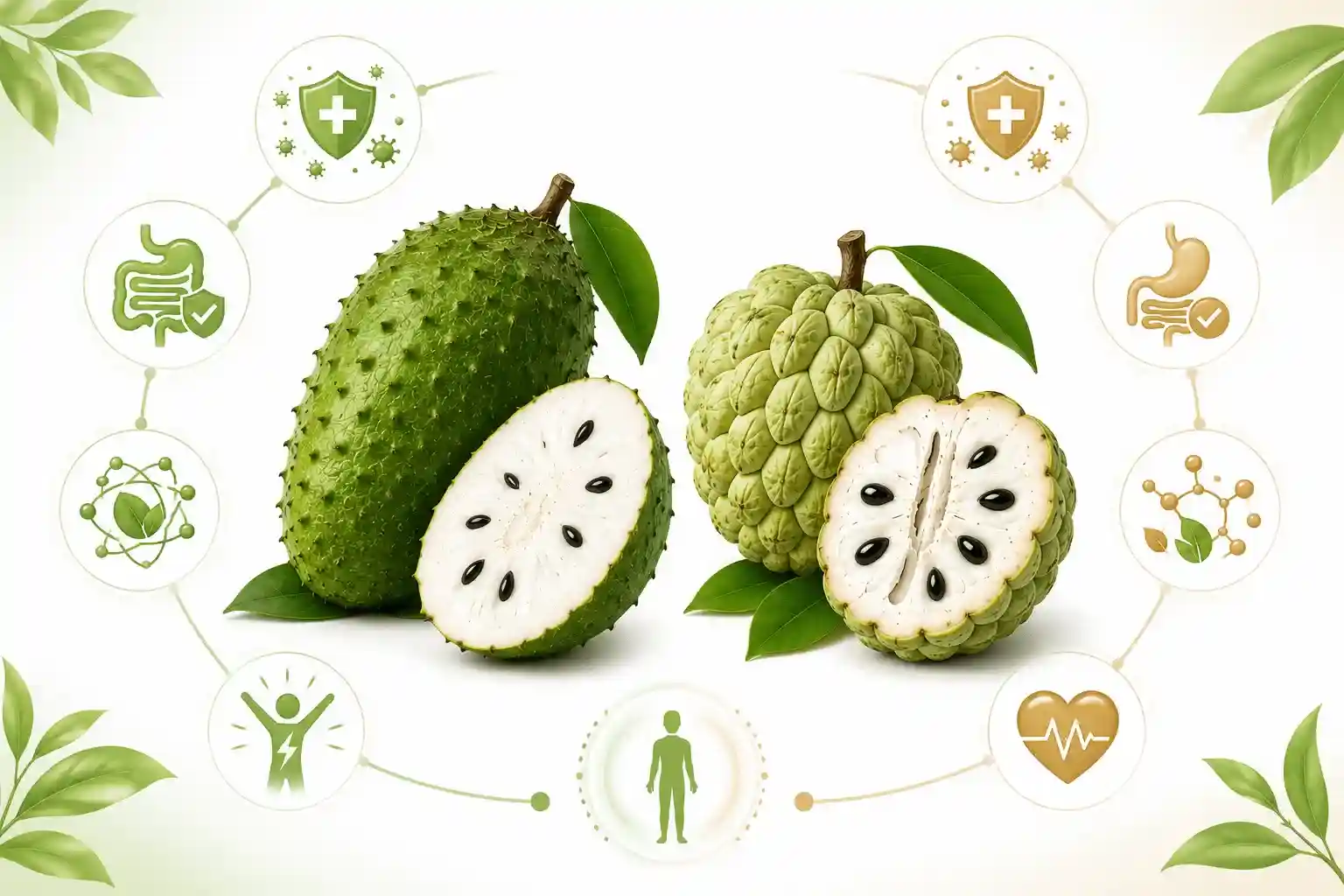
Health Benefits of Soursop
Soursop contains antioxidants, including naturally occurring acetogenins that have attracted scientific interest.
Potential benefits include:
- Antioxidant support
- Immune system support through Vitamin C
- Digestive health support from fiber
- Anti-inflammatory properties
Research has explored soursop compounds in cancer-related studies, but current evidence remains preliminary. Soursop should not be viewed as a cancer treatment. Is soursop the healthiest fruit? Not necessarily. It is nutrient-rich, but the healthiest fruit depends on an individual’s overall dietary requirements. Like several plants used in traditional wellness practices, soursop is often discussed alongside species featured in our Leaf of Life Plant Benefits, Uses, Tea & Care Guide.
Health Benefits of Custard Apple
Custard apple offers several nutritional advantages.
Potential benefits include:
- Natural energy support
- Iron intake support
- Calcium for bone health
- Antioxidant protection
- Digestive support from fiber
Many people ask whether custard apple is good for PCOD. Its fiber, antioxidants, and micronutrients may support overall health, but individuals with PCOD should consider its natural sugar content and consult a healthcare professional. For readers interested in other plants valued for their natural wellness properties, see our Purple Passion Plant Benefits: Health, Care & Uses article.
Comparing Health Benefits — When to Choose Which
Soursop may be preferable for:
- Weight management
- Lower-calorie diets
- Antioxidant-focused nutrition
- Immune support
Custard apple may be preferable for:
- Energy needs
- Iron intake
- Higher-calorie diets
- Bone-supportive nutrition
Soursop vs Sugar Apple vs Cherimoya — Expanding the Annona Family
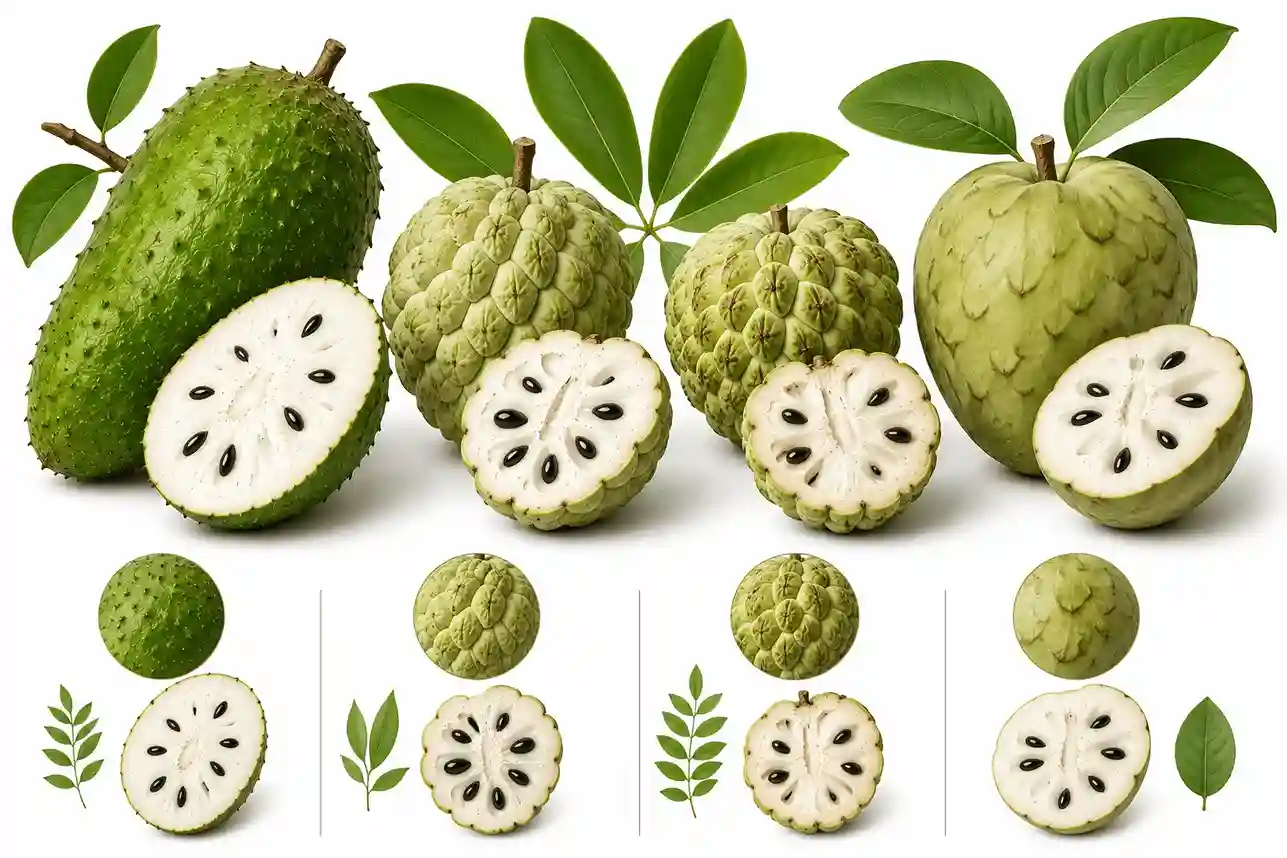
What Is Sugar Apple (Sweetsop)?
Sugar apple (Annona squamosa) is also known as sweetsop.
Characteristics include:
- Small, round fruit
- Segmented, scaly exterior
- Extremely sweet flavor
- Popular cultivation across tropical Asia and the Americas
Compared with soursop, sugar apple is sweeter, smaller, and less acidic.
What Is Cherimoya?
Cherimoya (Annona cherimola) is native to the Andean region of South America.
Characteristics include:
- Heart-shaped fruit
- Smooth green skin with scalloped patterns
- Creamy, custard-like texture
- Complex sweet flavor
In some countries, cherimoya is commonly referred to as a custard apple, adding to consumer confusion.
Three-Way Comparison Table
If you want to filter and compare more Annona relatives beyond these three, our interactive Annona fruit identification and comparison tool lets you sort soursop, custard apple, sugar apple, cherimoya, and atemoya by skin type, flavor, and climate fit.
It’s especially useful if you’re trying to confirm a fruit’s identity from appearance alone before buying or planting it.
| Feature | Soursop | Custard Apple | Sugar Apple | Cherimoya |
| Scientific Name | A. muricata | A. reticulata | A. squamosa | A. cherimola |
| Taste | Tangy, tropical | Mild, sweet | Very sweet | Creamy, sweet |
| Texture | Fibrous | Smooth-creamy | Segmented | Custard-like |
| Skin | Spiny | Bumpy | Scaly | Smooth/scalloped |
| Calories/100g | ~66 | ~101 | ~94 | ~75 |
| Best Known For | Traditional medicinal use | Energy and iron | Sweetness | Flavor complexity |
How to Identify Each Fruit (Visual and Sensory Guide)
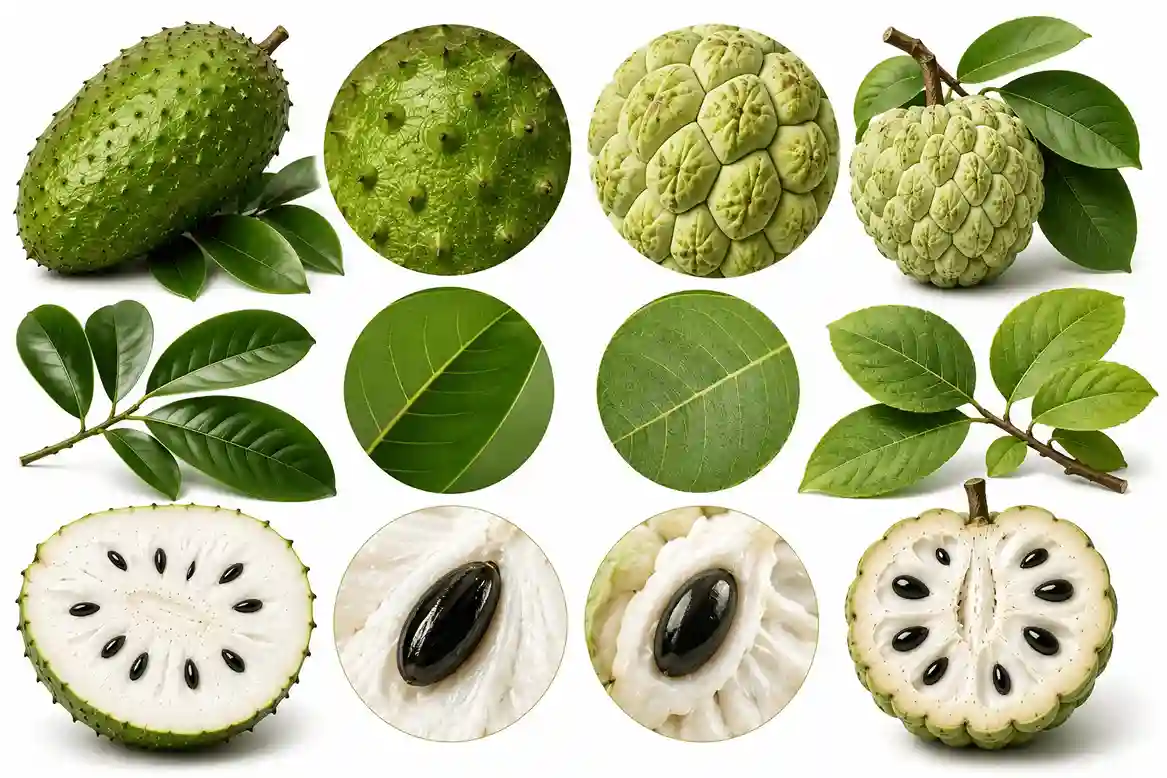
What Does a Soursop Look Like vs a Custard Apple?
Soursop is easy to identify because of its:
- Large size
- Elongated shape
- Dark green spiny skin
Custard apple typically has:
- Smaller size
- Round or heart-shaped form
- Bumpy greenish-brown skin
Internally, soursop flesh is more fibrous, while custard apple flesh is softer and creamier.
Soursop Leaves vs Custard Apple Leaves
Soursop leaves are:
- Large
- Glossy
- Dark green
- Frequently used in herbal tea preparations
Custard apple leaves are:
- Smaller
- Less glossy
- Lighter green
- Less commonly used for herbal applications
In our experience growing Annona species, leaf appearance is one of the easiest ways to distinguish young trees before fruiting. Understanding leaf characteristics is an important plant identification skill, much like the foliage observations covered in our Dracaena Plant Indoor Benefits, Care, Meaning & Propagation guide.
Common Beginner Mistakes When Buying or Using These Fruits
Many first-time buyers make avoidable mistakes.
Common examples include:
- Buying sweetsop while expecting soursop.
- Mistaking cherimoya for custard apple due to labeling differences.
- Assuming all Annona fruits provide identical nutritional benefits.
- Eating seeds, which are considered toxic and inedible across the Annona family.
- Allowing fruits to over-ripen before consumption.
For a deeper dive into every Annona species, cultivar, and naming variation mentioned above, our complete Annona fruit family reference database consolidates botanical, regional, and buying details in one place.
It’s a handy resource to cross-check before purchasing, especially given how often sweetsop, sitaphal, and custard apple labels get mixed up at markets.
Elemo Baker recommends choosing fruits that yield slightly under gentle pressure but are not excessively soft or leaking juice. Only the ripe pulp is edible. Seeds should always be removed and discarded. Correct plant identification becomes easier with experience, similar to distinguishing cultivars in our Snow Maiden Oriental Pearl Plant: Growing Guide & Comparison article.
Soursop and Custard Apple in Culinary Use
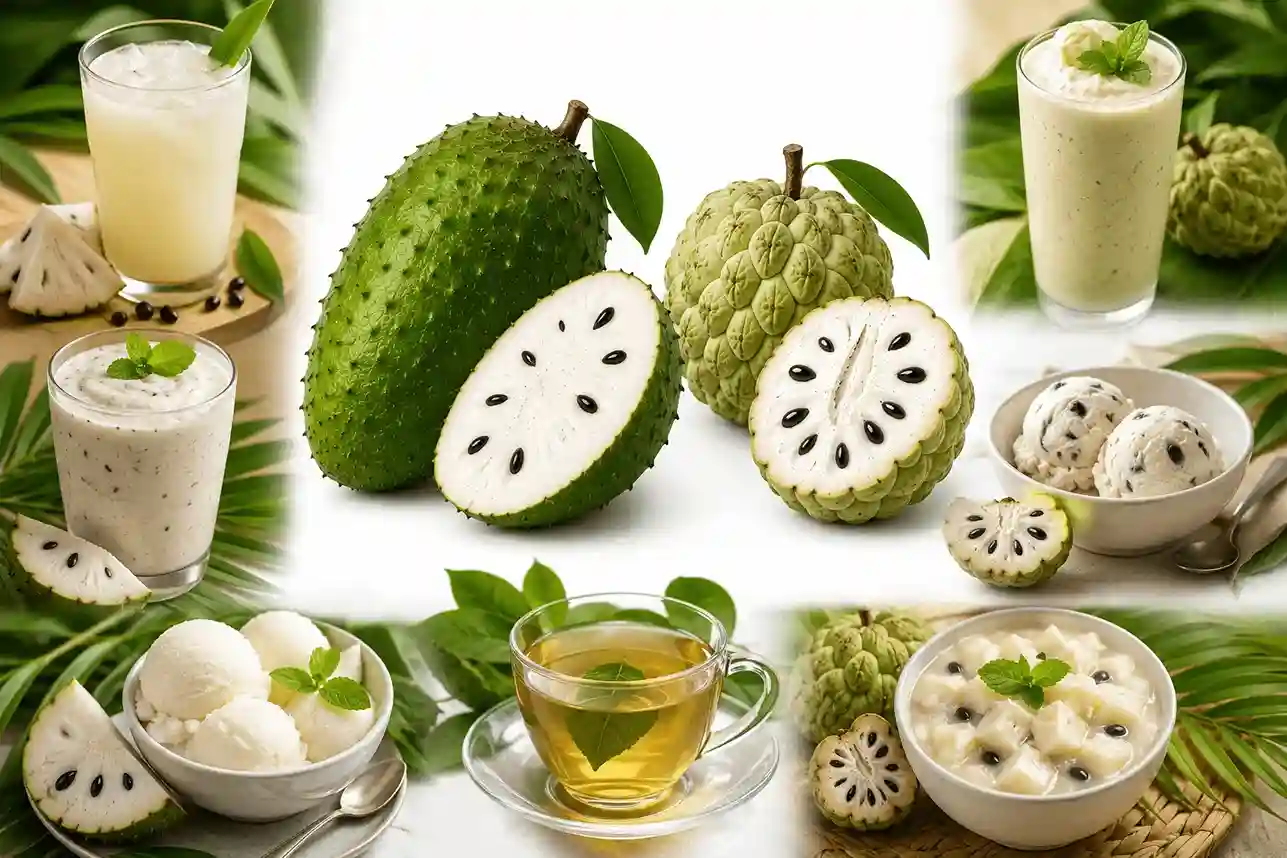
How Is Soursop Used in Food and Drinks?
Soursop is widely used in:
- Smoothies
- Juices
- Sorbets
- Ice cream
- Desserts
Soursop leaf tea is also consumed in some regions as a traditional herbal beverage.
Caribbean and Latin American cuisines frequently feature soursop-based drinks and frozen treats.
How Is Custard Apple Used in Food?
Custard apple is commonly:
- Eaten fresh
- Added to milkshakes
- Used in desserts
- Incorporated into traditional sweets
Sitaphal ice cream remains one of the most popular custard apple desserts in India.
Which Tastes Better — Soursop or Custard Apple?
- Taste preference is subjective.
- People who enjoy tart tropical flavors often prefer soursop because of its pineapple-like acidity.
- People who enjoy creamy sweetness generally prefer custard apple because of its dessert-like flavor.
- Regional preferences and cultural familiarity often influence which fruit people consider superior.
Conclusion
The comparison of soursop vs custard apple reveals that these fruits are closely related but distinctly different members of the Annona family. Soursop (Annona muricata) is larger, spiny, tangy, and lower in calories, while custard apple (Annona reticulata) is sweeter, creamier, and more energy-dense. Sugar apple (sweetsop) and cherimoya are additional Annona relatives with their own unique characteristics and should not be treated as interchangeable names. For antioxidant support and lower-calorie nutrition, soursop is often the better choice. For sweetness, iron, and natural energy, custard apple may be preferable. Exploring both fruits is the best way to appreciate the remarkable diversity within the Annona family. If you enjoy learning how different plant varieties compare, you may also find our Magnolia Teddy Bear vs Little Gem: Key Differences Explained guide useful.
Frequently Asked Questions (FAQs)
Is soursop the same as custard apple?
No. Soursop is Annona muricata, while custard apple is Annona reticulata. They are different species with distinct flavors, appearances, nutritional profiles, and culinary uses. Confusion occurs because both belong to the Annona genus and are sometimes marketed under overlapping regional names.
What is the difference between soursop and custard apple in terms of taste?
Soursop has a tangy tropical flavor often compared to pineapple, strawberry, and coconut. Custard apple is sweeter, milder, and more custard-like. Soursop also has a more fibrous texture, while custard apple is generally creamier.
Is soursop the healthiest fruit?
Soursop is rich in antioxidants, Vitamin C, and fiber while remaining relatively low in calories. However, there is no single healthiest fruit. Nutritional value depends on individual dietary needs and health goals.
Are soursop and sitaphal the same?
No. Sitaphal typically refers to sugar apple (Annona squamosa) in India. Soursop is a separate species, Annona muricata, and is sometimes called laxman phal in certain regions.
Is custard apple good for PCOD?
Custard apple contains fiber, iron, Vitamin B6, and antioxidants that may support overall wellness. However, because it also contains natural sugars, individuals with PCOD should consume it in moderation and seek personalized medical advice.
What is the difference between cherimoya, soursop, and custard apple?
All three belong to the Annona genus. Soursop is spiny and tangy, custard apple is bumpy and sweet, and cherimoya has smoother skin with a creamy custard-like flavor. Each species originates from different regions and is used differently in cooking.
Which has more calories — soursop or custard apple?
Custard apple contains approximately 101 calories per 100 grams, while soursop contains about 66 calories per 100 grams. As a result, soursop is generally better suited for lower-calorie diets.
2 Comments