

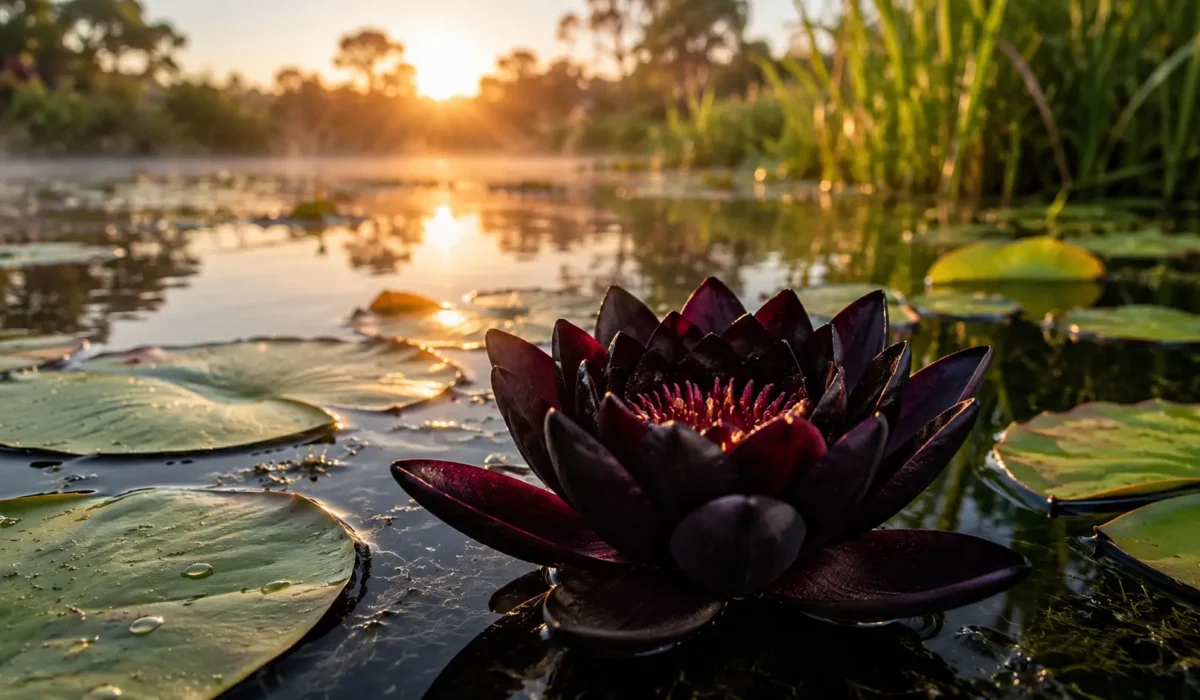
Are Black Lotus Flowers Real? Facts, Myths & Meaning
Introduction
Are black lotus flowers real? The short answer is no. True black lotus flowers do not occur naturally. However, some lotus and water lily varieties produce exceptionally dark burgundy, maroon, or deep purple blooms that appear almost black under certain lighting conditions. This similarity has led to widespread confusion between real ornamental plants and the mythical or fictional “black lotus” often featured in folklore, novels, films, games, and artwork.
Many online images labelled as black lotus flowers are digitally enhanced, artist illustrations, or photographs of very dark cultivars rather than naturally black flowers. Understanding the science behind flower pigmentation helps explain why a genuinely black lotus does not exist while revealing several beautiful real-world alternatives. If you’re interested in unusual flower colours, you may also enjoy our guide on Rare Blue Bougainvillea Flower: Is It Real?, which explores another commonly misunderstood plant.
Quick Summary
- No true black lotus flower exists in nature; the term usually refers to extremely dark purple or burgundy lotus-like flowers.
- Many “black lotus” references come from mythology, literature, fantasy games, tattoos, and symbolic art rather than botany.
- The closest real examples are very dark ornamental water lilies and lotus-adjacent plants with deep maroon or purple flowers.
- Rare blue and purple lotus varieties are genuine plants and are often what people are actually searching for.
What Is a “Black Lotus” Flower?
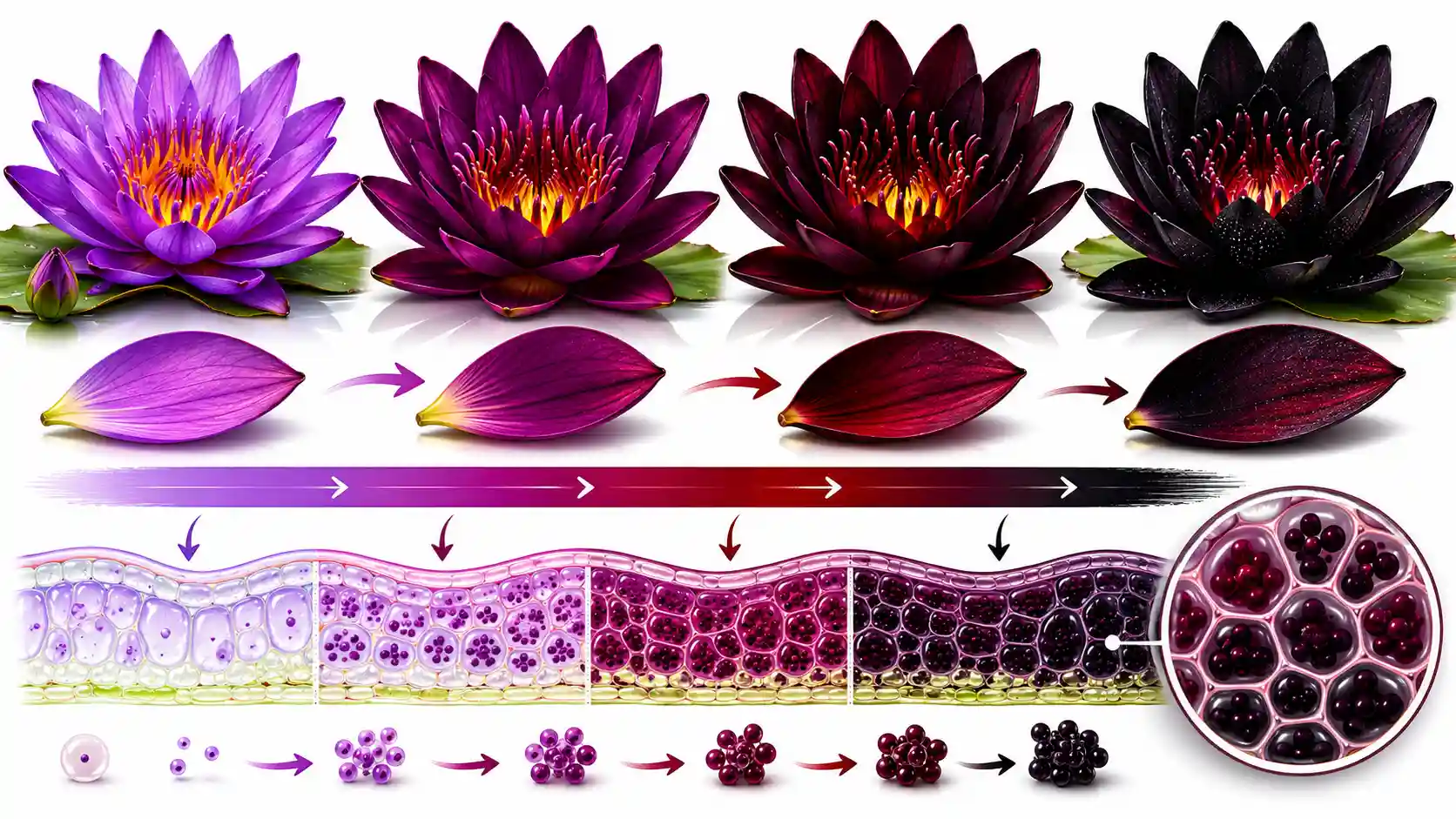
A black lotus flower is a commonly searched term used to describe either a mythical flower or a very dark-coloured lotus-like bloom. Botanically, no naturally occurring lotus species produces truly black petals. Instead, flowers marketed as “black lotus” are typically deep burgundy, wine-red, or dark purple cultivars whose colour appears nearly black in low light or photographs.
To learn more about the true lotus genus and its botanical classification, see the Nelumbo article on Wikipedia.
The confusion exists because the word black is often used in horticulture to describe flowers that are much darker than average rather than literally black. Many ornamental plants marketed as black roses, black tulips, or black lilies follow the same naming convention. Many unusual flower colours occur naturally, as shown in our guide to Australian Native Purple Flowers: Types, Care & Guide.
From a botanical perspective, the true lotus belongs to the genus Nelumbo, while many dark aquatic flowers mistaken for black lotus actually belong to the genus Nymphaea, commonly known as water lilies.
Plant pigments also explain why a true black lotus does not exist. Flower colours develop through naturally occurring pigments, particularly anthocyanins, which create shades of red, purple, blue, and burgundy. These pigments can become extremely concentrated but do not produce completely black petals in lotus species.
In our experience growing ornamental aquatic plants, many gardeners initially believe a flower advertised as “black” will remain jet black throughout the day. In reality, sunlight often reveals rich purple, crimson, or burgundy tones that photographs may hide.
Why True Black Flowers Are Rare in Nature
True black flowers are exceptionally rare because plants cannot easily produce pure black pigmentation through natural flower pigments.
Several biological factors explain this:
- Flower colour is primarily created by anthocyanins, which naturally produce red, purple, blue, and maroon shades.
- High anthocyanin concentrations can make petals appear almost black, especially in shade.
- Bright sunlight usually reveals underlying purple, burgundy, or dark red tones.
- Petal structure and light absorption also influence how dark a flower appears.
- Most flowers marketed as black are actually deep shades of purple, crimson, or chocolate red.
This pigment limitation affects many ornamental flowers, not only lotus species. As a result, true black flowers remain one of the rarest colour expressions in horticulture.
Are Black Lotus Flowers Real or Fictional?
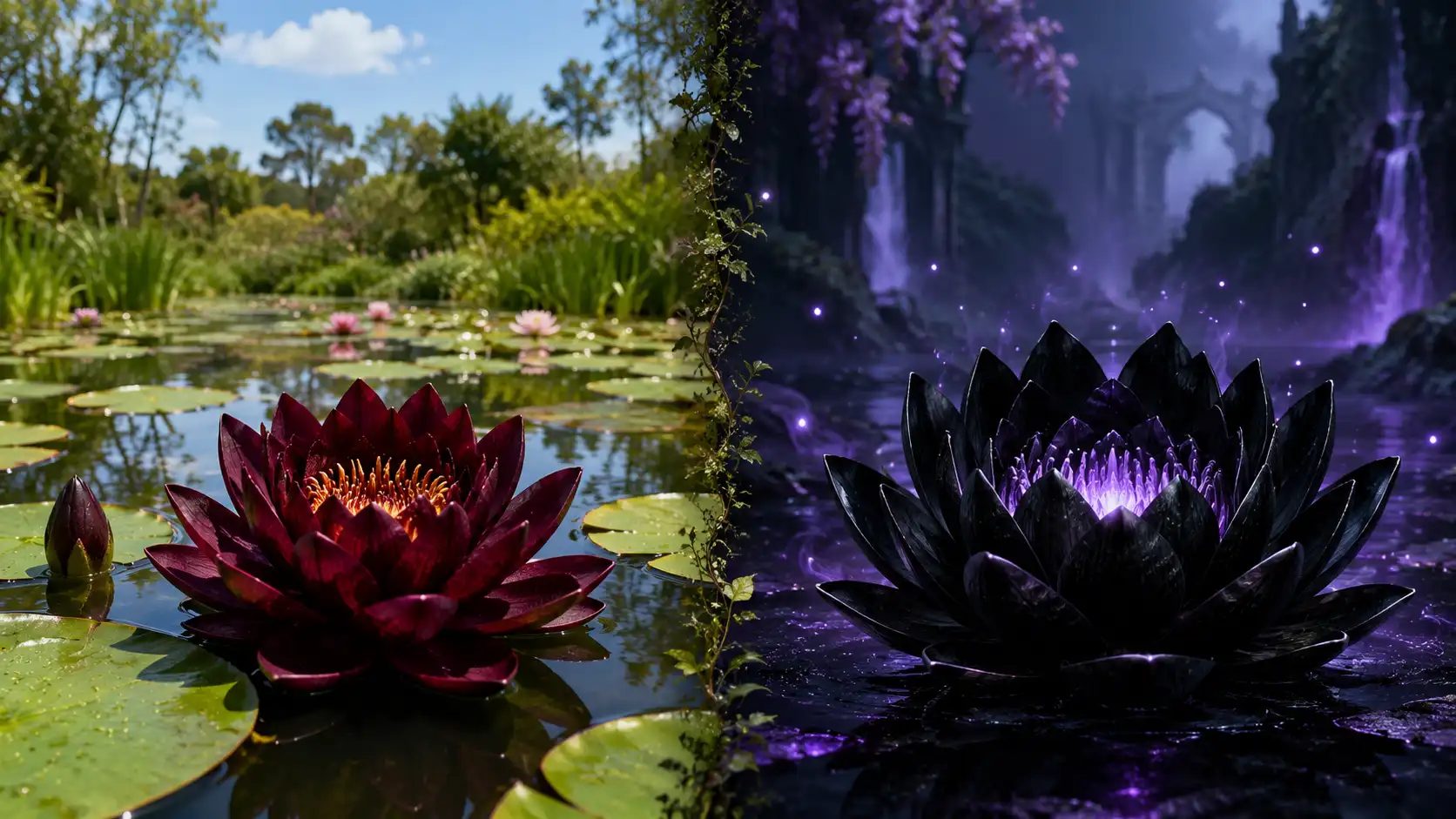
No, black lotus flowers are not real in the literal botanical sense. There is no naturally occurring lotus species that produces completely black flowers. The term “black lotus” instead refers to either extremely dark ornamental cultivars or fictional flowers appearing in mythology, fantasy stories, novels, games, films, and symbolic artwork.
Real lotus plants display flowers in colours such as white, pink, yellow, and, in some related aquatic species, shades of blue or purple. Although some water lilies develop remarkably dark blooms, none are truly black when examined under natural light.
The popularity of the black lotus has grown because fictional works often portray it as a symbol of mystery, hidden knowledge, power, transformation, or rarity. This symbolic meaning has become so widespread that many people assume the flower exists naturally.
Garden centres and online sellers sometimes contribute to the confusion by marketing very dark flowers as “black lotus,” even when they belong to entirely different botanical groups.
Elemo Baker recommends purchasing aquatic plants only from specialist nurseries that provide both the scientific and common names. Reliable botanical identification helps prevent disappointment when colours appear different from edited promotional photographs.
As of the 2026 growing season, reputable aquatic plant growers continue to describe these flowers using terms such as deep burgundy, dark maroon, or near-black, reflecting accepted horticultural practice rather than claiming the existence of a true black lotus.
How to Tell If a “Black Lotus” Is Real
When evaluating photographs or plant listings, look for these indicators:
- Deep purple, burgundy, or maroon colouring rather than perfectly black petals.
- Scientific botanical names provided alongside the common name.
- Photographs showing flowers under natural daylight instead of heavily filtered images.
- Reputable aquatic plant nurseries with accurate cultivar descriptions.
- Multiple photographs showing colour variation from different angles.
Be cautious of these common warning signs:
- Images with unnaturally black petals lacking visible texture.
- Listings without botanical names.
- Sellers promising a “100% naturally black lotus.”
- Digitally altered photographs with excessive colour saturation.
- Unrealistic marketing claims unsupported by botanical information.
Learning to distinguish genuine plant cultivars from edited images helps gardeners make informed purchasing decisions and better understand what nature can realistically produce.
Where the Black Lotus Myth Comes From
The black lotus myth comes from a blend of folklore, symbolism, literature, films, games, and modern popular culture rather than from botany. Although a true black lotus does not exist in nature, the flower has become a powerful fictional symbol representing mystery, hidden knowledge, transformation, danger, and spiritual awakening.
Unlike the pink or white lotus, which has well-documented religious and cultural significance across Asia, the black lotus is largely a creative concept. Writers, artists, and game developers have used the name because the lotus already symbolises purity and enlightenment. Adding the colour black creates a striking contrast, suggesting secrecy, forbidden wisdom, resilience, or power.
The popularity of the internet has further reinforced the myth. Countless edited photographs, AI-generated artwork, and fictional illustrations are shared online without explanation, leading many people to believe black lotus flowers grow naturally.
The term also appears in:
- Fantasy novels and graphic novels
- Video games featuring magical or rare plants
- Films and television series
- Tattoo art and body art symbolism
- Decorative artwork and digital illustrations
- Fictional organisations and secret societies
Because these references are so widespread, search engines frequently receive queries from people wondering whether the flower exists in real life.
Black Lotus in Chinese Symbolism and Literature
In Chinese-inspired literature and artistic symbolism, the black lotus is generally a fictional or symbolic flower rather than a recognised botanical species.
Depending on the story or artistic interpretation, it may represent:
- Mystery and hidden wisdom
- Inner strength developed through hardship
- Transformation and personal growth
- Spiritual depth
- Rare beauty
- Secrecy or forbidden knowledge
Unlike the traditional lotus, which commonly represents purity, harmony, and enlightenment, the fictional black lotus often symbolises overcoming darkness or embracing life’s complexities.
It is important to distinguish literary symbolism from historical botanical records. There is no evidence that ancient Chinese botany recognised a naturally black lotus species. Instead, the symbolism has evolved through artistic and fictional interpretations over time.
Lotus Jacobaeus — The Closest Real “Black” Lotus
Although no true black lotus exists, one of the closest real plants associated with the search is Lotus Jacobaeus. Despite its common name causing confusion, it is not a true lotus (Nelumbo). Instead, it is a flowering plant known for producing exceptionally dark maroon to almost black blossoms.
Many gardeners searching for a “black lotus” eventually discover plants with similar deep colouring, including certain ornamental water lilies and dark-flowered species marketed for their dramatic appearance.
Some aquatic plant enthusiasts also refer to very dark Nymphaea cultivars as black lotus because their flowers can appear almost black from a distance. In reality, they belong to the water lily family rather than the true lotus genus.
In our experience growing aquatic ornamentals, deep-coloured cultivars often appear darkest during the first day or two after blooming. As flowers mature, sunlight can reveal more noticeable burgundy, crimson, or purple tones.
Characteristics and Care Basics
Although individual cultivars vary, dark lotus-like aquatic plants generally share similar growing requirements.
Colour
- Deep burgundy, wine-red, or near-black appearance
- Colour intensity varies with sunlight
- Mature blooms often reveal purple or maroon undertones
Growing Conditions
- Full sun for at least 6–8 hours daily
- Warm temperatures during the growing season
- Calm water conditions
- Nutrient-rich aquatic planting media
Where They Are Sold
- Specialist aquatic plant nurseries
- Botanical garden plant sales
- Reputable online aquatic plant retailers
- Water garden specialists
Elemo Baker recommends buying only from trusted growers that clearly identify both the botanical name and cultivar. Accurate labelling helps ensure you receive the plant you expect instead of a misleading “black lotus” marketed solely for its name.
Real Rare Lotus Colour Varieties (Blue and Purple Lotus)
While black lotus flowers are fictional from a botanical perspective, several genuinely rare lotus and lotus-adjacent flowers display striking colours that often attract people searching for black lotus plants. Gardeners who enjoy colourful flowering plants may also like our Pink Lily of the Valley Flower: Meaning, Care & Facts guide.
The best-known examples include blue lotus, purple lotus cultivars, and dark ornamental water lilies. These plants are real and admired for their unusual appearance, although they differ botanically and historically.
Blue and purple flowers owe their colour to varying concentrations of anthocyanins and other natural pigments. Environmental conditions such as sunlight, temperature, soil nutrients, and water quality can also influence flower intensity.
As of the 2026 growing season, collectors continue to value rare aquatic flowering plants for their unique colours rather than expecting naturally black blooms.
Comparison Table — Black vs Blue vs Purple Lotus
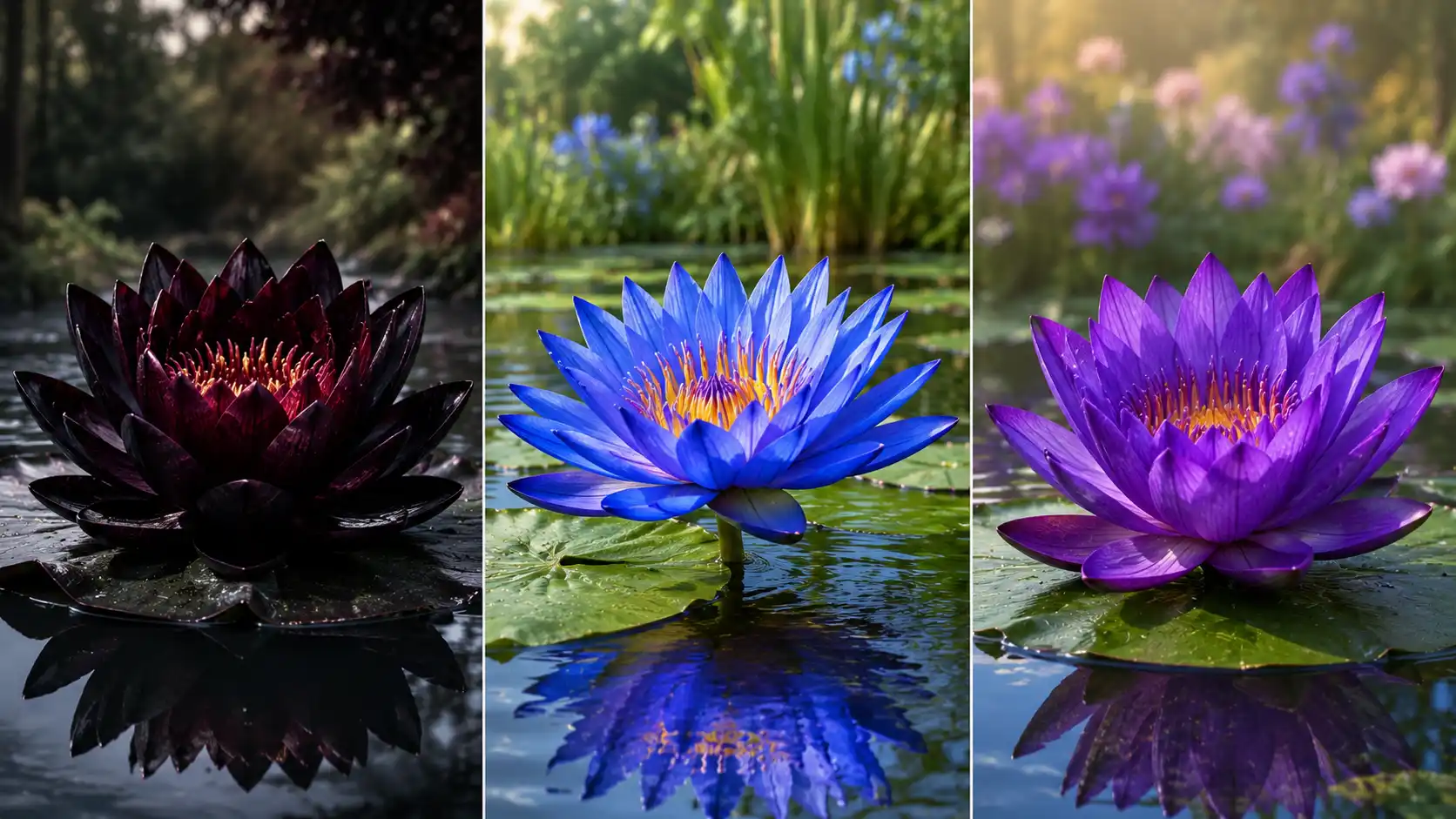
| Feature | “Black Lotus” | Blue Lotus | Purple Lotus |
| Exists naturally? | No (fictional or marketing term) | Yes | Yes (certain cultivars and lotus-adjacent plants) |
| Typical colour | Near-black, dark burgundy, or deep maroon | Blue to bluish-purple | Purple to deep violet |
| Botanical identity | No recognised true species | Nymphaea caerulea (Egyptian blue water lily) | Various lotus or water lily cultivars |
| Rarity | Fictional concept | Uncommon but real | Rare depending on cultivar |
| Common symbolism | Mystery, transformation, secrecy | Spirituality, renewal, wisdom | Nobility, creativity, tranquillity |
This comparison highlights that the closest real alternatives to the mythical black lotus are naturally occurring blue and purple aquatic flowers rather than a true black species.
Egyptian Blue Lotus — Historical and Symbolic Significance
The Egyptian blue lotus (Nymphaea caerulea) is one of history’s most famous aquatic flowers. Despite its common name, it is actually a water lily, not a true lotus in the genus Nelumbo.
For thousands of years, ancient Egyptians associated the blue lotus with:
- Rebirth
- The rising sun
- Creation
- Spiritual awakening
- Ceremonial traditions
- Artistic expression
The flower frequently appears in ancient Egyptian artwork, temple carvings, and decorative objects. Its opening during daylight and closing at night contributed to its symbolism of renewal and the daily cycle of the sun.
Today, the Egyptian blue lotus remains one of the most recognised rare aquatic flowers in the world. Its historical importance often leads people researching unusual lotus flowers to discover it alongside discussions of the fictional black lotus.
Black Lotus Flower Price and Value Misconceptions
Searches for black lotus flower price often produce confusing or misleading results because a true black lotus does not exist as a botanical plant.
When unusually high prices are advertised online, they generally refer to one of three things:
- A very dark ornamental water lily or lotus cultivar.
- A rare collector’s item unrelated to real plants.
- Misleading marketing that exaggerates the rarity of a dark-coloured flower.
Reputable aquatic plant nurseries price plants based on factors such as cultivar rarity, plant maturity, and availability—not because they are genuinely black.
Be cautious of listings that claim to sell “natural black lotus seeds” without providing scientific names or clear growing information. In many cases, these listings use edited images or inaccurate descriptions to attract buyers.
A trustworthy seller should always provide:
- The botanical name.
- The cultivar name, if applicable.
- Recent photographs taken in natural light.
- Realistic colour descriptions.
- Basic growing information.
Understanding these differences helps buyers avoid paying inflated prices for plants marketed with misleading names.
Common Misconceptions and Beginner Mistakes
Many people searching “are black lotus flowers real” encounter misleading information because fictional references, edited images, and inaccurate product listings are widespread online. Understanding these common misconceptions makes it easier to separate botanical facts from internet myths.
One of the biggest misunderstandings is assuming that every flower labelled “black” is naturally jet black. In horticulture, the term black often describes flowers with extremely dark burgundy, maroon, purple, or red petals rather than true black pigmentation.
Another source of confusion is the similarity between true lotus plants (Nelumbo) and water lilies (Nymphaea). Although both are aquatic plants with attractive blooms, they belong to different botanical genera and have distinct characteristics.
Common Beginner Mistakes
Avoid these frequent mistakes when researching or buying rare lotus varieties:
- Believing digitally edited photographs. Many online images increase contrast and saturation, making dark purple flowers appear completely black.
- Confusing AI-generated artwork with real plants. AI-generated images have become increasingly realistic, but they often depict flowers that cannot exist naturally.
- Assuming fictional flowers are botanical species. Black lotus flowers featured in novels, games, or films are usually symbolic creations rather than real plants.
- Ignoring scientific names. A listing without a botanical name makes it difficult to verify what plant is actually being sold.
- Thinking all “black” plant names are literal. Similar marketing terms are used for black roses, black tulips, and black lilies, even though these flowers are generally very dark shades of other colours.
- Purchasing seeds from unreliable sellers. Some online marketplaces advertise “black lotus seeds” using edited images, even though the resulting plants cannot produce naturally black flowers.
In our experience, first-time aquatic gardeners are often disappointed because promotional photographs rarely show how flower colours appear under natural sunlight. Viewing several images taken in different lighting conditions gives a much more accurate expectation.
Common Problems When Growing Dark or Rare Lotus Varieties
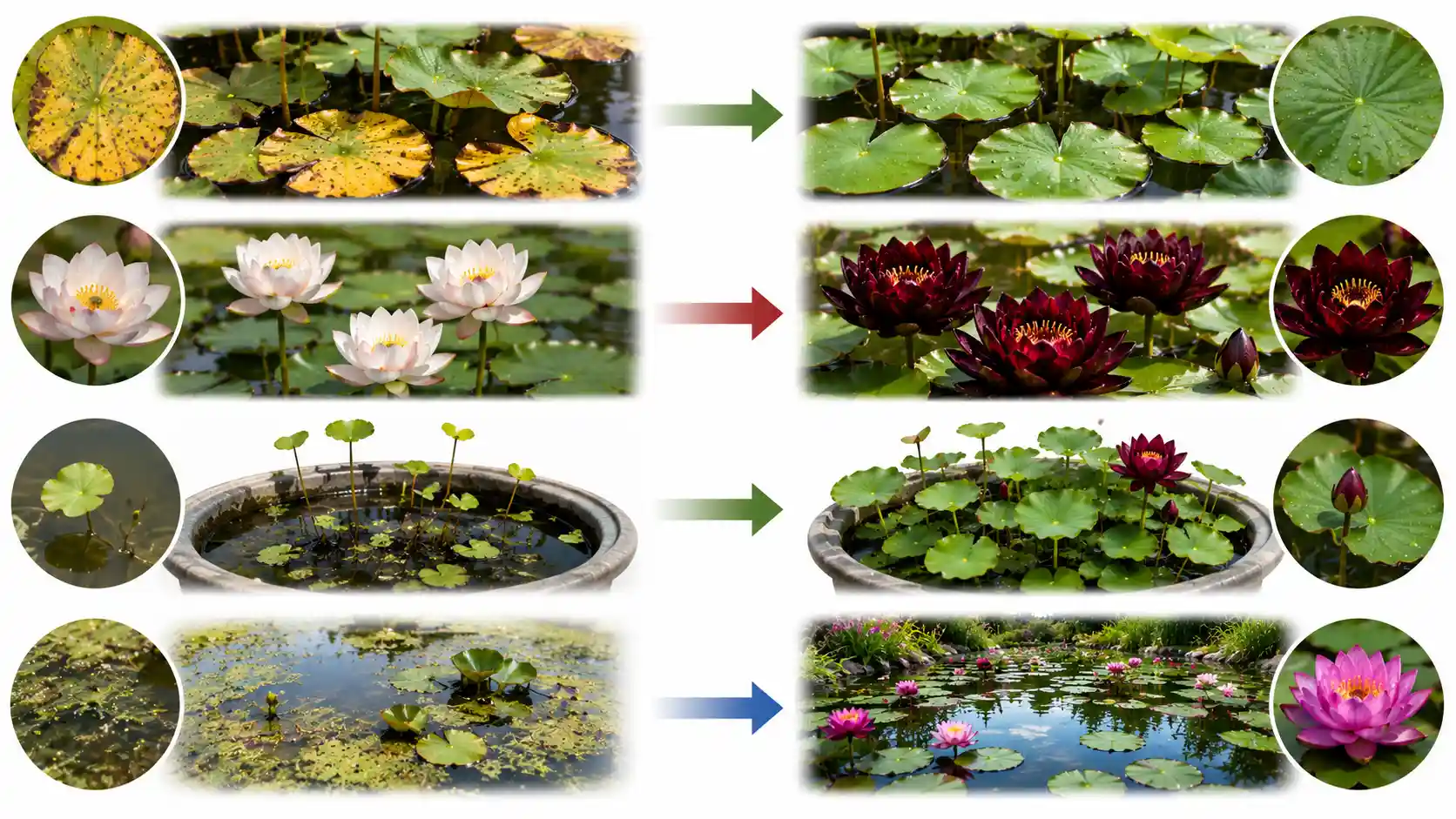
Although true black lotus flowers do not exist, gardeners who grow dark-coloured lotus cultivars or ornamental water lilies may encounter several common cultivation challenges. Most problems relate to environmental conditions rather than the plant’s genetics. Many plant health issues are easier to diagnose with a systematic approach—our Garden Pest Identification Guide for Australian Gardens can help identify common causes of damage.
Providing adequate sunlight, warm temperatures, and good water quality helps maintain healthy growth and rich flower colour. Environmental conditions affect flowering in many ornamentals, including those covered in our All Year Round Flowering Plants Australia Guide.
Leaves Turning Yellow
Yellowing leaves are one of the most common problems affecting aquatic flowering plants.
Possible causes
- Insufficient sunlight
- Nutrient deficiencies
- Poor water quality
- Natural ageing of older leaves
- Root stress after transplanting
How to fix it
- Move the plant to a location receiving at least six hours of direct sunlight.
- Apply a balanced aquatic plant fertiliser according to the manufacturer’s recommendations.
- Remove old yellow leaves to encourage healthy new growth.
- Monitor water quality and avoid stagnant conditions.
How to prevent it
- Maintain consistent water levels.
- Feed actively growing plants during the growing season.
- Avoid overcrowding containers.
- Ensure the planting medium remains suitable for aquatic plants.
Poor Colour Development (Fading to Lighter Shades)
Dark cultivars sometimes lose their rich burgundy or purple colouring and produce noticeably lighter flowers.
Possible causes
- Inadequate sunlight
- Excessive shade
- Nutrient imbalance
- Cooler temperatures
- Natural colour variation between blooms
How to fix it
- Relocate the plant to a sunnier position.
- Feed with an appropriate aquatic fertiliser during active growth.
- Remove surrounding vegetation that blocks sunlight.
- Allow new blooms to develop before judging colour consistency.
How to prevent it
- Grow plants in full sun whenever possible.
- Maintain healthy nutrient levels throughout the season.
- Avoid frequent relocation, which can stress the plant.
- Purchase cultivars from reputable growers to ensure accurate colour descriptions.
Elemo Baker recommends observing flower colour over several blooming cycles. Environmental conditions often influence colour intensity more than many gardeners realise.
Slow or Stunted Growth
Healthy lotus and water lily plants should produce vigorous foliage during warm weather. Slow growth usually indicates that one or more growing conditions need improvement.
Possible causes
- Low temperatures
- Limited sunlight
- Inadequate nutrition
- Restricted root space
- Dormancy outside the active growing season
How to fix it
- Increase daily sunlight exposure.
- Fertilise during the active growing period.
- Divide overcrowded plants when necessary.
- Repot into a larger aquatic container if roots become confined.
How to prevent it
- Plant only after water temperatures have warmed.
- Use rich aquatic planting soil.
- Provide sufficient growing space.
- Follow seasonal care recommendations for your climate.
As of the 2026 growing season, experienced growers continue to recommend focusing on consistent care rather than chasing dramatic flower colours through unverified products or additives.
Conclusion
Are black lotus flowers real? The answer is no. There is no naturally occurring lotus species that produces truly black flowers. What people commonly call a black lotus is usually an extremely dark burgundy, maroon, or purple aquatic flower, a near-black water lily cultivar, or a fictional flower found in mythology, literature, games, and popular culture.
Understanding the science behind flower pigmentation explains why true black petals do not develop in lotus species. Instead, anthocyanin pigments create deep shades that can appear almost black under certain lighting conditions. If you enjoy learning about unusual plants and botanical myths, you may also find our Purple Passion Plant Benefits: Health, Care & Uses article interesting.
If you are looking for genuine alternatives, consider dark ornamental water lilies, Lotus Jacobaeus, or rare blue and purple lotus varieties. These plants offer striking colours while remaining botanically accurate.
By recognising the difference between scientific reality and symbolic fiction, gardeners and plant enthusiasts can make informed decisions when purchasing aquatic plants and appreciate the remarkable diversity that truly exists in nature.
Frequently Asked Questions
Is there a Black Lotus flower?
No. A true black lotus flower does not exist naturally. Flowers marketed as black lotus are typically very dark burgundy, maroon, or purple cultivars, or they may refer to fictional flowers found in literature and popular culture.
What does the Black Lotus flower mean?
The black lotus is generally a symbolic rather than botanical concept. It is commonly associated with mystery, transformation, hidden knowledge, resilience, rarity, and spiritual depth in fiction, art, and modern symbolism.
How can you tell if a Black Lotus is real?
Check whether the seller provides a recognised botanical name, realistic photographs taken in natural light, and accurate colour descriptions. Be cautious of listings showing perfectly black flowers or making unsupported claims about naturally black lotus plants.
What is the closest real flower to a black lotus?
The closest real alternatives include very dark ornamental water lilies, near-black aquatic cultivars, and plants such as Lotus Jacobaeus, which produce deep burgundy or almost black-looking flowers rather than true black blooms.
Are blue and purple lotus flowers real?
Yes. Blue and purple lotus or lotus-adjacent aquatic flowers exist, although some belong to the water lily genus (Nymphaea) rather than the true lotus genus (Nelumbo). Their colours are produced by naturally occurring plant pigments.
What does Black Lotus mean in Chinese culture?
The black lotus is primarily a literary and symbolic concept rather than a traditional botanical symbol. In modern Chinese-inspired literature and artwork, it may represent mystery, inner strength, transformation, secrecy, or spiritual growth, while the traditional pink and white lotus continue to symbolise purity, harmony, and enlightenment.
1 Comment