

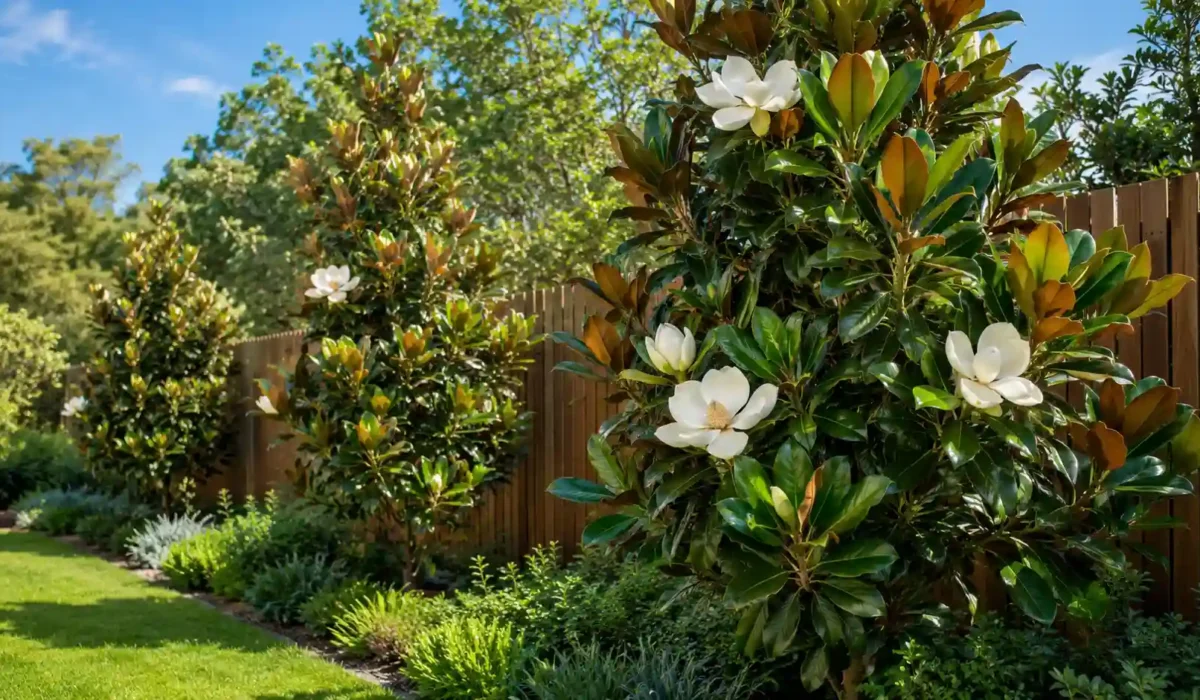
Fast Growing Magnolia Australia: Best Varieties & Care Guide
Introduction
Fast growing magnolia Australia varieties are among the most popular ornamental trees for home landscapes because they combine elegant foliage, fragrant flowers, and relatively rapid establishment. While not all magnolias grow at the same pace, several evergreen cultivars perform exceptionally well in Australian gardens when matched to the right climate and growing conditions. This guide explains what qualifies as a fast-growing magnolia, compares the leading magnolia tree Australia varieties, and provides practical information to help you choose the best magnolia plants Australia for screening, feature planting, hedging, or container growing.
By Elemo Baker | Plant Care & Gardening Expert
Quick Summary
- Kay Parris is widely regarded as one of the fastest-growing evergreen magnolias for Australian gardens.
- Little Gem remains one of Australia’s most versatile choices for hedging, screening, pots, and smaller landscapes.
- Evergreen magnolias generally establish and grow faster than deciduous species in Australia’s warmer regions.
- Selecting the right variety depends on your climate zone, available space, and intended landscape use.
What Makes a Magnolia “Fast Growing” in the Australian Context?
A fast-growing magnolia is one that establishes quickly, produces consistent annual growth, and reaches its mature size sooner than slower-growing species under suitable Australian conditions. Growth rates vary significantly depending on climate, soil quality, irrigation, and cultivar selection. All cultivated Magnolia species belong to a diverse genus of flowering trees and shrubs valued for their ornamental foliage and spectacular blooms, with evergreen and deciduous species suited to different Australian climates.
Defining Fast Growth in Magnolia Species
In horticulture, magnolia growth rates are generally classified as:
| Growth Rate | Annual Growth |
| Slow | Under 15 cm per year |
| Moderate | 15–30 cm per year |
| Fast | More than 30 cm per year |
Most fast-growing evergreen magnolias can produce between 30 and 60 cm of new growth annually when planted in fertile, well-drained soil with adequate moisture and sunlight. Some vigorous cultivars may exceed this under ideal conditions during their establishment years.
Australian climate also influences magnolia height and growth speed.
- Subtropical regions (QLD and northern NSW): Longer growing seasons encourage faster development.
- Temperate regions (VIC, southern NSW, SA): Growth remains strong but is slightly slower during cooler winters.
- Cooler climates (ACT, Tasmania): Growth rates are reduced, particularly for evergreen varieties that prefer warmer conditions.
In our experience growing magnolias in Australian gardens, newly planted trees benefit significantly from deep watering and organic mulch during their first two summers. Establishment during this period often determines long-term growth performance.
Evergreen vs Deciduous Magnolias — Which Grows Faster?
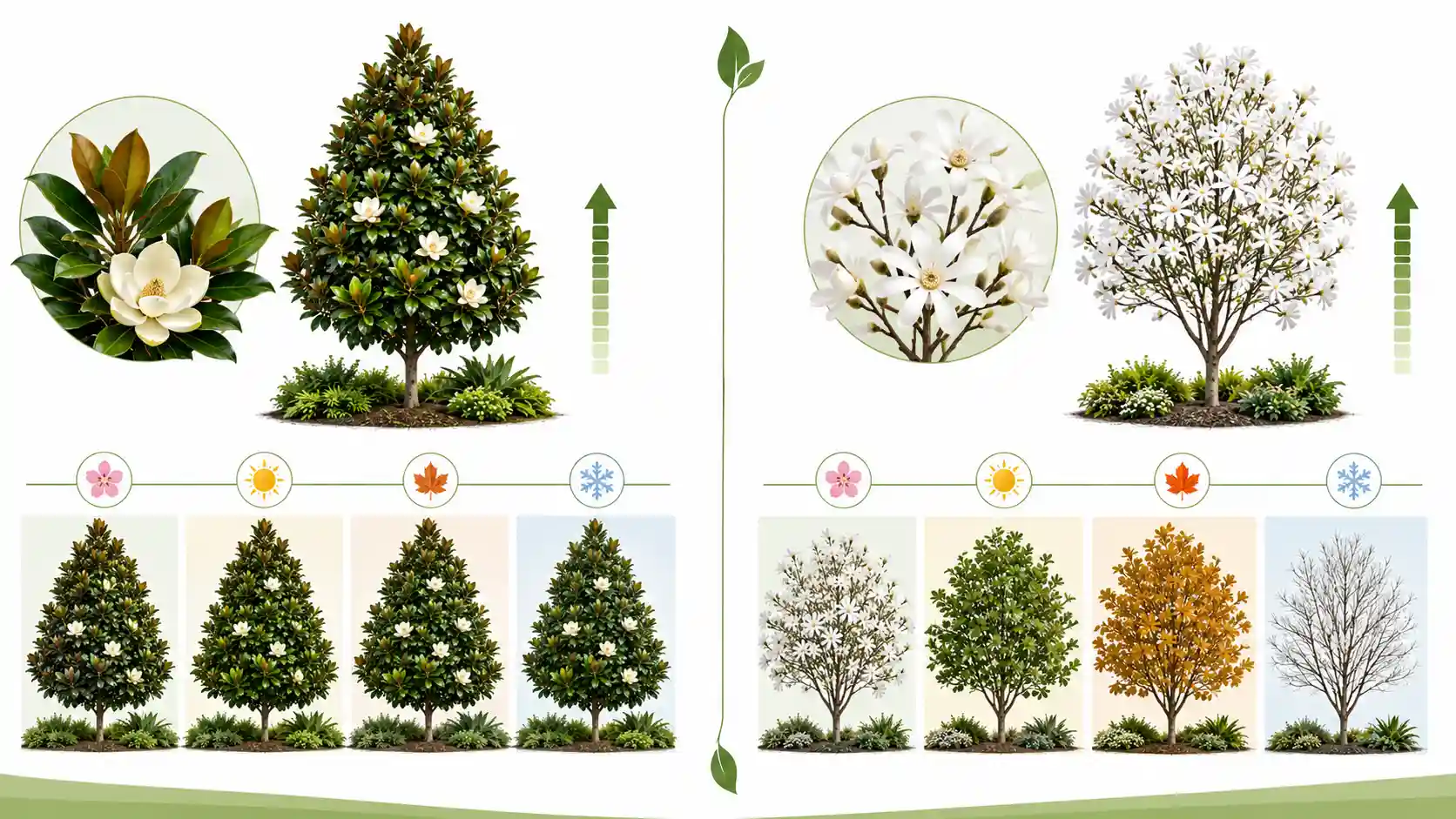
Evergreen magnolias generally grow faster than deciduous magnolias in Australia’s warm and moderate climates. They retain their leaves year-round, allowing them to photosynthesise over a longer period and establish dense canopies more quickly.
Evergreen magnolias such as Little Gem, Teddy Bear, and Kay Parris are particularly valued for:
- Faster establishment
- Year-round privacy screening
- Dense evergreen foliage
- Better performance in warmer Australian regions
Deciduous magnolias, including the popular Star Magnolia (Magnolia stellata), produce spectacular spring flowers but typically grow more slowly. They lose their leaves during winter and are generally better suited to cooler climates where their seasonal flowering display is appreciated.
For gardeners seeking quick privacy, evergreen magnolia cultivars remain the preferred choice throughout much of Australia.
Best Fast Growing Magnolia Varieties for Australian Gardens
Choosing the right magnolia depends on more than growth rate alone. Mature size, canopy shape, flowering performance, maintenance needs, and climate suitability all influence which variety is best for your landscape. Magnolia selection is only one part of successful planting; our Australian Plants Guide: Indoor Houseplants & Garden Design offers broader guidance on choosing plants for Australian spaces.
Little Gem Magnolia (Magnolia grandiflora ‘Little Gem’)
Little Gem Magnolia is one of Australia’s most widely planted evergreen magnolia cultivars because it combines manageable size with reliable growth and attractive flowering. Still deciding between these two popular cultivars? Read Magnolia Teddy Bear vs Little Gem: Key Differences Explained for a detailed side-by-side comparison.
Typical characteristics include:
- Growth rate: 30–60 cm per year
- Mature height: 3–6 metres
- Mature width: 2–3 metres
- Evergreen foliage
- Large creamy-white fragrant flowers
Its naturally compact growth makes it highly suitable for:
- Privacy screens
- Formal hedges
- Small suburban gardens
- Courtyard landscapes
- Large decorative containers
The glossy green leaves feature distinctive bronze undersides, creating visual interest throughout the year.
Elemo Baker recommends planting Little Gem where it receives at least six hours of sunlight daily. Consistent watering during establishment usually produces fuller growth and earlier flowering.
Little Gem is also commonly available through Australian garden centres, including many Bunnings locations, making it one of the easiest magnolias to source nationally.
Teddy Bear Magnolia (Magnolia grandiflora ‘Teddy Bear’)
Teddy Bear Magnolia has become increasingly popular because of its upright form and exceptionally dense foliage. Its compact habit makes it particularly valuable where space is limited but vertical screening is required.
If you’re planning to plant it near paving, fences, or buildings, our Teddy Bear Magnolia Root System guide explains root spread and safe planting distances.
Typical characteristics include:
- Moderate to fast growth
- Mature height: 4–6 metres
- Narrow upright habit
- Large fragrant white flowers
- Rich bronze-backed foliage
Compared with Little Gem, Teddy Bear often grows more vertically while maintaining a narrower footprint. This makes it particularly suitable for:
- Narrow side boundaries
- Driveways
- Feature planting
- Urban gardens
- Tall privacy screens
It performs well across subtropical and temperate Australian climates provided drainage remains excellent.
As of the 2026 growing season, many Australian growers continue favouring Teddy Bear for contemporary landscape designs because it develops a dense, symmetrical shape with relatively little pruning.
Kay Parris Magnolia (Magnolia grandiflora ‘Kay Parris’)
Many horticulturists consider Kay Parris one of the fastest-growing Grandiflora cultivars available in Australia.
Its key characteristics include:
- Growth rate: 30–60 cm or more annually
- Mature height: 4–8 metres
- Narrow upright structure
- Evergreen foliage
- Earlier flowering than Little Gem
Kay Parris combines vigorous growth with excellent ornamental appeal. Its glossy leaves feature copper-coloured undersides, while abundant creamy-white flowers appear throughout the warmer months.
Because of its rapid vertical development, it is particularly effective for:
- Boundary screening
- Formal hedging
- Windbreaks
- Larger residential gardens
- Commercial landscapes
In warmer coastal regions, Kay Parris often establishes faster than many comparable cultivars when provided with regular irrigation and nutrient-rich soil.
Caviar Magnolia
Caviar Magnolia is a newer evergreen cultivar gaining popularity in Australian nurseries due to its refined appearance and compact growth.
Typical characteristics include:
- Moderate growth rate
- Mature height: 3–5 metres
- Upright habit
- Dark glossy foliage
- Creamy fragrant flowers
Compared with Little Gem, Caviar generally maintains a slightly slimmer profile, making it attractive for contemporary garden designs where clean architectural lines are preferred.
It is well suited to:
- Modern residential landscapes
- Compact screening
- Feature planting
- Courtyard gardens
- Medium-sized properties
Although not quite as vigorous as Kay Parris, Caviar provides excellent year-round foliage with relatively low maintenance.
Port Wine Magnolia (Michelia figo)
Although traditionally known as Michelia figo, Port Wine Magnolia has been reclassified within the Magnolia genus. It remains one of Australia’s favourite fragrant screening shrubs.
Typical characteristics include:
- Moderate to fast growth
- Mature height: 2–4 metres
- Dense branching habit
- Evergreen foliage
- Small burgundy-edged cream flowers with a sweet fragrance
Its flowers produce a distinctive scent often compared with ripe fruit or sweet confectionery.
Port Wine Magnolia performs exceptionally well as:
- Informal hedges
- Courtyard screening
- Container specimens
- Low privacy borders
- Patio planting
Its naturally compact growth also makes it one of the easiest magnolias to maintain in pots, provided containers offer excellent drainage and regular feeding.
Star Magnolia (Magnolia stellata)
Star Magnolia provides a striking contrast to the evergreen varieties discussed above. It is a deciduous species valued primarily for its spectacular floral display rather than rapid growth.
Typical characteristics include:
- Slow to moderate growth
- Mature height: 2–4 metres
- Deciduous habit
- White or pale pink star-shaped flowers
- Blooms before leaf emergence in late winter or early spring
Because it flowers on bare branches, Star Magnolia creates one of the most dramatic seasonal displays among ornamental trees. If you’re interested in expanding your flowering landscape, explore our Purple Flower Tree Australia: Native & Popular Species Guide for complementary ornamental trees.
It performs particularly well in:
- Victoria
- Tasmania
- ACT
- Southern New South Wales
- Cooler elevated regions
Although slower growing than Little Gem, Teddy Bear, or Kay Parris, Star Magnolia remains an excellent option for gardeners prioritising ornamental flowering over evergreen screening.
Its compact size also suits smaller gardens where seasonal interest is more important than year-round privacy.
Head-to-Head Comparison — Fast Growing Magnolias in Australia
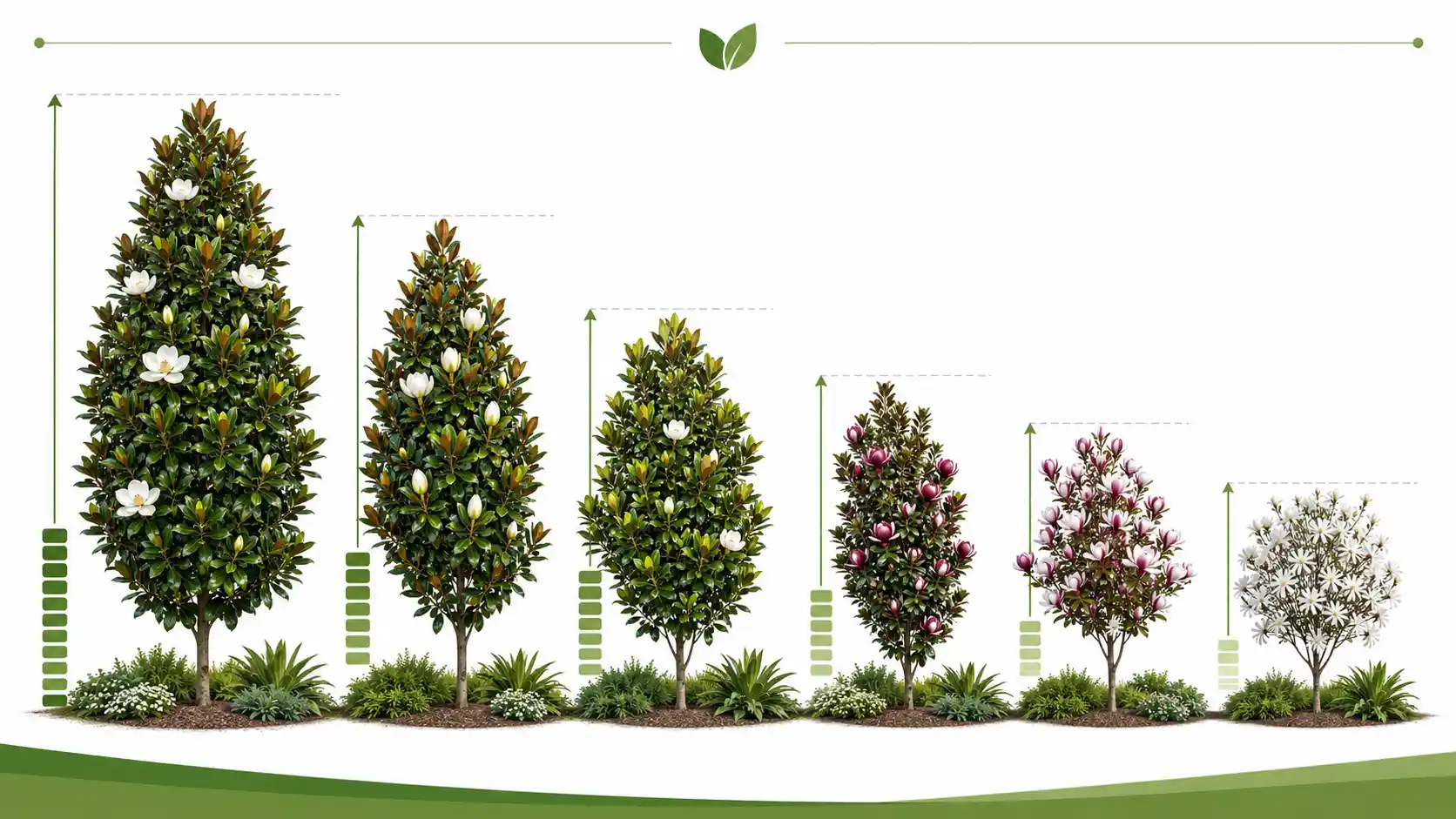
The best fast-growing magnolia depends on your garden’s size, climate, and intended purpose. Some cultivars prioritise rapid vertical growth for screening, while others offer compact forms better suited to smaller spaces or container planting. For another fast-growing hedge option, our Photinia Fraseri Robusta: Growth, Care & Hedge Guide explains how it compares with evergreen magnolias for privacy planting.
| Variety | Growth Rate | Mature Height | Evergreen? | Best Use | Climate Suitability |
| Kay Parris | Fast | 4–8 m | Yes | Screening, hedging | Subtropical to temperate |
| Teddy Bear | Moderate–Fast | 4–6 m | Yes | Feature planting, narrow screening | Wide range |
| Little Gem | Moderate–Fast | 3–6 m | Yes | Pots, hedges, small gardens | Wide range |
| Caviar | Moderate | 3–5 m | Yes | Contemporary gardens | Wide range |
| Port Wine Magnolia | Moderate | 2–4 m | Yes | Hedges, pots, courtyards | Subtropical to temperate |
| Star Magnolia | Slow–Moderate | 2–4 m | No | Cool-climate feature gardens | Temperate and cool climates |
There is no single “best” magnolia for every Australian garden. Kay Parris is an excellent option for fast privacy screening, while Little Gem remains one of the most versatile cultivars for smaller properties. Teddy Bear offers a narrower profile for restricted spaces, Port Wine Magnolia excels as a fragrant hedge, and Star Magnolia is ideal where seasonal flowering is the priority rather than rapid growth.
For gardeners comparing cultivars such as Magnolia Kay Parris vs Little Gem or Kay Parris vs Teddy Bear, the deciding factors are usually available space, desired mature height, maintenance requirements, and local climate rather than growth rate alone.
Evergreen Magnolia Varieties Best Suited to Australian Conditions
Evergreen magnolias dominate Australian landscapes because they retain their foliage throughout the year, providing continuous privacy, structure, and ornamental value. Their ability to maintain active growth during longer warm seasons also makes many evergreen cultivars better suited to Australia’s diverse climates than deciduous species. If you’re comparing magnolias with other screening trees, our Fast Growing Evergreen Trees Australia Guide explores additional evergreen options suitable for Australian gardens.
The most popular evergreen magnolia varieties in Australia include:
Kay Parris
Kay Parris is prized for its vigorous growth, upright habit, and reliable flowering. It is particularly effective as a screening tree and performs well across subtropical and temperate regions.
Little Gem
Little Gem remains one of Australia’s favourite compact evergreen magnolias because it combines attractive flowers with manageable size. It suits suburban gardens, driveways, and courtyard landscapes where space is limited.
Teddy Bear
Teddy Bear develops a naturally dense and symmetrical canopy with rich bronze-backed leaves. Its narrow form makes it ideal for tight planting spaces while still providing excellent screening.
Caviar
Caviar Magnolia has become increasingly popular in contemporary landscape design. Its glossy foliage and upright growth habit suit modern homes, commercial gardens, and architectural planting schemes.
Port Wine Magnolia
Although generally grown as a shrub rather than a tree, Port Wine Magnolia provides year-round foliage, fragrant flowers, and reliable performance in Australian climates. It is especially suitable for informal hedging and courtyard gardens.
Regional performance varies throughout Australia.
- Queensland: Evergreen magnolias thrive with consistent moisture and protection from prolonged drought.
- New South Wales: Most evergreen cultivars perform exceptionally well across coastal and inland temperate regions.
- Victoria: Evergreen varieties grow successfully in warmer districts with good drainage and protection from severe frost.
- Western Australia: Magnolias benefit from improved soil preparation and regular irrigation during dry summers.
In our experience, gardeners often achieve better long-term results by selecting evergreen cultivars matched to their local climate rather than simply choosing the fastest-growing variety available.
Using Fast Growing Magnolias as Screening Trees and Hedges
Fast-growing evergreen magnolias are among Australia’s most effective natural screening plants. Their dense foliage provides privacy, reduces wind exposure, softens boundary fences, and creates attractive green walls throughout the year. For practical design ideas, see our Teddy Bear Magnolia Landscaping Guide for Australian Gardens, which showcases popular screening and feature planting layouts.
Best Magnolias for Privacy Screening
For tall privacy screens, Kay Parris and Teddy Bear are generally considered the leading choices.
Kay Parris offers:
- Excellent vertical growth
- Dense evergreen foliage
- Strong branching
- Ideal height for boundary planting
Teddy Bear provides:
- Narrow footprint
- Upright structure
- Minimal pruning requirements
- Excellent screening for smaller blocks
Little Gem also performs exceptionally well where a slightly shorter hedge is preferred.
If you’re exploring alternative evergreen screening plants, compare these magnolias with Ficus Hillii ‘Flash’ Care, Growth & Hedge Guide.
Recommended planting distances include:
- 1.5–2 metres apart for taller screens
- 1–1.5 metres apart for dense hedging
- Wider spacing when growing individual feature trees
Most evergreen magnolias require several years to form a fully established privacy screen. Under favourable conditions, noticeable screening can often be achieved within three to five years. Upright cultivars such as Teddy Bear and Kay Parris suit narrow fence lines, while broader varieties like Little Gem create fuller hedges with wider coverage. Magnolias also pair well with other boundary plantings featured in our Low-Maintenance Plants for Fence Line in Australia guide.
Port Wine Magnolia as a Hedge Plant
Port Wine Magnolia is widely used as a fragrant evergreen hedge throughout Australian gardens.
Its advantages include:
- Naturally dense branching
- Pleasant fragrance during flowering
- Compact mature size
- Good response to pruning
- Excellent suitability for suburban gardens
For hedge planting, spacing plants approximately 80 cm to 1.2 metres apart generally produces a dense screen over time.
Pruning immediately after flowering helps maintain shape while encouraging bushier growth.
Port Wine Magnolia also adapts well to large containers, making it suitable for patios, balconies, and courtyard gardens where in-ground planting is not possible.
Elemo Baker recommends applying organic mulch annually around hedge plantings to retain soil moisture and minimise weed competition without placing mulch directly against the trunk.
Standard Magnolia Trees — What They Are and How They Differ
A standard magnolia is a plant that has been trained to develop a single clear trunk supporting a rounded canopy above ground level. This differs from the naturally multi-stemmed growth habit seen in many shrub-form magnolias.
Standard forms are created by nursery growers through selective pruning and training during the plant’s early development.
Advantages of standard magnolias include:
- Cleaner architectural appearance
- Improved visibility beneath the canopy
- Greater suitability for formal landscapes
- Easier lawn maintenance beneath the tree
- Enhanced feature planting value
Several Australian nurseries commonly offer standard forms of:
- Little Gem
- Teddy Bear
- Kay Parris
- Port Wine Magnolia
Standard magnolias are particularly popular along driveways, entrances, patios, swimming pools, and formal garden beds where an elegant tree form is preferred.
Shrub forms, by comparison, develop multiple stems from the base and generally provide denser lower foliage. They are better suited to screening, hedging, and informal landscape designs.
Choosing between a standard magnolia and a shrub depends largely on your landscaping objectives. If privacy is the goal, shrub forms usually provide better coverage. If ornamental impact is more important, a standard tree often creates a stronger focal point.
How to Grow Fast Growing Magnolias in Australia — Care Guide
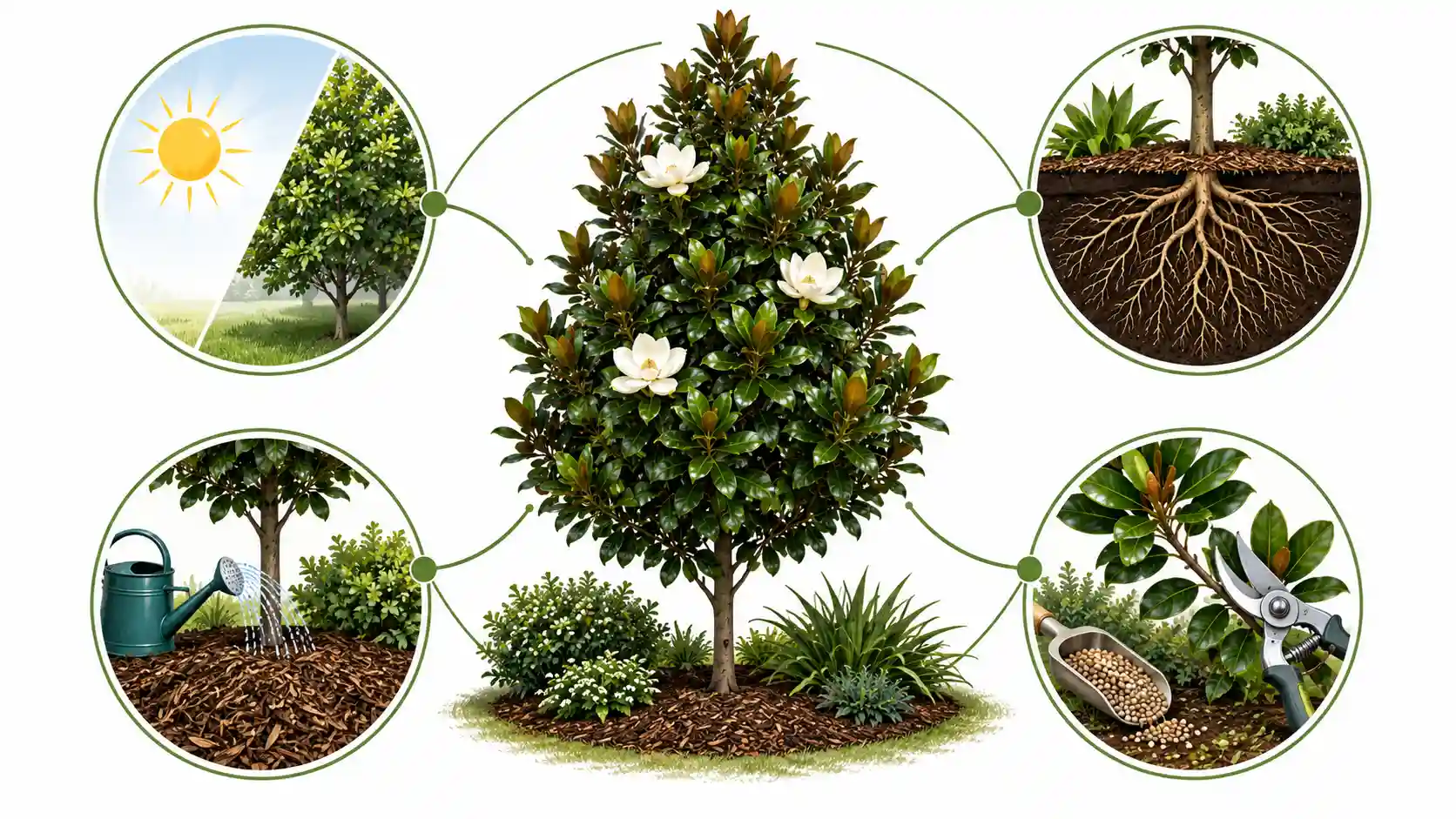
Growing fast-growing magnolias successfully depends on providing the right combination of soil, sunlight, moisture, and ongoing maintenance. While most evergreen magnolias are relatively low-maintenance once established, proper care during their first few years significantly improves growth rate, flowering, and long-term health.
Soil, Sunlight, and Planting Position
Most magnolias prefer fertile, well-drained soil rich in organic matter. A slightly acidic to neutral soil pH (approximately 5.5–7.0) provides the best conditions for healthy root development and nutrient uptake.
For optimal growth:
- Plant in full sun to partial shade.
- Choose a location sheltered from strong, drying winds.
- Ensure the soil drains freely, as magnolias dislike waterlogged conditions.
- Improve heavy clay soils with compost and organic matter before planting.
The ideal planting season varies slightly across Australia:
- Queensland and northern NSW: Autumn and early winter are ideal, allowing roots to establish before summer heat.
- Southern NSW, Victoria, South Australia and WA: Autumn and spring provide favourable growing conditions.
- Tasmania and cooler alpine regions: Spring planting generally offers the best establishment.
In our experience growing magnolias, planting during cooler months reduces transplant stress and encourages stronger root growth before the next growing season.
Watering and Feeding for Maximum Growth Rate
Consistent watering is one of the most important factors affecting growth during establishment.
During the first two years:
- Water deeply once or twice each week, depending on rainfall.
- Allow the soil surface to dry slightly between watering.
- Avoid shallow, frequent watering, which encourages weak root systems.
Established magnolias are considerably more drought tolerant but still benefit from supplementary irrigation during prolonged dry periods.
Feeding recommendations include:
- Apply a slow-release fertiliser formulated for flowering trees in early spring.
- Reapply according to the manufacturer’s recommendations if necessary.
- Incorporate compost annually to improve soil structure and biological activity.
- Maintain a layer of organic mulch 5–8 cm deep while keeping it clear of the trunk.
As of the 2026 growing season, many Australian horticulturists continue recommending organic mulches such as composted bark or leaf mulch to improve moisture retention and moderate soil temperatures during increasingly hot summers.
Pruning Magnolias Without Damaging Growth
Magnolias generally require only light pruning to maintain shape and remove damaged branches.
The best time to prune depends on the variety:
- Evergreen magnolias are usually pruned after flowering.
- Deciduous magnolias are best pruned during late winter or immediately after flowering if required.
When pruning:
- Remove dead, diseased, or crossing branches first.
- Avoid excessive pruning, which may reduce flowering.
- Shape hedges gradually rather than removing large amounts of foliage at once.
- Use clean, sharp pruning tools to minimise disease risk.
Common pruning mistakes include:
- Heavy topping
- Removing major structural branches unnecessarily
- Pruning during extreme heat
- Cutting into older wood without a clear purpose
Elemo Baker recommends light annual maintenance rather than infrequent heavy pruning, as this preserves the tree’s natural form while encouraging healthy new growth.
Growing Magnolias in Pots and Containers
Several compact magnolia varieties adapt well to container growing.
The best choices include:
- Little Gem
- Port Wine Magnolia
- Caviar Magnolia
For successful container cultivation:
- Choose a pot at least 50–60 cm in diameter.
- Ensure excellent drainage through multiple drainage holes.
- Use a premium-quality potting mix formulated for trees and shrubs.
- Repot every few years as the root system expands.
Container-grown magnolias require more frequent watering than garden specimens, particularly during summer.
Regular feeding with a controlled-release fertiliser and occasional liquid fertiliser applications will help maintain steady growth and flowering.
Common Problems with Fast Growing Magnolias and How to Fix Them
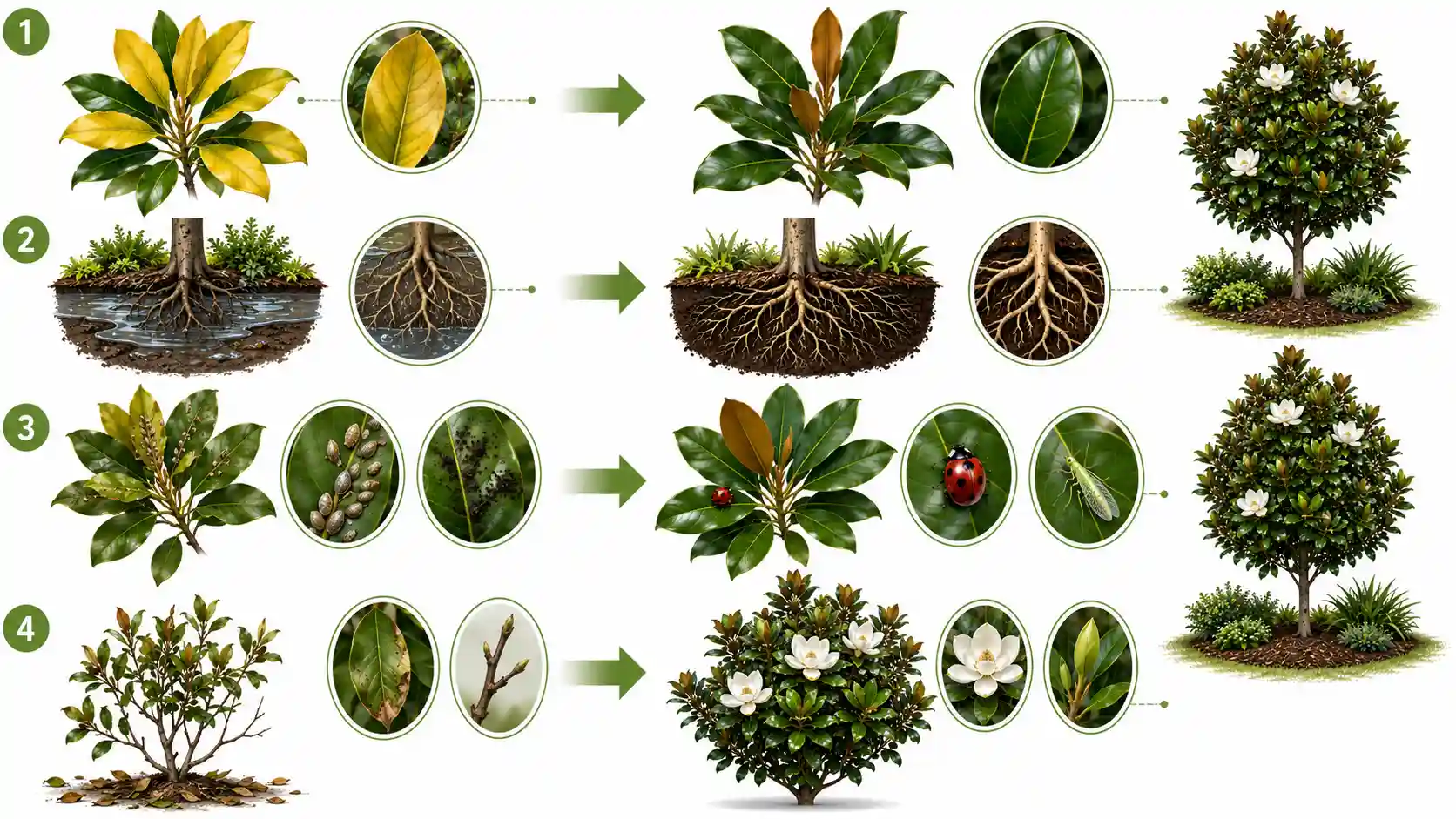
Although magnolias are generally reliable landscape trees, a few common problems can affect growth and appearance if not addressed promptly.
Yellowing Leaves
Yellow leaves usually indicate an underlying environmental or nutritional issue rather than disease.
Common causes include:
- Iron chlorosis
- Poor drainage
- Overwatering
- Nitrogen deficiency
- Alkaline soils limiting nutrient availability
To diagnose the problem:
- Check soil drainage.
- Test soil pH.
- Inspect new and older leaves separately.
- Review recent watering practices.
Corrective measures may include improving drainage, applying iron chelates where deficiency exists, adjusting irrigation, or using fertilisers formulated for acid-loving plants.
Maintaining healthy soil conditions remains the most effective long-term prevention strategy.
Slow Growth Despite Ideal Conditions
Even under apparently favourable conditions, some magnolias may establish more slowly than expected.
Potential causes include:
- Root-bound nursery stock
- Poor soil preparation
- Compacted soil
- Insufficient sunlight
- Incorrect fertiliser selection
- Root disturbance during planting
If growth remains disappointing:
- Inspect the planting area for drainage issues.
- Confirm the tree receives adequate sunlight.
- Apply mulch to regulate soil moisture.
- Feed appropriately during spring.
- Avoid excessive pruning while the tree establishes.
Most healthy magnolias accelerate their growth after their root systems become well established.
Pest and Disease Issues in Australian Gardens
Magnolias are relatively resistant to serious pest problems, although some issues may occasionally occur.
Common pests include:
- Scale insects
- Aphids
- Mealybugs
Common diseases include:
- Sooty mould
- Leaf spot
- Root rot caused by poor drainage
Integrated management practices include:
- Encouraging beneficial insects.
- Removing heavily infested branches where practical.
- Applying horticultural oils when appropriate.
- Improving air circulation around dense plantings.
- Avoiding excessive overhead watering.
Chemical treatments should only be used when infestations become severe and should always follow Australian label directions.
Where to Buy Fast Growing Magnolias in Australia
Fast-growing magnolias are widely available throughout Australia from both retail garden centres and specialist wholesale nurseries.
Common sources include:
- Bunnings Garden Centres
- Independent local nurseries
- Specialist tree growers
- Online plant retailers
- Regional wholesale nurseries supplying the public
Availability varies throughout the year and may differ between states depending on local growing conditions and nursery production schedules.
When purchasing a magnolia, look for:
- Healthy green foliage
- Strong central leader where appropriate
- Well-developed root systems
- No signs of pests or disease
- Accurate plant labels identifying the cultivar
Larger container-grown specimens usually establish more quickly but may require additional watering during their first growing season.
When purchasing online, confirm:
- Plant size on delivery
- Shipping availability for your state
- Seasonal dispatch times
- Nursery guarantees regarding plant health
Taking time to purchase healthy, correctly labelled plants gives the best chance of long-term success regardless of the cultivar selected.
Conclusion
Choosing the best fast growing magnolia Australia variety depends on balancing growth rate, mature size, climate suitability, and your intended landscape purpose. Kay Parris is an outstanding option for rapid screening, Teddy Bear offers excellent vertical growth in narrower spaces, and Little Gem remains one of Australia’s most versatile evergreen magnolias for gardens of almost every size. To create colour beyond magnolia flowering seasons, browse our All Year Round Flowering Plants Australia Guide for plants that bloom throughout the year.
Port Wine Magnolia provides a fragrant hedge for compact landscapes, while Star Magnolia delivers spectacular seasonal flowers in cooler climates despite its slower growth.
By selecting a variety suited to your local conditions and following sound horticultural practices, you can enjoy healthy magnolias that provide year-round beauty, structure, and value for decades. Whether your goal is privacy screening, feature planting, or container gardening, matching the right cultivar to the right location is the key to long-term success.
Frequently Asked Questions
What is the fastest growing magnolia tree in Australia?
Kay Parris is widely regarded as one of the fastest-growing evergreen magnolia cultivars available in Australia. Under favourable conditions, it commonly grows 30–60 cm or more each year while developing a dense, upright canopy suitable for privacy screening and hedging.
Are magnolias evergreen in Australia?
Many of the most popular Australian magnolias are evergreen, including Little Gem, Teddy Bear, Kay Parris, Caviar, and Port Wine Magnolia. However, some species, such as Star Magnolia (Magnolia stellata), are deciduous and lose their leaves during winter.
What is the difference between Little Gem and Kay Parris magnolia?
Little Gem generally has a more compact growth habit and reaches around 3–6 metres, making it suitable for smaller gardens and containers. Kay Parris grows taller, often reaching 4–8 metres, flowers earlier, and is usually chosen where faster screening or larger landscape specimens are required.
Can magnolias be grown in pots in Australia?
Yes. Compact varieties such as Little Gem, Port Wine Magnolia, and Caviar Magnolia grow well in large containers provided they receive quality potting mix, consistent watering, regular feeding, and excellent drainage.
How fast does a Teddy Bear magnolia grow per year?
Teddy Bear Magnolia is considered a moderate to fast grower, typically producing approximately 30–60 cm of new growth annually under favourable Australian growing conditions with proper watering, sunlight, and soil preparation.
Is Port Wine Magnolia suitable for hedging in Australian gardens?
Yes. Port Wine Magnolia is one of Australia’s most popular evergreen hedge plants because of its dense branching, fragrant flowers, manageable size, and excellent response to regular pruning. It is well suited to suburban gardens, courtyards, and boundary plantings.
Where can I buy fast growing magnolias in Australia?
Fast-growing magnolias are available from Bunnings Garden Centres, specialist nurseries, independent garden centres, and reputable online plant retailers. Availability varies by season and state, so it is advisable to check local stock and select healthy, correctly labelled plants before purchasing.
3 Comments