

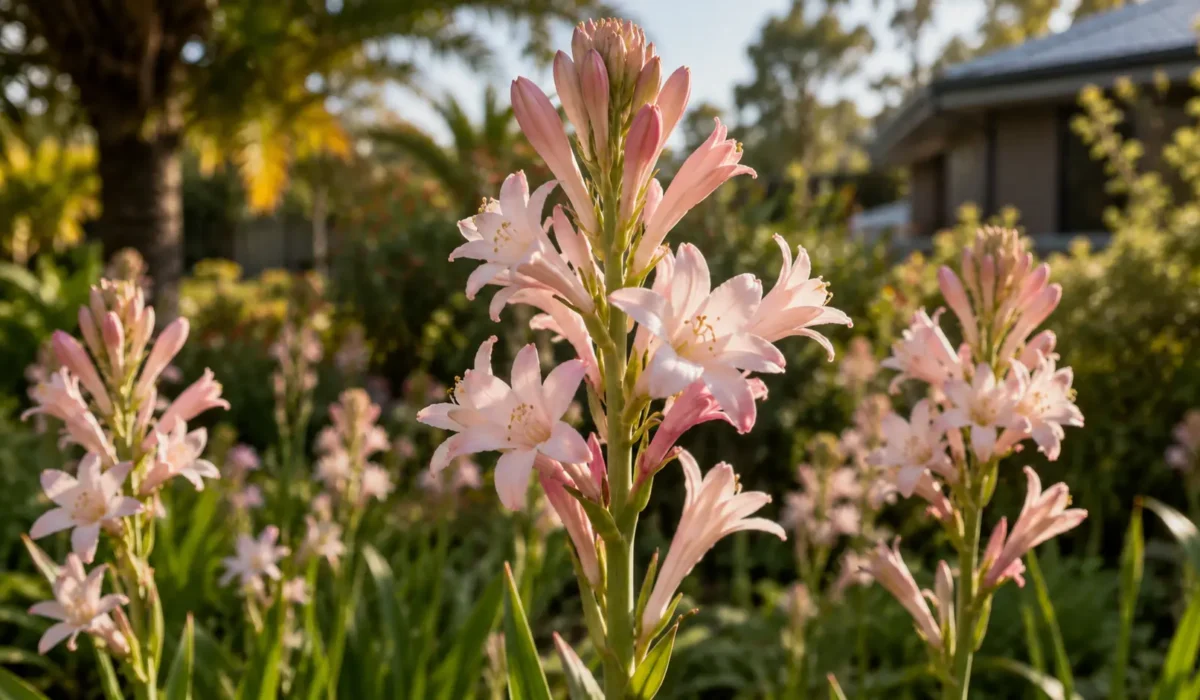
Pink Tuberose Growing Guide Australia
Introduction
Pink tuberose (Polianthes tuberosa) is a warm-season flowering plant prized for its intensely fragrant blooms and elegant flower spikes. Although the species is best known for its white flowers, several pink and blush-flowering cultivars are available through specialist growers. Despite its name, tuberose is not related to roses or “tuberous roses.” Instead, it belongs to the Asparagaceae family and grows from rhizomatous offsets rather than true bulbs. In Australia, pink tuberose performs best in warm climates with full sun and well-draining soil, making it an excellent choice for gardeners seeking long-lasting summer flowers with exceptional fragrance.
By Elemo Baker | Plant Care & Gardening Expert
Last Updated: June 2026
Quick Summary
- Pink tuberose (Polianthes tuberosa) is a warm-season flowering bulb known for its intensely fragrant blooms and elegant appearance.
- It thrives in full sun, well-draining soil, and warm Australian climates.
- True pink varieties exist but are less common than white and are usually sold by specialist bulb suppliers.
- Tuberose grows from rhizomatous offsets rather than true bulbs and performs best when planted in spring after the last frost.
- Healthy plants reward gardeners with fragrant summer flower spikes suitable for borders, containers, and cut flowers.
What Is Pink Tuberose?
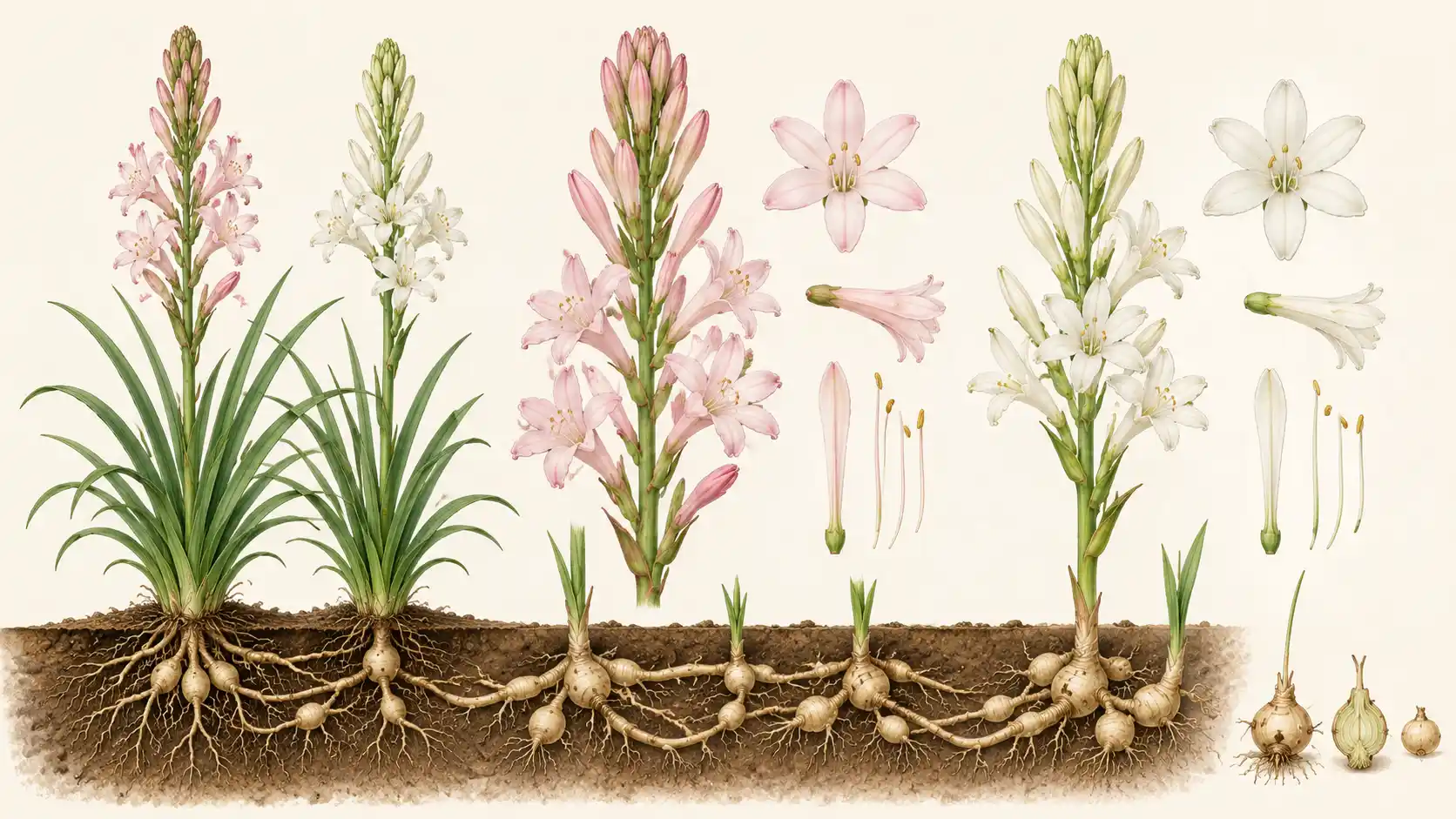
Pink tuberose is a cultivated form of Polianthes tuberosa, a highly fragrant flowering plant valued for ornamental gardens, floral arrangements, and perfume production. While traditional tuberose produces white blooms, selected cultivars display soft pink, blush, or pink-flushed flowers that add subtle colour without sacrificing the plant’s famous fragrance. For broader botanical reference, see general plant classification information on Tuberose (Polianthes tuberosa) on Wikipedia.
The plant produces upright flower spikes bearing waxy, tubular blossoms that open gradually from the base upwards. Its perfume becomes strongest during the evening, making it particularly attractive in outdoor entertaining spaces.
Although gardeners often refer to tuberose bulbs, the plant technically grows from fleshy rhizomatous offsets. These underground structures multiply naturally, allowing established clumps to expand over time.
In our experience growing tuberose in Australian gardens, warm soil and consistent sunlight are the two biggest factors influencing strong flowering. Plants established after the soil has warmed in spring generally outperform those planted too early.
Botanical Background — Polianthes tuberosa
Polianthes tuberosa is native to Mexico, where it has been cultivated for centuries for both ornamental and commercial purposes. Its highly aromatic flowers remain one of the world’s most valuable natural perfume ingredients.
Historically, the plant was placed within the genus Polianthes, but advances in botanical classification have resulted in taxonomic revisions. Many modern references now include tuberose within broader Agave or Manfreda groupings while retaining the scientific name Polianthes tuberosa in horticultural use. Regardless of classification updates, gardeners and nurseries continue to recognise the species by its traditional botanical name.
Botanical Classification
| Feature | Details |
| Botanical name | Polianthes tuberosa |
| Common names | Tuberose, Pink Tuberose |
| Plant family | Asparagaceae |
| Native range | Mexico |
| Plant type | Perennial flowering plant |
| Growing structure | Rhizomatous offsets (commonly called bulbs) |
| Flowering season | Summer to early autumn in Australia |
Today, tuberose is grown throughout tropical, subtropical, and warm temperate regions for:
- Perfume production
- Cut flower farming
- Home gardens
- Decorative containers
- Fragrant landscape plantings
Its exceptional fragrance remains one of its defining characteristics, with essential oils widely used in luxury perfumes.
Is Tuberose the Same as a Tuberous Rose?
No. Tuberose (Polianthes tuberosa) is completely unrelated to roses.
The confusion comes from the similarity between the words tuberose and tuberous rose, but they refer to entirely different plants.
| Tuberose | Rose |
| Botanical name: Polianthes tuberosa | Genus: Rosa |
| Family: Asparagaceae | Family: Rosaceae |
| Grows from rhizomatous offsets | Grows as woody shrubs or climbers |
| Produces tubular fragrant flowers | Produces classic rose blooms |
| Native to Mexico | Native to Asia, Europe, and North America |
The name “tuberose” originated from the plant’s underground storage organs rather than any botanical relationship with roses.
Gardeners searching for “tuberous roses” are often surprised to discover that tuberose is actually a fragrant perennial bulb-like plant rather than a member of the rose family.
Pink Tuberose Varieties
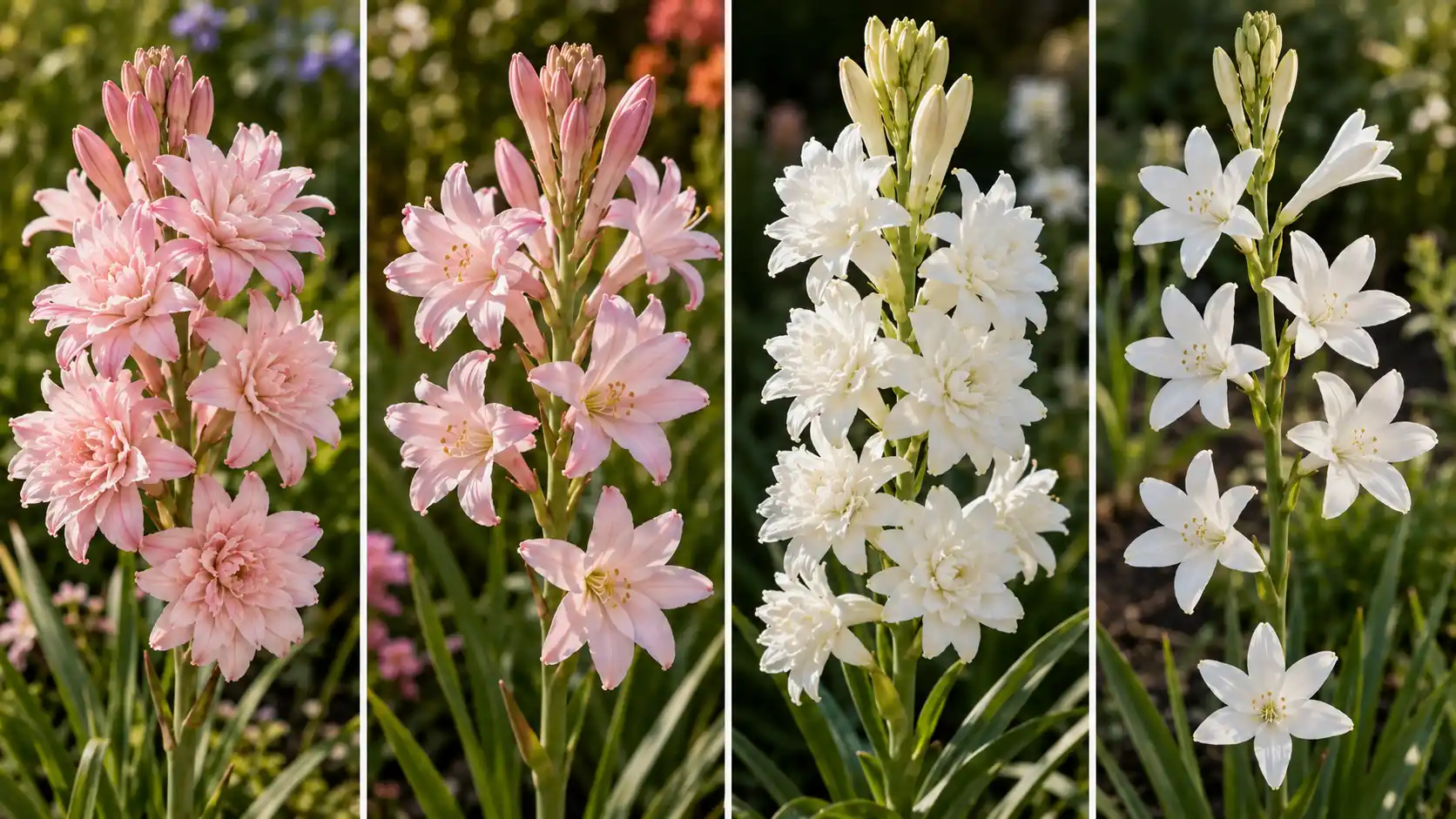
Most commercially available tuberose cultivars produce white flowers, but breeders have developed several attractive pink or blush-flowering selections. These specialty varieties are generally less common than traditional white forms and are often sold through specialist bulb suppliers rather than mainstream garden retailers.
Common Pink Tuberose Varieties
| Variety | Bloom Colour | Flower Form | Notes |
| Pink Sapphire | Blush pink | Double | Rare, highly fragrant |
| Pink Sensation | Soft pink | Single | Excellent cut flower |
| The Pearl | White to cream | Double | Most widely available cultivar |
| Mexican Single | White | Single | Strongest fragrance and excellent garden performer |
True pink cultivars are prized primarily for their distinctive colouring while maintaining the classic tuberose fragrance. If you’re exploring other pink-flowering garden plants, you may also find Pink Flowering Shrub Identification Australia Guide useful for identifying similar ornamental species.
Single-flowered varieties typically feature:
- Stronger fragrance
- More natural flower shape
- Better pollinator access
- Excellent performance as cut flowers
Double-flowered varieties generally offer:
- Fuller flower spikes
- Longer-lasting displays
- More ornamental appearance
- Slightly softer fragrance compared with single forms
Elemo Baker recommends choosing healthy, firm planting stock from reputable bulb suppliers rather than selecting solely by flower colour. High-quality offsets establish more quickly and usually produce stronger flowering spikes during their first growing season.
Because pink cultivars are still relatively uncommon, availability varies considerably from year to year. Gardeners may need to preorder bulbs before the spring planting season.
Where to Buy Pink Tuberose in Australia
Pink tuberose is available in Australia, although finding genuine pink cultivars often requires more effort than purchasing standard white varieties.
Most large retail stores stock only common flowering bulbs during seasonal promotions, while specialist bulb growers offer a wider range of cultivars, including rare pink selections.
As of the 2026 planting season, many Australian specialist bulb suppliers release tuberose stock between late winter and early spring, allowing gardeners to purchase fresh planting material before the growing season begins.
Are Tuberose Bulbs Available at Bunnings?
Sometimes, but availability is limited.
Bunnings stocks a seasonal selection of flowering bulbs each year, and standard white tuberose may occasionally appear depending on supplier availability. However, genuine pink tuberose cultivars are rarely included in these seasonal ranges.
Bunnings more commonly stocks:
- Tulip bulbs
- Daffodil bulbs
- Gladiolus
- Dahlias
- Ranunculus
- Mixed flowering bulbs
Because pink tuberose is considered a specialty variety, gardeners looking for specific cultivars usually have better success through dedicated bulb suppliers.
If purchasing from Bunnings, inspect packaging carefully to confirm the botanical name and flower colour before buying.
Specialist Bulb Suppliers for Tuberose in Australia
Australian gardeners generally find the best selection through specialist bulb nurseries and online mail-order suppliers.
These suppliers often provide:
- Named cultivars
- Fresh seasonal stock
- Larger planting offsets
- Detailed growing instructions
- Better variety selection
Many independent garden centres also stock tuberose during spring, particularly in warmer regions where the plant performs reliably.
Because demand often exceeds supply for rare pink cultivars, ordering early in the season improves the chances of securing preferred varieties.
In our experience, specialist suppliers consistently provide healthier offsets than mass-market retailers, resulting in quicker establishment and stronger flowering.
Growing Pink Tuberose from Seed
Although pink tuberose can be grown from seed, most gardeners choose to plant offsets instead.
Growing from seed requires patience because seedlings develop slowly and may take several years before producing their first flowers. Seed-grown plants can also vary from the parent plant, particularly when collecting seed from cultivated varieties.
Typical germination requirements include:
- Warm temperatures between 22–27°C
- Free-draining seed-raising mix
- Even moisture without waterlogging
- Bright filtered light
- Consistent humidity
After germination, seedlings require careful watering and gradual hardening before being planted outdoors.
Most commercial growers propagate tuberose vegetatively through offsets because this method:
- Produces identical plants
- Flowers much sooner
- Maintains cultivar characteristics
- Offers more reliable results
- Is considerably easier for home gardeners
For Australian gardeners seeking reliable summer flowers, purchasing healthy offsets remains the quickest and most dependable method of growing pink tuberose.
How to Grow Tuberose in Australia
Growing pink tuberose in Australia is most successful when warm soil, full sun, and free-draining conditions are prioritised. Polianthes tuberosa is a heat-loving perennial that performs best in regions with long, warm summers and mild winters. In cooler climates, it can still be grown successfully with container planting and seasonal protection.
In our experience growing tuberose across Australian gardens, the most consistent flowering occurs when bulbs are planted after soil temperatures stabilise above 18°C. Early planting in cold soil often results in slow growth and reduced flowering. If you’re designing a wider garden layout, you may also like our guide on Low-Maintenance Plants for Fence Line in Australia for companion planting ideas that suit Australian conditions.
Best Climate Zones for Tuberose in Australia
Pink tuberose thrives in tropical, subtropical, and warm temperate regions across Australia. These climates provide the extended warmth needed for strong vegetative growth and reliable flowering.
Suitable regions include:
- Coastal Queensland (tropical and subtropical zones)
- Northern New South Wales
- Warm inland regions with long summers
- Parts of Western Australia with Mediterranean-to-warm conditions
In cooler southern climates such as Melbourne and Hobart, tuberose can still be grown but requires more management. Soil warming is slower, and frost risk can damage emerging shoots.
Key climate considerations:
- Requires consistently warm soil for root development
- Sensitive to frost and cold snaps
- Performs best with long daylight exposure
- Flowers more reliably in humid or warm environments
Elemo Baker recommends container growing in cooler regions, as pots can be moved into sheltered positions during unexpected temperature drops.
When and How to Plant Tuberose Bulbs
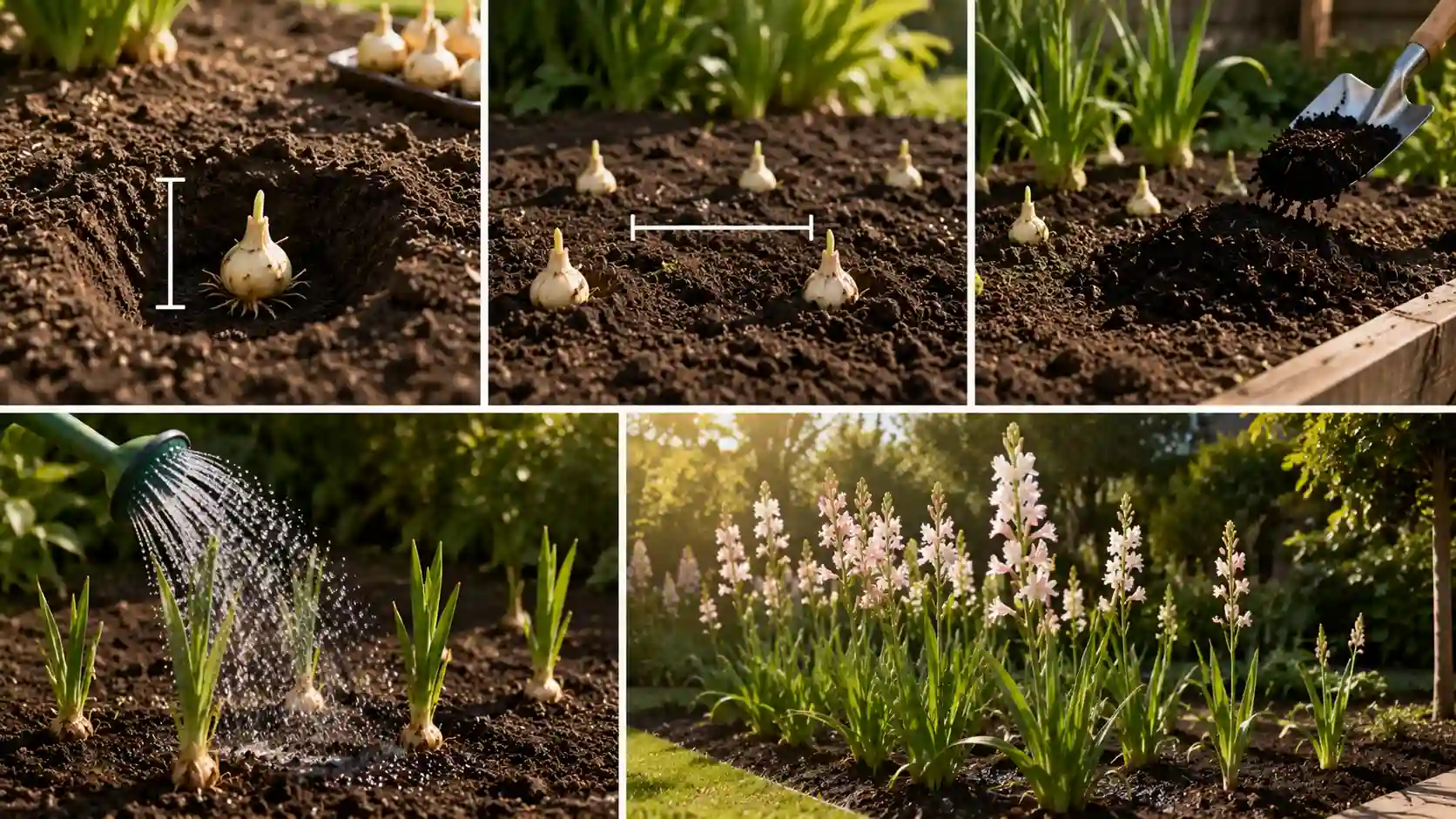
Planting time and technique are critical for successful flowering. Tuberose should always be planted in spring once frost risk has passed and soil has warmed.
Step-by-step planting guide:
- Planting time: Spring (when soil is consistently above 18°C)
- Planting depth: 5–7 cm below soil surface
- Spacing: 15–20 cm apart for healthy airflow
- Soil preparation: Mix garden soil with compost and sand for drainage
- Watering: Water thoroughly after planting to settle soil around offsets
Planting too deeply or in compacted soil can delay emergence and increase the risk of rot. Offset health also plays a significant role; larger, firm bulbs generally produce faster and stronger growth.
In our field observations, tuberose planted in raised beds tends to outperform ground-level plantings in heavy soils due to improved drainage and warmer root zones.
Sun, Soil, and Watering Requirements
Pink tuberose requires full sun and well-draining soil to thrive. These conditions directly influence flower spike strength, fragrance intensity, and overall plant health.
Optimal growing conditions:
- Light: Minimum 6–8 hours of direct sunlight daily
- Soil: Loose, fertile, and well-draining with organic matter
- Watering: Moderate, increasing during active growth
Soil requirements:
- Sandy loam or enriched garden soil
- pH range: slightly acidic to neutral (6.0–7.0)
- High organic content improves flowering performance
Watering guidelines:
- Water regularly during active growth phase
- Reduce watering once established
- Avoid waterlogging at all costs
Overwatering is one of the most common causes of tuberose failure in Australian gardens. Poor drainage can quickly lead to rhizome rot, particularly in humid or wet climates.
Elemo Baker recommends checking soil moisture before watering rather than following a fixed schedule, especially during unpredictable seasonal rainfall.
Pink Tuberose Care Guide
Once established, pink tuberose is relatively low-maintenance but responds strongly to consistent feeding, proper watering, and seasonal care adjustments.
Healthy plants reward gardeners with tall, fragrant flower spikes that bloom progressively over several weeks.
Watering and Feeding Tuberose
Tuberose requires balanced moisture during active growth but should never sit in saturated soil.
Watering practices:
- Water deeply once or twice per week during growth
- Allow topsoil to dry slightly between watering
- Reduce watering after flowering begins to slow vegetative growth
Feeding schedule:
- At planting: Apply a slow-release balanced fertiliser
- During growth: Apply liquid fertiliser every 2–3 weeks
- During bud formation: Switch to potassium-rich fertiliser to enhance flowering
Potassium supports stronger flower spikes and improves bloom longevity.
In our experience, under-fertilised tuberose produces fewer florets per spike, while over-fertilised plants often produce excessive foliage at the expense of flowers.
Pruning and Deadheading
Tuberose produces flowers sequentially along a central spike, meaning blooms open gradually from the bottom upwards.
Pruning practices:
- Remove spent florets individually to extend display life
- Cut entire flower spikes once flowering is complete
- Leave foliage intact until it naturally yellows
Key post-flowering care:
- Allow leaves to die back naturally to replenish bulb energy
- Avoid cutting green foliage prematurely
- Store energy in rhizomatous offsets for next season’s growth
Cut flower use is one of tuberose’s strongest features, as stems can last several days in arrangements when harvested at early bud stage.
Mulching and Frost Protection
Mulching plays an important role in maintaining stable soil conditions for tuberose, especially in regions with fluctuating temperatures.
Benefits of mulching:
- Retains soil moisture during hot weather
- Regulates soil temperature
- Reduces weed competition
- Protects developing offsets
Recommended mulch types:
- Sugarcane mulch
- Bark chips
- Straw mulch (light layer)
In cooler Australian climates, frost protection becomes essential. Tuberose is highly sensitive to cold, and even light frost can damage emerging shoots.
Protection methods include:
- Thick mulch layer around plant base
- Container growing for mobility
- Relocation to sheltered areas during cold snaps
- Avoiding early spring planting in cold soils
Elemo Baker notes that tuberose grown in pots generally overwinter more successfully in southern regions due to the ability to control exposure conditions.
Growing Tuberose Indoors
Pink tuberose can be grown indoors, although success depends heavily on light availability and container management. Indoor cultivation is most suitable for decorative use or for gardeners in cooler climates who want to extend the growing season. If you’re interested in the broader advantages of indoor greenery, see our guide on Benefits of Indoor Plants: 10 Science-Backed Reasons for how plants improve air quality and wellbeing indoors.
Container requirements:
- Pot size: Minimum 20–25 cm deep container
- Drainage: Essential to prevent root rot
- Potting mix: Free-draining mix with added sand or perlite
Light requirements:
- Bright direct light or strong indirect light
- North-facing window in Australia preferred
- Minimum 6 hours of light daily
Indoor considerations:
- Strong fragrance may be overwhelming in small spaces
- Air circulation is important to prevent fungal issues
- Flowering may be reduced without sufficient sunlight
While tuberose can grow indoors, flowering is less reliable compared to outdoor conditions. Supplemental grow lights may improve results but are not commonly used in home settings.
In our experience, indoor-grown tuberose performs best when moved outdoors during peak summer months to maximise light exposure and natural growth cycles.
Plant Size and Growth Rate
Pink tuberose develops into a medium-height flowering plant with upright foliage and tall, elegant flower spikes. Growth rate is influenced by temperature, bulb quality, and sunlight exposure.
How Tall Does Pink Tuberose Grow?
Mature pink tuberose typically reaches:
- Flower spike height: 60–90 cm
- Foliage height: 30–50 cm
Growth variation depends on:
- Nutrient availability
- Sunlight intensity
- Cultivar type (single vs double flowers)
- Bulb maturity and size
Double-flowered cultivars often produce slightly taller and heavier spikes due to increased floral density.
How Fast Does Tuberose Grow?
Tuberose is considered a moderately slow-starting plant but develops quickly once established in warm conditions. For comparison with other ornamental flowering plants, see Fast Growing Magnolia Australia: Best Varieties & Care Guide which explores similar growth patterns in landscape plants.
Growth timeline:
- Planting to emergence: 2–4 weeks
- Vegetative growth phase: 6–8 weeks
- Flowering: 90–120 days from planting
Factors affecting growth speed:
- Soil temperature (critical factor)
- Sun exposure
- Watering consistency
- Bulb size and health
Warm soil accelerates development significantly, while cool conditions can delay flowering by several weeks.
Elemo Baker recommends planting only when conditions are stable, as premature planting is the most common cause of delayed flowering in Australian gardens.
Common Problems with Tuberose and How to Fix Them
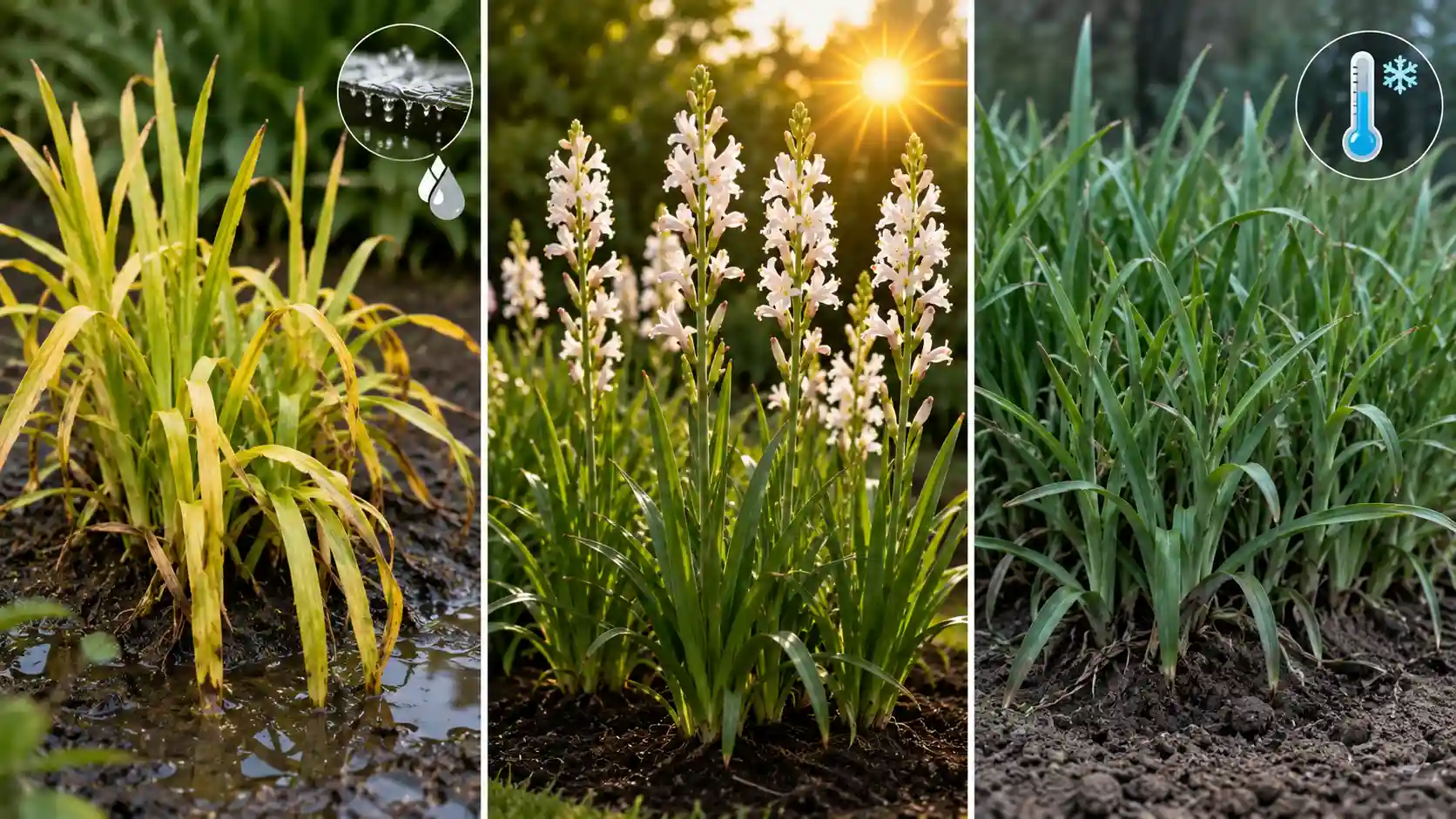
Pink tuberose is generally hardy in warm conditions, but it can develop growth and flowering issues when environmental requirements are not met. Most problems in Australian gardens are linked to temperature, drainage, or light levels rather than pests alone.
In our experience, correcting early soil and watering mistakes prevents the majority of tuberose failures before they develop into long-term plant decline.
Tuberose Not Flowering
Tuberose not flowering is the most common issue gardeners face. The plant may produce healthy foliage but fail to develop flower spikes.
Main causes include:
- Planting in cold soil (below 18°C)
- Insufficient sunlight (less than 6 hours daily)
- Overcrowded offsets limiting energy distribution
- Poor soil nutrition, especially low potassium levels
- Immature bulbs that require another growth cycle
How to fix it:
- Replant in warmer conditions in spring
- Move to a full sun location
- Thin overcrowded clumps every 2–3 years
- Apply potassium-rich fertiliser during bud development
- Use mature, firm offsets for planting
Elemo Baker notes that in cooler Australian regions, delayed flowering is often resolved simply by improving soil warmth and sun exposure rather than replacing plants.
Yellow Leaves on Tuberose
Yellowing leaves can be either a natural part of the plant’s life cycle or a sign of stress.
Normal causes:
- Natural dieback after flowering
- Seasonal dormancy preparation
Problematic causes:
- Overwatering leading to root stress
- Poor drainage causing rhizome rot
- Nutrient deficiency, especially nitrogen or potassium shortage
How to diagnose:
- If yellowing occurs after flowering → normal process
- If yellowing occurs early in growth → likely environmental issue
Solutions:
- Improve drainage with sand or raised beds
- Reduce watering frequency
- Apply balanced fertiliser during active growth
- Remove affected rotting sections if detected early
In our field observations, poorly drained clay soils are the most common trigger for premature yellowing in Australian gardens.
Pests and Diseases
While tuberose is not highly pest-prone, certain insects and fungal issues can affect plant health, particularly in humid or overcrowded conditions.
Common pests:
- Aphids: cluster on new shoots and flower buds
- Spider mites: cause speckled or dry foliage in hot, dry weather
Common diseases:
- Fungal rot: caused by waterlogged soil
- Leaf spot: occurs in humid, poorly ventilated conditions
For a broader breakdown of identifying and managing garden pests in Australia, refer to the Garden Pest Identification Guide for Australian Gardens.
Treatment options:
Organic methods:
- Neem oil sprays for aphids and mites
- Hosing plants to dislodge pests
- Improving airflow through spacing and pruning
Conventional methods:
- Targeted horticultural insecticides for severe infestations
- Fungicides for persistent fungal outbreaks
Prevention strategies:
- Ensure full sun exposure for airflow
- Avoid overhead watering late in the day
- Maintain well-draining soil conditions
- Remove dead foliage promptly
Healthy tuberose grown in proper conditions rarely suffers from severe pest or disease pressure.
Conclusion
Pink tuberose (Polianthes tuberosa) is a highly fragrant, warm-season flowering plant that thrives in full sun and well-draining soil. In Australian gardens, it performs best when planted in spring after soil temperatures rise, producing elegant pink or blush flower spikes during summer. While white varieties are more common, true pink cultivars are available through specialist suppliers rather than mainstream retailers.
Successful growth depends on warm conditions, careful watering, and good soil structure. In cooler regions, container growing offers better control over temperature and drainage. With proper care, tuberose rewards gardeners with long-lasting fragrance and striking ornamental blooms that enhance both garden beds and cut flower arrangements.
Frequently Asked Questions
Q1: Is pink tuberose the same as white tuberose?
Pink and white tuberose belong to the same species, Polianthes tuberosa, but differ in cultivar selection. White forms are more common, while pink varieties are selectively bred for blush-toned blooms.
Q2: How long does it take tuberose to flower after planting?
Tuberose typically flowers within 90–120 days after planting in warm soil conditions. Cooler temperatures or poor sunlight can delay flowering.
Q3: Can I grow tuberose in pots in Australia?
Yes, tuberose grows well in pots provided they have excellent drainage, a deep container (20–25 cm minimum), and full sun exposure.
Q4: Why does my tuberose have leaves but no flowers?
This is usually caused by insufficient sunlight, cold soil, immature offsets, or overcrowding. Nutrient imbalance can also prevent flowering.
Q5: Does tuberose come back every year in Australia?
In warm Australian climates, tuberose is perennial and returns via offsets. In cooler regions, bulbs may need lifting and storage over winter to prevent frost damage.
Q6: Where can I buy pink tuberose bulbs in Australia?
Pink tuberose bulbs are best sourced from specialist online bulb suppliers. Availability is seasonal, and pink cultivars are rarely found in large retailers like Bunnings compared to standard white varieties.
1 Comment