
Pink Flowering Shrub Identification Australia Guide
Introduction
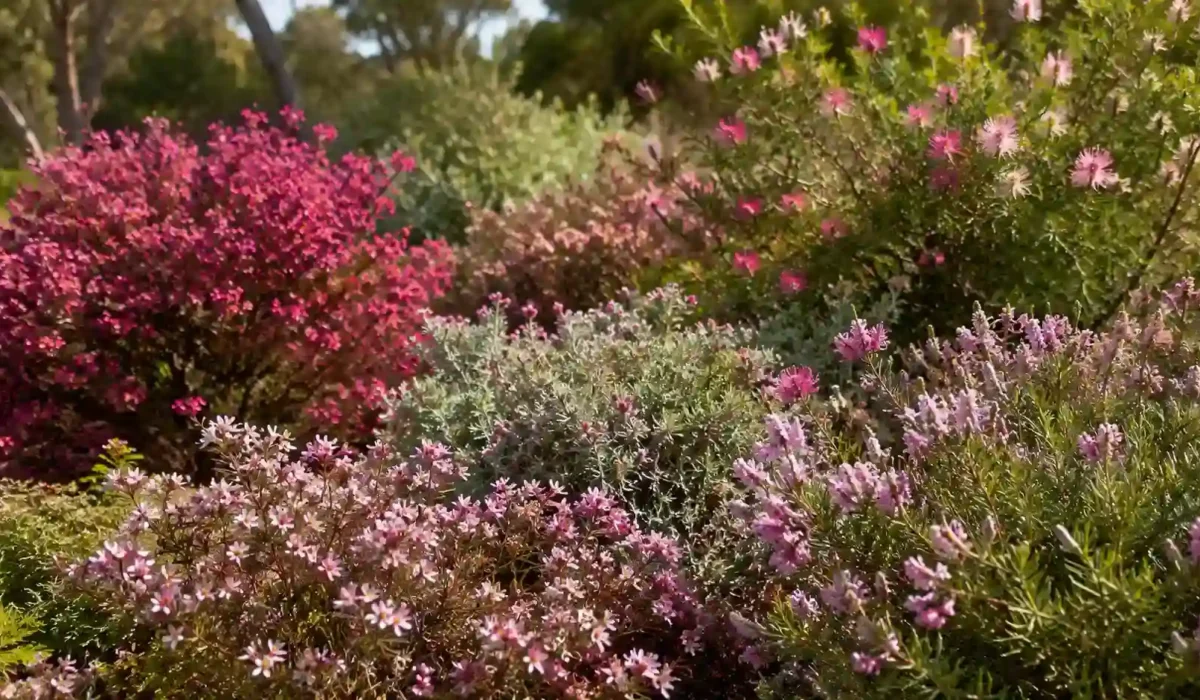
Australia is home to an impressive variety of pink flowering shrubs, including both native species and widely cultivated exotic plants. From coastal gardens to inland bushland and tropical landscapes, these shrubs thrive across diverse climate zones. Accurate pink flowering shrub identification Australia requires more than simply observing flower colour. Features such as leaf shape, flower structure, growth habit, bark texture, and flowering season all provide valuable clues for identifying a plant correctly. Whether you are recognising a native shrub in the bush or choosing a suitable garden specimen, understanding these characteristics helps distinguish similar-looking species with greater confidence. If you’re specifically trying to identify flowering trees rather than shrubs, our Tree With Pink Flowers Australia: Identification Guide explains the key differences between the two growth forms.
Quick Summary
- Australia supports a wide range of native and exotic pink flowering shrubs suitable for many climate zones.
- Correct identification relies on flower structure, foliage, growth habit, bark, and flowering season rather than flower colour alone.
- Common native genera include Grevillea, Boronia, Melaleuca, Kunzea, Leptospermum, Crowea, and Philotheca.
- Pink flowering shrubs range from compact border plants under one metre to large screening shrubs exceeding five metres.
- Understanding regional distribution and botanical characteristics improves identification accuracy and plant selection.
What Makes a Shrub a “Pink Flowering Shrub”? Defining the Category
A pink flowering shrub is a woody plant with multiple stems that produces flowers in shades ranging from pale blush and soft rose to vivid magenta or deep pink. Unlike trees, shrubs generally branch close to ground level and maintain a relatively compact structure. They also differ from groundcovers, which spread horizontally with minimal height.
In Australia, pink flowering shrubs include both native species that evolved in local ecosystems and introduced ornamental shrubs grown in home gardens. While flower colour is often the first feature noticed, it should never be the only basis for identification. Many species display colour variations depending on cultivar, age of the bloom, sunlight exposure, and environmental conditions.
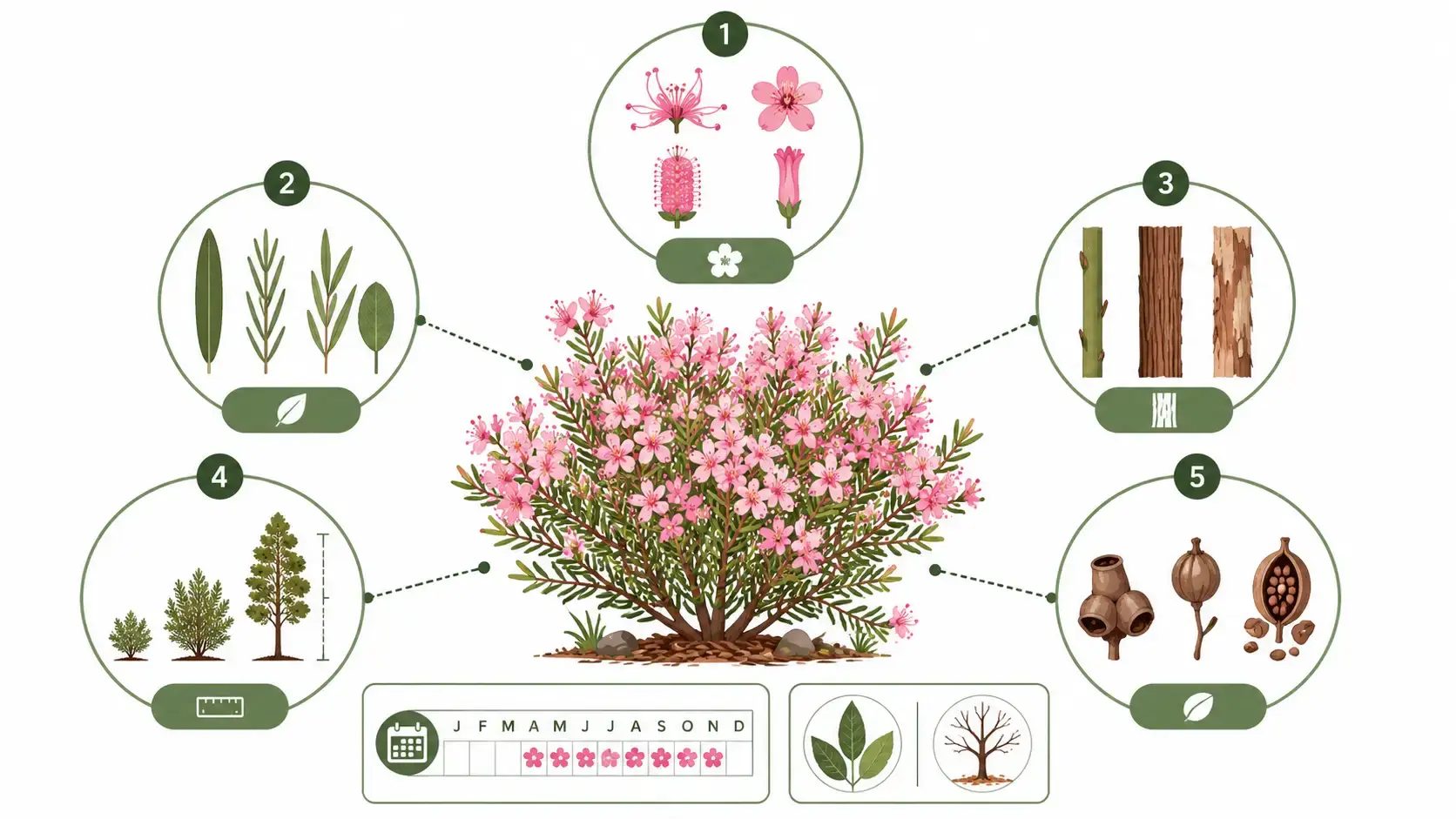
Flower structure provides a much more reliable identification characteristic. Australian shrubs produce a remarkable diversity of flower forms, including:
- Spider-like flowers with extended styles
- Bottlebrush or pompom flower spikes
- Five-petalled open flowers
- Tubular flowers
- Waxy star-shaped blooms
- Dense flowering clusters
Leaf arrangement, stem texture, bark characteristics, and overall plant shape are equally important. Looking at these characteristics together provides a far more accurate identification than relying on flower colour alone.
In our experience identifying Australian garden plants, taking time to observe the entire shrub rather than focusing only on its flowers consistently leads to more reliable identification results.
Key Identification Features to Observe
When identifying a pink flowering shrub in Australia, examine the following features carefully:
- Flower form: Determine whether the flowers are tubular, spider-shaped, bottlebrush-like, star-shaped, clustered, or open-faced.
- Leaf shape and texture: Observe whether leaves are narrow, broad, needle-like, leathery, glossy, aromatic, or softly textured.
- Stem and bark structure: Note whether stems are smooth, woody, papery, rough, or covered in fine hairs.
- Plant size at maturity: Estimate whether the shrub remains under one metre, grows to medium height, or develops into a large screening shrub.
- Fruit or seed capsules: Native shrubs often produce distinctive capsules or woody fruits that remain after flowering.
Additional identification clues include:
- Flowering season
- Evergreen or deciduous growth habit
- Preferred habitat
- Geographic location within Australia
Elemo Baker recommends observing the same shrub throughout different seasons whenever possible. Flowers may only appear briefly, but foliage, bark, and growth habit remain valuable identification features all year.
Native Pink Flowering Shrubs in Australia — Overview by Genus
Australia’s native flora contains numerous genera that regularly produce pink flowers. Each genus has distinctive botanical characteristics that make identification easier once their defining features are understood. Many Australian native shrubs featured here complement the colourful species covered in our Australian Native Purple Flowers: Types, Care & Guide.
Native pink flowering shrubs occur naturally across Australia’s varied environments, including coastal heathlands, dry woodlands, mountain forests, wetlands, and semi-arid regions. These plants have adapted to local soils and climates, making many of them excellent low-maintenance choices for Australian gardens.
For readers interested in the botanical classification of Australian flowering plants, the Wikipedia article on the Myrtaceae family provides a useful overview of one of Australia’s most important native plant families.
The following genera represent some of the most commonly encountered native pink flowering shrubs.
Grevillea — Spider Flowers and Silky Oak Relations
Grevilleas are among Australia’s most recognisable flowering shrubs and belong to the family Proteaceae. Their unique spider-like flowers consist of long curved styles that create an intricate appearance unlike most ornamental shrubs.
Pink-flowered grevilleas range from delicate pastel varieties to rich rose and deep pink cultivars. Their foliage varies dramatically between species, from fine fern-like leaves to broader leathery foliage.
Growth habits are equally diverse:
- Prostrate groundcovers
- Compact shrubs under one metre
- Rounded garden shrubs
- Large shrubs reaching around three metres
One of the best-known cultivated varieties is ‘Robyn Gordon’, recognised for its vibrant red-pink flowers and exceptionally long flowering season. Numerous other cultivars display softer pink shades suitable for ornamental gardens.
Grevilleas are also highly valued for attracting native wildlife. Their nectar-rich flowers provide an important food source for:
- Honeyeaters
- Lorikeets
- Native bees
- Butterflies
Most species perform best in full sun with well-drained soil and generally require minimal fertiliser, particularly products low in phosphorus.
As of the current growing season, many Australian gardeners continue selecting grevilleas for water-wise landscaping due to their excellent drought tolerance once established.
Boronia — Star-Shaped Pink Blooms
Boronias belong to the citrus family, Rutaceae, and are admired for their delicate flowers and distinctive fragrance. Many species produce four-petalled star-shaped flowers that cover the shrub during winter and spring.
Two of the most commonly cultivated pink-flowering species include:
- Boronia heterophylla
- Boronia ledifolia
Their flowers typically range from soft pink to deep rosy pink and are often strongly scented. The fine foliage releases a pleasant aroma when gently brushed or crushed.
Boronias naturally occur in well-drained heathlands and woodland habitats, where soils are typically acidic and low in nutrients. Successful cultivation depends on recreating these conditions.
Ideal growing requirements include:
- Excellent drainage
- Slightly acidic soil
- Morning sun with afternoon shade
- Consistent moisture without waterlogging
- Protection from extreme heat
Although boronias are exceptionally beautiful, they are often relatively short-lived compared with many other native shrubs.
In our experience growing boronias, heavy clay soils almost always result in poor performance. Improving drainage before planting dramatically increases the likelihood of long-term success.
Melaleuca and Leptospermum — Bottlebrush and Tea Tree Relatives
Melaleuca species belong to the family Myrtaceae and include many plants formerly classified as Callistemon. These shrubs are recognised by their striking bottlebrush or pompom flower spikes, which consist of masses of colourful stamens.
Pink-flowering melaleucas vary considerably in size, from compact ornamental shrubs to large screening plants. Many species also develop distinctive papery bark that provides another useful identification feature.
Common characteristics include:
- Evergreen foliage
- Nectar-rich flowers
- High drought tolerance
- Excellent adaptability to Australian climates
Closely related to Melaleuca are the Leptospermum species, commonly known as tea trees.
Unlike bottlebrush flowers, Leptospermum produces small five-petalled blooms that resemble miniature blossoms. Depending on the species or cultivar, flowers may be white, blush pink, or bright pink.
One of the best-known species is Leptospermum scoparium, which has produced numerous ornamental cultivars featuring attractive pink flowers. These shrubs are widely planted as hedges, screening plants, and feature specimens.
Both Melaleuca and Leptospermum generally thrive in sunny positions with well-drained soils and tolerate coastal conditions remarkably well.
Crowea and Philotheca — Small, Star-Flowered Natives
Crowea and Philotheca are compact Australian native shrubs valued for their neat growth habit and elegant flowers.
Crowea produces attractive waxy star-shaped flowers, usually in shades of soft to medium pink. Flowering often extends across autumn and winter, providing colour when many other shrubs are dormant.
Typical characteristics include:
- Rounded compact habit
- Evergreen foliage
- Long flowering period
- Excellent suitability for small gardens
Philotheca, formerly classified as Eriostemon, also belongs to the Rutaceae family. One widely grown species is Philotheca myoporoides, which bears attractive white flowers tinged with pink or soft pink blooms depending on the variety.
These shrubs generally remain compact, making them ideal for:
- Native cottage gardens
- Borders
- Rockeries
- Courtyards
- Container planting
Elemo Baker recommends these smaller native shrubs for gardeners wanting reliable year-round foliage combined with manageable plant size. Their compact habit makes maintenance easier while still providing valuable nectar for native pollinators and attractive seasonal displays.
Small Pink Flowering Shrubs — Identification Guide
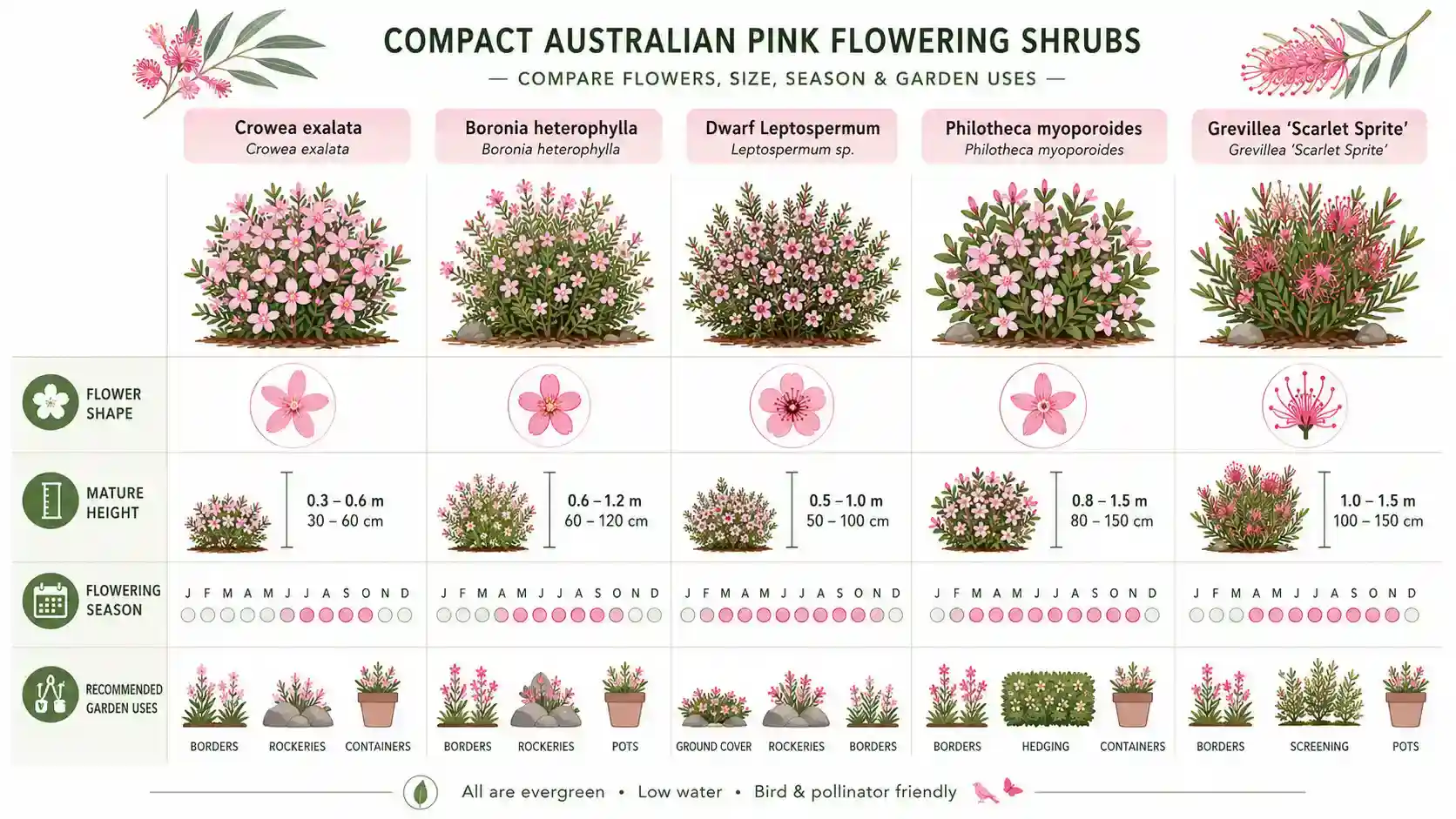
Small pink flowering shrubs are generally defined as woody plants that mature at under one metre in height, although some compact species may eventually reach around 1.5 metres. These shrubs are ideal for borders, rockeries, courtyard gardens, native landscapes, and container planting. Their manageable size also makes it easier to observe identifying characteristics such as flower shape, leaf arrangement, and branching habit.
Many Australian native shrubs remain naturally compact without requiring frequent pruning. Common genera producing small pink flowers include Crowea, dwarf Boronia, compact Leptospermum, Philotheca, and selected dwarf Grevillea cultivars.
Identifying Features of Compact Pink Shrubs
Compact shrubs often display distinctive growth habits that help separate them from taller species. While flower colour is helpful, accurate identification depends on combining several botanical characteristics.
Look for the following features:
- Mature height generally under 1 metre
- Dense, rounded, or naturally compact growth
- Fine branching close to ground level
- Evergreen foliage in most native species
- Flowers produced across much of the shrub rather than only at branch tips
Many small native shrubs are commonly planted in:
- Rock gardens
- Native borders
- Courtyards
- Patio containers
- Low-maintenance landscape designs
Among the easiest native genera to recognise are:
- Crowea
- Dwarf Boronia
- Dwarf Leptospermum
- Philotheca
- Compact Grevillea cultivars
In our experience, gardeners often underestimate how much room compact shrubs still require. Even naturally small species benefit from adequate spacing, which improves airflow, flowering, and long-term health.
Table — Small Native Pink Shrubs at a Glance
| Plant Name | Height | Flower Form | Flowering Season | Best Climate Zone |
| Crowea exalata | 0.5–1 m | Waxy pink star | Autumn–winter | South-east Australia |
| Boronia heterophylla | 0.5–1.5 m | Tubular pink bells | Winter–spring | South-west Western Australia |
| Dwarf Leptospermum spp. | 0.5–1 m | Small five-petalled flowers | Spring | South-east and South-west Australia |
| Philotheca myoporoides | 0.5–1.5 m | Waxy white-pink star | Spring | South-east Australia |
| Grevillea ‘Scarlet Sprite’ | 0.5–1 m | Spider flower | Winter–spring | South-east and South-west Australia |
Tall Pink Flowering Shrubs — Identification Guide
Tall pink flowering shrubs generally reach between two and five metres at maturity. These plants are commonly used as privacy screens, informal hedges, windbreaks, and feature specimens. Their larger size means overall plant shape becomes an important identification characteristic alongside flowers and foliage. For gardeners wanting year-round privacy, you may also like our guide to Fast Growing Evergreen Trees Australia Guide.
Several Australian natives naturally develop into substantial shrubs, while some exotic ornamental species are also widely planted throughout Australian gardens.
Identifying Features of Tall Pink Shrubs
Tall shrubs usually display upright or broadly spreading habits with well-developed woody stems. Their flowers may appear over the entire canopy or concentrate toward branch ends depending on the species.
Common tall pink flowering shrubs include:
- Melaleuca nesophila
- Tall Grevillea cultivars
- Pink forms of Callistemon viminalis
- Tibouchina species
- Lagerstroemia indica
Key identification features include:
- Mature height between 2–5 metres
- Multiple woody stems arising from the base
- Larger canopy spread
- Strong structural branching
- Suitable for screening and hedging
Many taller shrubs also attract significant numbers of nectar-feeding birds, bees, and beneficial insects due to their abundant floral displays.
Elemo Baker recommends checking the mature height before planting. A shrub purchased at one metre tall may eventually occupy several metres in both height and width, making proper placement essential.
Table — Tall Pink Flowering Shrubs at a Glance
| Plant Name | Height | Flower Form | Flowering Season | Best Climate Zone |
| Melaleuca nesophila | 2–5 m | Rounded pink pompom | Summer | South-west WA, tropical regions |
| Grevillea ‘Honey Gem’ | 3–5 m | Large spider flower | Most of the year | Subtropical to temperate |
| Tibouchina spp. | 2–5 m | Large purple-pink flowers | Autumn–summer | Subtropical |
| Lagerstroemia indica | 2–5 m | Ruffled flower clusters | Summer | Warm temperate and subtropical |
| Callistemon viminalis (pink forms) | 2–4 m | Bottlebrush flowers | Spring–summer | Coastal south-east and north-east Australia |
Evergreen Pink Flowering Shrubs in Australia
Evergreen pink flowering shrubs retain their foliage throughout the year, making them valuable for privacy screening, garden structure, and continuous visual interest. Unlike deciduous shrubs that lose their leaves during winter, evergreen species maintain dense foliage regardless of the season. If your goal is creating a dense living screen, see our Photinia Fraseri Robusta: Growth, Care & Hedge Guide for another popular evergreen option.
Most Australian native pink flowering shrubs are naturally evergreen because they evolved in climates where year-round foliage provides an advantage for conserving moisture and supporting continuous photosynthesis. Another excellent screening choice is Ficus Hillii ‘Flash’ Care, Growth & Hedge Guide, particularly for larger Australian gardens.
Reliable evergreen native shrubs include:
- Grevillea
- Crowea
- Melaleuca
- Leptospermum
- Philotheca
- Many Kunzea species
These shrubs provide several practical advantages:
- Permanent garden screening
- Consistent foliage texture
- Reduced seasonal maintenance
- Reliable habitat for birds and beneficial insects
- Attractive appearance even when not flowering
In contrast, some popular exotic shrubs are deciduous. Lagerstroemia indica (crepe myrtle), for example, sheds its leaves during autumn before producing fresh growth in spring.
As of the current growing season, Australian gardeners continue favouring evergreen native shrubs for water-wise landscaping because they generally require fewer inputs once established and remain visually appealing throughout the year.
Pink Flowering Shrubs by Region — Where to Find Them in Australia
Australia’s climate varies dramatically between regions, influencing both the natural distribution of native shrubs and the success of cultivated ornamental species. Understanding regional growing conditions significantly improves plant identification and selection. If you’re selecting flowering plants for year-round colour, our All Year Round Flowering Plants Australia Guide provides additional recommendations for different climates.
South-west Western Australia
South-west Western Australia is recognised internationally as a biodiversity hotspot with exceptionally high plant diversity.
Pink flowering shrubs commonly found in this region include:
- Boronia
- Kunzea
- Endemic Melaleuca
- Various Leptospermum species
Many of these plants have evolved in nutrient-poor sandy soils and require excellent drainage to thrive.
South-east Australia
Victoria, New South Wales, Tasmania, and parts of South Australia support numerous native pink flowering shrubs adapted to temperate conditions.
Common genera include:
- Grevillea
- Crowea
- Melaleuca
- Philotheca
- Leptospermum
These shrubs are frequently found in open forests, heathlands, and coastal environments, making them popular choices for residential landscapes throughout south-eastern Australia.
Tropical and Subtropical Australia
Queensland’s warmer climates support both native and introduced pink flowering shrubs.
Common examples include:
- Tropical Melaleuca
- Large Grevillea
- Tibouchina
- Various ornamental exotic shrubs
Higher humidity and extended growing seasons allow many species to flower for longer periods than they would in cooler regions.
Arid and Semi-arid Australia
Although flowering shrubs are generally less abundant in Australia’s dry interior, several native genera have adapted successfully to harsh conditions.
These include:
- Drought-tolerant Grevillea
- Selected Eremophila species with pink flowers
- Hardy desert shrubs adapted to sandy and rocky soils
These plants typically possess narrow leaves, reduced water requirements, and exceptional heat tolerance.
In our experience growing Australian natives across different climates, matching a shrub to its natural environment produces healthier plants, stronger flowering, and significantly lower maintenance requirements than attempting to grow unsuitable species outside their preferred conditions.
How to Identify a Pink Flowering Shrub — Step-by-Step Process
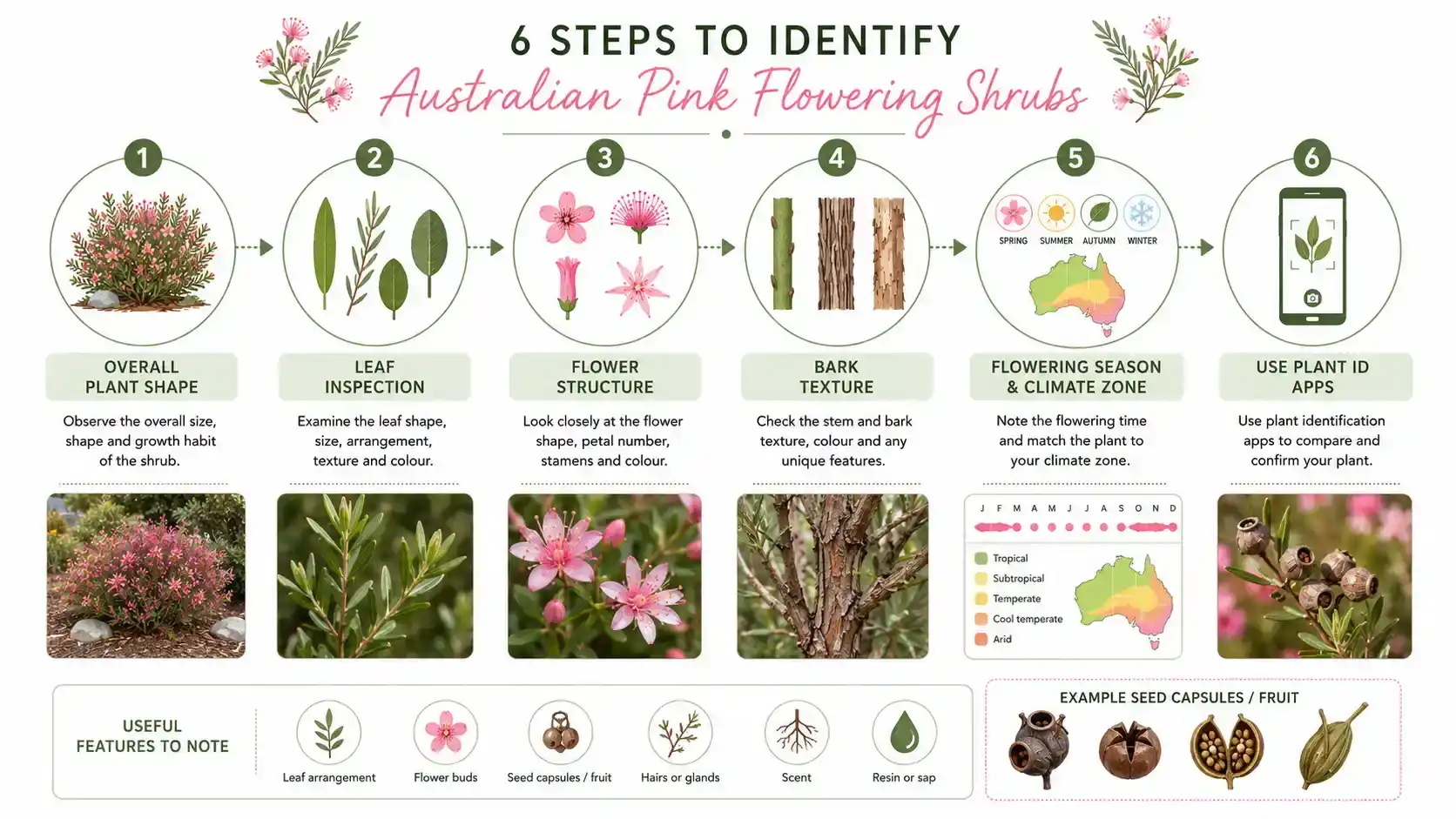
Accurate pink flowering shrub identification requires examining several plant characteristics rather than relying solely on flower colour. Following a systematic approach improves identification accuracy and helps distinguish between similar native and exotic species. When identifying plants, understanding common pests can also prevent confusion caused by damaged foliage, so see our Garden Pest Identification Guide for Australian Gardens.
Use the following step-by-step process whenever you encounter an unknown pink flowering shrub.
- Note the overall plant size and growth habit.
Observe whether the shrub is compact, upright, spreading, rounded, or weeping. Estimate its mature height if possible, as plant size is one of the first useful identification clues. - Examine the leaves.
Look at their arrangement (alternate or opposite), shape, texture, and colour. Check whether the leaves are simple or compound and gently crush one if appropriate to determine whether it releases an aromatic scent, which is common in many Australian native shrubs such as Melaleuca and Leptospermum. - Observe the flower structure.
Flower architecture is often the most reliable identification feature. Consider:- Number of petals
- Presence of prominent stamens
- Tubular or open flower shape
- Spider-like or bottlebrush structure
- Whether flowers grow singly or in clusters
- Check the bark and stems.
Some shrubs have distinctive bark that remains identifiable throughout the year. Paperbark species, smooth stems, rough bark, or hairy young growth can all provide valuable clues. - Consider the flowering season and climate zone.
Recording when the plant flowers and where it is growing helps eliminate many possibilities. Some species flower primarily in winter, while others bloom during spring or continue flowering across multiple seasons. - Cross-reference reliable identification resources.
Compare your observations with trusted Australian plant references or identification apps before making a final identification.
In our experience, photographing and recording these characteristics together is far more reliable than trying to identify a shrub from a single close-up image of its flowers.
Using Photos for Identification (Pink Flowering Shrub Identification Australia Pictures)
High-quality photographs greatly improve identification accuracy. Rather than photographing only the flowers, capture multiple views of the plant.
Useful photographs include:
- The entire shrub
- Close-up of individual flowers
- Close-up of flower clusters
- Upper surface of the leaves
- Underside of the leaves
- Bark and stems
- Seed capsules or fruit if present
Including a familiar object such as your hand or a ruler in one image can also provide useful scale.
Australian gardeners commonly use the following identification tools:
- iNaturalist Australia
- PlantNet
- State herbarium resources
- Local native plant societies
These platforms allow users to compare observations with verified records and benefit from identification assistance provided by experienced botanists and native plant enthusiasts.
Common Exotic Pink Flowering Shrubs Found in Australian Gardens
Many pink flowering shrubs commonly seen in Australian gardens are introduced ornamental species rather than Australian natives. These plants are valued for their colourful displays, extended flowering periods, and suitability for ornamental landscaping.
Although attractive, some exotic shrubs require greater irrigation, fertiliser, or maintenance than native alternatives. A small number may also become environmental weeds under favourable conditions, making responsible planting important.
Common exotic pink flowering shrubs include:
- Weigela
- Spiraea
- Hydrangea
- Abelia
- Escallonia
- Rhododendron
Tibouchina, while widely planted, has demonstrated invasive behaviour in certain regions of Australia. Gardeners should consult local regulations before planting in environmentally sensitive areas.
Table — Exotic Pink Shrubs Commonly Grown in Australia
| Plant Name | Origin | Height | Flower Type | Notes |
| Hydrangea macrophylla | Japan and China | 1–2 m | Large mophead flower clusters | Pink flowers often develop in less acidic soils |
| Weigela florida | East Asia | 1–3 m | Tubular pink flower clusters | Deciduous shrub with prolific spring flowering |
| Spiraea japonica | Asia | 0.5–1.5 m | Flat-topped pink flower clusters | Deciduous and compact |
| Escallonia spp. | South America | 1–3 m | Small tubular pink flowers | Evergreen and tolerant of coastal conditions |
| Abelia × grandiflora | Hybrid | 1–2 m | Small pink-white bell-shaped flowers | Semi-evergreen to evergreen with long flowering period |
Pink Flowering Shrub Problems — Identification and Solutions
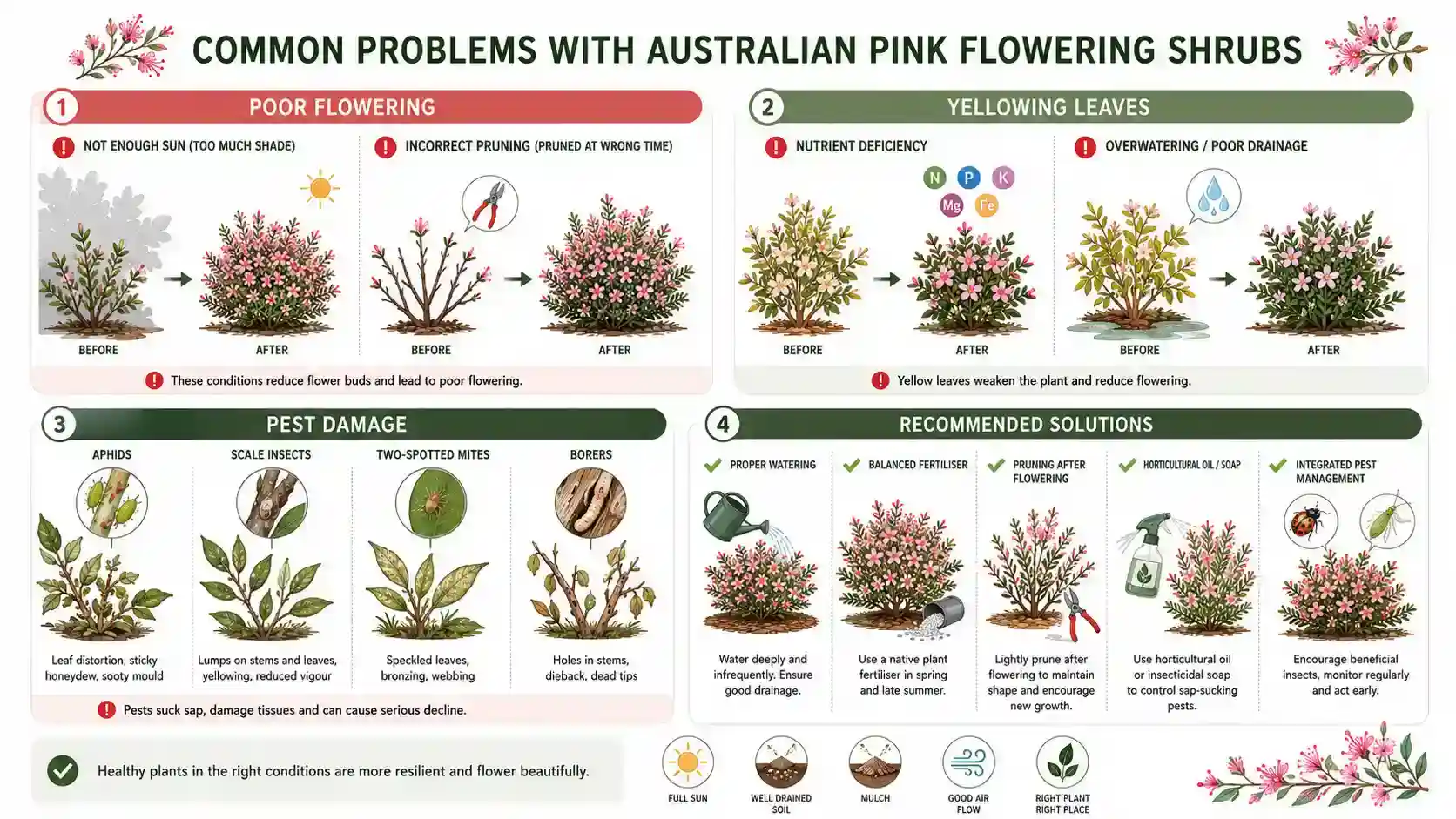
Healthy pink flowering shrubs generally produce vigorous growth, attractive foliage, and reliable seasonal flowering. When problems develop, recognising symptoms early helps prevent long-term decline and improves the chances of successful recovery. For troubleshooting another popular Australian native shrub, read our Woolly Bush Problems: Causes, Solutions and Care Guide.
The most common issues include poor flowering, yellowing foliage, pest infestations, and environmental stress.
Why Is My Pink Shrub Not Flowering?
A pink flowering shrub usually fails to flower because one or more growing conditions are unsuitable. Identifying the underlying cause is the first step towards restoring healthy flowering.
Common causes include:
Insufficient sunlight
Most flowering shrubs require at least six hours of sunlight each day. Plants growing in excessive shade often produce lush foliage but very few flowers.
Too much nitrogen fertiliser
High-nitrogen fertilisers encourage leafy growth at the expense of flower production. Switching to a balanced fertiliser designed for flowering plants often improves blooming.
Incorrect pruning
Many shrubs develop flower buds on the previous season’s growth. Pruning immediately before flowering may remove these buds entirely.
Drought stress
Extended dry periods reduce flower production as the plant directs its resources towards survival rather than reproduction.
Immature plants
Young shrubs frequently require several growing seasons before producing abundant flowers.
Elemo Baker recommends identifying the flowering period before pruning any shrub. Pruning immediately after flowering is often the safest approach for many Australian native species.
Yellowing Leaves on Pink Flowering Shrubs
Yellowing leaves may result from nutritional deficiencies, watering problems, root damage, or natural ageing.
Common causes include:
- Iron deficiency (interveinal chlorosis)
- Magnesium deficiency
- Overwatering
- Poor drainage
- Root disturbance after planting
- Temporary leaf drop in semi-deciduous species
Possible solutions include:
- Improve soil drainage where necessary.
- Apply an appropriate trace element fertiliser if deficiencies are confirmed.
- Avoid excessive irrigation.
- Maintain suitable soil pH for the species being grown.
- Water deeply but less frequently rather than applying shallow daily watering.
In our experience, overwatering causes more problems than underwatering in many Australian native shrubs, particularly those adapted to freely draining soils.
Pests Affecting Pink Flowering Shrubs in Australia
Several insect pests regularly affect pink flowering shrubs throughout Australia. Early detection allows most infestations to be managed before significant damage occurs.
Common pests include:
Scale insects
Scale insects attach themselves to stems and leaves while feeding on plant sap. Heavy infestations often produce sticky honeydew that encourages black sooty mould.
Aphids
Aphids commonly gather around new shoots and developing flower buds, causing distorted growth and reducing flowering performance.
Two-spotted mites
These tiny pests become particularly active during hot, dry weather. Symptoms include fine webbing and pale stippling across leaves.
Borers
Wood-boring insects tunnel into stems and branches, causing dieback, weakened growth, and occasionally plant death.
Effective management strategies include:
- Regular plant inspection
- Pruning heavily infested branches
- Encouraging beneficial insects
- Applying horticultural oil where appropriate
- Using integrated pest management (IPM) practices before considering stronger chemical controls
Monitoring shrubs throughout the growing season allows problems to be addressed while populations remain small, reducing long-term damage and preserving beneficial garden wildlife.
Beginner Mistakes When Identifying and Growing Pink Flowering Shrubs
Many identification errors occur because gardeners focus on a single characteristic rather than assessing the entire plant. Likewise, some common cultivation mistakes can reduce flowering, weaken plant health, or even lead to plant failure. Avoiding these pitfalls improves both identification accuracy and long-term garden success.
Confusing Flower Colour at Different Ages
Flower colour often changes as blooms mature. Some pink flowers open almost white before deepening to pink, while others fade from vibrant pink to pale blush as they age.
For this reason:
- Observe several flowers on the same plant.
- Compare newly opened and older blooms.
- Do not identify a shrub solely by flower colour.
Flower colour can also vary depending on sunlight, temperature, soil conditions, and cultivar.
Misidentifying Exotic Shrubs as Australian Natives
Many exotic ornamental shrubs resemble native Australian plants at first glance. For example, a flowering Weigela or Escallonia may be mistaken for a native shrub because both produce attractive pink flowers.
Instead of relying on flower colour, compare:
- Leaf arrangement
- Flower structure
- Growth habit
- Bark characteristics
- Seed capsules or fruit
Native shrubs generally display distinctive botanical features that separate them from introduced ornamentals.
Purchasing Unlabelled Plants and Relying on Flower Colour Alone
Garden centres occasionally sell plants with missing or incomplete labels. Purchasing an unidentified shrub based only on its flowers can lead to unexpected growth habits or unsuitable planting choices.
Before buying:
- Check the botanical name.
- Confirm mature height and spread.
- Understand flowering season.
- Verify climate suitability.
- Review soil and sunlight requirements.
Elemo Baker recommends purchasing plants from reputable nurseries that provide accurate botanical labelling and growing information.
Choosing a Shrub Without Checking Its Mature Size
One of the most common gardening mistakes is selecting a shrub because it looks attractive in a nursery pot without considering its eventual size.
Potential problems include:
- Overcrowding
- Reduced airflow
- Increased disease risk
- Constant pruning
- Competition for sunlight
Always check the expected mature height and width before planting. Allow sufficient spacing so each shrub can develop its natural shape.
Pruning Native Shrubs Too Hard or at the Wrong Time
Heavy pruning immediately before flowering often removes developing flower buds, resulting in reduced blooms the following season.
Most Australian native shrubs benefit from:
- Light shaping after flowering
- Removal of dead or damaged branches
- Avoiding severe pruning into old woody growth unless recommended for the species
Understanding each shrub’s flowering cycle helps determine the most appropriate pruning time.
Planting Boronia in Heavy or Poorly Drained Soils
Boronia is one of Australia’s most admired flowering shrubs, but it is also among the least tolerant of poor drainage.
Heavy clay soils frequently lead to:
- Root rot
- Yellowing foliage
- Reduced flowering
- Premature plant death
For best results:
- Improve drainage before planting.
- Incorporate organic matter where appropriate.
- Avoid waterlogged positions.
- Water consistently without saturating the soil.
In our experience growing Boronia, excellent drainage is the single most important factor influencing long-term success. Even healthy nursery plants often decline quickly if planted into poorly drained ground.
Conclusion
Pink flowering shrubs are among the most diverse and rewarding ornamental plants found throughout Australia. They include everything from compact native species suited to rockeries and small gardens to tall shrubs used for screening and landscape structure. Successful pink flowering shrub identification Australia depends on observing multiple botanical characteristics rather than relying solely on flower colour.
Examining flower form, leaf shape, growth habit, bark texture, flowering season, and regional distribution provides a reliable framework for distinguishing both native and exotic species. Whether you are identifying an unknown shrub in the bush, selecting a suitable garden plant, or diagnosing a struggling specimen, understanding these features allows for more confident identification and better long-term care across Australia’s diverse climate zones.
Frequently Asked Questions
What is the most common native pink flowering shrub in Australia?
The Grevillea genus is widely regarded as the most common group of native pink flowering shrubs found across Australia. Numerous species and cultivars produce flowers ranging from soft pink to deep rose and occur naturally in many states. Boronia and Melaleuca are also common native genera with pink-flowering species, although their distribution varies depending on regional climate and habitat.
How do I identify a small pink flowering shrub in my Australian garden?
Begin by observing the shrub’s overall size and growth habit, followed by its leaf shape, flower structure, and flowering season. Compact native genera such as Crowea, Philotheca, dwarf Leptospermum, and dwarf Boronia each have distinctive characteristics that assist identification. Free identification platforms such as iNaturalist Australia and PlantNet are valuable tools for confirming observations using photographs.
Are there evergreen pink flowering shrubs suitable for Australian gardens?
Yes. Most Australian native pink flowering shrubs are naturally evergreen, making them excellent choices for year-round garden structure and screening. Reliable evergreen options include Grevillea, Crowea, Melaleuca, Leptospermum, Philotheca, and Escallonia. These shrubs retain their foliage throughout the year while providing seasonal displays of pink flowers.
What pink flowering shrubs grow well in full sun in Australia?
Several pink flowering shrubs perform exceptionally well in full sun, including Grevillea, Melaleuca nesophila, pink forms of Callistemon, and Lagerstroemia indica. These shrubs generally flower more prolifically when grown in bright conditions. Boronia, however, usually performs better with morning sun and some afternoon shade, particularly in warmer parts of Australia.
What is the difference between native and exotic pink flowering shrubs in Australia?
Native pink flowering shrubs evolved under Australian environmental conditions and are generally better adapted to local soils, drought, and native wildlife. They often require less fertiliser and irrigation once established while providing valuable habitat for pollinators and birds. Exotic shrubs may offer striking ornamental displays but frequently require greater maintenance and, in some cases, may become invasive in suitable climates.
How do I tell the difference between a Grevillea and a Melaleuca by their pink flowers?
The easiest way to distinguish these two genera is by examining their flower structure. Grevillea flowers have a distinctive spider-like appearance with long, curved styles extending beyond the flower. Melaleuca, by contrast, produces dense bottlebrush or pompom-like flower spikes composed of numerous colourful stamens. Although both genera commonly produce pink flowers, their floral architecture is visually distinct and provides one of the most reliable identification features.
1 Comment