

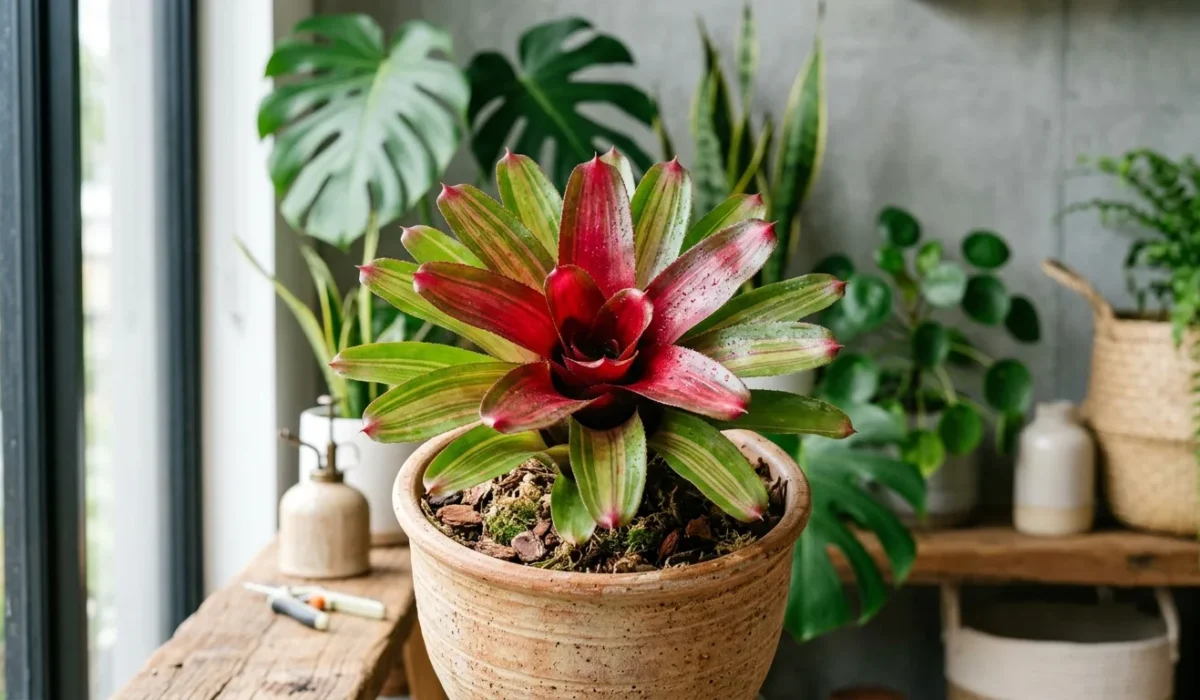
Neoregelia Fireball Care Guide & Growth Tips
Introduction
Neoregelia Fireball (also written Neoregelia ‘Fireball’) is a compact, colourful bromeliad known for its striking fire-red foliage and rosette growth habit. It is a miniature terrestrial bromeliad from the Neoregelia genus, widely grown in Australian indoor plant collections and subtropical gardens. The plant changes colour intensity depending on light exposure, making it both decorative and dynamic.
In simple terms, Neoregelia Fireball is a low-maintenance ornamental plant that thrives in bright environments and forms a tight rosette of leaves. It is popular because it remains small, adapts well to pots, and adds long-lasting colour without complex care requirements. Its ability to shift from green to deep red tones makes it a standout choice for beginners and collectors alike.
Neoregelia Fireball is also part of the wider group of indoor plants that contribute to healthier living spaces, similar to insights discussed in Benefits of Indoor Plants: 10 Science-Backed Reasons.
Quick Summary
- Neoregelia Fireball is a compact, colour-changing bromeliad
- Best colour develops in bright, indirect light
- Low to moderate care difficulty level
- Typically grows under 20–30 cm in size
What Is Neoregelia Fireball?
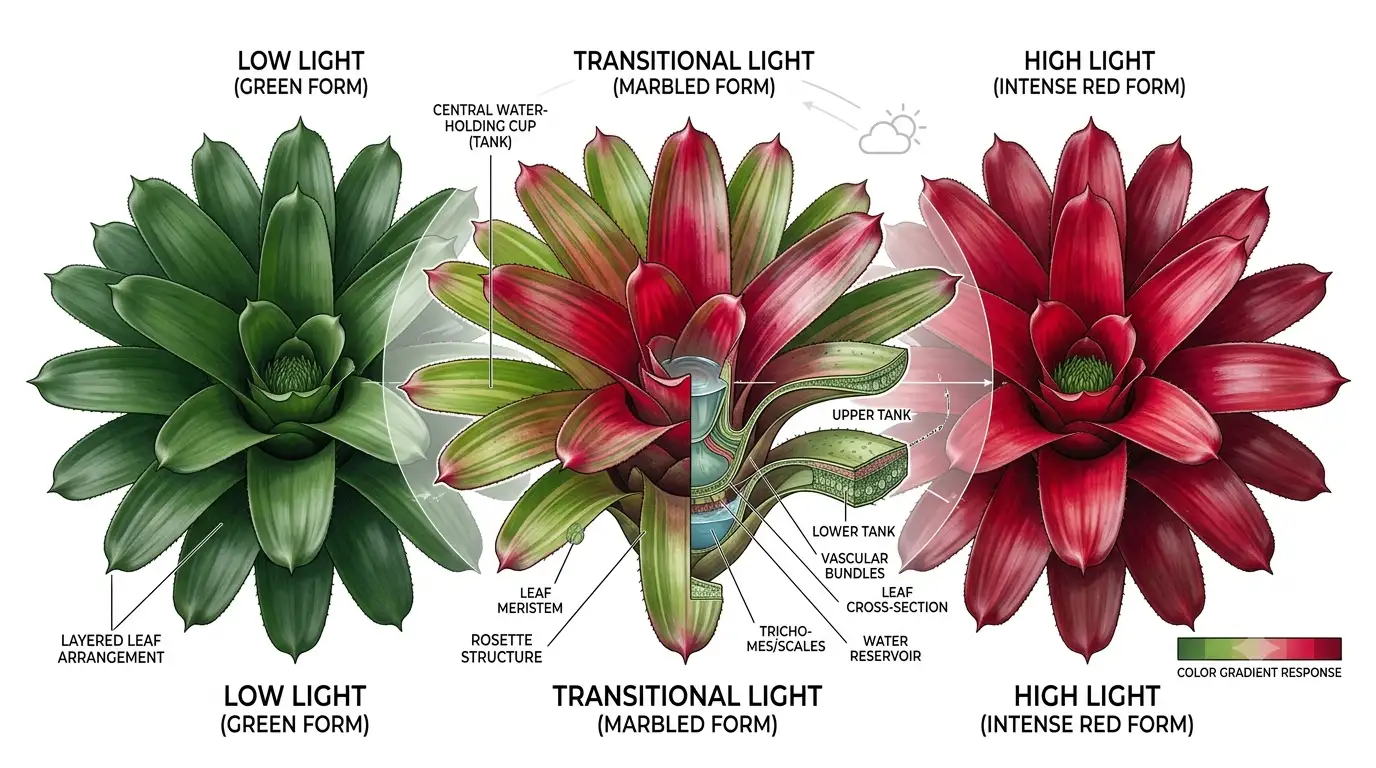
Neoregelia Fireball is a bromeliad species belonging to the Bromeliaceae family and closely related to Neoregelia carolinae. It is often referred to as the “fire ball plant” or “fireball bromeliad” due to its vivid red leaf colouring under strong light conditions.
Neoregelia Fireball belongs to the Bromeliaceae family, a diverse group of tropical plants widely studied for their epiphytic adaptations and ornamental value (see Bromeliaceae).
This plant forms a symmetrical rosette of broad, strap-like leaves that collect water in the central “cup.” Unlike many flowering plants, its main ornamental value lies in its foliage rather than its blooms. As light exposure increases, anthocyanin pigments intensify, causing the leaves to turn vibrant red or pink.
In our experience growing Neoregelia Fireball in Australian climates, plants placed in brighter filtered light consistently produce stronger colour contrast compared to shaded specimens, which remain mostly green.
Key characteristics:
- Rosette growth habit
- Central water-holding cup
- Colour intensifies with light exposure
- Epiphytic or terrestrial growth ability
Neoregelia Fireball vs Neoregelia Carolinae
Neoregelia Fireball and Neoregelia carolinae are closely related but differ in size, colour intensity, and growth form.
| Variety | Colour | Size | Light Needs |
| Fireball | Bright red/pink tones | Compact (20–30 cm) | Bright indirect to filtered sun |
| Carolinae | Green with red centre | Larger rosette | Moderate indirect light |
| ‘Donger’ | Deep green/red blush | Medium | Partial shade |
| ‘Cane Fire’ | Intense red variegation | Small-medium | High light |
| N. ampullacea | Green with subtle tint | Small | Shade-tolerant |
Fireball is generally preferred for small spaces due to its compact size and strong colour response.
Neoregelia Fireball Size
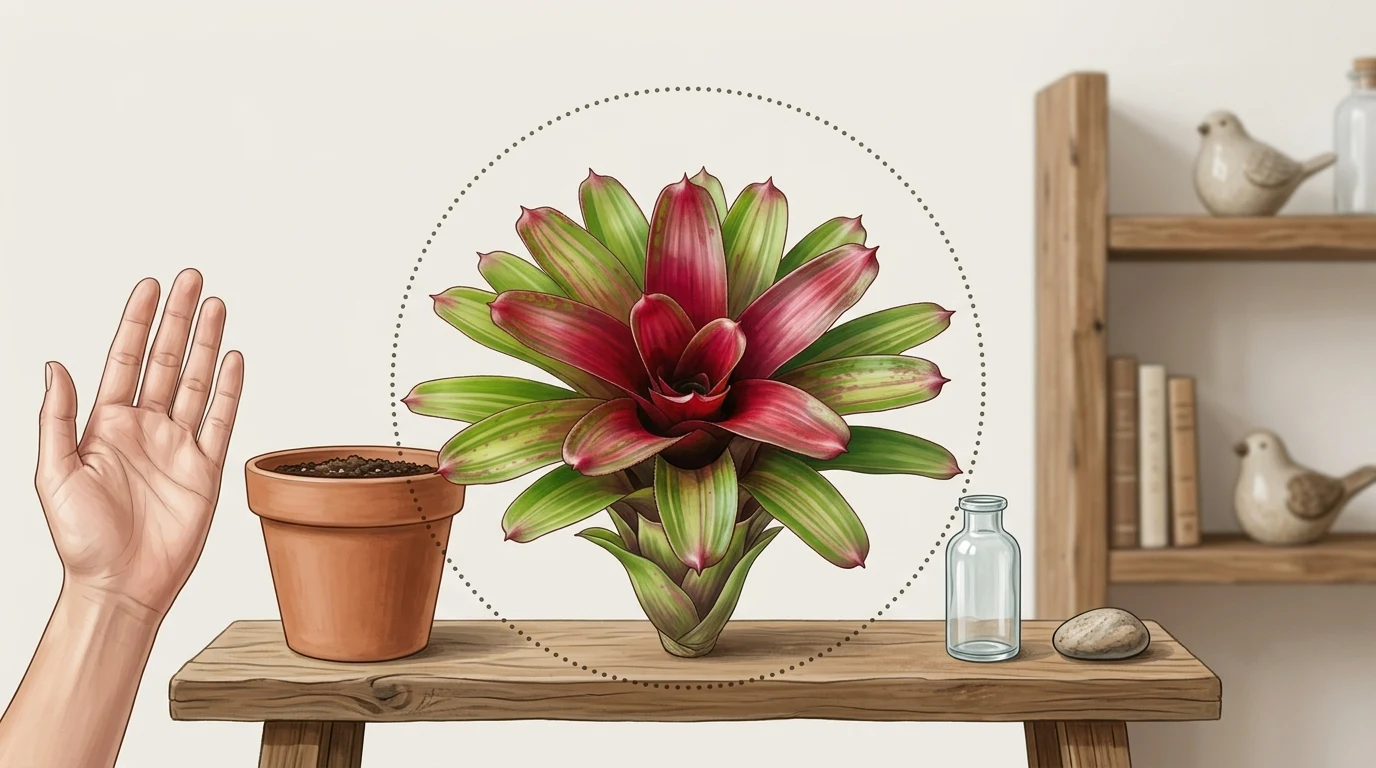
Neoregelia Fireball remains one of the most compact bromeliads in cultivation. It typically reaches a mature height and width of around 20–30 cm, making it ideal for pots, terrariums, and small garden borders.
Indoor plants often stay slightly smaller due to restricted root space and lower light levels. Outdoor plants grown in bright, humid environments may develop fuller rosettes and slightly larger spread.
Key size factors:
- Light intensity directly affects leaf expansion
- Smaller pots restrict overall growth
- Warm temperatures encourage faster development
- Nutrient availability influences rosette fullness
In practical gardening experience, Fireball plants grown under filtered morning sun tend to maintain the best balance of compact size and vibrant colour.
Is Neoregelia Fireball Indoor or Outdoor?
Neoregelia Fireball is suitable for both indoor and outdoor environments, depending on climate and light conditions. In Australia, it performs well outdoors in subtropical and warm temperate regions but is equally popular as an indoor ornamental plant.
Indoors, it thrives near bright windows with indirect sunlight. Outdoors, it prefers filtered light under trees or shaded garden structures. For a broader understanding of how bromeliads and other species fit into Australian home styling, see the full guide on Australian Plants Guide: Indoor Houseplants & Garden Design.
Bathroom suitability
Bromeliads, including Neoregelia Fireball, adapt well to bathrooms due to higher humidity levels. However, they still require good natural or artificial light to maintain colour vibrancy.
Can Neoregelia Fireball Take Full Sun?
Neoregelia Fireball can tolerate gentle morning sun but does not perform well in harsh full afternoon sun. Excessive direct sunlight can scorch leaves, while insufficient light leads to dull green coloration.
Ideal light conditions:
- Bright indirect light (best overall)
- Filtered sunlight (outdoors)
- Mild morning sun exposure
Too little light results in faded colour, while too much direct sun causes leaf burn and dehydration.
How to Care for Neoregelia Fireball
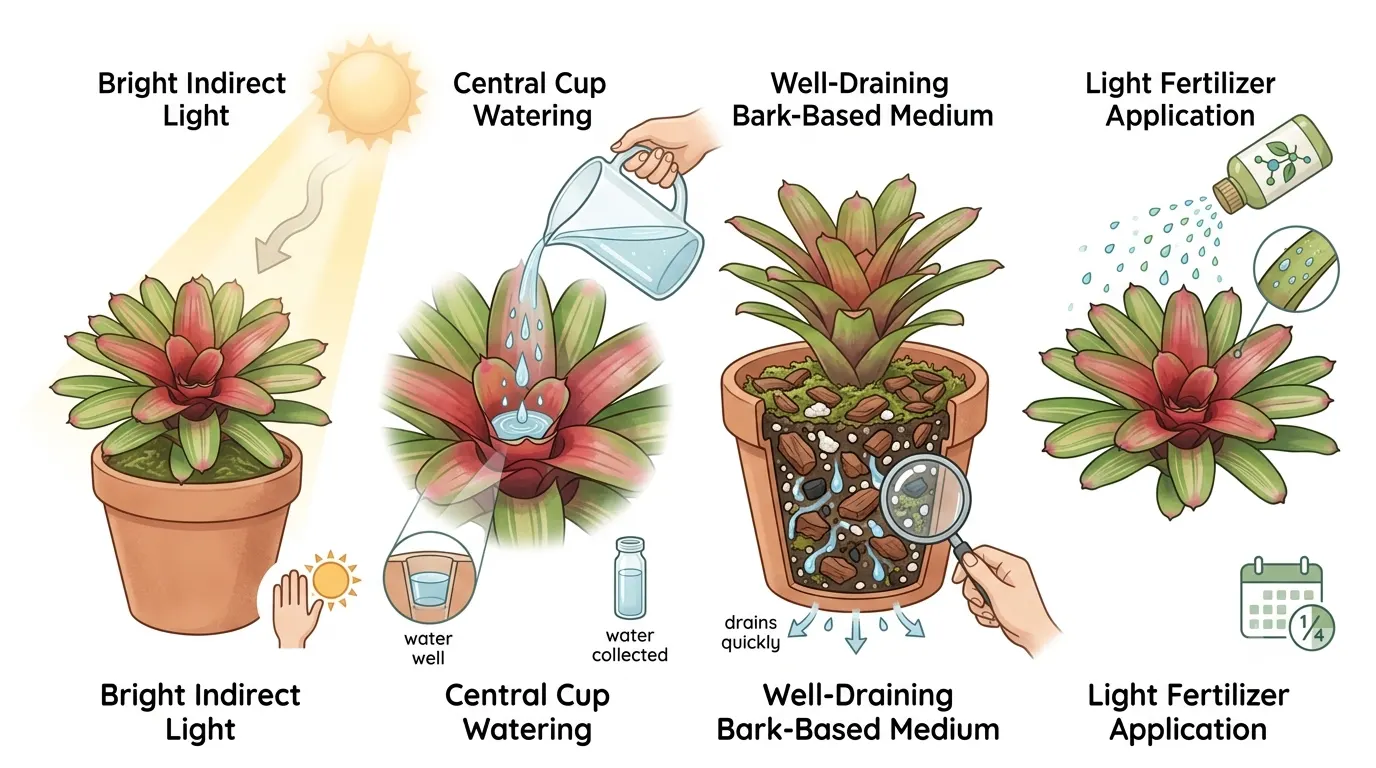
Neoregelia Fireball care is relatively simple, making it suitable for beginner gardeners. The key is balancing water in the central cup and ensuring good light exposure.
Core care requirements:
- Watering: Keep the central cup filled with clean water
- Light: Bright indirect light for best colour
- Soil: Free-draining mix or mounted bark
- Fertiliser: Light feeding during growing season
- Temperature: 15–30°C ideal range
- Pruning: Remove dead outer leaves occasionally
Watering is unique compared to typical plants. The cup should be refreshed regularly to prevent stagnation. In our experience, stagnant water is the most common cause of rot in poorly maintained plants. Many indoor plant enthusiasts who grow Neoregelia Fireball also enjoy other decorative foliage plants like Monstera varieties, including Monstera Albo Variegata Care Guide Australia.
A diluted balanced fertiliser can be applied sparingly during warmer months. Over-fertilising can damage sensitive bromeliad roots.
Can Bromeliads Grow in Just Water?
Bromeliads like Neoregelia Fireball cannot live permanently in just water. While they can temporarily survive in water-filled environments, they require structural support (soil, bark, or mounting) and air circulation for long-term health.
Are Neoregelia Easy to Care For?
Yes, Neoregelia Fireball is considered beginner-friendly. Once positioned correctly in adequate light with proper cup watering, it requires minimal maintenance and remains stable for long periods.
Common Neoregelia and Bromeliad Problems
Neoregelia Fireball is hardy, but a few common issues may occur.
1. Rot in central cup
Caused by stagnant water.
Fix: Flush cup weekly and use clean water.
2. Pests (scale, mealybugs)
Occur in dry or poorly ventilated conditions.
Fix: Remove manually and use mild insecticidal soap.
3. Poor colour development
Due to insufficient light.
Fix: Move to brighter filtered light.
4. Slow growth
Caused by low temperature or nutrient deficiency.
Fix: Improve warmth and apply diluted fertiliser.
Similar leaf stress issues can also appear in other tropical indoor plants, such as those explained in Brown Spots on Anthurium Leaves: Causes and Treatment.
Bromeliad Blooming and Pups
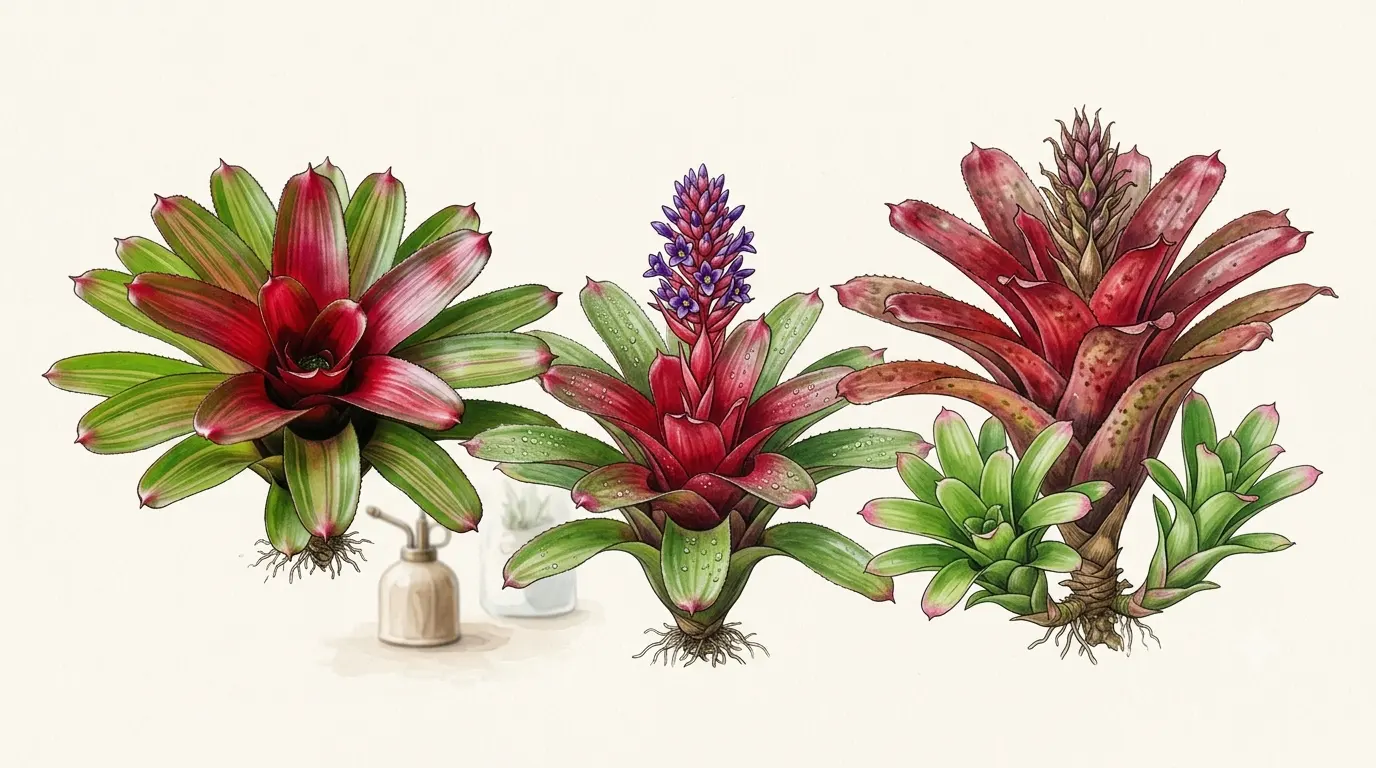
Bromeliads, including Neoregelia Fireball, follow a unique lifecycle. Each plant blooms once, after which the main rosette gradually declines.
Lifespan
A bromeliad typically lives several years before flowering, then produces offsets (pups) before dying back.
Should I cut off the bromeliad bloom?
Yes, once flowering ends, the bloom can be removed to redirect energy to pup development.
What happens if you don’t remove pups?
Pups will eventually cluster around the parent plant. While this is natural, overcrowding may reduce airflow and growth efficiency.
Propagation
Pups can be separated once they reach one-third to half the size of the parent plant and replanted individually.
Where to Plant Bromeliads for Best Results
Neoregelia Fireball grows best in locations with filtered light and good humidity. Ideal placements include shaded garden beds, patio pots, and mounted displays. In Australian gardens, they perform particularly well under tree canopies where they receive dappled sunlight. For gardeners designing layered tropical and ornamental spaces, Neoregelia Fireball pairs well with species discussed in Flowering Trees Australia: Best Species Guide.
Best locations:
- Bright indoor windows
- Shaded outdoor gardens
- Vertical plant walls
- Mounted bark displays
Avoid full sun exposure or deep shade, both of which reduce colour vibrancy.
Beginner Mistakes to Avoid With Neoregelia Fireball
Common mistakes include:
- Overfilling and not refreshing the central cup
- Placing in harsh direct sunlight
- Using heavy, moisture-retaining soil
- Ignoring pup separation
- Over-fertilising the plant
In practical gardening experience, light balance is the most critical factor affecting long-term colour and health.
Conclusion
Neoregelia Fireball is a hardy, visually striking bromeliad that performs well in both indoor and outdoor Australian environments. Its compact size, vivid red foliage, and low-maintenance requirements make it an ideal choice for beginners and collectors. With proper light, clean cup watering, and occasional care, this plant maintains strong colour and produces healthy pups over time.
The key to success with Neoregelia Fireball is balance—bright light without harsh sun, moisture without stagnation, and minimal but consistent care.
FAQs
How do you care for a Neoregelia Fireball?
Keep it in bright indirect light, maintain water in its central cup, and use a free-draining growing medium with minimal fertiliser.
Is bromeliad Neoregelia an indoor or outdoor plant?
It can grow both indoors and outdoors depending on climate, but it prefers warm, humid, and well-lit conditions.
How tall do fireball Neoregelia get?
They typically grow 20–30 cm in height and width at maturity.
Can Neoregelia take full sun?
They tolerate mild morning sun but not harsh full afternoon sun, which can damage leaves.
What are common Neoregelia problems?
Common issues include rot from stagnant water, pest infestations, poor colour from low light, and slow growth.
Should I cut off the bromeliad bloom?
Yes, after flowering ends, removing the bloom helps redirect energy to pup production.
Do bromeliads like bathrooms?
Yes, they enjoy humidity, but still require bright indirect light to stay healthy.