
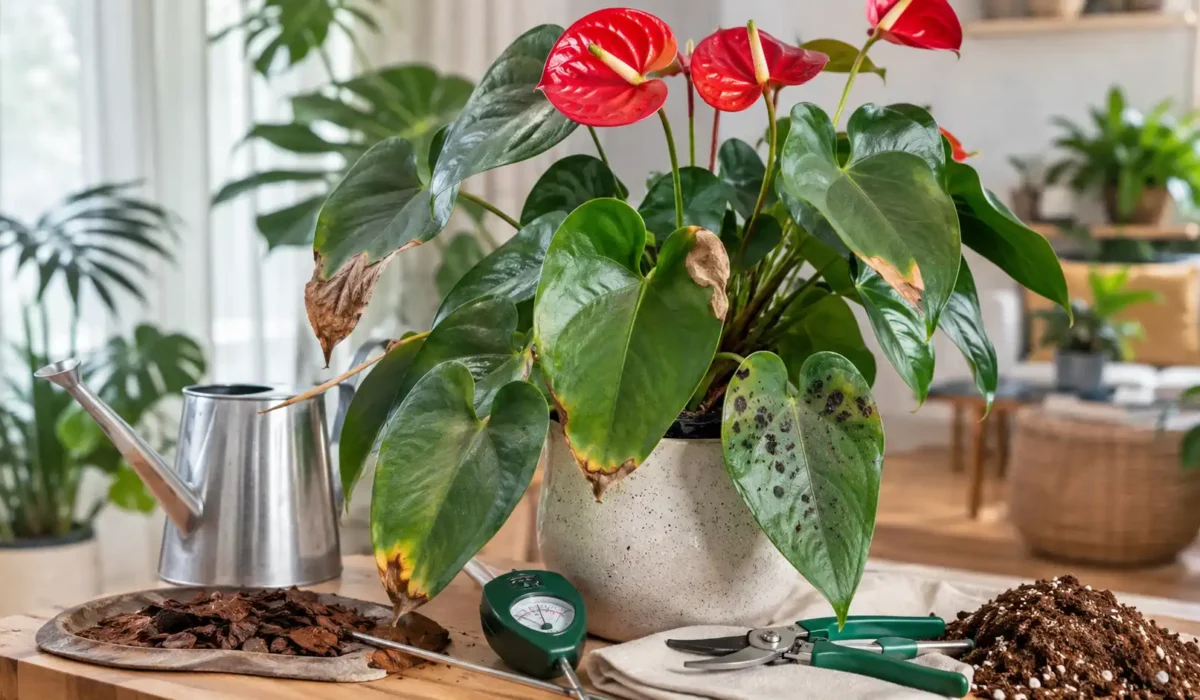
Brown Spots on Anthurium Leaves: Causes and Treatment
Introduction
Brown spots on anthurium leaves are among the most common problems experienced by anthurium growers in Australia. While the damage may appear similar at first glance, brown spots can develop for several different reasons, including watering mistakes, excessive sunlight, dry indoor conditions, fungal diseases, and bacterial infections. Because each cause requires a different solution, accurate diagnosis is the first and most important step before attempting treatment. Understanding why brown spots appear helps prevent unnecessary damage and allows the plant to recover more quickly. This guide explains the most common causes, how to distinguish them, and the most effective treatments for restoring healthy anthurium foliage. Anthuriums belong to the tropical Anthurium genus in the Araceae family, making them popular ornamental houseplants valued for their glossy foliage and colourful flowering spathes.
By Elemo Baker | Plant Care & Gardening Expert
Last Updated: June 2026
Quick Summary
- Brown spots on anthurium leaves can result from overwatering, underwatering, sun scorch, fungal leaf spot, or bacterial blight, each with distinct symptoms.
- Correct diagnosis is the first and most important step before applying any treatment.
- Most environmental causes are reversible by improving watering practices, light exposure, humidity, and drainage.
- Fungal and bacterial diseases require prompt removal of infected foliage and appropriate treatments to prevent further spread.
What Causes Brown Spots on Anthurium Leaves?
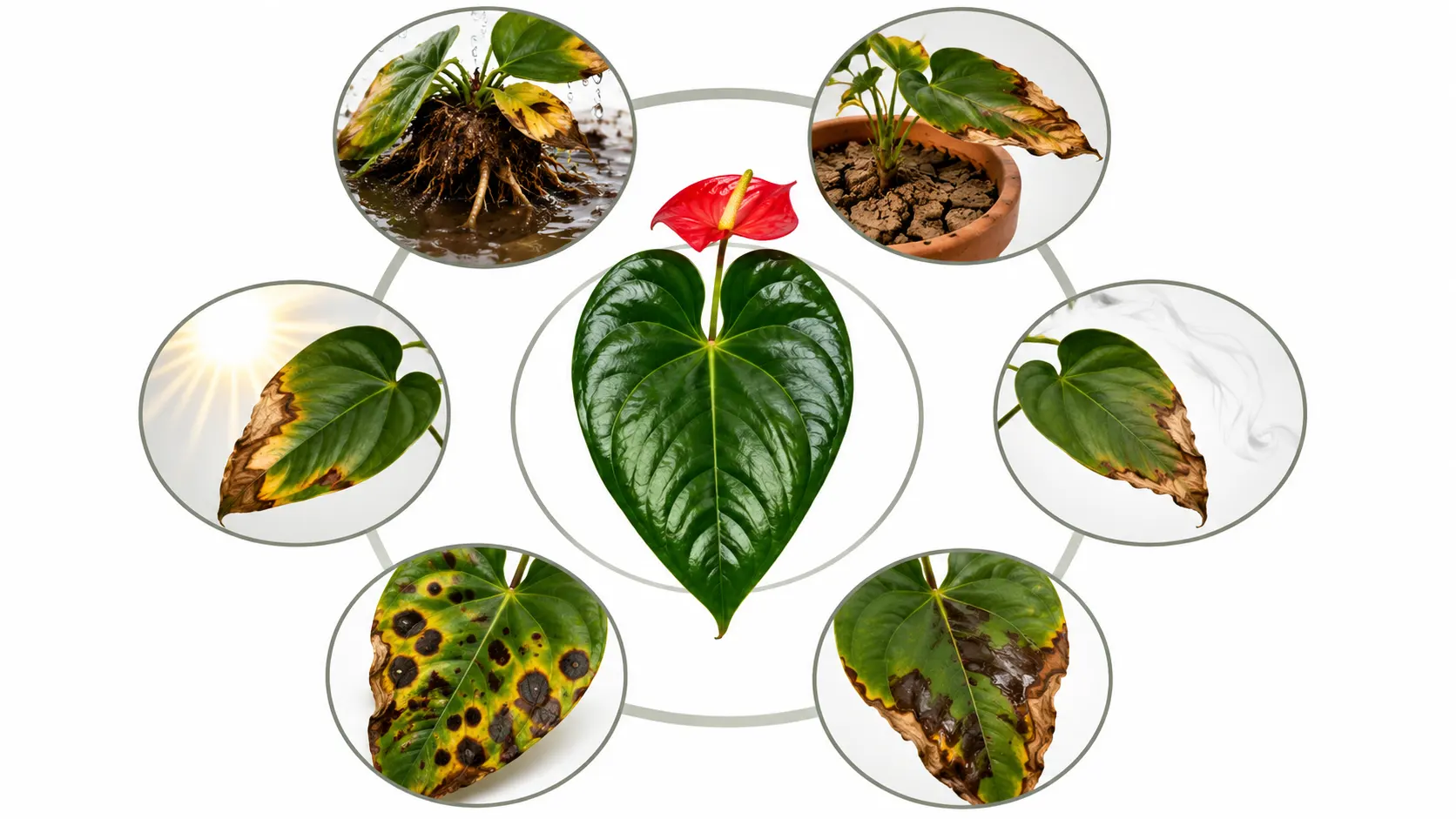
Brown spots on anthurium leaves are a symptom rather than a disease itself. The spots develop when leaf tissue becomes damaged by environmental stress, improper care, or infectious pathogens. Identifying the appearance, location, and progression of the spots is the easiest way to determine the underlying cause.
The most common causes include:
- Overwatering and root rot
- Underwatering and dehydration stress
- Excessive direct sunlight
- Low humidity and dry indoor air
- Fungal leaf spot diseases
- Bacterial leaf blight and bacterial leaf spot
In our experience growing anthuriums in Australian homes, watering problems account for most cases of brown leaves. However, fungal and bacterial diseases should always be considered if multiple leaves develop spreading spots within a short period.
Overwatering and Root Rot
Overwatering is the leading cause of brown spots on anthurium leaves. Excess moisture deprives roots of oxygen, causing them to decay. As healthy roots die, the plant can no longer absorb water and nutrients efficiently, resulting in leaf damage.
Typical signs of an overwatered anthurium include:
- Soft, mushy brown patches on leaves
- Yellowing leaves alongside brown spots
- Persistently wet or soggy potting mix
- Soft stems near the base of the plant
- Unpleasant smell from the growing medium
- Black or mushy roots during inspection
Brown spots caused by root rot often begin as water soaked areas before turning dark brown. Unlike drought damage, affected tissue feels soft rather than crisp.
Elemo Baker recommends checking soil moisture before watering instead of following a fixed schedule. Allowing the top few centimetres of potting mix to dry helps maintain healthy roots while reducing the risk of root rot.
Underwatering and Dehydration Stress
Underwatering causes a different type of brown spotting. Instead of soft patches, drought stressed plants develop dry, crispy brown edges and leaf tips as moisture is pulled away from the outer leaf tissues.
Common symptoms include:
- Brown crispy leaf margins
- Dry brown leaf tips
- Curling foliage
- Dry, lightweight potting mix
- Wilting during warm weather
Dehydration damages individual plant cells, causing them to collapse permanently. Once tissue becomes brown and dry, it cannot return to green.
Although anthuriums prefer evenly moist soil, they do not tolerate prolonged dryness. During Australia’s warmer months, plants may require more frequent watering because higher temperatures increase evaporation.
Sun Scorch and Heat Stress
Direct sunlight can quickly burn anthurium leaves. Native to tropical rainforest environments, anthuriums naturally grow beneath tree canopies where they receive filtered light rather than prolonged exposure to harsh afternoon sun.
Sun scorch usually appears as:
- Large bleached patches
- Tan or light brown dry spots
- Damage concentrated on the upper surface of exposed leaves
- Brown areas surrounded by faded green tissue
Australian summer afternoons are particularly intense, especially near west facing windows or outdoor patios. Even healthy plants can develop burnt leaves after only a few hours of direct sunlight.
Moving the plant into bright indirect light prevents additional damage while allowing new foliage to develop normally.
Low Humidity and Dry Air
Anthuriums belong to the Araceae family and naturally thrive in humid tropical forests. Indoor environments with low humidity place continual stress on the foliage, often leading to brown leaf tips and edges.
Dry air is especially common in:
- Air conditioned homes during summer
- Heated rooms during winter
- Areas with constant airflow from vents
- Naturally dry inland climates
Symptoms generally include:
- Brown tips that slowly spread inward
- Dry leaf edges
- Otherwise healthy green centres
- Slower overall growth
In our experience, maintaining humidity between 60 and 80 percent significantly improves leaf quality and reduces tip browning. Using a humidifier or placing the plant among other tropical species often provides more consistent results than occasional misting.
Healthy humidity levels also reduce plant stress, making anthuriums less vulnerable to opportunistic diseases.
Anthurium Fungal Leaf Spot – Identification and Treatment
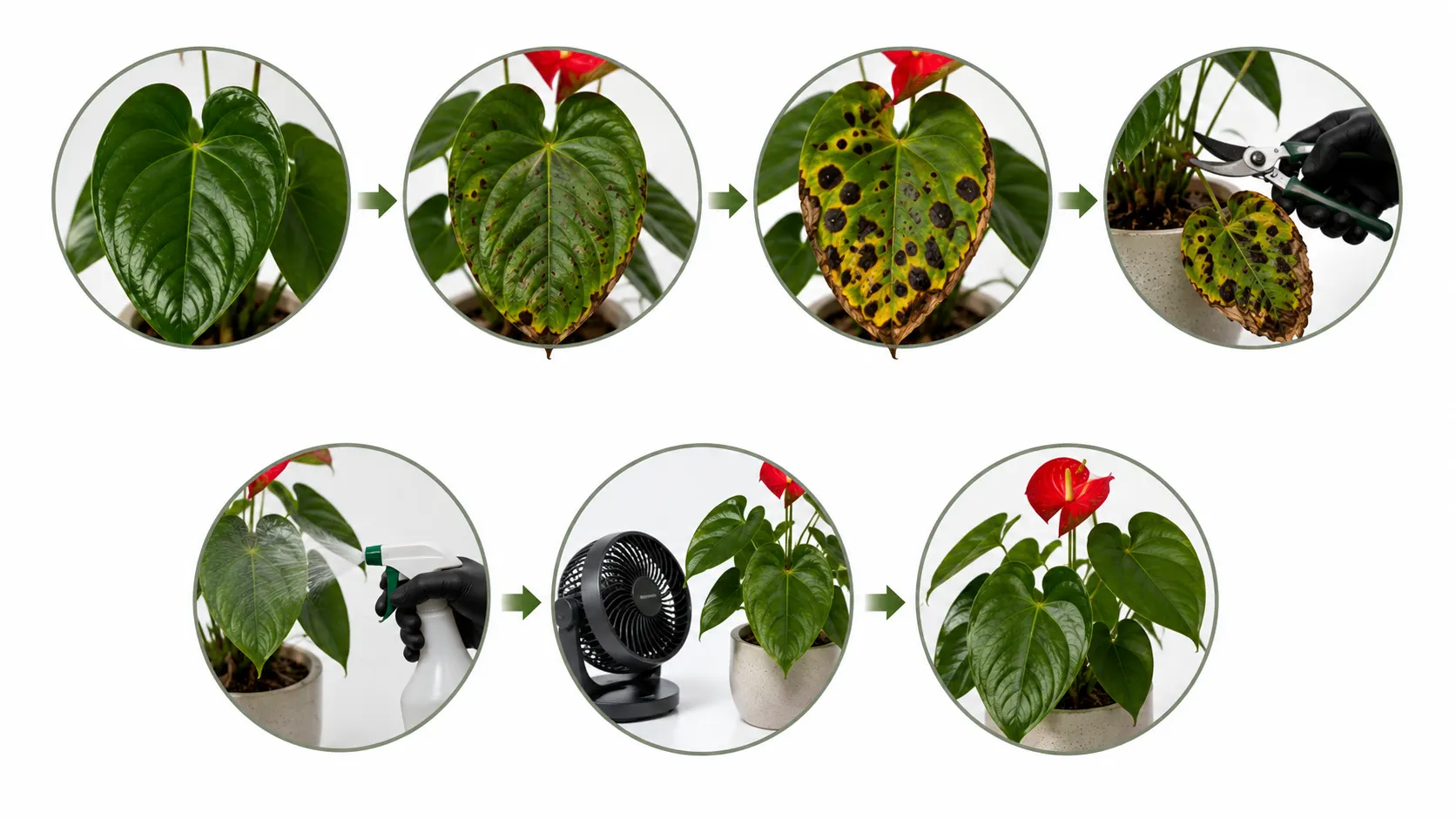
Anthurium fungal leaf spot is one of the most common infectious causes of brown spots on anthurium leaves. Unlike environmental damage, fungal infections spread from one leaf to another under favourable conditions. Early identification is essential because prompt treatment can prevent significant foliage loss.
Fungal leaf spot usually develops when moisture remains on leaves for extended periods, especially in warm, humid environments with poor air circulation. Spores spread through splashing water, contaminated tools, and infected plant debris.
Common symptoms include:
- Small circular or irregular brown spots
- Yellow halos surrounding the spots
- Multiple affected leaves appearing at the same time
- Spots gradually enlarging and merging together
- Premature yellowing and leaf drop
Unlike sun scorch, fungal spots often continue expanding over time. New spots may also appear on previously healthy leaves if conditions remain favourable.
Although anthuriums enjoy humidity, excessive moisture combined with poor ventilation creates ideal conditions for fungal diseases. Good airflow is just as important as maintaining adequate humidity.
As of the 2026 growing season, growers continue to recommend watering the soil directly rather than wetting the foliage, especially during cooler months when leaves dry more slowly.
How to Treat Anthurium Fungal Leaf Spot
The most effective treatment combines sanitation, improved growing conditions, and an appropriate fungicide. Acting quickly usually produces the best results.
Follow these steps:
- Remove all affected leaves using sterilised pruning shears.
- Dispose of infected material in household waste rather than compost.
- Apply a suitable fungicide according to the manufacturer’s instructions.
- Increase air circulation around the plant.
- Water the soil instead of spraying water onto the leaves.
- Allow the surface of the growing mix to dry slightly between waterings.
Copper based fungicides and other broad spectrum ornamental fungicides are commonly used for anthurium fungal diseases. Always follow the product label carefully.
Many gardeners ask whether baking soda is good for anthurium plants. Baking soda solutions may help suppress mild fungal activity on leaf surfaces by altering the pH, but they are not a reliable cure for established infections. Severe fungal outbreaks generally require a registered fungicide for effective control.
Elemo Baker recommends inspecting nearby tropical plants whenever fungal leaf spot appears. Early detection often prevents spores from spreading throughout an indoor plant collection.
Anthurium Bacterial Blight and Bacterial Leaf Spot
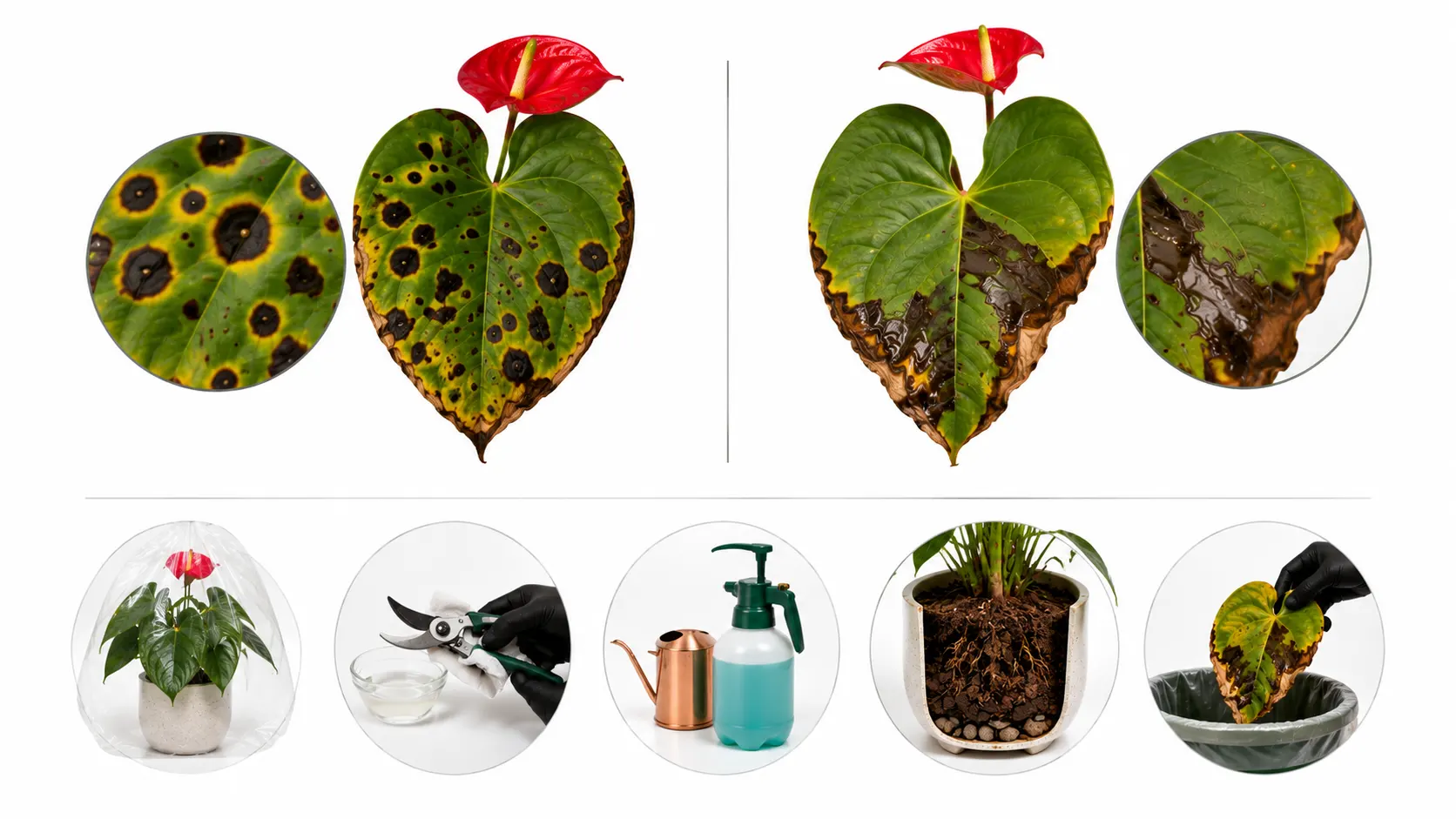
Bacterial blight is generally more aggressive than fungal leaf spot and can spread rapidly if left untreated. Because treatment options are limited, recognising bacterial symptoms early is especially important.
Bacterial infections often begin as water soaked lesions that gradually turn dark brown or black. The disease commonly starts along leaf margins before moving inward through the leaf tissue.
Typical symptoms include:
- Water soaked translucent spots
- Brown or black lesions with irregular edges
- Rapid expansion during warm, humid weather
- Yellow margins surrounding infected tissue
- Wilting of severely infected leaves
- Darkening of leaf veins in advanced cases
Bacteria spread primarily through:
- Splashing water
- Contaminated pruning tools
- Handling infected plants
- Shared irrigation systems
- Contact between wet leaves
Unlike fungal diseases, bacterial blight can move very quickly through a collection of anthuriums if environmental conditions remain warm and wet.
When searching for anthurium diseases photos or anthurium diseases pictures, bacterial blight often appears noticeably darker than fungal leaf spot and usually develops a water soaked appearance before turning black.
How to Treat Anthurium Bacterial Blight
Successful treatment depends on acting immediately after symptoms appear. While mild infections may be contained, advanced bacterial blight is often difficult to reverse completely.
Recommended treatment steps include:
- Isolate the affected anthurium from healthy plants.
- Remove infected leaves using sterilised cutting tools.
- Disinfect pruning tools after every cut.
- Improve drainage if the soil remains consistently wet.
- Reduce overhead watering and avoid splashing foliage.
- Apply a copper based bactericide where appropriate for ornamental plants.
- Monitor surrounding plants closely for new symptoms.
Because bacteria live inside plant tissues, damaged leaves will not recover after treatment. The goal is to prevent further spread while encouraging healthy new growth.
In severe cases where most leaves and stems are infected, discarding the plant may be the safest option to protect nearby anthuriums and other tropical houseplants.
In our experience, maintaining excellent sanitation practices, watering carefully, and providing good air circulation are the most effective long term strategies for preventing bacterial blight from becoming established indoors.
Other Types of Spots – Black, Yellow, and White Discolouration
Not every leaf spot on an anthurium is brown. Black, yellow, and white discolouration can also indicate different plant problems. Identifying the colour, texture, and pattern of the spots helps narrow down the underlying cause and ensures the correct treatment is applied.
| Spot Type | Likely Cause | Key Distinguishing Feature |
| Brown (soft, mushy) | Overwatering or root rot | Soggy soil, yellowing nearby leaves |
| Brown (dry, crispy) | Sun scorch or underwatering | Dry soil, bleached patches, crisp edges |
| Yellow spots | Nutrient deficiency or overwatering | Gradual spread with pale yellow tissue |
| Black spots | Bacterial blight or cold damage | Rapid spread, water soaked margins |
| White spots | Mineral deposits or pests | Powdery coating or fine stippled appearance |
Black spots usually indicate a more serious issue than brown spots because they often result from bacterial disease or exposure to cold temperatures. Yellow spotting commonly reflects stress related to watering or nutrition, while white marks may be harmless mineral residue or evidence of pests such as mealybugs or spider mites.
Regular inspection allows growers to detect problems early before significant damage occurs.
How to Treat Brown Spots on Anthurium Leaves
Treating brown spots on anthurium leaves begins with identifying their cause. Applying the wrong treatment can worsen the problem, particularly when watering issues are mistaken for disease. Whenever pruning diseased plants, wear gloves and clean your tools carefully. If irritating plant sap comes into contact with your skin, see our Firestick Plant Sap on Skin Treatment Guide for safe handling advice.
Use the following guide based on the diagnosed cause.
Overwatering and Root Rot
- Allow the top 2 to 3 centimetres of soil to dry before watering again.
- Remove the plant from its pot and inspect the roots.
- Trim away black or mushy roots using sterilised scissors.
- Repot into a fresh, well draining aroid potting mix.
- Use a container with adequate drainage holes.
Underwatering
- Water thoroughly until excess water drains from the pot.
- Maintain evenly moist soil without allowing it to remain saturated.
- Adjust watering frequency during warmer months.
- Monitor soil moisture instead of watering on a fixed schedule.
Sun Scorch
- Move the plant into bright indirect light.
- Avoid harsh afternoon sun, particularly during Australian summer.
- Rotate the pot regularly for balanced growth.
- Leave mildly damaged leaves attached until new growth develops.
Low Humidity
- Increase humidity to approximately 60 to 80 percent.
- Use a humidifier or humidity tray.
- Group tropical plants together to create a naturally humid environment.
- Keep plants away from heating and cooling vents.
Fungal Infection
- Remove infected foliage immediately.
- Improve airflow around the plant.
- Avoid overhead watering.
- Apply a suitable fungicide according to label directions.
Bacterial Infection
- Isolate the affected plant.
- Remove infected leaves with sterilised tools.
- Apply a copper based bactericide where appropriate.
- Dispose of severely infected material safely.
Elemo Baker recommends monitoring new growth after treatment rather than focusing only on damaged leaves. Healthy new foliage is the best indication that the underlying problem has been corrected.
Should You Cut Off Brown Anthurium Leaves?
Yes, severely damaged or diseased brown leaves should usually be removed. Removing infected foliage helps reduce the spread of fungal spores and bacteria while allowing the plant to direct energy toward healthy new growth.
Leaves should be removed when they are:
- More than half brown or damaged
- Infected with fungal or bacterial disease
- Soft, rotting, or collapsing
- No longer contributing to healthy growth
Minor brown tips caused by low humidity or occasional drought stress do not always require removal. If the majority of the leaf remains healthy, it can continue supporting the plant through photosynthesis.
Always use clean, sharp pruning tools and sterilise them before and after each cut using rubbing alcohol or another suitable disinfectant.
Can Plants Recover from Brown Leaves?
Brown leaf tissue cannot turn green again because the affected cells have died permanently. However, the anthurium itself can recover if the underlying problem is corrected.
After improving watering, light, humidity, or disease management, healthy new leaves should emerge over the following weeks or months.
In our experience, many struggling anthuriums recover remarkably well once root health is restored and environmental conditions become more stable. Patience is important because recovery takes time, especially after severe stress.
Anthurium Watering Guide – Avoiding the Most Common Cause of Brown Spots
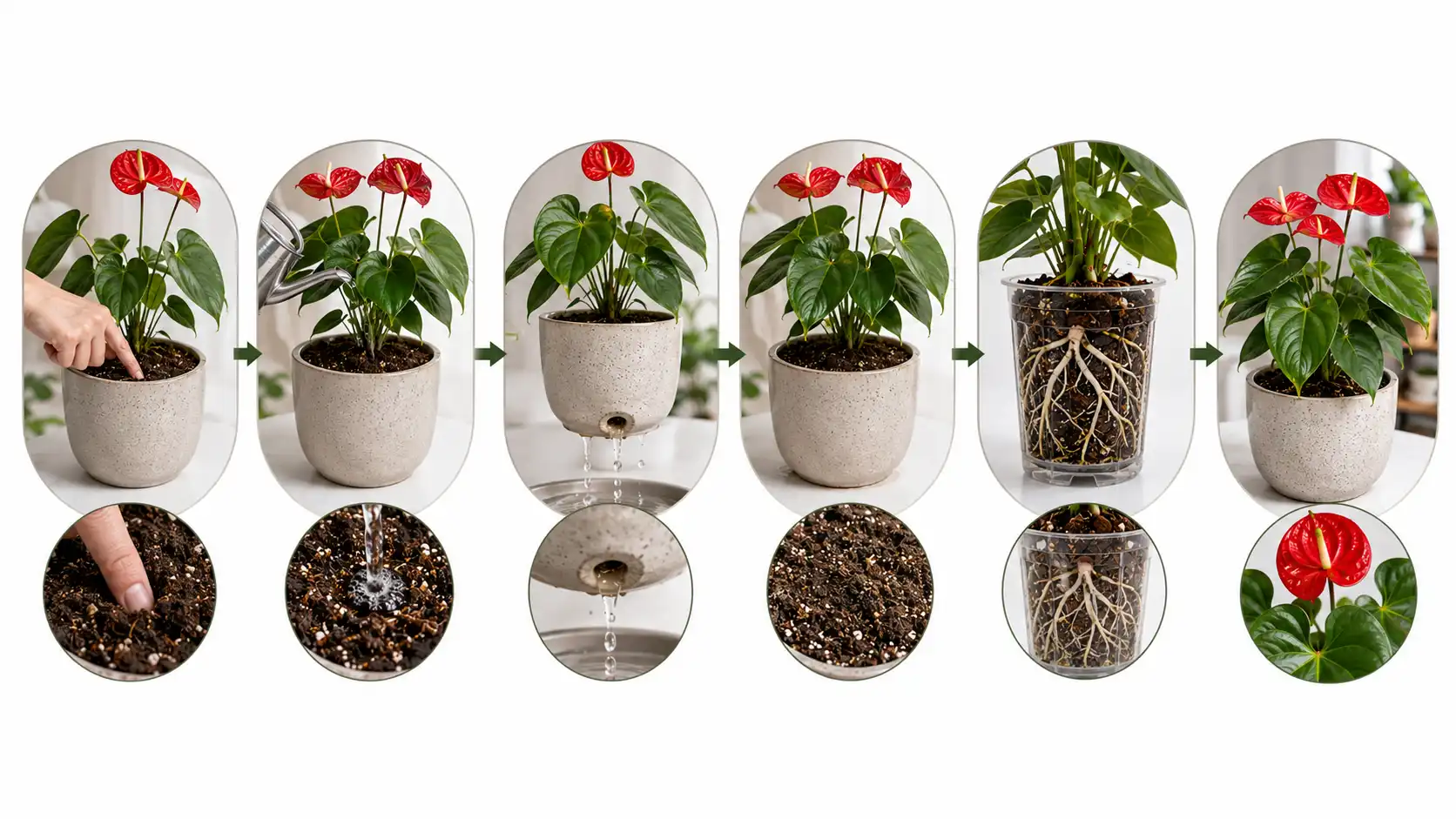
Proper watering is the most effective way to prevent brown spots on anthurium leaves. Since overwatering remains the leading cause of root rot and leaf damage, understanding when and how to water is essential.
A simple guideline is to water only when the top 2 to 3 centimetres of potting mix feels dry. Depending on temperature, humidity, and the size of the pot, this typically means watering every 7 to 10 days, although the schedule varies throughout the year. Many of these watering principles also apply to other indoor plants, as explained in our Money Tree Australia: Care, Meaning & Buying Guide, where correct soil moisture is equally important for healthy growth.
General watering recommendations include:
- Check soil moisture before watering.
- Water deeply until excess water drains from the bottom.
- Empty saucers after drainage to prevent standing water.
- Reduce watering during winter when growth slows.
- Increase watering slightly during hot summer weather if the soil dries more quickly.
Many growers ask whether anthuriums should be watered from the top or the bottom. Both methods can be effective, but top watering is generally preferred because it flushes excess salts from the potting mix while ensuring the entire root system receives moisture. Bottom watering may be used occasionally but should not replace regular flushing.
Three simple watering rules help prevent most anthurium plant problems:
- Water only when the soil needs it.
- Ensure excellent drainage after every watering.
- Never allow the plant to sit in water for extended periods.
Learning to recognise early signs of both overwatering and underwatering allows growers to correct problems before brown spots become widespread.
Anthurium Care Adjustments to Prevent Brown Spots
Preventing brown spots on anthurium leaves is easier than treating them after they develop. Providing the correct growing conditions reduces plant stress, improves disease resistance, and encourages healthy foliage throughout the year. If you enjoy growing tropical houseplants, our Monstera Albo Variegata Care Guide Australia explains how proper light, humidity, and watering practices help prevent similar foliage problems.
In our experience, healthy anthuriums rarely develop significant brown spotting when their basic care requirements are consistently met. Small adjustments to light, watering, soil, and fertilisation often make the biggest difference.
Light Requirements
Anthuriums grow best in bright indirect light. This closely mimics the filtered sunlight they receive beneath tropical forest canopies.
Too much direct sunlight can cause:
- Brown scorched patches
- Bleached leaf tissue
- Dry, crispy edges
- Slower growth due to heat stress
Too little light may result in:
- Slower growth
- Smaller leaves
- Reduced flowering
- Weak stems
Australian growers should protect anthuriums from strong afternoon sun, particularly during late spring and summer. East facing windows often provide ideal morning light, while sheer curtains can soften brighter exposures.
Soil and Drainage
A well draining, airy potting mix is essential for healthy roots and helps prevent root rot.
An ideal anthurium growing medium typically contains:
- Orchid bark
- Coconut coir or peat substitute
- Perlite
- Pumice or coarse sand
- Small amounts of compost or quality houseplant mix
The goal is to create a mix that retains moisture while allowing excess water to drain quickly.
Repot every two to three years or whenever the potting mix begins to break down. Fresh growing media improves aeration and reduces the likelihood of fungal and bacterial problems developing around the root system.
Fertilisation – What Works and What Doesn’t
Anthuriums benefit from regular but moderate feeding during their active growing season.
A balanced liquid fertiliser diluted to half strength every four to six weeks is generally sufficient throughout spring and summer.
Avoid excessive fertiliser because nutrient build up can cause:
- Brown leaf tips
- Leaf edge burn
- Salt accumulation in the soil
- Root damage
Many gardeners ask about homemade fertilisers.
Is Epsom salt good for anthurium plants?
Only if the plant has a confirmed magnesium deficiency. Routine application is unnecessary and excessive use may upset nutrient balance.
Is coffee good for anthuriums?
Fresh coffee grounds are not recommended because they may alter soil structure and moisture retention. Well composted organic material is a safer alternative.
What is the best homemade fertiliser for anthuriums?
Well matured compost, diluted worm castings, or compost tea can provide gentle nutrition when used occasionally. However, commercially balanced fertilisers provide more predictable nutrient ratios for indoor anthuriums.
Elemo Baker recommends flushing the potting mix with clean water every few months to remove excess fertiliser salts and maintain healthy root conditions.
Common Anthurium Problems Beyond Brown Spots
Brown spots are only one of several issues that may affect anthuriums. Recognising related symptoms helps identify broader plant health problems before they become severe. Many indoor plant issues, including leaf browning, yellowing, and environmental stress, are also discussed in our Dracaena Plant Indoor Benefits, Care, Meaning & Propagation guide.
| Problem | Likely Cause |
| Brown flower spathes | Natural ageing, low humidity, or temperature stress |
| Black leaf patches | Bacterial blight or frost damage |
| Yellowing leaves | Overwatering or nutrient deficiency |
| Crispy leaf edges | Low humidity or underwatering |
| White powdery patches | Fungal infection or mineral deposits |
Monitoring both leaves and flowers provides valuable clues about overall plant health. Changes in colour, texture, or growth rate often appear before more serious symptoms develop.
Regular inspection also helps detect pests and diseases while they are still easy to manage.
How Long Do Anthuriums Live and What Affects Their Health?
With proper care, anthuriums can live for many years and often remain healthy for decades as indoor plants. Their lifespan depends largely on consistent growing conditions and early management of problems such as brown spots, root rot, fungal diseases, and bacterial infections.
Healthy anthuriums continue producing new leaves and flowers throughout much of the year when provided with:
- Bright indirect light
- Proper watering practices
- High humidity
- Well draining soil
- Regular but balanced fertilisation
- Good air circulation
Plants that experience repeated overwatering, severe disease outbreaks, or prolonged environmental stress generally have shorter lifespans.
Fortunately, many struggling anthuriums recover successfully once the underlying cause is identified and corrected. Even plants that have lost several leaves often regain their vigour by producing healthy new growth from the crown.
As of 2026, experienced growers continue to emphasise prevention through proper cultural care rather than relying solely on chemical treatments after problems appear.
Conclusion
Brown spots on anthurium leaves are a symptom rather than a single problem. They may result from overwatering, underwatering, sun scorch, low humidity, fungal leaf spot, or bacterial blight. Successful treatment depends on accurately identifying the cause before taking corrective action.
Most environmental problems can be reversed by improving watering practices, providing bright indirect light, increasing humidity, and using a well draining growing medium. Fungal and bacterial diseases require prompt removal of affected foliage along with appropriate treatment to limit further spread.
By regularly inspecting your plant and maintaining consistent care, Australian growers can prevent most cases of brown spots on anthurium leaves and enjoy vigorous growth, healthy foliage, and long lasting blooms for many years. If you’re looking to expand your indoor plant collection, you may also enjoy learning about the 10 Benefits of Snake Plant for Home and Health, another easy care houseplant that thrives indoors.
Frequently Asked Questions
Why does my anthurium have brown spots?
Brown spots on anthurium leaves are most commonly caused by overwatering, underwatering, excessive sunlight, fungal leaf spot, or bacterial blight. Examine the appearance of the spots, soil moisture, and growing conditions to determine the correct cause before beginning treatment.
How do I treat anthurium fungal leaf spot at home?
Remove infected leaves using sterilised pruning tools, improve air circulation, avoid overhead watering, and apply an appropriate fungicide if necessary. Baking soda sprays may help suppress mild fungal growth but are generally less effective than commercial fungicides for established infections.
Should I cut off brown anthurium leaves?
Yes. Severely damaged or diseased leaves should usually be removed to reduce disease spread and encourage healthy new growth. Minor brown tips caused by temporary stress can remain if most of the leaf is still green and functional.
How often should I water an anthurium?
Water when the top 2 to 3 centimetres of soil feels dry. For most indoor plants, this is approximately every 7 to 10 days, although frequency varies depending on temperature, humidity, pot size, and season. Top watering is generally preferred because it flushes excess salts from the potting mix.
What are the signs of an overwatered anthurium?
Common signs include soft brown patches on leaves, yellowing foliage, mushy stems, persistently wet soil, unpleasant odours from the potting mix, and black or decaying roots. These symptoms often indicate developing root rot and require immediate attention.
Can anthuriums recover from bacterial blight?
Mild bacterial blight can sometimes be managed if infected leaves are removed promptly and sanitation practices are improved. Severe infections are much more difficult to reverse and may require disposal of the affected plant to prevent the disease from spreading to nearby anthuriums.
1 Comment