
Orchid Stem Turning Brown: Causes, Fixes & Care Guide
Introduction
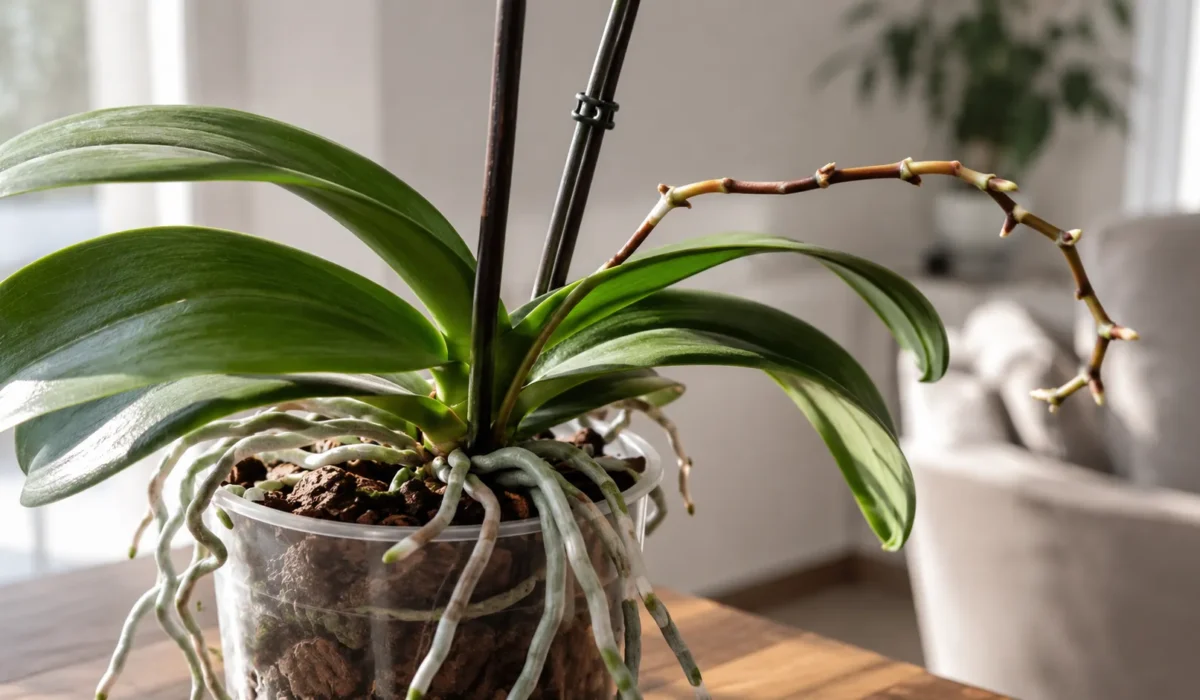
An orchid stem turning brown is one of the most common concerns among indoor gardeners, especially with Phalaenopsis orchids. In most cases, browning simply means the flower spike has finished its blooming cycle and is naturally dying back. However, in some situations, it can indicate stress, rot, disease or environmental damage affecting the plant’s health. Orchids belong to the plant family Orchidaceae, one of the largest and most diverse families of flowering plants in the world.
The key to correct care is distinguishing between natural spike dieback and harmful browning caused by overwatering, root damage or infection. This article explains the causes, symptoms, and recovery steps so you can confidently diagnose your orchid and take the right action without harming a healthy plant. Orchids are also valued as indoor plants for their air-enhancing and aesthetic benefits, similar to other species discussed in benefits of indoor plants and their impact on home environments.
Quick Summary
- A brown stem after flowering is usually natural spike dieback, not a problem
- Soft, mushy brown stems often signal rot from overwatering
- Green leaves with a brown stem usually means normal post-bloom dormancy
- Sudden browning during flowering can indicate stress or disease
- Proper pruning supports reblooming and healthy future growth
Why Is My Orchid Stem Turning Brown?
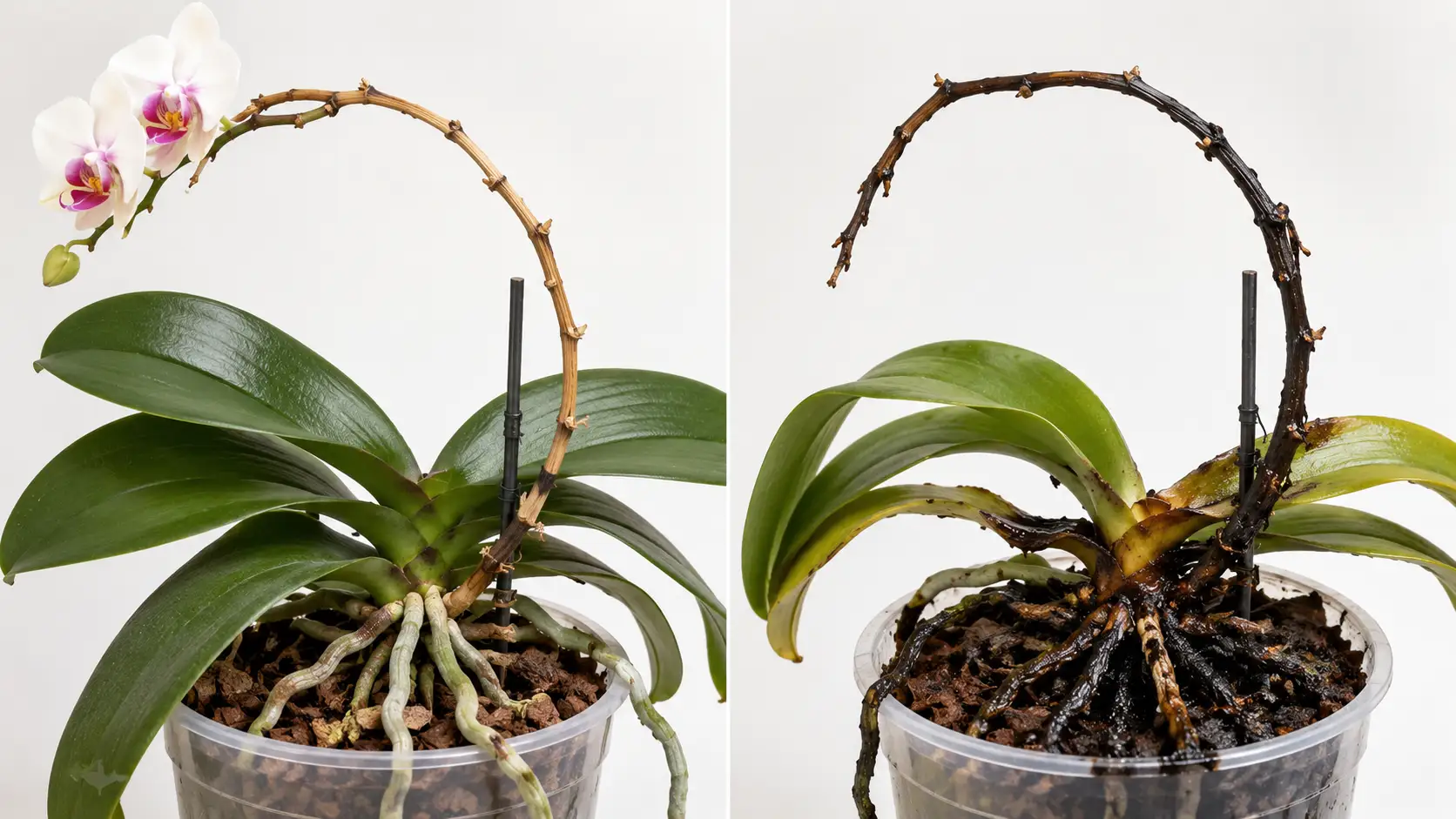
An orchid stem turning brown can happen for both natural and environmental reasons. The flower spike may be completing its life cycle, or the plant may be responding to stress.
Common causes include:
- Natural flower spike dieback
- Overwatering and root rot
- Underwatering and dehydration
- Temperature shock or cold drafts
- Fungal or bacterial infection
- Old age of the flower spike
- Repotting or transplant stress
In healthy orchids, spike dieback is expected after flowering, while repeated or rapid browning usually signals an underlying issue.
Natural vs Problematic Browning
Natural browning:
- Happens gradually after flowering
- Stem becomes dry and papery
- No foul smell
- Leaves stay firm and green
Problematic browning:
- Stem becomes soft or mushy
- Blackened or spreading patches
- Foul or sour smell
- Leaves yellow or collapse
Healthy roots are the best indicator of plant survival, even if the spike dies.
Orchid Stem Turning Brown But Leaves Still Green
When an orchid stem turns brown but leaves are still green, the plant is usually healthy. This is a classic post-flowering stage where the orchid has finished blooming and is redirecting energy into roots and leaf growth.
As long as leaves remain:
- Firm
- Green
- Not wrinkled
the orchid is not dying. Many growers observe this exact pattern before the plant produces a new spike in the next season.
Orchid Stem Turning Brown During Flowering
If the spike browns while flowers are still open, this indicates stress rather than natural dieback.
Possible causes:
- Sudden temperature changes
- Cold drafts or heat exposure
- Ethylene gas from fruit
- Root damage
- Fungal or bacterial infection
Rapid environmental change is a major trigger, especially in indoor settings with air conditioning or heaters.
Orchid Stem Colour Changes — What Different Colours Mean
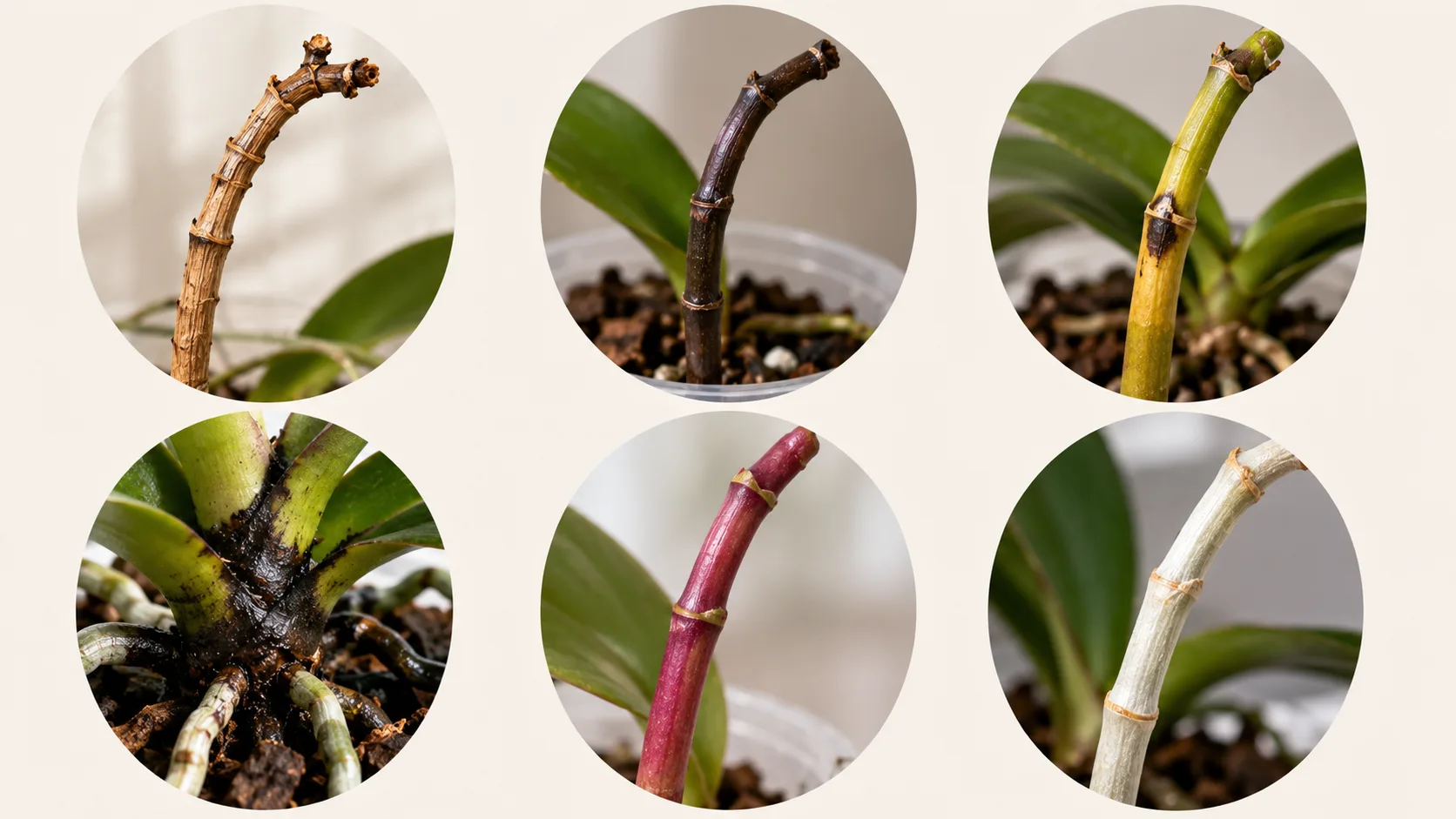
| Stem Colour | Likely Cause | Action |
| Brown (dry) | Natural dieback | Trim above node or remove |
| Brown (soft) | Rot | Cut to healthy tissue |
| Yellow | Aging or stress | Monitor conditions |
| Black | Severe rot | Remove affected area |
| Red/pink | Light stress | Usually harmless |
| White | Fungal/mineral residue | Inspect and treat |
Colour alone is not enough—always check roots and stem texture. If your orchid stem is changing colour before turning fully brown, you may also want to understand the earlier warning stage in detail, such as in orchid stem turning yellow symptoms and causes for better early diagnosis.
What Do Overwatered Orchids Look Like?
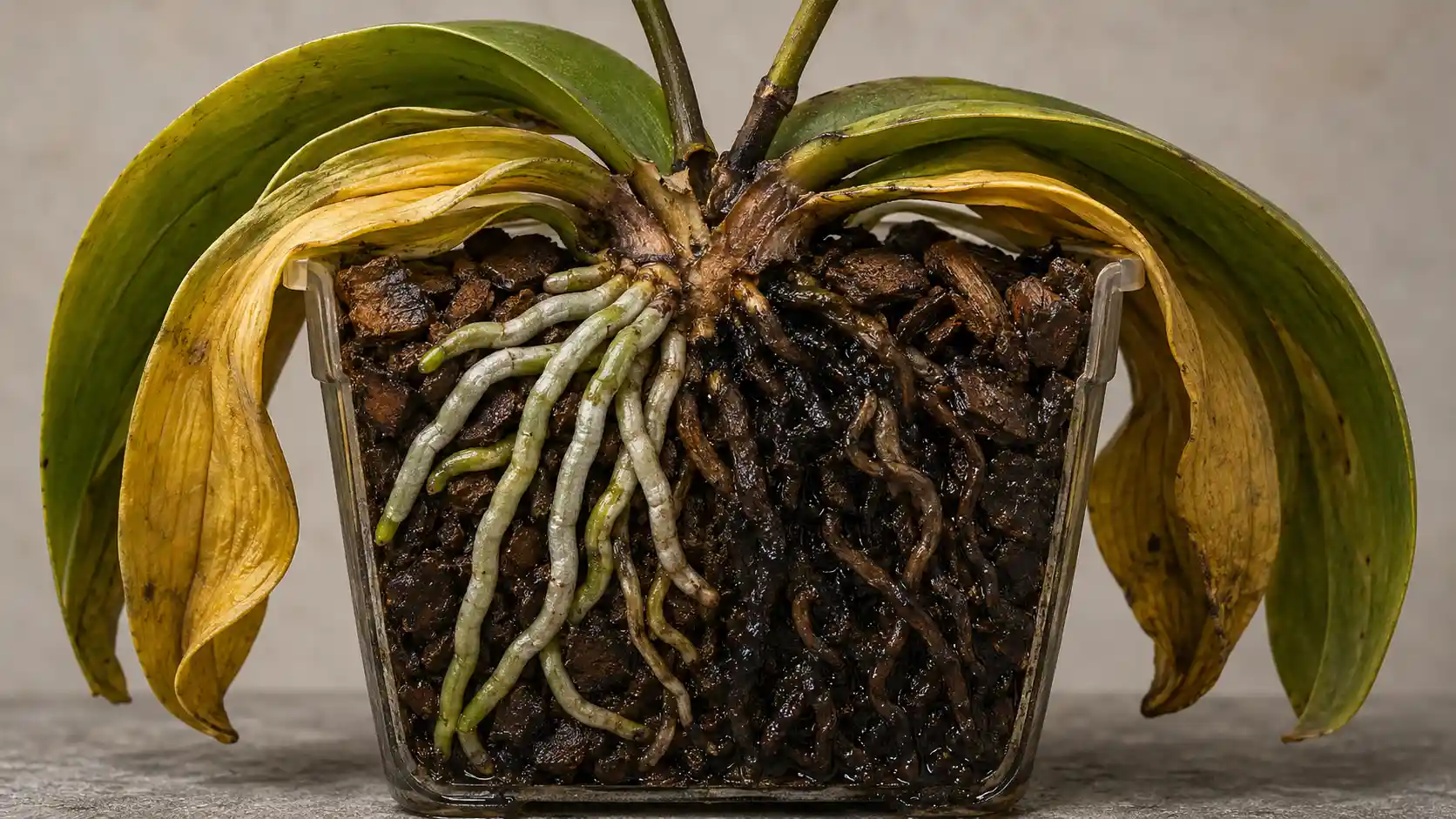
Overwatered orchids show symptoms mainly in roots and lower stem.
Signs include:
- Mushy black roots
- Yellowing leaves
- Soft stem base
- Foul smell from pot
- Constantly wet medium
- Flower drop
Will an Orchid Recover From Overwatering?
Yes, if roots are not fully destroyed.
Recovery steps include:
- Removing rotten roots
- Repotting in fresh orchid bark
- Reducing watering frequency
- Ensuring good airflow
Severely damaged orchids may struggle to recover if crown rot develops.
Signs of an Unhealthy Orchid (Beyond the Stem)
- Wrinkled or limp leaves
- Widespread yellowing foliage
- Rotten or hollow roots
- No new growth
- Soft crown or stem base
- Early flower drop
- Bad smell from pot
Root health is always more important than stem appearance.
Similar stress patterns like spotting, discoloration, and tissue decline are also seen in other indoor plants, such as in cases of brown spots on Anthurium leaves caused by moisture imbalance or fungal infection.
What to Do When Your Orchid Stem Turns Brown
Step-by-step diagnosis:
- Check if stem is dry or mushy
- Inspect roots for rot
- Examine leaf condition
- Review watering habits
- Identify environmental stress
Only prune after confirming whether the browning is natural or disease-related.
Should I Cut Off a Brown Orchid Stem?
Yes, but only when fully dead or diseased.
Cut when:
- Entire spike is brown
- Stem is dry and brittle
- Rot is spreading
Do not cut if:
- Green nodes remain
- Spike is partially alive
Where to Cut a Brown Orchid Stem
- Above a healthy node if partially green
- At base if completely dead
- Avoid damaging crown tissue
How to Trim an Orchid Stem (Tools and Technique)
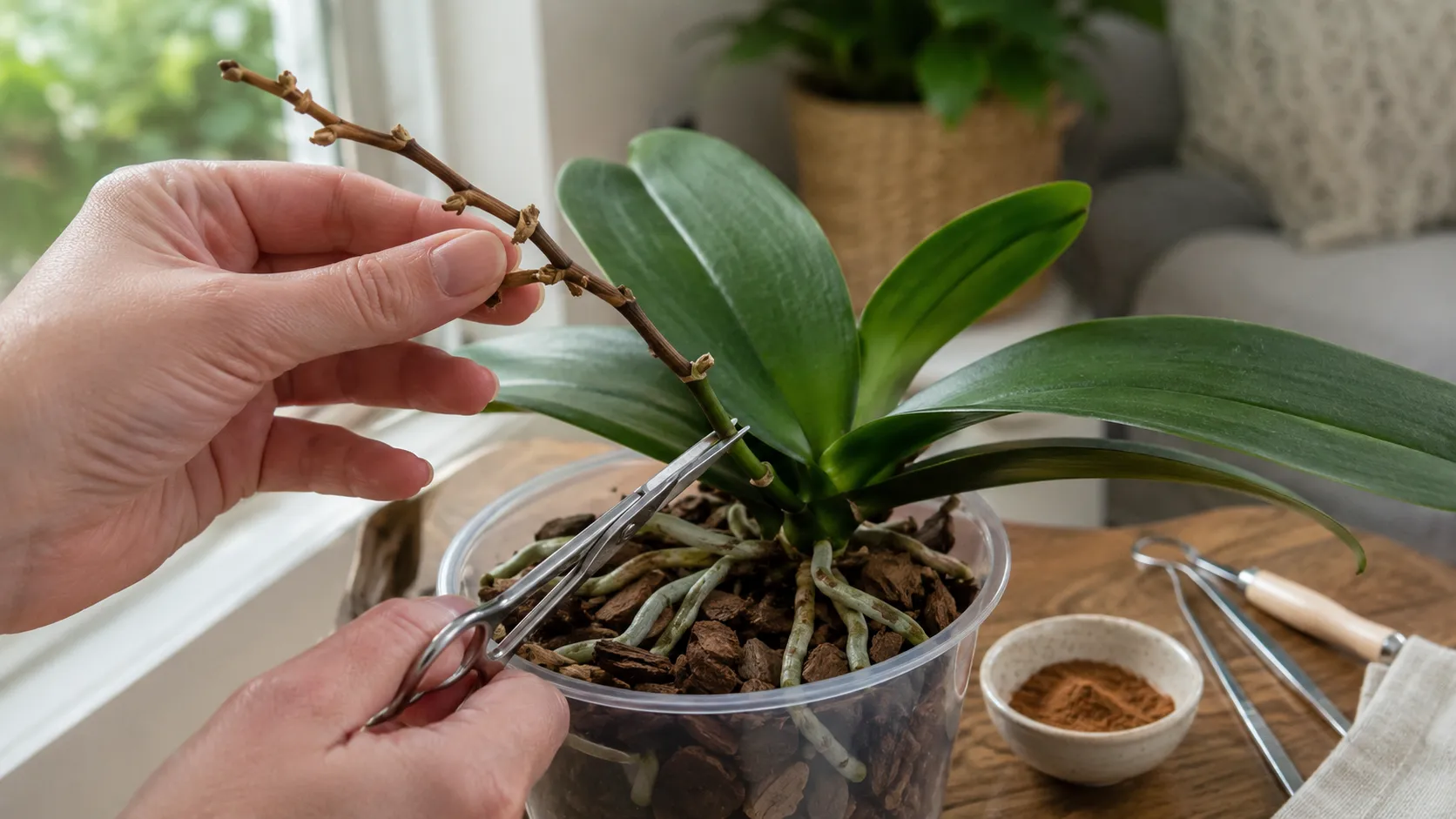
- Sterilise scissors before use
- Make a clean single cut
- Avoid tearing tissue
- Optionally apply cinnamon to cut surface
Can an Orchid Stem Repair Itself?
No, a damaged spike cannot regenerate.
However, orchids can produce:
- New spikes
- Side shoots from nodes
- Fresh leaves and roots
The plant replaces old growth rather than repairing it. Sometimes what looks like damage is actually a resting phase, and understanding what a dormant orchid looks like helps avoid cutting healthy spikes too early.
How to Revive a Dying Orchid Stem or Plant
Recovery steps:
- Adjust watering (only when dry)
- Remove rotten roots
- Repot in orchid bark
- Provide bright indirect light
- Maintain humidity and airflow
Healthy root regrowth is the first sign of recovery.
Common Orchid Care Myths and Extras
Why Can’t You Touch Orchids?
Light touching is fine, but frequent handling can shorten bloom life due to petal damage and oil transfer.
Can You Cut an Orchid Stem and Put It in Water?
No propagation occurs. Flowers may last briefly, but the stem will not root.
Home Remedies
- Coffee grounds: harmful, too dense
- Baking soda: limited antifungal use
- Sugar water: encourages bacteria
- Cinnamon: useful for cut stems only
For a broader understanding of how orchids fit into overall indoor plant care systems, you can explore Australian Plants Guide: Indoor Houseplants & Garden Design, which explains general environmental principles for healthy plant growth indoors.
What to Do With a Dead Orchid Stem
Remove when:
- Fully brown and dry
- No green tissue remains
Cut at base with sterilised tools. This helps redirect energy into new growth.
Orchid Stem Turning Brown and Flowers Falling Off
This usually indicates:
- Natural end of blooming cycle
OR - Stress from environment or watering issues
If roots are healthy, it is normal. If leaves decline too, check for rot or dehydration.
Common Beginner Mistakes With Orchid Stems
- Overwatering due to caution
- Cutting too early
- Cutting in wrong position
- Ignoring root health
- Misreading natural dieback
- Exposure to cold drafts
Seasonal and Environmental Considerations
Orchids are sensitive to:
- Winter temperature drops
- Low humidity indoors
- Air conditioning drafts
- Seasonal dormancy cycles
These factors often trigger temporary browning or slowed growth.
Conclusion
An orchid stem turning brown is most often a natural part of the orchid’s flowering cycle, but it can also signal rot, stress or disease. The most important diagnostic step is checking stem texture and root health before taking action. Proper pruning, correct watering and stable environmental conditions help ensure healthy regrowth and future flowering.
FAQs
- Is my orchid dead if the stem is brown?
No, a brown stem usually means the flower spike has finished blooming, not that the plant is dead. - Can I cut an orchid stem and put it in water?
No, orchid stems do not root in water and will not grow into new plants. - Why is my orchid stem turning yellow instead of brown?
Yellowing usually indicates ageing or early stress before the spike fully dies. - How long does it take for an orchid stem to fully die back?
It can take a few weeks to several months depending on conditions. - Should I repot my orchid if the stem is brown?
Only if roots are damaged or the potting mix is breaking down. - Why do people say not to touch orchid flowers?
Touching can bruise petals and shorten bloom life due to oils and pressure.