
Small Mango Tree with Fruits: Complete Guide
Introduction
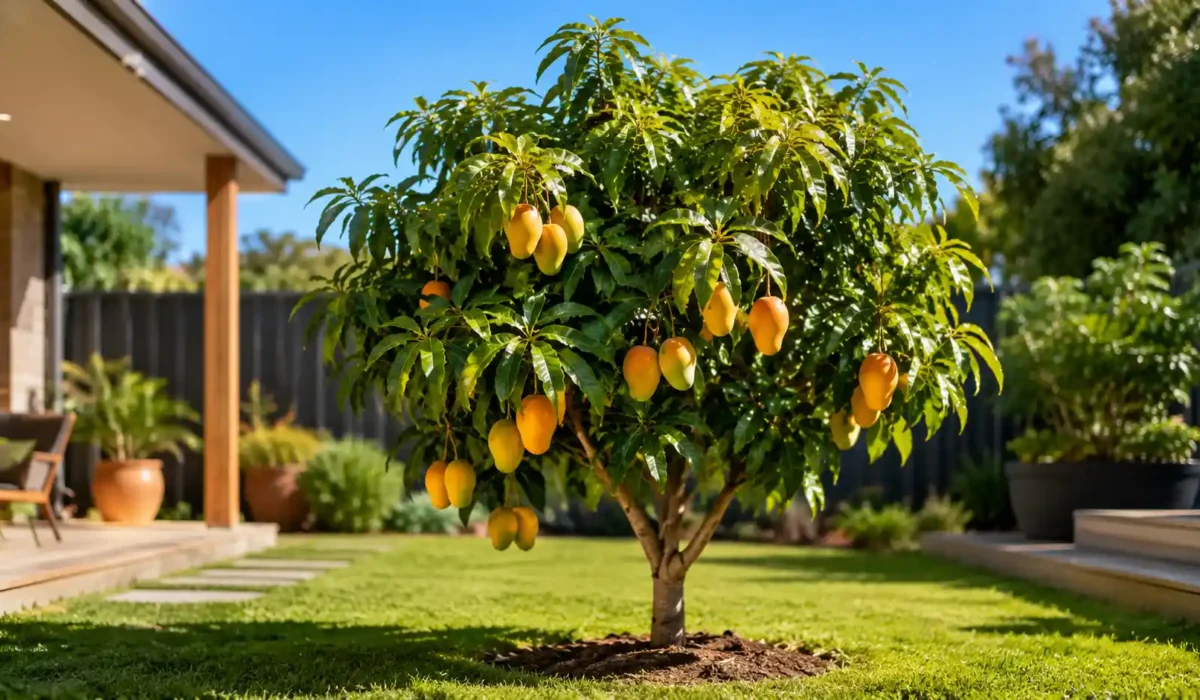
A small mango tree with fruits refers to dwarf or grafted mango varieties that are specifically bred or managed to stay compact while still producing full-sized, flavour-rich mangoes. These trees are ideal for small gardens, courtyards, and large containers, making mango cultivation accessible even in limited spaces. Despite their reduced height, they maintain the same genetic ability to produce high-quality fruit as standard mango trees.
In Australian conditions, dwarf mango trees are especially popular due to their adaptability, early fruiting age, and suitability for warm climates. Understanding what makes a mango tree “small” and how it still fruits effectively helps gardeners maximise yield in restricted spaces.
Quick Summary
- Dwarf mango trees grow 1.5–3 metres tall and still produce full-sized fruit.
- Grafted varieties often fruit within 2–4 years, much faster than seed-grown trees.
- Popular dwarf types include Kensington Pride, Irwin, Nam Doc Mai, and Calypso.
- Mango trees are self-pollinating, so one tree is enough for fruit production.
What Is a Small (Dwarf) Mango Tree?
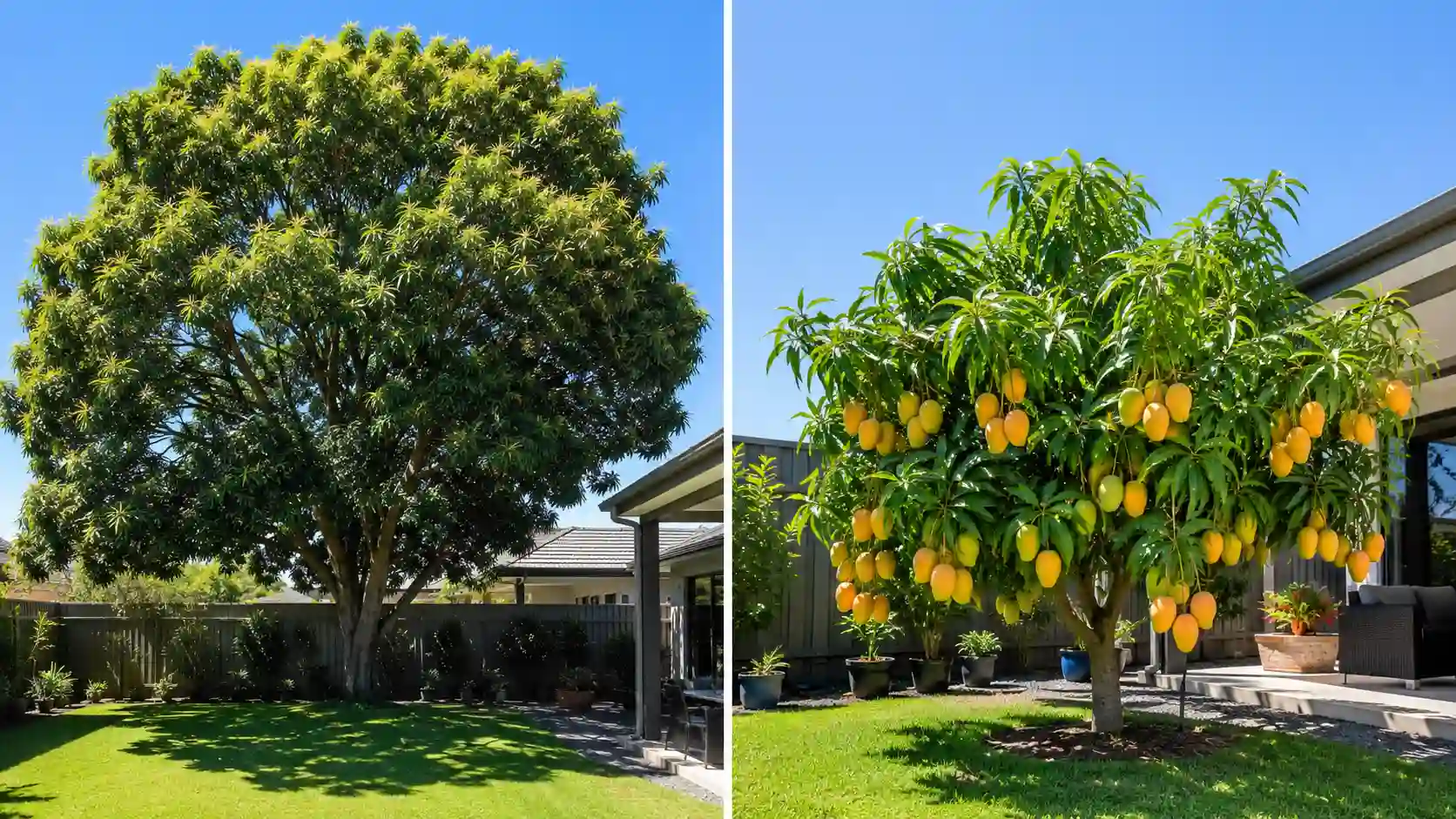
A small or dwarf mango tree is a cultivated mango variety that has been genetically selected or grafted to maintain reduced growth while still producing normal fruit. Unlike standard mango trees that can exceed 10–20 metres, dwarf mango trees typically remain compact at 1.5–3 metres. For general botanical background on mango species, see Mango tree on Wikipedia.
These trees are not naturally miniature in most cases. Instead, they are controlled through horticultural techniques such as grafting onto dwarfing rootstocks or selective breeding for compact growth habits.
Dwarf mango trees are widely used in home gardens because they offer easier maintenance, earlier fruiting, and suitability for container growing.
How Grafting Creates a Smaller Tree
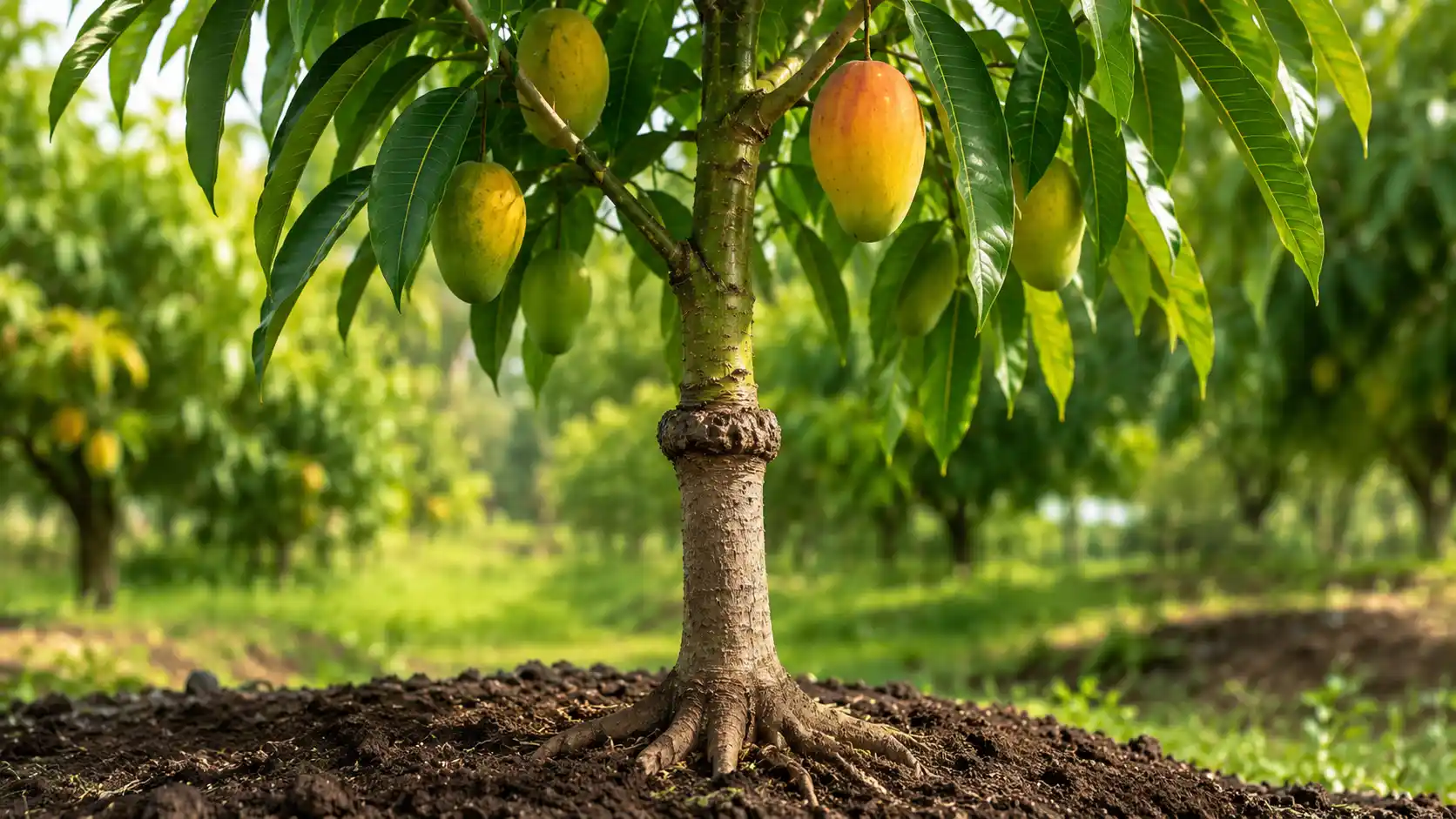
Grafting is the most common method used to produce dwarf mango trees.
It involves joining two plant parts:
- Rootstock: Controls size, vigour, and adaptability
- Scion: Determines fruit type and quality
When a dwarfing rootstock is used, the tree’s overall size is restricted, but the scion still produces genetically identical fruit to the parent variety. This is why grafted mango trees fruit earlier and stay compact.
In practical gardening experience, grafted mango trees also show more predictable growth patterns, which makes pruning and canopy management significantly easier for home growers.
Dwarf vs Standard Mango Trees (Comparison)
| Feature | Dwarf Mango Tree | Standard Mango Tree |
| Mature Height | 1.5–3 m | 10–20 m |
| Fruiting Age | 2–4 years | 5–8 years |
| Container Suitability | Excellent | Poor |
| Yield Size | Moderate but consistent | Very high but less accessible |
| Maintenance | Easy | High |
Dwarf mango trees are preferred in urban gardening because they combine productivity with manageability.
Can a Small Mango Tree Produce Fruit?
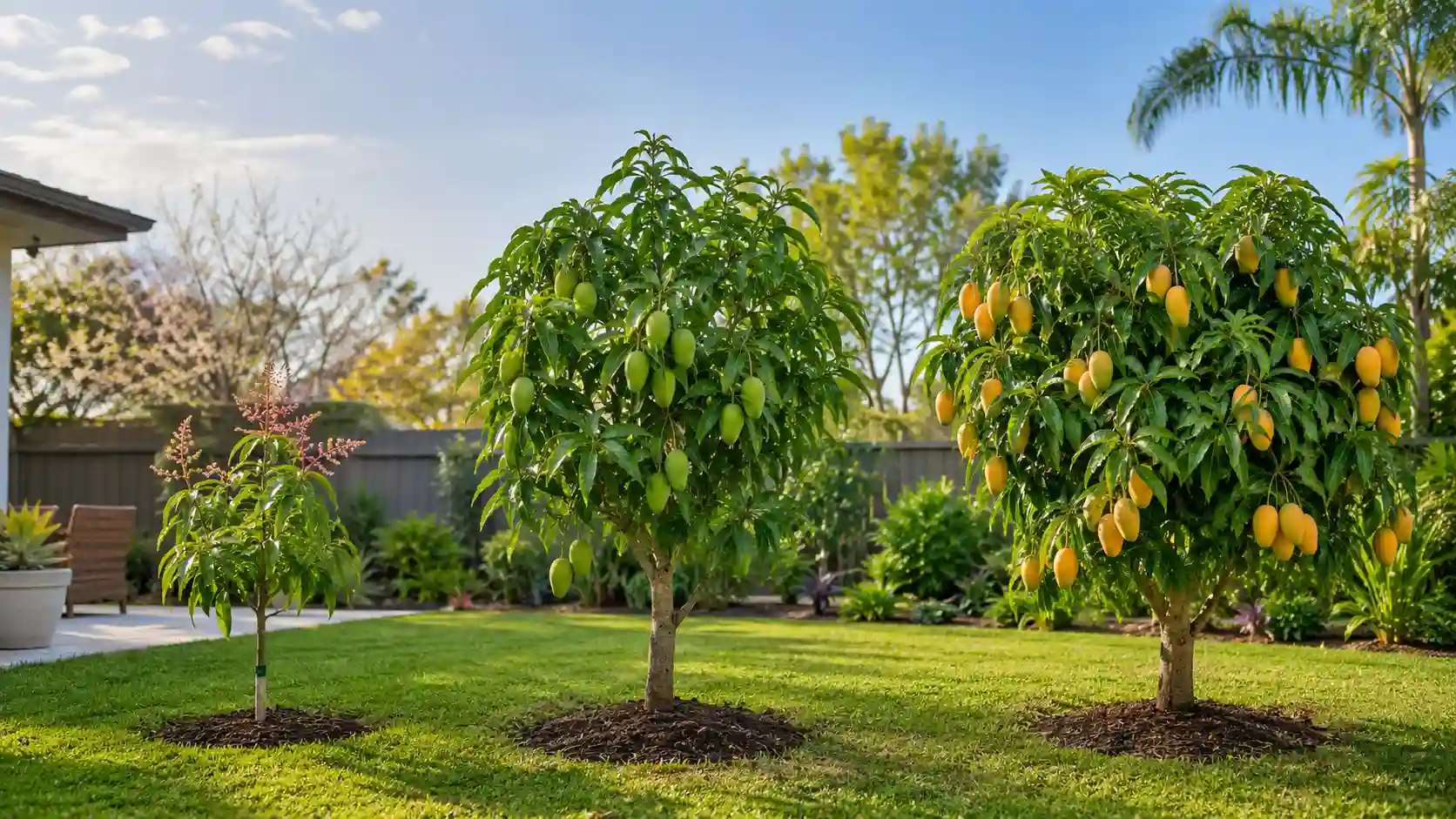
Yes, a small mango tree can produce full-sized fruit. Dwarf mango trees are genetically identical to standard varieties in terms of fruit production. The only difference is their controlled growth habit, not their reproductive capacity. Like mango trees, Mulberry Varieties Australia: Best Types, Care & Fruiting also demonstrate how grafting significantly reduces time to fruit production compared to seed-grown trees.
Fruit production depends more on age, climate, nutrition, and pollination conditions than tree size. In Australia’s warm regions, dwarf mango trees are highly reliable fruit producers when properly cared for.
How Long Until a Mango Tree Bears Fruit?
The time required for fruiting depends on how the tree was propagated:
- Grafted mango trees: 2–4 years
- Seed-grown mango trees: 5–8 years
Key factors influencing fruiting speed include:
- Warm tropical or subtropical climate
- Adequate sunlight (6–8 hours daily)
- Balanced fertilisation (low nitrogen, higher potassium)
- Proper pruning and canopy airflow
- Healthy pollinator activity
In our experience growing mango trees in warm Australian climates, grafted dwarf varieties consistently outperform seed-grown trees in early fruiting reliability.
Do You Need Two Mango Trees to Get Fruit?
No, you do not need two mango trees to produce fruit. Mango trees are generally self-pollinating, meaning a single tree can produce fruit independently.
However, pollination success can improve when:
- Bees and flies are active during flowering
- Multiple flowering plants are nearby
- Weather conditions are warm and dry during bloom
While one tree is sufficient, improved pollinator activity often increases fruit set and overall yield consistency.
Best Small Mango Tree Varieties for Australian Gardens
Several dwarf mango varieties perform particularly well in Australia due to climate compatibility and compact growth habits.
These include:
- Dwarf Kensington Pride
- Irwin Mango
- Nam Doc Mai
- Calypso Mango
- Dwarf Strawberry-type mangoes
These varieties are selected for their balance of size control, flavour quality, and disease resistance in warm climates. Other compact fruiting plants such as Super Dwarf Cavendish Banana Growing Guide Australia are also popular choices for small-space tropical gardening in Australia.
Comparison Table — Popular Dwarf Mango Varieties
| Variety | Mature Height | Fruit Profile | Climate Suitability | Fruiting Time |
| Kensington Pride (Dwarf) | 2–3 m | Sweet, aromatic | Tropical/subtropical Australia | 2–4 years |
| Irwin | 2–3 m | Mild, less fibrous | Warm coastal regions | 2–4 years |
| Nam Doc Mai | 1.5–2.5 m | Very sweet, low fibre | Tropical zones | 2–3 years |
| Calypso | 2–3 m | Sweet, firm flesh | Wide Australian adaptation | 2–4 years |
| Dwarf Strawberry | 1.5–2 m | Rich, tangy sweetness | Warm climates | 3–4 years |
Ideal Growing Conditions for a Small Mango Tree
Small mango trees thrive in warm, frost-free environments with full sun exposure. Similar warm-climate fruit trees such as Feijoa Tree Australia: Growing, Care, Varieties & Fruit Guide also share comparable sunlight and soil requirements for reliable fruiting in home gardens.
They require:
- 6–8 hours of direct sunlight daily
- Well-draining soil (sandy loam preferred)
- Warm temperatures above 15°C
In Australian gardens, coastal and northern regions provide the most reliable growing conditions. For a broader understanding of how fruit trees and ornamentals fit into Australian landscaping design, see the Australian Plants Guide: Indoor Houseplants & Garden Design.
Growing Mango Trees in Pots
Dwarf mango trees adapt well to container growing when managed correctly:
- Use large pots (50–100 litres minimum)
- Ensure excellent drainage holes
- Repot every 2–3 years
- Perform light root pruning if needed
- Use quality citrus or tropical fruit mix
Container-grown mango trees require more frequent watering but offer excellent space control.
Plant Size
Dwarf mango trees typically reach:
- Height: 1.5–3 metres
- Width: 1.5–2.5 metres
They are best suited to outdoor environments such as gardens, patios, or sun-exposed courtyards. Mango trees are not suitable as indoor plants due to high light requirements. Other compact ornamental trees like Dwarf Cherry Blossom Tree: Size, Care & Australian Guide show similar benefits of size-controlled growth in small Australian gardens.
Tree size is influenced by pruning, pot restriction, climate conditions, and rootstock selection. Native aromatic species like Lemon Myrtle Height and Width: Complete Australian Size Guide offer another example of manageable growth habits in Australian edible landscaping.
Growth Rate
Dwarf mango trees grow at a moderate pace. They experience:
- Strong spring growth flushes
- Slower growth in cooler months
- Reduced activity in winter dormancy
Warm temperatures, regular feeding, and proper irrigation significantly enhance growth speed.
Care Guide
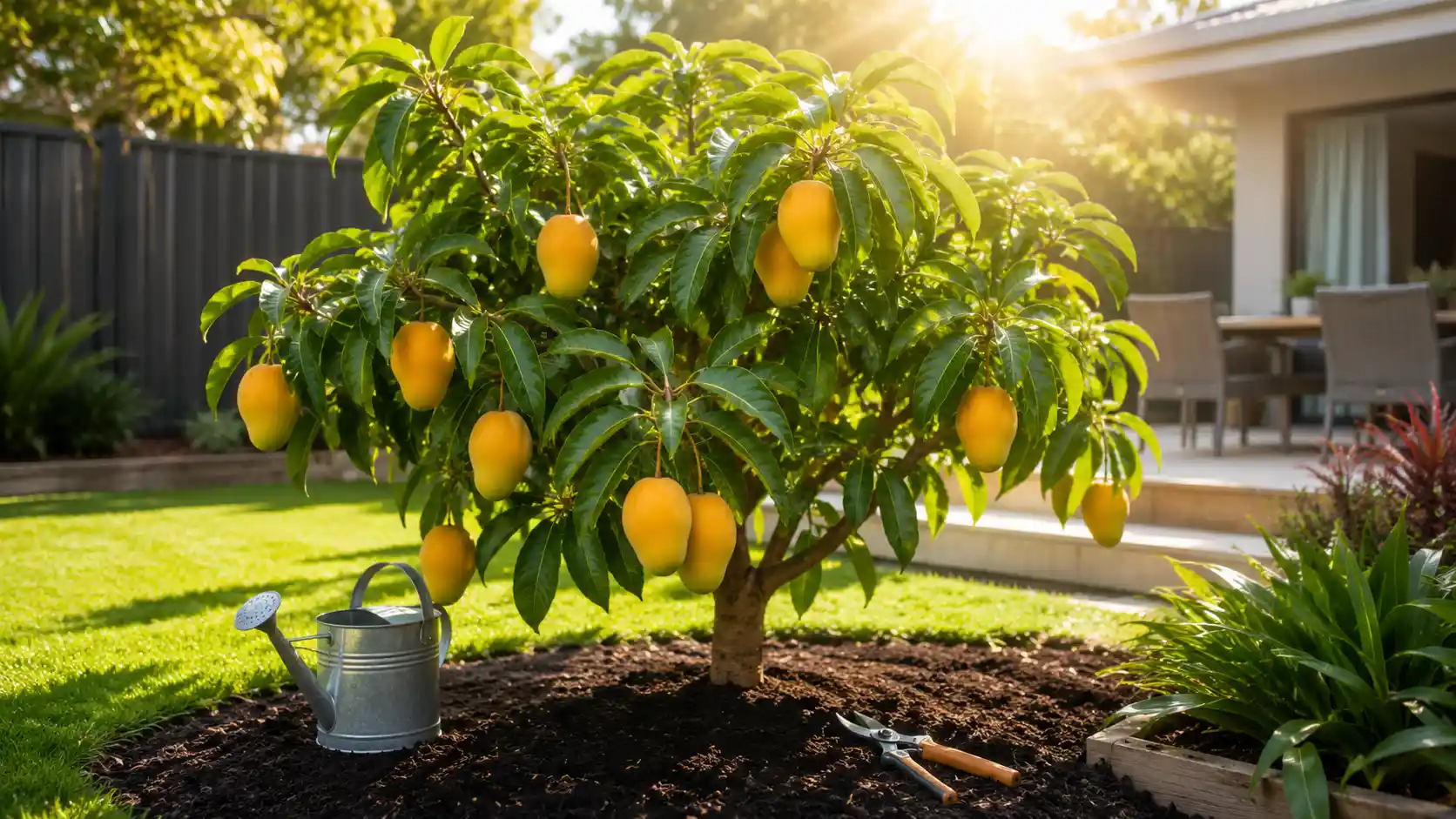
Proper care ensures healthy growth and fruiting consistency.
Watering Needs
Water deeply but infrequently. Allow soil to dry slightly between watering to prevent root rot.
Sunlight Requirements
Full sun exposure is essential for flowering and fruit development.
Soil and Fertilising
Use well-draining soil. Apply low-nitrogen, high-potassium fertiliser during growing season.
Pruning to Maintain a Compact Shape
Prune after harvest to maintain shape and encourage airflow.
Climate and Frost Tolerance in Australia
Mango trees are frost-sensitive. Protect young trees during cold spells.
How to Induce Fruiting in a Small Mango Tree
Inducing fruiting in a small mango tree with fruits involves managing stress, nutrition, and seasonal timing so the tree shifts from vegetative growth to flowering. Mango trees naturally respond to warm dry conditions followed by a slight reduction in growth activity, which triggers flowering in healthy mature trees.
To improve fruiting success, gardeners should focus on controlled pruning, balanced fertilisation, and environmental consistency rather than excessive intervention.
Key fruiting triggers include:
- Warm, dry flowering period (late spring to early summer in many Australian regions)
- Reduced nitrogen fertiliser before flowering
- Strong sunlight exposure
- Mature tree age (usually 2–4 years for grafted trees)
In our experience growing dwarf mango trees in warm climates, trees that are slightly “stressed” in a controlled way (less water and nitrogen before flowering season) tend to produce more consistent blooms.
Common Problems With Small Mango Trees (Problem–Solution)
Even hardy dwarf mango varieties can experience growth and fruiting issues if conditions are not optimal. Understanding common problems helps maintain tree health and productivity.
Leaves Turning Yellow
Yellowing leaves are usually a sign of stress rather than disease. The most common causes include overwatering, nutrient imbalance, or poor drainage.
Causes:
- Excess water causing root stress
- Nitrogen or iron deficiency
- Compacted or poorly draining soil
Solutions:
- Reduce watering frequency
- Improve soil drainage with organic matter
- Apply a balanced micronutrient fertiliser
Overwatering Issues
Overwatering is one of the most common mistakes with mango trees, especially in containers.
Symptoms:
- Drooping leaves
- Root rot smell in soil
- Slowed growth
Prevention:
- Allow topsoil to dry before watering
- Ensure pots have proper drainage holes
- Avoid waterlogged soil conditions
Healthy mango trees prefer slightly dry conditions over consistently wet soil.
Pest Infestations
Mango trees can be affected by several pests that reduce yield and fruit quality.
Common pests include:
- Fruit fly
- Mango seed weevil
- Scale insects
- Aphids
- Anthracnose-related fungal issues
Management strategies:
- Use fruit fly traps during fruiting season
- Apply horticultural oil for scale control
- Maintain airflow through regular pruning
- Remove infected fruit and leaves promptly
In Australian conditions, fruit fly is one of the most significant threats to developing mango fruit.
Slow or No Fruit Growth
A mango tree that grows but does not fruit is usually facing environmental or maturity-related limitations.
Common causes:
- Tree is too young (under 2–3 years grafted, or 5+ years seed-grown)
- Insufficient heat or sunlight
- Excess nitrogen fertiliser promoting leaf growth over fruiting
- Poor pollination activity
Solutions:
- Ensure full sun exposure (6–8+ hours daily)
- Switch to flowering-support fertiliser (low nitrogen, high potassium)
- Encourage pollinators like bees in the garden
Do Mango Trees Attract Wildlife?
Yes, mango trees naturally attract a range of wildlife, especially when fruit begins to ripen. The sweet aroma and soft flesh make mangoes highly appealing to both birds and mammals.
Common wildlife visitors include:
- Native birds (lorikeets, parrots, mynas)
- Flying foxes (fruit bats)
- Possums in suburban areas
- Insects such as bees and fruit flies
While wildlife interaction is part of a healthy garden ecosystem, it can reduce harvest yield. Many gardeners use protective netting to safeguard ripening fruit without harming animals.
In Australian gardens, flying foxes are particularly active in mango season, especially in warmer coastal regions.
Mango Nutrition and Common Myths
Mangoes are nutrient-rich tropical fruits containing vitamins, antioxidants, and natural sugars. However, several myths exist around their consumption and effects.
Nutritional highlights:
- High in vitamin C and vitamin A
- Contains dietary fibre supporting digestion
- Provides natural antioxidants such as beta-carotene
Common myths:
- “Can mango lower cholesterol?”
Mango contains fibre and antioxidants that may support heart health, but it is not a direct cholesterol-lowering food. - “Why not eat mango at night?”
There is no scientific restriction on eating mango at night; however, its natural sugar content may affect digestion in sensitive individuals. - “Can 7 months have mango?”
This is often interpreted as pregnancy-related dietary concern. Mango is generally considered safe in normal food amounts, but dietary guidance should always be confirmed with a qualified health professional.
Mango consumption is safe and beneficial as part of a balanced diet when eaten in moderation.
What Makes This Guide Different
This guide focuses specifically on small mango trees with fruits in Australian conditions, rather than generic tropical gardening advice.
Key differences include:
- Climate-specific guidance for Australian warm and subtropical zones
- Clear distinction between dwarf and standard mango varieties
- Practical container growing advice for small spaces
- Realistic fruiting timelines based on grafted tree performance
- Problem-solving strategies for common Australian pests like fruit fly
This makes the guide more relevant for home gardeners dealing with real environmental conditions rather than idealised tropical scenarios.
Conclusion
A small mango tree with fruits offers one of the most rewarding options for home gardeners with limited space. Dwarf and grafted mango varieties allow full-sized, flavour-rich fruit production while maintaining a compact and manageable tree structure.
The key to success lies in selecting the right variety, ensuring strong sunlight, maintaining balanced nutrition, and applying consistent seasonal care. With proper management, most grafted dwarf mango trees begin producing reliable harvests within just a few years.
Ultimately, choosing the right small mango tree with fruits comes down to variety selection, grafting quality, and ongoing care suited to Australian conditions.
FAQs
Can a small mango tree produce fruit?
Yes, small or dwarf mango trees produce full-sized fruit. Their compact size does not affect fruit quality or flavour.
What are the smallest mango tree varieties?
Dwarf Nam Doc Mai, Dwarf Kensington Pride, and dwarf strawberry-type mangoes are among the smallest commonly grown varieties.
How many years does it take for a mango tree to bear fruit?
Grafted mango trees typically fruit in 2–4 years, while seed-grown trees may take 5–8 years.
Do you need two mango trees to get fruit?
No, mango trees are self-pollinating, so a single tree can produce fruit.
How do you keep a mango tree small?
Regular pruning, container growing, and using dwarf grafted rootstocks help maintain a compact size.
How can you induce fruiting in a mango tree?
Reduce nitrogen fertiliser before flowering, ensure full sun, and maintain mild water stress during pre-flowering periods.
Do mango trees attract birds and other wildlife?
Yes, ripening mangoes attract birds, flying foxes, possums, and insects. Netting can help protect fruit during harvest season.
2 Comments