

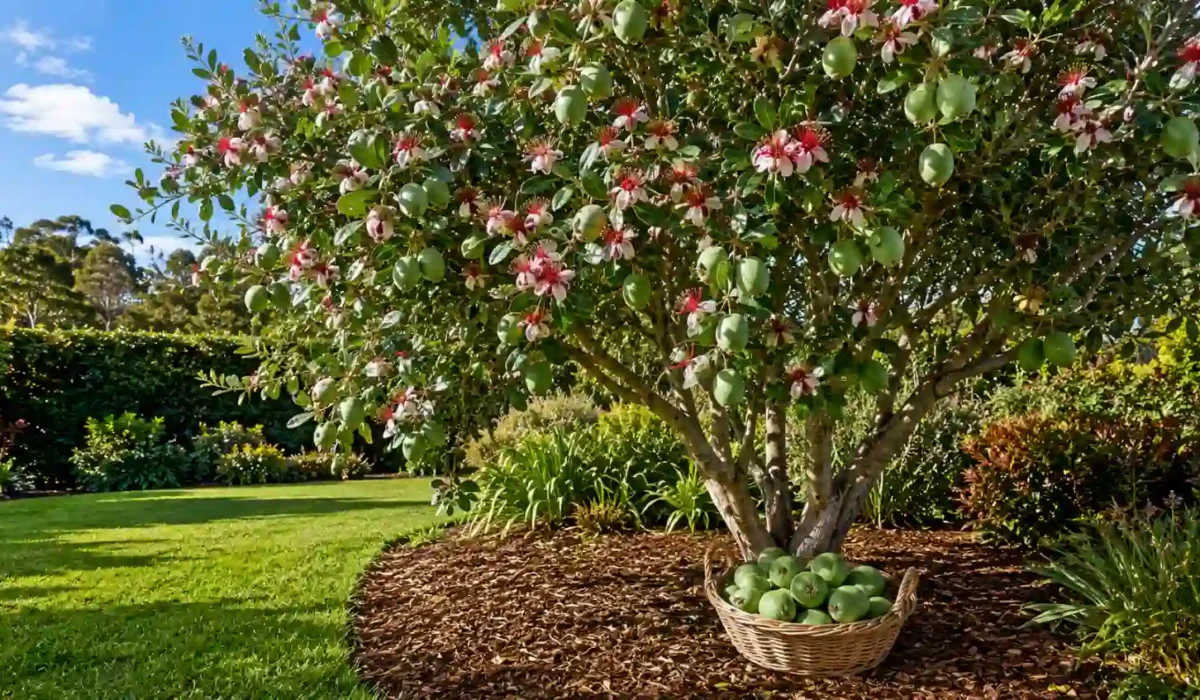
Feijoa Tree Australia: Growing, Care, Varieties & Fruit Guide
Introduction
Feijoa trees are becoming one of the most popular fruiting plants in Australian home gardens thanks to their attractive evergreen foliage, fragrant edible flowers, and delicious autumn fruit. Also known by the scientific name Acca sellowiana (formerly Feijoa sellowiana), these versatile shrubs produce aromatic fruit with a distinctive tropical flavour while also serving as excellent hedges or ornamental feature plants. Although feijoas have long been associated with New Zealand, they thrive across many Australian climates and are increasingly available through local nurseries. Understanding the right variety, growing conditions, and care requirements helps gardeners enjoy reliable harvests for many years. If you’re looking for more productive backyard fruit trees, our Super Dwarf Cavendish Banana Growing Guide Australia covers another compact fruiting plant well suited to Australian gardens.
By Elemo Baker | Plant Care & Gardening Expert
Last Updated: June 2026
Quick Summary
- Feijoa trees are evergreen fruiting shrubs native to South America and are widely grown throughout Australia and New Zealand.
- Mature plants typically reach 2–5 metres in height and can be grown as either productive hedges or standalone specimen trees.
- Most feijoa varieties produce heavier crops when cross-pollinated, although several cultivars are self-fertile.
- Australian feijoa season generally runs from March to June, depending on climate and variety.
- Once established, feijoa trees require relatively little maintenance, tolerate periods of drought, and experience few serious pest or disease problems.
What Is a Feijoa Tree?
A feijoa tree is an evergreen fruit-producing shrub or small tree belonging to the Myrtaceae family. Native to the highlands of southern Brazil, Uruguay, Paraguay, and northern Argentina, it has adapted exceptionally well to temperate regions of Australia and New Zealand.
Feijoa (Acca sellowiana) belongs to the myrtle family (Myrtaceae), a diverse group of flowering plants that includes eucalyptus, bottlebrushes, and lilly pilly species. (Wikipedia)
The plant is valued for both its ornamental appearance and edible fruit. It produces attractive silver-backed leaves, colourful edible flowers, and oval green fruit that ripen during autumn. Because of its dense branching habit, it is commonly grown as both a backyard fruit tree and a privacy hedge.
In our experience growing feijoas, established plants prove remarkably resilient once their root systems are developed. They tolerate wind, moderate drought, and light frost far better than many subtropical fruit trees.
What Does a Feijoa Taste Like?
Feijoas have a unique flavour that combines tropical sweetness with floral aromas. Most people describe the taste as a blend of:
- Guava
- Pineapple
- Strawberry
- Mint
- Floral perfume
The flesh is soft, juicy, and slightly grainy near the centre, while the skin is firmer and mildly bitter.
The easiest way to eat a ripe feijoa is to cut it in half and scoop out the flesh with a spoon. Some people also enjoy eating the skin, although its slightly bitter flavour is an acquired taste.
Feijoas are commonly eaten fresh but are equally suitable for smoothies, desserts, jams, chutneys, baking, and beverages.
How Do You Pronounce Feijoa?
The most widely accepted pronunciation in Australia and New Zealand is:
“fay-JO-ah”
Some regions may pronounce it slightly differently, but “fay-JO-ah” remains the standard pronunciation used by gardeners, nurseries, and horticultural organisations throughout Australia.
What Are Feijoas Called in Australia?
In Australia, the fruit is generally sold simply as feijoa. Some nurseries also use the name pineapple guava, reflecting its tropical flavour rather than its botanical classification.
Despite the nickname, feijoas are not true guavas. They belong to a different genus and are scientifically classified as Acca sellowiana.
The name “pineapple guava” is mainly used in international plant catalogues, while Australian gardeners typically refer to the plant simply as a feijoa tree.
Feijoa Tree Size and Growth Rate
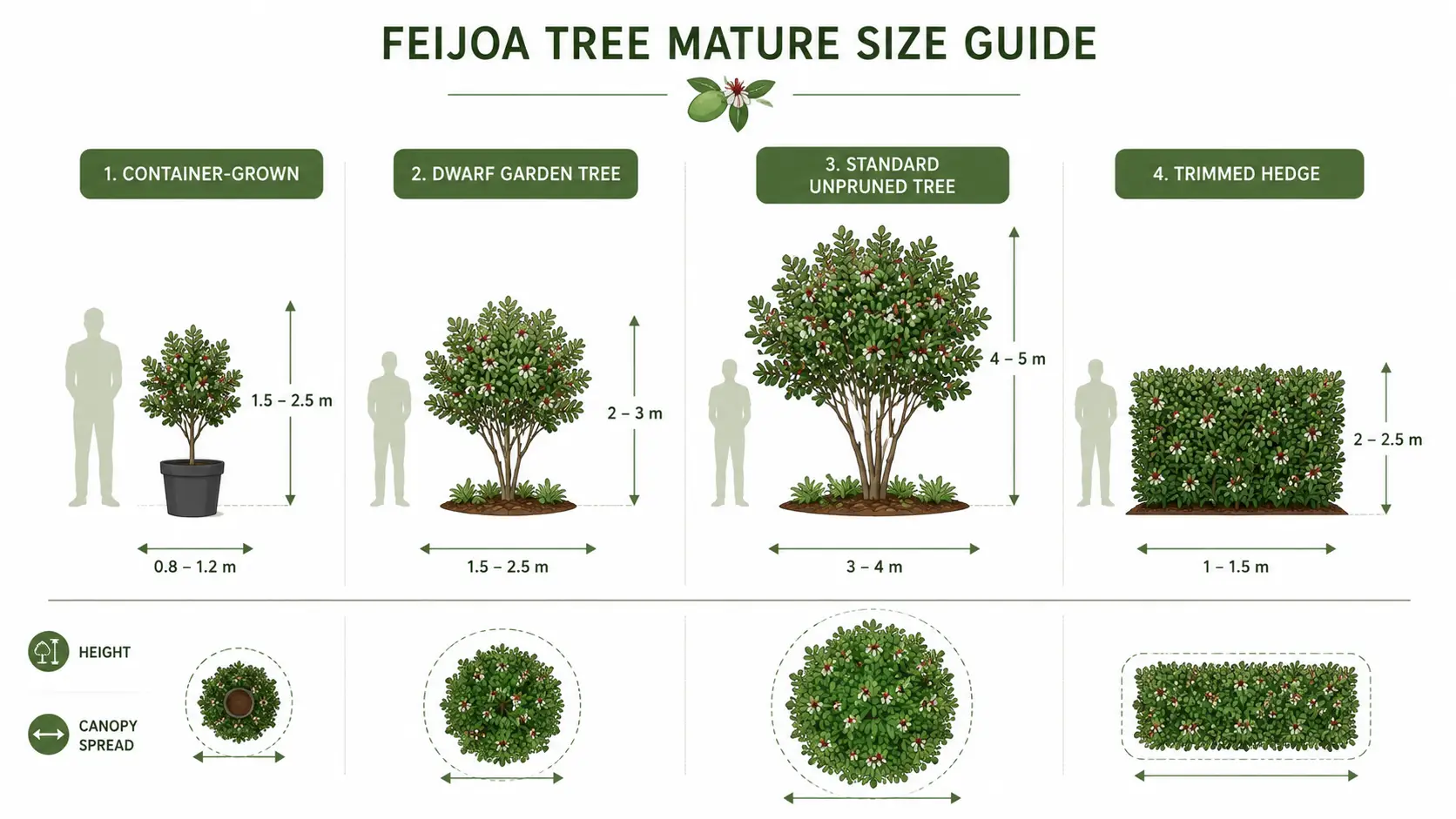
Feijoa trees remain relatively compact compared with many backyard fruit trees, making them suitable for suburban gardens, edible landscapes, and productive hedges. If you’re comparing mature tree sizes before planting, see our Lemon Myrtle Height and Width: Complete Australian Size Guide for another popular evergreen species.
Feijoa Tree Height and Spread at Maturity
Most mature feijoa trees grow between 2 and 5 metres tall with a spread of approximately 2 to 4 metres, depending on the variety and pruning practices.
Regular pruning keeps plants compact and encourages dense branching, making them ideal for screening or hedging.
Dwarf cultivars are also available and perform well in smaller gardens and large containers.
| Growing Condition | Typical Height | Typical Spread |
| Unpruned tree | 4–5 m | 3–4 m |
| Pruned garden tree | 2–4 m | 2–3 m |
| Hedge | 2–3 m | Maintained by pruning |
| Container-grown | 1.5–2.5 m | 1–2 m |
Elemo Baker recommends planning for the mature size before planting. Although feijoas tolerate pruning well, allowing sufficient space improves airflow and simplifies harvesting.
Is Feijoa Fast Growing?
Feijoa is considered a moderately fast-growing fruit tree.
Under favourable growing conditions, most plants grow approximately 30–50 centimetres each year.
Growth is strongest during:
- Spring
- Early summer
Growth naturally slows during cooler months as temperatures decline.
Healthy growth depends on several factors, including:
- Full sun
- Well-drained soil
- Regular watering during establishment
- Balanced fertilisation
- Adequate air circulation
As of the 2026 growing season, many Australian growers continue to recommend avoiding excessive nitrogen fertilisers, as these often encourage leafy growth at the expense of flowering and fruit production.
Do Feijoa Trees Have Invasive Roots?
No. Feijoa trees generally develop non-invasive root systems compared with many larger fruit trees.
Their roots typically spread near the surface without aggressively damaging foundations, plumbing, or paved areas.
As a precaution, it is still advisable to plant feijoas:
- Around 2–3 metres from house foundations
- Away from underground water pipes
- With enough spacing between neighbouring trees to allow healthy root development
This makes feijoas an excellent choice for suburban gardens where space is limited.
Feijoa Tree Varieties
Choosing the right variety is one of the most important factors influencing fruit quality, productivity, and pollination success.
Best Feijoa Varieties for Australian Gardens
Several excellent cultivars perform well across Australian temperate regions.
| Variety | Fruit Size | Self-Fertile | Mature Height | Flavour Notes |
| Unique | Medium | Yes | 2–3 m | Sweet, aromatic |
| Mammoth | Large | No | 3–5 m | Rich, juicy |
| Apollo | Large | Partially | 3–5 m | Sweet with floral notes |
| Gemini | Medium-Large | Yes | 2–4 m | Balanced sweetness |
| Wiki Tu | Large | No | 3–4 m | Dense flesh, aromatic |
| Triumph | Large | No | 3–5 m | Excellent dessert quality |
Many of these cultivars originated in New Zealand before becoming widely available through Australian specialist nurseries.
Growing two compatible varieties generally increases pollination and improves overall fruit production.
Feijoa as a Hedge Variety Choice
Feijoas make excellent edible hedges because they naturally produce dense evergreen foliage while also yielding fruit.
Varieties commonly recommended for hedging include:
- Apollo
- Mammoth
- Triumph
- Wiki Tu
When planted approximately 1.5 to 2 metres apart, they develop into attractive privacy screens with regular pruning.
Unlike many ornamental hedges, a feijoa hedge provides multiple benefits:
- Year-round screening
- Attractive flowers
- Edible fruit
- Habitat for pollinators
- Wind protection
Growing Feijoa Trees in Australia
Growing feijoas successfully depends largely on choosing an appropriate climate and planting location.
Can Feijoas Grow in Australia?
Yes. Feijoas grow successfully throughout much of Australia.
They perform particularly well in:
- ACT
- Victoria
- Tasmania
- Southern New South Wales
- South Australia
- Elevated areas of Western Australia
They also grow in parts of Queensland and northern New South Wales, although prolonged humidity and tropical heat may reduce flowering and fruit quality. Selecting the right planting location follows many of the same principles discussed in our Fast Growing Evergreen Trees Australia Guide.
Feijoas perform best in cool-temperate to warm-temperate climates where they receive sufficient winter chilling while avoiding prolonged tropical conditions. For gardeners creating productive privacy screens, our Ficus Hillii ‘Flash’ Care, Growth & Hedge Guide offers another excellent hedging option.
In our experience, trees planted in full sun with good airflow consistently produce larger harvests than those grown in humid, sheltered locations.
Where Is the Best Place to Plant a Feijoa Tree?
The best place to plant a feijoa tree is in a location that receives at least six to eight hours of direct sunlight each day. Although feijoas tolerate partial shade, full sun promotes stronger flowering, improved pollination, and larger fruit crops.
Choose a site that is protected from strong, hot drying winds, particularly in inland regions where summer temperatures can become extreme. Wind protection also helps prevent flowers from dropping before pollination.
Feijoas perform best in soil that is:
- Well-draining
- Slightly acidic to neutral (pH 5.5–7.0)
- Rich in organic matter
- Moderately fertile
While they tolerate heavier clay soils better than many fruit trees, incorporating compost and gypsum before planting improves drainage and root development.
Elemo Baker recommends avoiding low-lying areas where water collects after heavy rain, as prolonged waterlogging may lead to root decline.
Do You Need Two Feijoa Trees to Get Fruit?
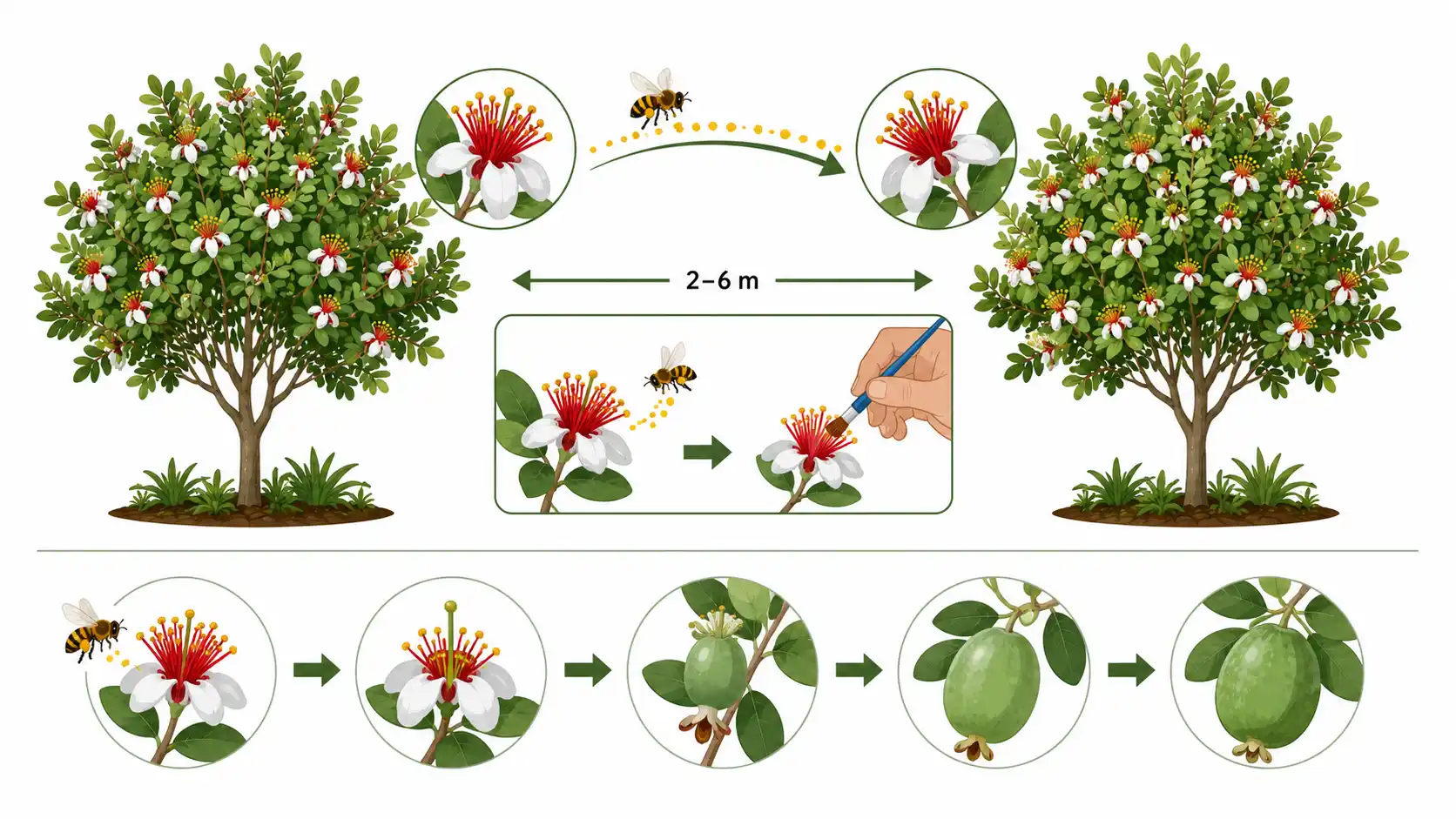
Most feijoa varieties produce heavier and more reliable crops when planted with a compatible pollination partner. Cross-pollination increases fruit set because pollen from a different cultivar is generally more effective than self-pollination.
Self-fertile varieties include:
- Unique
- Gemini
Although these cultivars can produce fruit on their own, planting a second compatible variety usually improves both fruit size and yield.
Bees are the primary pollinators of feijoa flowers, while birds may also assist when feeding on the edible petals. If natural pollinator activity is low, hand pollination using a small paintbrush can significantly improve fruit production.
In our experience growing multiple cultivars together, even self-fertile varieties consistently produce larger harvests when another flowering feijoa is nearby.
Feijoa Tree Care Guide
Feijoas are considered one of the easiest fruit trees to maintain once established. They require only routine care to remain healthy and productive.
Watering
Young trees benefit from regular watering during their first one to two years while roots become established.
General watering guidelines include:
- Water deeply once or twice each week during dry weather.
- Reduce watering during prolonged wet periods.
- Increase irrigation during flowering and fruit development.
- Apply mulch around the root zone to conserve soil moisture.
Established trees tolerate moderate drought but produce better-quality fruit with consistent moisture throughout the growing season.
Soil
Feijoas grow best in fertile, well-drained soil enriched with organic matter.
Suitable soil conditions include:
- Slightly acidic to neutral pH
- Good drainage
- Moderate fertility
- Organic mulch to improve moisture retention
If planting in heavy clay, improve soil structure before planting by incorporating compost and coarse organic matter.
Fertilising
Feijoas are relatively light feeders compared with many other fruit trees.
Apply a balanced slow-release fertiliser during early spring before new growth begins. Organic compost or well-rotted manure can also be applied annually to improve soil health.
Avoid excessive nitrogen applications, as vigorous leafy growth may reduce flowering and fruit production.
Pruning
Regular pruning keeps feijoa trees healthy, productive, and easy to harvest.
Pruning objectives include:
- Removing dead or damaged branches
- Improving airflow through the canopy
- Maintaining hedge shape
- Controlling overall size
- Encouraging new fruiting wood
For hedge plantings, trim lightly after harvest while avoiding excessive removal of flowering wood that will produce next season’s fruit.
Climate Tolerance
Feijoas tolerate a broad range of environmental conditions.
They perform well in:
- Cool-temperate climates
- Warm-temperate climates
- Coastal gardens
- Areas experiencing light frosts
However, they are generally unsuitable for Australia’s tropical north, where consistently high humidity and warm winters reduce flowering and fruit production.
As of 2026, Australian horticultural advice continues to recommend selecting locally adapted cultivars for the best long-term performance in different climate zones.
Feijoa Fruiting Season in Australia
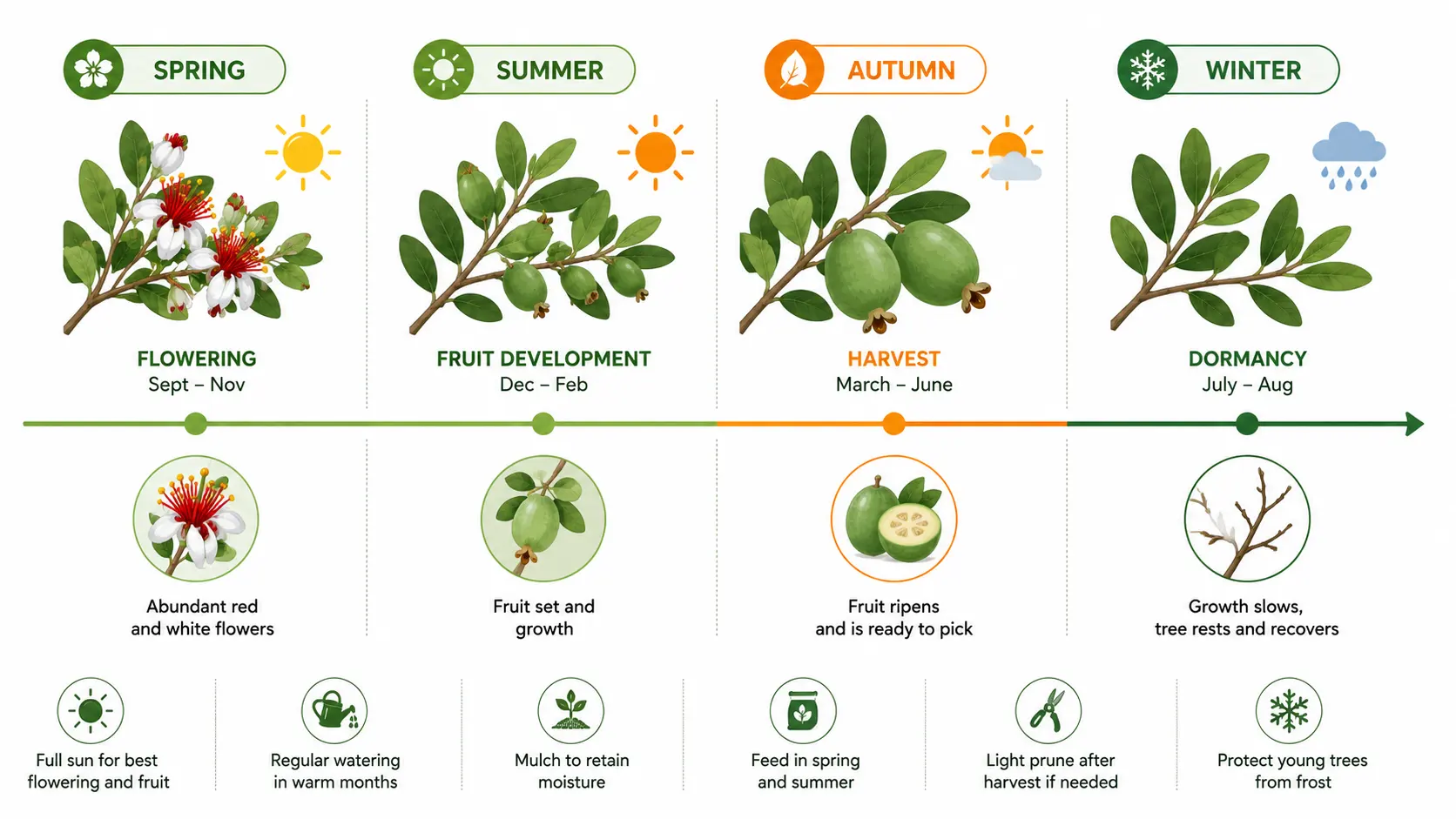
Feijoas are valued for producing fruit during autumn, when relatively few other backyard fruit trees are at their peak.
When Do Feijoas Fruit in Australia?
Feijoa season in Australia generally occurs between March and June, although exact timing depends on climate, elevation, and cultivar.
Typical harvest periods include:
| Region | Typical Harvest Period |
| Victoria | April–May |
| Tasmania | April–June |
| ACT | April–May |
| Southern NSW | March–May |
| South Australia | April–May |
| Elevated WA | April–May |
New Zealand’s season is broadly similar but often begins slightly earlier in favourable growing regions.
Unlike many fruits, feijoas naturally fall from the tree when fully ripe. Fruit should be collected daily during peak harvest to maintain the best eating quality.
How Many Years Does It Take for a Feijoa Tree to Fruit?
The time required before a feijoa tree begins producing fruit depends mainly on how it was propagated.
Generally:
- Grafted trees begin fruiting within 2–3 years.
- Seed-grown trees usually require 4–7 years before producing worthwhile crops.
Several factors influence fruiting time, including:
- Variety selection
- Pollination success
- Sunlight exposure
- Soil fertility
- Irrigation
- Climate suitability
Purchasing a grafted tree from a reputable nursery provides the quickest path to reliable fruit production.
Why Does My Feijoa Tree Have Flowers but No Fruit?
A feijoa tree may flower without setting fruit if pollination has been unsuccessful.
Common causes include:
- Only one non-self-fertile tree is planted.
- Insufficient bee activity.
- Hot weather during flowering.
- Poor cross-pollination between varieties.
- Young trees that have not yet reached full maturity.
Possible solutions include:
- Planting a compatible second cultivar.
- Hand-pollinating flowers.
- Encouraging bees by growing flowering companion plants.
- Maintaining consistent watering during flowering.
Feijoa flowers contain both male and female reproductive parts, so there are no separate male or female trees. Successful fruit set depends on effective pollen transfer rather than plant gender.
Feijoa Health Benefits and Nutrition
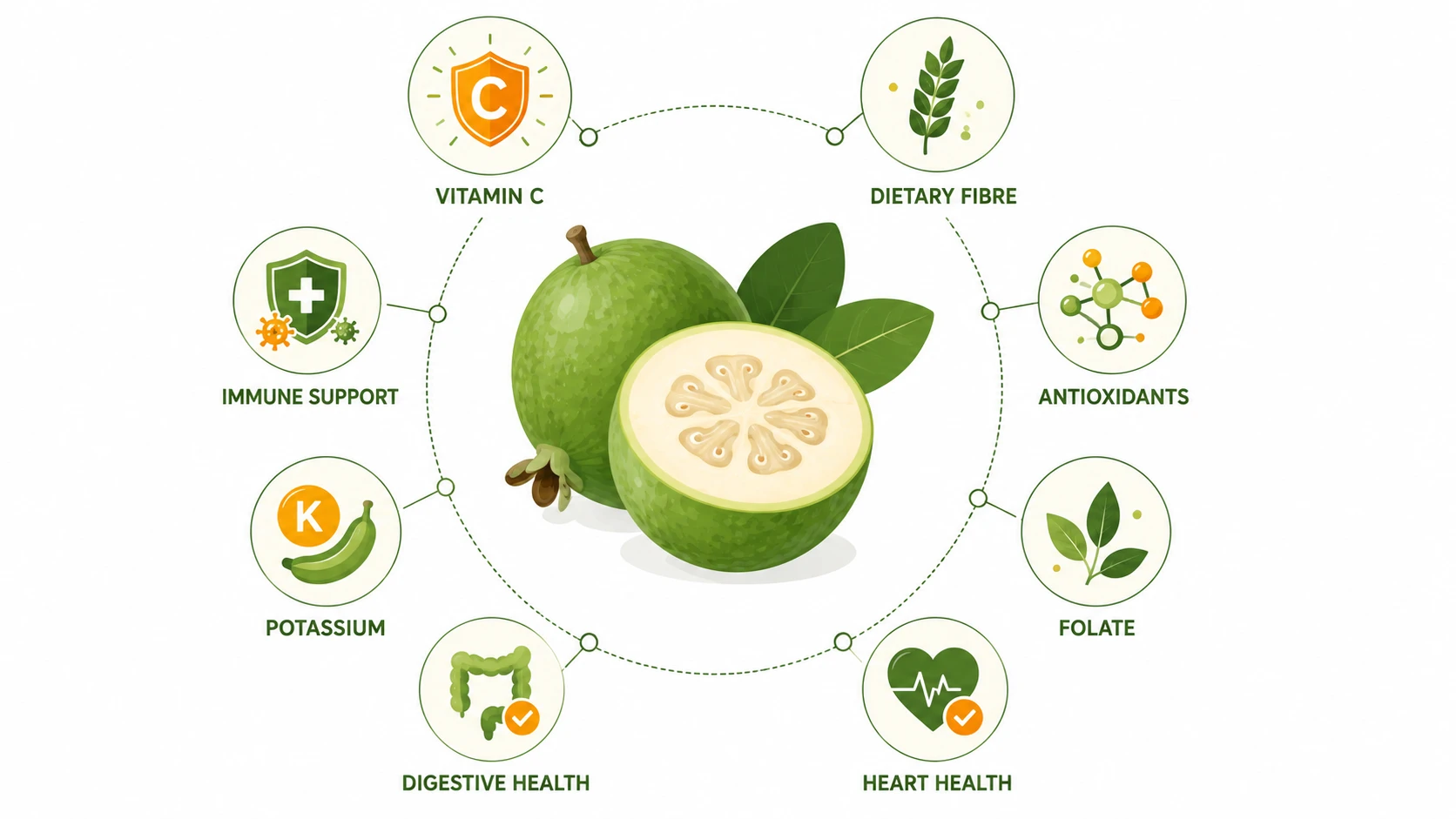
Feijoas are not only enjoyable to eat but also provide a range of valuable nutrients that support a balanced diet.
Are Feijoas Good for You?
Yes. Feijoas are a nutritious fruit that supplies vitamins, dietary fibre, and natural antioxidants while remaining relatively low in calories.
Regular consumption can contribute to a healthy diet by supporting immune function, digestion, and overall wellbeing.
Key nutritional benefits include:
- High in Vitamin C
- Good source of dietary fibre
- Contains folate
- Provides potassium
- Rich in antioxidant compounds
- Naturally low in fat
- Low calorie density
Key Nutrients at a Glance
- Vitamin C: Supports immune health and collagen production.
- Dietary fibre: Promotes digestive health and helps maintain regular bowel function.
- Folate: Supports healthy cell growth.
- Potassium: Helps regulate normal muscle and nerve function.
- Antioxidants: Help protect cells from oxidative stress.
Feijoas are best enjoyed as part of a varied, balanced diet rather than being viewed as a single “superfood.”
Feijoa Tree as a Hedge: Practical Guide
Feijoas are among the few plants that combine ornamental appeal, edible fruit, evergreen foliage, and privacy screening in a single planting. You may also like our Photinia Fraseri Robusta: Growth, Care & Hedge Guide, another popular evergreen hedge for Australian landscapes.
To establish a productive feijoa hedge:
- Select compatible varieties with upright growth habits.
- Plant trees approximately 1.5–2 metres apart.
- Water consistently during establishment.
- Apply organic mulch annually.
- Prune lightly after harvest to maintain shape.
Regular trimming encourages dense branching while still allowing sufficient flowering wood for future fruit production.
Suitable hedge varieties include:
- Apollo
- Mammoth
- Triumph
- Wiki Tu
- Unique
Elemo Baker recommends avoiding heavy annual pruning, as excessive trimming can reduce the following season’s fruit yield by removing developing flower buds.
Where to Buy Feijoa Trees in Australia
Selecting a healthy tree is just as important as choosing the right variety. If you’re planning an edible landscape, you may also enjoy our guide on Money Tree Australia: Care, Meaning & Buying Guide for another attractive small garden tree.
Are Feijoa Trees Available at Bunnings?
Yes. Feijoa trees are sometimes available at Bunnings, particularly during the fruit tree planting season.
However, availability is seasonal and typically limited to only a small selection of cultivars.
Gardeners seeking specific varieties such as Mammoth, Apollo, Triumph, or Wiki Tu will often find a broader selection through specialist fruit tree nurseries and reputable online plant suppliers.
Tips for Buying Feijoa Plants
When purchasing a feijoa tree, consider the following factors:
- Choose grafted trees for earlier fruit production.
- Look for clearly labelled varieties.
- Inspect leaves for healthy colour.
- Avoid plants with damaged roots or pot-bound root systems.
- Check for signs of pests or disease.
- Select varieties suited to your local climate.
Seedling-grown trees are generally less expensive but usually require several additional years before fruiting and may vary from the parent plant in fruit quality.
Feijoa Tree Pros and Cons
Feijoa trees are widely regarded as one of the most rewarding fruit trees for Australian home gardens. They combine ornamental beauty with dependable fruit production and require relatively little maintenance once established. However, like any plant, they have advantages and limitations that gardeners should consider before planting.
Pros
Dual-purpose ornamental and edible plant
Feijoas offer year-round visual appeal with attractive evergreen foliage, colourful edible flowers, and delicious fruit. They work equally well as feature trees, edible landscape plants, or productive hedges.
Drought-tolerant once established
After the first couple of growing seasons, feijoas tolerate dry conditions much better than many other fruit trees. Occasional deep watering during prolonged dry periods is usually sufficient.
Low pest and disease pressure
Compared with citrus, stone fruit, and apples, feijoas experience relatively few serious pest or disease problems, making them suitable for low-maintenance gardens.
Excellent hedge plant
Their naturally dense branching habit makes them ideal for creating attractive privacy screens that also produce edible fruit.
Reliable autumn harvest
Feijoas fruit during autumn when relatively few backyard fruit trees are producing, extending the home harvest season.
Cons
Although feijoas are easy to grow, there are some drawbacks.
- Most varieties require a compatible cross-pollinating partner for maximum fruit production.
- They are not well suited to tropical climates with consistently high humidity.
- Ripe fruit naturally falls from the tree and should be collected promptly.
- Seed-grown trees take considerably longer to produce fruit than grafted plants.
Overall, the advantages significantly outweigh the disadvantages for gardeners living in suitable climates.
Common Feijoa Tree Problems (and How to Fix Them)
Most feijoa problems are related to growing conditions or pollination rather than serious diseases. Identifying the cause early helps maintain healthy trees and consistent harvests. Learning to recognise insects early is easier with our Garden Pest Identification Guide for Australian Gardens.
What Are Common Feijoa Tree Problems?
Fruit Drops Before Ripening
Some fruit drop is completely normal because ripe feijoas naturally fall from the tree.
However, premature fruit drop may result from:
- Inconsistent watering
- Heat stress
- Poor pollination
- Nutrient imbalance
How to fix it
- Water consistently during flowering and fruit development.
- Apply mulch to regulate soil moisture.
- Avoid prolonged drought.
- Ensure adequate cross-pollination.
Flowers but No Fruit
One of the most common complaints is a tree that flowers beautifully but produces little or no fruit.
Possible causes include:
- Lack of a compatible pollinator
- Low bee activity
- Hot, windy weather during flowering
- Young trees that have not yet matured
How to fix it
- Plant a second compatible variety.
- Hand-pollinate flowers using a soft brush.
- Encourage bees by planting flowering companion plants.
- Avoid spraying insecticides during flowering.
Yellowing Leaves
Yellow leaves may indicate:
- Poor drainage
- Overwatering
- Nitrogen deficiency
- Iron deficiency in alkaline soils
How to fix it
- Improve drainage.
- Water only when necessary.
- Apply a balanced fertiliser.
- Use iron chelates if soil tests indicate deficiency.
Scale Insects and Sooty Mould
Scale insects occasionally appear on stems and leaves, producing sticky honeydew that encourages black sooty mould.
How to fix it
- Remove heavily infested branches.
- Encourage beneficial insects such as ladybirds.
- Treat severe infestations with horticultural oil according to label directions.
Poor Fruiting in Warm Climates
Feijoas naturally perform best in cool-to-warm temperate regions.
Warm winters and high humidity may reduce flowering because the trees receive insufficient winter chilling.
How to improve fruiting
- Select cultivars known to perform in warmer regions.
- Plant in full sun with good air circulation.
- Avoid excessive nitrogen fertiliser.
- Maintain even soil moisture throughout flowering and fruit development.
Feijoa and Alcohol: What You Need to Know
Feijoa’s fragrant, tropical flavour makes it a popular ingredient in homemade and commercial alcoholic beverages.
The fruit’s distinctive balance of sweetness and floral aroma pairs well with a variety of spirits and fermented drinks.
Popular feijoa-based beverages include:
- Feijoa vodka
- Feijoa wine
- Feijoa liqueur
- Feijoa gin infusions
- Sparkling feijoa cocktails
Why Does Feijoa Work Well in Alcohol?
The fruit contains highly aromatic compounds that remain noticeable after infusion or fermentation.
Its flavour combines tropical fruit notes with subtle floral and herbal characteristics, creating beverages with a unique taste profile.
Basic Home Infusion Overview
A simple feijoa infusion generally involves:
- Washing ripe fruit.
- Slicing or halving the fruit.
- Placing it into a clean glass jar.
- Covering with vodka or another neutral spirit.
- Allowing the mixture to infuse for several weeks before straining.
This process is intended as general information only. Anyone preparing alcoholic beverages should follow local food safety recommendations and applicable regulations.
Conclusion
Feijoa trees are among the most rewarding fruiting plants for Australian gardens. Their evergreen foliage, attractive flowers, aromatic fruit, and relatively low maintenance requirements make them suitable for both beginner and experienced gardeners.
Success with a feijoa tree largely depends on selecting the right variety, planting it in a suitable temperate climate, providing well-drained soil, and ensuring effective pollination. While some cultivars are self-fertile, most produce heavier crops when grown alongside a compatible pollination partner.
Whether grown as a standalone fruit tree or a productive evergreen hedge, feijoas provide long-term value through reliable harvests, ornamental appeal, and excellent adaptability to many Australian growing conditions.
Frequently Asked Questions About Feijoa Trees
1. How many years does it take for a feijoa tree to fruit?
Grafted feijoa trees usually begin producing fruit within 2–3 years after planting. Seed-grown trees generally require 4–7 years, depending on growing conditions, variety, and pollination.
2. Do you need two feijoa trees to produce fruit?
Most feijoa varieties benefit from cross-pollination and produce larger crops when planted with another compatible cultivar. Self-fertile varieties such as Unique and Gemini can produce fruit alone, although yields often improve with a second tree nearby.
3. Can feijoa trees grow in all parts of Australia?
Feijoas grow successfully throughout most temperate regions of Australia, including Victoria, Tasmania, the ACT, southern New South Wales, South Australia, and parts of Western Australia. They are generally less suitable for tropical regions with hot, humid conditions year-round.
4. How big does a feijoa tree grow?
A mature feijoa tree typically reaches 2–5 metres in height with a spread of 2–4 metres. Regular pruning can maintain a smaller size for hedges or compact gardens.
5. When is feijoa season in Australia?
Feijoa season generally runs from March to June, with most fruit ripening during autumn. Harvest timing varies slightly according to climate, elevation, and cultivar.
6. What does a feijoa taste like?
Feijoas have a distinctive flavour that combines notes of guava, pineapple, and strawberry with subtle floral and mint-like characteristics. The ripe flesh is soft, juicy, and aromatic.
7. Are feijoa tree roots invasive?
No. Feijoa trees have relatively non-invasive root systems compared with many larger fruit trees. When planted with standard clearances from buildings, pipes, and other structures, they rarely cause root-related problems.
2 Comments