

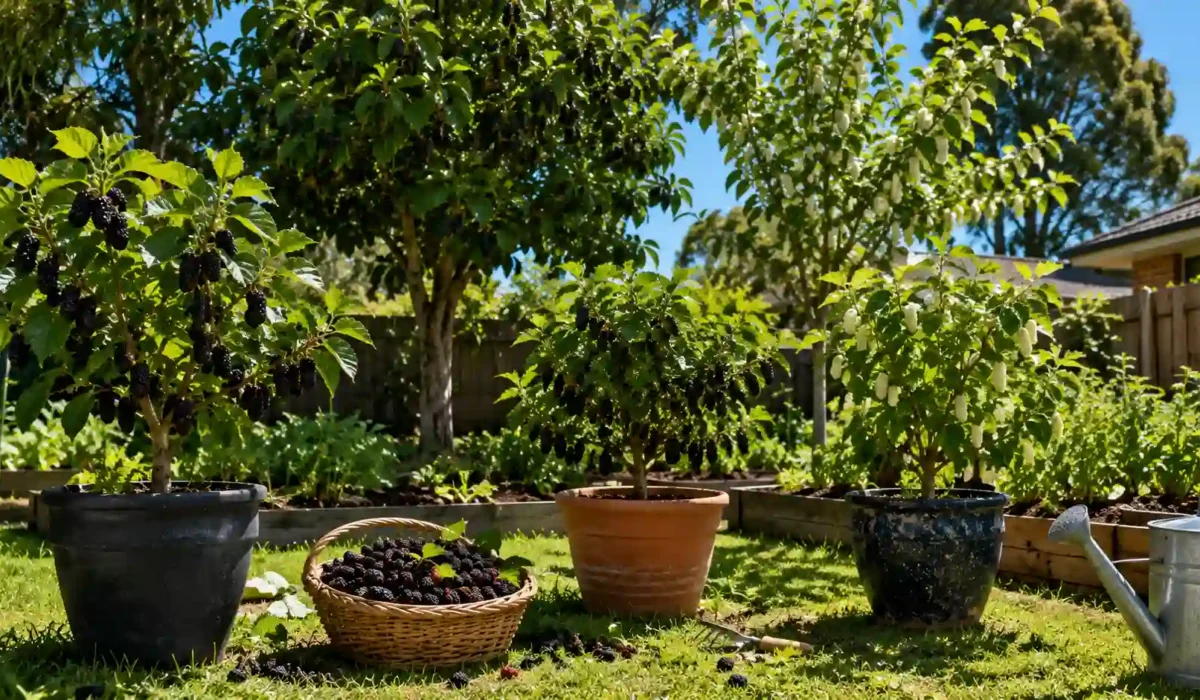
Mulberry Varieties Australia: Best Types, Care & Fruiting
Introduction
Mulberry varieties Australia gardeners can choose from range from compact dwarf trees for patios to large, long lived specimens that produce generous harvests each summer. These hardy deciduous trees are valued for their sweet berries, attractive shade, and relatively low maintenance requirements, making them suitable for many Australian climates. Whether you are interested in growing a traditional black mulberry, a fast growing white mulberry, or the exceptionally sweet shahtoot mulberry, selecting the right variety is essential for long term success. This guide explains the main mulberry varieties grown in Australia, their fruiting seasons, growth habits, legal considerations, and essential care requirements to help you make an informed choice.
By Elemo Baker | Plant Care & Gardening Expert
Last Updated: June 2026
Quick Summary
- Several mulberry varieties thrive across Australia’s diverse climate zones, from compact dwarf cultivars to large productive trees.
- Black, white, and shahtoot mulberries are the three most commonly grown mulberry species in Australia.
- Mulberry season in Australia generally runs from late spring into summer, although timing varies by region and variety.
- Dwarf mulberry varieties are ideal for pots, courtyards, balconies, and smaller suburban gardens.
- Choosing a variety suited to your local climate improves fruit production, tree health, and long term performance.
What Are Mulberry Varieties Available in Australia?
Australia is home to several popular mulberry species that perform well across temperate, subtropical, and warm coastal regions. The three principal species are Morus nigra, Morus alba, and Morus macroura, while specially selected dwarf cultivars provide excellent options for gardeners with limited space. If you are expanding your home garden, you may also like our Money Tree Australia: Care, Meaning & Buying Guide, covering another popular ornamental plant grown across Australia.
Each variety differs in berry flavour, tree size, growth rate, and climate preference. Understanding these differences helps gardeners select the most suitable mulberry tree for their location and intended use. The cultivated Mulberry (Morus) species belong to the genus Morus, which includes several deciduous trees grown worldwide for their nutritious fruit and ornamental value.
In our experience growing mulberries in Australian conditions, choosing the right species for the local climate has a much greater impact on fruit quality than intensive fertilising or pruning later in the tree’s life.
Black Mulberry (Morus nigra)
Black mulberry (Morus nigra) is widely regarded as the premium fruiting mulberry grown in Australia. It produces rich, dark purple to almost black berries with an intense sweet and tart flavour that many gardeners consider superior to other mulberry species.
The tree grows at a moderate pace and develops a broad, rounded canopy over time. Mature specimens commonly become treasured feature trees because they remain productive for decades with relatively simple maintenance.
Black mulberries perform best in temperate and cooler climates where winter dormancy supports reliable flowering and fruit production. They are particularly well suited to southern Australia, including Victoria, South Australia, Tasmania, and many inland regions of New South Wales.
Key characteristics include:
- Rich, complex berry flavour
- Deep red to black fruit
- Long lived tree with excellent productivity
- Moderate to large mature size
- Best suited to temperate and cool regions
Elemo Baker recommends black mulberry for gardeners whose highest priority is exceptional fruit quality rather than rapid growth.
White Mulberry (Morus alba)
White mulberry (Morus alba) is a vigorous, adaptable species capable of growing successfully across a broader range of Australian climates than black mulberry.
Despite its name, fruit colour may range from white and cream to pale pink or light purple depending on the cultivar. The berries are generally sweeter and milder than black mulberries, making them popular for fresh eating.
White mulberry trees establish quickly and tolerate heat, drought, and varying soil conditions better than many fruit trees once fully established.
Historically, Morus alba became famous worldwide as the primary food source for silkworms, making it an important species in silk production.
Advantages include:
- Fast establishment
- Broad climate adaptability
- Sweet, mild tasting fruit
- Heat tolerance
- Reliable growth across many Australian regions
Although vigorous growth is beneficial in many gardens, some forms of white mulberry have become environmental weeds in parts of Australia. Gardeners should always check local regulations before planting.
Shahtoot Mulberry (Morus macroura)
Shahtoot mulberry (Morus macroura) is becoming increasingly popular throughout Australia’s warmer regions because of its unusually long berries and exceptionally sweet flavour.
Often referred to as Afghan mulberry or Pakistani mulberry, this species produces elongated fruit that can reach several centimetres in length. The berries are soft, juicy, and considerably sweeter than many traditional mulberry varieties.
Shahtoot trees thrive in subtropical and tropical climates where warm growing conditions encourage vigorous growth and abundant fruit production.
They are particularly well suited to:
- Queensland
- Northern New South Wales
- Northern Western Australia
- Warm coastal districts
Compared with black mulberry, shahtoot generally grows faster and produces a more vigorous canopy. Gardeners in frost free regions often find it among the most rewarding fruit trees available.
Dwarf Mulberry Varieties Australia
Dwarf mulberry varieties Australia gardeners grow are specifically selected for their compact size while maintaining excellent fruit production.
Unlike full sized trees, dwarf cultivars remain manageable and are ideal for smaller residential blocks, patios, balconies, and container gardening.
Popular selections include Dwarf Black and other compact cultivars that typically remain below three metres with occasional pruning.
Benefits of dwarf mulberries include:
- Suitable for pots and containers
- Excellent for courtyards
- Easy harvesting
- Simple pruning
- Productive despite compact growth
In our experience, dwarf mulberries can produce surprisingly generous harvests when grown in quality potting mix, placed in full sun, and watered consistently during the fruiting season.
Best Mulberry Varieties for Australian Gardens
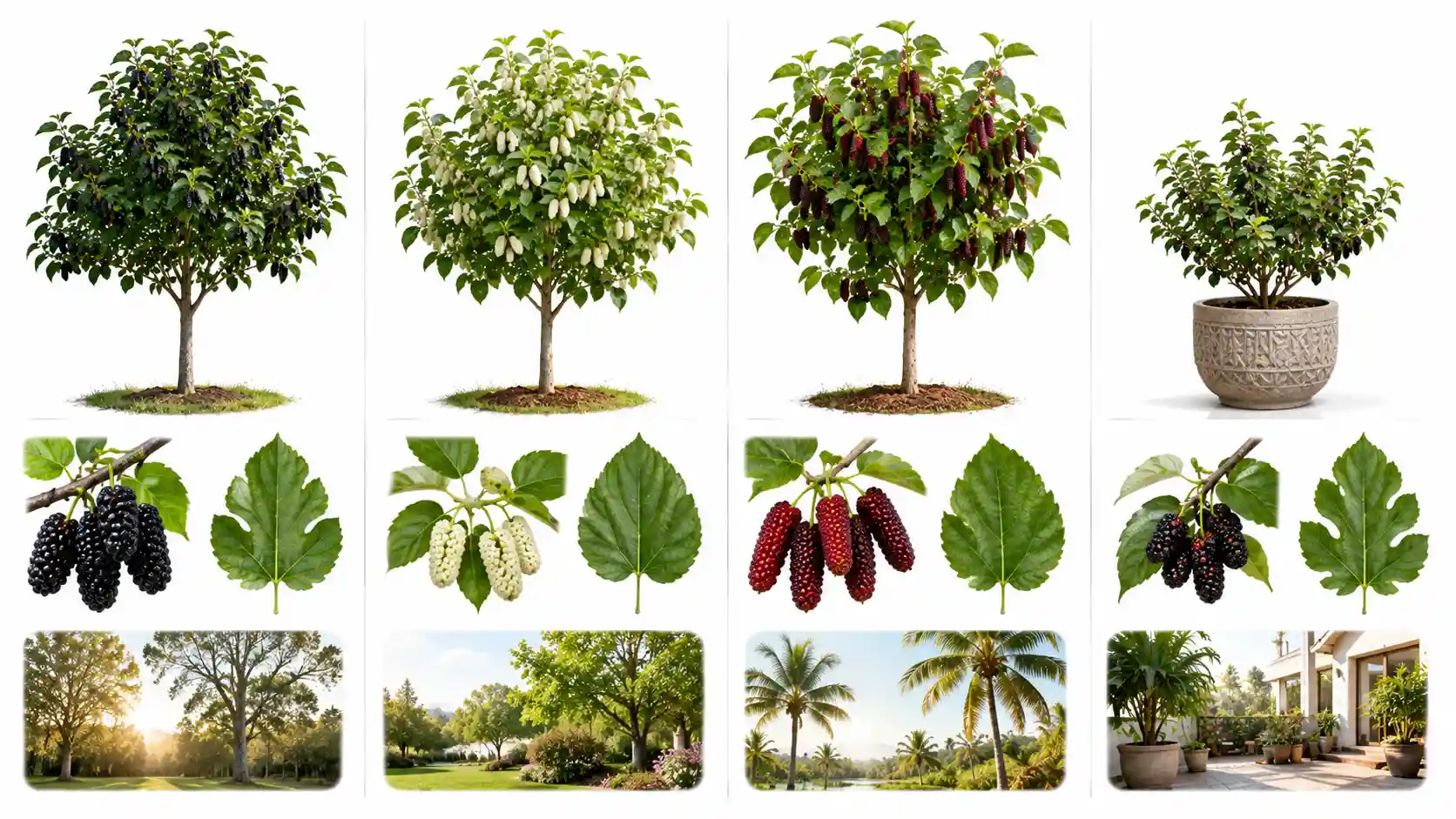
The best mulberry variety depends largely on your climate, available space, and preferred fruit flavour. While every species has strengths, selecting one that naturally suits your local conditions reduces maintenance and improves long term productivity.
Gardeners in cooler regions often achieve the best results with black mulberry, while warmer climates favour shahtoot or white mulberry. Small urban gardens frequently benefit from dwarf selections that combine manageable growth with reliable harvests.
Comparison Table — Mulberry Varieties at a Glance
| Variety | Berry Colour | Flavour | Tree Size | Best Climate Zone |
| Black Mulberry (Morus nigra) | Deep red to black | Rich and tart | Large | Temperate and cool |
| White Mulberry (Morus alba) | White to pale pink | Sweet and mild | Medium to large | Most Australian climates |
| Shahtoot Mulberry (Morus macroura) | White to pale | Very sweet | Large | Subtropical and tropical |
| Dwarf Mulberry | Red to black | Rich and sweet | Compact | Most climate zones |
Which Mulberry Variety Is Best for Small Gardens?
Dwarf mulberry varieties are generally the best option for small Australian gardens because they deliver abundant fruit while requiring significantly less space than standard trees.
Container grown dwarf mulberries perform particularly well on patios, balconies, and compact courtyards when planted in large containers with excellent drainage.
Their smaller size also offers practical advantages, including:
- Easier harvesting
- Simpler pruning
- Reduced maintenance
- Better suitability for urban properties
- Convenient protection from birds using netting
Even though dwarf trees occupy less space, they can produce an impressive crop each season when provided with full sun and regular care.
Which Mulberry Variety Grows Best in Queensland?
For Queensland gardens, shahtoot mulberry and white mulberry generally provide the most reliable performance because both species tolerate warm temperatures and extended growing seasons.
Shahtoot mulberry is particularly well suited to subtropical and tropical districts where it develops vigorous growth and consistently sweet fruit.
White mulberry also performs well throughout much of Queensland due to its adaptability and heat tolerance.
Black mulberry can still be grown successfully in cooler parts of southern Queensland, particularly in elevated inland areas. However, prolonged humidity and tropical conditions may reduce fruit quality compared with temperate climates.
As of the 2026 growing season, many Australian fruit growers continue recommending shahtoot mulberry for warm northern gardens because of its excellent heat tolerance and dependable fruit production.
Mulberry Tree Size and Growth Rate in Australia
Mulberry trees are generally fast to moderate growing deciduous fruit trees that adapt well to Australian conditions. Their mature size depends on the species, growing environment, pruning practices, and whether they are grown in the ground or in containers. While standard mulberries can become impressive shade trees, dwarf cultivars remain compact and are ideal for smaller spaces.
Choosing the correct variety from the beginning makes long term maintenance much easier. Regular pruning also allows gardeners to control tree size without significantly reducing fruit production.
How Tall Do Mulberry Trees Grow?
The mature height of a mulberry tree varies according to the species and how it is managed.
- Black mulberry (Morus nigra): Typically reaches 6 to 10 metres tall if left unpruned, with a broad spreading canopy.
- White mulberry (Morus alba): Usually grows between 8 and 12 metres under favourable conditions and can establish quickly.
- Shahtoot mulberry (Morus macroura): Often develops into a vigorous tree reaching 8 to 12 metres or more in warm climates.
- Dwarf mulberry varieties: Generally remain between 2 and 3 metres, making them suitable for small gardens and patios.
Trees grown in large containers naturally remain smaller because root growth is restricted. Annual pruning and occasional root pruning help maintain a manageable size while encouraging continued fruit production.
In our experience growing mulberries, annual winter pruning is one of the easiest ways to keep even vigorous varieties productive without allowing them to dominate a backyard.
Are Mulberry Trees Deciduous in Australia?
Yes. All commonly grown mulberry species in Australia are deciduous trees.
During autumn and winter, mulberries naturally lose their leaves as they enter dormancy. Fresh foliage appears again in spring, followed by flowering and fruit production as temperatures increase.
This seasonal cycle provides several benefits for Australian gardeners:
- Pleasant summer shade from dense foliage.
- Increased winter sunlight after leaf fall.
- Easier winter pruning while branches are bare.
- Reduced watering requirements during dormancy.
Many homeowners intentionally plant mulberries on the western side of their property to provide cooling shade during summer while allowing winter sunshine to reach the home after the leaves have fallen.
Pruning Mulberry Trees in Australia
Mulberry trees respond exceptionally well to pruning and can tolerate fairly heavy cutting when performed at the correct time.
Late winter, while the tree remains dormant, is generally the best period for structural pruning before new spring growth begins.
Pruning helps to:
- Maintain a practical tree height.
- Improve air circulation through the canopy.
- Encourage new fruiting wood.
- Remove damaged or crossing branches.
- Simplify harvesting.
Mulberries can also be trained as espalier trees against fences or maintained as compact bush forms for smaller gardens.
Elemo Baker recommends removing dead, diseased, and crowded branches first before shortening vigorous new growth. This approach maintains tree health while improving fruit quality in the following season.
As of the 2026 growing season, many Australian home growers continue favouring annual light pruning over infrequent severe pruning, as it promotes more consistent harvests and easier long term maintenance.
Mulberry Season in Australia — When Do Mulberry Trees Fruit?
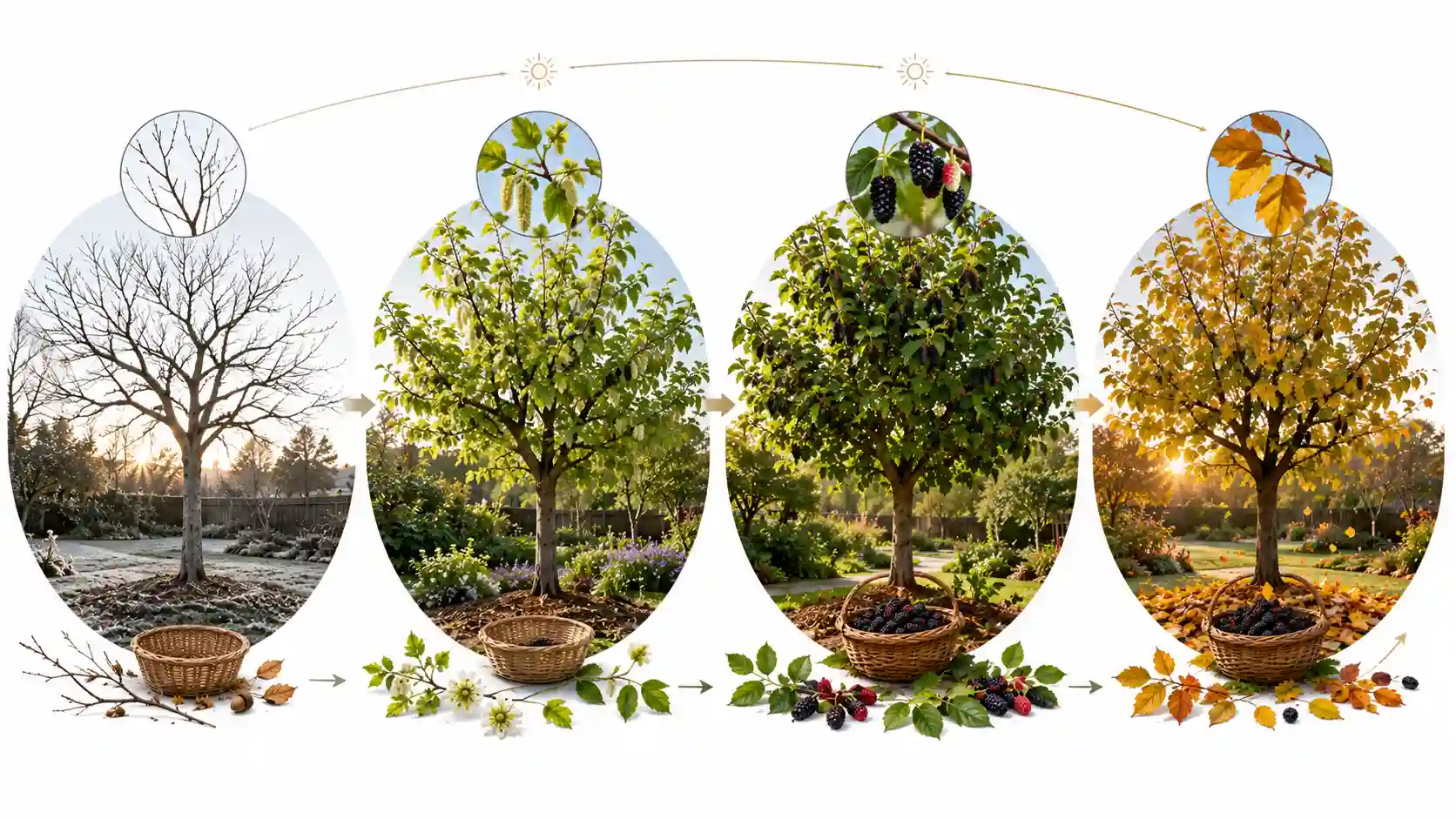
Mulberry season in Australia generally runs from October through January, although the exact fruiting period depends on the variety, local climate, and seasonal weather conditions. Warmer regions typically harvest earlier, while cooler southern areas experience later fruiting. For a more detailed breakdown of harvest timing across different Australian regions, read our guide on When Do Mulberry Trees Fruit in Australia?
Most mulberry trees produce fruit over several weeks rather than all at once, allowing repeated harvesting throughout the season.
Mulberry Fruiting Season by State
The timing of mulberry harvests varies across Australia due to differences in temperature and seasonal conditions.
| State or Region | Typical Fruiting Season |
| Queensland | October to December |
| New South Wales | October to December |
| Victoria | November to January |
| South Australia | November to January |
| Tasmania | November to January |
| Western Australia | November to January, depending on location |
Shahtoot mulberries often begin fruiting slightly earlier than black mulberries in warmer climates and may continue producing fruit over a longer period.
Gardeners should remember that unusual seasonal temperatures may shift harvest times by several weeks.
What Affects When Mulberries Ripen?
Several environmental and biological factors influence when mulberries begin to ripen.
The most important include:
- Variety selection.
- Local climate zone.
- Winter chilling in cooler regions.
- Spring temperatures.
- Tree maturity.
- Water availability during fruit development.
Young trees often produce only a light crop during their first few fruiting seasons. Most grafted mulberry trees become consistently productive within two to three years, while seed-grown trees may require considerably longer before producing substantial harvests.
Extended cool springs may delay fruit development, whereas warm early springs can bring harvests forward in many parts of Australia.
Are Mulberry Trees Illegal in Australia?
No. Most mulberry trees are not illegal to grow in Australia. However, certain forms of white mulberry may be restricted in some locations because of their potential to spread beyond cultivation.
Regulations vary between states and even individual councils, making it important to check local requirements before planting.
Why Are Mulberry Trees Banned in Some Areas?
Some forms of White Mulberry (Morus alba) are considered environmental weeds because they can self seed readily and establish in native bushland.
Where natural regeneration becomes widespread, these trees may compete with indigenous vegetation and alter local ecosystems.
For this reason, some councils and state authorities discourage or regulate particular white mulberry varieties.
In contrast:
- Black mulberry (Morus nigra) is generally not regarded as invasive.
- Shahtoot mulberry (Morus macroura) is typically not listed as an environmental weed.
- Named dwarf cultivars are generally suitable for residential gardens.
Restrictions usually apply only to specific white mulberry forms rather than every mulberry species.
Which States or Councils Restrict Mulberry Trees?
Rules differ across Australia, so there is no single nationwide regulation covering mulberry trees.
Before planting, gardeners should:
- Check local council planting guidelines.
- Review state environmental weed lists.
- Purchase trees from reputable Australian nurseries.
- Confirm the botanical species before buying.
Black mulberry and shahtoot mulberry remain the preferred choices in many regions because they are valued primarily as fruit trees rather than being associated with weed concerns.
If you are uncertain about local regulations, purchasing named cultivars from established nurseries provides additional confidence that the tree is appropriate for residential planting.
How to Grow Mulberry Trees in Australia
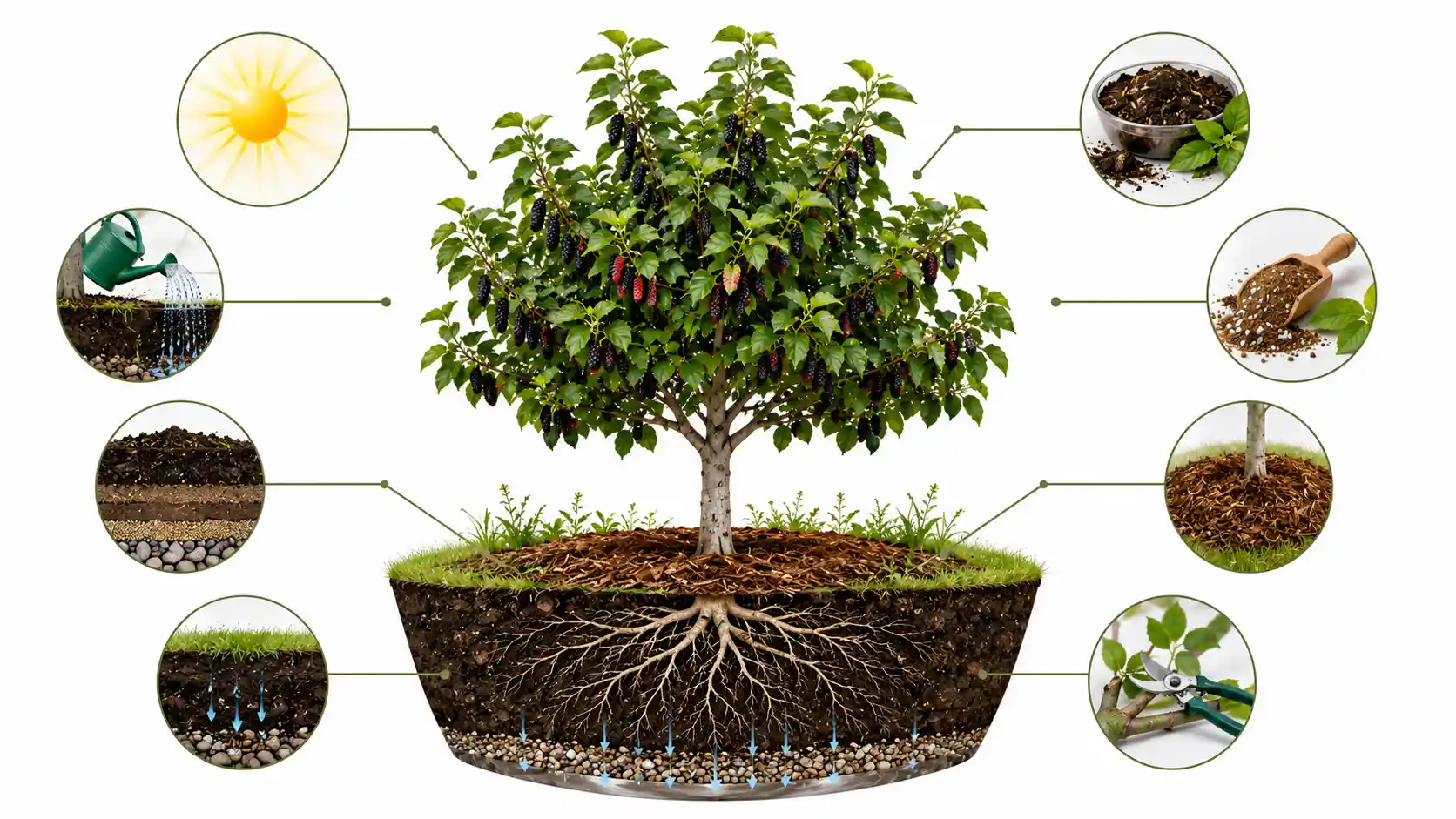
Mulberry trees are among the easiest fruit trees to grow in Australia when planted in the right location and given basic care. They tolerate a wide range of climates and soils, making them suitable for both experienced gardeners and beginners. Providing full sun, well drained soil, and occasional pruning encourages healthy growth and reliable fruit production for many years. If you enjoy growing productive backyard fruit trees, our Feijoa Tree Australia: Growing, Care, Varieties & Fruit Guide offers additional advice on planting, care, and harvesting another excellent fruit tree suited to Australian gardens. Apply mulch after planting while keeping it clear of the trunk. Work out the amount of mulch you need before buying so you can cover the root zone evenly without creating an excessively deep layer.
In our experience, mulberries establish quickly when planted during their dormant season, and once established, they require considerably less maintenance than many other backyard fruit trees.
When to Plant a Mulberry Tree in Australia
The ideal time to plant a mulberry tree in Australia is late winter to early spring, while the tree is still dormant. Planting during this period allows roots to establish before vigorous spring growth begins.
Bare rooted mulberry trees are commonly available from Australian nurseries during July and August and are often the most economical option.
Potted mulberry trees can be planted throughout the year, provided they receive adequate watering during hot weather.
General planting recommendations include:
- Plant during cooler weather whenever possible.
- Choose a sunny location with good air circulation.
- Water thoroughly after planting.
- Apply mulch while keeping it clear of the trunk.
- Avoid planting into waterlogged soil.
Soil and Sun Requirements
Mulberry trees perform best in fertile, well drained soil with a slightly acidic to neutral pH, although they tolerate many Australian soil types once established.
For maximum fruit production, choose a site that receives at least six to eight hours of direct sunlight each day.
Ideal growing conditions include:
- Full sun.
- Free draining soil.
- Organic matter incorporated before planting.
- Soil pH between approximately 6.0 and 7.0.
- Protection from prolonged waterlogging.
Although mature trees are relatively drought tolerant, consistently moist soil during establishment encourages stronger root development and healthier early growth.
Watering and Fertilising Mulberry Trees
Young mulberry trees require regular watering while developing their root systems. Once established, deep and infrequent watering is generally more beneficial than frequent shallow watering.
During extended dry periods, occasional deep irrigation helps maintain healthy growth and fruit quality.
For fertilising:
- Apply a balanced fertiliser in early spring before new growth appears.
- Water well after feeding.
- Add compost or well rotted organic matter annually.
- Avoid excessive nitrogen, which encourages leafy growth instead of fruit production.
Elemo Baker recommends monitoring tree growth rather than fertilising on a fixed schedule. Healthy mulberries often require only modest feeding once established.
As of the 2026 growing season, many Australian growers continue favouring compost and slow release fertilisers to provide steady nutrition throughout the growing season.
Growing Dwarf Mulberry Trees in Pots
Dwarf mulberry varieties adapt exceptionally well to container growing and are an excellent choice for patios, balconies, and compact urban gardens. Gardeners interested in compact edible plants may also enjoy our Super Dwarf Cavendish Banana Growing Guide Australia, which explains how to successfully grow another productive fruit plant in containers.
For the best results:
- Use a container holding at least 40 to 50 litres.
- Choose premium quality potting mix with excellent drainage.
- Position the pot in full sun.
- Water more frequently than in ground trees.
- Feed regularly during spring and summer.
Because roots are confined, container grown trees dry out more quickly during hot Australian summers. Regular watering and annual root pruning help maintain long term health and productivity.
Common Mulberry Tree Problems and How to Fix Them
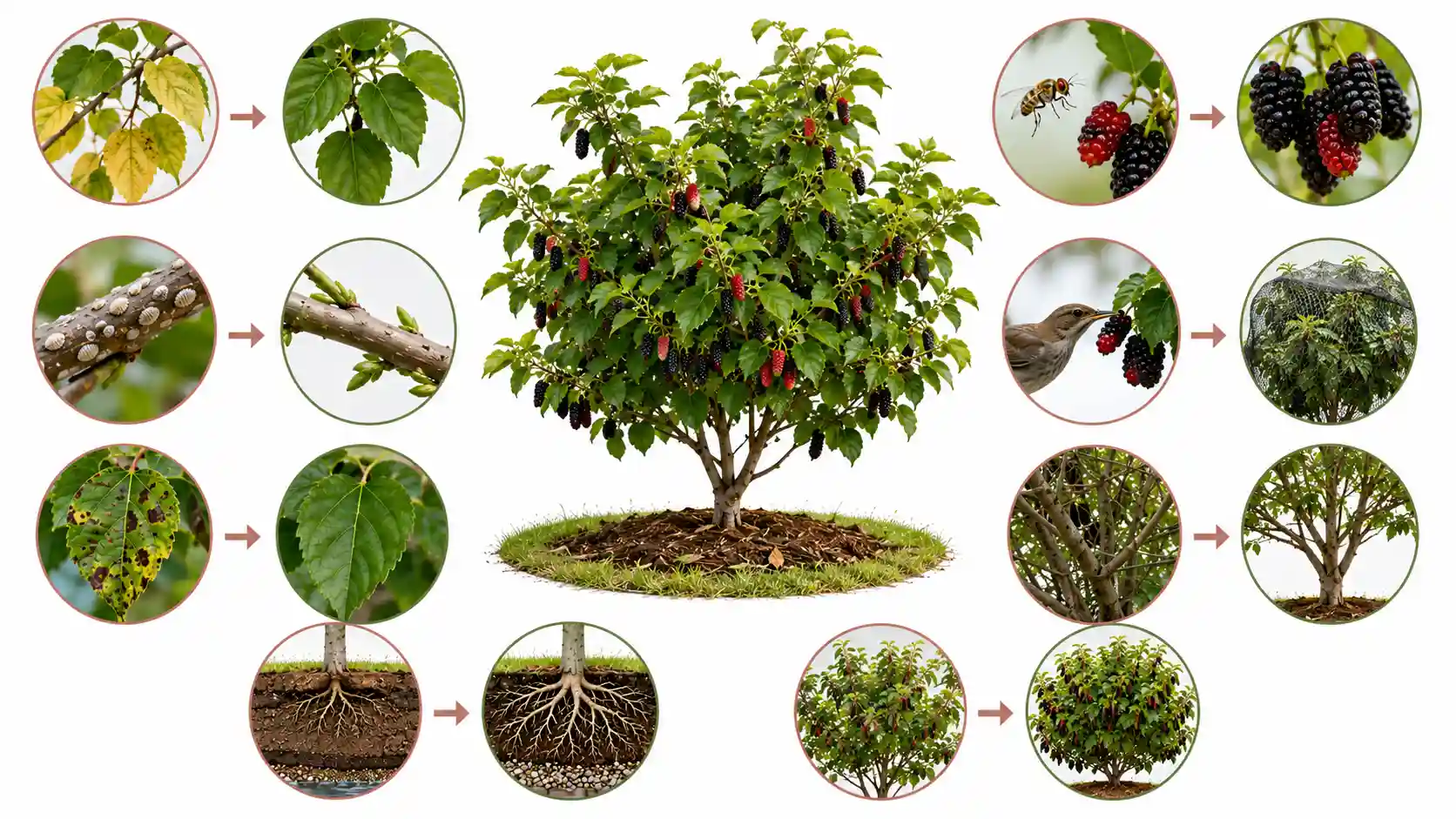
Mulberry trees are generally resilient, but like all fruit trees, they can occasionally develop problems related to nutrition, watering, pests, or environmental conditions. Identifying the underlying cause early usually allows gardeners to correct issues before they affect long term tree health or fruit production.
Why Is My Mulberry Tree Not Fruiting?
A healthy mulberry tree that fails to produce fruit is usually experiencing one or more common growing issues rather than a serious disease.
Possible causes include:
- The tree is still too young.
- Insufficient sunlight.
- Excess nitrogen fertiliser.
- Frost damage to developing flower buds.
- Heavy pruning that removed fruiting wood.
Solutions depend on the underlying cause:
- Allow young trees additional time to mature.
- Ensure at least six hours of direct sunlight daily.
- Reduce high nitrogen fertilisers.
- Protect trees from late frosts where practical.
- Prune during dormancy rather than after flowering.
Most grafted mulberry trees begin fruiting reliably within two to three years, while seed grown trees may require five years or longer.
Mulberry Leaves Turning Yellow
Yellowing leaves are often an early warning that growing conditions require adjustment.
The most common causes include:
- Overwatering.
- Poor soil drainage.
- Nutrient deficiencies.
- Temporary stress during establishment.
Start by checking soil moisture before applying additional water. Waterlogged soil limits oxygen around the roots and commonly leads to yellow foliage.
If drainage is adequate, a soil test can help identify nutrient imbalances that may require correction.
In our experience, overwatering is one of the most frequent mistakes made by new mulberry growers, particularly during the first year after planting.
Pests and Diseases Affecting Mulberry Trees in Australia
Although mulberries experience relatively few serious pest problems, several issues occasionally occur in Australian gardens.
Common pests include:
- Scale insects.
- Fruit fly in susceptible regions.
- Birds feeding on ripe fruit.
Common diseases include:
- Fungal leaf spot.
- Minor fungal infections during prolonged wet weather.
Management options include:
- Encouraging beneficial insects.
- Applying horticultural oils where appropriate.
- Removing heavily infected leaves.
- Improving airflow through pruning.
- Using fruit netting to protect ripening berries from birds.
Many gardeners consider bird damage the greatest challenge because ripe mulberries are highly attractive to local wildlife. Installing netting shortly before fruit begins to ripen often prevents significant crop losses.
Mulberry Fruit — Nutrition, Uses, and Harvest Tips
Mulberries are valued not only for their pleasant flavour but also for their nutritional benefits and versatility in the kitchen. Fresh berries are delicate and rarely transported over long distances, making home grown fruit especially rewarding. For another rewarding home grown fruit crop, explore our Black Sapphire Grapes: Taste, Benefits & Growing Guide, which compares growing habits, flavour, and harvesting tips for backyard gardeners.
Nutritional Value of Mulberries
Mulberries are rich in several important nutrients and plant compounds that contribute to a healthy diet.
Fresh mulberries contain:
- Vitamin C.
- Iron.
- Vitamin K.
- Dietary fibre.
- Potassium.
- Anthocyanins and other antioxidants, particularly in darker varieties.
Compared with many common backyard fruits, mulberries provide an excellent combination of vitamins, minerals, and antioxidant compounds while remaining relatively low in calories.
Fresh berries contain more vitamin C, while dried mulberries provide a more concentrated source of natural sugars and fibre.
How to Harvest Mulberries
Mulberries ripen progressively rather than all at once, allowing repeated harvests over several weeks.
One of the easiest harvesting methods is to spread a clean sheet beneath the tree and gently shake the branches. Fully ripe berries fall naturally while less mature fruit remains attached.
Harvesting tips include:
- Pick regularly during the fruiting season.
- Wear gloves because ripe berries stain skin.
- Wear older clothing to avoid permanent stains.
- Refrigerate freshly picked fruit promptly.
- Freeze surplus berries for later use.
Fresh mulberries are excellent for eating straight from the tree as well as making jams, pies, desserts, smoothies, and preserves.
Mulberry Price Per Kg in Australia
Fresh mulberries are relatively uncommon in Australian supermarkets because they bruise easily and have a short shelf life after harvesting.
When available, they are more commonly sold through:
- Farmers’ markets.
- Local greengrocers.
- Specialty fruit growers.
- Pick your own orchards.
Prices vary considerably depending on the season, region, and availability, but fresh mulberries generally command a premium compared with more durable commercial fruits.
For many home gardeners, growing a mulberry tree provides access to fresh fruit that is often difficult to purchase commercially, making the tree an excellent long term investment for the backyard.
Conclusion
Mulberry varieties available in Australia suit a wide range of garden sizes, climates, and fruit preferences. Black mulberry (Morus nigra) delivers outstanding flavour in temperate regions, while shahtoot mulberry (Morus macroura) excels in subtropical and tropical climates. White mulberry (Morus alba) offers broad adaptability, and dwarf mulberry varieties make home fruit growing possible even in compact gardens and containers.
Understanding your local climate, expected fruiting season, available growing space, and any regional planting regulations helps you choose the most suitable variety from the beginning. With the right selection and straightforward care, a mulberry tree can provide decades of reliable harvests, attractive seasonal shade, and one of the most rewarding fruit growing experiences for Australian gardeners.
Frequently Asked Questions
What is the best mulberry variety to grow in Australia?
The best mulberry variety depends on your climate and available space. Black mulberry is generally preferred for exceptional flavour in temperate regions, shahtoot performs best in warmer subtropical and tropical climates, and dwarf mulberry varieties are ideal for small gardens, patios, and container growing.
When is mulberry season in Australia?
Mulberry season typically runs from October through January, although harvest times vary by state and variety. Queensland and northern regions usually fruit earlier, while Victoria, South Australia, and Tasmania often experience harvests from November into January.
Are mulberry trees illegal to plant in Australia?
Most mulberry trees are not illegal to grow. However, certain forms of white mulberry may be restricted in some states or local council areas because of their potential to spread into native bushland. Black mulberry, shahtoot, and most named dwarf cultivars are generally unrestricted, but local regulations should always be checked before planting.
How long does it take for a mulberry tree to fruit in Australia?
Grafted mulberry trees commonly begin producing fruit within two to three years after planting. Trees grown from seed usually require five years or more before producing significant crops. Good sunlight, appropriate watering, and balanced fertilising encourage earlier and more reliable fruiting.
Can you grow a dwarf mulberry tree in a pot in Australia?
Yes. Dwarf mulberry varieties grow very successfully in large containers of at least 40 to 50 litres. They require premium potting mix, full sun, regular watering, and seasonal feeding. With proper care, container grown dwarf mulberries can remain productive for many years on patios, balconies, and courtyards.
What is a shahtoot mulberry and how does it differ from black mulberry?
Shahtoot mulberry (Morus macroura) produces long, pale coloured berries with an exceptionally sweet flavour and performs best in warmer climates. Black mulberry (Morus nigra) produces shorter, deep red to black berries with a richer, more complex sweet tart flavour and is generally better suited to temperate regions of Australia.
4 Comments