

Green Lychee vs Red Lychee: Key Differences Explained
Introduction
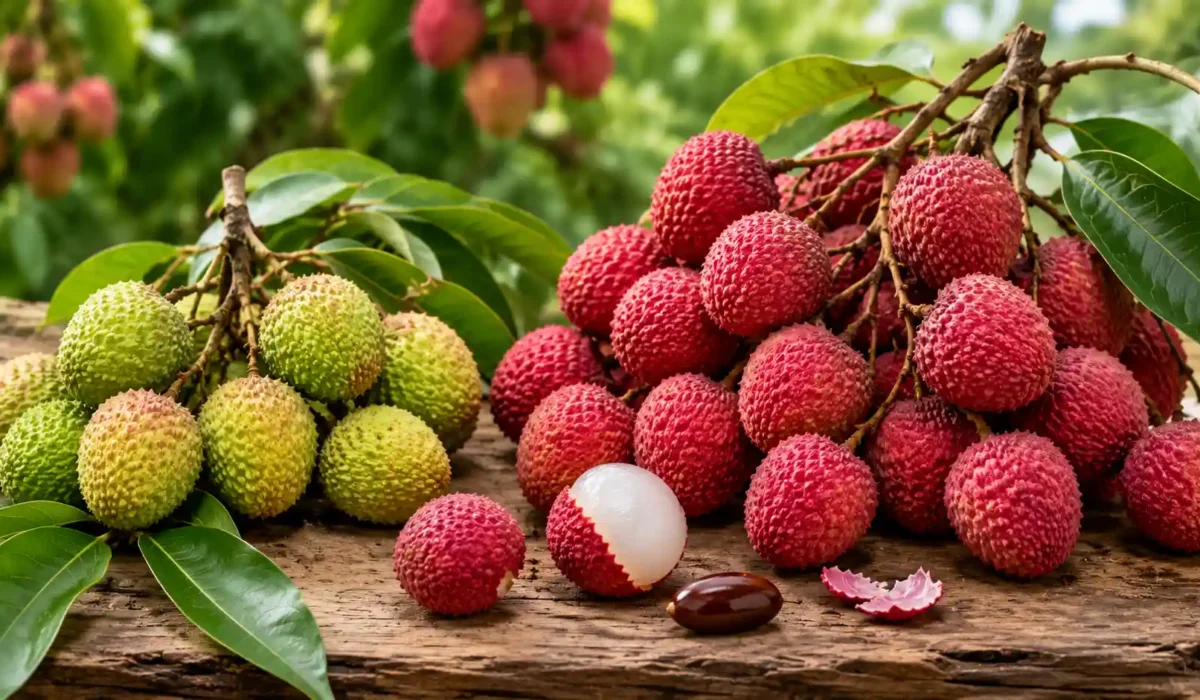
Green lychee vs red lychee is mainly a comparison of ripeness stages and cultivated varieties rather than two different types of fruit. Most lychees begin green and develop pink or red skin as they ripen, but some cultivars naturally remain green even when fully mature. Because of this, skin colour alone is not a reliable indicator of sweetness or eating quality. Instead, aroma, slight softness, and the specific variety provide better clues. Understanding the difference helps buyers choose ripe fruit, gardeners identify their trees correctly, and consumers enjoy lychees safely while avoiding confusion about naturally green-skinned cultivars.
Quick Summary
- Green or green-blushed lychees are often unripe, although some cultivars naturally stay green when ripe.
- Red lychees are the most common ripe fruit sold in Australian markets and home gardens.
- Skin colour alone does not determine sweetness, as variety, aroma, and texture also matter.
- Both green and red lychees are edible, but unripe fruit contains naturally occurring compounds that may pose risks if eaten in large quantities, particularly on an empty stomach.
What Determines Lychee Colour? (Ripeness vs Variety)
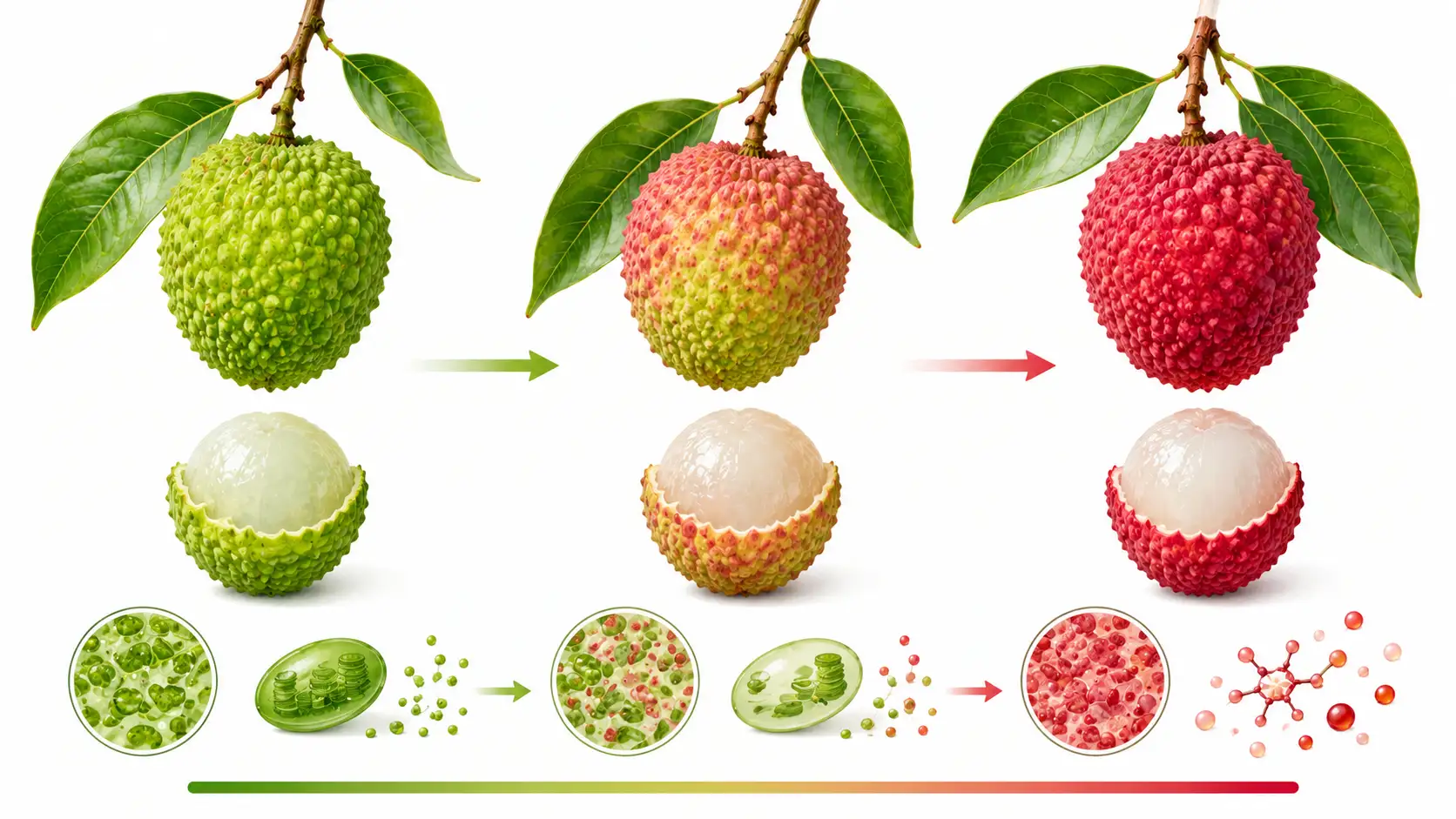
Lychee skin colour is determined by two main factors: the natural ripening process and the genetics of the cultivar. While many people assume green fruit is unripe and red fruit is ripe, this is only partly true. Most commercial varieties change colour as they mature, but several cultivars remain mostly green despite being fully ripe. Lychee belongs to the soapberry family Sapindaceae and is scientifically known as Litchi chinensis, a tropical fruit species with a long history of cultivation in Asia and other warm regions.
As the fruit develops, natural plant pigments change. Chlorophyll, which gives immature fruit its green appearance, gradually breaks down. At the same time, pigments called anthocyanins develop, producing shades of pink, crimson, or bright red. However, the amount of these pigments varies between cultivars because of their genetic makeup.
In our experience growing lychees, gardeners often judge ripeness by colour alone. This is a common mistake because some excellent varieties never develop the deep red skin many shoppers expect.
Why Lychees Turn Red as They Ripen
Most popular lychee varieties become pink or red as they mature because chlorophyll decreases while anthocyanin pigments increase.
Other factors also influence colour intensity, including:
- Warm daytime temperatures
- Cool nights before harvest
- Sunlight exposure
- Variety genetics
- Fruit maturity
As sugar levels increase during ripening, the fruit also develops its characteristic floral aroma and juicy texture. While colour often accompanies this process, it should not be treated as the only sign of maturity.
Green-Skinned Varieties That Ripen Without Turning Red (e.g. Fay Zee Siu)
Some lychee cultivars naturally remain green or yellow-green even when completely ripe. One well-known example is Fay Zee Siu, which produces sweet fruit despite retaining much of its green skin.
These cultivars demonstrate that skin colour is controlled by genetics as much as ripeness. Depending on growing conditions, they may develop only a slight pink blush instead of turning bright red.
Elemo Baker recommends identifying the cultivar whenever possible rather than relying solely on appearance. For home gardeners, keeping records of planted varieties helps avoid unnecessary harvesting before fruit reaches peak flavour.
Green Lychee vs Red Lychee: Taste Comparison
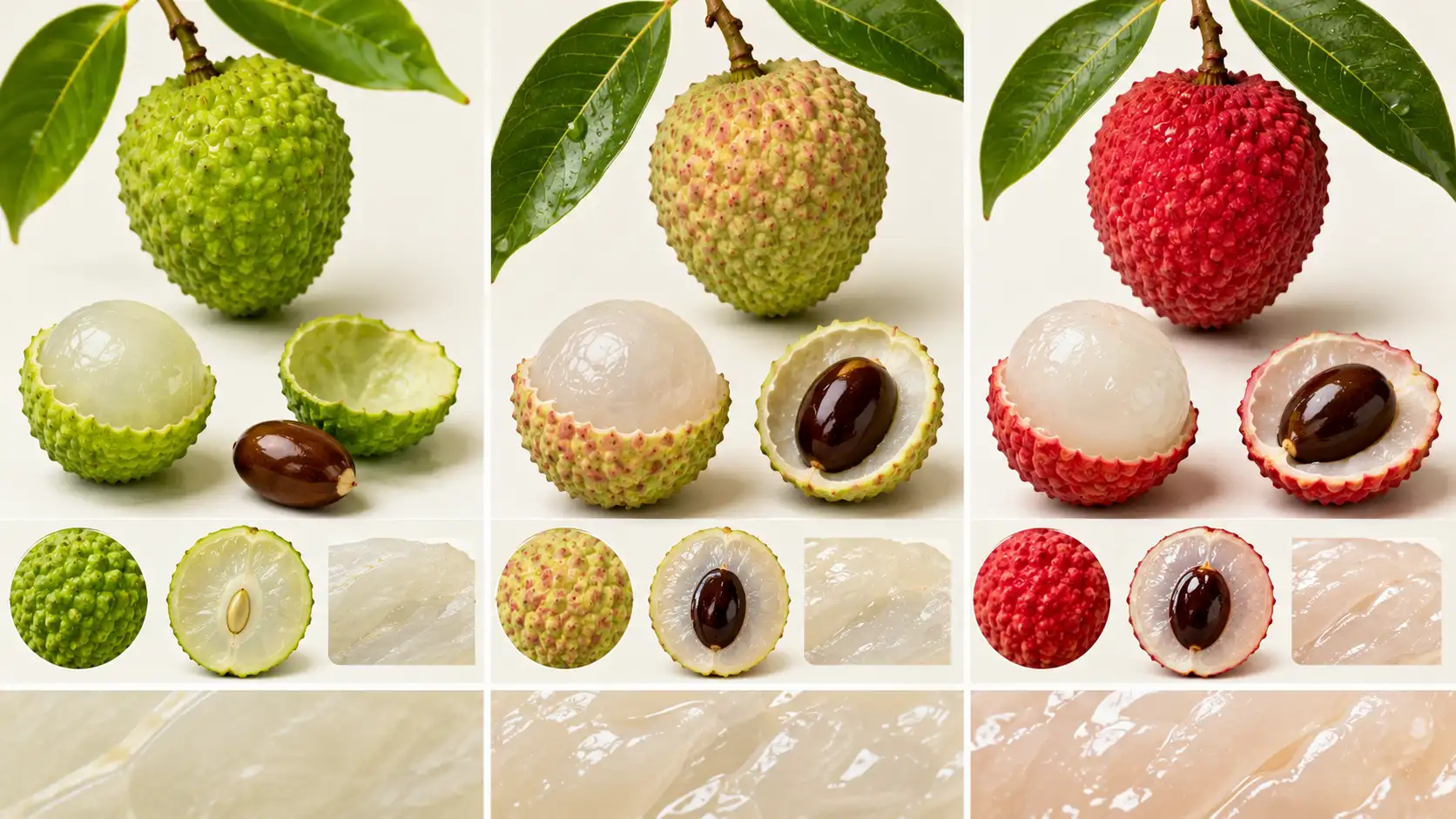
Taste differences depend far more on ripeness and cultivar than on colour alone. An unripe green lychee is usually firm, tart, and less juicy, whereas a ripe green-skinned cultivar can be exceptionally sweet. Similarly, most ripe red lychees offer the classic balance of sweetness, floral fragrance, and juicy flesh.
| Feature | Green (Unripe) | Green Cultivar (Ripe) | Red (Ripe) |
| Sweetness | Low | High | High |
| Acidity | High | Mild | Mild |
| Texture | Firm | Juicy | Juicy and tender |
| Aroma | Very little | Floral | Floral and fragrant |
Generally:
- Unripe green fruit tastes sour and lacks the signature lychee fragrance.
- Ripe green cultivars can rival or exceed many red varieties in sweetness.
- Ripe red lychees usually provide the flavour most consumers expect.
Because flavour is strongly influenced by variety, two red lychees may taste more different from each other than a ripe green cultivar compared with a red one.
Is a Green Lychee Safe and Edible to Eat?
A green lychee may or may not be ready to eat, depending on whether it is naturally green when ripe or simply immature. Most unripe lychees are edible in small amounts but are less enjoyable because they are acidic, firm, and lack sweetness. Naturally green-skinned cultivars, however, are perfectly suitable to eat once mature.
Unripe lychees also contain higher concentrations of naturally occurring compounds that have been linked to illness when consumed in large quantities, especially on an empty stomach. This information is general food-safety guidance and should not be considered medical advice.
For most people, selecting fully ripe fruit remains the best way to enjoy lychees for both flavour and quality.
How to Tell if a Green Lychee Is Unripe or a Green Variety
Colour alone is not enough to judge maturity.
Instead, look for several indicators together:
- A noticeable sweet floral aroma
- Slightly flexible skin rather than very hard skin
- Full-sized fruit for the variety
- A juicy, translucent white flesh after peeling
- Knowledge of the cultivar if growing the tree yourself
In our experience, gently feeling the fruit and smelling it provides a more accurate indication of ripeness than relying solely on skin colour.
Are Redder Lychees Always Better Quality?
No. A darker red lychee is not automatically sweeter, fresher, or higher quality.
Colour intensity varies because of several natural factors, including:
- Variety genetics
- Growing region
- Sun exposure
- Temperature during ripening
- Harvest timing
Some premium cultivars remain partly green, while others naturally develop a deep crimson colour. Even within the same orchard, fruit exposed to more sunlight may appear redder than shaded fruit despite having similar sugar levels.
When selecting lychees, look beyond colour.
Fresh fruit should have:
- Bright, healthy-looking skin
- A fresh floral fragrance
- Firm but slightly yielding texture
- No signs of mould, excessive browning, or dehydration
Choosing fruit based on these characteristics usually leads to better flavour than selecting the reddest fruit available.
Popular Lychee Varieties in Australia and Beyond
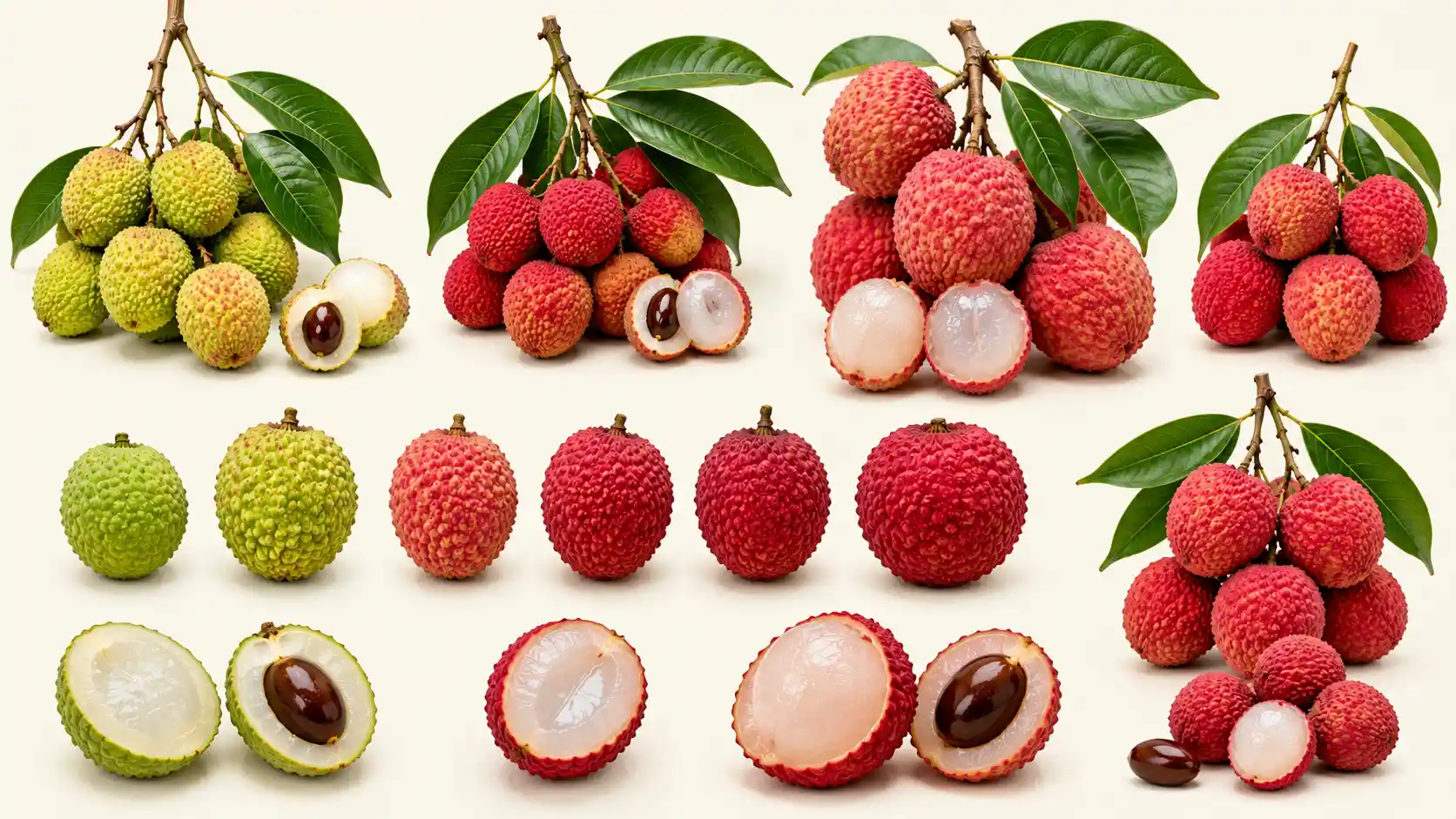
Lychee varieties differ significantly in skin colour, sweetness, seed size, harvest timing, and growing requirements. In Australia, growers commonly cultivate varieties suited to warm subtropical climates, especially in Queensland and northern New South Wales. Australian gardeners interested in growing a wider range of fruiting plants can also compare different fruit tree options, including the characteristics of Mulberry Varieties Australia, which vary in size, fruiting habits, and climate suitability.
Popular varieties such as Fay Zee Siu, Kaimana, Wai Chee, and Baitaying show why colour alone cannot define lychee quality. Some remain green or green-blushed when ripe, while others develop the familiar red appearance.
| Variety | Skin Colour | Flavour Notes | Best Growing Regions | Availability in Australia |
| Fay Zee Siu | Green to green-blushed | Very sweet, aromatic, excellent flavour | Warm subtropical regions | Available with specialist growers |
| Wai Chee | Red to pink-red | Sweet, juicy, reliable flavour | Queensland, northern NSW | Common |
| Kaimana | Red to pink | Large fruit, sweet and mild flavour | Tropical and subtropical areas | Available commercially |
| Red Dragon | Bright red | Sweet with strong lychee aroma | Warm Australian climates | Available from selected growers |
| Baitaying | Red to reddish-green | Sweet, aromatic, good eating quality | Subtropical regions | Less common |
| Erdon Lee | Red to pink | Large fruit with balanced sweetness | Warm climates | Limited availability |
What Is the Best Tasting Lychee Variety?
The best-tasting lychee variety depends on personal preference, growing conditions, and harvest timing. Many enthusiasts consider Fay Zee Siu highly desirable because of its intense sweetness and distinctive flavour, while varieties such as Wai Chee are valued for reliability and consistent production.
Taste is influenced by:
- Sugar concentration
- Acidity balance
- Growing environment
- Tree maturity
- Harvest timing
A perfectly ripe fruit from a suitable variety will generally outperform an under-ripe fruit from even a highly rated cultivar.
Which Country Has the Best Lychee? (Global Growing Regions Overview)
The best lychees are produced in regions with warm, humid climates and suitable seasonal temperature changes.
Major lychee-growing countries include:
- China — one of the world’s largest lychee producers with many traditional cultivars
- India — known for varieties such as Shahi and excellent fresh-market fruit
- Thailand — recognised for commercial production and export quality
- Vietnam — an important producer of sweet seasonal lychees
- Australia — produces high-quality lychees mainly in Queensland and northern NSW
Rather than one country producing universally “the best” lychee, quality depends on the variety, farming practices, climate, and harvest handling.
Choosing between fruit varieties can be tricky — check out our Plant Comparisons hub for more guides like this.
Lychee Tree Size, Growth and Care
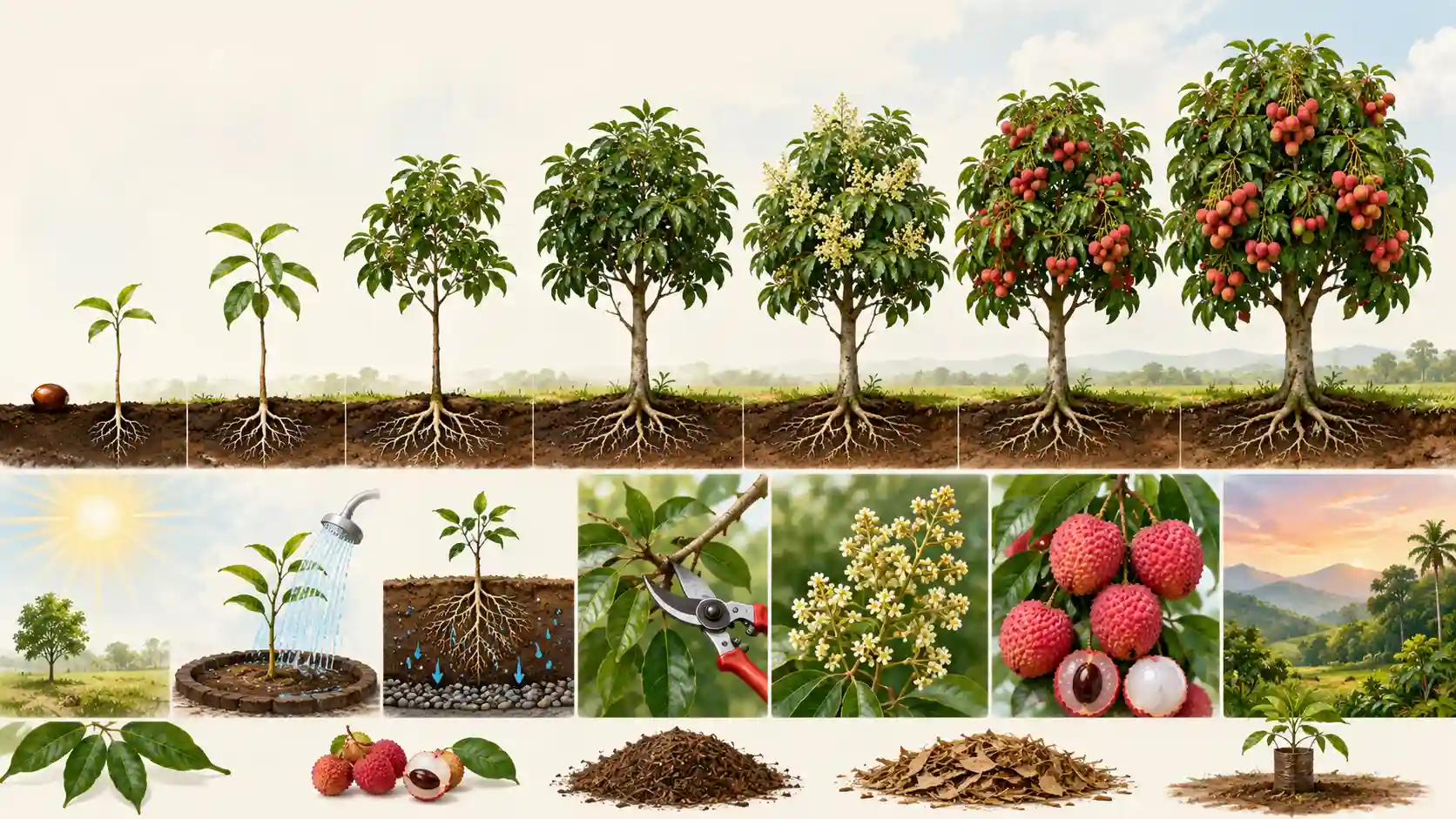
Lychee trees (Litchi chinensis) are evergreen tropical and subtropical fruit trees belonging to the soapberry family (Sapindaceae). They are valued for their attractive foliage, fragrant flowers, and clusters of sweet fruit. For home gardens with limited space, comparing different edible trees can help gardeners choose suitable plants. A Feijoa Tree Australia guide provides useful information about another productive fruit tree option for Australian climates.
Understanding lychee tree size, growth habits, and care requirements helps gardeners choose suitable planting locations and improve fruit production. Lychee is one of many warm-climate fruit trees that perform well in suitable Australian conditions. Gardeners exploring other tropical fruit options can also learn more from our guide on Australian Plants Guide: Indoor Houseplants & Garden Design for broader plant selection and garden planning ideas.
How Big Do Lychee Trees Get?
A standard lychee tree can become a large evergreen tree when grown in favourable outdoor conditions.
Typical mature size:
- Height: around 8–15 metres
- Width: around 6–10 metres
- Canopy: dense and rounded
Tree size depends on:
- Variety
- Soil quality
- Climate
- Pruning practices
- Available space
Standard lychee trees are not suitable for most indoor environments because they require significant sunlight, space, and warm conditions.
A dwarf lychee tree or regularly pruned specimen can remain smaller, making it more practical for home gardens. However, even smaller trees usually perform best outdoors rather than inside homes.
Growth Rate — How Fast Do Lychee Trees Grow?
Lychee trees have a moderate growth rate. Young trees often focus on developing roots and structure before producing heavy crops.
Growth patterns include:
- Active growth during warm seasons
- Slower growth during cooler months
- Flowering influenced by seasonal temperature changes
- Better fruit production as trees mature
Young grafted trees may produce fruit earlier than seedlings. Seed-grown trees often take many years before reliable fruiting.
Environmental factors affecting growth include:
- Adequate sunlight
- Consistent moisture
- Good drainage
- Protection from strong frost
- Balanced nutrition
Care Guide — Watering, Sunlight, Soil, Fertilising, Pruning and Climate
Lychee trees require warm conditions and consistent care to grow successfully.
Watering
- Keep young trees evenly moist while establishing.
- Avoid waterlogged soil because poor drainage can damage roots.
- Mature trees need regular watering during flowering and fruit development.
Sunlight
- Full sun is ideal for healthy growth and better fruit production.
- Trees grown in heavy shade may produce fewer flowers and fruit.
Soil
- Lychees prefer fertile, well-draining soil.
- Slightly acidic soil conditions are generally suitable.
- Organic matter can improve soil structure and moisture retention.
Fertilising
- Apply balanced fertiliser according to tree age and soil condition.
- Avoid excessive nitrogen, which may encourage leaf growth instead of fruit production.
Pruning
- Light pruning after harvest helps maintain tree shape.
- Removing overcrowded branches improves airflow and sunlight penetration.
Climate Tolerance
Lychees perform best in warm subtropical and tropical climates. In Australia, they are commonly grown in Queensland and northern New South Wales. Young trees may require protection from frost.
Choosing the right location is important when planting long-lived trees. For gardeners planning larger landscapes, understanding suitable species through a guide to Fast Growing Evergreen Trees Australia can help create a healthier garden structure.
Lychee Season in Australia
The lychee season in Australia generally occurs during the warmer months, with harvest timing varying by region and variety. Queensland produces the majority of Australian lychees, while northern New South Wales also supports commercial and home garden production.
Typical harvest periods:
- Early varieties: October to November
- Main season: December to January
- Late varieties: February and sometimes March
Queensland’s warmer climate often allows earlier harvests compared with cooler growing regions.
Season timing affects fruit quality because lychees harvested too early may remain green, firm, and less sweet. Fully mature fruit develops better flavour, aroma, and texture.
When buying Australian lychees, shoppers may see different colours throughout the season because varieties mature at different times and do not all develop the same skin colour.
How to Eat a Lychee Properly
Eating a lychee is simple once the fruit is properly prepared.
Steps:
- Wash the fruit before eating.
- Remove the outer skin by cracking it with fingers or a small cut.
- Peel away the rough shell.
- Separate the white flesh from the seed.
- Eat the juicy flesh and discard the seed.
A ripe lychee usually has:
- Sweet floral aroma
- Slightly soft but firm texture
- Juicy translucent flesh
Avoid eating the hard seed. Fresh lychees are commonly eaten raw, but they can also be used in desserts, drinks, and fruit dishes.
Lychee and Health: Common Questions Answered
Lychees are naturally nutritious fruits containing water, carbohydrates, fibre, and plant compounds. However, health effects vary between individuals, and food choices should consider personal dietary needs. The information below is general knowledge only and not medical advice.
Are Lychees OK for Diabetics?
People with diabetes can include fruit in their diet, but lychees contain natural sugars and should be considered as part of overall carbohydrate intake. The glycemic response can vary depending on portion size, ripeness, and individual health factors.
Anyone managing diabetes should discuss personalised dietary choices with a qualified healthcare professional.
Is Lychee Good for Gastritis?
Lychee may be tolerated differently by different people. Its natural acidity and sweetness may affect individuals with sensitive digestive systems.
People with ongoing digestive concerns should seek personalised advice from a healthcare professional.
Who Should Not Eat Lychee?
Certain individuals may need to consider their personal health circumstances before consuming large amounts of lychee. This includes people with specific dietary restrictions, allergies, or medical conditions.
A healthcare professional can provide advice based on individual needs.
Does Lychee Help with Constipation?
Lychees contain water and some dietary fibre, which contribute to overall digestive health. Eating a variety of fibre-containing foods and maintaining adequate hydration generally supports normal digestion.
Why Do Some People Feel Dizzy After Eating Lychee?
Some reports of dizziness after eating lychee have been associated with consuming large amounts of unripe fruit or eating it on an empty stomach. Research has linked certain naturally occurring compounds in unripe lychees with health concerns in specific situations.
Eating properly ripened fruit as part of a balanced diet is generally considered the safer approach.
2 Comments