

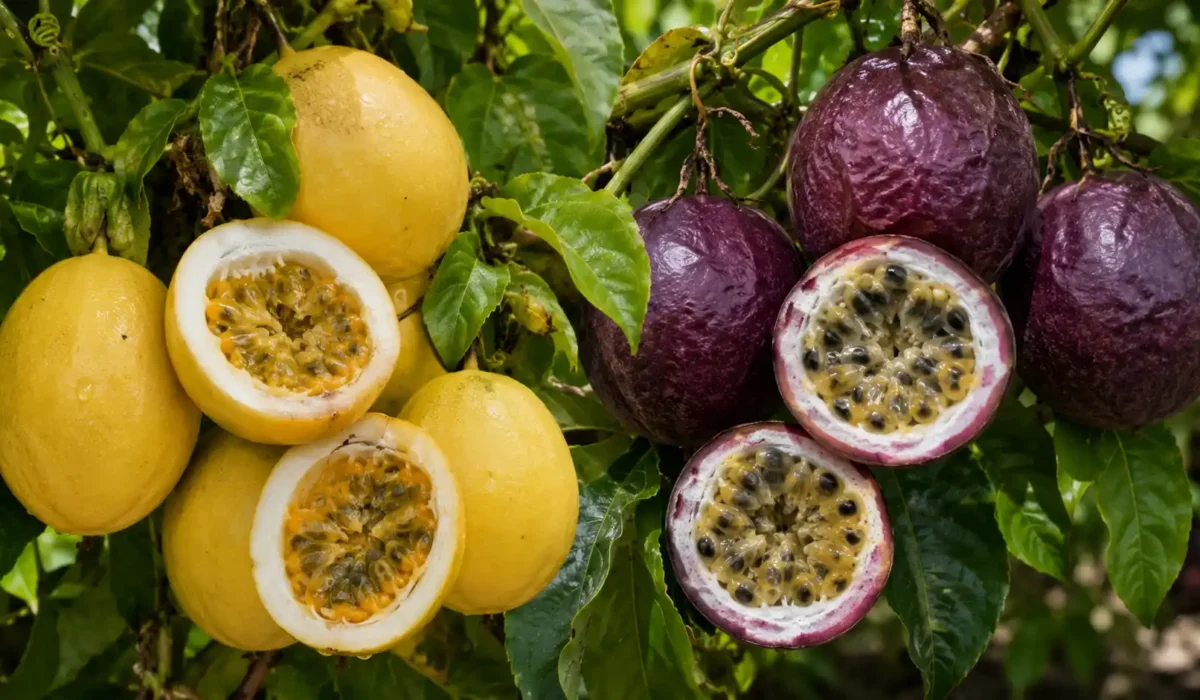
Yellow Passion Fruit vs Purple: Differences, Taste & Growing Guide
Introduction
Yellow passion fruit vs purple refers to two closely related varieties of the same species, but they differ in taste, size, seed colour, climate requirements and culinary uses. The yellow variety (Passiflora edulis f. flavicarpa) is generally larger, more acidic and better suited to warm tropical conditions, while the purple variety (Passiflora edulis) is smaller, sweeter and often preferred for fresh eating. Both produce aromatic pulp-filled fruits, but their growth habits, pollination needs and best uses are different. Understanding these differences helps gardeners and fruit lovers choose the right passion fruit variety for their climate and purpose.
If you’re weighing up other plant varieties too, our full plant comparisons guide breaks down key differences to help you choose the right variety for your garden.
By Elemo Baker | Plant Care & Gardening Expert
Last Updated: July 2026
Quick Summary
- Purple passion fruit is smaller, sweeter and more aromatic, while yellow passion fruit is larger, tangier and more acidic.
- Purple passion fruit has dark black seeds, whereas yellow passion fruit usually has brown seeds.
- Yellow passion fruit performs best in tropical and hot climates with higher fruit production, while purple prefers cooler subtropical conditions.
- Yellow passion fruit is commonly used for commercial juice production, while purple passion fruit is often enjoyed fresh.
What Is the Difference Between Yellow and Purple Passion Fruit?
Yellow and purple passion fruit are two forms of the species Passiflora edulis. The purple variety (Passiflora edulis) is considered the traditional form and originated in Brazil and the Amazon region. The yellow variety (Passiflora edulis f. flavicarpa) developed as a distinct form and is widely grown in tropical regions because of its vigorous growth and heavy fruit production. Passion fruit belongs to the genus Passiflora, a diverse group of flowering plants known for their ornamental flowers and edible fruits. More botanical background about this plant group can be found on Wikipedia’s page about Passiflora.
The main difference between yellow and purple passion fruit is their adaptation, flavour and fruit characteristics. Yellow passion fruit generally produces larger fruits with higher acidity, while purple passion fruit produces smaller fruits with sweeter, more fragrant pulp. Like other tropical fruits, passion fruit varieties can vary significantly in flavour, growing conditions and culinary uses, similar to other tropical fruit comparisons such as soursop and custard apple.
Gardeners often choose between these varieties based on local climate, available space and whether the fruit will be eaten fresh or processed.
Appearance and Size
Yellow and purple passion fruit can be easily distinguished by their outer appearance.
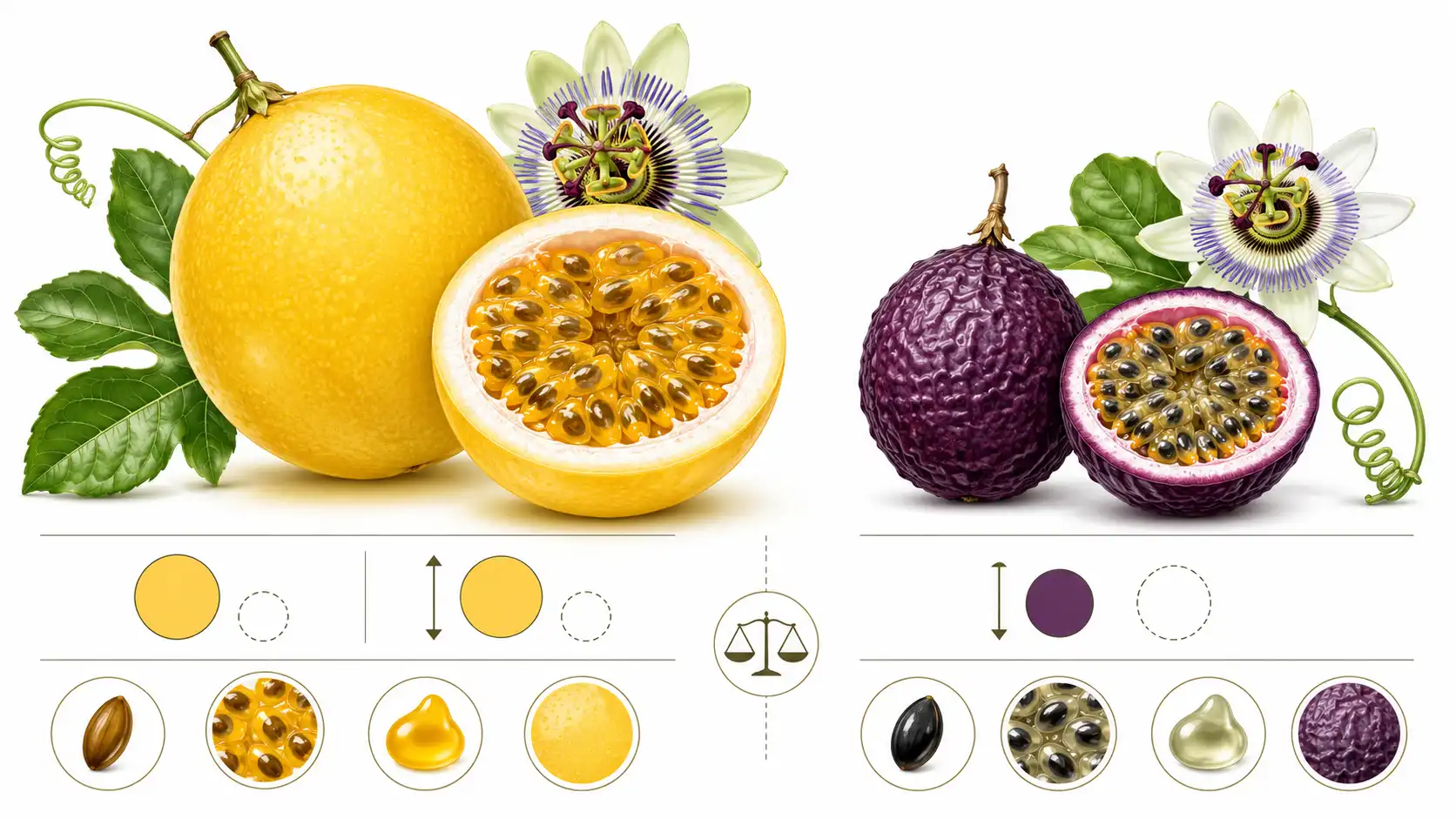
Purple passion fruit is usually smaller, round to slightly oval, and commonly measures around 5–7 cm in diameter. Its skin changes from green to deep purple when ripe. The pulp contains black seeds surrounded by orange-yellow jelly-like flesh.
Yellow passion fruit is typically larger and more egg-shaped. Its skin remains yellow or golden when mature, and it usually contains brown seeds. Yellow fruits often have thicker skins and more juice-producing pulp, making them popular for commercial growing.
Flavour and Taste
Passion fruit has a unique combination of sweetness, acidity and tropical aroma. Purple passion fruit is generally sweeter, less acidic and has a stronger floral fragrance, making it ideal for eating directly from the shell.
Yellow passion fruit has a sharper, more citrus-like flavour due to its higher acidity. The yellow passion fruit taste is often described as tangy and refreshing, which is why it is frequently used in juices, desserts and flavouring.
Comparison Table — Yellow vs Purple Passion Fruit
| Attribute | Yellow Passion Fruit | Purple Passion Fruit |
| Size | Larger, often egg-shaped | Smaller, rounder fruit |
| Skin colour | Yellow to golden | Purple when ripe |
| Seed colour | Brown seeds | Black seeds |
| Taste | Tangy, sharp and acidic | Sweeter and more aromatic |
| Acidity | Higher acidity | Lower acidity |
| Climate preference | Tropical and hot climates | Cooler subtropical climates |
| Typical yield | Higher fruit production | Moderate yield |
| Best use | Juice, desserts and processing | Fresh eating |
| Self-pollination need | Usually requires cross-pollination | Often self-pollinating |
Nutritional Value of Yellow vs Purple Passion Fruit
Both yellow and purple passion fruit are nutrient-dense tropical fruits containing vitamin C, dietary fibre and plant antioxidants. Their nutritional profiles are similar, but the types and levels of certain plant compounds can vary. Many fruit crops, including passion fruit and Black Sapphire grapes, are valued for their unique flavours, antioxidants and nutritional benefits.
Yellow passion fruit generally contains higher levels of carotenoids and citric acid, which contribute to its bright colour and sharper flavour. Purple passion fruit contains anthocyanins, antioxidant compounds responsible for its darker skin colour.
Passion fruit benefits are often associated with supporting general nutrition because it provides fibre, vitamins and naturally occurring plant compounds. The fruit is also commonly linked with skin health because vitamin C contributes to normal collagen formation and antioxidant protection.
Some people also ask, “is passion fruit good for your liver?” While passion fruit contains antioxidants that support overall dietary quality, it should not be considered a treatment for liver conditions.
Is Passion Fruit Good for Weight Loss or Diabetics?
Passion fruit can be included in a balanced diet because it is naturally high in fibre and has a relatively low glycaemic impact compared with many sweet foods. Fibre may help promote fullness and support healthy digestion.
For people managing diabetes or specific dietary needs, individual responses can vary. It is best to consult a healthcare professional for personalised advice.
How to Grow Yellow vs Purple Passion Fruit
Both varieties grow as vigorous climbing vines and require support structures such as trellises, fences or pergolas. However, their growth performance differs depending on climate and growing conditions.
Plant Size
Passion fruit vines can spread several metres when mature. Yellow passion fruit is usually more vigorous, producing stronger growth and larger flowers. Its flowers are also larger and often have a stronger fragrance.
Purple passion fruit generally has a slightly more moderate growth habit but can still become a large climbing vine when provided with suitable support.
Growth Rate
- Yellow passion fruit is known for fast growth in warm tropical climates. Under favourable conditions, it can produce heavy crops and may produce more than 20 fruits per vine.
- Purple passion fruit grows moderately quickly and performs well in cooler subtropical areas. It is often more tolerant of mild cold compared with yellow varieties.
- Passion fruit vines commonly take around 1–3 years to begin producing fruit. After successful pollination, fruit usually develops and matures within approximately 70–90 days.
Understanding climate requirements is essential for tropical fruit vines, as plants such as soursop and passion fruit perform best when grown in regions that match their natural growing conditions.
Care Guide
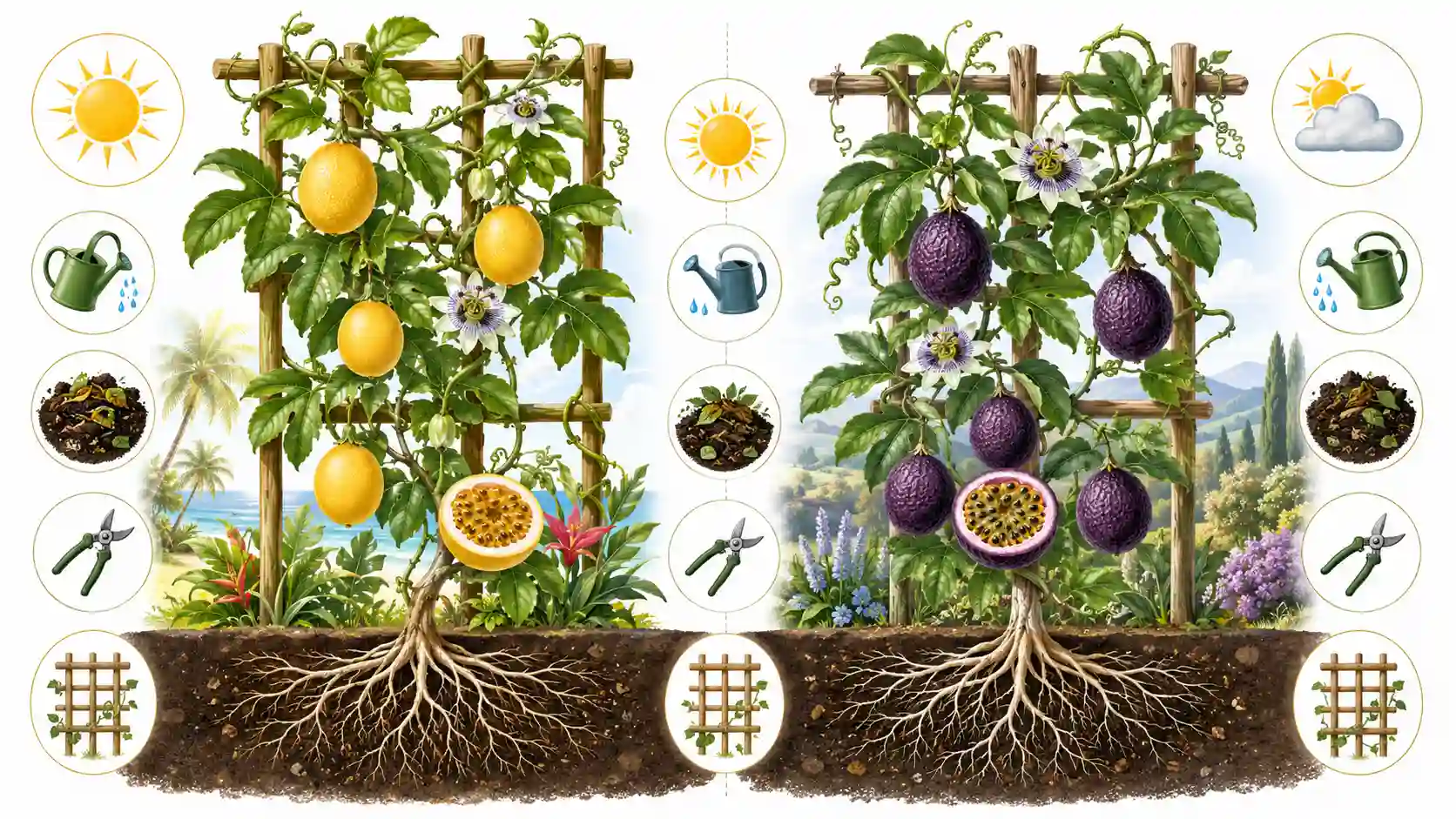
Passion fruit vines need:
- Full sun with at least 6 hours of direct sunlight daily
- Well-draining soil rich in organic matter
- Regular watering, especially during flowering and fruit development
- Balanced fertiliser during active growth
- Regular pruning to control size and encourage new growth
Choosing the right plant for your location is an important part of successful gardening. Our Australian plants guide covers how climate, garden design and plant selection influence growing success.
In our experience growing passion fruit vines, inconsistent watering is one of the most common causes of poor fruit quality. Keeping soil moisture stable without waterlogging helps improve flowering and fruit development.
As of 2026, growers continue to emphasise choosing varieties suited to local climate conditions, especially as changing weather patterns affect flowering and fruit set.
Pollination Needs
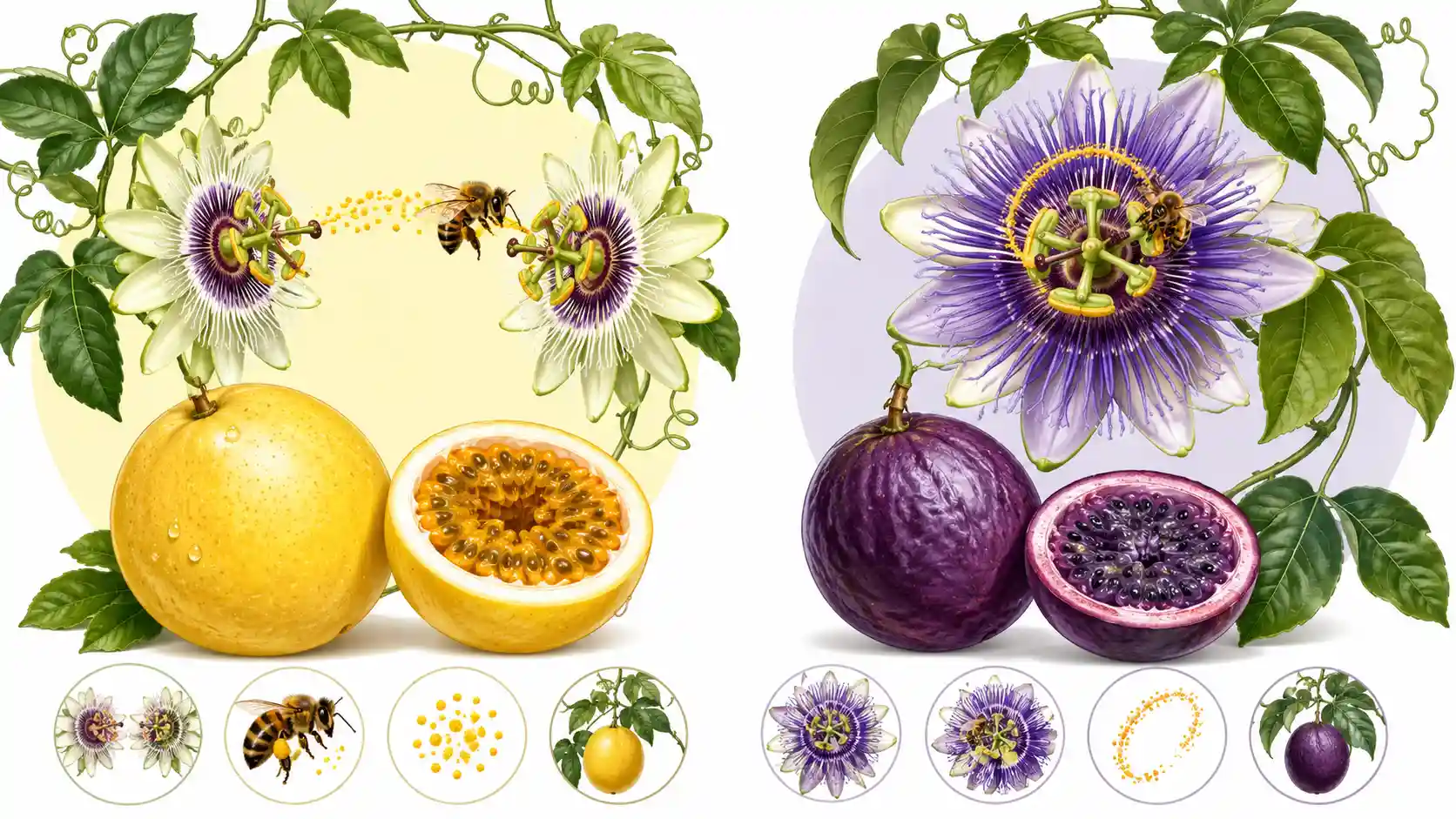
Pollination is one of the biggest differences between these varieties. Purple passion fruit is often self-pollinating, meaning a single plant may produce fruit.
Yellow passion fruit is usually self-incompatible and requires pollen from a genetically different vine or hand pollination to produce fruit successfully.
If a yellow passion fruit vine flowers heavily but produces little fruit, poor pollination is often the reason.
Ripening, Storage and How to Eat Passion Fruit
How to Tell When Passion Fruit Is Ripe
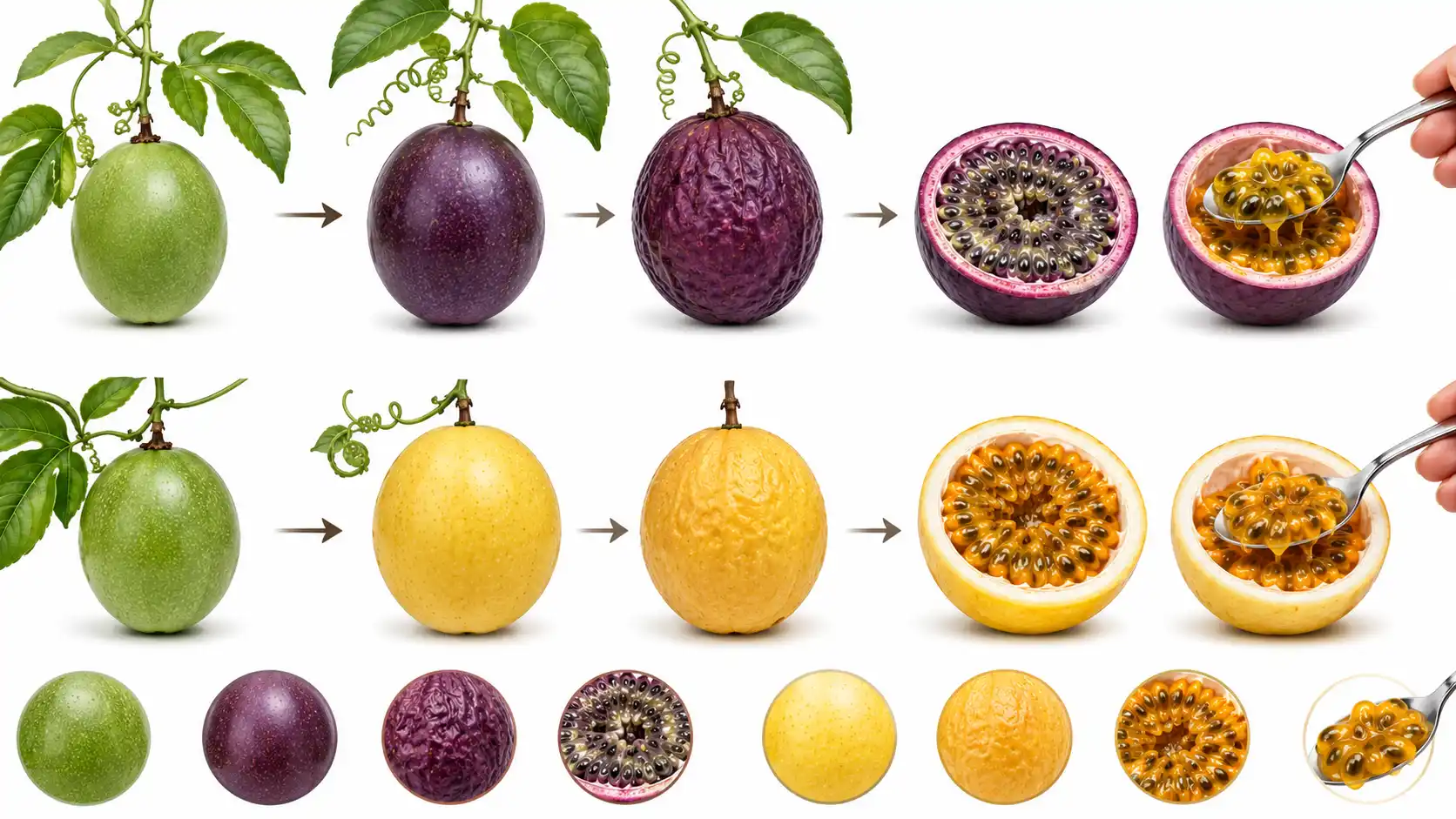
A ripe passion fruit usually has slightly wrinkled skin. Although many people think wrinkles indicate spoilage, they often show that the fruit has reached peak sweetness.
Purple passion fruit shows this change more clearly because its skin becomes deeply wrinkled as it ripens.
Does Passion Fruit Ripen Off the Vine?
Yes, passion fruit can continue ripening after harvest if it has reached sufficient maturity on the vine. Fruits picked too early may not develop the same flavour or sweetness.
How to Eat Passion Fruit
To eat passion fruit:
- Wash the fruit and cut it in half.
- Scoop out the pulp and seeds with a spoon.
- Eat the pulp fresh or strain it for seedless juice.
The pulp can also be added to yoghurt, desserts, drinks and sauces.
Common Problems With Purple and Yellow Passion Fruit Plants
Common passion fruit problems include:
- Poor fruit set: Often caused by pollination issues, especially in yellow varieties. Hand pollination or planting another compatible vine can help.
- Woodiness disease or bacterial spot: Use healthy planting material and remove infected plants quickly.
- Stomach discomfort: High fibre and acidity may cause discomfort for some people. Those with recurring symptoms should seek medical advice.
- Slow growth or low yield: Often caused by unsuitable climate, poor soil or incorrect variety selection.
Beginner Mistakes to Avoid
Common mistakes when growing passion fruit include:
- Choosing yellow passion fruit for a cool climate where purple may perform better
- Ignoring pollination requirements
- Harvesting fruit before it is mature
- Applying excessive fertiliser, which can encourage leaves instead of fruit
Selecting the right variety before planting is one of the most important steps for long-term success.
Which Passion Fruit Should You Grow or Eat?
The best choice depends on your climate and intended use. Gardeners planning an Australian edible garden can also explore other suitable fruit plants, such as feijoa trees, which offer reliable growth and seasonal harvests.
Choose purple passion fruit if you want:
- Sweeter fruit for fresh eating
- A variety suited to cooler subtropical climates
- Strong natural aroma
Choose yellow passion fruit if you want:
- Higher yields
- Fruit for juice, baking or processing
- A variety suited to tropical conditions
For many Australian gardeners, purple passion fruit may be easier in cooler regions, while yellow passion fruit performs better in warmer northern climates.
Conclusion
Yellow passion fruit vs purple comes down to differences in flavour, size, climate preference, pollination and culinary use. Purple passion fruit is smaller, sweeter and better suited for fresh eating, while yellow passion fruit is larger, more acidic and often preferred for juice production. Both varieties are nutritious, attractive climbing plants that can reward gardeners when grown in suitable conditions. The best choice depends on whether you want fresh fruit, high production or a vine that matches your local climate.
FAQs
Which color passion fruit is the best?
The best colour depends on personal preference and growing conditions. Purple passion fruit is often preferred for sweetness, while yellow passion fruit is valued for juice production and higher yields.
Is yellow passion fruit better than purple?
Yellow passion fruit is not always better; it is better suited for warm climates and commercial uses, while purple is often better for fresh eating.
Which variety of passion fruit is the sweetest?
Purple passion fruit is generally considered the sweetest variety because it has lower acidity and a stronger sweet aroma.
Which passion fruit is not edible?
Most cultivated yellow and purple passion fruits are edible when ripe. However, unripe fruit and unknown ornamental species should not be consumed.
Can diabetics eat passionfruit?
Passionfruit can be included in many balanced diets because it contains fibre and natural nutrients. People with diabetes should follow advice from their healthcare professional for individual dietary choices.
How many years does it take for passionfruit to fruit?
Passion fruit vines usually begin producing fruit within 1–3 years after planting when grown in suitable conditions.
What are the common problems with purple passion plants?
Common problems include poor pollination, fungal or bacterial diseases, insufficient sunlight, irregular watering and unsuitable soil conditions.