

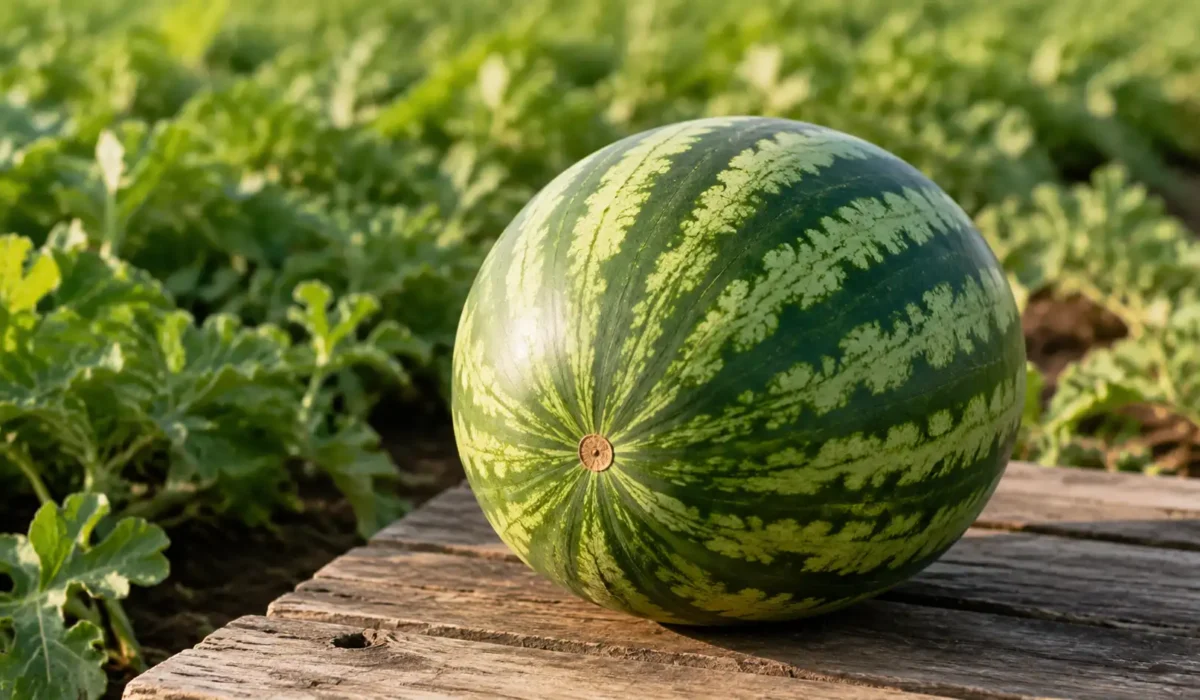
Watermelon Belly Button: Meaning & Ripeness Guide
Introduction
The watermelon belly button is the small circular mark found on the blossom end of a watermelon, opposite the stem. It is the scar left behind where the flower was attached before the fruit developed. This natural mark can provide clues about watermelon growth and ripeness, but it is not a sign of damage or a defect. A smaller, dry, and slightly indented belly button is often associated with better fruit development, especially when combined with other checks such as a yellow field spot, heavy weight, and a dull rind.
Watermelons are one of many productive plants grown in Australian gardens, and understanding fruit development can also help gardeners improve their knowledge of other fruit trees for Australian gardens and edible crops.
Quick Summary
- The watermelon belly button is the blossom-end scar where the flower was attached, not the stem mark.
- A small, dry belly button may indicate more even growth and better sugar development.
- Ripeness should be checked using several signs, including the belly button, field spot, weight, and rind appearance.
- A large, cracked, or sunken belly button may suggest uneven growth or an overripe fruit.
- The belly button alone cannot guarantee sweetness because growing conditions also affect watermelon quality.
What Is the Watermelon Belly Button?
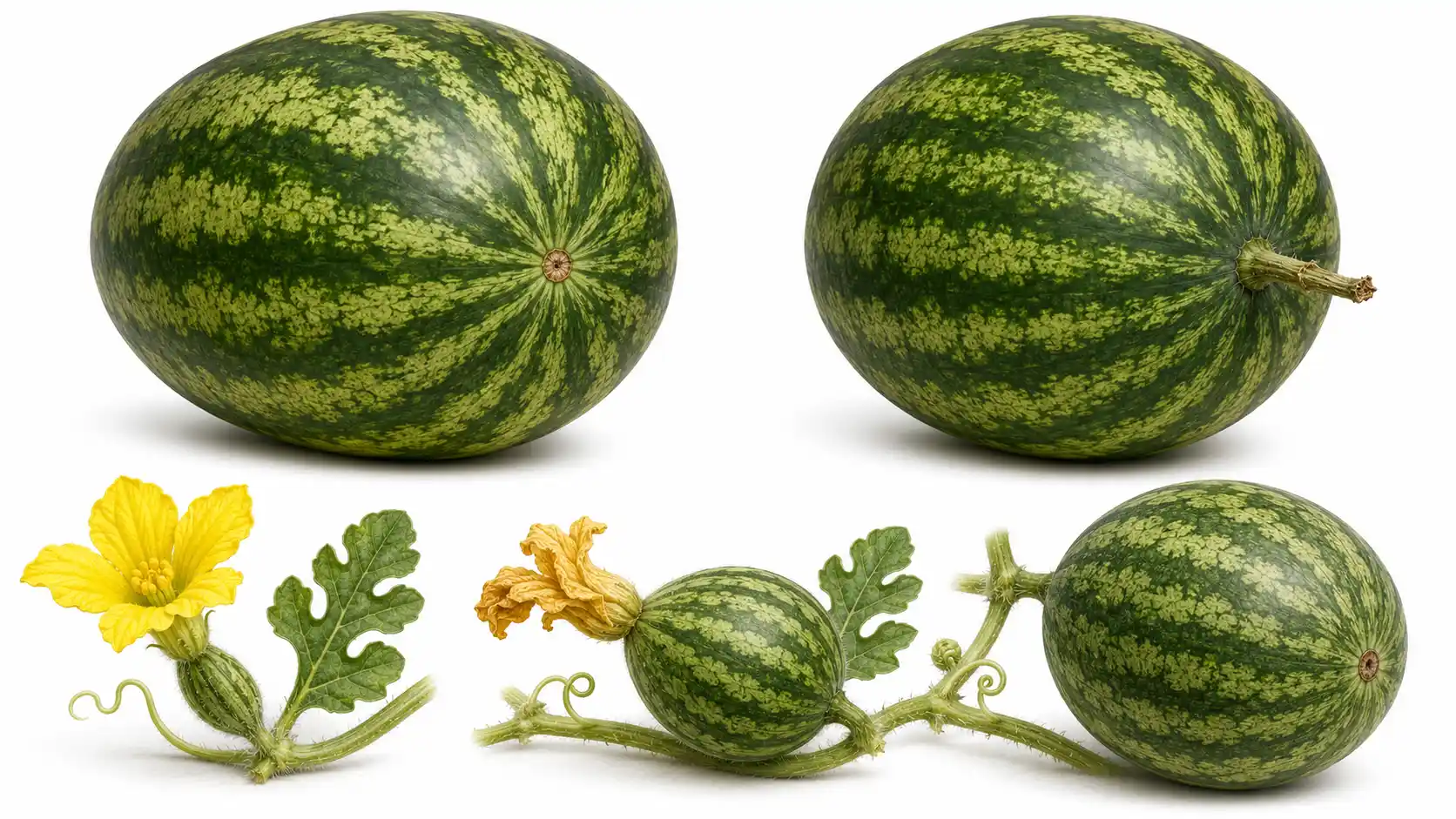
The watermelon belly button, also called the watermelon navel, is the circular scar located at the blossom end of the fruit. This is the opposite side from the stem end, where the watermelon was connected to the vine. Watermelon is a flowering fruit crop belonging to the species Citrullus lanatus, a plant widely cultivated around the world for its sweet edible fruit.
During fruit development, a watermelon begins as a fertilised flower. After pollination, the flower petals fall away, and the remaining flower attachment point develops into the small circular mark seen on the mature fruit.
Like other warm-season edible plants, watermelon growth depends on successful flowering, pollination, and suitable growing conditions, which are important concepts covered in guides about fruit trees and edible plants for Australian gardens.
The terms watermelon navel, melon belly, and watermelon belly are commonly used to describe this same blossom-end marking. These names refer to the appearance of the scar and do not describe a separate part of the fruit.
The belly button is a natural feature found on many watermelons and does not mean the fruit has been damaged, spoiled, or affected by disease.
Belly Button vs Field Spot
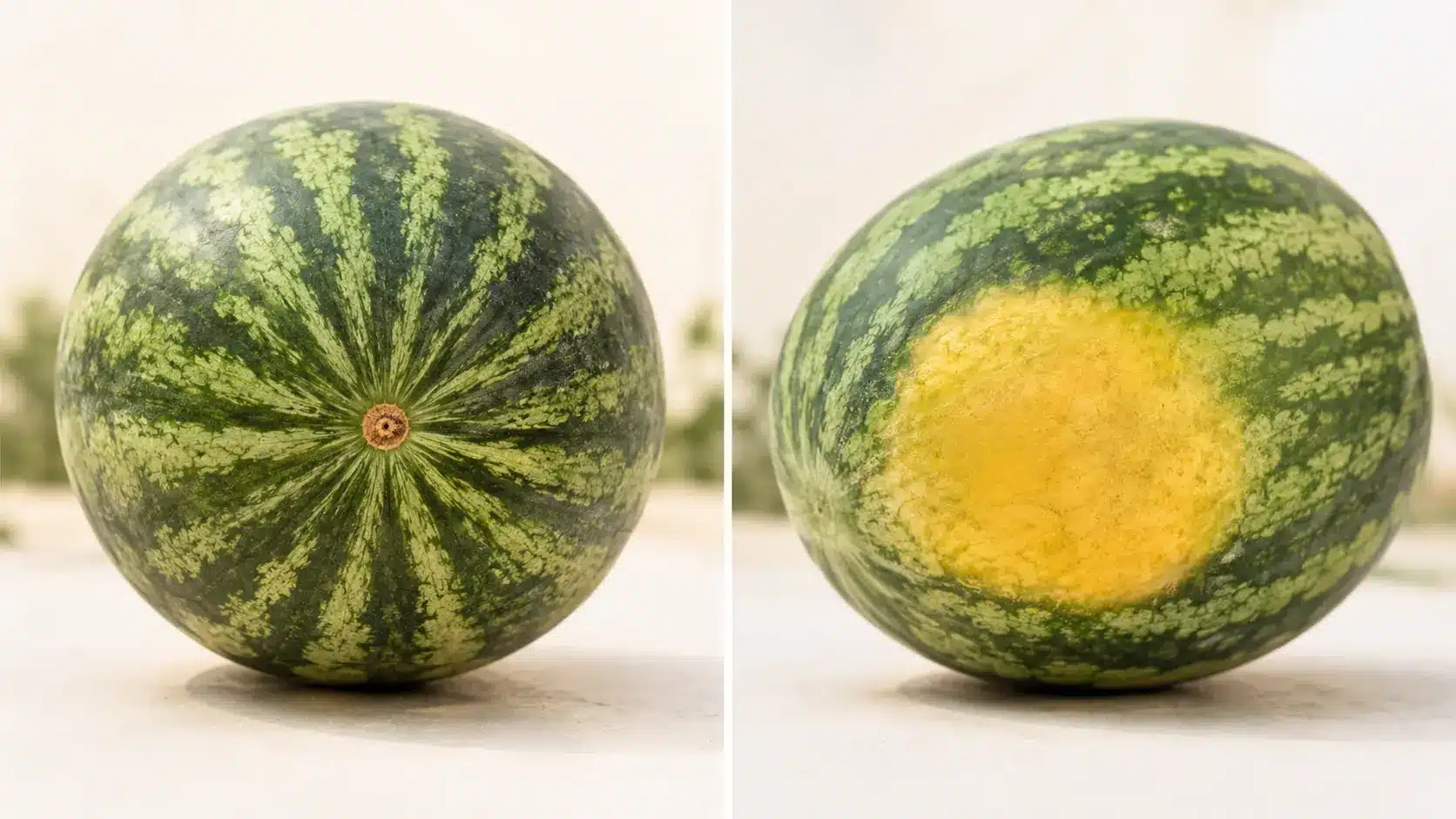
The belly button and field spot are two different watermelon features that can help shoppers judge ripeness.
| Feature | Belly Button (Navel) | Field Spot |
| Location | Blossom end of the watermelon | Underside area that touched the ground |
| Indicates | Pollination and fruit development clues | Time spent ripening on the vine |
| Ideal appearance | Small, dry, slightly indented mark | Deep yellow or creamy yellow colour |
| Less desirable signs | Large, cracked, soft, or dark mark | White or pale field spot |
The field spot is often considered one of the stronger ripeness indicators because it shows where the watermelon rested during growth. A deep yellow field spot usually suggests the fruit had more time to mature naturally.
What Does Belly Button Size Tell You About Ripeness?
A watermelon belly button can provide useful information about fruit development, but it should not be used as the only ripeness test.
A small and tight belly button is often linked with more balanced fruit growth. It may indicate that pollination occurred evenly, allowing the watermelon to develop consistent texture and sweetness.
Similar factors such as temperature, water availability, and growing conditions also influence fruit development in other tropical crops, including bananas, as explained in our Super Dwarf Cavendish Banana Growing Guide Australia.
A large belly button can sometimes indicate uneven growth or stress during development. In some cases, larger blossom-end scars may be associated with softer, watery, or grainier flesh, although this is not always the case.
The belly button should be considered a supporting clue rather than a guarantee of quality.
The best way to choose a ripe watermelon is to combine several observations:
- Check the colour of the field spot.
- Compare the watermelon’s weight to its size.
- Look for a dull rather than shiny rind.
- Inspect the overall shape and firmness.
Growing conditions, watermelon variety, weather, and harvesting time all influence the final taste and texture.
How to Tell If a Watermelon Is Ripe (Full Checklist)
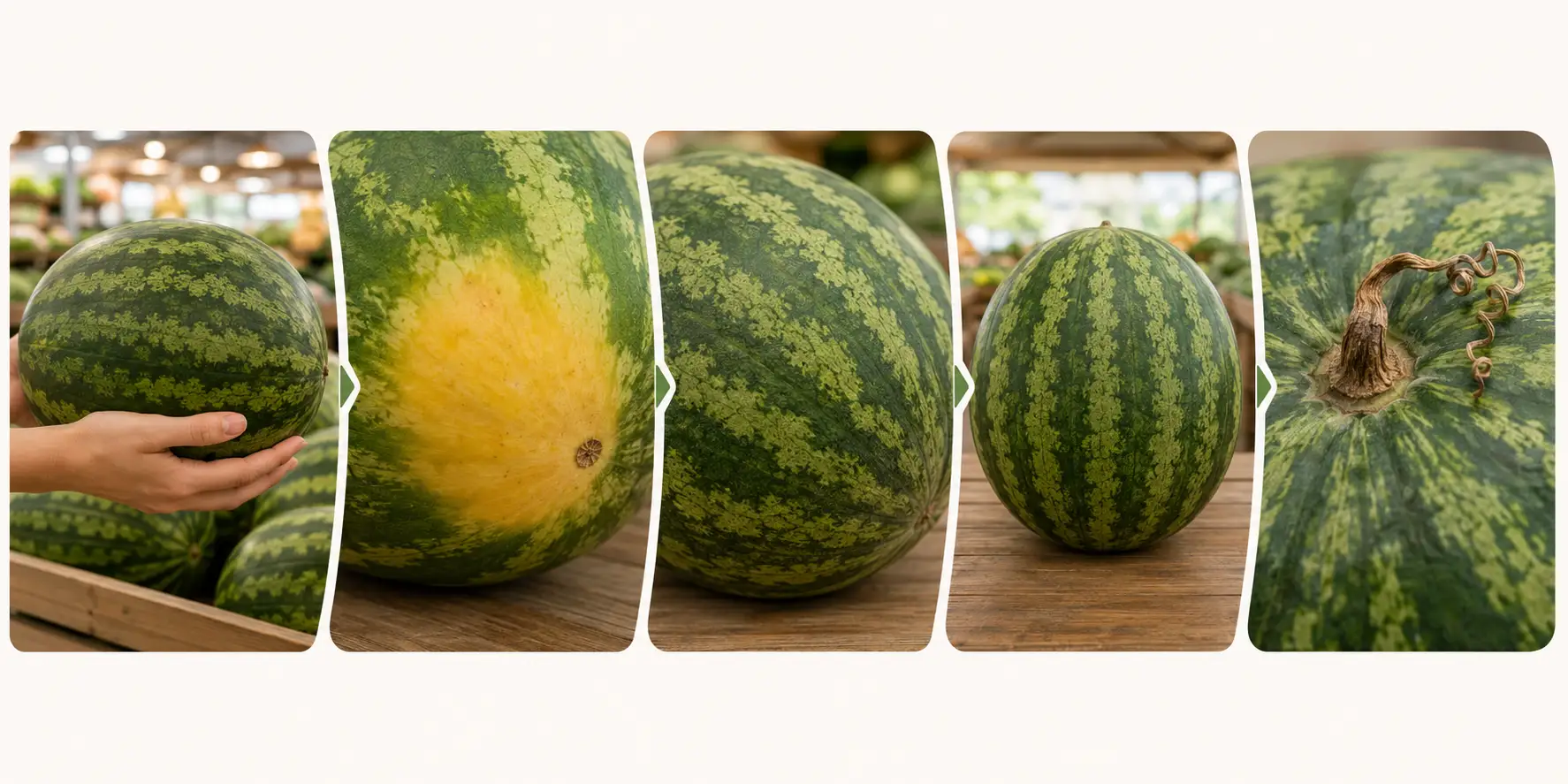
Knowing how to tell if watermelon is good requires checking several signs together.
When checking watermelon for ripeness, use the following checklist:
- Look at the field spot: A ripe watermelon usually has a deep yellow or creamy yellow patch where it rested on the ground. A white or pale spot may indicate early harvesting.
- Check the weight: A ripe watermelon should feel heavy for its size because mature fruit contains a high amount of water.
- Examine the rind: A ripe watermelon often has a dull, matte surface. A very glossy rind can indicate the fruit was picked before reaching full maturity.
- Inspect the shape: Choose a watermelon with a symmetrical shape. Irregular bumps or uneven growth may affect internal texture.
- Check the stem and nearby tendril: A dried brown tendril near the stem can suggest the fruit had more time to mature on the vine.
- Look at the belly button: A small, dry blossom-end scar can be a positive sign when combined with other ripeness indicators.
The “Thump Test” — Does It Actually Work?
The thump test is a traditional method where people tap a watermelon and listen for a sound. A deep, hollow sound is often associated with a ripe watermelon, while a dull sound may suggest lower quality.
However, the thump test is less reliable than checking the field spot, weight, and overall appearance. Sound can vary depending on watermelon size, variety, and internal structure, so it should only be used as an additional clue.
Common Myths About Watermelon and Digestion
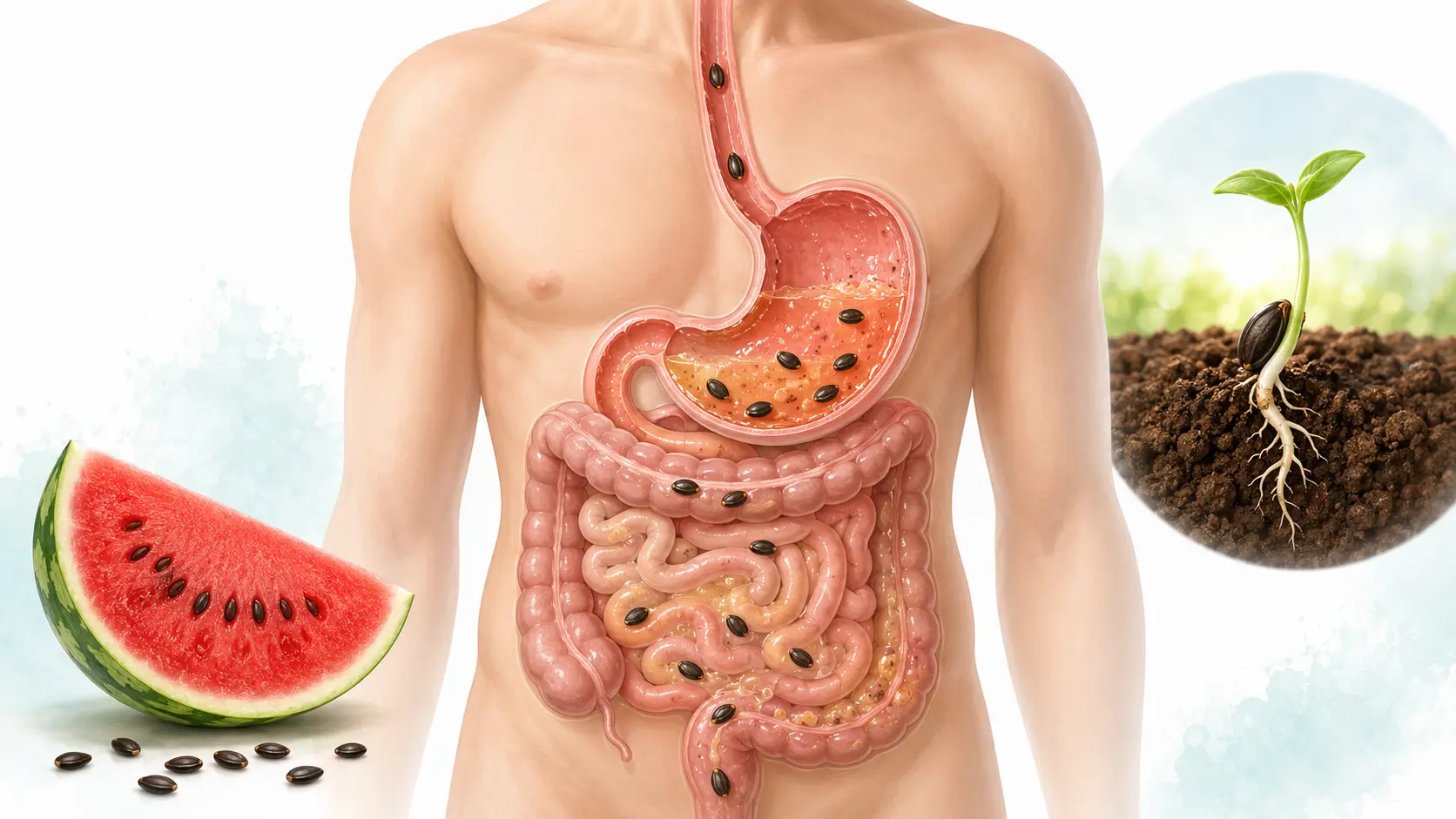
Watermelon is sometimes connected with myths about digestion, seeds, and the idea of a “watermelon stomach.” These claims are generally based on misunderstandings about how the digestive system works.
Questions about seeds are common among fruit growers and consumers, including topics such as whether certain citrus varieties contain seeds, like the information covered in our guide on Are Imperial Mandarins Seedless?
Can Watermelon Seeds Grow in Your Stomach?
No, watermelon seeds cannot grow in your stomach. The human digestive system does not provide the conditions needed for seeds to germinate.
Stomach acid, digestive enzymes, and the lack of suitable growing conditions prevent seed development. Most swallowed watermelon seeds either pass through the digestive system naturally or are broken down if chewed.
How Long Do Watermelon Seeds Stay in Your System?
Watermelon seeds generally pass through the digestive system as part of normal digestion, often within about 24–48 hours.
Large amounts of unchewed seeds may contribute to digestive discomfort in some people because seed coatings contain insoluble fibre, which can affect digestion and bowel movement patterns.
Why Does Watermelon Sometimes Appear Undigested in Stool?
Watermelon may sometimes appear partially undigested because it contains water, fibre, and plant structures that the body does not completely break down.
Visible pieces of fibrous fruit material can occur when food moves through the digestive system relatively quickly. This does not necessarily mean the fruit was not absorbed or used by the body.
Common Problems People Associate With “Watermelon Belly”
The phrase “watermelon belly” can create confusion because it may refer either to the literal belly button mark on the fruit or to digestive sensations after eating watermelon.
Common associations include:
- Bloating after eating watermelon: Watermelon contains natural sugars, water, and fibre. Some people may experience temporary bloating depending on their individual digestion and dietary habits.
- Confusing the belly button mark with stomach-related terms: The watermelon belly button is a physical feature of the fruit and is unrelated to human body shape or digestion.
- Buying overripe watermelon: A cracked, soft, sunken, or discoloured belly button may indicate that the fruit has passed its ideal quality stage. Choose firm fruit with healthy colour and no major damage.
What Does the “4032” Sticker Number Mean?
- The number 4032 on a watermelon sticker is a PLU (Price Look-Up) code used in grocery systems. It identifies a conventionally grown red seedless watermelon.
- PLU codes help retailers and suppliers classify produce items. They are mainly used for inventory and checkout purposes rather than indicating ripeness, sweetness, or nutritional quality.
- The 4032 sticker number is separate from the watermelon belly button and does not provide information about the fruit’s blossom-end mark.
Understanding fruit characteristics, varieties, and quality indicators can help consumers make better choices across different tropical fruits, including comparisons such as Soursop vs Custard Apple.
Conclusion
The watermelon belly button is a natural blossom-end scar that forms where the flower was attached during fruit development. It is not a defect and can provide useful clues when selecting a ripe watermelon. A small, dry belly button may indicate balanced growth, but it should always be checked alongside other signs such as a deep yellow field spot, heavy weight, and a dull rind. For the best results, use multiple ripeness indicators together rather than relying on one feature alone.
FAQs
What is the belly button of a watermelon?
The belly button of a watermelon is the circular scar on the blossom end of the fruit where the flower was attached before the watermelon developed.
Is a small or large watermelon belly button better?
A small, dry, slightly indented watermelon belly button is generally considered a better sign than a large or cracked one, but it is only one indicator of fruit quality.
Can you eat watermelon seeds safely?
Yes, watermelon seeds are generally safe to eat. They pass through the digestive system naturally, especially when swallowed whole.
Does an undigested-looking stool after watermelon mean something is wrong?
Not necessarily. Watermelon contains fibre and plant material that may sometimes remain visible after digestion. Occasional visible fruit matter can be a normal digestive occurrence.
What does 4032 mean on a watermelon sticker?
The number 4032 is a PLU code used to identify conventionally grown red seedless watermelon in retail systems.
How can you tell a watermelon is ripe without cutting it?
You can check ripeness by looking for a deep yellow field spot, choosing a heavy watermelon for its size, checking for a dull rind, inspecting shape symmetry, and using the belly button as an additional clue.
1 Comment