

Growing Tropical Fruits in Australia: A Home Gardener’s Guide
Growing tropical fruits in Australia is possible well beyond the deep tropics, but success depends on matching the right fruit to your climate. Many gardeners in Queensland, northern NSW, and even cooler regions with a warm microclimate can grow mango, banana, papaya, and several lesser-known species — provided they choose varieties suited to their frost exposure, space, and patience for time-to-fruit. This guide sorts tropical fruits by realistic growability, compares their care needs side by side, and shows how pot-growing techniques from citrus gardening apply just as well here.
By Elemo Baker | Plant Care & Gardening Expert
Last Updated: August, 2026
Quick Summary
- Tropical fruits fall into three practical categories: true-tropical, subtropical-tolerant, and container/greenhouse-only.
- Frost is the main limiting factor — most tropical species suffer damage below 2°C.
- Dwarf varieties of mango, banana, and avocado make pot-growing realistic in smaller yards.
- Time-to-fruit varies enormously, from under 2 years (dwarf banana) to 8+ years (some sapotes).
- Techniques used for growing citrus in pots on this site transfer directly to many tropical fruit trees.
What Are Tropical Fruits, and Which Ones Can You Grow in Australia?
Tropical fruits are species native to equatorial regions that typically require warm, humid, frost-free conditions to grow and fruit reliably. In Australia, true tropical fruits thrive naturally in Far North Queensland, while gardeners further south rely on subtropical-hardy varieties or pot cultivation to succeed. Climate is the single biggest factor determining success, a point echoed by University of Florida’s tropical fruit growing research, which notes that variety selection matters as much as region.
Botanically, many popular tropical fruit trees belong to families such as Anacardiaceae (mango), Musaceae (banana), and Caricaceae (papaya). Each family has different frost tolerance, root systems, and fruiting timelines, which is why a one-size-fits-all approach to “growing tropical fruit” rarely works for Australian conditions. If you’re in a warmer pocket of Brisbane or similar, a Brisbane backyard guide is a useful starting point for matching species to local conditions. For a wider view of growing fruit trees and tropical plants in Australian conditions generally, see our complete fruit trees and tropical plants guide.
True Tropical vs Subtropical-Tolerant vs Container-Only
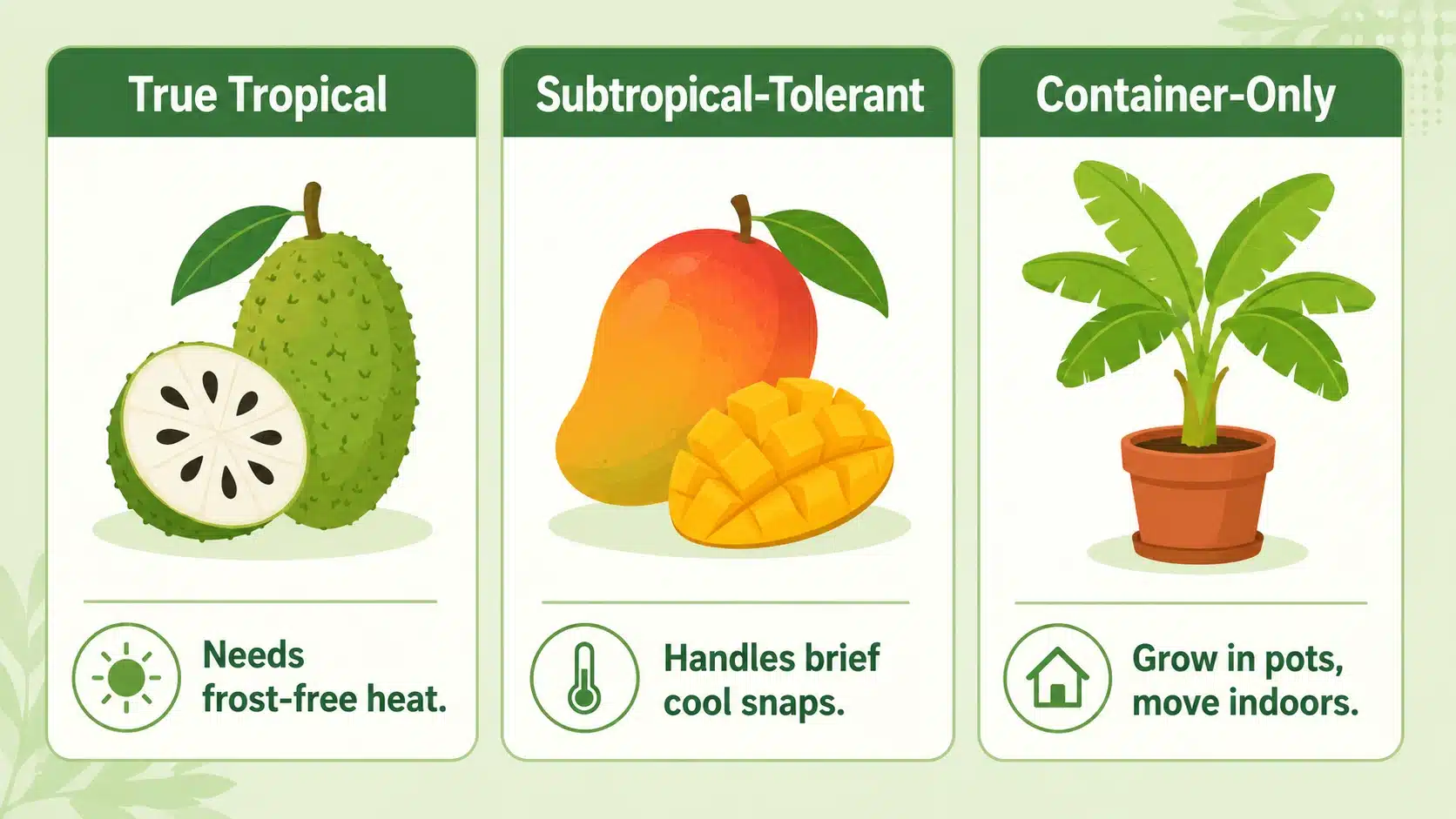
Not every tropical fruit needs true tropical heat. Sorting species into three tiers helps set realistic expectations before planting.
True Tropical Fruits
These need consistently warm temperatures and minimal frost exposure, generally restricted to Far North Queensland or heated greenhouses elsewhere. Soursop is a clear example — it’s frost-sensitive and demands genuinely tropical humidity; see where soursop grows naturally for climate specifics. Sapodilla varieties, including butterscotch sapodilla, fall into this category too.
Subtropical-Tolerant Fruits
Many mango and papaya varieties tolerate brief cool snaps and grow well across coastal QLD and northern NSW. Different papaya types vary in cold sensitivity, so variety choice matters as much as climate zone.
Container and Greenhouse-Only Options
Dwarf cultivars bring tropical fruit into cooler climates by allowing gardeners to move plants indoors or into sheltered positions during cold months. The super dwarf Cavendish banana and Little Cado avocado are two of the most practical container options available.
Tropical Fruit Growing Comparison Table
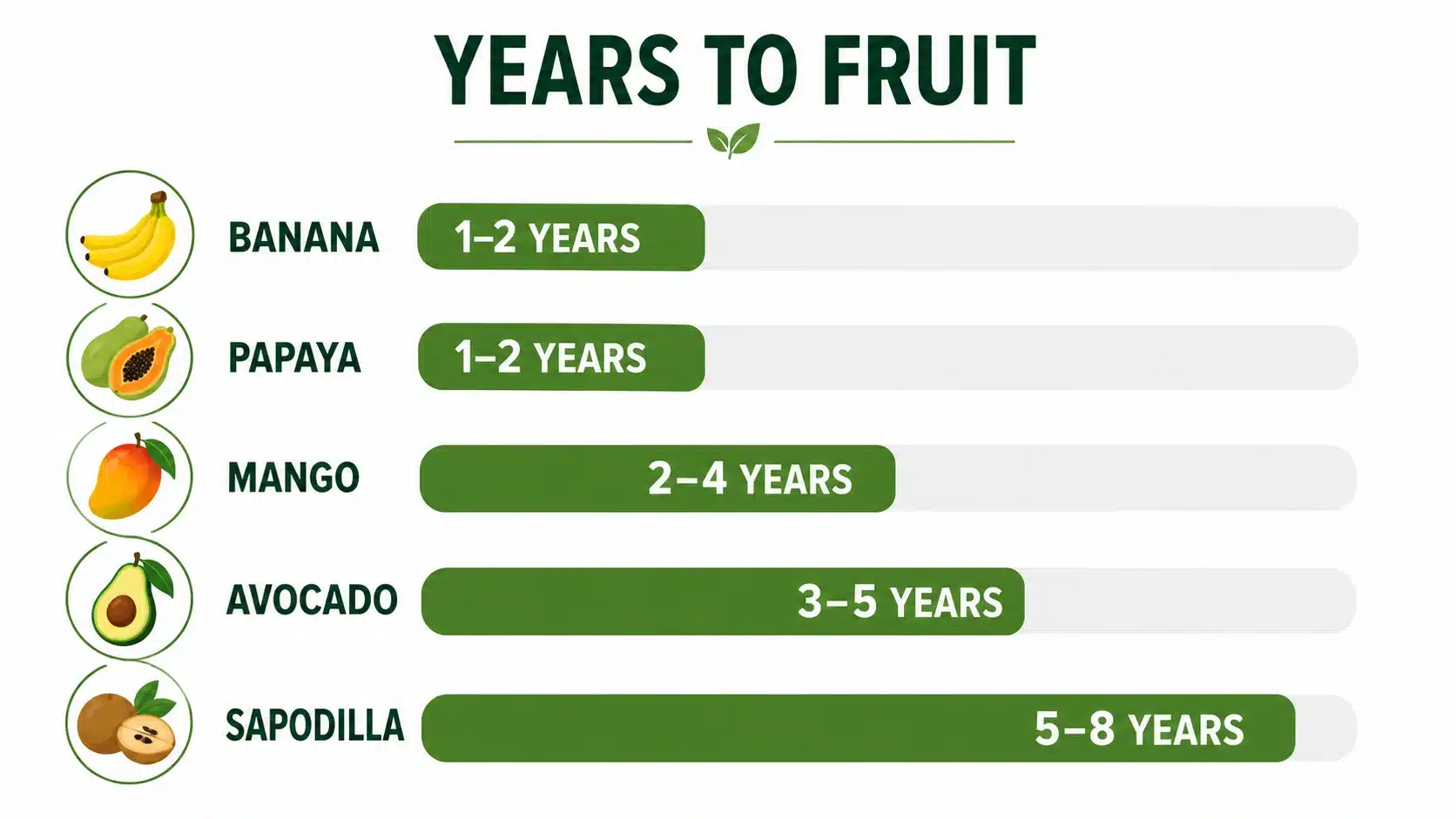
| Fruit | Climate Zone Needed | Frost Tolerance | Years to Fruit | Pot-Friendly |
| Mango (dwarf varieties) | Subtropical–tropical | Low | 2–4 | Yes |
| Banana (super dwarf Cavendish) | Subtropical–tropical | Very low | 1–2 | Yes |
| Papaya | Subtropical–tropical | Very low | 1–2 | Yes (short-lived) |
| Avocado (tropical types) | Subtropical–tropical | Low–moderate | 3–5 | Yes (dwarf types) |
| Soursop | True tropical | None | 3–5 | Greenhouse only |
| Sapodilla | True tropical | None | 5–8 | Greenhouse only |
| Guyana cherry | Subtropical-tolerant | Low–moderate | 2–3 | Yes |
Popular Tropical Fruits for Australian Backyards
Mangoes
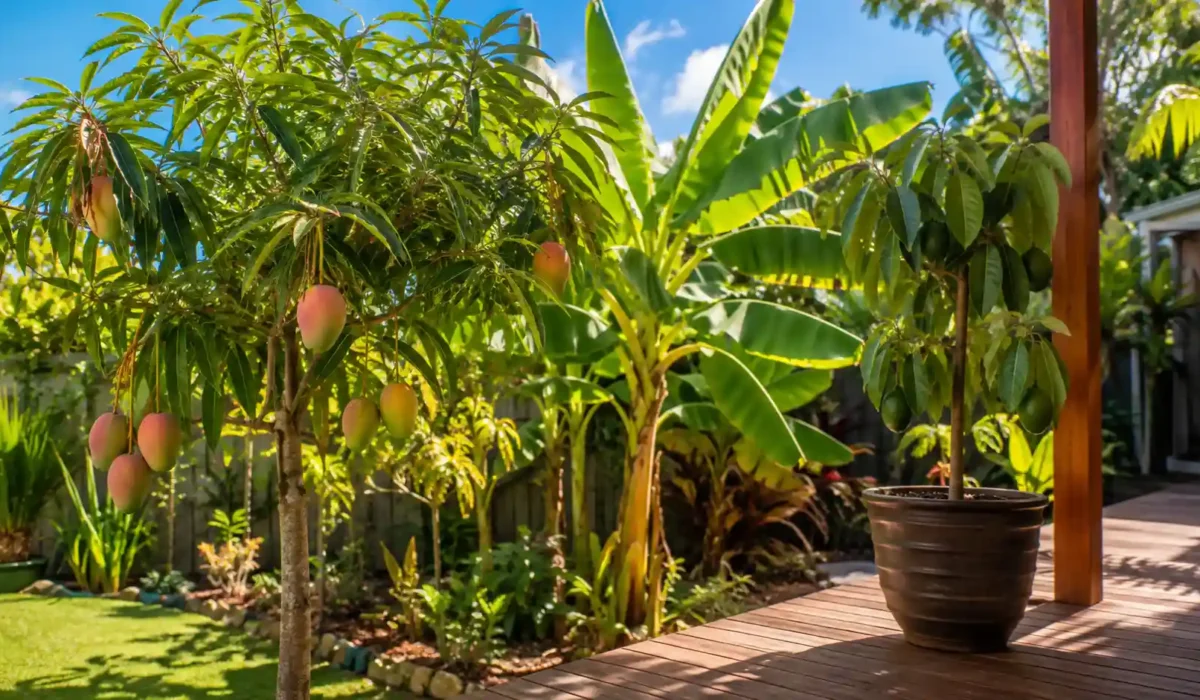
Mango is the most widely grown tropical fruit tree in Australian home gardens. Dwarf cultivars, as shown in this small mango tree with fruit example, suit pots and small yards, while grafted trees based on Southeast Asian cultivars — see this mango tree from the Philippines — offer strong flavour and manageable size.
Papayas
Papaya grows quickly and fruits within a year or two, but it’s frost-sensitive and short-lived compared with tree crops. Choosing the right type, covered in this guide to papaya varieties, affects both fruit size and cold hardiness.
Bananas
Bananas are herbaceous perennials rather than true trees, and dwarf forms like the super dwarf Cavendish are among the easiest tropical fruits to grow in pots or small courtyards.
Avocados
While avocados aren’t strictly tropical, tropical-type cultivars behave differently to Hass and other Mexican-type varieties. This comparison of whether tropical avocados taste the same explains the flavour and texture differences, while the Little Cado dwarf avocado is a strong pot-growing option.
Lesser-Known and Exotic Options
For gardeners wanting to experiment, soursop, butterscotch sapodilla, and Guyana cherry offer unusual flavours for warm, sheltered gardens. Black sapphire grapes and easy-growing annuals like those covered in this watermelon belly button explainer make good companion plantings alongside tropical fruit beds.
Growing Tropical Fruit Trees in Pots
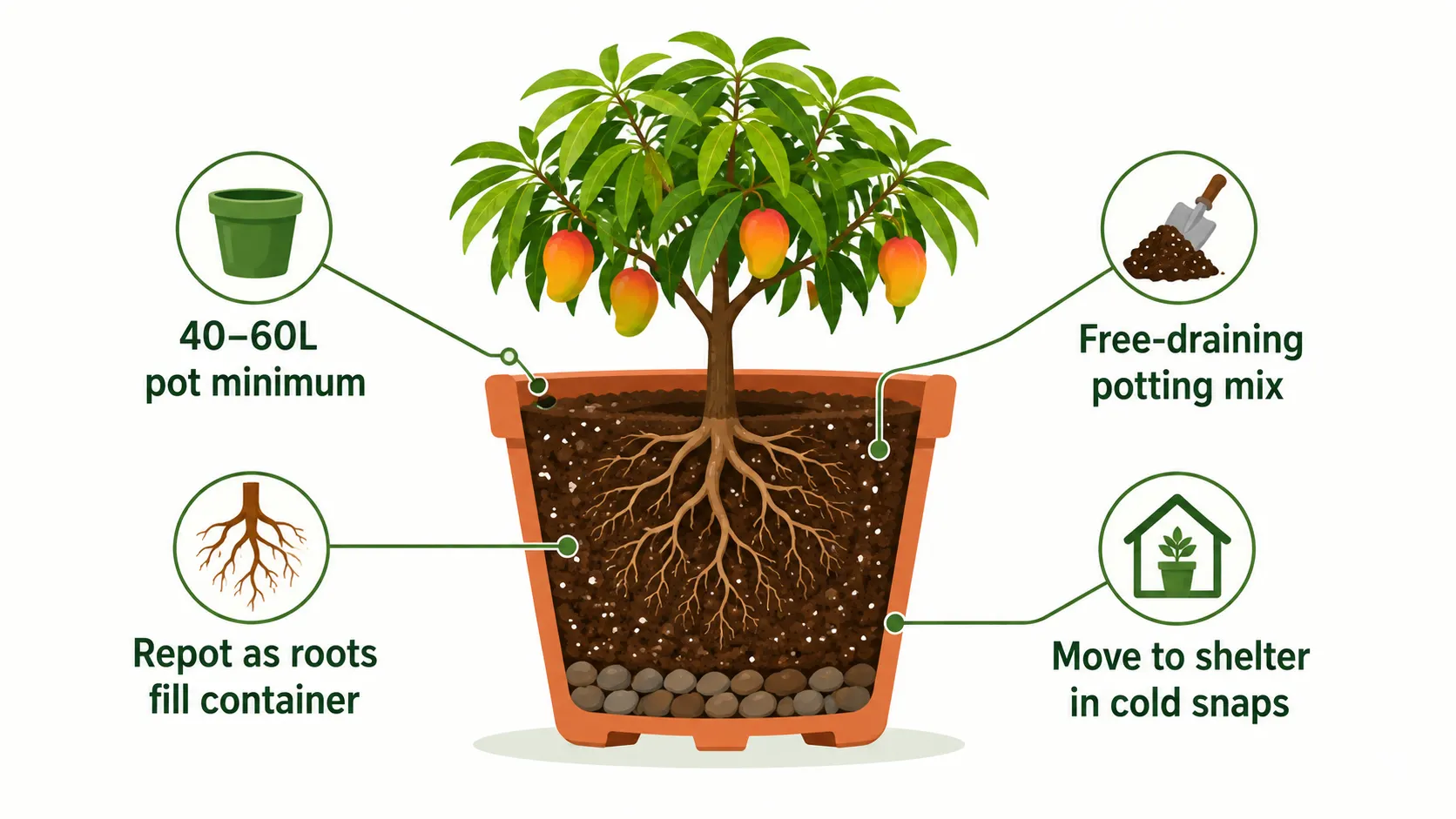
Container growing is often the only realistic option for gardeners outside subtropical zones. In our experience growing dwarf mango and banana in large pots, the key factors are root space, drainage, and the ability to relocate plants during cold snaps. A 40–60 litre pot with excellent drainage suits most dwarf tropical fruit trees for their first several years, and the same principles used for pot-grown citrus on this site apply directly here: free-draining potting mix, regular repotting as roots fill the container, and consistent moisture without waterlogging.
Soil, Sun, Water and Frost Protection
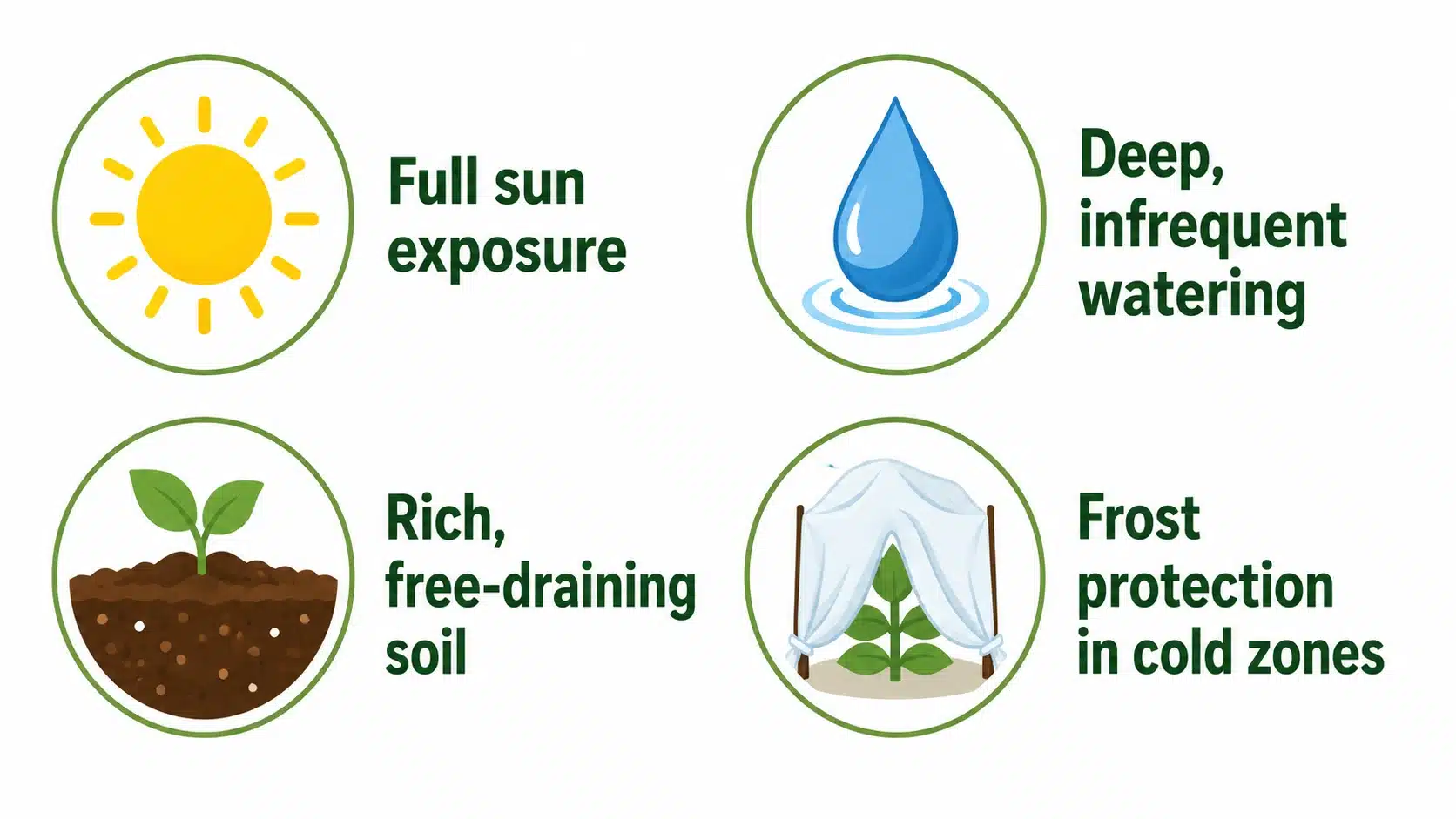
Tropical fruit trees generally need full sun, humus-rich free-draining soil, and consistent watering during establishment. Elemo Baker recommends deep, infrequent watering over frequent light watering, which encourages stronger root systems and better frost resilience. Frost protection — frost cloth, mulching, or moving potted specimens under cover — is essential for any tropical species planted outside genuinely frost-free zones. As of the current growing season, more Australian growers are using shade-cloth frost covers rather than plastic sheeting, since they allow airflow while still buffering overnight temperature drops.
Beginner-Friendly vs Difficult Tropical Fruits
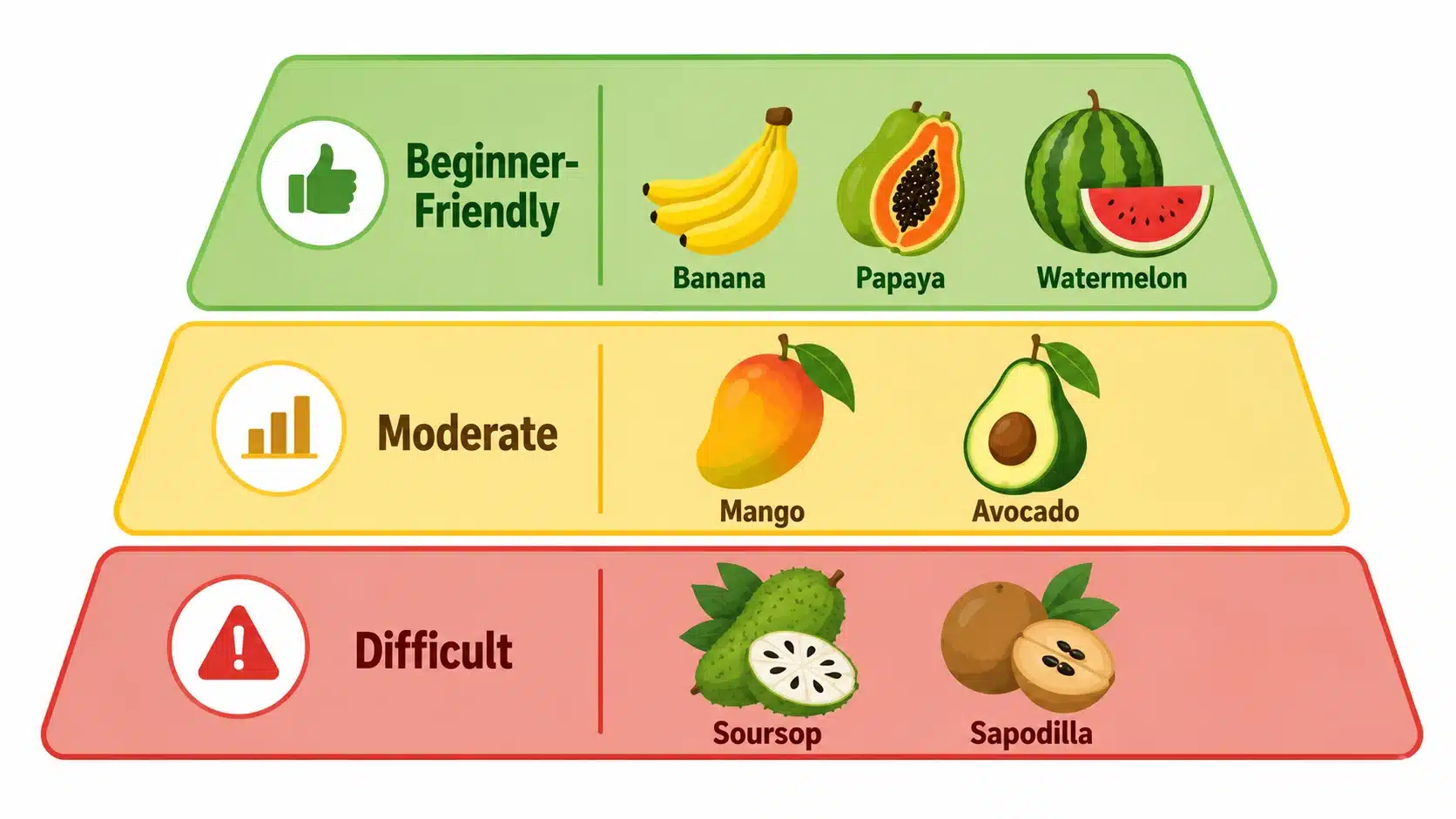
- Beginner-friendly: dwarf banana, papaya, and easy annuals like watermelon are forgiving and fruit quickly.
- Moderate: dwarf mango and Little Cado avocado need more patience but are manageable in pots.
- Difficult: soursop and sapodilla require true tropical conditions and years of care before fruiting, making them better suited to experienced growers with a greenhouse or a genuinely tropical garden.
Tropical Fruits vs Citrus: What’s Different for Home Growers?
Citrus and tropical fruit trees share several growing techniques — both do well in large pots, need free-draining soil, and benefit from regular feeding — but citrus is generally far more frost-tolerant and easier to grow across a wider range of Australian climates. If you’re already growing citrus in pots successfully, many of the same skills transfer directly to dwarf mango, avocado, or banana, making tropical fruit a natural next step rather than a completely new growing discipline.
Conclusion
Growing tropical fruits in Australia comes down to matching the right species to your climate zone, choosing dwarf or pot-friendly cultivars where frost is a risk, and being realistic about time-to-fruit. True tropical species like soursop and sapodilla suit only the warmest, frost-free gardens, while subtropical-tolerant and container-grown options — mango, banana, papaya, and dwarf avocado — bring tropical fruit growing within reach of most Australian backyards, especially for gardeners already comfortable growing citrus in pots.
Frequently Asked Questions
Can you grow tropical fruit trees in Melbourne or Sydney?
Only with container growing, greenhouse protection, or a genuinely warm, sheltered microclimate, since most tropical species are damaged by frost.
How long does it take for a mango tree to fruit in Australia?
Dwarf grafted mango trees typically fruit within 2–4 years, while seedling-grown trees can take significantly longer.
Which tropical fruit is easiest to grow in a pot?
Dwarf banana varieties are among the easiest, fruiting within 1–2 years and tolerating regular container conditions well.
Do tropical fruit trees need full sun?
Yes, most tropical fruit trees require full sun for healthy growth and reliable fruiting, with only a few tolerating partial shade.
What is the main difference between growing citrus and tropical fruit?
Citrus tolerates a wider range of Australian climates and frost levels, while most tropical fruit trees need frost-free or near frost-free conditions to thrive.
Can avocados be considered a tropical fruit?
Tropical-type avocado cultivars behave similarly to other tropical fruit trees, while Mexican-type cultivars like Hass are more cold-hardy and technically subtropical.
1 Comment