

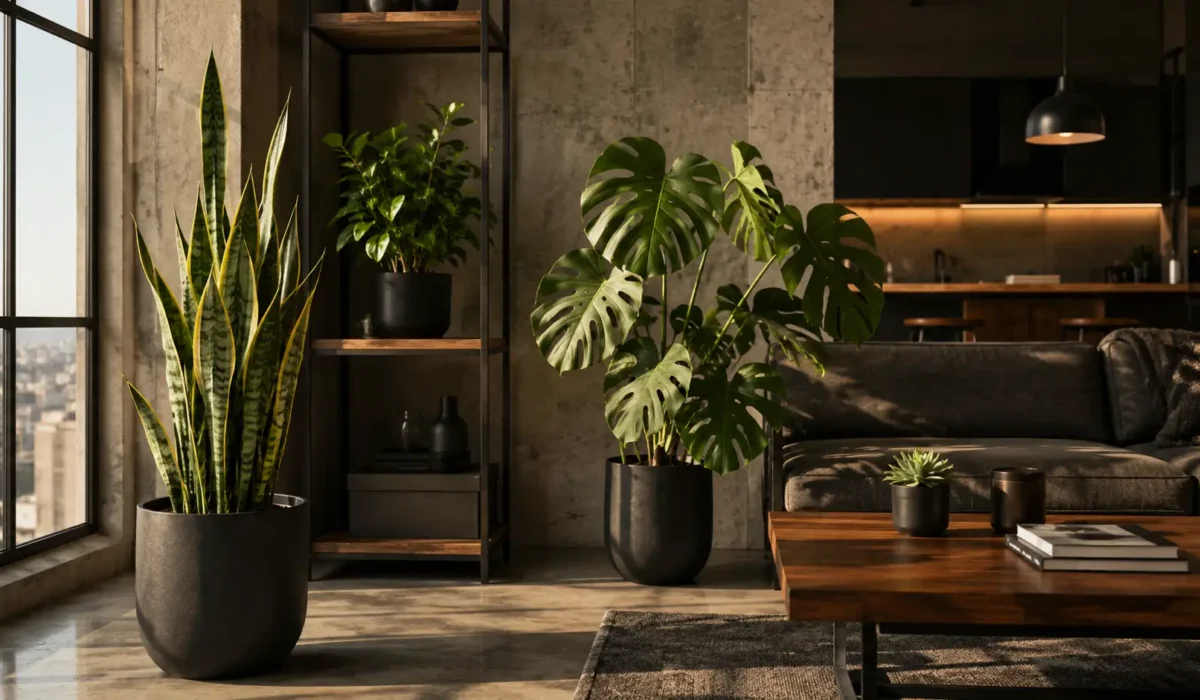
Plants for Men’s Apartment: Best Masculine Indoor Plants
Introduction
Plants for men’s apartment spaces are not defined by gender but by design qualities such as bold shapes, architectural foliage, easy care, and practical suitability for modern living. The best choices usually include plants with strong silhouettes, deep green leaves, minimal maintenance needs, and the ability to tolerate common apartment challenges like low light or irregular watering. Whether creating a masculine décor style, furnishing a bachelor apartment, or choosing a low-effort indoor plant, the focus should be on matching the plant’s needs with the owner’s lifestyle rather than choosing a plant based only on appearance.
Quick Summary
- Masculine-looking plants are usually defined by bold foliage, structural shapes, dark colours, and simple care requirements.
- Snake plants, ZZ plants, and pothos are popular apartment choices because they tolerate lower light and infrequent watering.
- Healthy apartment plants can improve indoor atmosphere, add natural décor, and support wellbeing when properly maintained.
- The best plant for a man’s apartment depends on available light, space, pets, and personal care habits.
What Makes a Plant “Masculine” or Good for a Man’s Apartment?
A “masculine plant” is a style category rather than a botanical classification. These plants are generally associated with strong forms, clean lines, dark foliage, rugged textures, and low-maintenance care. There is no scientific category called a male or masculine plant, although some plant species are botanically divided into male and female individuals.
The term is mainly used in interior design to describe plants that suit minimalist apartments, offices, and modern spaces. Common masculine plant names often refer to appearance rather than biology. The idea of a masculine plant is mainly connected to design style, structure, and maintenance level rather than plant biology. Our masculine plants guide explores more indoor and outdoor options that suit bold, modern spaces.
Botanical vs Aesthetic “Male” Plants
In botany, some species are dioecious, meaning individual plants are either male or female. For example, ginkgo trees (Ginkgo biloba) have separate male and female plants. Male plants produce pollen, while female plants produce seeds or fruit.
This botanical meaning is different from the popular décor phrase “male plant” or “masculine plant,” which usually refers to visual style rather than reproduction.
Common Traits of “Manly” Houseplants
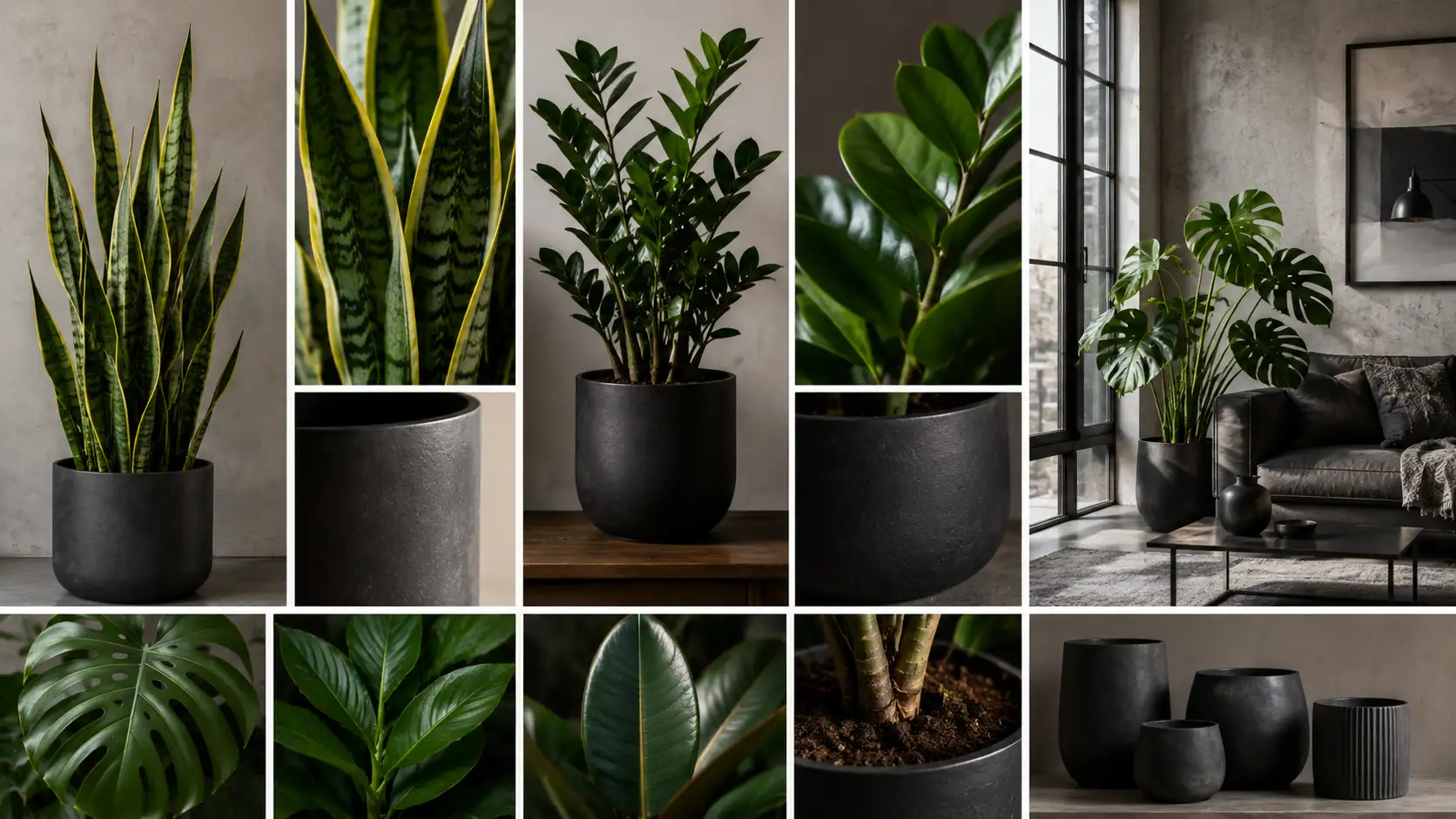
Plants commonly considered masculine often have:
- Large, structured leaves or upright growth habits.
- Dark green or glossy foliage.
- Minimal flowering and simple colour palettes.
- Compatibility with modern pots such as charcoal, concrete, or ceramic designs.
- Low watering and maintenance requirements.
Best Plants for a Men’s Apartment (Top Picks)
The best plants for men’s apartments are usually resilient indoor plants that combine visual impact with easy care. Options such as snake plants, ZZ plants, monsteras, pothos, and succulents work well for apartments because they adapt to indoor conditions.
Snake Plant (Sansevieria) — The Definitive Low-Maintenance Masculine Pick
Snake plant (Dracaena trifasciata, formerly Sansevieria trifasciata) is one of the most recommended apartment plants because of its upright sword-like leaves and extreme tolerance.
It handles low light, dry indoor air, and missed watering better than many houseplants. In our experience growing indoor plants, snake plants are often the first recommendation for beginners because overwatering is usually a bigger problem than underwatering. Beyond its durability and architectural appearance, the snake plant is also valued for its indoor-friendly qualities. Learn more about snake plant benefits and care, including its uses, maintenance needs, and common growing tips.
ZZ Plant — Near-Indestructible, Glossy, Architectural
The ZZ plant (Zamioculcas zamiifolia) has thick stems and shiny dark-green leaves that create a clean architectural appearance. Its underground rhizomes store water, allowing it to survive periods of drought.
It is suitable for busy apartment owners who want greenery without frequent maintenance. Other upright foliage plants with a similar modern appearance include dracaenas, which are popular for apartments because of their structured growth and adaptability. Explore our guide on Dracaena indoor benefits and care for more details.
The snake plant, scientifically known as Dracaena trifasciata, is a drought-tolerant species from the Asparagaceae family with a long history as an indoor ornamental plant. More botanical information about this species can be found on Wikipedia’s Dracaena trifasciata overview.
Fiddle Leaf Fig / Monstera — Statement Floor Plants for Living Rooms
Fiddle leaf fig (Ficus lyrata) and monstera (Monstera deliciosa) are popular statement plants because of their large tropical leaves. Monstera varieties are especially popular among indoor plant collectors because of their large leaves and decorative appeal. For those interested in rare varieties, our Monstera Albo care guide explains its light, watering, and maintenance requirements.
They require brighter indirect light and more attention than snake plants or ZZ plants, but they create strong visual impact in living rooms and offices.
Cacti & Succulents — Desk and Shelf-Friendly, Minimal Care
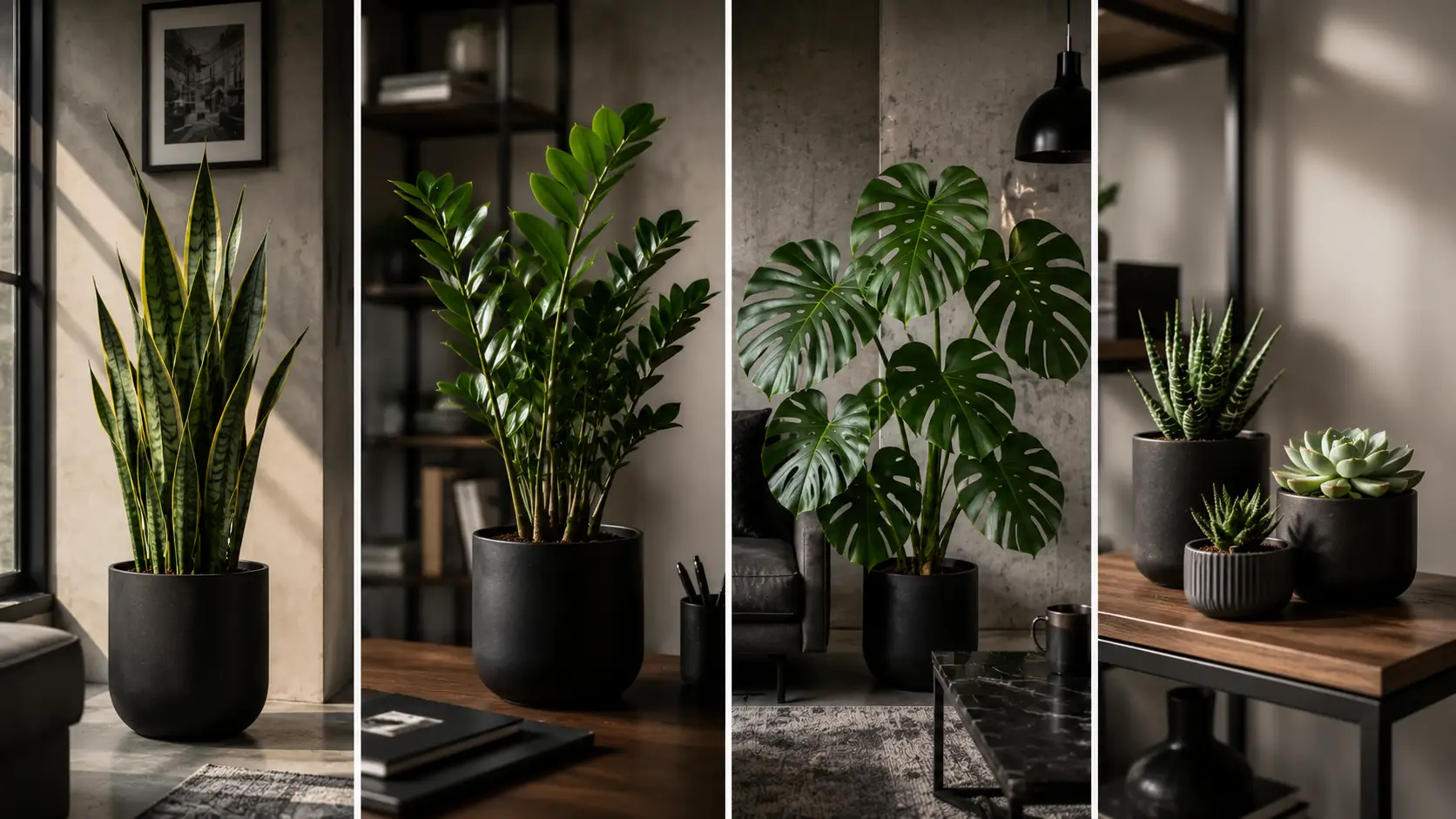
Cacti and succulents suit desks, shelves, and small apartments. Their compact size and unusual shapes make them attractive décor plants.
They require bright light and well-draining soil, making them ideal for sunny windows or workspaces.
| Plant | Light Needs | Watering | Masculine Styling |
| Snake Plant | Low to bright indirect light | Every few weeks | Upright, bold leaves |
| ZZ Plant | Low to medium light | Infrequent | Glossy architectural form |
| Monstera | Bright indirect light | Moderate | Large statement foliage |
| Succulents | Bright light | Low | Minimal, sculptural shapes |
How to Pick Plants for an Apartment
Choosing apartment plants requires considering practical factors rather than only appearance. The healthiest plants are those matched to the available light, humidity, space, and lifestyle.
Assessing Your Light Conditions
Light is the most important factor when selecting indoor plants. Observe where sunlight enters your apartment throughout the day.
- Bright indirect light suits monstera and fiddle leaf figs.
- Medium light works well for pothos and ZZ plants.
- Lower light areas are better for snake plants and some peace lilies.
Low-Light and No-Direct-Sunlight Options
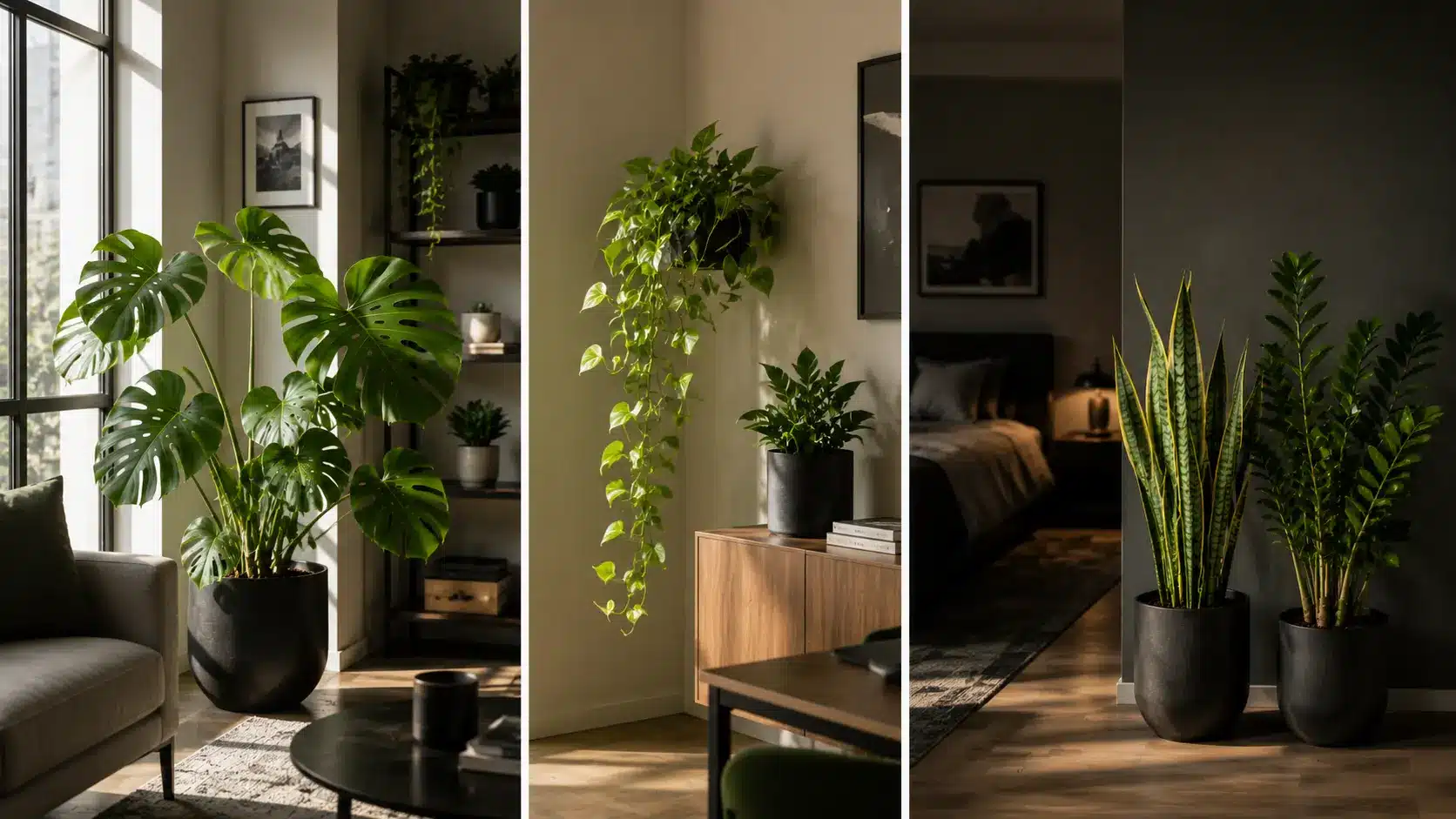
If an apartment has no direct sunlight, choose plants that tolerate indirect or filtered light.
Suitable options include:
- Snake plant.
- ZZ plant.
- Pothos.
- Peace lily.
However, low light does not mean no light. All plants require some level of energy from light for healthy growth.
Health and Wellbeing Benefits of Apartment Plants
Indoor plants can contribute to a more comfortable living environment by adding natural elements, improving visual appeal, and supporting relaxation. Research suggests interacting with plants may positively influence mood and stress levels, although plants should not replace proper ventilation or medical treatments.
Indoor plants can provide more than visual appeal, and research has explored their connection with wellbeing, comfort, and indoor environments. For a deeper look at their advantages, see our guide on the benefits of indoor plants and the science behind keeping greenery indoors.
Styling Plants in a Bachelor Pad
Masculine apartment styling often focuses on simplicity, function, and strong visual balance. Plants can soften modern interiors while maintaining a clean aesthetic.
Plants Next to a TV Stand or Entertainment Unit
Plants beside a TV stand should tolerate indoor conditions and avoid blocking screens. Compact snake plants, ZZ plants, and pothos work well because they remain attractive without requiring constant attention.
For larger rooms, a monstera or fiddle leaf fig can create a statement corner beside entertainment units.
Desk and Office Plants for a Masculine Look
For offices, choose plants that fit limited spaces:
- ZZ plants for low-maintenance desks.
- Small succulents for shelves.
- Snake plants for floor corners.
- Pothos for hanging arrangements.
Elemo Baker recommends selecting plants that match the work environment rather than choosing the most visually impressive option.
Do Snake Plants Really Purify the Air? Fact vs Marketing
Snake plants can remove certain airborne compounds under controlled laboratory conditions, but claims that they remove specific percentages of mould from homes are not supported by the original research.
What NASA’s Study Actually Found
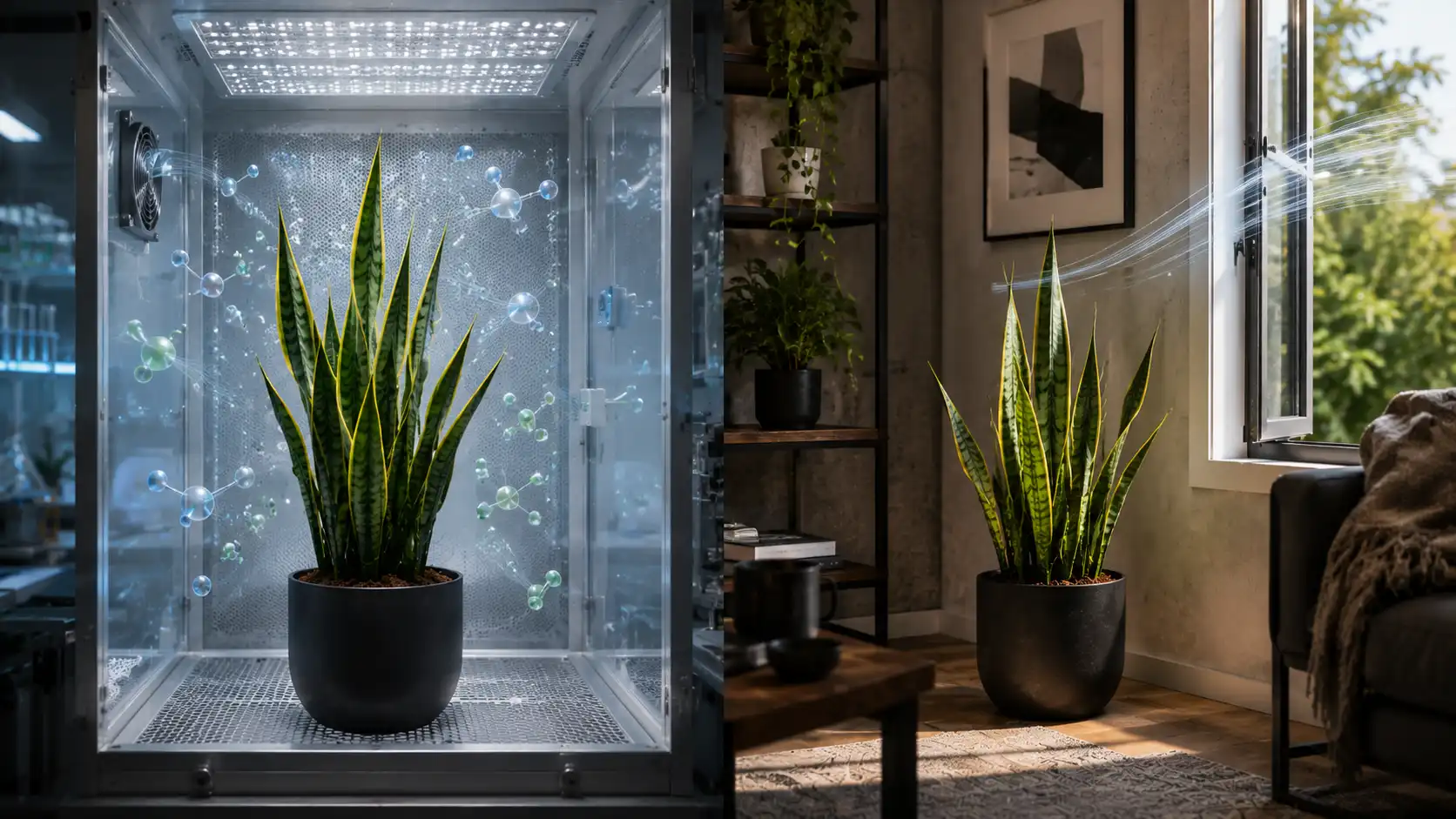
NASA’s 1989 Clean Air Study examined whether certain indoor plants could reduce volatile organic compounds (VOCs), including formaldehyde, benzene, and trichloroethylene, inside sealed laboratory chambers.
The study did not test normal apartments, mould removal, or claims that plants “eat” airborne mould spores.
NASA’s Clean Air Study investigated whether common indoor plants could reduce certain volatile organic compounds (VOCs) in controlled laboratory environments. The original research examined compounds such as formaldehyde, benzene, and trichloroethylene rather than everyday claims about removing mould from homes. Readers can review the original NASA research report for the full scientific context.
Why Lab Results Don’t Fully Translate to Apartments
Real homes have ventilation, airflow, furniture, and changing conditions. Effective indoor air purification depends more on ventilation, filtration, humidity control, and cleaning practices.
Coffee Grounds and Plant Health
Coffee grounds do not remove mould from indoor air. They can add organic matter to soil when properly composted, but fresh coffee grounds may affect soil structure and should not be used heavily because they can create moisture problems.
Common Mistakes and Problems When Growing Plants in an Apartment
Overwatering and Root Rot
Overwatering is one of the most common indoor plant problems. Excess moisture reduces oxygen around roots and can cause root rot.
Prevent it by:
- Using drainage holes.
- Checking soil moisture before watering.
- Avoiding fixed watering schedules.
Yellowing Leaves in Low-Light Apartments
Yellow leaves often result from overwatering, insufficient light, or nutrient issues. Move plants closer to suitable light and adjust watering habits.
Pests on Indoor Plants
Common indoor pests include spider mites, fungus gnats, and scale insects. Regular leaf checks, cleaning foliage, and avoiding overly wet soil help prevent infestations.
The 70/30 Rule and ADHD Gardening — Do They Apply Indoors?
The 70/30 gardening rule usually refers to outdoor design, where around 70% of plants are reliable foundation choices and 30% are experimental or seasonal additions.
Applying the 70/30 Principle to an Indoor Plant Collection
For apartments, this approach can mean keeping mostly easy-care plants with a few challenging plants for enjoyment.
For example:
- 70% snake plants, ZZ plants, and pothos.
- 30% tropical plants requiring more attention.
What “ADHD Gardening” Means and Why Low-Maintenance Plants Help
ADHD gardening is an informal phrase describing gardening approaches that use simple routines, sensory experiences, and manageable tasks. It is not a medical term.
Low-maintenance plants help because they reduce pressure while still providing a rewarding care routine.
Best Plants to Gift a Man
Plants can make practical gifts because they combine decoration with long-term growth. The best options are usually durable, attractive, and easy to maintain.
Top Gift-Worthy Low-Maintenance Plants
Good choices include:
- Snake plants.
- ZZ plants.
- Succulents.
- Small monstera plants.
- Pothos.
These work well as housewarming, office, or apartment gifts.
Do Men Prefer Flowering Plants or Foliage Plants?
There is no universal preference, but masculine interior trends often favour foliage plants over flowering varieties. Structural leaves, unique shapes, and low-maintenance care commonly appeal to people looking for modern décor.
Conclusion
The best plants for a men’s apartment are not defined by gender but by practical qualities such as bold form, easy care, and suitability for indoor conditions. Snake plants, ZZ plants, monsteras, and succulents remain reliable choices because they combine strong visual appeal with manageable maintenance. The ideal plant is the one that matches the apartment’s light, space, and the owner’s ability to care for it consistently.
FAQs
What plants are best for an apartment?
Snake plants, ZZ plants, pothos, peace lilies, and succulents are among the best apartment plants because they adapt well to indoor environments and require manageable care.
What is a good plant for a guy?
A good plant for a guy is usually a low-maintenance, architectural plant such as a snake plant, ZZ plant, or monstera that suits modern interiors.
Is it healthy to have plants in your apartment?
Yes, apartment plants can improve indoor atmosphere, add natural decoration, and support wellbeing when combined with proper ventilation and care.
Do coffee grounds help plants?
Coffee grounds can contribute organic matter when composted, but using large amounts directly in pots may create soil and moisture problems.
What is the 70/30 rule for gardening?
The 70/30 rule generally means using about 70% reliable plants and 30% experimental or seasonal plants to create a balanced garden design.
What plants can you grow in an apartment with no direct sunlight?
Snake plants, ZZ plants, pothos, and peace lilies can grow in apartments without direct sunlight, although they still need some indirect light for healthy growth.