

Pleached Lilly Pilly: Training & Screening Guide
Introduction
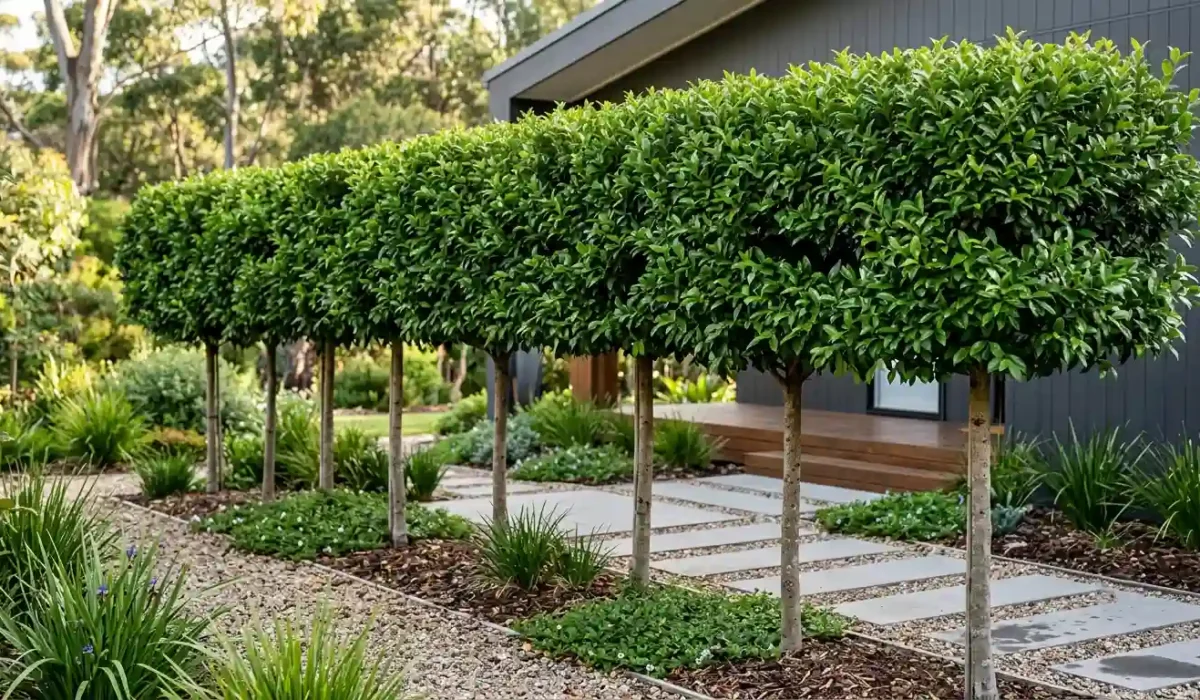
A pleached lilly pilly is a trained living screen created by shaping lilly pilly trees into a clear-stemmed structure with a woven, flattened crown of branches. Pleaching is a traditional horticultural technique where young stems are guided along a framework or trellis to form an elevated hedge-like canopy. Lilly pilly (Syzygium species) is well suited to this method because it has dense evergreen foliage, vigorous branching, and responds well to regular pruning. This guide explains whether lilly pilly can be pleached, how it compares with a standard hedge, and how to maintain this refined screening style in Australian gardens. Lilly pilly is one of many Australian landscape plants valued for screening and structure, and it is often included alongside other selections featured in our guide to best trees and shrubs for Australian gardens.
Quick Summary
- Yes, lilly pilly can be pleached, and its dense evergreen growth makes it suitable for creating elevated privacy screens.
- A pleached lilly pilly has a raised woven crown, while a standard hedge remains dense from ground level upwards.
- Pleached forms require regular formative pruning and training to maintain their structured appearance.
- They are ideal for narrow gardens, contemporary landscapes, and areas needing privacy without losing ground space.
What Does It Mean to Pleach a Lilly Pilly?
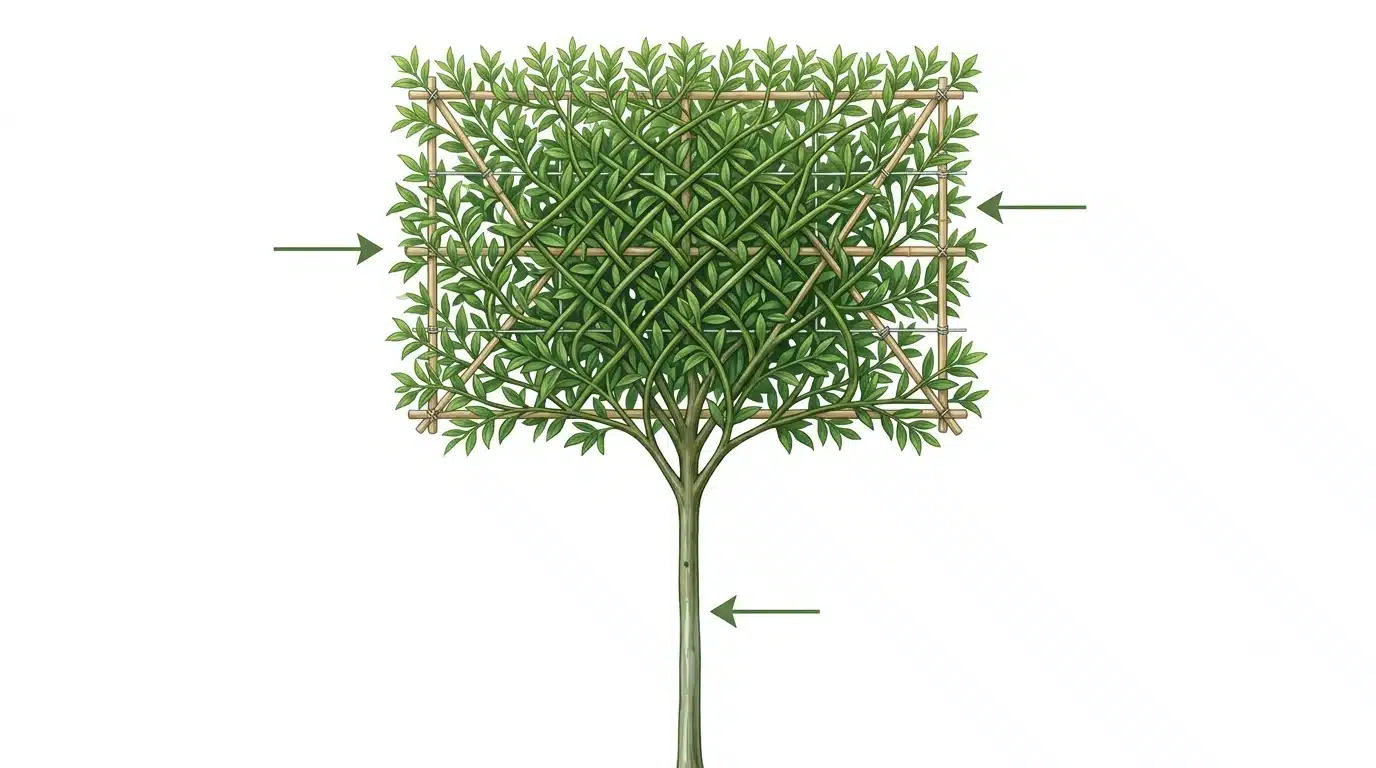
Pleaching a lilly pilly means training the plant into a raised living screen by developing a clear stem and a woven crown of branches supported by a framework or trellis. Instead of allowing the plant to grow naturally as a bushy hedge, gardeners select strong upright stems, remove lower growth, and guide upper branches horizontally to create an organised, interlaced structure.
The pleaching process traditionally involves creating a framework that supports young flexible branches while they grow. These branches are tied, woven, and pruned until they form a dense canopy. In the case of lilly pilly, the technique works particularly well because young shoots are pliable, and the plant produces many side branches after pruning.
A pleached lilly pilly is essentially a “hedge on stilts”, combining the privacy benefits of a hedge with the architectural appearance of a trained tree. It creates vertical screening while keeping the space underneath open for planting, pathways, or decorative landscaping.
Yes, you can pleach a lilly pilly. Its fast growth rate, evergreen foliage, and tolerance of regular trimming make it one of the more suitable Australian plants for this style of formal training.
How Pleaching Differs From a Standard Lilly Pilly Hedge
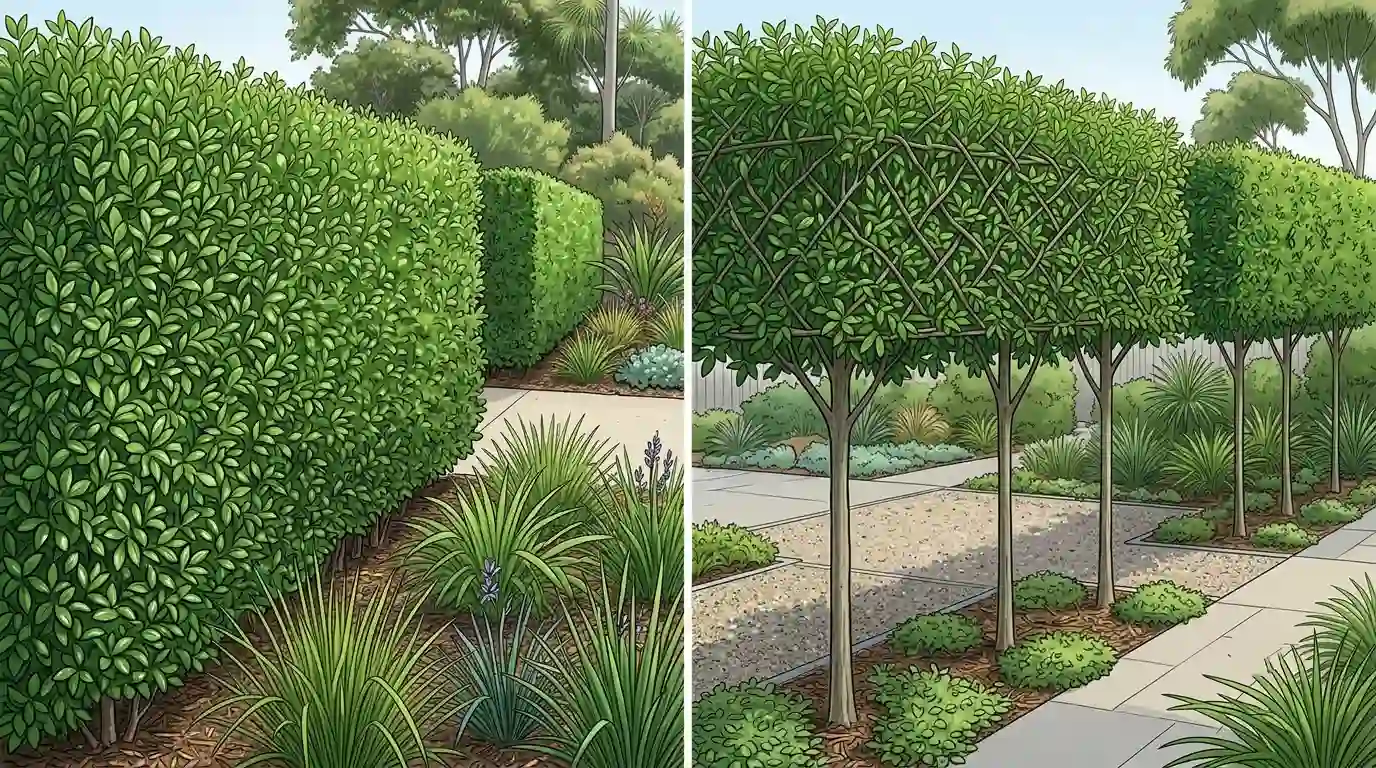
The main difference between a pleached lilly pilly and a standard lilly pilly hedge is the way the plant is structured and maintained. For narrow boundaries and fence lines where space is limited, selecting suitable plants is important, and our guide to low-maintenance plants for fence lines in Australia explores other practical screening options.
| Feature | Pleached Lilly Pilly | Standard Lilly Pilly Hedge |
| Structure | Clear stem with elevated woven crown | Dense foliage from ground level |
| Appearance | Formal, architectural, tree-like screen | Traditional privacy hedge |
| Space use | Leaves ground area open for planting | Occupies full width from soil level |
| Maintenance | Requires formative training and regular shaping | Mainly requires trimming for height and width |
| Best use | Contemporary gardens and narrow spaces | Boundary screens and general privacy planting |
A standard hedge focuses on creating a solid wall of foliage, while pleaching creates a raised green structure. The open area beneath pleached trees can be used for low-growing plants, garden beds, or pathways, making it useful where horizontal space is limited.
What Is the Difference Between Pleached and Espaliered Trees?
Pleached and espaliered trees both involve training plants into controlled shapes, but the techniques create different forms. Pleached trees develop a three-dimensional woven crown, while espaliered trees are trained flat against a wall, fence, or support system.
| Feature | Pleached Trees | Espaliered Trees |
| Support | Usually freestanding framework or trellis | Wall, fence, or flat support structure |
| Shape | Raised woven canopy with clear stem | Flat branches arranged in one plane |
| Branch pattern | Interlaced 3D framework | Horizontal or fan-shaped tiers |
| Main purpose | Elevated screening and landscape structure | Space-saving fruit or ornamental training |
Pleaching is commonly used for creating living boundaries and architectural garden features, whereas espalier is often chosen when plants need to grow close to walls or narrow spaces.
Is Lilly Pilly a Good Candidate for Pleaching?
Yes, lilly pilly is a good candidate for pleaching because it combines several characteristics required for successful structural training. Lilly pillies are evergreen Australian natives from the Myrtaceae family and are known for dense foliage, strong branching, and their ability to tolerate repeated pruning. Lilly pilly refers to several Australian native plants within the genus Syzygium, a group of flowering plants in the myrtle family (Myrtaceae).
Many lilly pilly varieties used for screening develop compact growth and respond by producing fresh shoots after trimming. These qualities allow gardeners to gradually build a thick woven crown rather than relying on uncontrolled growth. Gardeners comparing evergreen screening options may also consider other formal hedge plants such as Ficus Hillii ‘Flash’, which is another popular choice for creating dense privacy screens in Australian landscapes.
The commonly discussed acmena hedge refers to older classifications of lilly pilly types. Many plants previously grouped under Acmena are now classified within the broader Syzygium genus. These selections remain popular because of their reliable screening performance and attractive foliage.
When selecting a lilly pilly for pleaching, important characteristics include:
- Dense leaf coverage for privacy.
- Strong but flexible young branches.
- Good response to pruning.
- Resistance to common problems such as psyllid damage and myrtle rust.
Best Lilly Pilly Varieties for Pleaching
Several screening cultivars are commonly considered suitable for formal training because of their compact growth and strong foliage density.
- Lilly pilly ‘Resilience’ – Popular for screening due to its compact habit and improved resistance to common lilly pilly issues.
- Lilly pilly ‘Elite’ – A narrow-growing selection suitable for formal hedging and structured landscapes.
- Lilly pilly ‘Aussie Southern’ – Known for dense growth and suitability for privacy screens.
- Weeping lilly pilly – A softer alternative that creates a more flowing appearance compared with strict formal pleached designs.
For a traditional pleached appearance, upright-growing cultivars are generally easier to train because they establish a stronger framework before the crown is developed. Another related selection is Acmena smithii ‘Minor’, a compact lilly pilly type valued for dense growth, smaller size, and suitability for structured garden screens.
Lilly Pilly vs Traditional Pleaching Species (Carpinus betulus)
The classic European pleaching species is European hornbeam (Carpinus betulus), which has been used for centuries in formal gardens. However, lilly pilly offers advantages for Australian conditions because it remains evergreen and grows actively through warmer months.
| Species | Foliage Type | Growth Rate | Climate Suitability | Typical Use |
| Carpinus betulus (Hornbeam) | Deciduous | Slow to moderate | Temperate European climates | Traditional formal avenues and garden screens |
| Lilly pilly (Syzygium spp.) | Evergreen | Fast | Australian climates, especially warmer regions | Privacy screens and contemporary landscapes |
Hornbeam provides a classic seasonal appearance, with leaves dropping in winter and returning in spring. Lilly pilly provides year-round screening, making it more practical for many Australian gardens where continuous privacy is required.
How to Pleach a Lilly Pilly (Step-by-Step Process)
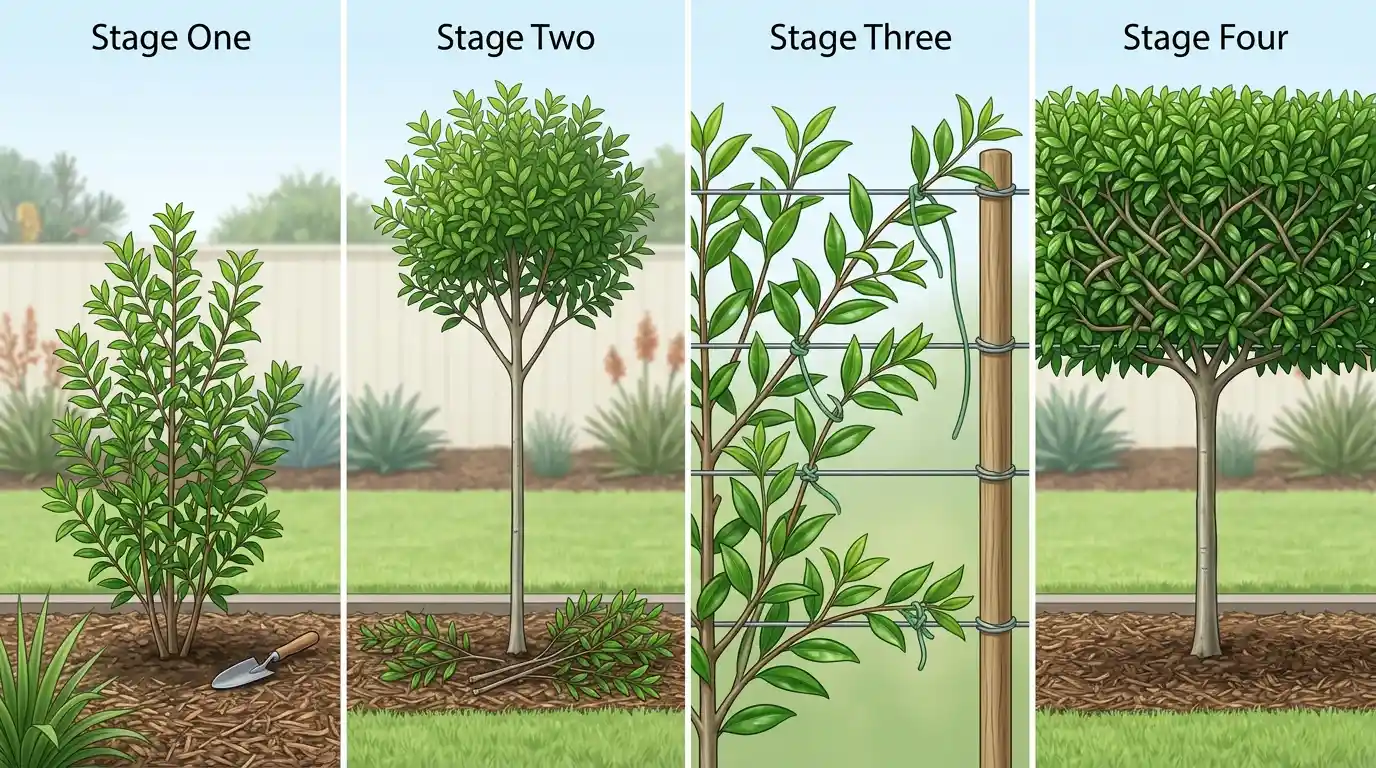
Creating a pleached lilly pilly requires patience because the plant must first establish its structural framework before the crown becomes dense. The process involves selecting a suitable plant, developing a clear stem, installing support, and gradually training new shoots.
Successful pleaching relies on early training rather than trying to reshape an established hedge later.
Setting Up the Framework
The first stage is creating the structure that guides future growth.
Key steps include:
- Select healthy lilly pilly plants with strong upright stems.
- Remove lower branches gradually to create a clear stem.
- Establish a preferred stem height, commonly around 1.8–2 metres.
- Install a trellis, wire system, or support frame for horizontal branch training.
- Space wires evenly so branches can be guided into a balanced pattern.
The framework acts as the skeleton of the future woven crown. A well-planned structure produces a more even and professional result.
Training and Tying In New Growth
Young lilly pilly shoots are flexible and should be guided while they are still soft enough to bend without snapping. New branches are gently positioned along horizontal wires and secured using soft plant ties.
The aim is to encourage branches to cross and form a dense woven canopy over time.
Pruning timing is important in Australian conditions. Lilly pillies generally respond well to pruning around late winter before strong spring growth begins. This encourages fresh shoots that can be trained into the framework.
Ongoing Formative Pruning
Pleached lilly pillies require consistent formative pruning rather than occasional heavy cutting. Light, frequent trimming encourages branching and keeps the crown dense.
Good maintenance practices include:
- Trim new shoots regularly to maintain the desired shape.
- Remove dead, damaged, or crossing branches first.
- Use clean, sharp pruning tools to create healthy cuts.
- Avoid allowing individual vigorous branches to dominate the framework.
In our experience growing structured screening plants, regular small adjustments produce a more even pleached form than waiting until growth becomes difficult to control.
How Quickly Does a Pleached Lilly Pilly Fill In?
A pleached lilly pilly usually fills in slower than a standard hedge because the plant’s growth is redirected into a controlled woven framework rather than allowed to grow freely. While lilly pilly is naturally considered a fast-growing screening plant, developing a dense pleached crown requires time, regular tying, and formative pruning.
The speed of establishment depends on the cultivar, climate, soil quality, sunlight exposure, and the quality of the initial framework. Healthy plants in warm Australian conditions can develop strong growth during spring and summer, while growth generally slows during cooler winter months. Lilly pilly is among the evergreen plants commonly chosen for year-round screening, similar to other species covered in our guide to fast-growing evergreen trees in Australia.
Growth Rate
Lilly pilly is classified as a fast-growing evergreen screening plant under suitable conditions. However, a pleached form takes longer to achieve full coverage because branches are trained sideways and spaced intentionally.
Typical growth patterns include:
- Spring and summer: strongest growth periods with active shoot production.
- Autumn: moderate growth as temperatures begin to decline.
- Winter: slower growth in cooler regions.
Regular pruning encourages branching, which helps create the dense woven crown required for a quality pleached screen. Leaving growth unmanaged may produce height quickly but will not create the balanced structure needed for pleaching.
Plant Size
A mature pleached lilly pilly usually consists of two sections: the clear stem and the trained crown. The final dimensions depend on the desired design, but the form is generally narrower and more controlled than a free-growing tree.
Typical characteristics include:
- Clear stem height: commonly around 1.8–2 metres.
- Crown width: maintained according to available garden space.
- Overall height: can vary depending on pruning goals.
Pleached lilly pilly is an outdoor landscaping technique and is not suitable for indoor cultivation. The plant requires natural sunlight, outdoor airflow, and enough root space to develop properly.
Environmental factors affecting crown development include:
- Full sun exposure for stronger foliage density.
- Well-drained soil with adequate nutrients.
- Consistent watering during establishment.
- Protection from severe environmental stress.
Where to Buy Pleached Lilly Pilly Trees in Australia
When searching for pleached trees in Australia, including terms such as pleached trees Australia, evergreen pleached trees Australia, pleached trees Melbourne, or pleached trees for sale Australia, gardeners should focus on plant quality rather than simply choosing the largest specimen available.
Pleached lilly pilly trees are specialised landscape plants because they require years of training to develop their clear stems and woven crowns. Specialist advanced tree nurseries often provide more mature pleached specimens than general garden retailers.
When selecting a pleached lilly pilly, check for:
- A clearly established framework.
- Even branch spacing across the crown.
- Healthy leaves without significant pest or disease damage.
- A strong root system suitable for transplanting.
- A balanced shape rather than uneven or crowded growth.
Retail environments such as hardware garden centres may sometimes stock screening plants or younger lilly pilly varieties, but advanced pleached forms usually require specialist production because of the time involved in training them.
Common Problems With Pleached Lilly Pilly
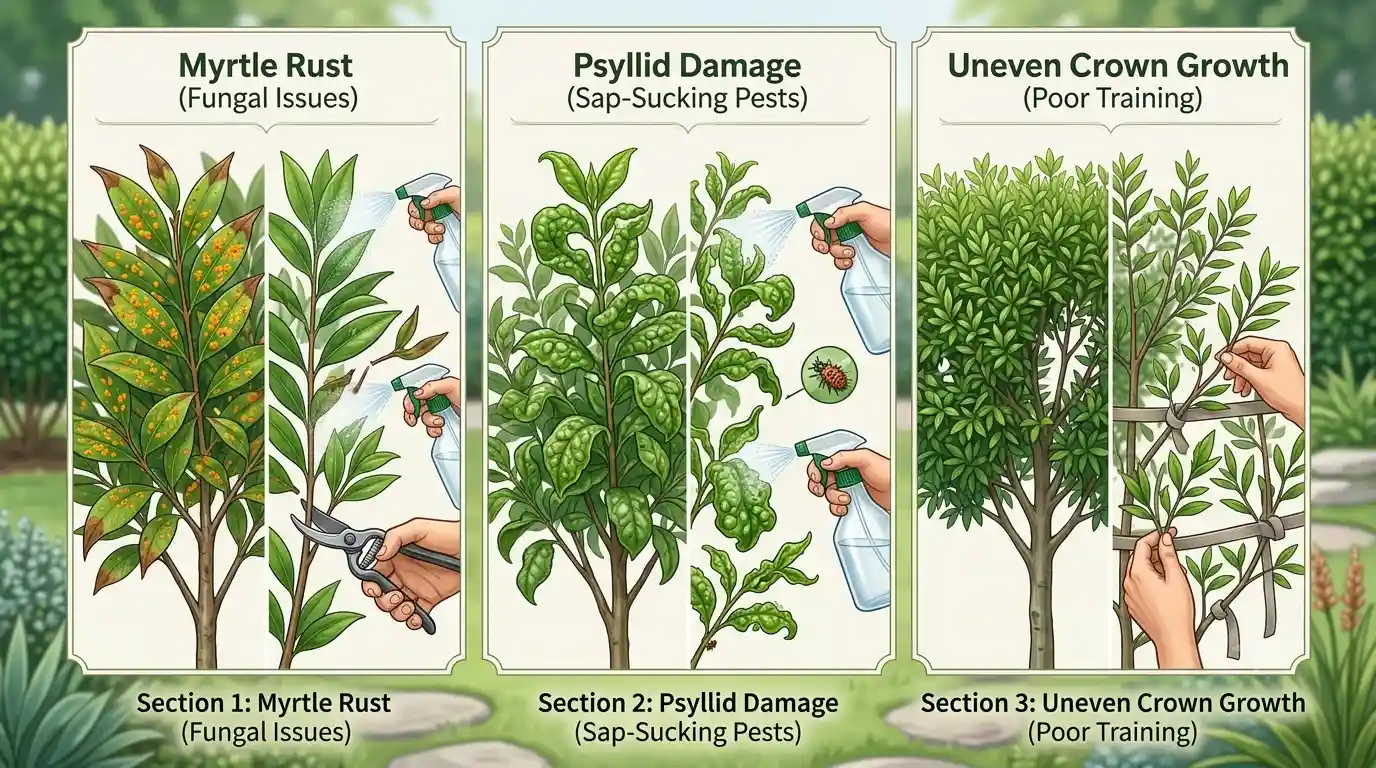
Pleached lilly pilly plants are generally hardy, but their dense foliage and frequent pruning requirements mean gardeners should monitor for diseases, pests, and structural problems. Correct pest and disease identification is essential for maintaining healthy landscape plants, and our garden pest identification guide for Australian gardens explains how to recognise common garden problems.
Myrtle Rust
Myrtle rust is a fungal disease that affects plants in the Myrtaceae family, including lilly pilly (Syzygium species). It was first detected in New South Wales in 2010 and has since become an important consideration for Australian gardeners growing susceptible plants.
Symptoms may include:
- Yellow or orange rust-like patches on new leaves.
- Distorted or curled young growth.
- Reduced quality of new shoots used for training.
Management strategies include:
- Removing affected growth carefully.
- Bagging and disposing of infected plant material.
- Cleaning pruning tools between plants.
- Using registered fungicide treatments where appropriate.
- Selecting cultivars with better tolerance where available.
Elemo Baker recommends regular inspection of new growth because pleached plants rely heavily on healthy young shoots to maintain their woven structure.
Psyllid Damage
Lilly pilly psyllids are small sap-sucking insects that mainly affect new growth. They can cause leaf dimpling, curling, distortion, and reduced appearance quality.
Psyllid problems are commonly noticed during active growth periods when fresh leaves are developing.
Control and prevention methods include:
- Monitoring new shoots regularly.
- Applying suitable horticultural oils when appropriate.
- Removing badly affected growth.
- Selecting psyllid-resistant cultivars where possible.
Healthy plants with good growing conditions are generally better able to recover from minor pest pressure.
Uneven or Gappy Crown Growth
Uneven crown development occurs when branches are not trained consistently or when stronger shoots dominate the framework.
Common causes include:
- Irregular tying-in of young branches.
- Allowing vigorous shoots to grow unchecked.
- Delayed pruning of competing branches.
Solutions include:
- Training new shoots into empty areas using soft plant ties.
- Pinching growing tips to encourage side branching.
- Regularly trimming dominant shoots.
- Maintaining even light exposure across the crown.
A dense pleached crown is created through gradual correction rather than one major pruning session.
What Are the Disadvantages of Lilly Pilly?
The main disadvantages of lilly pilly include possible pest and disease issues, ongoing pruning requirements in formal designs, and the need for careful planting placement. While lilly pilly is generally considered a reliable screening plant, pleached forms require more maintenance than ordinary hedges because the structure must be actively preserved.
Potential drawbacks include:
- Myrtle rust risk: Some varieties may be affected, especially in humid or coastal environments.
- Psyllid damage: New growth can be vulnerable without suitable cultivar selection and monitoring.
- Higher maintenance: Pleached plants need regular training to maintain their architectural form.
- Root considerations: Although lilly pilly roots are generally not considered among the most invasive tree root systems, planting distance from foundations, pipes, and paved areas is still commonly recommended.
A standard lilly pilly hedge can tolerate more relaxed maintenance, while a pleached design requires ongoing attention to keep its clean, formal appearance.
Are Lilly Pilly Trees Poisonous to Dogs?
Lilly pilly berries are not generally considered highly toxic to dogs, but individual pets may react differently to eating plant material. Excessive consumption of berries or leaves may cause digestive upset in some animals.
Pet owners with specific concerns should consult a veterinarian for advice related to their individual dog and circumstances.
Lilly Pilly Hedge vs Murraya — Which Is Easier to Grow?
Lilly pilly and murraya (Murraya paniculata) are both popular Australian screening plants, but they have different growth characteristics.
| Feature | Lilly Pilly | Murraya |
| Growth habit | Dense evergreen shrub/tree | Compact evergreen shrub |
| Growth speed | Fast-growing in suitable climates | Moderate to fast |
| Climate preference | Adaptable across many Australian regions | Performs best in warmer climates |
| Maintenance | Regular trimming for formal screens | Requires regular shaping |
| Screening ability | Excellent dense privacy screen | Excellent fine-textured hedge |
Lilly pilly is often preferred for pleaching because its branching habit and foliage density suit structural training better.
Lifespan and Longevity of Pleached Lilly Pilly
A healthy lilly pilly can be a long-lived garden plant when grown in suitable conditions. While exact lifespan depends on species, climate, soil, and care, established lilly pillies can remain productive landscape plants for many years.
Lilly pilly hedges are often considered relatively low maintenance once established, but pleached forms require additional care because the gardener is maintaining a specific architectural shape.
Long-term success depends on:
- Consistent formative pruning.
- Disease monitoring.
- Maintaining healthy soil conditions.
- Avoiding excessive stress from drought or poor planting conditions.
The plant itself may be hardy, but the pleached design requires ongoing structural management.
Beginner Mistakes to Avoid When Pleaching Lilly Pilly
New gardeners often focus on quick height growth and overlook the importance of establishing the framework early. Pleaching is a long-term training process, and mistakes during the first years can affect the final shape.
Common mistakes include:
- Allowing uncontrolled growth: Early training is essential for creating the correct branch structure.
- Incorrect spacing: Planting too close can cause competition, while excessive spacing can leave gaps in the finished screen.
- Ignoring disease monitoring: Regular checks are important, especially in humid regions where fungal issues can spread more easily.
For screening hedges, spacing depends on the chosen cultivar and desired density. Gardeners should consider mature width rather than planting only for immediate coverage.
In regions with myrtle rust concerns, including parts of Australia and New Zealand, seasonal pruning and monitoring practices are commonly recommended to encourage healthy new growth and reduce disease risks.
Conclusion
A pleached lilly pilly combines the durability and evergreen screening ability of an Australian native plant with the refined structure of a traditional pleaching technique. Its dense foliage, vigorous branching, and tolerance of pruning make it a suitable choice for creating elevated privacy screens in modern gardens.
Although pleached lilly pilly requires more ongoing maintenance than a standard hedge, the result is a space-efficient landscape feature that works especially well in narrow gardens, contemporary designs, and areas where ground space needs to remain open. With correct training, regular pruning, and disease monitoring, pleached lilly pilly can provide a long-lasting and attractive living screen.
FAQs
Can you pleach a lilly pilly?
Yes, lilly pilly can be pleached because its evergreen foliage, flexible young growth, dense branching, and tolerance of pruning make it suitable for creating a woven elevated screen.
What is the difference between pleached and espaliered trees?
Pleached trees develop a raised three-dimensional woven crown supported by a framework, while espaliered trees are trained flat against walls, fences, or trellises in a single plane.
How far apart should lilly pilly be planted for a screening hedge?
Lilly pilly spacing depends on the cultivar, mature width, and desired screening speed. Many screening varieties are planted closer together for faster coverage, but spacing should allow enough room for healthy root and canopy development.
What is the fastest growing lilly pilly hedge for pleaching?
Fast-growing lilly pilly cultivars such as ‘Resilience’, ‘Elite’, and other vigorous screening selections are commonly considered suitable for pleaching because they produce dense foliage and respond well to pruning.
Can lilly pilly be cut back hard once pleached?
Lilly pilly can tolerate significant pruning when healthy, but pleached forms should usually be maintained through regular formative trimming rather than relying on occasional severe cuts that may damage the established structure.
What is the best pleached tree for Australian gardens?
The best pleached tree depends on climate, design goals, and maintenance preference. Lilly pilly is one of the strongest evergreen options for Australian gardens because it provides year-round foliage and adapts well to regular training.
1 Comment