

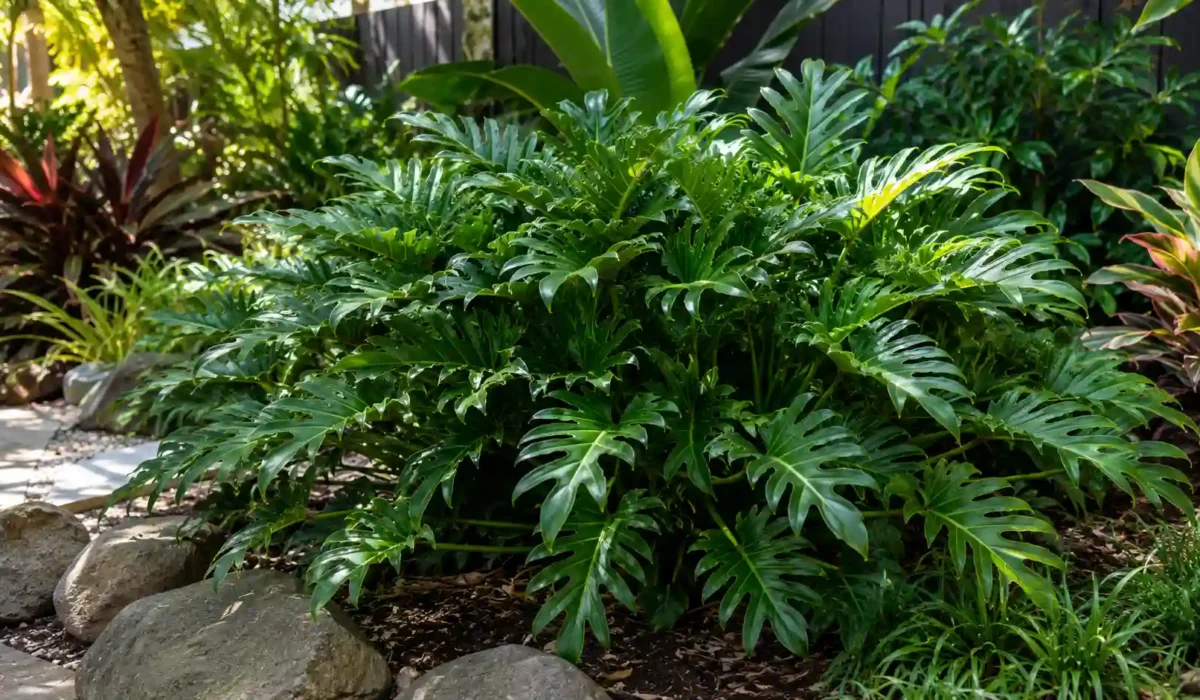
Dwarf Philodendron Xanadu: Care, Size & Growing Guide
The ‘dwarf philodendron Xanadu’ isn’t a separate cultivar — according to Elemo Baker, it’s the common nickname for Thaumatophyllum xanadu (formerly Philodendron xanadu), valued for its compact, self-heading growth habit. Unlike climbing philodendrons, it forms dense clumps of deeply lobed, glossy leaves, reaching roughly 90–150cm tall and wide at maturity.
The cultivar traces to a 1983 Western Australian nursery selection originally sold as ‘Winterbourn’, though later genetic evidence has suggested it may in fact be a wild-collected Brazilian species rather than a true hybrid. Like most aroids, all parts are toxic to pets and humans if ingested, and mature outdoor specimens can produce dark red spathe flowers rarely seen on plants grown indoors.
Quick Summary
- Dwarf philodendron xanadu usually grows around 1–1.5m tall and wide outdoors, while indoor plants generally remain 0.5–1m.
- It grows best in bright filtered light but can tolerate full sun in tropical climates when moisture levels are maintained.
- Xanadu is a self-heading, non-climbing philodendron suitable for pots, borders, and tropical-style landscaping.
- It prefers well-draining organic soil and regular watering during establishment.
- The plant contains calcium oxalate crystals and is toxic if eaten by pets or humans.
What Is Dwarf Philodendron Xanadu?
Dwarf philodendron xanadu is a compact, clumping foliage plant from the family Araceae. Its accepted botanical name is Thaumatophyllum xanadu, although many gardeners still refer to it as Philodendron xanadu or xanadu philodendron. Botanically, xanadu belongs to the genus Thaumatophyllum, a group of tropical plants in the Araceae family with similar foliage characteristics.
Unlike traditional climbing philodendrons, xanadu develops multiple upright stems from a central base, creating a naturally rounded and bushy appearance. This growth habit makes it valuable as a low-maintenance feature plant for Australian gardens and indoor spaces.
The term “dwarf” describes its compact size compared with larger species such as the tree philodendron or Selloum (Thaumatophyllum bipinnatifidum). It does not mean the plant is a separate dwarf variety.
Other names associated with this plant include:
- Thaumatophyllum xanadu
- Philodendrum xanadu (common spelling variation)
- Winterbourn philodendron
- Xanadu philodendron
Is Xanadu a Climber or Self-Header?
Xanadu is a self-heading philodendron, meaning it grows upright from a central stem structure and does not naturally climb.
Unlike vining philodendrons that produce long trailing stems and need support, xanadu forms a compact clump with strong upright growth. It usually does not require staking, moss poles, or climbing structures.
This makes it ideal for:
- Garden borders
- Patio containers
- Indoor plant displays
- Tropical landscaping
Philodendron Xanadu Origin and Naming
Philodendron xanadu was discovered through nursery development in Western Australia and was later patented under the name ‘Winterbourn’. It became commercially recognised after being renamed and marketed as Xanadu in 1988.
This history explains why some references use Winterbourn philodendron while others use Philodendron xanadu. Modern botanical classification places it under the genus Thaumatophyllum.
How Big Do Dwarf Philodendron Xanadu Get?
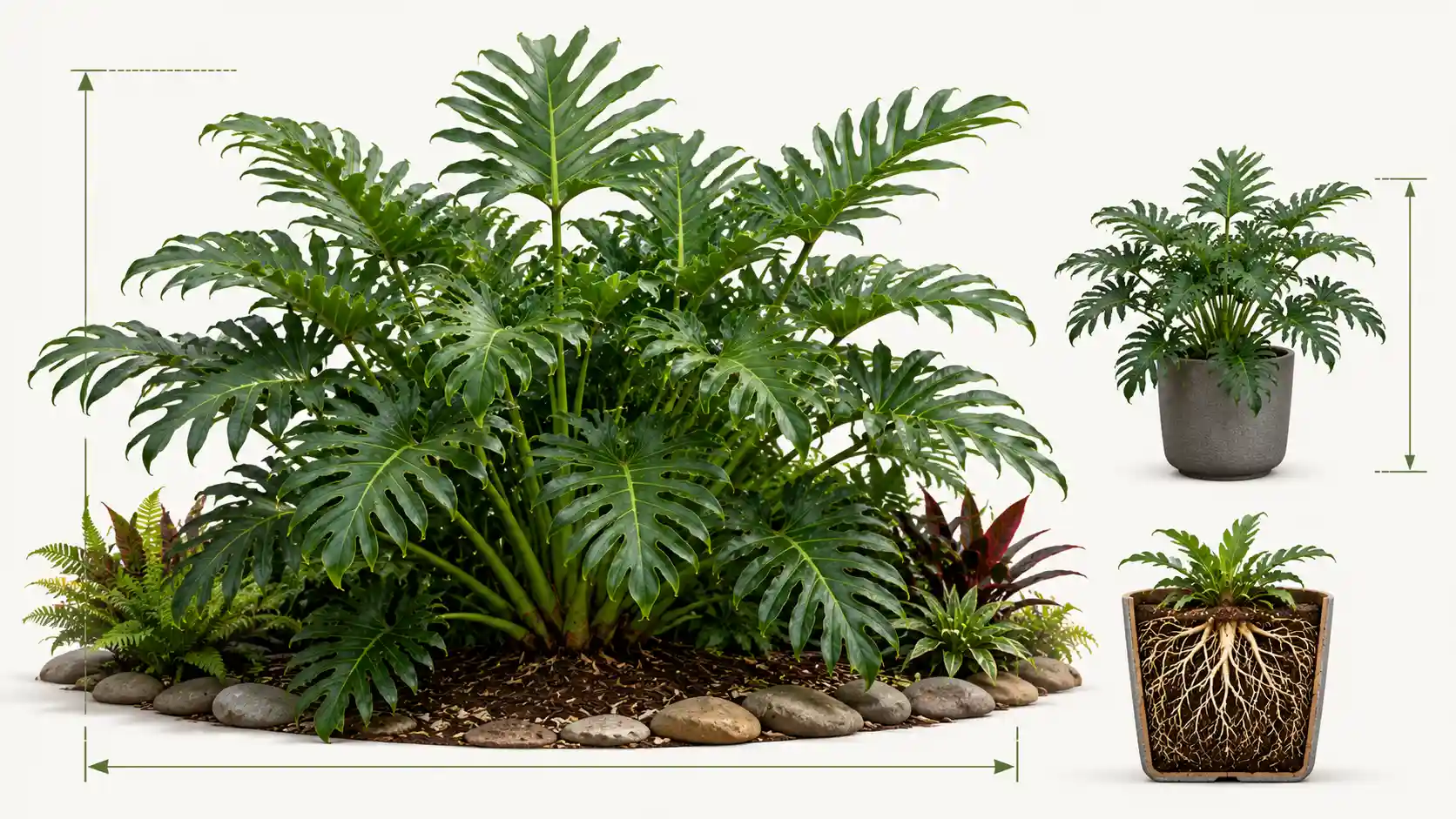
Dwarf philodendron xanadu has a naturally compact growth habit, but its final size depends on growing conditions, climate, soil quality, and available root space.
Outdoor plants in suitable Australian climates generally reach:
- Height: approximately 1–1.5 metres
- Width: approximately 1–1.5 metres
- Individual leaves: up to 40cm long
Indoor plants grown in pots usually remain smaller:
- Height: around 0.5–1 metre
- Width: controlled by pot size and pruning
Root restriction naturally limits the plant’s overall size, which is why xanadu remains manageable indoors.
How Long Does Philodendron Xanadu Take to Grow?
Philodendron xanadu is considered a fast-growing plant when provided with warmth, moisture, and suitable light. It usually takes several growing seasons to reach mature size.
| Season | Growth Activity | Care Adjustment |
| Spring | Active new leaf growth | Feed regularly and maintain moisture |
| Summer | Fastest growth period | Increase watering during hot weather |
| Autumn | Growth slows gradually | Reduce feeding frequency |
| Winter | Slow growth or dormancy | Avoid overwatering |
In our experience growing tropical foliage plants, xanadu performs best when seasonal care changes are followed rather than maintaining the same watering routine all year.
Does Philodendron Xanadu Like Sun or Shade?
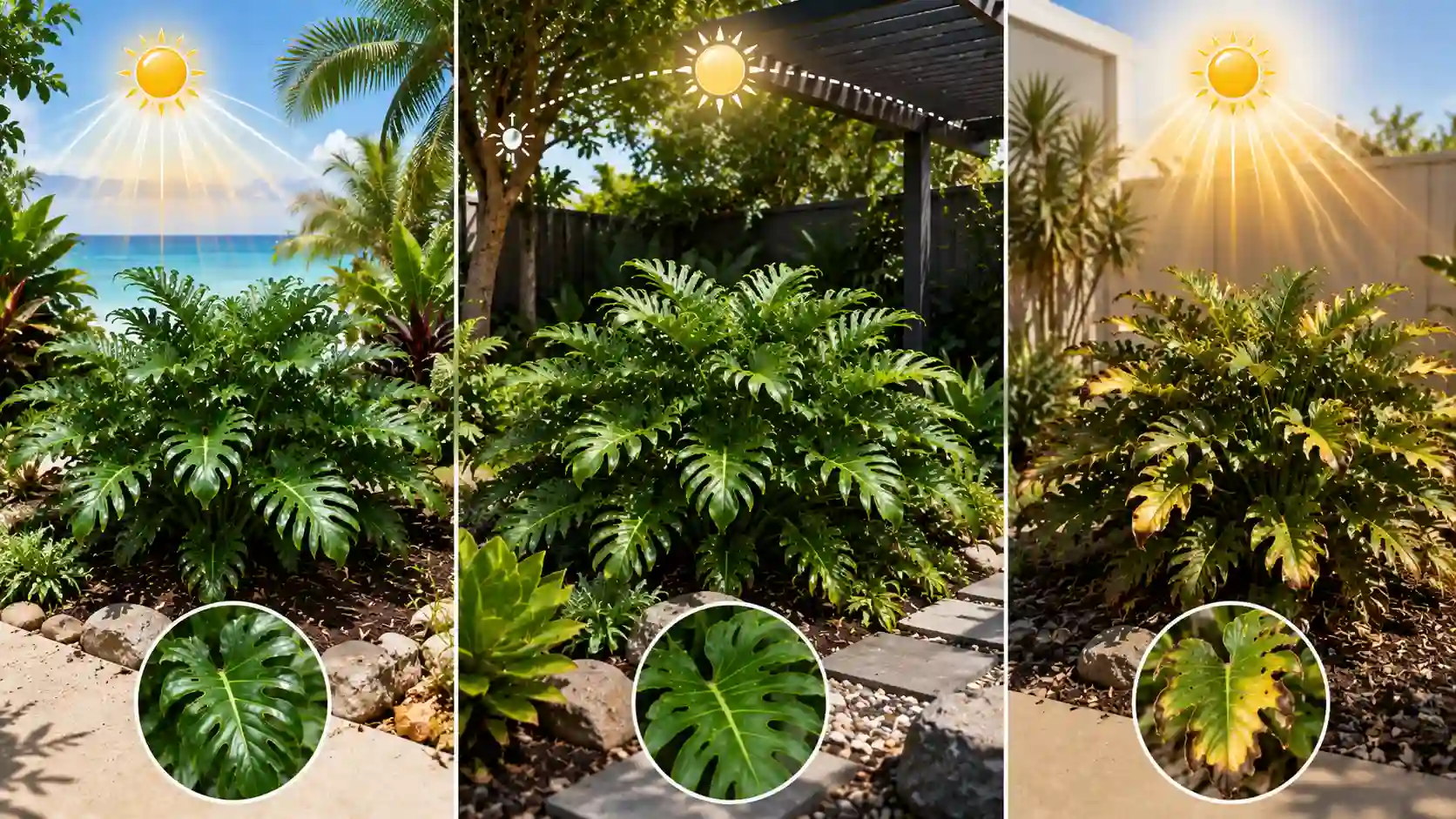
Philodendron xanadu prefers bright filtered light but can adapt to different light conditions depending on climate. In Australian gardens, the safest position is usually morning sun followed by afternoon shade.
Can Xanadu Tolerate Full Sun?
Yes, xanadu can tolerate full sun in tropical and subtropical regions if it receives adequate water and humidity. However, intense afternoon sun in hot or dry areas can cause leaf scorch, fading, or bleaching.
The best general rule for Australian gardens is:
- Tropical areas: full sun may be suitable with moisture management.
- Warm temperate areas: morning sun and afternoon shade are ideal.
- Hot inland areas: protect from harsh afternoon sunlight.
Best Position for Indoor Xanadu Plants
Indoor xanadu plants grow best in bright indirect light.
Ideal locations include:
- Near north or east-facing windows
- Behind sheer curtains
- Bright rooms away from strong afternoon sunlight
Low light conditions can cause slower growth and a less dense appearance. Like other popular indoor foliage plants such as dracaena, xanadu performs best when its light, watering, and humidity requirements are matched to indoor conditions. Learn more in our guide to Dracaena Plant Indoor Benefits, Care, Meaning & Propagation.
Philodendron Xanadu Outdoor Care in Australian Gardens
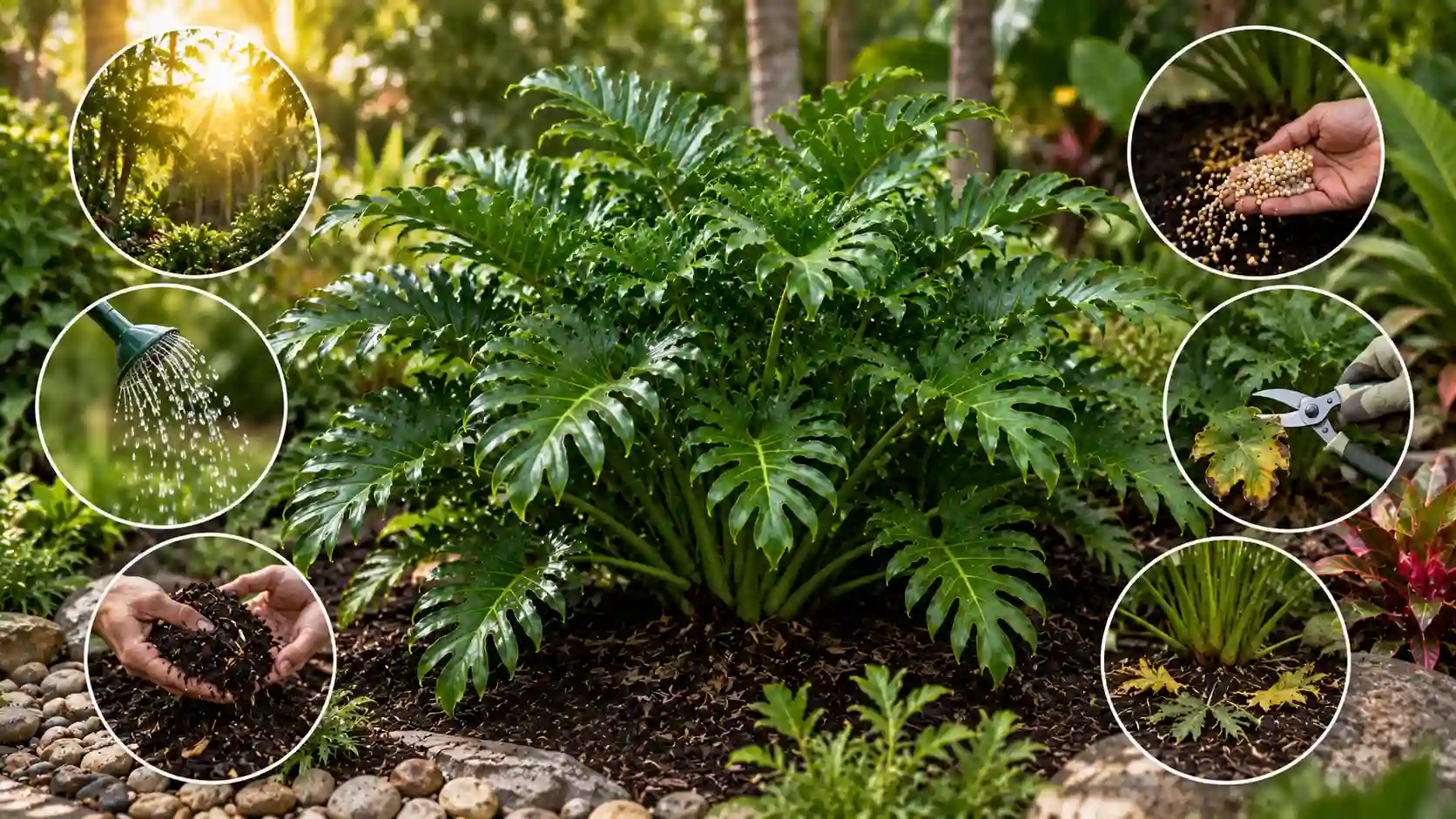
Philodendron xanadu outdoor care is relatively simple once the plant becomes established. It performs especially well in tropical, subtropical, and warm temperate Australian regions.
Care Guide
Watering:
Keep soil consistently moist while establishing. Once mature, xanadu becomes moderately drought tolerant. Water when the top 5–10cm of soil feels dry.
Light:
Provide full sun to part shade depending on climate. Avoid extreme afternoon sun in sensitive areas.
Soil:
Use free-draining soil enriched with organic matter. Poor drainage can cause root problems.
Fertilising:
Apply slow-release fertiliser annually or use a liquid fertiliser monthly during active growth.
Pruning:
Minimal pruning is required. Remove yellow, damaged, or old leaves to maintain appearance.
Climate tolerance:
Xanadu performs best in warm climates and is sensitive to frost. In cooler Australian regions, grow it in containers or protect it during cold periods.
How Often Should I Water Xanadu?
Xanadu watering depends on location and weather conditions.
General guidance:
- Newly planted garden xanadu: water regularly until established.
- Mature garden plants: water when soil becomes dry several centimetres below the surface.
- Potted xanadu: check moisture more frequently because containers dry out faster.
Avoid keeping the soil constantly saturated, as excess moisture can lead to root issues.
Do Xanadu Have Invasive Roots?
No, xanadu does not typically have invasive roots that damage pipes or building foundations. However, its underground root system can become vigorous in favourable conditions.
Allow enough spacing between plants and nearby structures to prevent overcrowding. For gardeners planning a layered landscape design, xanadu can be combined with suitable shrubs and feature plants. Our guide Best Trees and Shrubs for Australian Gardens: Growth, Roots & Landscaping Guide covers more Australian landscaping choices.
Common Problems With Philodendron Xanadu (Troubleshooting)
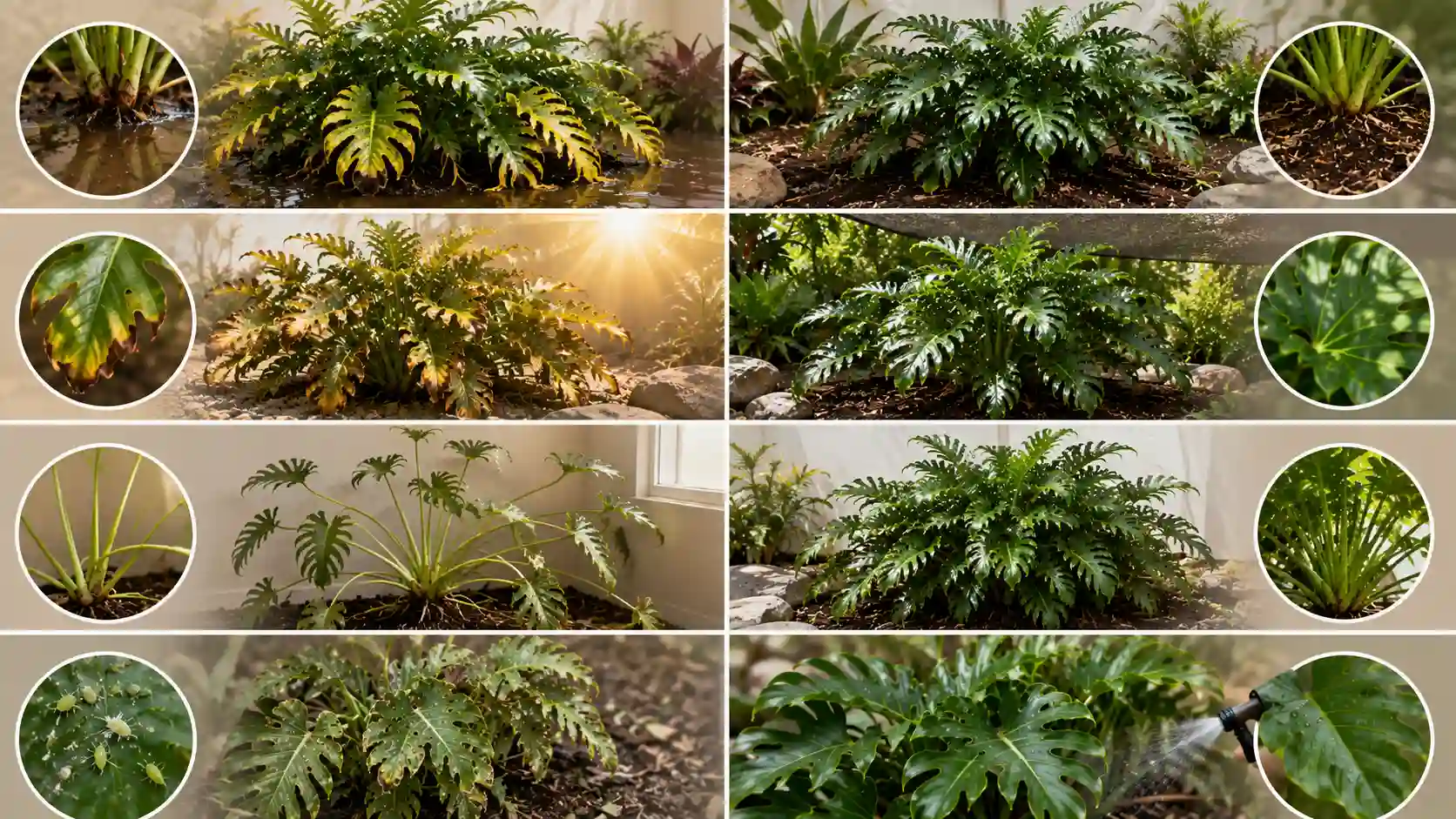
Yellowing Leaves
Yellow leaves are commonly caused by overwatering or poor drainage.
Solutions:
- Allow soil to dry slightly between watering.
- Improve drainage with suitable potting mix.
- Check that pots have drainage holes.
Yellowing leaves are a common concern among indoor plant growers, and similar care principles apply across many houseplants. See our troubleshooting guide on Orchid Stem Turning Yellow: Causes & Fix for more plant problem-solving tips.
Leaf Scorch or Bleaching
Brown patches or faded leaves often occur when xanadu receives too much harsh direct sunlight.
Fixes include:
- Moving the plant to filtered light.
- Providing afternoon shade.
- Avoiding hot reflective surfaces.
Leggy, Sparse Growth
Sparse growth usually indicates insufficient light.
To improve growth:
- Move the plant to a brighter position.
- Avoid very dark corners indoors.
- Rotate pots regularly for balanced growth.
Pests
Common pests include:
- Aphids
- Mealybugs
- Scale insects
- Spider mites
Control pests with horticultural oil or insecticidal soap and maintain good airflow around plants.
How to Make Philodendron Xanadu Bushier
A bushy xanadu plant depends mainly on adequate light, nutrition, and correct pruning.
To encourage fuller growth:
- Provide bright indirect or filtered light.
- Apply balanced fertiliser during active growth.
- Remove weak or leggy stems.
- Avoid using excessively large pots.
Elemo Baker recommends focusing on light quality first because poor lighting is one of the main reasons indoor xanadu plants become thin and stretched.
Propagating Philodendron Xanadu
Philodendron xanadu is most commonly propagated through division because it naturally forms clumps with multiple stems.
Can I Grow Xanadu in Water?
Yes, xanadu can be grown temporarily in water, but long-term growth is usually better in soil.
Basic propagation method:
- Remove the plant carefully from its pot.
- Separate a healthy section with roots attached.
- Place the division into fresh potting mix.
- Keep soil lightly moist while roots establish.
Water propagation can work with suitable plant sections, but transferring to soil provides better long-term nutrition.
Philodendron Xanadu vs Other Philodendrons (Comparison)
| Plant | Growth Habit | Mature Size | Best Use |
| Philodendron Xanadu | Self-heading clump | 1-1.5m | Landscapes and indoor pots |
| Split-leaf Philodendron (Thaumatophyllum bipinnatifidum) | Large upright growth | Much larger | Outdoor feature planting |
| Heart-Leaf Philodendron | Climbing/trailing | Smaller | Indoor hanging pots |
| Pink Princess Philodendron | Climbing | Compact indoor plant | Collector houseplant |
Xanadu is better suited for landscaping than climbing varieties because of its structured, bushy shape. Gardeners often compare xanadu with other statement tropical foliage plants, including variegated monstera varieties. Our guide on Monstera Albo Variegata Care Guide Australia explains another popular indoor tropical plant option.
Where to Buy Philodendron Xanadu in Australia
Philodendron xanadu is widely available across Australia through garden centres, nurseries, and major retailers. It is commonly sold in small to medium pots for indoor and outdoor planting.
When selecting a plant, look for:
- Healthy green leaves
- Strong stems
- No visible pest damage
- Well-developed root growth
Availability can vary between regions such as Melbourne, Sydney, and Brisbane depending on climate and seasonal demand.
What Plants Go Well With Xanadu?
Xanadu works well with tropical companion plants including:
- Palms
- Gingers
- Ferns
- Strappy-leaved plants
- Cordylines
These combinations create layered tropical garden designs with contrasting textures.
Is Philodendron Xanadu Safe for Pets and Easy to Care For?
Philodendron xanadu is considered easy to care for, but it is toxic if consumed. Adding plants like xanadu to indoor spaces can improve greenery, visual appeal, and connection with nature. Explore more benefits of indoor greenery in our article Benefits of Indoor Plants: 10 Science-Backed Reasons.
The plant contains calcium oxalate crystals, which can cause irritation of the mouth, throat, and digestive system in pets and humans.
Keep xanadu away from:
- Dogs
- Cats
- Children who may chew leaves
With proper care, xanadu can live for a decade or more, especially outdoors in suitable climates.
It prefers:
- A pot that fits the root ball comfortably
- Regular repotting every 1-2 years
- Good drainage
- Balanced watering
Overall, xanadu is a beginner-friendly plant with low maintenance requirements.
Conclusion
Dwarf philodendron xanadu is a reliable, compact foliage plant valued for its self-heading growth, glossy lobed leaves, and adaptability across Australian gardens. It can thrive from filtered shade to full sun depending on climate, provided moisture and soil drainage are managed correctly. With suitable light, regular watering, and occasional feeding, xanadu provides a long-lasting architectural feature for indoor spaces, containers, borders, and tropical landscapes. Xanadu philodendron is a popular choice for Australian indoor and outdoor spaces, especially when combined with other suitable species featured in our Australian Plants Guide: Indoor Houseplants & Garden Design.
Frequently Asked Questions
Do Philodendron Xanadu like sun or shade?
Philodendron xanadu prefers bright filtered light but can tolerate full sun in tropical climates. In most Australian gardens, morning sun with afternoon shade provides the best balance.
How big do dwarf Philodendron Xanadu get?
Dwarf philodendron xanadu usually reaches around 1–1.5m tall and wide outdoors, while indoor plants commonly remain between 0.5–1m depending on pot size.
What are the common problems with Philodendron Xanadu?
Common problems include yellow leaves from overwatering, leaf scorch from harsh sunlight, sparse growth from low light, and pests such as scale and mealybugs.
Can Xanadu tolerate full sun?
Yes, xanadu can tolerate full sun in warm humid climates, but it may suffer leaf scorch in hot, dry, or temperate locations without afternoon protection.
How often should I water Xanadu?
Water xanadu when the top 5–10cm of soil becomes dry. Garden plants need less frequent watering once established, while potted plants require more regular checks.
Do Xanadu have invasive roots?
No, xanadu does not usually have invasive roots, but its root system can become vigorous and should have adequate space in garden beds.
Are Xanadu philodendrons toxic to pets?
Yes. Xanadu contains calcium oxalate crystals and can cause irritation or illness if pets or humans ingest the leaves.
Is Philodendron Xanadu easy to care for?
Yes, philodendron xanadu is a beginner-friendly plant that requires basic care, including suitable light, drainage, watering, and occasional fertilising.