

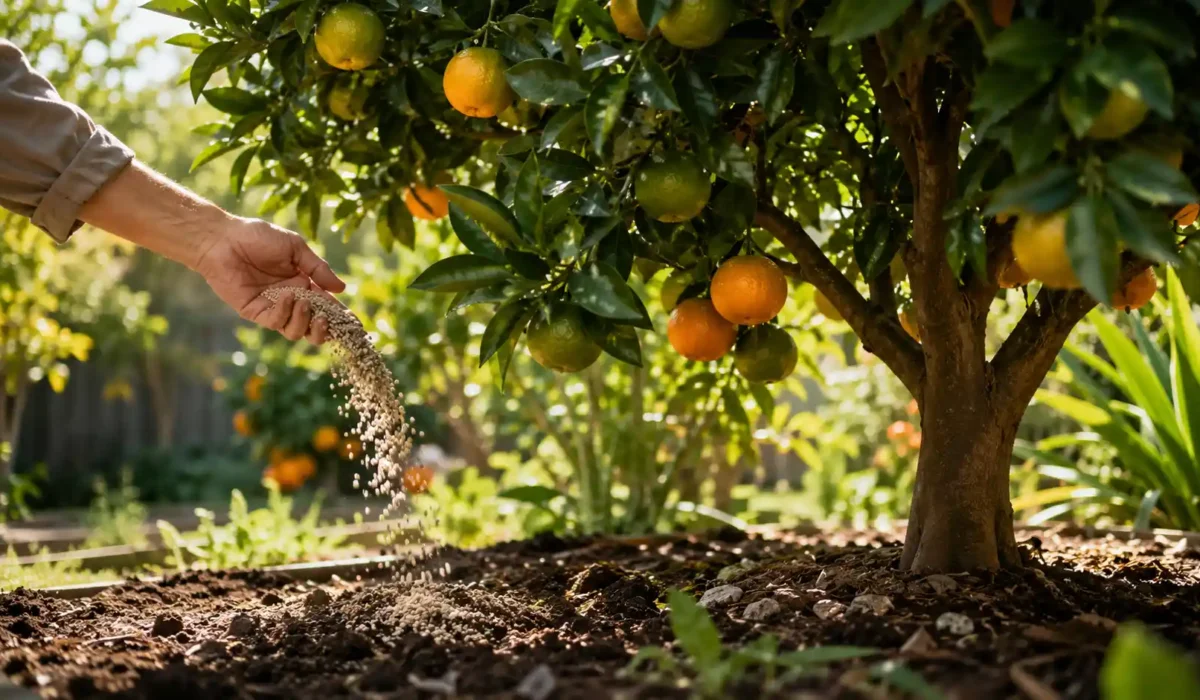
Fruit Tree Fertiliser Schedule: Australian Guide by Season
Most fruit trees do best on three feeds a year: nitrogen-heavy in late winter to kick off spring growth, a balanced feed once fruit has set in early summer, and a potassium-rich feed after harvest to help roots build up reserves for next season. Elemo Baker says sticking to this rhythm makes a real difference to flowering, fruit set, and how well the tree fights off disease.
One thing worth knowing: young trees (under two) shouldn’t get that heavy autumn feed — too much nitrogen this late pushes new growth right when the tree should be shutting down for winter, which leaves it exposed to frost. Citrus also plays by different rules, wanting smaller feeds more often (every six to eight weeks) rather than three big hits. And if your trees are in pots, expect to feed roughly twice as often as you would in-ground, since watering washes nutrients out of that smaller root zone much faster. If you’ve ever stood in the shed holding a bag of fertiliser, wondering whether now is the right time and how much is too much, you’re not alone. It’s one of the most common questions we get from Australian backyard growers — and most of the advice online doesn’t actually answer it, because it’s written for a Northern Hemisphere spring that has nothing to do with our seasons. This guide is part of our broader Fruit Trees and Edible Plants for Australian Gardens coverage, focused specifically on getting your feeding schedule right.
Elemo Baker | Plant Care & Gardening Expert
Quick summary
- Feed most Australian fruit trees as the growing flush begins for your climate zone, then taper off before dormancy or after harvest.
- Rates change with tree age (young vs mature), fruit category (citrus, stone/pome, subtropical), and whether the tree is potted or in the ground.
- Skip further down for the exact climate-zone calendar, an age-and-species rate table, and a simple method for converting any fertiliser bag’s N-P-K numbers into grams per tree.
What’s the Right Fertiliser Schedule for Your Fruit Tree?
The short answer: feed your tree as it moves into active growth for your climate zone — generally late winter into spring — then ease off through summer and stop well before the tree goes dormant or finishes fruiting.
The reason timing matters more than quantity is simple: a tree can only use nutrients while its roots are actively growing and taking up water. Feed a dormant or heat-stressed tree and the fertiliser either sits unused in the soil, leaches away in the next heavy rain, or — worse — pushes soft new growth at exactly the wrong moment, leaving it vulnerable to frost or heat scorch.
Why Most Fertiliser Advice Doesn’t Work for Australian Trees
A lot of what comes up when you search “fruit tree fertiliser schedule” is written for the US Midwest or the UK — places with a genuine winter dormancy and a spring that kicks off in March or April. Follow that timing here and you’ll be feeding your citrus in the depths of an Australian winter, when the roots are barely active and most of what you apply is wasted.
Before trusting any schedule you find online, check:
- Does the timing match your season, not the Northern Hemisphere’s?
- Is the tree evergreen (citrus, most subtropicals) or deciduous (stone fruit, apples, pears)?
- Is your soil sandy, clay-heavy or somewhere in between — this changes how fast nutrients move and leach?
- Is the tree in a pot, where feeding needs are lighter but more frequent?
Fertilising by Climate Zone: An Australian Seasonal Calendar
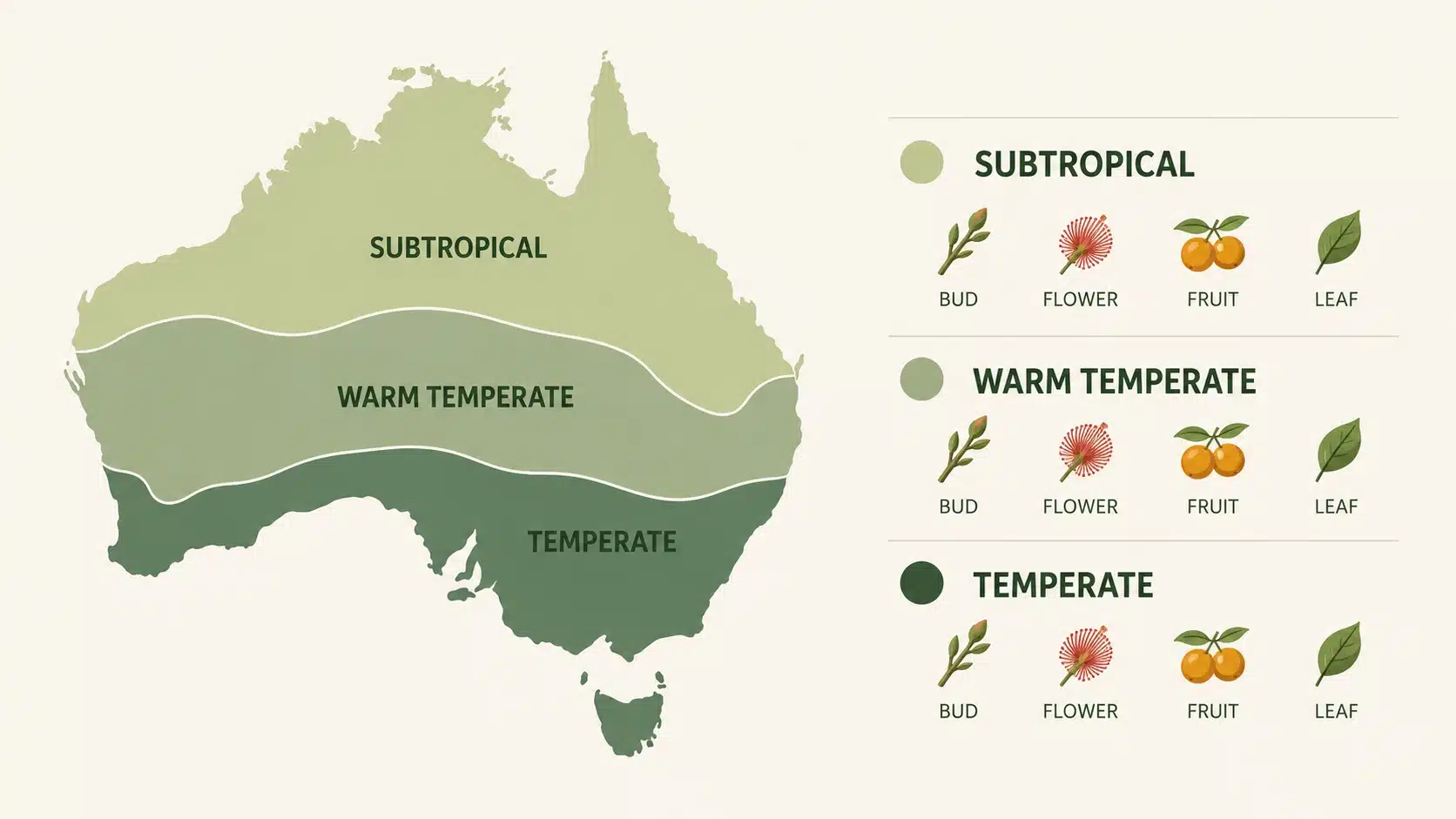
Because Australia spans everything from cool temperate Tasmania to subtropical Queensland, a single national schedule doesn’t work. Here’s a general calendar to adapt to your own zone:
| Climate Zone | Late Winter | Spring | Summer | Autumn |
| Temperate (VIC, southern NSW, SA, TAS) | Light basal feed as buds swell | Main feed at flush | Light top-up for fruit sizing | Taper off, stop by early autumn |
| Warm Temperate (Sydney basin, coastal NSW) | Basal feed | Main feed | Feed through summer, reduce late | Light autumn feed for citrus only |
| Subtropical (SE QLD, northern NSW) | Feed lightly, growth may already be active | Main feed | Regular feed if actively growing | Reduce as growth slows; avoid heavy nitrogen |
Fertilising by Fruit Type: Citrus vs Stone/Pome vs Subtropical
Not every fruit tree wants the same diet.
Citrus are evergreen and hungry through the whole warm season — they’ll tell you when something’s wrong, usually with yellowing leaves or poor fruit set. If you’re growing citrus specifically, our citrus tree care guide goes into more depth on varieties and sizing. Citrus are evergreen and hungry through the whole warm season — they’ll tell you when something’s wrong, usually with yellowing leaves or poor fruit set. If you’re growing citrus specifically, our Citrus Tree Guide Australia covers varieties, care and size in more depth.
Stone fruit and pome fruit (peaches, plums, apricots, apples, pears) are more seasonal. They need good reserves built up before flowering, then steady support through fruit fill — but too much nitrogen too late pushes soft growth right when the tree should be hardening off for winter.
Subtropical and tropical fruit (mango, avocado, banana, and similar) often keep growing year-round in warmer zones, so feeding tends to be lighter and more frequent rather than one or two big applications. See our tropical fruits guide for species-specific notes. Subtropical and tropical fruit (mango, avocado, banana, and similar) often keep growing year-round in warmer zones, so feeding tends to be lighter and more frequent. See our Growing Tropical Fruits in Australia guide for species-specific notes.
Young Tree vs Mature Tree Schedules
A one-year-old tree and a fifteen-year-old tree are not doing the same job with their nutrients. A young tree is building roots and structure — it doesn’t need heavy fruiting-stage nutrition, and overdoing it can stress a small root system that isn’t ready to support that much top growth. A mature, fruiting tree has different priorities: balanced feeding through flowering, then a shift toward potassium and trace minerals as fruit sizes up. A healthy, well-fed mature tree typically puts on a solid flush of new growth each season — too little suggests under-feeding, too much soft growth can suggest excess nitrogen. Our Average Tree Growth Rate Chart Australia sets out typical annual growth ranges by species to check yours against.
| Fruit Category | Young Tree (0–2 yrs) | Mature Tree (3+ yrs) | Organic Alternative |
| Citrus | Light, frequent feeds through warm season | Full-rate spring–summer feeding, taper autumn | Pelletised manure + seaweed tonic |
| Stone & Pome | Light feed, focus on root establishment | Pre-flower and fruit-fill feeds | Blood and bone + compost |
| Subtropical | Light, frequent feeds year-round in warm zones | Regular feeding through active growth | Composted manure top-dress |
A useful check on whether your rate is right: look at annual shoot growth. A healthy, well-fed mature tree typically puts on a solid flush of new growth each season — too little suggests under-feeding or another limiting factor, too much soft growth can suggest too much nitrogen. Our growth, roots and sizing guide covers what typical annual growth looks like across species.
How to Read Any Fertiliser Bag and Work Out Your Rate
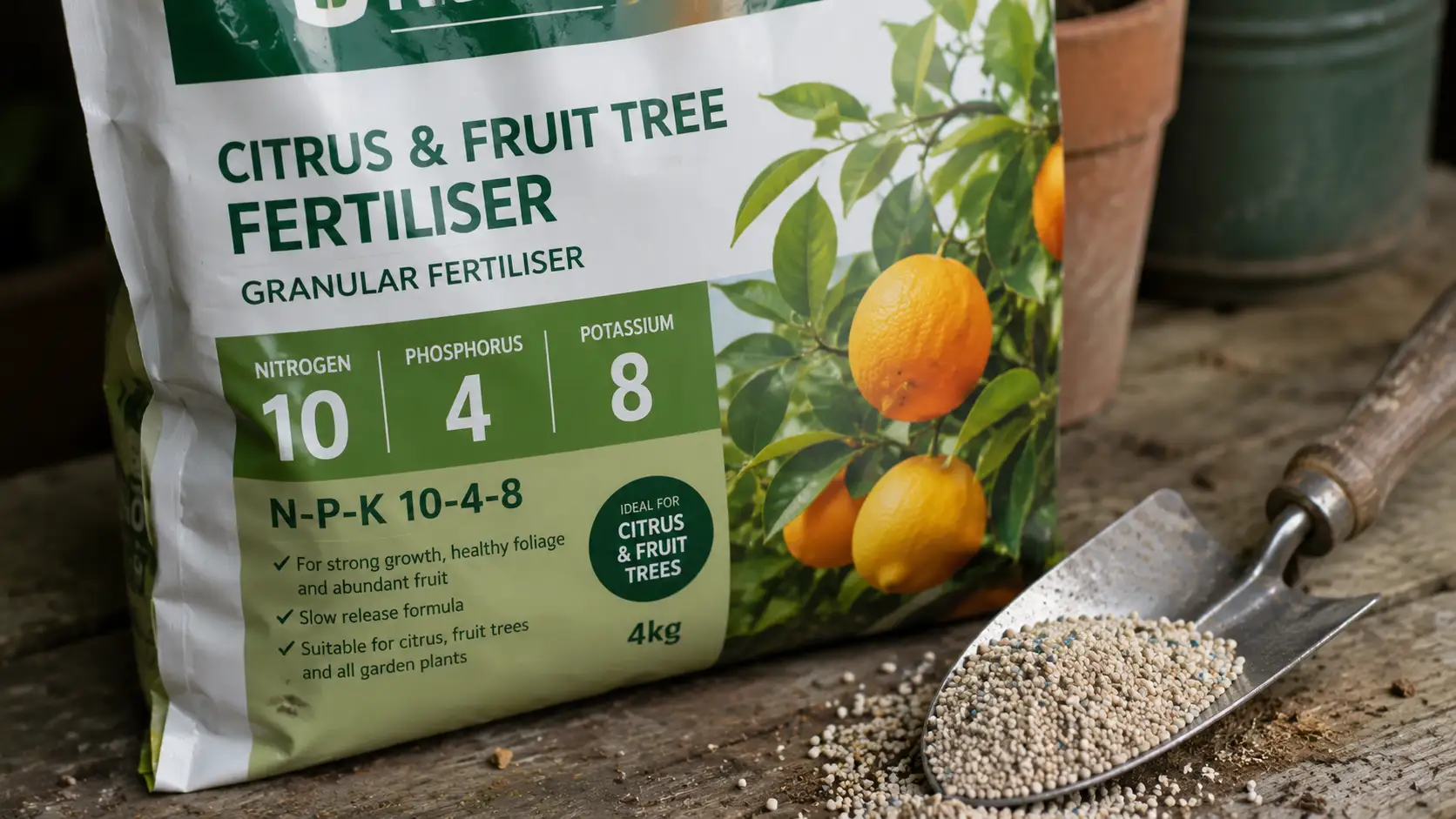
Every fertiliser bag lists three numbers — N-P-K — representing the percentage of nitrogen, phosphorus and potassium by weight. A bag labelled 12-4-8 is 12% nitrogen, 4% phosphorus, 8% potassium.
To work out how much of that bag to use: check the label’s recommended rate per square metre or per plant, then adjust up or down based on the tree’s age and canopy size using the young/mature guidance above. If two products have different N-P-K ratios, the one with the lower first number needs a larger quantity to deliver the same amount of nitrogen. For a wider look at fertiliser types and NPK basics beyond fruit trees, see our Australian Garden Soil & Fertiliser Guide.
Organic vs Synthetic Fertilisers
Synthetic fertilisers act fast and are easy to dose precisely, but they don’t feed the soil biology and can leach quickly in sandy soils. Organic options — pelletised manure, blood and bone, compost, seaweed extract — release more slowly and build soil health over time, but need to be applied a little more generously and further ahead of when the tree needs the nutrients. Many home growers use a mix: an organic base feed plus a light synthetic top-up during peak fruit-fill.
Potted vs In-Ground Fruit Trees
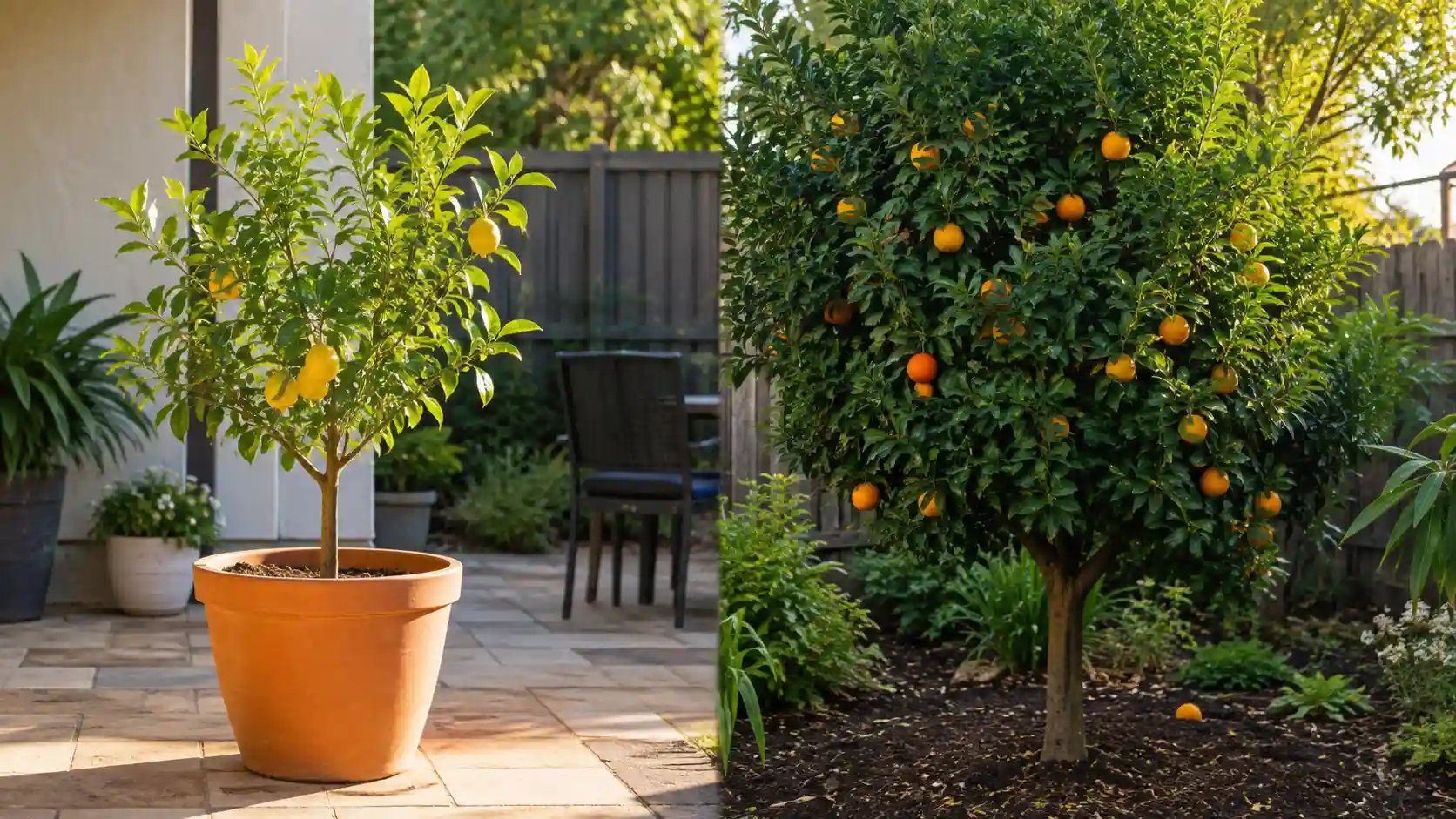
Potted trees have a fraction of the root volume of an in-ground tree, so they run out of stored nutrients faster and need lighter, more frequent feeding rather than one or two big doses. Frequent watering (which potted trees need more of) also leaches nutrients out faster, so factor that into how often you feed. Potted trees have a fraction of the root volume of an in-ground tree, so they run out of stored nutrients faster and need lighter, more frequent feeding. If citrus is your potted tree of choice, our Best Citrus Trees for Pots in Australia guide breaks this down further by climate zone.
When to Stop Fertilising
Stop feeding well before your tree’s natural slowdown — generally by early-to-mid autumn for deciduous fruit, and by late autumn for citrus in most zones. Late feeding pushes new growth that hasn’t got time to harden off before cooler weather, leaving it prone to frost damage or dieback.
Signs of Over- or Under-Fertilising
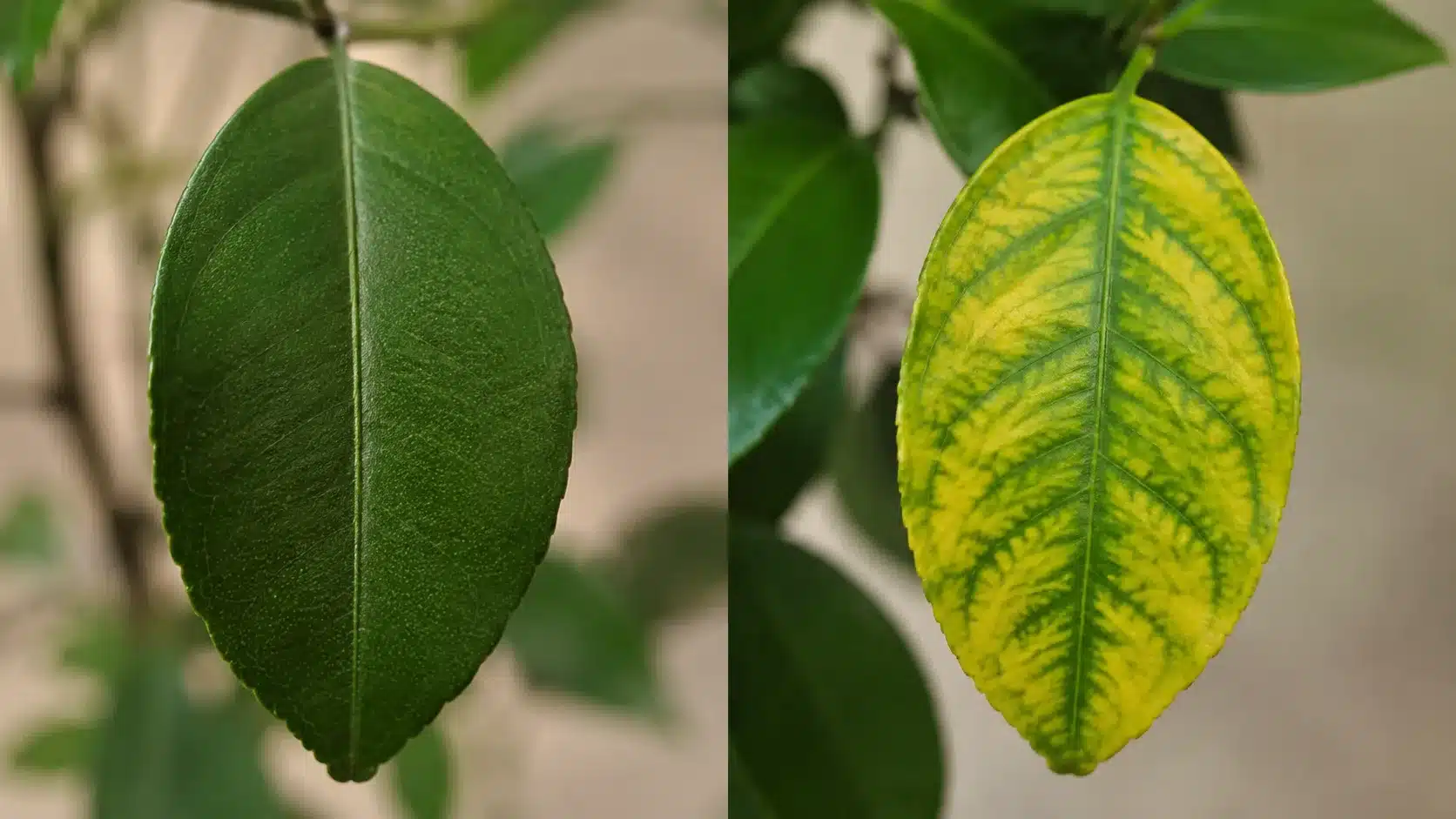
Yellowing leaves with green veins usually points to a nutrient lock-up (often iron) rather than a lack of fertiliser — check soil pH before adding more. Lots of leafy growth but little fruit is a classic sign of too much nitrogen. Fertiliser burn shows as scorched leaf edges or sudden leaf drop after feeding — always water in fertiliser thoroughly. Slow, weak growth with pale leaves can mean under-feeding, but rule out poor drainage or root stress first.
Common Beginner Mistakes
- Feeding right at the trunk instead of around the drip line, where the active feeder roots actually are
- Applying fertiliser to dry soil, where it can’t move into the root zone
- Chasing a high NPK number without checking soil pH first
- Treating a potted tree’s schedule the same as an in-ground tree
Conclusion
A fruit tree fertiliser schedule that actually works starts with matching feeding to your climate zone, then adjusting for the tree’s fruit type, age, and whether it’s potted or in-ground. Get the timing right and the exact product matters far less than most fertiliser marketing would have you believe — feed when the tree can use it, taper before dormancy, and watch the tree’s own growth to tell you if you’ve got the rate right.
Frequently Asked Questions
How often should I fertilise a fruit tree in Australia?
Most established fruit trees do well with two to three feeds a year — timed to the start of the growing flush, mid-season, and a light post-harvest feed — adjusted for your climate zone and fruit type.
What’s the best NPK ratio for fruit trees?
There’s no single ideal ratio — a balanced fertiliser works for general feeding, while potassium-leaning products suit fruit-sizing stages. What matters more is matching the rate to tree age and season.
Can I use the same fertiliser for citrus and stone fruit?
Yes, a balanced fertiliser can work for both, but timing and emphasis differ — citrus need regular warm-season feeding, while stone fruit need stronger pre-flower support.
Do potted fruit trees need a different fertiliser schedule?
Yes — lighter, more frequent applications, since potted trees have limited root volume and lose nutrients faster through regular watering.
What happens if I fertilise my fruit tree too late in the season?
It can push soft new growth that doesn’t harden off before cooler weather, making it more vulnerable to frost or dieback.
How do I know if I’m over-fertilising my fruit tree?
Watch for excessive leafy growth with little fruit, scorched leaf margins, or sudden leaf drop after feeding — these all suggest cutting back the rate.