

Benefits of Rosemary: Health, Tea, Hair, Culinary & Garden Uses
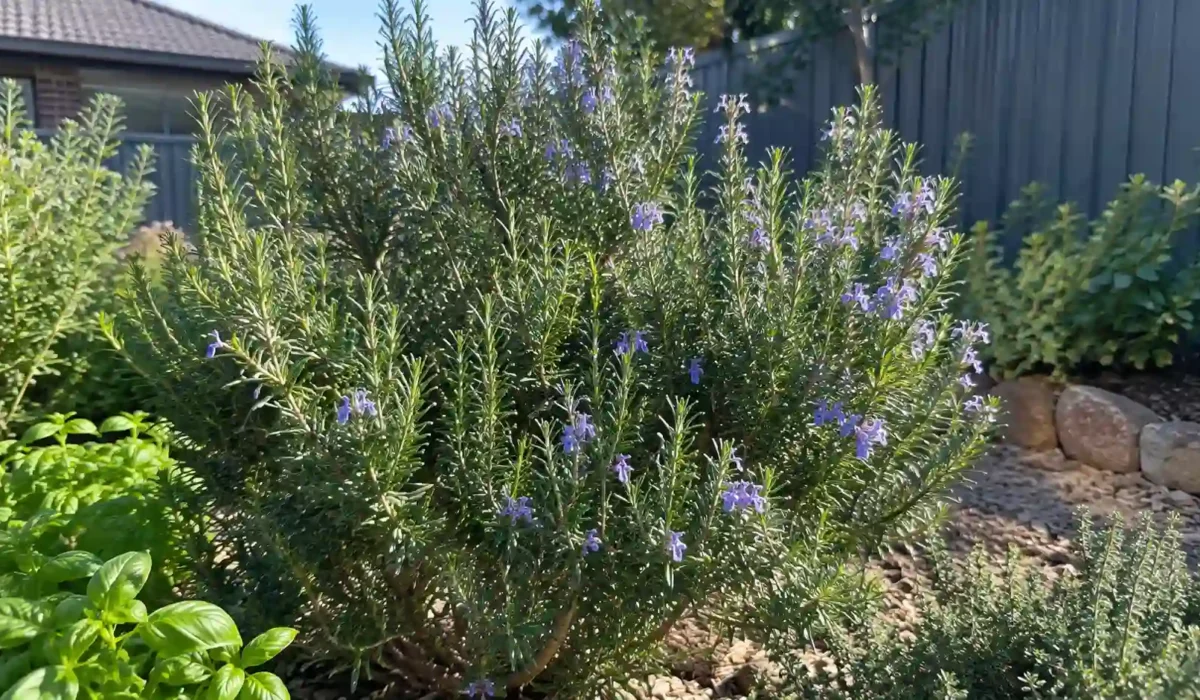
The benefits of rosemary extend well beyond adding flavour to roast potatoes. For Australian growers, rosemary (Salvia rosmarinus, formerly Rosmarinus officinalis) can provide three practical returns from one small garden plant: a reliable culinary herb, a source of aromatic compounds with some promising but still limited human research, and a drought-tolerant flowering shrub that can contribute to a pollinator-friendly garden. Kew currently accepts Salvia rosmarinus as the species name, while Rosmarinus officinalis remains a widely encountered synonym, as shown in the Kew Plants of the World Online rosemary record.
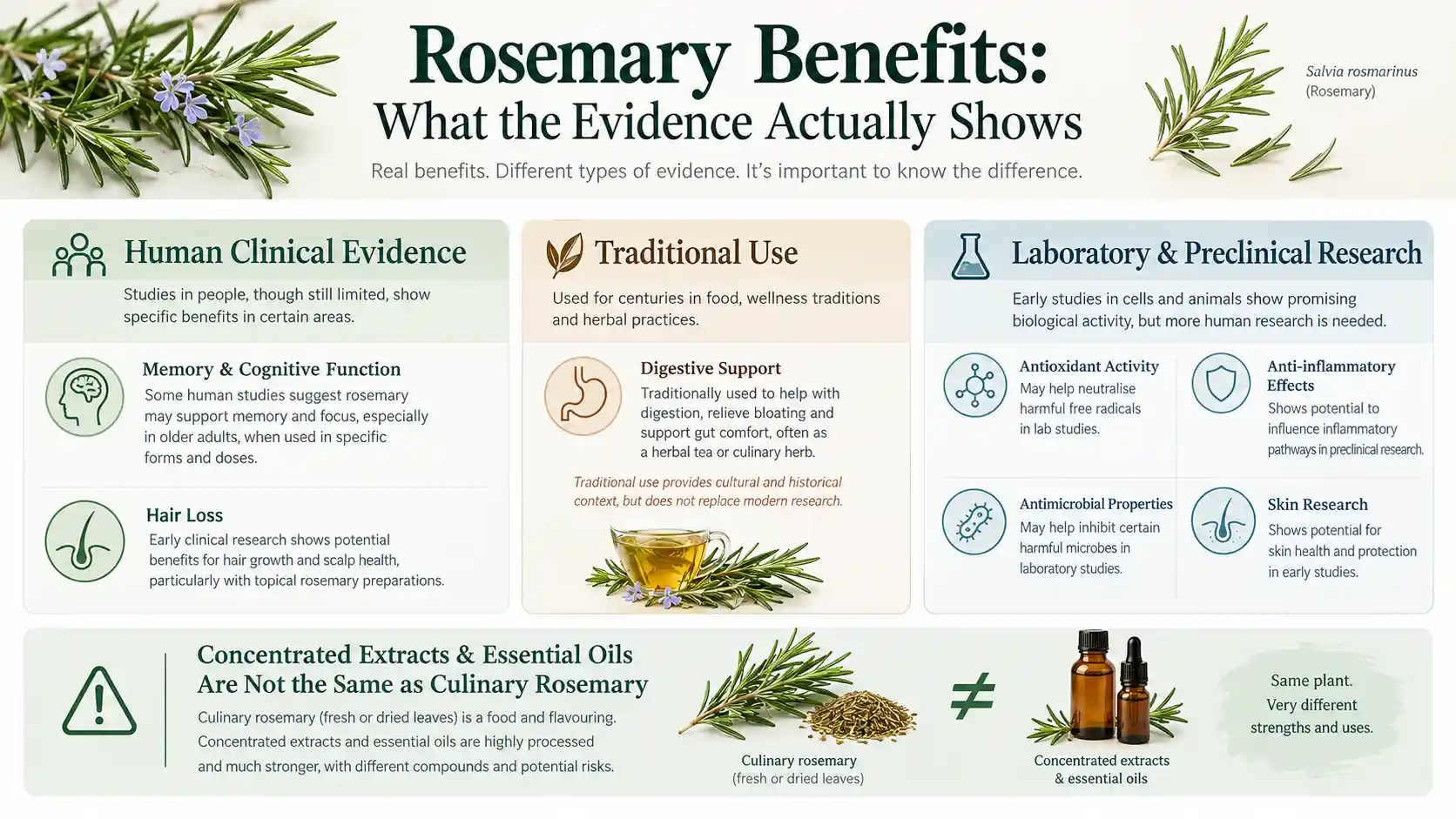
The important distinction is between using rosemary as food and treating it as a concentrated herbal medicine. Some human studies are encouraging, but many claims about rosemary’s anti-inflammatory, immune, skin, brain or digestive effects come from laboratory, animal or traditional-use evidence rather than large clinical trials.
Quick Summary
- Rosemary is worth growing for most suitable Australian gardens because it combines culinary usefulness, evergreen structure, drought tolerance and flowers that attract pollinating insects.
- Human health evidence is promising in a few areas but limited overall. Small clinical studies have investigated memory and hair loss, while antioxidant and anti-inflammatory effects are much more firmly demonstrated in laboratory and preclinical research.
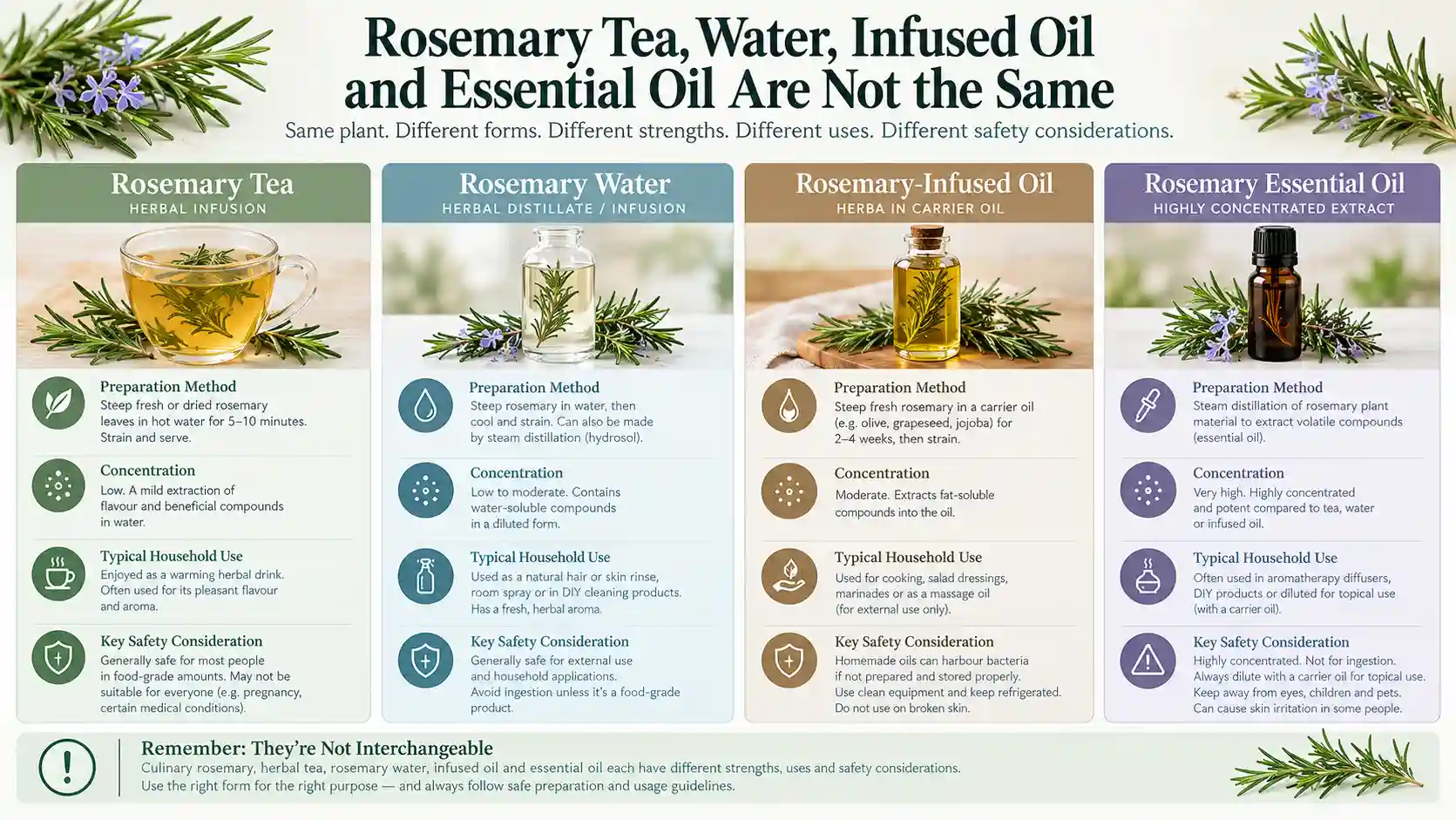
- Fresh, dried, infused and essential-oil rosemary are not interchangeable. Drying can substantially alter volatile compounds, while essential oil is far more concentrated than culinary leaves.
- For Australian growers, drainage matters more than heavy feeding. Rosemary performs best in sunny, well-drained conditions and can struggle in warm, humid, waterlogged sites.
Is Rosemary Worth Growing at Home?
For a gardener who will actually harvest and use it, yes—provided the planting site suits rosemary.
The strongest case is not that one rosemary plant delivers a long list of proven medical benefits. Its value comes from combining several lower-risk, practical benefits in the same garden space.
First, rosemary is a highly useful cooking herb. Fresh sprigs can be harvested whenever needed for potatoes, lamb, chicken, focaccia, beans, vegetables, soups and marinades. It can also be dried for longer-term use.
Second, rosemary contains numerous phenolic compounds and volatile constituents that have been studied for antioxidant, anti-inflammatory and other biological effects. However, much of this evidence concerns extracts, isolated compounds or laboratory models rather than ordinary culinary consumption.
Third, the plant earns its space as a garden shrub. Australian horticultural sources describe rosemary as drought tolerant, suitable for low-maintenance landscapes and useful as a hedge or background shrub. In South Australia, for example, Rosmarinus officinalis is listed as a full-sun, low-water plant with good drainage requirements.
For broader planning, the Australian garden soil and fertiliser guide is useful because rosemary’s biggest growing problem is often unsuitable soil structure rather than a lack of fertiliser.
Health Benefits of Rosemary
Memory and Brain Function
What does rosemary do to the brain?
Research suggests rosemary may influence cognitive performance, but the evidence is not strong enough to describe rosemary as a proven memory treatment.
A randomized controlled trial involving 68 university students investigated oral rosemary at 500 mg twice daily for one month.
The original randomized clinical trial published in PubMed reports the study’s design and outcomes, including the use of 500 mg rosemary twice daily for one month.
The rosemary group showed improvements in several memory measures compared with placebo. The study was relatively small and involved a specific young population, so it does not establish the same effect for everyone or for normal culinary amounts of rosemary.
Rosemary’s aroma has also been investigated independently of eating the herb. A human study examined exposure to rosemary essential-oil aroma and cognitive performance in healthy adults, demonstrating that the subject is biologically plausible but not equivalent to proof that drinking rosemary tea improves memory.
Practical takeaway: growing rosemary gives you easy access to a fragrant culinary herb that has interesting cognitive research behind it, but it should not replace established treatment for memory problems.
Anti-inflammatory and Antioxidant Effects
Rosemary is rich in compounds such as rosmarinic acid, carnosic acid and carnosol. Laboratory and preclinical studies associate these compounds with antioxidant and anti-inflammatory activity.
The evidence becomes less certain when the question changes from “can rosemary compounds show antioxidant activity?” to “does eating ordinary rosemary prevent or treat inflammation in humans?”
That distinction matters. Extracts used in experiments can be much more concentrated than the amount found in a typical meal.
Australian gardeners can therefore reasonably view rosemary as a flavourful herb containing bioactive plant compounds, without turning it into a medical claim.
Digestion and Immune Support
Digestion: rosemary leaf has a long traditional history of use for mild digestive discomfort. The European Medicines Agency’s rosemary-leaf monograph recognises rosemary-leaf preparations for traditional use in the symptomatic relief of dyspepsia and mild spasmodic gastrointestinal disorders. While explicitly noting that the indication is based on long-standing use rather than sufficient clinical-trial evidence.
Immune support: rosemary contains compounds with antimicrobial and antioxidant activity in laboratory research, but there is not strong clinical evidence that drinking rosemary tea or eating rosemary provides a measurable immune-boosting effect in healthy people. Reviews describe substantial biological activity while also highlighting the limitations of translating laboratory findings into human treatment.
So the evidence-aware answer is simple: rosemary may contribute useful phytochemicals to the diet, but “immune booster” is too strong as a proven human-health claim.
Skin Benefits
Rosemary has attracted significant interest in skin research because its compounds show antioxidant, antimicrobial and anti-inflammatory activity.
A review of rosemary’s topical applications discusses research into wound healing, inflammatory skin conditions, ageing, ultraviolet-related effects and other dermatological applications. However, the authors also point out that larger, controlled clinical trials are still needed before many of these uses can be considered established treatments.
For home use, this means rosemary can be interesting as an ingredient in cosmetic formulations, but fresh leaves, homemade rosemary water and essential oil should not be assumed to treat eczema, infections, wounds or other skin diseases.
Hair Benefits
What are the benefits of rosemary for hair?
The hair-growth evidence is more substantial than many other rosemary claims, but it is still based on limited research.
A randomized comparative trial enrolled 100 people with androgenetic alopecia and compared rosemary oil with 2% minoxidil over six months. The trial is discussed in the peer-reviewed clinical literature on rosemary oil for androgenetic alopecia, which reports the six-month comparison between topical rosemary oil and 2% minoxidil. Both groups had increased hair counts by the six-month endpoint, and there was no significant difference between the groups at that point. The study provides useful clinical evidence, but it does not establish that any homemade rosemary-water recipe or diluted household oil will reproduce the same result.
That distinction is especially important because “rosemary oil” can mean very different products, including essential oil preparations and commercial formulations.
For a broader look at rosemary benefits and uses, including its practical applications beyond individual health claims, see our dedicated rosemary reference.
Rosemary Tea Benefits
What Is Rosemary Tea Good For
Rosemary tea is essentially a water infusion of rosemary leaves.
Its best-supported traditional use is digestive: the EMA recognises rosemary leaf preparations for traditional use in the symptomatic relief of dyspepsia and mild spasmodic gastrointestinal disorders. The EMA also makes clear that this is traditional use rather than evidence from adequate clinical trials.
Rosemary infusions also contain measurable phenolic compounds. Research into rosemary tea has identified numerous phenolic acids, flavonoids and related compounds in the beverage.
That makes rosemary tea an interesting caffeine-free herbal drink, but not a proven treatment for inflammation, anxiety, weight loss, kidney disease or chronic digestive conditions.
How to Brew It
For a simple home rosemary tea, the practical approach is infusion rather than prolonged boiling: place culinary rosemary leaves in a cup or teapot, pour over freshly boiled water, allow the herb to infuse, then strain.
Published rosemary-tea research has used an infusion prepared with boiled water, supporting infusion as a realistic way to extract water-soluble rosemary compounds.
There is no good evidence that repeatedly boiling rosemary for a long period produces greater health benefits. In fact, rosemary’s volatile composition is sensitive to processing, so a gentle infusion is preferable for a pleasant everyday beverage.
| Brew method | Best use case |
| Hot-water infusion | Everyday herbal drink and culinary experimentation |
| Brief re-steeping | Mild flavour when the first infusion is too strong |
| Prolonged boiling | Generally unnecessary for a normal tea |
| Concentrated decoction | Better treated as a medicinal preparation rather than a casual beverage |
The exact strength of homemade tea can vary greatly with fresh versus dried leaves, cultivar, harvest time and the amount used, so it should not be treated as a standardised medicinal dose.
Morning vs Night — Does Timing Matter
There is no good clinical evidence showing that rosemary tea works better in the morning than at night.
Timing is therefore mainly a matter of personal preference and tolerance. If a strong herbal drink causes stomach discomfort, simply having less or stopping it is more sensible than assuming that changing the time of day will solve the problem.
Rosemary tea is naturally caffeine-free, so it does not create the same caffeine-related timing issue as coffee or black tea.
Who Should Avoid Rosemary Tea
Regular culinary use is different from medicinal-strength herbal preparations.
The EMA advises against medicinal rosemary-leaf preparations during pregnancy and breastfeeding, in children under 12, in people allergic to rosemary, and in people with bile-duct obstruction, gallstones, gallbladder inflammation or liver disease.
That guidance applies to rosemary herbal medicinal products, not every meal containing a small amount of rosemary. Still, people in these groups should avoid turning homemade rosemary tea into a regular therapeutic regimen without professional advice.
Rosemary Oil Benefits and Uses
What Is Rosemary Oil Good For
Rosemary oil is often discussed for hair and scalp care, especially because of the clinical hair-loss trial described earlier. However, the research does not mean that every rosemary oil product is equivalent.
Essential oil is a concentrated volatile product. Infused oil, by contrast, is a carrier oil that has taken on rosemary’s aroma and some soluble components from the plant. They are chemically and practically different.
Topical rosemary research also covers antioxidant and anti-inflammatory activity, but much of that evidence is experimental rather than definitive clinical treatment evidence.
Common Uses
Rosemary essential oil is mainly encountered in commercial scalp products, cosmetics, aromatherapy and fragrance applications. It should not be swallowed casually.
Rosemary-infused oil is primarily a culinary product or cosmetic carrier preparation and is much less concentrated than essential oil.
Do not assume that putting fresh rosemary in olive oil creates a medicinal essential oil. It does not.
Rosemary Water Benefits
Can You Drink It Every Day
There is no universally established evidence-based daily dose for homemade rosemary water.
“Rosemary water” is also an imprecise term. It may mean weak water infused with fresh leaves, a stronger tea, a commercial hydrosol or a concentrated preparation. These products should not be treated as equivalent.
For a healthy adult, occasional use as a mild herbal drink is a different situation from consuming strong preparations every day for a claimed therapeutic effect.
The safest evidence-aware position is to use rosemary primarily as food and treat regular medicinal-style use separately.
How Long Until You Notice Effects
There is no scientifically established timeline for noticing a general “rosemary water benefit”.
Different claims have different evidence. The hair study, for example, evaluated a six-month intervention, while memory research has used different preparations and time periods. Neither provides a valid schedule for homemade rosemary water.
Be suspicious of claims that promise a predictable result after three, seven or fourteen days unless the claim is backed by a specific human study using the same preparation.
Side Effects of Overuse
Potential problems depend on the preparation.
Rosemary leaf medicinal products can cause hypersensitivity reactions such as contact dermatitis in susceptible people.
Very concentrated essential oils present a separate safety issue. A systematic review of essential oils notes that internal use of oils containing constituents such as camphor and 1,8-cineole can be associated with seizure risk, particularly when essential oils are swallowed or used improperly.
That is why “natural” does not mean “concentrated enough to drink”.
Culinary Benefits and Best Pairings
The strongest everyday benefit of home-grown rosemary may simply be having a fresh herb available whenever you cook.
Rosemary’s intense, resinous flavour works particularly well with foods that can withstand a strong herb:
| Dish or ingredient | Fresh rosemary | Dried rosemary |
| Roast potatoes | Add sprigs or chopped leaves | Crushed leaves work well |
| Lamb | Excellent with garlic and lemon | Useful in rubs and marinades |
| Chicken | Strong flavour for roasting | Convenient for marinades |
| Focaccia and breads | Fresh leaves provide aroma | Dried works in dough seasoning |
| Beans and legumes | Adds a savoury herbal note | Useful in long cooking |
| Pumpkin and root vegetables | Excellent with olive oil | Good for roasting mixes |
| Tomato dishes | Use lightly | Convenient for sauces |
| Mushroom dishes | Fresh rosemary is especially aromatic | Suitable in stronger dishes |
| Olive oil-based marinades | Fresh leaves infuse quickly | Dried leaves give a more concentrated flavour |
Fresh rosemary is often best added toward the end of cooking when you want a more obvious aroma. Dried rosemary can work better earlier in long cooking because the leaves need time to soften and release flavour.
For gardeners growing multiple edible plants, the Fruit Trees and Edible Plants for Australian Gardens guide provides a broader framework for building a productive edible landscape around herbs, fruit and other food plants. If you are building a productive herb garden, curry leaf is another useful edible plant to consider; our guide to curry leaf benefits, uses, safety and growing in Australia covers its culinary role and growing considerations.
Garden Benefits of Growing Rosemary
Companion Planting and Natural Pest Deterrence
Rosemary is frequently recommended as a companion plant beside carrots and brassicas because of its strong aromatic compounds. University and extension companion-planting guides commonly list rosemary alongside carrots and cabbage and associate it with deterrence of pests such as carrot fly and cabbage pests.
However, this should not be presented as proven pest control.
Controlled research on rosemary and insects demonstrates that rosemary volatiles can influence insect behaviour. Studies have found repellency effects involving whiteflies, for example, but effects can vary with rosemary variety and volatile composition.
Research into rosemary compounds has also demonstrated insecticidal effects against some moth larvae under experimental conditions, but this is not the same as planting a rosemary shrub beside cabbage and guaranteeing protection.
The practical approach is therefore to use rosemary as one element of a diverse integrated garden, not as a replacement for pest monitoring, exclusion or appropriate biological and horticultural controls.
Pollinator Attraction
Rosemary’s flowers are one of its clearest garden benefits. The Royal Horticultural Society’s rosemary growing guide describes rosemary as an evergreen shrub whose spring flowers are popular with bees and other pollinating insects. The University of Florida’s bee-garden database likewise lists rosemary as particularly attractive to a diversity of bees.
South Australian botanic-garden guidance also lists rosemary as butterfly attracting.
For a small suburban garden, that means a rosemary hedge, border plant or container can serve both culinary and ornamental purposes while adding flowering resources for insects.
Drought Tolerance and Low-Maintenance Landscaping
Rosemary’s Mediterranean origin helps explain its preference for sunny conditions and relatively dry, well-drained soil.
Gardening Australia describes rosemary as drought tolerant and particularly useful as a landscaping plant, while also warning that Queensland’s hot, humid summers can be difficult for the plant when drainage is poor.
That makes rosemary particularly useful in gardens that receive strong sunlight and dry out reasonably quickly.
Home-Grown vs Store-Bought Potency
There is not enough evidence to claim that home-grown rosemary is automatically more potent than supermarket rosemary.
What research does show is that rosemary’s volatile profile changes with processing. Studies comparing fresh and dried rosemary have found measurable differences in oil yield and composition, while drying can alter or reduce particular volatile compounds.
Growing conditions matter too. A 2025 study found that irrigation and phosphorus conditions altered both rosemary growth and essential-oil yield and composition.
So the better grower’s argument is not “home-grown equals medically stronger.” It is:
Home-grown rosemary lets you harvest exactly when needed, control growing conditions, and avoid long storage between harvest and use.
Does Rosemary Suit Australian Climates and Soil?
Climate Zones and Positioning
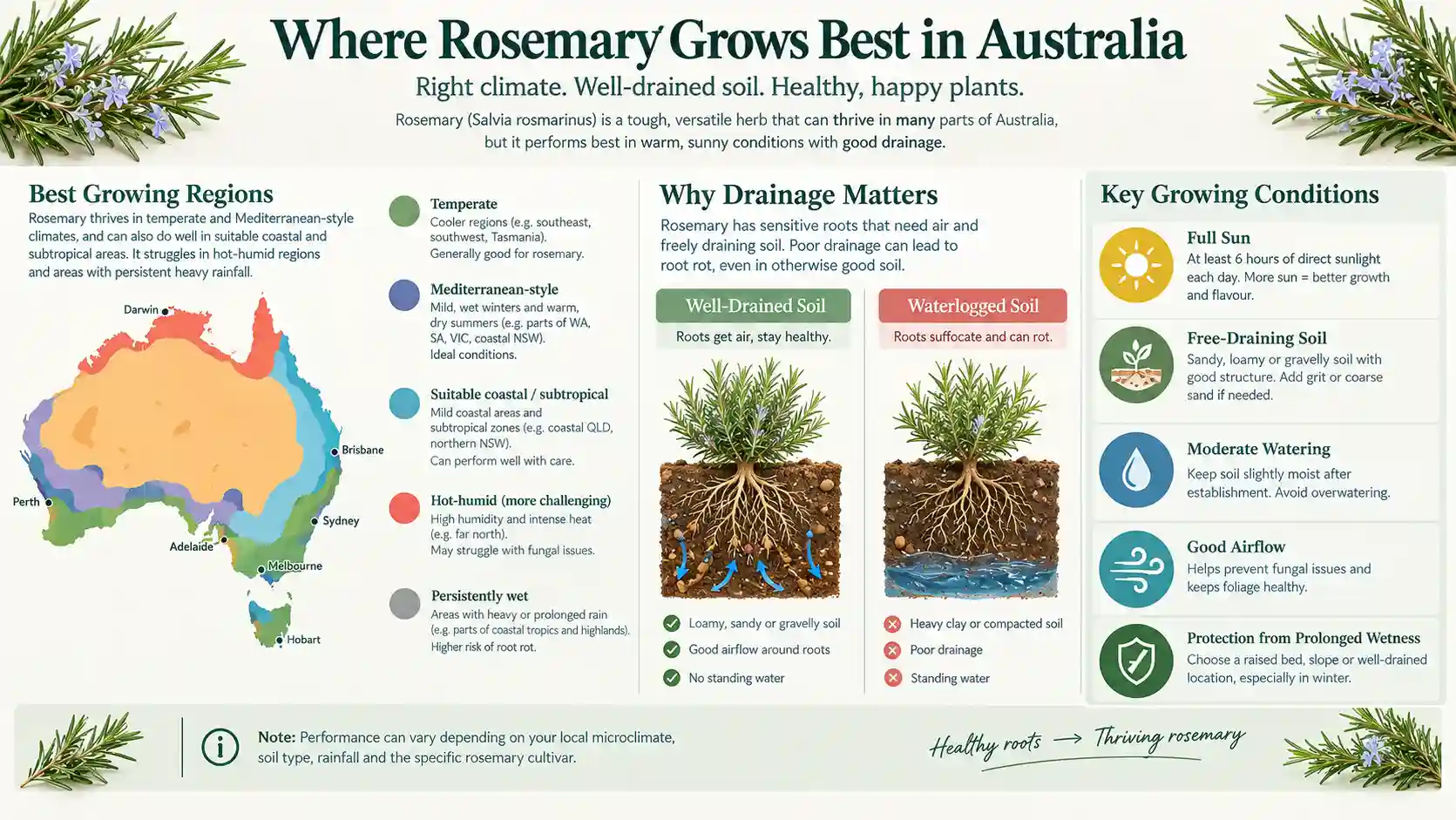
Rosemary suits many parts of Australia, but it is not equally easy everywhere.
A strong starting point is:
- Temperate and Mediterranean-style regions: generally well suited.
- Southern Australia: commonly grown successfully in sunny, free-draining sites.
- Coastal regions: can perform well, including exposed conditions where drainage remains good.
- Brisbane and humid subtropical areas: possible, but heat plus summer humidity makes drainage and airflow particularly important.
- Tropical, persistently wet locations: more challenging because prolonged wet roots are a bigger risk than dry soil.
Gardening Australia specifically notes the difficulty rosemary can face during Queensland’s hot, humid summer conditions.
The Australian Plants Guide: Indoor Houseplants & Garden Design can also help when deciding how rosemary fits into a broader Australian garden layout. Rosemary is also one of many non-native plants commonly grown successfully in Australian gardens; for another example of how origin and Australian growing status can differ, see our guide to whether aloe vera is native to Australia.
Soil and Drainage Needs
Drainage is the key.
The RHS rosemary growing guidance likewise recommends a sunny position and well-drained conditions for rosemary.
The South Australian Botanic Gardens’ plant selector lists rosemary for clay, loam and sandy soils but still specifies good drainage, while Gardening Australia warns against overwatering because warm, moist roots can encourage root disease.
Before adding fertiliser, correct the physical problem.
A rosemary plant struggling in compacted clay, a poorly drained bed or a constantly wet pot will not be fixed simply by applying more nutrients. Our Australian garden soil and fertiliser guide covers the broader process of identifying and fixing soil structure before feeding.
Growing conditions can also influence the plant’s chemistry. Research shows that water availability and nutrient conditions affect rosemary essential-oil production and composition, which helps explain why two plants of the same species can smell somewhat different or produce different amounts of aromatic oil.
For gardeners growing more than just rosemary, this Australian herb growing reference provides a useful broader guide to choosing and growing herbs in Australian conditions.
Rosemary Plant Size and Growth Rate
Rosemary is highly variable because different cultivars have different growth habits.
Australian plant-selector information commonly lists standard rosemary around 1–1.5 m high and 0.8–1 m wide, while RHS information gives a much broader range across cultivars, from prostrate forms to upright plants around 2 m or more.
Prostrate cultivars may stay only a few tens of centimetres high while spreading laterally, making them useful for rockeries, retaining walls and containers. Upright forms can become substantial shrubs and can be maintained as informal or formal hedges.
Growth is generally moderate, but the actual rate depends on cultivar, light, temperature, water and soil.
For context when planning any permanent planting, our Growth Rate, Root Spread & Plant Sizing Guide explains why mature width and growth rate need to be considered together rather than judged from the size of a nursery plant.
Rosemary Care Guide
- Light: Give rosemary full sun where possible. Aim for a bright, open position rather than dense shade.
- Soil: Use free-draining soil. Sandy or loamy sites can be easier than heavy, persistently wet clay.
- Watering: Water newly planted rosemary during establishment, then allow the soil to dry appropriately between deeper waterings rather than keeping it constantly wet.
- Drainage: Treat drainage as a priority, particularly in humid climates such as coastal Queensland.
- Fertilising: Feed modestly rather than trying to force lush growth. Fix drainage, compaction or other soil problems first.
- Pruning: Light pruning helps maintain a compact shape. Rosemary also responds well to heavier pruning when necessary, although cutting repeatedly into old, leafless woody sections is best avoided.
- Climate tolerance: Established plants can tolerate drought and moderate frost, but prolonged humidity and wet roots can be more problematic than dry weather.
- Containers: Pots are useful in humid areas or for renters because the plant can be moved into a brighter, more sheltered position when conditions become excessively wet.
Best Ways to Use Home-Grown Rosemary
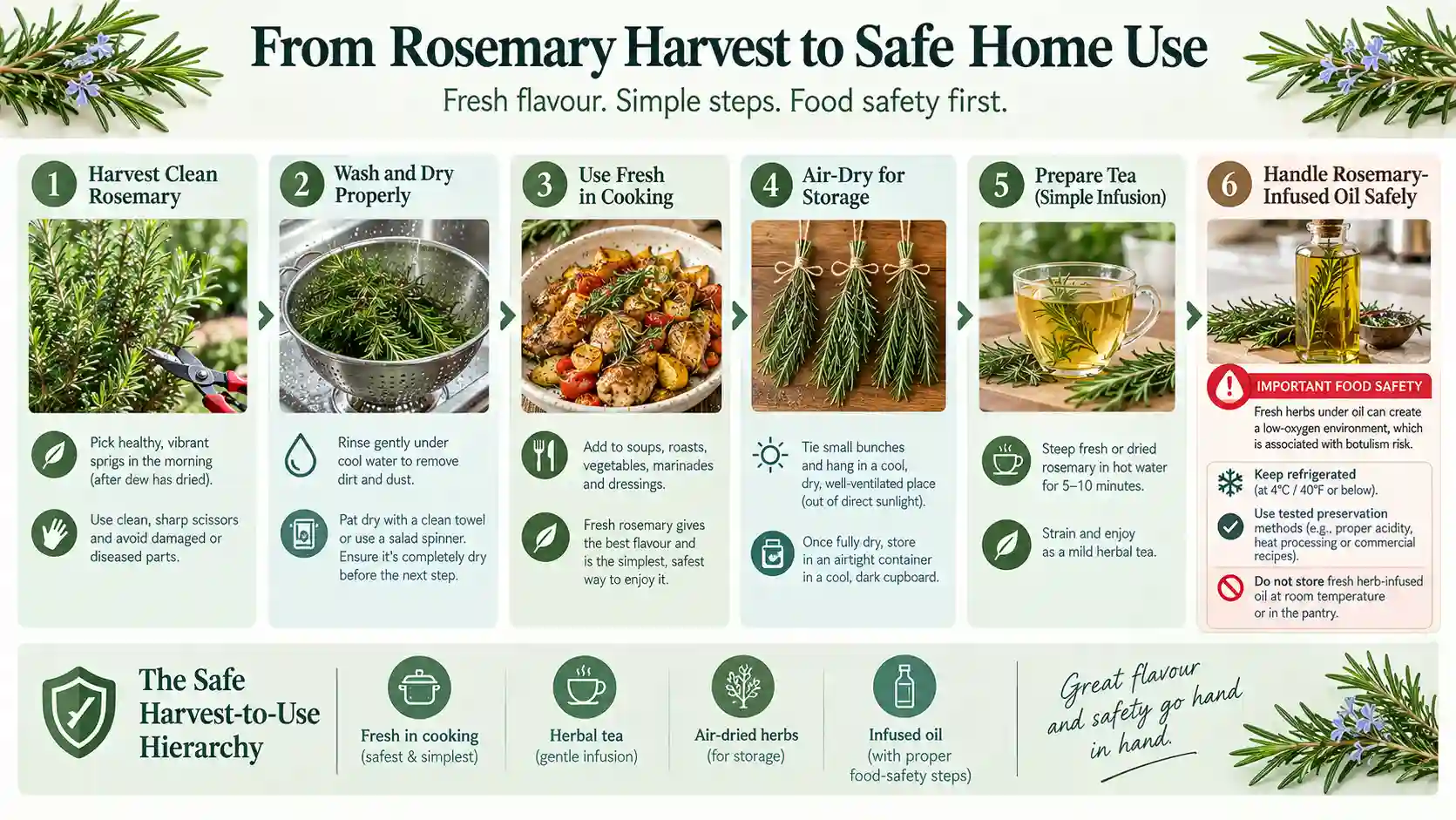
Fresh vs Dried
Fresh rosemary generally provides the brightest aroma because many volatile compounds remain readily available in freshly harvested foliage.
Drying makes the herb easier to store and gives you a reliable supply outside harvest periods, but it changes the volatile profile. Research has shown significant chemical differences between fresh and dried rosemary material.
Neither form is automatically “better.” Use fresh leaves when aroma and appearance matter most; dried leaves when convenience and storage matter most.
Drying and Storing
For home use:
- Harvest healthy, dry stems rather than wet foliage.
- Remove damaged leaves.
- Bundle small amounts or spread the leaves in a well-ventilated location away from strong direct heat.
- Allow the leaves to become fully dry and brittle before storage.
- Store in an airtight container away from heat, light and moisture.
- Label the container with the drying date.
The goal is to minimise moisture while avoiding unnecessary heat that can drive off desirable volatile compounds.
Infusing Oil at Home
Rosemary-infused oil is useful for cooking, but this is one area where a simple-looking homemade recipe can create a food-safety problem.
Fresh herbs stored under oil can create a low-oxygen environment favourable to Clostridium botulinum. Food Standards Australia New Zealand explains that botulinum spores are associated with soil and plants and can produce dangerous toxins under suitable conditions.
For that reason, do not put fresh rosemary into oil and leave the bottle on the kitchen bench for weeks.
For a short-term homemade infusion, follow a tested food-safety procedure and keep the product refrigerated rather than relying on appearance or smell. University extension food-safety guidance specifically recommends refrigeration and short storage for non-acidified homemade herb oils; tested acidification methods also exist for rosemary.
For long-term storage, commercially prepared acidified products or a rigorously tested preservation method are safer choices than an improvised pantry recipe.
Making Tea from Fresh Leaves
Fresh rosemary can be used to make a simple infusion.
Use clean edible-quality leaves, rinse fresh herbs under running water, place them in a heatproof cup or teapot, pour over freshly boiled water, allow them to infuse, then strain.
Keep the drink relatively mild rather than assuming that a stronger tea is more therapeutic. Published research confirms that rosemary infusions extract multiple phenolic compounds into hot water, but the composition depends on the plant material and preparation.
For a more detailed reference covering rosemary uses, preparation and garden applications, see our rosemary reference database before choosing how to harvest, preserve or use your home-grown herb.
Safety, Side Effects and Who Should Avoid Rosemary
Common Side Effects and Kidney Safety
For normal culinary use, rosemary is a familiar food herb rather than a high-dose medicinal substance.
The safety picture changes with concentrated preparations. Rosemary leaf medicinal products can cause hypersensitivity reactions such as contact dermatitis, and concentrated essential oils should not be treated like ordinary food ingredients.
Is rosemary safe for the kidneys? There is no strong clinical evidence that normal culinary amounts of rosemary damage healthy kidneys, but there is also no good evidence that rosemary should be used to treat kidney disease.
People with existing kidney disease should be especially cautious about making concentrated herbal drinks or supplements part of a daily routine because their overall medication and fluid-management needs can be different.
Seek medical advice for persistent pain, blood in the urine, swelling, major changes in urination or other symptoms rather than trying to manage a kidney problem with rosemary tea.
What Not to Mix With Rosemary
The EMA’s assessment of rosemary leaf medicinal products did not identify established medicine interactions at the time of its assessment. However, that does not mean every rosemary extract, supplement or essential oil has been proved interaction-free.
The greatest practical mistake is treating concentrated essential oil as though it were culinary rosemary.
People taking multiple medicines, anticoagulants, medicines with a narrow therapeutic range, or regular herbal supplements should check with a pharmacist or doctor before starting concentrated rosemary preparations. Evidence on herb–drug interactions is often incomplete, which is exactly why caution is appropriate.
Do not swallow undiluted rosemary essential oil.
Pregnancy Considerations
Pregnancy is one situation where caution is particularly important.
The EMA advises against the use of rosemary-leaf medicinal preparations during pregnancy and breastfeeding.
That should not be confused with the normal culinary use of rosemary in food. A small amount used to season a meal is not equivalent to a concentrated herbal preparation.
Pregnant or breastfeeding people should therefore avoid self-prescribing rosemary tea, extracts or essential oils for therapeutic purposes without professional advice.
Is Rosemary Safe for Pets — Home-Garden Angle
The live rosemary plant is listed by the ASPCA as non-toxic to dogs, cats and horses.
That makes rosemary a relatively straightforward choice for a pet-friendly garden compared with plants known to be toxic.
However, the safety of the whole garden plant should not be confused with the safety of concentrated essential oil. Essential oils contain far higher concentrations of volatile compounds and can pose different risks from the plant itself.
For pet owners, the sensible approach is to grow rosemary as a culinary garden plant while keeping concentrated oils and homemade cosmetic preparations out of pets’ reach.
Beginner Mistakes When Growing or Using Rosemary
Overwatering: Rosemary is often killed by kindness. Constantly wet soil is more dangerous than allowing an established plant to experience periods of dryness.
Wrong positioning: A rosemary plant pushed into a shaded, enclosed corner will usually perform differently from one in full sun with good airflow.
Assuming all cultivars stay small: Upright rosemary can become a substantial shrub. Check mature height and width before planting beside paths, windows or fences.
Confusing traditional use with clinical proof: Traditional digestive use and promising laboratory studies are not the same as evidence that rosemary treats a disease.
Making tea too strong: More leaves do not automatically mean more benefit. A concentrated homemade beverage is harder to standardise and may increase the chance of adverse effects.
Treating rosemary water as a proven hair treatment: The clinical evidence for rosemary oil and hair loss cannot simply be transferred to homemade rosemary water.
Leaving fresh rosemary in oil at room temperature: This can create a serious food-safety hazard because herbs in oil can support botulism risk under suitable conditions.
Ignoring pets because the plant is “natural”: The live plant is listed as non-toxic by ASPCA, but concentrated essential oils are a separate product and should be stored securely.
Conclusion
The benefits of rosemary make the plant unusually useful for an Australian home garden, but the strongest case is broader than a list of supposed health cures.
Grow rosemary for fresh flavour, easy harvesting, evergreen garden structure, drought tolerance and pollinator-friendly flowers. Enjoy its tea as a simple herbal infusion rather than a guaranteed treatment. Treat rosemary oil as a concentrated preparation with different safety considerations. And remember that promising research on antioxidant activity, memory or hair growth does not automatically prove the same effect from a few leaves picked from the backyard.
For most Australian gardeners, the real advantage of home-grown rosemary is control: you can grow it in the right soil, harvest it fresh, use it immediately in food and preserve part of the crop for later. Once drainage, light and climate are right, that combination of culinary usefulness and garden value makes rosemary a practical long-term plant rather than merely another herb to squeeze into a vegetable bed.
FAQs
What are the 10 benefits of rosemary?
There is no scientifically established list of “10 proven health benefits” of rosemary.
Ten practical, evidence-aware benefits are:
- Adds strong flavour to food.
- Provides a readily available fresh herb for cooking.
- Can be dried for long-term storage.
- Provides antioxidant plant compounds.
- Contains compounds with anti-inflammatory activity in laboratory research.
- Has traditional use for mild digestive discomfort.
- Has preliminary human evidence related to memory.
- Has limited clinical evidence related to hair loss when rosemary oil is used in a studied preparation.
- Provides evergreen structure in Australian gardens.
- Produces flowers that attract bees and other pollinating insects.
What does rosemary do for the body?
Rosemary provides flavour and bioactive plant compounds when eaten. Laboratory research has identified antioxidant and anti-inflammatory activity, while small human studies have investigated memory and other outcomes. However, rosemary should be viewed as a food herb rather than a proven treatment for systemic disease.
Can you drink rosemary water every day?
There is no universally established evidence-based daily dose for homemade rosemary water. Occasional culinary-level use is different from consuming concentrated herbal preparations every day. Regular therapeutic use should be discussed with a healthcare professional, particularly during pregnancy, breastfeeding or when taking medicines.
Who should not drink rosemary tea?
People who are pregnant or breastfeeding, children under 12, people allergic to rosemary, and people with bile-duct obstruction, gallstones, gallbladder inflammation or liver disease should avoid rosemary-leaf medicinal preparations unless advised otherwise by a qualified professional.
What not to mix with rosemary?
Do not assume that concentrated rosemary extracts or essential oils are interchangeable with culinary rosemary. People taking several medicines or medicines with a narrow therapeutic range should check with a pharmacist or doctor before starting concentrated rosemary preparations.
Is it healthy to eat raw rosemary?
Rosemary can be eaten as a culinary herb, provided it is handled as food and washed appropriately. The leaves are strong, fibrous and highly aromatic, so most people use small amounts rather than eating large quantities directly. Normal culinary use should not be confused with taking concentrated rosemary extracts.
Is rosemary safe for the kidneys?
There is not strong evidence that normal culinary use of rosemary harms healthy kidneys, but rosemary is not an established treatment for kidney disease. Anyone with kidney disease should seek personalised medical advice before using concentrated herbal preparations regularly.
Is it better to drink rosemary tea in the morning or at night?
There is no strong evidence that rosemary tea has a superior time of day. Choose the timing that fits your routine and tolerance rather than expecting a different therapeutic effect in the morning or evening.
1 Comment