

Broad Leaf Lilly Pilly: Growth, Care & Hedge Guide
Introduction
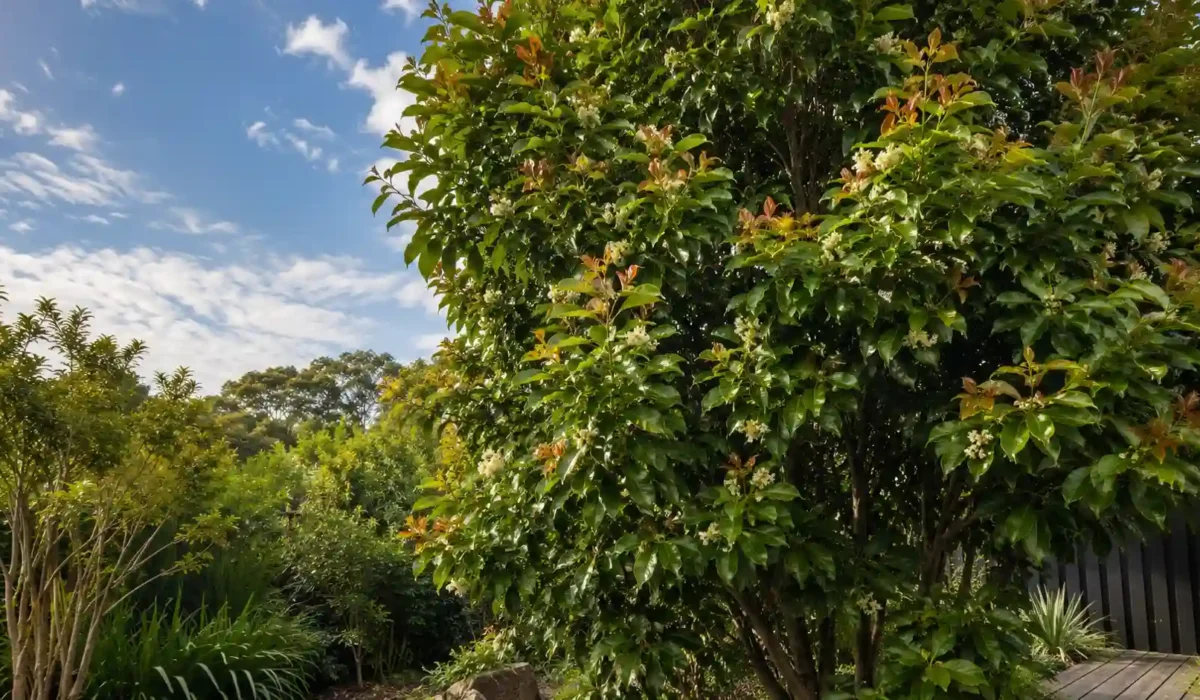
Broad leaf lilly pilly (Acmena hemilampra, now classified as Syzygium hemilamprum) is an Australian native rainforest tree valued for its glossy foliage, copper-tan new growth, white flowers and edible white fruit. It naturally occurs from northern New South Wales through Queensland to Cape York and is commonly grown as a feature tree, screening plant or large garden hedge. The name “broad leaf lilly pilly” can create confusion because it is sometimes mixed with compact hedging plants such as “Goodbye Neighbours” (Acmena smithii) or other lilly pilly varieties. Unlike smaller cultivars bred for tight boundaries, this species develops into a much larger tree with strong rainforest characteristics.
Quick Summary
- Broad leaf lilly pilly (Acmena hemilampra / Syzygium hemilamprum) can reach around 8–15 m in gardens and grows larger than most lilly pilly hedging cultivars.
- It is a hardy Australian native with good tolerance to coastal conditions, moderate frost and many common lilly pilly pests.
- This species is better suited to feature planting, large screens and spacious gardens rather than narrow suburban hedges.
- Once established, it requires minimal maintenance with seasonal pruning and spring applications of native fertiliser.
What Is a Broad Leaf Lilly Pilly?
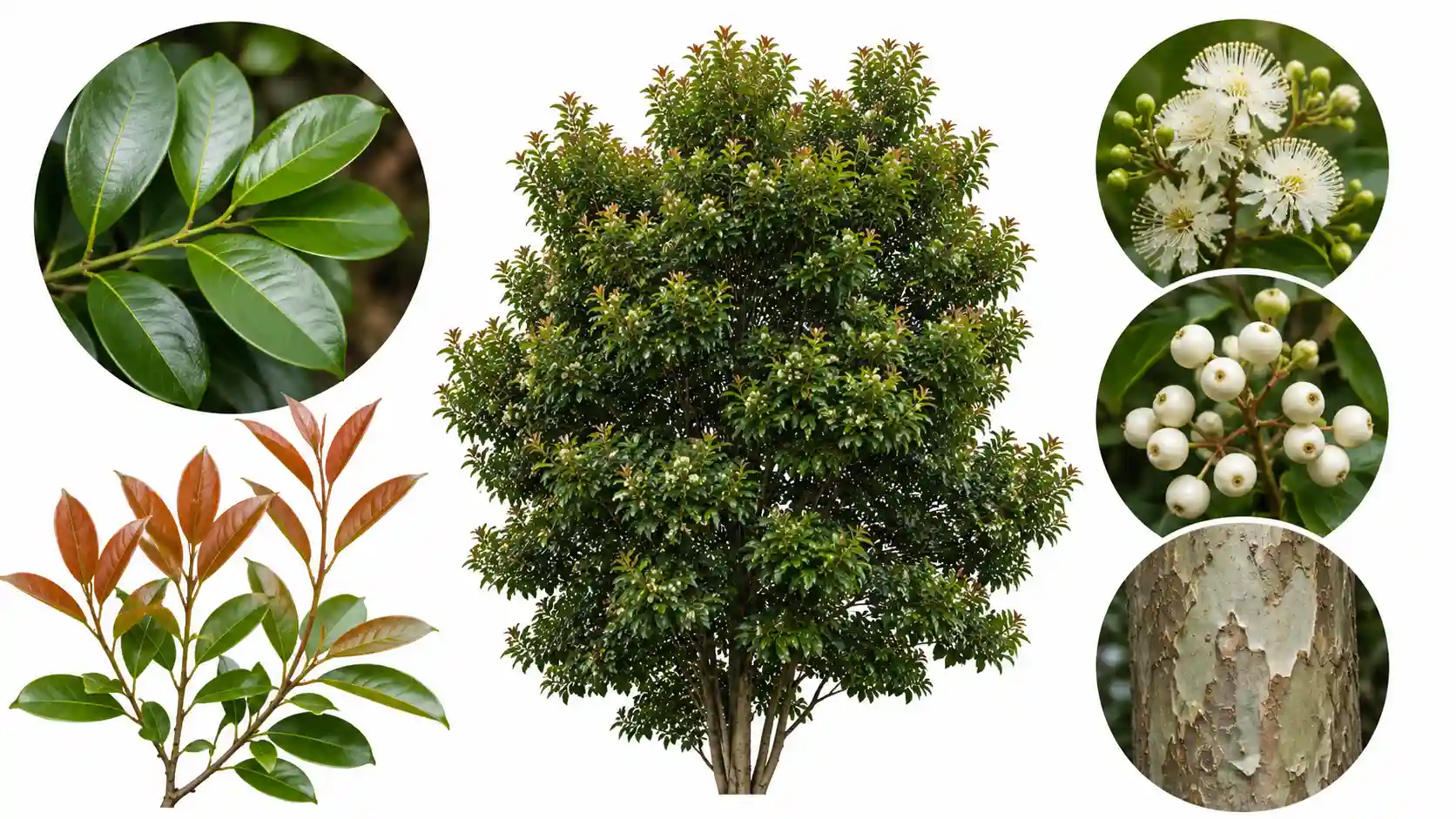
Broad leaf lilly pilly is the common name for Acmena hemilampra, a rainforest tree now generally accepted botanically as Syzygium hemilamprum. It belongs to the Myrtaceae family, which also includes well-known Australian natives such as eucalyptus, bottlebrush and other lilly pilly species. Broad leaf lilly pilly belongs to the Syzygium genus, a large group of flowering plants in the Myrtaceae family that includes many tropical and Australian native species.
The botanical reclassification from Acmena to Syzygium means older plant labels and nursery descriptions may still use Acmena hemilampra, while newer references may list it as Syzygium hemilamprum. Both names refer to the same native species.
Other common names include:
- Broad-leaved lilly pilly
- Blush satinash
- Cassowary gum
- Eungella gum
This species naturally grows in warm, humid rainforest environments from northern New South Wales through Queensland, including Cape York regions, with some populations extending into the Northern Territory. Its natural habitat explains its preference for moisture-retentive soils and warmer climates.
The broad leaf lilly pilly is recognised by:
- Large, glossy green leaves
- Copper, bronze or reddish new growth
- Clusters of small white flowers
- White or pale-coloured edible fruit
- Smooth to slightly textured bark
Because of its size and appearance, it is often chosen where gardeners want a native evergreen tree with year-round foliage rather than a small formal hedge.
Key Features and Appearance
Broad leaf lilly pilly has several features that separate it from smaller hedge-forming lilly pilly varieties. Its larger leaves, rainforest growth habit and mature size make it more suitable as a feature tree or tall screening plant.
Foliage and New Growth
The foliage is one of the most attractive features of Syzygium hemilamprum. The leaves are broader than many common hedge lilly pillies and have a glossy surface that reflects light.
Key foliage characteristics include:
- Large oval to elliptical leaves
- Thick, leathery leaf texture
- Deep green mature foliage
- Copper, bronze or tan-coloured new growth
- Dense evergreen coverage when grown in suitable conditions
The colourful flush of new leaves provides seasonal interest, especially during active growth periods in warmer months. In practical garden settings, maintaining consistent moisture during establishment usually results in stronger foliage production and denser growth.
Flowers and Fruit
Broad leaf lilly pilly produces clusters of small white flowers, typically appearing during warmer seasons. These flowers attract native insects and contribute to the plant’s ecological value in Australian gardens.
Important flower and fruit features include:
- White flower clusters forming along branches
- Small white to pale fruit after flowering
- Fruit that can be eaten by humans when ripe
- Smooth bark with a rainforest tree appearance
The fruit is produced in clusters and may attract birds, adding biodiversity benefits to gardens. In our experience growing Australian native screening plants, allowing flowering before pruning often improves natural fruit production while still maintaining a manageable shape.
How Tall Do Acmena Hemilampra Get?
Acmena hemilampra typically grows around 8 metres tall in cultivated garden conditions, although mature rainforest specimens can reach approximately 15 metres or more. Some botanical references record larger rainforest trees potentially reaching 25–35 metres under ideal natural conditions.
The difference between garden and rainforest size is mainly caused by environmental factors, including:
- Soil depth and nutrient availability
- Competition from surrounding vegetation
- Access to moisture
- Available sunlight
- Natural rainforest canopy pressure
In open gardens, broad leaf lilly pilly usually develops a wider, more rounded form because it does not compete for light like it would in a rainforest. In dense native forests, trees grow taller as they compete for sunlight.
For homeowners, the practical expectation is:
| Growing Situation | Typical Height |
| Garden feature tree | Around 8 m |
| Large screening planting | 8–15 m |
| Natural rainforest conditions | 15 m+ (occasionally much taller) |
Because of its eventual size, broad leaf lilly pilly should be planted where there is enough space for root development and canopy expansion.
Broad Leaf Lilly Pilly vs Other Lilly Pilly Varieties
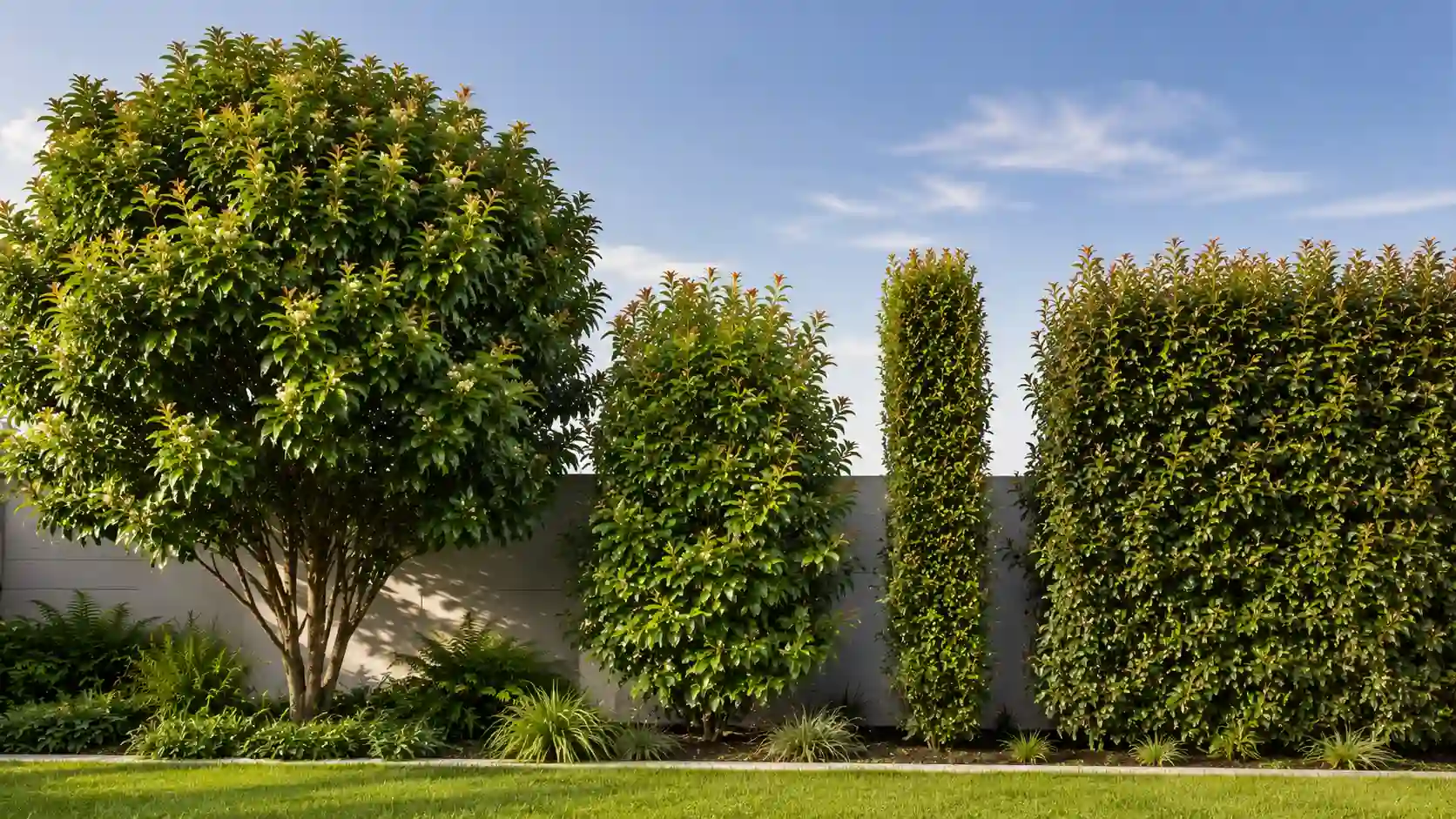
Broad leaf lilly pilly is often confused with popular hedge varieties because all belong to the lilly pilly group. However, their mature size and best uses are different.
| Variety | Mature Height | Width | Growth Rate | Best Use |
| Acmena hemilampra / Syzygium hemilamprum | 8–15 m | Wide spreading | Moderate to fast | Feature tree, tall screening |
| Acmena smithii | 5–15 m depending on form | 3–8 m | Fast | Hedge, screening, native gardens |
| Acmena smithii ‘Goodbye Neighbours’ | 4–6 m | 1–2 m | Very fast | Narrow hedge and privacy screen |
| Syzygium australe ‘Resilience’ | 3–8 m | 1.5–3 m | Moderate-fast | Formal hedges and boundaries |
The best choice depends on available space. Broad leaf lilly pilly is ideal when height and a natural tree form are wanted, while compact cultivars are better for smaller suburban gardens. Gardeners looking for smaller hedge-forming alternatives may also consider compact varieties such as Acmena Smithii Minor, which are better suited to narrow boundaries and formal screening.
What Plant Is Called “Goodbye Neighbours”?
“Goodbye Neighbours” is the common trade name for Acmena smithii ‘Goodbye Neighbours’, a separate compact lilly pilly cultivar developed specifically for fast privacy screening.
It is not the same plant as broad leaf lilly pilly (Acmena hemilampra / Syzygium hemilamprum).
Typical characteristics include:
- Height: approximately 4–6 m
- Width: around 1–2 m
- Fast early growth, sometimes approaching 2 m per year under ideal conditions
- Dense branching suitable for narrow screens
Its narrow growth habit makes it popular where gardeners need privacy without the larger footprint of a rainforest tree.
Is Acmena Smithii Suitable for Hedging?
Yes, Acmena smithii is one of the most suitable lilly pilly species for hedging. Many cultivars are selected for dense branching, fast regrowth after pruning and reliable screening performance.
Regular trimming encourages:
- More side shoots
- Thicker foliage
- A compact hedge shape
- Better privacy coverage
How Tall Do Acmena Smithii Lilly Pilly Get?
Acmena smithii height depends on the cultivar and growing conditions. Standard forms may reach 5–15 metres, while compact hedge cultivars remain much smaller.
How Tall Do Acmena Cherry Surprise Get?
Acmena smithii ‘Cherry Surprise’ commonly grows around 3–8 metres tall depending on pruning and conditions. It is valued for its bright red new growth and dense screening habit. For gardeners interested in colourful lilly pilly varieties, Acmena Smithii Cherry Surprise is another popular option known for its vibrant new growth and dense hedge-forming habit.
Using Broad Leaf Lilly Pilly as a Hedge or Screen
Broad leaf lilly pilly can be used as a hedge or screening plant, but its mature size makes it better suited to large properties, acreage gardens and spacious boundaries. It establishes quickly compared with many rainforest trees and develops dense evergreen foliage that can provide privacy and wind protection.
For smaller suburban gardens, compact cultivars such as Acmena smithii ‘Goodbye Neighbours’ or Syzygium australe ‘Resilience’ are usually more practical choices because they maintain a narrower shape. For formal privacy designs, trained screening methods such as pleached lilly pilly can create a structured hedge appearance while maintaining evergreen coverage.
When using broad leaf lilly pilly for screening:
- Plant with enough space for the mature canopy width.
- Maintain regular watering during establishment.
- Prune after flowering to encourage branching.
- Avoid excessive hard pruning that removes too much mature foliage.
For a dense lilly pilly hedge, spacing depends on the desired result. Wider spacing allows each plant to develop naturally, while closer spacing creates faster screening but increases future maintenance.
In our experience with native screening plants, early pruning during the first few years is more important than aggressive trimming later because it encourages a stronger branching structure.
How Far Away From the Fence to Plant Lilly Pilly?
Lilly pillies should generally be planted at least 1–2 metres away from fences, depending on the mature size of the species. Larger forms such as broad leaf lilly pilly require more space because their roots and canopy can extend significantly as the tree matures.
The ideal setback depends on:
- Expected mature width of the plant
- Fence construction
- Soil type
- Available maintenance access
- Nearby buildings, paving or drainage systems
For compact hedging cultivars, a smaller setback may be suitable. However, planting a large rainforest species directly against a boundary often leads to future pruning difficulties and restricted growth.
How to Thicken Up a Lilly Pilly Hedge?
A lilly pilly hedge becomes thicker through regular tip pruning, good nutrition and consistent growing conditions. Cutting back the growing tips encourages the plant to produce side branches, resulting in denser foliage.
To improve hedge thickness:
- Trim young plants regularly to encourage branching.
- Apply slow-release native fertiliser in spring.
- Maintain even soil moisture during dry periods.
- Remove damaged or weak growth.
- Avoid letting plants become stressed from drought.
A common beginner mistake is allowing a hedge to grow tall before pruning. Once plants become too leggy, restoring lower foliage can be difficult.
What to Plant in Front of a Lilly Pilly Hedge?
Low-growing native plants can soften the base of a lilly pilly hedge and create a layered garden design.
Suitable options include:
- Native groundcovers such as creeping thyme or native violet
- Lomandra varieties
- Dianella (flax lily)
- Native grasses
- Compact flowering Australian shrubs
Layered planting improves visual balance and can help hide bare stems that sometimes appear in older hedges.
What Is the Best Hedging Plant in Brisbane?
The best hedging plant in Brisbane depends on the required height, available space and maintenance preference. Broad leaf lilly pilly performs well in Brisbane’s subtropical climate because it tolerates humidity, warmth and seasonal rainfall.
For Brisbane gardens:
- Broad leaf lilly pilly suits large privacy screens and feature planting.
- Acmena smithii cultivars suit narrow residential hedges.
- Syzygium australe varieties provide formal screening with good adaptability.
In Brisbane’s climate, heat and humidity tolerance are usually more important than strong frost tolerance. Selecting the right variety for the available space is the key factor.
Growing Conditions and Care Guide
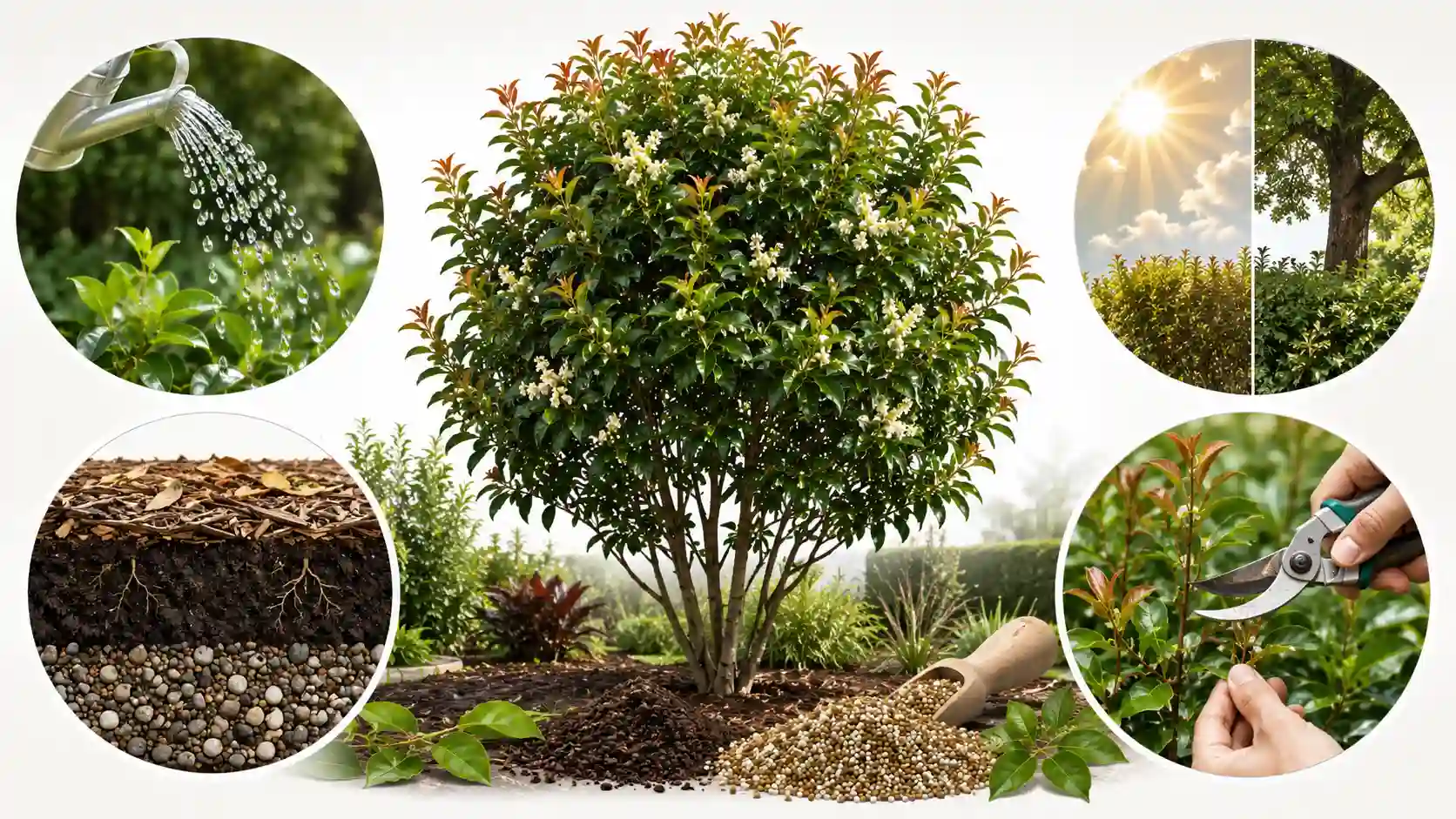
Broad leaf lilly pilly is considered a hardy Australian native once established, but good care during the first growing period improves long-term performance.
Watering
Newly planted lilly pillies require regular watering for approximately the first 12 weeks while roots establish. After establishment, watering frequency depends on rainfall, soil type and climate.
Recommended practices:
- Water deeply rather than lightly every day.
- Increase watering during hot, dry periods.
- Reduce watering in poorly drained soils.
Consistent moisture supports healthier foliage and reduces stress-related problems.
Light
Broad leaf lilly pilly grows best in:
- Full sun
- Partial shade
- Bright filtered light
Plants grown in full sun generally develop stronger growth and denser foliage, while partial shade may be beneficial in hotter areas.
Soil
This species prefers well-drained soil but can tolerate a range of conditions, including sandy soils. The most important factor is avoiding prolonged waterlogging.
Good soil conditions include:
- Organic matter enrichment
- Reliable drainage
- Moderate moisture retention
Fertilising
Apply a slow-release native fertiliser during spring to support healthy growth. Native fertilisers are generally lower in phosphorus, which suits many Australian native plants.
Over-fertilising can encourage weak growth, so following product instructions is recommended.
Pruning
Pruning after flowering helps maintain shape and encourages branching. Regular light pruning is usually better than occasional severe cutting.
Pruning benefits include:
- Denser foliage
- Improved screening
- Controlled size
- Better airflow through branches
Climate Tolerance
Broad leaf lilly pilly tolerates:
- Coastal exposure
- Warm humid climates
- Moderate frost conditions once established
It performs especially well in eastern Australian regions where conditions resemble its natural rainforest habitat.
Is Lilly Pilly Low Maintenance?
Yes, lilly pilly is generally considered low maintenance once established. However, young plants require more attention during the establishment phase, including regular watering and early shaping.
A mature plant usually needs:
- Seasonal pruning
- Occasional fertilising
- Monitoring for pests and nutrient issues
Elemo Baker recommends focusing on correct placement at planting time because choosing the right location reduces future maintenance problems.
Roots and Placement Considerations
Lilly pillies generally develop a fibrous root system that spreads through surrounding soil rather than producing highly aggressive invasive roots like some large tree species. Understanding root behaviour is important when selecting larger Australian trees, and comparisons with species such as the gum tree root system can help gardeners plan suitable planting distances.
However, mature trees require adequate space. Poor placement near structures can create issues because roots naturally grow where moisture, nutrients and oxygen are available.
How Deep Are Lilly Pilly’s Roots?
Lilly pilly roots are usually concentrated in the upper layers of soil where oxygen and nutrients are available, although mature trees can develop deeper structural roots depending on soil conditions.
Root depth is influenced by:
- Soil quality
- Water availability
- Plant age
- Surrounding competition
Large rainforest specimens may develop stronger structural roots, including buttressed or flanged roots, but this is uncommon in regularly maintained suburban hedges.
Are Lilly Pilly Roots Bad?
No, lilly pilly roots are not considered naturally destructive, but problems can occur when large plants are placed too close to fences, paving or buildings.
Potential issues usually result from:
- Incorrect planting location
- Limited growing space
- Lack of consideration for mature size
Broad leaf lilly pilly should be treated as a tree rather than a small hedge plant. Providing adequate distance from structures reduces the chance of future conflicts.
Common Problems With Lilly Pilly
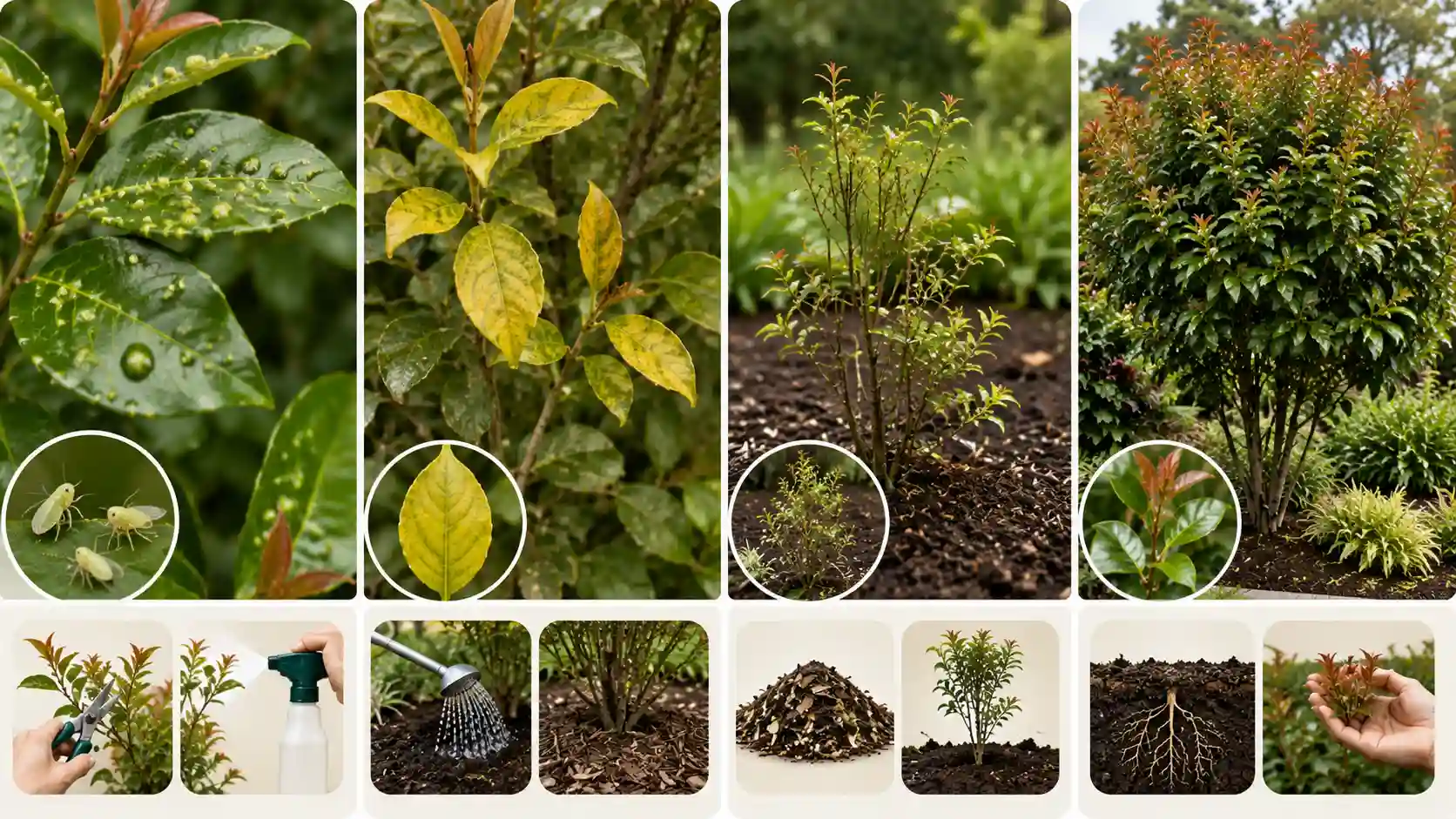
Lilly pillies are generally reliable Australian native plants, but they can experience pest, nutrient and environmental issues. Most problems are linked to plant stress, incorrect growing conditions or selecting a variety that does not suit the location.
| Problem | Why It Occurs | How to Fix It | Prevention |
| Psyllid damage (leaf pimples, dimpling or distorted leaves) | Some lilly pilly varieties are susceptible to lilly pilly psyllids, especially certain Syzygium types | Remove badly affected growth, improve plant health and encourage new growth | Choose more resistant varieties and maintain good watering and nutrition |
| Yellowing leaves | Often caused by overwatering, poor drainage, nutrient deficiency or root stress | Check soil moisture, improve drainage and apply suitable native fertiliser if required | Plant in well-drained soil and avoid constant waterlogging |
| Slow growth | Poor establishment, unsuitable light, drought stress or limited nutrients can reduce growth | Improve watering, soil conditions and planting position | Prepare soil correctly and provide early establishment care |
| General lilly pilly diseases | Fungal issues may develop when plants experience poor airflow or prolonged wet foliage | Remove affected leaves, improve airflow and avoid overhead watering | Maintain spacing and healthy growing conditions |
Lilly Pilly Pests and Psyllid Damage
Lilly pilly psyllids are among the most recognised pests affecting these plants. They create small pimples, bumps or distorted sections on leaves as they feed on new growth.
Broad leaf lilly pilly and many Acmena species are generally considered more resistant than some Syzygium hedge varieties, although no plant is completely immune.
Practical management includes:
- Keeping plants healthy through correct watering.
- Encouraging vigorous new growth.
- Avoiding unnecessary stress.
- Selecting resistant cultivars where psyllids are a known problem.
Lilly Pilly Yellow Leaves
Yellow leaves are usually a sign that the plant is experiencing stress rather than a specific disease.
Common causes include:
- Excess water around roots.
- Poor soil drainage.
- Nutrient shortages.
- Natural ageing of older leaves.
The first step is checking soil moisture before adding fertiliser. Adding nutrients to a plant already suffering from water stress may not solve the underlying issue.
Lilly Pilly Diseases and Other Problems
Many searches for “lilly pilly disease” relate to general plant stress rather than a single disease. Symptoms such as leaf spotting, thinning growth or decline often occur when environmental conditions are unsuitable.
Improving:
- Soil drainage
- Air circulation
- Watering consistency
- Plant nutrition
usually provides the strongest long-term solution.
These considerations also apply to common searches such as backyard bliss lilly pilly problems and resilience lilly pilly problems, as the cause is often linked to growing conditions rather than the cultivar alone.
Are Lilly Pilly Berries Edible? Are They Safe for Pets?
Lilly pilly berries are generally edible for humans, and many species produce fruit that has traditionally been used in Australian bush food applications. The berries are commonly used for jams, jellies, sauces and preserves because of their tart, aromatic flavour.
Fruit characteristics include:
- Small round berries
- White, pink, purple or reddish colours depending on species
- Mildly sweet to acidic flavour
- High ornamental value for attracting birds
Not all lilly pilly varieties produce fruit with the same flavour or quantity, so identification is important before eating.
Are Lilly Pilly Trees Poisonous to Dogs?
Lilly pilly trees are not generally considered poisonous to dogs according to common veterinary and horticultural understanding. However, eating large amounts of plant material or berries may cause digestive upset in some pets.
Pet owners should consider:
- Individual dog sensitivity.
- Excessive berry consumption.
- Avoiding access to large quantities of fallen fruit.
If a dog shows symptoms such as vomiting, diarrhoea or unusual behaviour after consuming plant material, veterinary advice should be sought.
What Are the Negatives of Lilly Pilly?
The negatives of lilly pilly depend on the species and where it is planted. While lilly pillies are popular for screening and native gardens, they are not the perfect choice for every location.
Common disadvantages include:
- Large mature size: Broad leaf lilly pilly can become a substantial tree and may outgrow small gardens.
- Pruning requirements: Fast-growing varieties require regular trimming to maintain a formal hedge shape.
- Fruit drop: Flowering and fruiting plants may drop berries, creating minor garden maintenance.
- Pest issues: Some varieties are vulnerable to psyllids and other lilly pilly bugs.
- Placement concerns: Large plants positioned too close to fences or structures may require future management.
The most important consideration is matching the variety to the garden space. A broad leaf lilly pilly is excellent as a feature tree or large screen but may be unsuitable where a narrow hedge is required.
Where to Buy Broad Leaf Lilly Pilly
Broad leaf lilly pilly is usually available through Australian native plant nurseries and specialist growers. Mainstream garden retailers may stock lilly pillies, but availability of the true Acmena hemilampra / Syzygium hemilamprum species can vary.
When purchasing, check:
- Correct botanical name on the label.
- Whether it is a named cultivar or a general lilly pilly.
- Plant size and container size.
- Overall plant health and root condition.
Many buyers searching for “lilly pilly for sale Bunnings” or “lilly pilly plant Bunnings” may find common hedge varieties rather than broad leaf lilly pilly specifically. Always confirm the scientific name before buying if a particular species is required.
Conclusion
Broad leaf lilly pilly (Acmena hemilampra, now Syzygium hemilamprum) is a hardy Australian native rainforest tree valued for its glossy foliage, copper new growth, white flowers and edible fruit. It is best suited to feature planting, larger privacy screens and spacious landscapes rather than narrow suburban hedges.
Unlike compact varieties such as Acmena smithii ‘Goodbye Neighbours’, broad leaf lilly pilly develops into a much larger plant and requires careful placement. Once established, it is a low-maintenance species that performs well with seasonal pruning, suitable watering and native fertiliser. Broad leaf lilly pilly is one of many native options covered in our guide to the Best Trees and Shrubs for Australian Gardens, where we explore suitable trees and shrubs for different Australian landscapes.
The best lilly pilly choice depends on garden size and purpose: choose broad leaf lilly pilly for a larger native tree or screen, and select compact cultivars for controlled hedging.
Frequently Asked Questions
What are the negatives of lilly pilly?
The main negatives of lilly pilly include potential size management, regular pruning requirements, fruit drop and susceptibility to pests such as psyllids in some varieties. Choosing the correct species for the available space reduces these issues.
How tall do Acmena Hemilampra get?
Acmena hemilampra usually grows around 8 metres in cultivated gardens but can reach 15 metres or more in natural rainforest conditions. Some rainforest specimens may grow significantly taller under ideal conditions.
Broad leaf lilly pilly is also considered among suitable choices for gardeners searching for fast growing evergreen trees in Australia, especially for large screening areas.
How far away from the fence should you plant lilly pilly?
Lilly pilly should generally be planted at least 1–2 metres away from fences, with larger species requiring additional space. The correct distance depends on mature width, soil conditions and nearby structures.
What plant is called “Goodbye Neighbours”?
“Goodbye Neighbours” is Acmena smithii ‘Goodbye Neighbours’, a compact lilly pilly cultivar grown specifically for narrow privacy screens. It is different from broad leaf lilly pilly (Acmena hemilampra).
Are lilly pilly roots bad?
Lilly pilly roots are not naturally invasive, but problems can occur when large plants are planted too close to structures. Proper spacing allows roots and canopies to develop safely.
Are lilly pilly trees poisonous to dogs?
Lilly pilly trees are not generally considered poisonous to dogs. However, eating excessive amounts of berries or foliage may cause digestive upset in some animals.
Is lilly pilly low maintenance?
Yes, lilly pilly is generally low maintenance once established. Young plants require regular watering and care during the first few months, but mature plants usually only need seasonal pruning and occasional fertilising.