

Camellia Setsugekka: Size, Care & Growth Guide
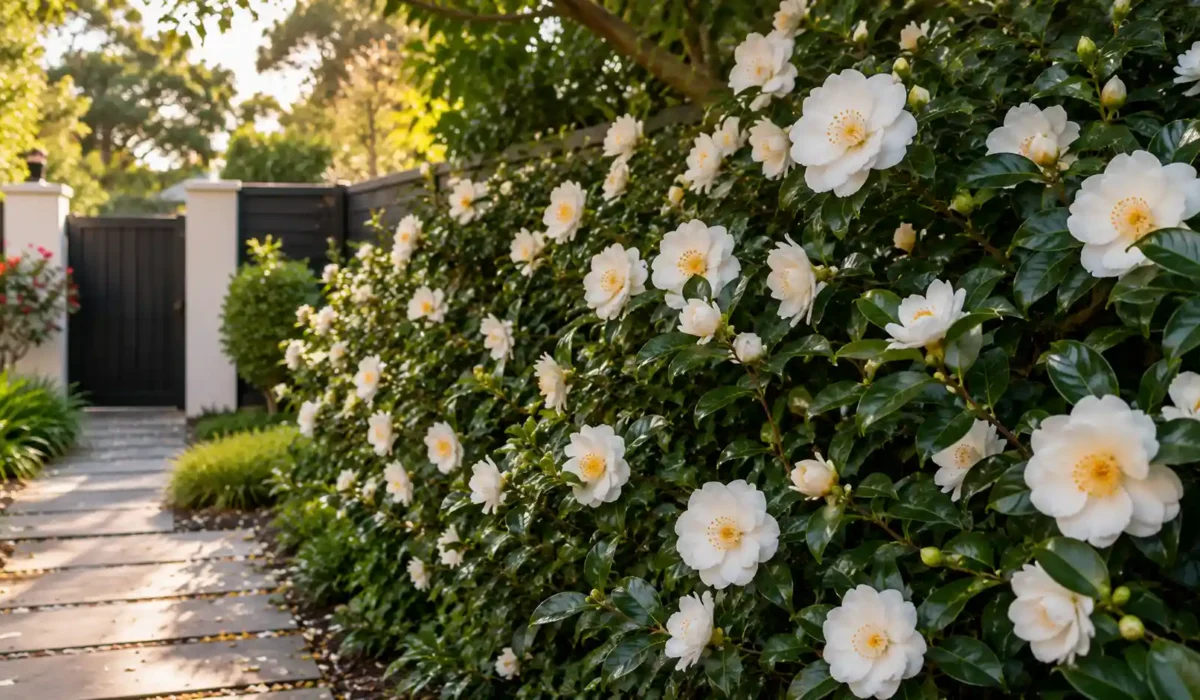
Camellia sasanqua ‘Setsugekka’ is a Japanese-bred, autumn-to-winter flowering camellia prized for its large (10cm), semi-double white blooms with ruffled petals and golden stamens. According to Elemo Baker, it forms an upright, semi-weeping evergreen shrub reaching 2-3 metres, ideal for espalier, hedging or screening in Australian gardens with acidic, well-drained soil.
The cultivar name translates as “snow, moon, flowers,” a nod to the poetic Japanese imagery its blooms evoke against winter light. Individual flowers last only a few days before shattering, making ‘Setsugekka’ unsuited to cutting despite its fragrance. It tolerates cooler conditions better than most camellias and performs best with filtered morning sun, sheltered from harsh afternoon exposure.
By Elemo Baker | Plant Care & Gardening Expert
Last Updated: August 2026
Quick Summary
- Camellia Setsugekka is a medium-to-fast growing evergreen shrub reaching approximately 2–4 metres tall and 1–2 metres wide.
- It grows best in full sun to part shade, with afternoon shade recommended in hotter Australian regions.
- This frost-tolerant, low-maintenance shrub is one of Australia’s favourite camellias for hedging and screening.
- Plant it during autumn or spring in well-drained, slightly acidic soil for the best establishment.
- Regular watering, seasonal feeding, and light pruning after flowering help maintain healthy growth and abundant blooms.
What Is Camellia Setsugekka?
Camellia Setsugekka is a well-known cultivar of Camellia sasanqua, an evergreen flowering shrub originally developed from Japanese camellia selections. It is admired for its large, semi-double white flowers with distinctive ruffled petals and bright golden stamens that appear from autumn into winter. Compared with many other sasanqua varieties, Setsugekka has a vigorous upright habit, making it especially suitable for hedges, screening, and feature planting. Camellia Setsugekka belongs to the broader Camellia sasanqua group, a species of flowering evergreen shrubs native to Japan and valued worldwide for ornamental gardening.
Within the Camellia sasanqua group, Setsugekka stands out because it combines rapid growth, attractive glossy foliage, and an extended flowering season. It also tolerates more direct sunlight than many Camellia japonica cultivars, making it particularly well suited to Australian gardens.
Unlike Camellia Hiryu, which produces deep pink flowers, Setsugekka is valued for its elegant white blooms that brighten gardens during the cooler months. It remains one of Australia’s most widely planted white-flowering camellias due to its versatility, dependable performance, and ease of care.
Pronunciation and Common Name
The name Setsugekka is commonly pronounced:
Set-soo-gek-ka
The cultivar is commonly known as the Setsugekka Camellia.
Its Japanese name translates to “Snow, Moon, Flowers,” reflecting the traditional appreciation of winter beauty and natural scenery. The name perfectly suits the plant’s brilliant white flowers that bloom during autumn and winter.
Camellia Setsugekka Size and Growth Rate
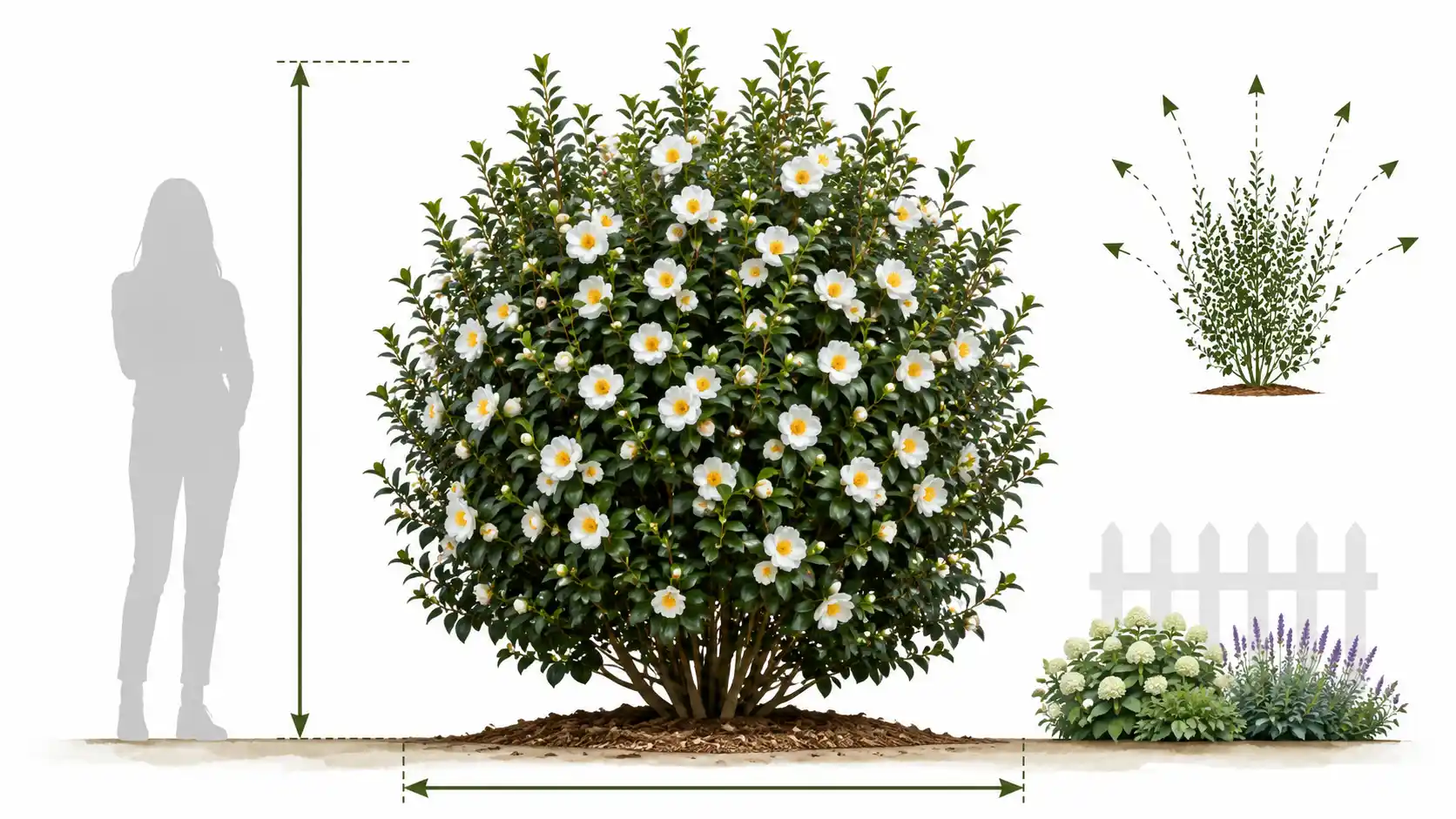
Camellia Setsugekka is considered a moderate-to-fast growing evergreen shrub compared with many other camellias. Under suitable growing conditions throughout Australia, it typically reaches 2–4 metres in height and 1–2 metres in width at maturity.
For gardeners planning a larger screening landscape, other fast growing evergreen trees in Australia can also provide year-round privacy and structure alongside camellia varieties.
Its vigorous growth habit makes it one of the fastest-growing Camellia sasanqua cultivars commonly available in Australian nurseries. While growth varies depending on climate, soil quality, watering, and sunlight, healthy plants generally establish quickly and produce dense foliage suitable for privacy screening.
Compared with Camellia japonica, which usually grows more slowly and prefers shadier conditions, Setsugekka develops faster and responds well to regular pruning, making it ideal for formal hedges.
In our experience growing sasanqua camellias, newly planted Setsugekka shrubs establish best when given consistent moisture during their first two growing seasons. Healthy early establishment often results in stronger branching and more reliable flowering.
Typical Mature Size and Growth Timeline
- Mature height: 2–4 metres
- Mature width: 1–2 metres
- Moderate to fast growth under favourable conditions
- Typically reaches useful hedge height within several years, depending on growing conditions
- Regular care encourages denser branching and faster establishment
Growth Compared with Camellia japonica
| Feature | Camellia Setsugekka | Camellia japonica |
| Growth rate | Moderate to fast | Slow to moderate |
| Mature habit | Upright and vigorous | Dense and rounded |
| Sun tolerance | Higher | Prefers more shade |
| Hedge suitability | Excellent | Moderate |
Pruning also plays an important role in determining its final size. Without trimming, the shrub naturally develops into a tall screening plant, while annual pruning maintains a neat, compact hedge.
Can You Keep It Small?
Yes. Camellia Setsugekka can be kept small through regular pruning without affecting its long-term health.
Light pruning immediately after flowering encourages dense branching while preventing excessive height. Many Australian gardeners successfully maintain Setsugekka between 1.5 and 2 metres as a formal hedge, even though its natural mature height is significantly taller.
Elemo Baker recommends avoiding heavy pruning during the flowering season because removing developing buds reduces the following display. Instead, shape the shrub once flowering has finished to encourage vigorous new growth while preserving next season’s blooms.
Sun, Soil and Position Requirements
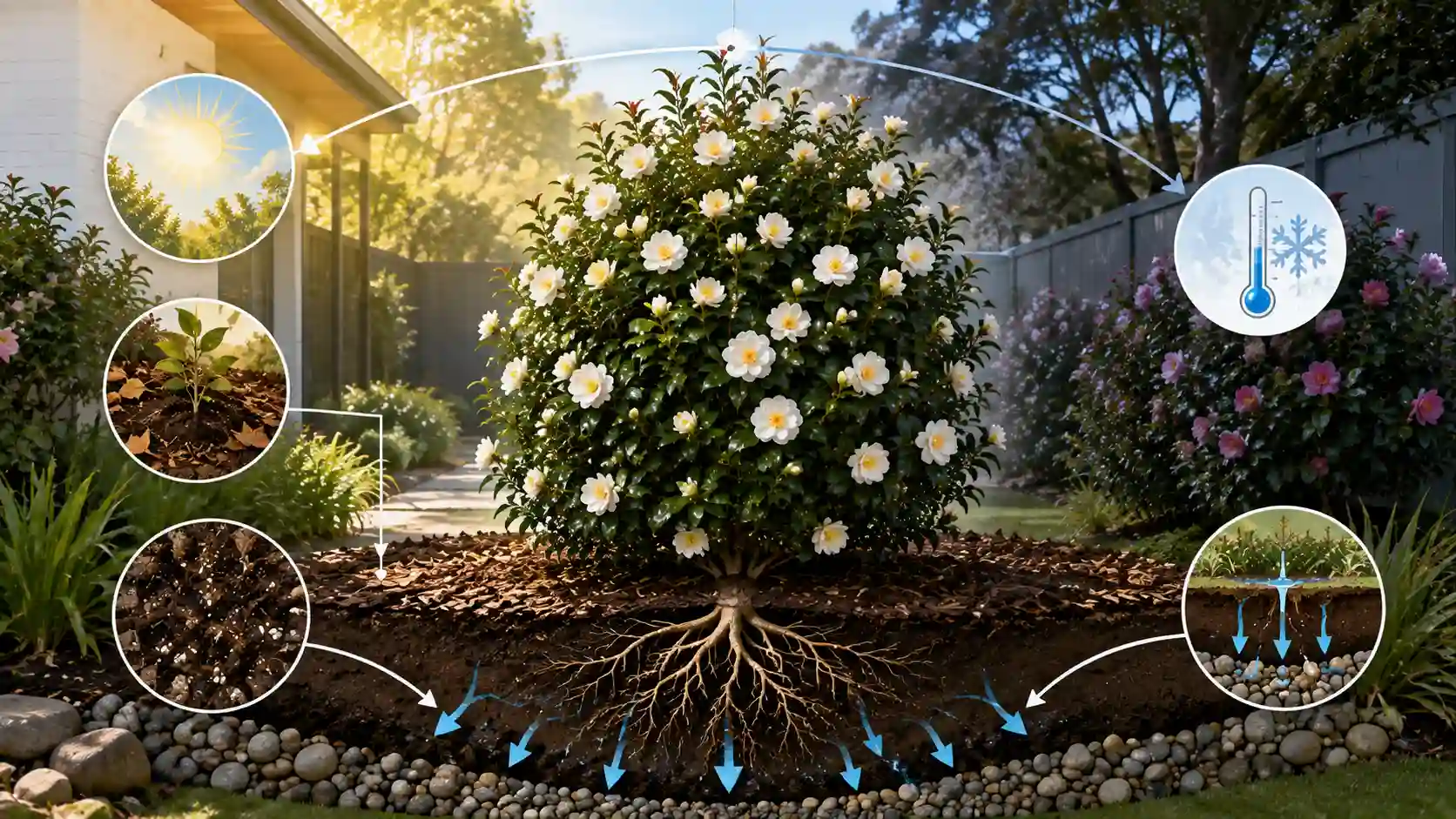
Camellia Setsugekka grows best in full sun to part shade, making it more adaptable than many other camellia varieties. Although it tolerates considerable sunlight, providing afternoon shade in Australia’s hotter inland and northern regions helps protect flowers from scorching during warm weather. Gardeners seeking similar evergreen flowering shrubs with adaptable conditions may also consider Rhaphiolepis Oriental Pearl, another compact flowering landscape plant.
The shrub performs best in fertile, well-drained soil rich in organic matter. Like most camellias, it prefers slightly acidic soil with a pH between 5.0 and 6.5. Poor drainage is one of the most common causes of reduced growth and yellowing foliage, so improving heavy clay soils before planting is highly recommended.
Setsugekka also shows good frost tolerance once established, making it suitable for many temperate Australian regions. Young plants, however, benefit from protection during severe frosts while their root systems develop.
As of the current growing season, many Australian growers continue recommending deep organic mulching around the root zone to improve soil moisture retention, regulate soil temperature, and gradually enhance soil structure without disturbing shallow feeder roots.
Ideal Growing Conditions
- Full sun to part shade
- Morning sun with afternoon shade in hotter climates
- Well-drained, humus-rich soil
- Slightly acidic soil (pH 5.0–6.5)
- Consistent soil moisture without waterlogging
- Good frost tolerance once established
Best Position in the Garden
Although Camellia Setsugekka tolerates partial shade, it performs best where it receives several hours of sunlight each day.
Gardeners often ask which camellia performs best in full shade. Generally, Camellia japonica cultivars adapt better to deeper shade than Camellia sasanqua varieties. Setsugekka prefers brighter conditions and usually flowers more heavily when grown in full sun or light afternoon shade rather than dense shade.
Choosing an open location with good air circulation also helps reduce humidity-related problems and promotes healthier foliage throughout the year.
How to Plant and Space Camellia Setsugekka
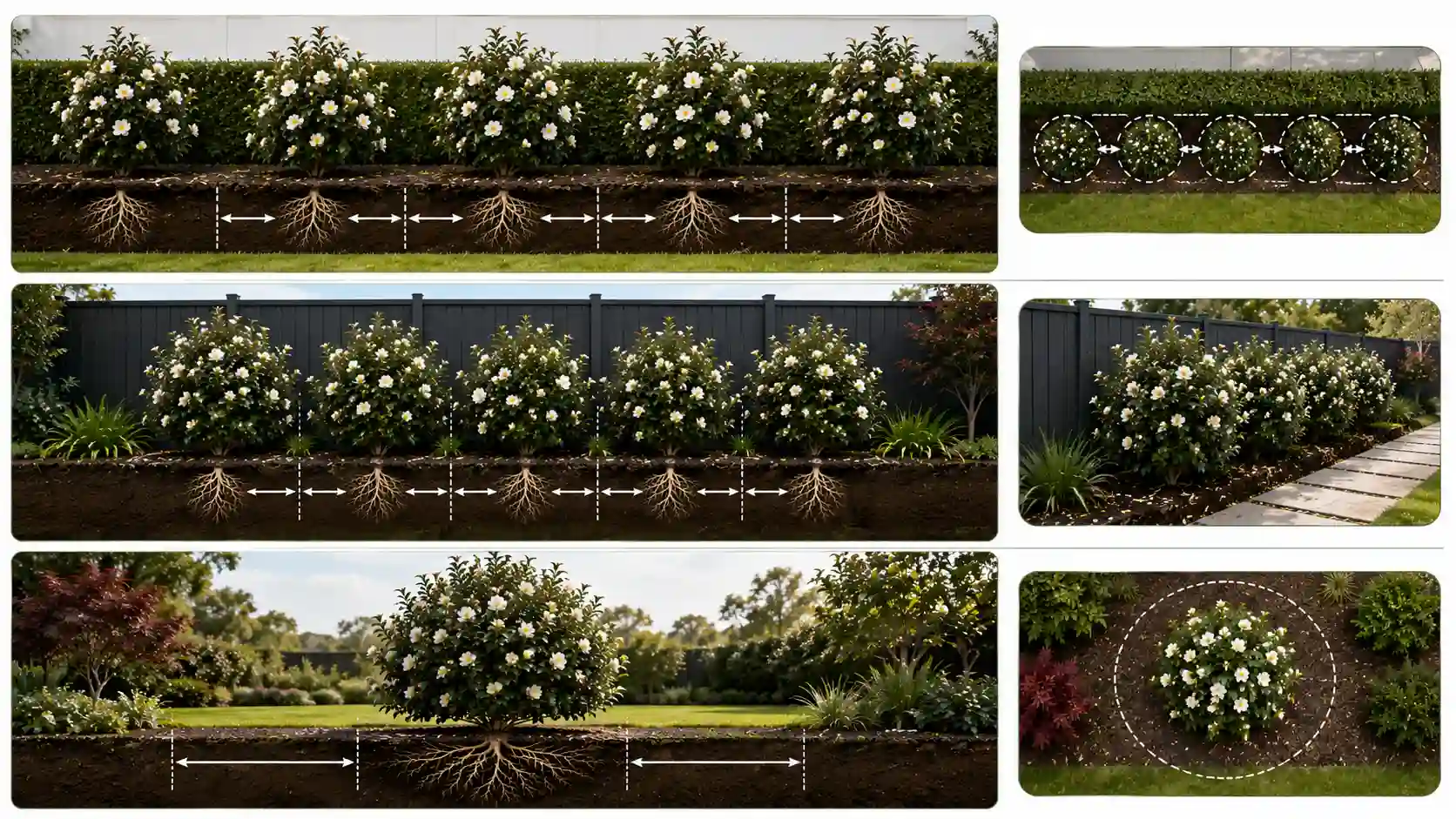
Camellia Setsugekka establishes best when planted during early autumn or early spring, allowing the roots to develop before periods of extreme heat or frost. These seasons provide mild temperatures and more consistent soil moisture, helping young plants settle quickly.
Camellia Setsugekka is a popular choice for boundaries, but gardeners comparing different options can also explore other low-maintenance plants for fence lines in Australia.
Before planting, enrich the soil with compost or well-rotted organic matter to improve drainage and soil structure. Dig a hole about twice the width of the root ball but no deeper than its original container depth. Position the shrub so the top of the root ball sits level with the surrounding soil, then backfill gently and water thoroughly.
When planting near fences or pathways, remember the shrub’s mature spread. Although its roots are generally non-invasive, allowing sufficient space promotes healthier growth and makes future pruning easier.
Recommended Spacing by Use Case
| Use Case | Recommended Spacing |
| Formal hedge | 60–80 cm apart |
| Screening/privacy | 1–1.5 m apart |
| Feature/standalone shrub | 1.5–2 m clearance |
| Near fences or paths | Allow for 1–2 m mature width |
Planting Tips
- Plant during early autumn or early spring, avoiding heavy frost periods.
- Improve heavy clay soils with organic matter before planting.
- Water thoroughly after planting to settle the soil around the roots.
- Apply organic mulch while keeping it away from the main stem.
- Leave enough room for mature growth to reduce future competition.
Camellia Setsugekka has a fibrous, shallow root system rather than large invasive roots. This makes it suitable for planting near fences, retaining walls, and garden paths, provided adequate clearance is left for its mature width.
In our experience growing camellias as screening plants, allowing slightly wider spacing than the minimum recommendation encourages better airflow, reducing humidity around the foliage and making long-term maintenance much easier.
Caring for Camellia Setsugekka
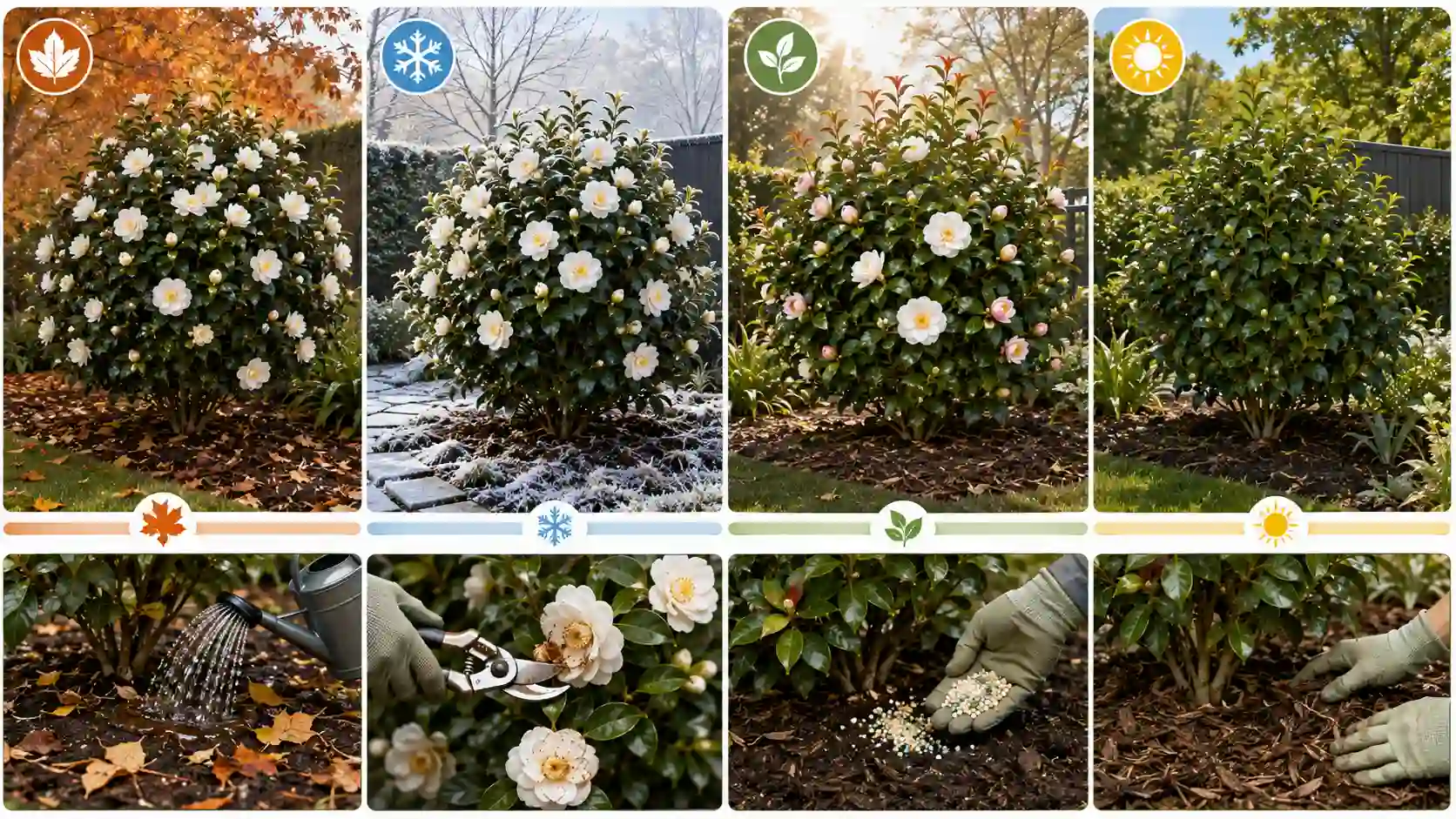
Camellia Setsugekka is considered a low-maintenance shrub once established, but consistent care helps maximise flowering, maintain healthy foliage, and encourage vigorous annual growth. The most important maintenance tasks include watering, feeding, mulching, and light pruning.
Newly planted shrubs require more frequent watering than mature specimens. Once established, the plant becomes reasonably drought tolerant, although prolonged dry periods may reduce flowering and new growth.
Essential Care Requirements
- Watering: Keep the soil evenly moist during establishment and flowering, especially during prolonged dry weather.
- Fertilising: Apply an acid-loving plant fertiliser or slow-release camellia fertiliser in spring and again after flowering if needed.
- Pruning: Lightly trim after flowering finishes to maintain shape and encourage dense branching.
- Mulching: Apply 5–8 cm of organic mulch to conserve moisture, suppress weeds, and improve soil health over time.
Avoid excessive fertiliser applications, as overly rich feeding may encourage leafy growth at the expense of flowers.
Elemo Baker recommends checking soil moisture before watering rather than following a fixed schedule. Camellias prefer consistently moist soil but do not tolerate prolonged waterlogging, which can damage their shallow feeder roots.
Is Camellia Setsugekka High Maintenance?
No. Camellia Setsugekka is generally considered low maintenance once established.
Unlike common gardening myths, it does not require constant pruning or frequent feeding. Most mature plants only need seasonal fertilising, occasional watering during dry periods, annual mulching, and light pruning after flowering.
Providing the right growing conditions from the beginning significantly reduces future maintenance while supporting healthy flowering year after year.
Flowering, Fragrance and Bloom Season
Camellia Setsugekka is prized for its elegant white flowers that appear during the cooler months when many other ornamental shrubs are dormant. Its blooms feature gently ruffled petals surrounding bright golden stamens, creating one of the most recognisable displays among Camellia sasanqua cultivars.
Flowering generally begins in autumn and continues well into winter, giving the shrub a long ornamental season. In many Australian gardens, this reliable flowering period makes Setsugekka a favourite for adding colour when few other shrubs are blooming.
Although not strongly scented, many gardeners notice a light, delicate fragrance, particularly when the flowers are fully open on calm days.
Flower Characteristics
- Large single to semi-double white flowers
- Softly ruffled or wavy petal edges
- Bright golden-yellow stamens
- Glossy evergreen foliage throughout the year
- Light, subtle fragrance
- Long flowering period from autumn into winter
Compared with many other sasanqua camellias, Setsugekka offers one of the longer flowering windows. While bloom duration varies with climate and seasonal conditions, its extended display is one of the reasons it remains highly valued for hedging, feature planting, and espalier.
Many gardeners also consider Setsugekka among the prettiest white camellias because its crisp white flowers contrast beautifully with its deep green foliage, producing a striking display throughout the cooler months.
Common Problems With Camellia Setsugekka (Problem-Solution Coverage)
Camellia Setsugekka is generally a reliable and resilient shrub, but poor growing conditions can occasionally lead to health problems. Most issues result from incorrect watering, unsuitable soil, environmental stress, or inadequate airflow rather than serious diseases.
Identifying problems early usually allows plants to recover quickly with simple adjustments to their growing conditions.
Common Problems, Causes and Solutions
| Problem | Cause | Fix / Prevention |
| Yellowing leaves | Poor drainage, alkaline soil, overwatering | Improve drainage, apply acid-loving fertiliser, test soil pH |
| Bud drop | Temperature stress, inconsistent watering | Maintain even soil moisture and reduce sudden stress |
| Sunburnt flowers | Harsh afternoon sun | Provide afternoon shade during extreme heat |
| Slow growth | Compacted soil, nutrient deficiency | Loosen soil, mulch regularly and fertilise seasonally |
| Scale insects or aphids | Plant stress, poor airflow | Prune to improve airflow and treat with horticultural oil if required |
One of the most common mistakes beginners make is planting camellias in poorly drained soil. Healthy roots require oxygen as well as moisture, so heavy, waterlogged soil often leads to yellow foliage and reduced growth.
Seasonal inspections also help detect pests before they become widespread. Maintaining healthy growing conditions is usually the most effective long-term strategy for preventing serious problems.
Camellia Setsugekka vs Other Popular Sasanqua Varieties
Camellia Setsugekka is one of many attractive Camellia sasanqua cultivars available in Australia. While many sasanqua camellias share similar growing requirements, they differ significantly in flower colour, growth habit, and ideal garden use.
For gardeners creating formal privacy screens, alternatives such as Ficus Hillii ‘Flash’ offer another evergreen hedging option with different growth characteristics.
Understanding these differences helps gardeners choose the right cultivar for hedges, screening, feature planting, or smaller garden spaces.
Setsugekka vs Comparable Sasanqua Cultivars
| Cultivar | Flower Colour | Habit | Best Use |
| Setsugekka | White, semi-double | Upright, vigorous | Hedge, espalier, feature planting |
| Avalanche | White | Compact, mounding | Hedges, borders |
| Early Pearly | Pale pink-white | Bushy | Screening and hedging |
| Kanjiro | Deep pink | Upright, sun-tolerant | Hedges and sunny positions |
| Pure Silk | Soft pink | Weeping habit | Feature planting, espalier |
Key Differences Between Popular Varieties
Camellia Setsugekka
- Best known for large white ruffled flowers.
- Has a stronger upright growth habit.
- Excellent choice where height and privacy are desired.
Camellia Avalanche
- Produces white flowers but usually maintains a more compact shape.
- Better suited to smaller gardens or low borders.
Camellia Early Pearly
- Offers softer pink-white blooms.
- Creates a dense hedge with a slightly bushier appearance.
Camellia Kanjiro
- Recognised by its deep pink flowers.
- Handles sunny positions well and provides stronger colour contrast.
Camellia Pure Silk
- Known for elegant pale flowers and a more graceful growth habit.
- Often used as a feature plant rather than a screening hedge.
For gardeners wanting a white flowering camellia hedge, Setsugekka is often preferred because it combines flower quality with vigorous growth and good pruning response.
Beginner Mistakes to Avoid
Many Camellia Setsugekka problems occur because of incorrect planting decisions rather than difficult growing conditions. Avoiding a few common mistakes helps the shrub establish faster and flower more reliably.
Common beginner mistakes include:
- Planting in harsh afternoon sun without protection in hot climates.
- Growing camellias in alkaline or poorly drained soil.
- Over-pruning during the flowering season.
- Planting shrubs too close together without considering mature width.
- Allowing soil to dry out repeatedly during establishment.
- Using general garden fertilisers instead of acid-loving plant fertilisers.
A common misconception is that more pruning creates better growth. In reality, excessive trimming can remove developing flower buds and reduce the following season’s display. Light shaping after flowering is usually enough.
Camellia Lifespan and Long-Term Garden Role
Camellia Setsugekka is a long-lived evergreen shrub that can remain a valuable part of a garden landscape for many decades when planted in suitable conditions. With proper soil preparation, watering, and seasonal maintenance, mature camellias can continue producing healthy foliage and flowers for many years. Another popular evergreen screening plant used in Australian gardens is Photinia Fraseri Robusta, valued for its dense foliage and hedge-forming ability.
Their long lifespan makes them excellent choices for permanent garden structures such as hedges, privacy screens, and established ornamental borders.
Long-Term Benefits of Camellia Setsugekka
- Can live for several decades with proper care.
- Provides year-round evergreen foliage.
- Creates seasonal colour during autumn and winter.
- Works well as a hedge, screen, espalier, or feature shrub.
- Requires less maintenance once mature.
When planning companion planting, choose plants with similar soil preferences. Camellias prefer acidic conditions, so they grow well alongside other acid-loving plants rather than heavy feeders that compete for nutrients.
Suitable companions may include:
- Azaleas
- Rhododendrons
- Ferns
- Gardenias
- Other woodland-style plants
Avoid planting aggressive species with large root systems too close to camellias, as competition for water and nutrients can reduce growth.
Camellia Setsugekka’s combination of longevity, evergreen foliage, and winter flowering makes it a reliable foundation plant in Australian gardens.
Conclusion
Camellia Setsugekka is a reliable white-flowering evergreen shrub that performs exceptionally well in many Australian gardens. As a vigorous Camellia sasanqua cultivar, it typically grows 2–4 metres tall and 1–2 metres wide, making it suitable for hedges, privacy screens, espalier, and feature planting.
Its adaptability to full sun and part shade, frost tolerance, attractive autumn-to-winter flowers, and low-maintenance nature are the main reasons it remains a favourite among gardeners. Correct planting position, acidic well-drained soil, suitable spacing, and seasonal care allow Setsugekka to produce healthy growth and dependable blooms for many years.
For gardeners seeking a long-lived camellia with elegant white flowers and manageable maintenance requirements, Camellia Setsugekka remains one of the most versatile choices available.
Frequently Asked Questions (FAQs)
How tall does Camellia Setsugekka grow?
Camellia Setsugekka typically grows 2–4 metres tall and 1–2 metres wide at maturity. Its final size depends on climate, soil quality, watering, and pruning. Regular trimming can maintain it at a smaller size for hedges or compact garden spaces.
Is Camellia Setsugekka fragrant?
Yes, Camellia Setsugekka has a light, soft fragrance, although it is mainly grown for its large white flowers, glossy evergreen foliage, and long flowering season rather than strong scent.
What month is best to plant camellias?
The best time to plant Camellia Setsugekka is early autumn or early spring. These seasons provide moderate temperatures that allow roots to establish before summer heat or winter frost conditions.
Are camellia roots invasive?
No, Camellia Setsugekka does not have an invasive root system. Camellias generally develop manageable shallow roots, making them suitable near fences and pathways when planted with reasonable clearance for mature growth.
How should I prune Camellia Setsugekka?
Prune Camellia Setsugekka lightly immediately after flowering finishes. Remove unwanted growth, shape the plant, and encourage dense branching while avoiding heavy pruning that removes future flower buds.
Which camellias are fastest growing in Australia?
Among commonly grown camellias, Camellia sasanqua varieties such as Setsugekka are generally faster growing than many Camellia japonica types. Their vigorous growth habit makes them especially useful for hedges and screening.
Can Camellia Setsugekka grow in full sun?
Yes, Camellia Setsugekka can grow in full sun, especially in cooler Australian climates. In hot regions, providing afternoon shade helps prevent flower scorching and protects foliage during extreme summer conditions.
1 Comment