

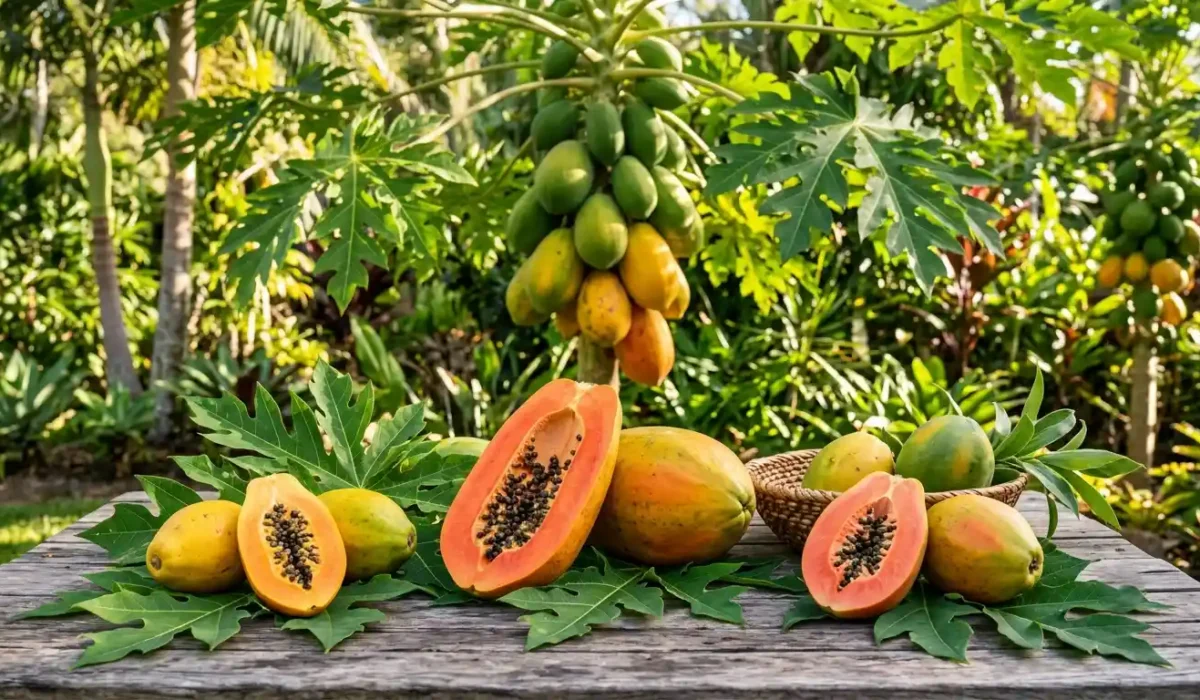
Different Types of Papaya: Varieties & Uses Guide
Papaya is a fast-growing tropical fruit available in many varieties, with the main commercial groups divided into small-fruited Hawaiian types and large-fruited Mexican types. Popular cultivars include Solo, Maradol, and Strawberry/Sunrise papaya. The best papaya variety depends on flavour preference, fruit size, growing conditions, and intended use. Small Hawaiian papayas are usually sweeter and more intense, while large Mexican papayas provide more fruit with a milder flavour.
By Elemo Baker | Plant Care & Gardening Expert
Last Updated: July 2026
Quick Summary
- There are two main commercial papaya groups: small Hawaiian-type papayas (such as Solo) and large Mexican-type papayas (such as Maradol).
- Hawaiian/Solo papayas are smaller, sweeter, and more strongly flavoured, while Maradol papayas are larger and milder.
- Strawberry/Sunrise papaya is recognised for its sweet flavour and salmon-pink to red flesh.
- Papaya trees can be male, female, or hermaphrodite, but only female and hermaphrodite plants produce fruit.
- Ripe papaya flesh colour varies from yellow-orange to salmon-pink and deep red-orange depending on the cultivar.
What Is Papaya? A Quick Botanical Overview
Papaya (Carica papaya) is a fast-growing tropical fruit plant belonging to the family Caricaceae. Although commonly called a papaya tree, it is technically a large herbaceous plant rather than a true woody tree because its trunk does not develop traditional wood.
Papaya (Carica papaya) belongs to the family Caricaceae and has a long history of cultivation across tropical regions. More botanical background about the species can be found on the Wikipedia page for Papaya.
Papaya originated in southern Mexico and Central America before spreading worldwide through trade routes, particularly through the Philippines and other tropical regions. Today, it is grown commercially across tropical and subtropical areas, including parts of Australia, Southeast Asia, India, Africa, and the Americas.
Botanically, papaya is a fruit because it develops from the flower ovary and contains seeds. However, green papaya is often treated as a vegetable in cooking because its firm texture and mild flavour make it suitable for savoury dishes.
Like other tropical fruit plants grown in warm climates, papaya requires frost-free conditions and consistent warmth. Gardeners interested in creating a tropical edible garden may also explore suitable companions such as the Super Dwarf Cavendish Banana Growing Guide Australia for another productive backyard fruit plant.
Papaya fruit characteristics vary significantly between varieties, including:
- Fruit size and shape
- Flesh colour
- Sweetness level
- Seed cavity size
- Texture when ripe
- Culinary purpose
These differences are why choosing the right papaya variety matters for home gardeners, fresh fruit lovers, and cooks.
How Many Types of Papaya Are There?
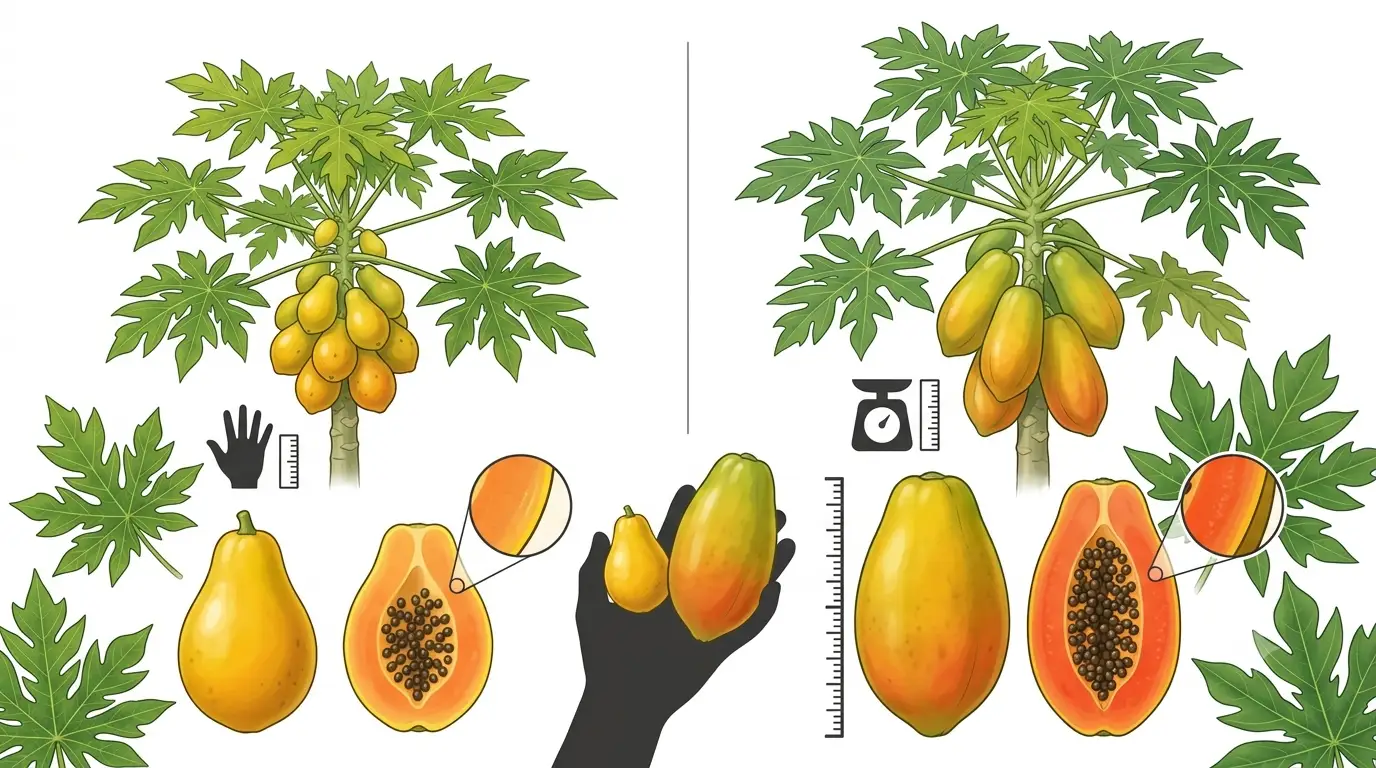
There are many named papaya cultivars worldwide, but they are generally grouped into two major horticultural categories: small-fruited Hawaiian-type papayas and large-fruited Mexican-type papayas.
Similar to papaya, other tropical fruits such as soursop require specific temperature ranges and growing conditions. Understanding climate suitability is essential when growing tropical fruit plants outside their native regions, as explained in the Where Does Soursop Grow: Climate & Regions Guide.
The term “types of papaya” can refer to different classifications, including commercial groups, named cultivars, and fruit maturity stages such as green papaya and ripe papaya.
The two major groups are:
- Small-fruited Hawaiian-type papayas: Known for sweeter flavour, smaller size, and premium fresh-market use.
- Large-fruited Mexican-type papayas: Known for bigger harvests, mild flavour, and commercial value.
Popular named varieties include Solo, Maradol, Strawberry/Sunrise, Red Lady, Tainung, Golden, and Thai Green papaya.
Hawaiian-Type Papayas (Small-Fruited)
Hawaiian-type papayas are small, pear-shaped fruits generally weighing around 450g–700g. They are popular for fresh eating because they have a sweeter flavour, thinner skin, and a stronger tropical aroma compared with larger varieties.
The most recognised Hawaiian-type cultivar is Solo papaya, which originated in Barbados before becoming strongly associated with Hawaiian production.
Characteristics of Hawaiian-type papayas include:
- Smaller fruit size
- Bright orange-yellow flesh
- Sweet, concentrated flavour
- Thin edible skin when properly ripe
- Smaller seed cavity compared with many large-fruited types
Solo papayas are especially valued in premium fruit markets because their flavour intensity suits breakfast dishes, fresh slices, and fruit salads.
A significant portion of Hawaiian-grown Solo papayas have been bioengineered for resistance to papaya ringspot virus, a disease that historically affected production.
Mexican-Type Papayas (Large-Fruited)
Mexican-type papayas are much larger than Hawaiian varieties and often have elongated, football-like shapes. Some fruits can exceed 4–5kg, making them popular for commercial production where high yield and transport efficiency are important.
The dominant cultivar is Maradol papaya, which originated in Cuba but became widely associated with Mexican production and exports.
Key characteristics include:
- Large fruit size
- Thick flesh walls
- Larger seed cavity
- Softer texture when ripe
- Mild, musky-sweet flavour
Mexican papayas are commonly sold in supermarkets because one fruit can provide many servings. Their size makes them suitable for smoothies, bulk preparation, juice production, and food service applications.
Maradol Papaya vs Hawaiian Papaya — Key Differences
Maradol and Hawaiian papayas differ mainly in size, flavour intensity, flesh colour, and culinary uses. Maradol papayas are preferred when larger quantities of fruit are needed, while Hawaiian Solo papayas are often chosen for sweeter fresh eating.
| Feature | Maradol (Mexican-type) | Solo (Hawaiian-type) |
| Size | Large, up to 4–5kg+ | Small, around 450–700g |
| Flavour | Milder, musky-sweet | More intense, candy-sweet |
| Flesh colour | Deep orange-red | Orange-yellow |
| Skin | Thicker | Thinner |
| Best use | Smoothies, batch cooking, salads | Fresh eating, breakfast fruit |
When comparing Maradol papaya vs papaya or Hawaiian papaya vs Mexican papaya, neither variety is universally better. The ideal choice depends on whether the priority is sweetness, serving size, storage, or cooking purpose.
What Is Maradol Papaya?
Maradol papaya is a large-fruited papaya cultivar originally developed in Cuba. Although its name is strongly linked with Mexico because Mexico became a major producer and exporter, the variety itself is not native to Mexico.
Maradol papaya is recognised by its:
- Large elongated fruit
- Deep orange-red flesh
- Mild tropical sweetness
- Slight musky aroma
- Thick protective skin
A ripe Maradol papaya usually develops yellow-orange skin patches and becomes slightly soft when pressed gently. The flavour is generally less intensely sweet than Solo papaya but provides a rich texture and large amount of edible flesh.
Maradol papayas are especially popular in Latin American markets and US retail stores because they offer good value, high yield, and strong transport performance.
Strawberry Papaya (Sunrise/Solo Sunrise)
Strawberry papaya, also called Sunrise papaya or Solo Sunrise, is a premium Hawaiian-type cultivar known for its attractive colour and sweet flavour.
The flesh ranges from salmon-pink to reddish-orange and often has a berry-like sweetness compared with traditional yellow-fleshed papayas.
Key features include:
- High natural sugar content
- Sweet, aromatic flavour
- Freckled green-yellow skin that becomes more yellow as it ripens
- Smooth, tender flesh
- Smaller fruit size compared with Mexican varieties
Many growers and consumers consider Strawberry papaya one of the sweetest papaya varieties because of its concentrated flavour. It is commonly eaten fresh, added to fruit bowls, or blended into smoothies.
Other Notable Papaya Varieties
Beyond Maradol, Solo, and Strawberry papaya, several other cultivars are grown around the world for different climates and uses.
Red Lady Papaya
- A productive hybrid popular among home growers.
- Produces medium to large fruit with orange-red flesh.
- Known for relatively early fruit production.
Tainung/Formosa Papaya
- A large-fruited variety developed for commercial farming.
- Known for good yield and transport qualities.
Golden Papaya
- A smaller variety with yellow-orange flesh.
- Often valued for sweet flavour and attractive appearance.
Thai Green Papaya
- Harvested before ripening.
- Firm and mild, making it ideal for green papaya salads and savoury dishes.
Green papaya refers to unripe fruit rather than a completely separate species. These varieties are commonly selected for their ability to maintain crisp texture before ripening.
Which Papaya Is the Sweetest and Best Tasting?
The sweetest papaya is often considered to be Strawberry/Sunrise or other Hawaiian Solo-type varieties because they typically have higher flavour intensity and a sweeter tropical taste.
Taste preferences are subjective, but common comparisons include:
- Strawberry/Sunrise: Sweetest, berry-like flavour and strong aroma.
- Solo: Very sweet, concentrated tropical flavour.
- Maradol: Richer, milder, musky sweetness with more fruit volume.
The best tasting papaya depends on personal preference. People who prefer dessert-like sweetness often choose Hawaiian varieties, while those who prefer larger portions and a softer texture may prefer Maradol.
Which Papaya Is the Most Widely Grown and Used?
Maradol and other Mexican-type papayas are among the most widely grown and traded papayas globally because they provide high yields, large fruit size, and better shipping efficiency.
Mexican papayas dominate many export markets, including the United States, because growers can transport large quantities at a lower cost per kilogram.
Hawaiian Solo papayas usually command premium prices because production is more limited and the fruit is smaller, requiring more individual handling.
The highest-yielding papaya varieties are generally large-fruited commercial cultivars such as Maradol and Tainung, while smaller Hawaiian varieties focus more on flavour quality and premium fresh markets.
Papaya is one of many warm-climate fruit plants suitable for Australian gardens. For gardeners planning a broader edible landscape, choosing from a range of suitable species is important, and the Fruit Trees for Australian Gardens: Complete 2026 Guide provides further ideas for productive fruit selections.
Male, Female and Hermaphrodite Papaya Trees
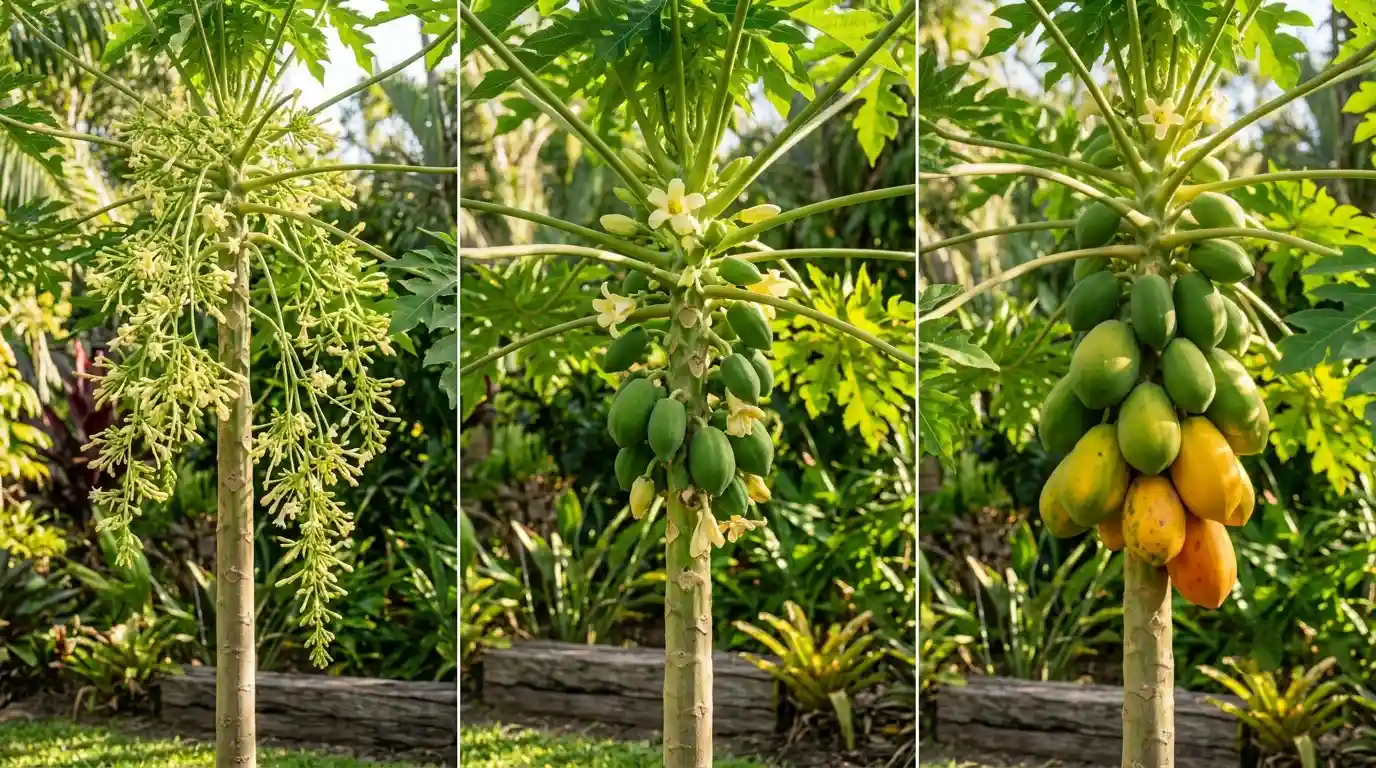
Papaya plants are trioecious, meaning individual plants can be male, female, or hermaphrodite. This is an important difference from many common fruit plants because the sex of the papaya plant determines whether it can produce fruit. Only female and hermaphrodite papaya trees produce harvestable fruit, while male plants mainly produce pollen.
Understanding papaya tree sex helps home growers avoid a common problem: having a healthy-looking plant that never produces fruit.
The three types of papaya trees are:
- Male papaya plants: Produce clusters of flowers on long, hanging stalks but normally do not produce fruit.
- Female papaya plants: Produce larger individual flowers near the trunk and require pollen from a male or hermaphrodite plant for fruit production.
- Hermaphrodite papaya plants: Produce flowers with both male and female reproductive structures and can usually self-pollinate.
Flower differences provide the easiest identification method:
- Male flowers grow in clusters on drooping stems away from the main trunk.
- Female flowers appear individually near leaf joints and have a visible swollen ovary that develops into fruit.
- Hermaphrodite flowers are elongated and contain both reproductive structures, allowing self-fertilisation.
In our experience growing tropical fruit plants, selecting known hermaphrodite cultivars is often preferred by home gardeners because they reduce the risk of ending up with non-fruiting male plants.
Growth Rate
Papaya is considered a fast-growing tropical plant and can produce fruit much earlier than many other fruit crops. Under warm conditions with adequate sunlight, healthy papaya plants may begin flowering around 4–6 months after transplanting.
Growth speed depends on several environmental factors:
- Warm temperatures between approximately 21°C and 32°C support strong growth.
- Full sunlight encourages better leaf development and fruit production.
- Poor drainage or cold conditions can significantly slow growth.
- Nutrient availability affects plant size and flowering performance.
Temperature can also influence flower expression in papaya plants. Environmental stress, especially temperature fluctuations, may affect whether flowers develop more like male, female, or hermaphrodite forms.
How Many Years Does a Papaya Tree Give Fruit?
A papaya plant is usually productive for around 3–4 years, although this varies depending on climate, care, soil conditions, and disease pressure.
Commercial growers often replace papaya plants after several years because fruit quality and yield commonly decline as plants age.
Productive lifespan depends on:
- Consistent fertilisation
- Protection from frost and strong winds
- Good drainage
- Effective pest and disease management
Home gardeners may keep healthy plants longer if they continue producing good-quality fruit.
Green Papaya vs Ripe Papaya — Culinary Uses
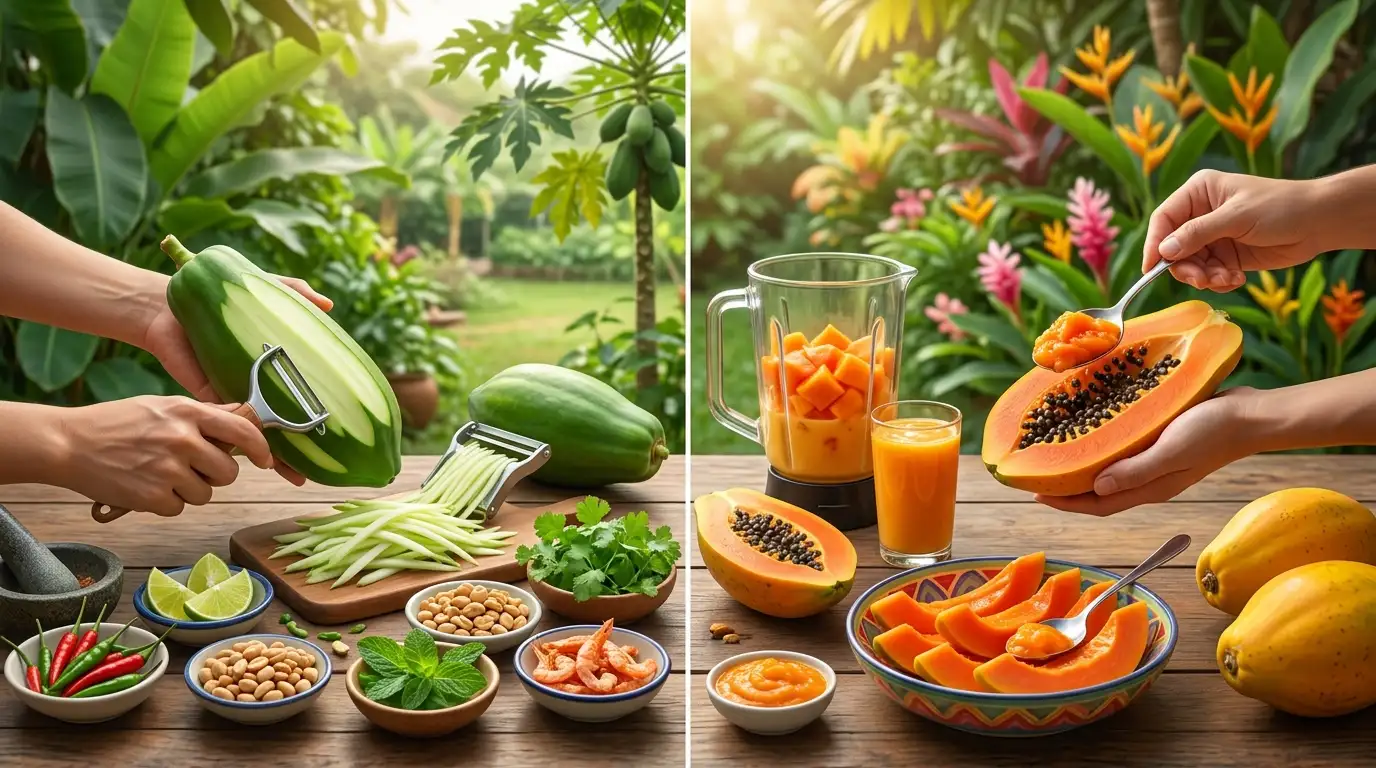
Green papaya and ripe papaya are the same fruit at different maturity stages. The main difference is texture, flavour, and how they are used in cooking.
Green papaya is harvested before ripening. It has firm white-green flesh, mild flavour, and a crisp texture that works well in savoury dishes.
Tropical and subtropical fruit gardens often include a variety of edible plants beyond papaya, including citrus selections such as Imperial mandarins. Gardeners interested in fruit characteristics and eating quality can also learn more in Are Imperial Mandarins Seedless?
Ripe papaya develops soft orange, yellow, salmon, or red flesh with a sweet tropical flavour and is usually eaten fresh.
Common uses include:
Green Papaya Uses
- Thai green papaya salad (Som tam)
- Shredded salads
- Pickled vegetable dishes
- Stir-fries
- Traditional raw papaya recipes
For green papaya salad, the fruit is usually prepared by:
- Removing the skin and seeds
- Shredding the firm flesh into thin strips
- Mixing with ingredients such as lime juice, chilli, fish sauce, garlic, tomatoes, and peanuts
Unripe green papayas can often be found at Asian grocery stores, farmers markets, and specialty produce suppliers. Choose fruits that feel firm with green skin and no soft spots.
Ripe Papaya Uses
Ripe papaya is commonly used for:
- Fresh fruit slices
- Breakfast bowls
- Smoothies
- Juices
- Desserts
Papaya in smoothies is popular because ripe fruit blends easily and provides a naturally creamy texture.
Papaya Care Guide (For Home Growers)
Papaya grows best in tropical and subtropical gardens where it receives warmth, sunlight, and protection from extreme weather. Although fast-growing, it requires suitable conditions to remain healthy and productive.
Before planting papaya, it is important to consider climate, available space, and companion plants. A broader overview of suitable edible options can be found in our guide to Fruit Trees and Edible Plants for Australian Gardens.
Watering
Papaya needs consistent moisture because its large leaves and rapid growth require regular water supply.
Best practices include:
- Water deeply when the top layer of soil begins drying.
- Maintain even moisture during flowering and fruit development.
- Avoid waterlogged soil because excessive moisture can cause root problems.
Light
Papaya requires full sun for healthy growth and fruit production.
A suitable location should receive:
- At least 6 hours of direct sunlight daily
- Protection from strong winds
- Warm growing conditions
Insufficient light often results in slower growth and reduced fruiting.
Soil
Papaya prefers:
- Well-drained soil
- Slightly acidic to neutral conditions
- Soil rich in organic matter
Heavy clay soils should be improved with compost or organic material because poor drainage increases the risk of root damage.
Fertilising
Regular feeding supports papaya’s fast growth and fruit development.
Recommended practices include:
- Applying a balanced fertiliser during active growth.
- Providing additional nutrients during flowering and fruiting.
- Maintaining soil health with compost or organic matter.
Pruning
Papaya generally requires minimal pruning.
Useful pruning tasks include:
- Removing damaged or diseased leaves
- Clearing old leaves around the trunk
- Improving airflow when necessary
Avoid excessive pruning because papaya relies on healthy leaves for energy production.
Climate Tolerance
Papaya is highly sensitive to frost and cold temperatures.
It performs best in:
- Tropical climates
- Frost-free subtropical regions
- Warm sheltered gardens
Cold stress can slow growth, damage leaves, and reduce fruit production.
Common Papaya Growing Problems (Problem–Solution Coverage)
Papaya problems are often linked to environmental stress, nutrient imbalance, pests, or incorrect growing conditions.
Yellowing Leaves
Why it happens:
Yellow leaves may result from nutrient deficiencies, particularly nitrogen deficiency, or from overwatering that damages roots.
How to fix it:
- Check soil moisture before watering.
- Improve drainage if soil remains wet.
- Apply appropriate balanced fertiliser.
How to prevent it:
- Maintain healthy soil conditions.
- Avoid planting papaya in areas where water collects.
Poor Fruiting
Why it happens:
Poor fruit production can occur when the plant is male, when pollination is insufficient, or when growing conditions are unsuitable.
How to fix it:
- Identify the plant’s flower type.
- Add another fruit-producing papaya plant if pollination is limited.
- Improve sunlight and nutrition.
How to prevent it:
- Choose reliable fruiting cultivars.
- Select hermaphrodite varieties when possible.
Slow Growth
Why it happens:
Cold temperatures, poor drainage, compacted soil, or insufficient nutrients can slow papaya growth.
How to fix it:
- Move plants to warmer locations where possible.
- Improve soil structure.
- Maintain regular feeding.
How to prevent it:
- Plant papaya in full sun.
- Provide suitable tropical or subtropical conditions.
Pest Issues
Common papaya pests include:
- Spider mites
- Fruit flies
- Aphids
How to manage them:
- Monitor leaves regularly.
- Remove heavily affected plant parts.
- Encourage beneficial insects where possible.
- Use appropriate horticultural treatments when needed.
Papaya and Diet — Common Questions (Non-Prescriptive)
Papaya is commonly discussed in relation to diet and traditional food beliefs. Many questions about papaya consumption are based on cultural practices rather than universal scientific rules.
Can diabetic patients eat papaya?
Papaya contains natural sugars along with fibre and nutrients. People with diabetes often consider portion size and overall dietary patterns when including fruit. Individual dietary needs vary, so anyone managing diabetes should discuss fruit choices with a qualified healthcare professional.
Why is papaya not eaten at night?
The belief that papaya should not be eaten at night is common in some cultures. There is no universal scientific rule that makes papaya unsuitable at a particular time of day. Personal digestion preferences and dietary habits may influence when people choose to eat fruit.
Why should we not eat papaya on an empty stomach?
Some traditional beliefs suggest avoiding papaya on an empty stomach. However, tolerance differs between individuals. People with specific health concerns, allergies, or dietary restrictions should seek personalised guidance from a healthcare professional.
Conclusion
Different types of papaya offer unique advantages depending on flavour preference, fruit size requirements, climate, and intended use. Hawaiian-type papayas such as Solo and Strawberry/Sunrise are valued for sweetness and fresh eating, while Mexican-type varieties such as Maradol are preferred for their large size, yield, and versatility.
Understanding papaya varieties, including plant sex, growth habits, and care requirements, helps gardeners choose the right cultivar and achieve better harvests. Whether growing papaya at home or selecting fruit for cooking, the best variety depends on whether the priority is intense sweetness, larger portions, smoothies, salads, or fresh consumption.
FAQs
What are the different varieties of papaya?
The main papaya varieties include Hawaiian-type papayas such as Solo and Strawberry/Sunrise, large Mexican-type papayas such as Maradol, and other cultivars including Red Lady, Tainung, Golden, and Thai Green papaya.
What is the difference between Mexican papaya and regular (Hawaiian) papaya?
Mexican papayas are larger, milder, and often weigh several kilograms, while Hawaiian papayas are smaller, sweeter, and have a more concentrated flavour. Mexican types are commonly used for volume and commercial supply, while Hawaiian types are popular for fresh eating.
What is the best tasting papaya variety?
Strawberry/Sunrise and Solo papayas are often considered among the best tasting because of their sweet flavour and aromatic flesh. Taste preference varies, and some people prefer the richer, milder flavour of Maradol papaya.
What are the three types of papaya trees?
The three types of papaya trees are male, female, and hermaphrodite. Male plants produce pollen, female plants produce fruit after pollination, and hermaphrodite plants can usually self-pollinate and produce fruit.
How do I know if I have a male or female papaya tree?
Male papaya trees have clusters of flowers on long hanging stalks, while female trees produce larger individual flowers near leaf joints with visible ovaries. Hermaphrodite trees have flowers containing both male and female structures.
How many years does a papaya tree produce fruit?
A papaya tree usually produces fruit for around 3–4 years before commercial yields and fruit quality begin declining. Good care and suitable growing conditions can influence productivity.
Which papaya is best for smoothies versus fresh eating?
Large Maradol papayas are excellent for smoothies because they provide a large amount of soft flesh, while Solo and Strawberry/Sunrise papayas are often preferred for fresh eating because of their sweeter, more intense flavour.
1 Comment