

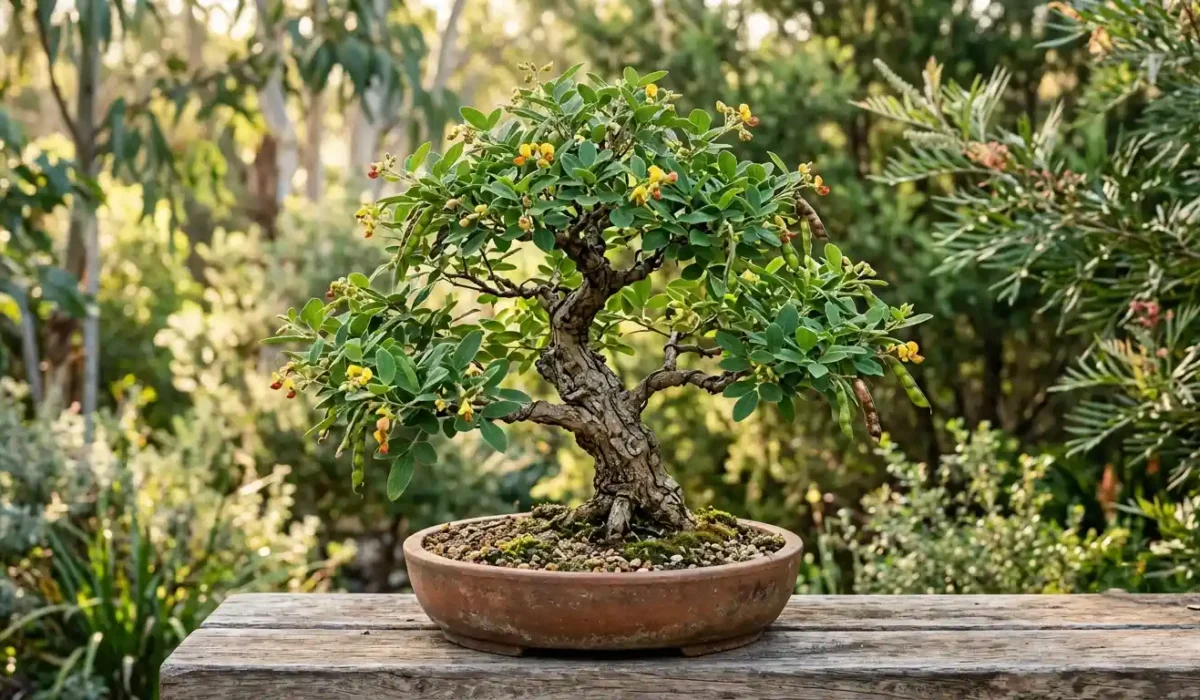
Pigeon Pea Bonsai: Care, Growth & Growing Guide
Introduction
Pigeon pea bonsai is a bonsai-trained form of Cajanus cajan, a fast-growing tropical legume shrub that is shaped using traditional bonsai techniques rather than being a naturally dwarf tree. Unlike classic bonsai species, pigeon pea develops quickly, making it a popular choice in beginner bonsai seed kits. However, growers should understand that it is not considered a traditional bonsai species and has a shorter lifespan than many established bonsai trees. With full sun, regular pruning, and well-draining soil, a pigeon pea bonsai can develop an attractive miniature form while helping beginners learn essential bonsai skills such as shaping, pinching, and root management.
Quick Summary
- Pigeon pea bonsai is grown from Cajanus cajan, a fast-growing tropical shrub rather than a traditional bonsai species.
- It requires at least 5–6 hours of direct sunlight, warm temperatures, and free-draining soil.
- It grows much faster than classic bonsai trees but has a relatively short lifespan and is unsuitable for permanent indoor growing.
- Frequent pruning and pinching are needed to maintain a compact bonsai shape.
What Is a Pigeon Pea Bonsai?
Pigeon pea bonsai is a miniature version of Cajanus cajan, a tropical shrub or small tree in the legume family. In its natural environment, the pigeon pea plant can grow several metres tall and produces edible seed pods widely cultivated in tropical and subtropical regions.
Many commercial bonsai seed kits include pigeon pea because its rapid growth allows beginners to see trunk development and branch formation within a relatively short period. However, it differs from classic bonsai species such as juniper or pine because its leaves are larger, branches remain relatively coarse, and its lifespan is much shorter. Understanding these characteristics helps set realistic expectations for growers. For another fast-growing bonsai species, compare its characteristics with our Locust Bonsai Tree: Care, Growth, Cost & Problems Guide.
Is Pigeon Pea a Good Bonsai Species?
Pigeon pea can be a good bonsai species for beginners who want quick results and hands-on practice with pruning and shaping techniques. Its vigorous growth makes mistakes easier to recover from.
On the downside, it lacks the refined appearance of traditional bonsai, develops coarse branching, and generally does not become a long-lived collector’s specimen. It is best viewed as a learning tree rather than a permanent display bonsai.
Pigeon Pea Bonsai Growth Stages
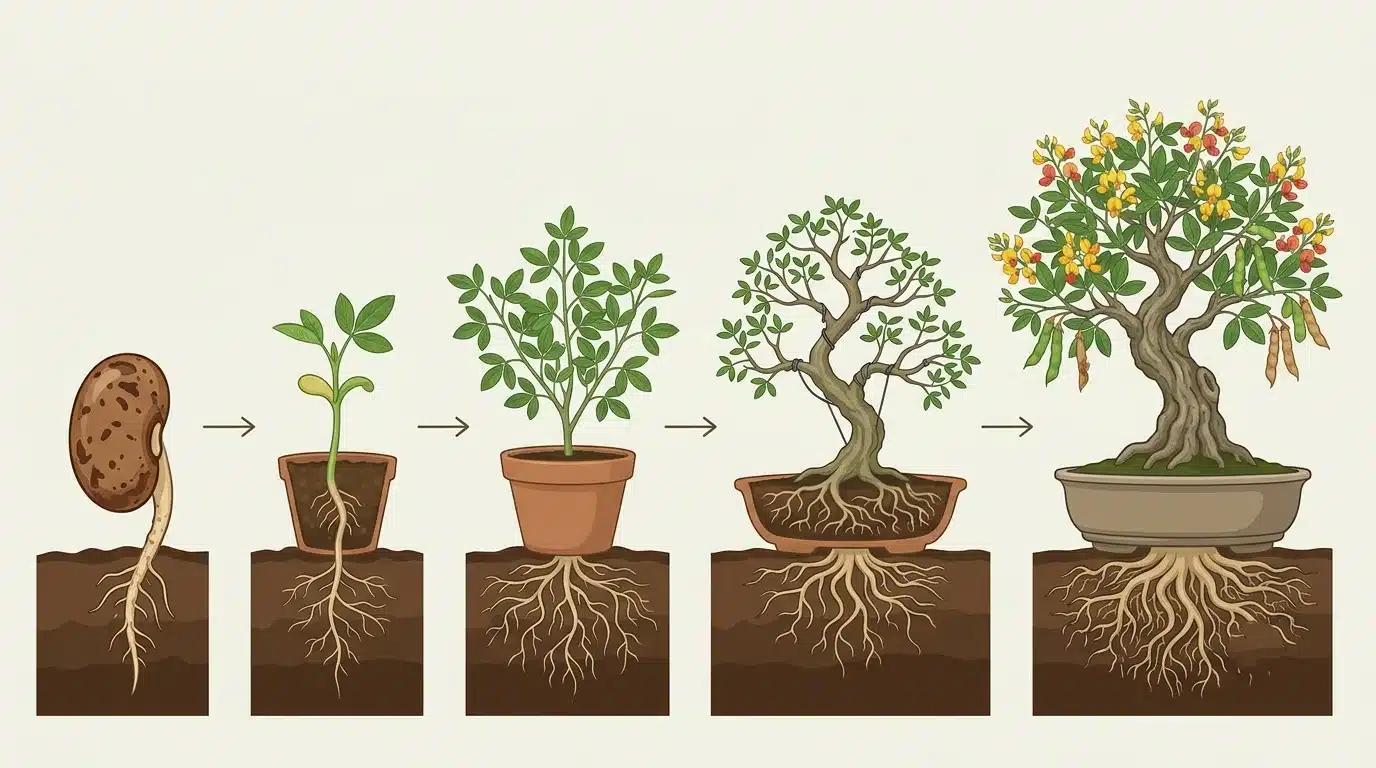
A pigeon pea bonsai progresses through several clear growth stages:
- Seed germination: Usually within 1–3 weeks under warm conditions.
- Seedling: First true leaves appear during the first month.
- Young shrub: Rapid stem and branch development over the next few months.
- Semi-woody trunk: The trunk gradually thickens, allowing shaping with pruning.
- Flowering and podding: Mature plants may flower and produce seed pods within their first year in favourable conditions.
Pigeon Pea Bonsai Growth Rate
Pigeon pea bonsai grows much faster than traditional bonsai species such as juniper or ficus. Warm temperatures, abundant sunlight, and regular watering encourage vigorous seasonal growth.
This fast growth means pruning is required more frequently to maintain proportion. During the growing season, new shoots often need pinching every few weeks to preserve a balanced silhouette.
How Big Does a Pigeon Pea Plant Get?
When grown in the ground, pigeon pea commonly reaches 2–4 metres in height with a similar spread. As a bonsai, however, root restriction, container size, and regular pruning significantly limit its growth. Another excellent compact tropical plant is featured in our Super Dwarf Cavendish Banana Growing Guide Australia, which explains how container growing influences plant size.
Environmental factors such as climate, pot size, watering, and root pruning all influence its final size. With consistent maintenance, growers can keep a pigeon pea bonsai compact while still encouraging trunk development.
How to Care for a Pigeon Pea Bonsai Tree
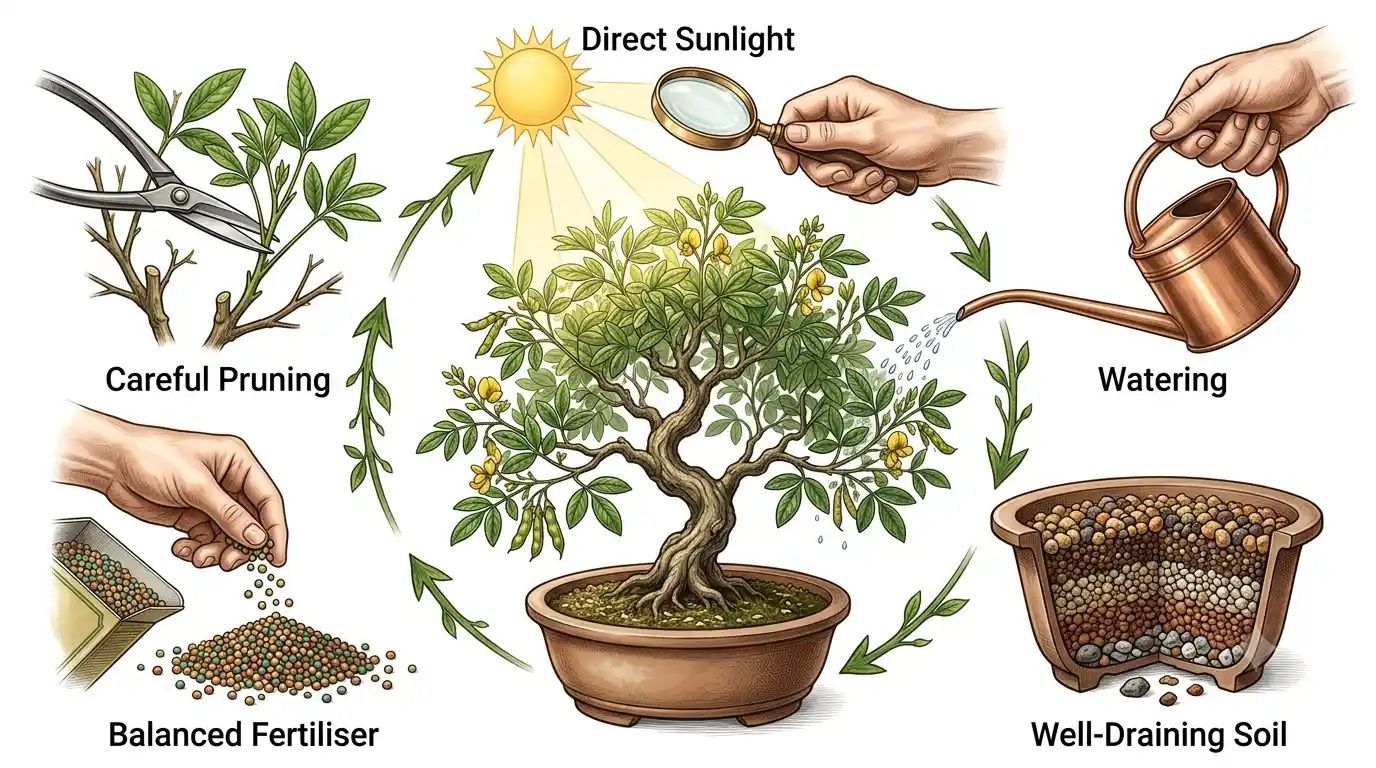
Healthy pigeon pea bonsai relies on balancing strong growth with regular maintenance. Proper light, watering, pruning, and soil management help maintain a healthy miniature tree.
Light Requirements
Provide at least 5–6 hours of direct sunlight each day. Full sun promotes sturdy growth, healthy foliage, and stronger branching. Insufficient light often causes elongated, weak stems.
Watering Needs
Although mature pigeon pea plants tolerate drought reasonably well, bonsai containers dry out much faster. Water thoroughly whenever the upper layer of soil begins to dry, but avoid leaving the roots constantly wet.
Soil and Drainage
Use a well-draining bonsai mix containing coarse particles that allow excess water to escape. Good drainage reduces the risk of root diseases while supporting healthy root growth.
Fertilising
Feed with a balanced fertiliser during active growth according to the manufacturer’s recommendations. Moderate feeding encourages healthy foliage and steady branch development without excessive soft growth.
Pruning and Shaping
Regular pruning keeps the tree compact. Pinch new shoots frequently and selectively remove unwanted branches. Many growers also apply the bonsai “rule of three” when selecting the primary branch structure to create a balanced design.
Temperature and Climate Tolerance
Pigeon pea performs best in tropical and subtropical Australian climates. In cooler temperate regions, it benefits from protection during winter, especially when temperatures approach frost conditions.
Can Pigeon Pea Bonsai Grow Indoors?
Pigeon pea bonsai can stay indoors temporarily, but it is generally unsuitable for permanent indoor cultivation. Outdoor conditions provide the sunlight, airflow, and seasonal variation needed for healthy growth. If you’re choosing plants for your home or garden, our Australian Plants Guide: Indoor Houseplants & Garden Design explains how to select species that thrive in different Australian growing conditions.
A bright window or quality grow light may support short-term indoor placement, but long-term health is usually better outdoors. If you’re looking for a bonsai-friendly plant that adapts better to indoor conditions, read our Money Tree Australia: Care, Meaning & Buying Guide.
Why Most Bonsai Struggle Indoors
Most bonsai struggle indoors because indoor light intensity is much lower than natural sunlight. Limited airflow and lower humidity also affect plant health. Pigeon pea, being a sun-loving tropical shrub, is especially dependent on strong light and fresh air.
Growing Pigeon Pea Bonsai From Seed
Growing pigeon pea bonsai from seed is straightforward. Sow seeds in a warm, well-draining seed-raising mix and keep the soil lightly moist until germination.
Once seedlings establish several true leaves, transplant them into individual pots. Early growth offers excellent opportunities to begin gentle trunk movement and branch selection while stems remain flexible.
Pigeon Pea Bonsai Flowers and Growth Habit
Pigeon pea bonsai produces attractive yellow flowers, often marked with reddish or brown streaks, followed by slender seed pods. Flowering usually begins once the plant reaches maturity under favourable growing conditions.
While flowering adds ornamental interest, excessive pod production may divert energy from branch development. Some growers remove flowers or pods when focusing on structural bonsai training.
Bonsai Basics: The Rule of Three
The rule of three is a traditional bonsai design principle that promotes visual balance by establishing three main structural branches. These branches help create depth, movement, and proportion within the tree.
When shaping a pigeon pea bonsai, selecting and maintaining three well-positioned primary branches can improve its overall appearance while simplifying future pruning decisions.
Common Pigeon Pea Bonsai Problems and Fixes
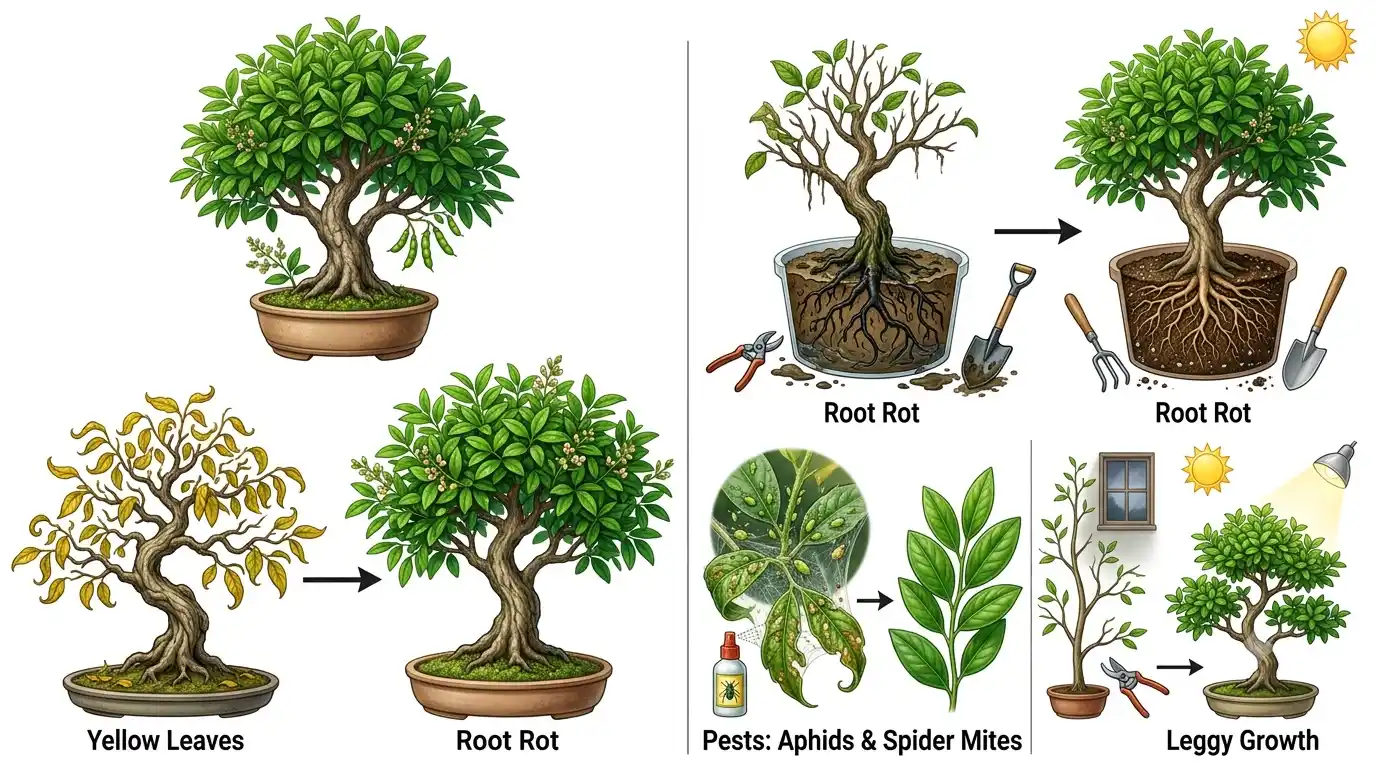
Yellowing Leaves
Yellow leaves often result from nutrient deficiencies or inconsistent watering. Correct the watering routine, feed appropriately, and ensure the soil drains well to prevent recurring problems.
Root Rot from Overwatering
Poor drainage and excessive watering can lead to root rot. Remove affected roots if necessary, repot into fresh free-draining soil, and water only when needed.
Pests (Aphids, Spider Mites, Scale)
Common pests include aphids, spider mites, and scale insects. Inspect foliage regularly and treat infestations promptly using appropriate horticultural methods to prevent severe damage.
Leggy or Weak Growth (Especially Indoors)
Leggy growth usually indicates inadequate light. Move the bonsai to a sunnier location or supplement with grow lights while maintaining regular pruning.
Common Beginner Mistakes With Bonsai
Many beginners overwater, expect pigeon pea to behave like a traditional bonsai species, prune too aggressively, or provide insufficient sunlight. Consistent watering, realistic expectations, moderate pruning, and full sun produce much healthier results. Beginners also commonly neglect regular pinching, allowing the tree to lose its compact form.
Pigeon Pea Bonsai vs Other Popular Flowering Bonsai
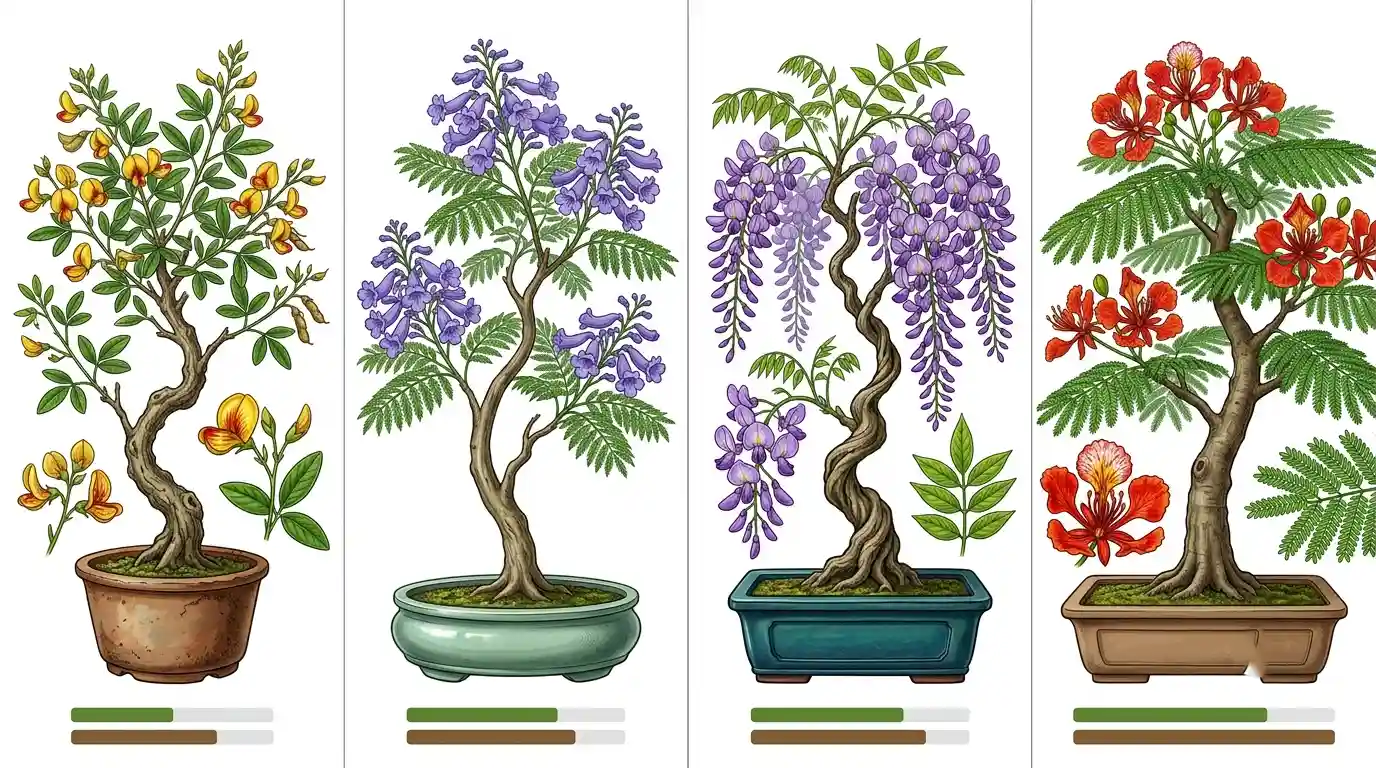
| Feature | Pigeon Pea | Jacaranda | Wisteria | Flame Tree (Delonix regia) |
| Growth rate | Very fast | Moderate | Moderate | Fast |
| Difficulty | Easy | Moderate | Moderate to difficult | Moderate |
| Indoor suitability | Poor | Poor | Poor | Poor |
| Flowering | Yellow | Purple-blue | Purple, white or pink | Bright red-orange |
| Lifespan | Short | Long | Long | Moderate |
| Climate needs | Warm tropical/subtropical | Warm temperate | Temperate | Tropical/subtropical |
You can also discover more ornamental flowering species in our Flowering Trees Australia: Best Species Guide.
Easiest vs Hardest Bonsai Trees to Care For
Pigeon pea is among the easier bonsai species for beginners because it grows rapidly and responds well to pruning. However, it is not considered a premium long-term bonsai.
Species such as ficus and Chinese elm are also beginner-friendly, while junipers, pines, and flowering species like wisteria generally require greater experience, patience, and specialised seasonal care. If you prefer an ornamental flowering bonsai with seasonal appeal, explore our Dwarf Cherry Blossom Tree: Size, Care & Australian Guide.
Pigeon Pea Bonsai Lifespan
A pigeon pea bonsai typically lives only a few years compared with traditional bonsai that may survive for decades or even centuries. Consistent care, suitable climate, pest management, and careful pruning can help maximise its lifespan, but it should still be viewed as a relatively short-lived bonsai species.
Conclusion
Pigeon pea bonsai offers beginners an excellent opportunity to practise essential bonsai techniques on a fast-growing plant. Although Cajanus cajan is not a traditional bonsai species, its rapid growth, easy cultivation, and quick trunk development make it rewarding for learning pruning and shaping skills. Providing full sun, well-draining soil, regular watering, and consistent pruning helps maintain an attractive miniature form. With realistic expectations, pigeon pea bonsai can serve as an enjoyable practice tree while introducing growers to the fundamentals of bonsai cultivation.
Frequently Asked Questions
How do you take care of a pigeon pea bonsai tree?
Provide full sun, well-draining soil, regular watering, balanced fertiliser during active growth, and frequent pruning to maintain its compact shape.
What is the rule of three in bonsai?
The rule of three is a bonsai design principle that uses three main structural branches to create balance, depth, and natural visual proportions.
Can pigeon pea grow indoors?
It can survive indoors for short periods with very bright light, but it grows best outdoors where it receives full sun and good airflow.
What is the easiest bonsai tree to keep alive?
Ficus is widely regarded as one of the easiest traditional bonsai trees, while pigeon pea is also beginner-friendly because of its vigorous growth and resilience.
What is the lifespan of a pigeon pea plant?
Pigeon pea is generally a short-lived perennial, often living around 3–5 years under favourable growing conditions.
Can pigeon peas survive winter?
They tolerate mild winters but are sensitive to frost. In cooler Australian regions, protect plants from freezing temperatures.
What are pigeon peas called in America?
In different regions, pigeon peas are also known as gungo peas, gandules, toor dal, or Congo peas, depending on local language and culinary tradition.