

Locust Bonsai Tree: Care, Growth, Cost & Problems Guide
Introduction
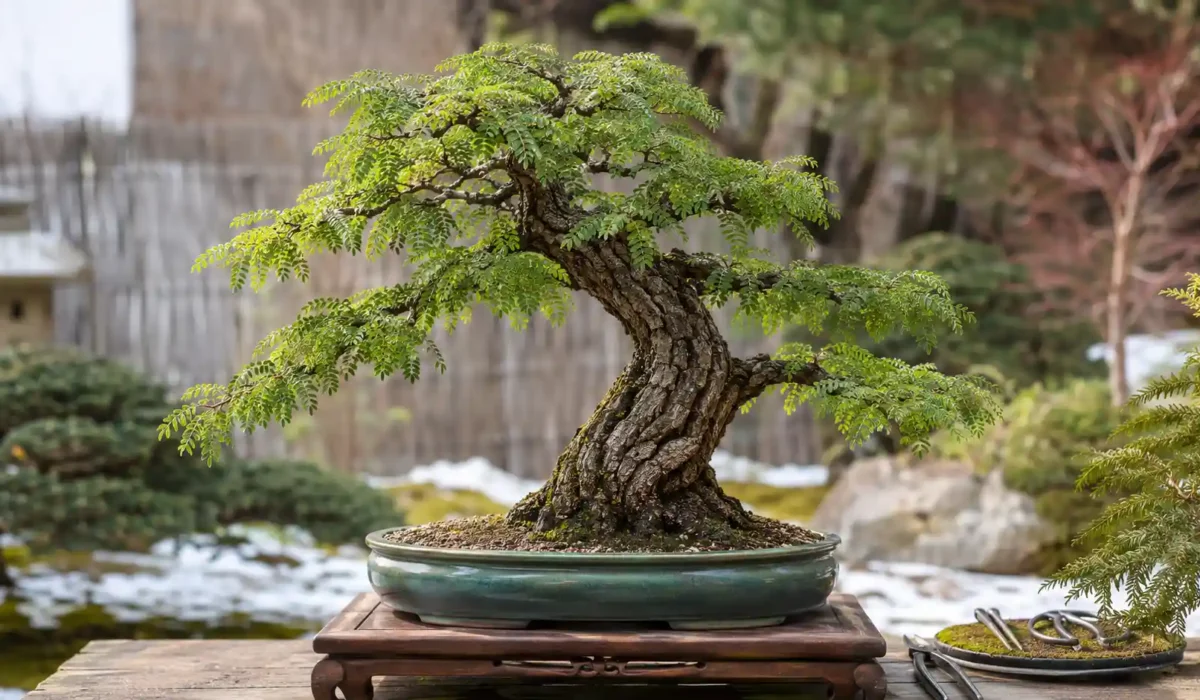
A locust bonsai tree is a black locust (Robinia pseudoacacia) trained and shaped into a miniature bonsai form through pruning, wiring, root management, and careful cultivation. Black locust bonsai is valued by growers because it develops thick trunks quickly, produces rugged furrowed bark, and creates an aged appearance faster than many slower-growing bonsai species. Unlike tropical bonsai that can live indoors, this hardy deciduous tree requires outdoor conditions, full sunlight, and seasonal dormancy. This guide explains whether locust makes good bonsai material, how to provide proper locust bonsai tree care, expected costs, toxicity concerns, growth habits, and common challenges.
By Elemo Baker | Plant Care & Gardening Expert
Last Updated: July 2026
Quick Summary
- Black locust (Robinia pseudoacacia) is suitable for bonsai because it develops thick trunks and textured bark quickly.
- A locust bonsai tree is an outdoor bonsai species that needs full sun and winter dormancy.
- Toxic compounds occur mainly in bark, leaves, seeds, and pods; normal touching of healthy skin is generally not the main concern.
- Bonsai prices vary widely depending on age, trunk size, styling quality, and root development.
- Successful black locust bonsai care depends on correct watering, pruning, and outdoor placement.
Can You Bonsai a Locust Tree?
Yes, you can bonsai a locust tree, and black locust (Robinia pseudoacacia) is the species most commonly trained for bonsai. Its natural characteristics make it suitable for traditional bonsai techniques, especially trunk chopping, clip-and-grow styling, and structural pruning.
Black locust is a pioneer tree species known for rapid growth, strong adaptability, and its ability to tolerate difficult conditions. As a member of the legume family (Fabaceae), it can form relationships with nitrogen-fixing bacteria, allowing it to grow successfully in relatively poor soils.
Its upright, columnar growth habit helps bonsai growers develop strong trunks before refining branches and foliage. However, its vigorous nature means regular maintenance is required to prevent unwanted growth.
Black locust is part of a wider group of hardy woody plants used in outdoor landscapes. Understanding the characteristics of different trees and shrubs can help gardeners choose suitable species, as explained in our guide to Best Trees and Shrubs for Australian Gardens: Growth, Roots & Landscaping Guide.
Honey locust (Gleditsia triacanthos) can also be used as bonsai material, but it is less common. It has different leaf characteristics and growth behaviour compared with black locust.
Why Bonsai Growers Choose Black Locust
Black locust is popular among bonsai enthusiasts for several reasons:
- Rapid trunk thickening: Young trees increase trunk diameter faster than many traditional bonsai species.
- Textured bark: Mature bark develops deep ridges and furrows, creating an old-tree appearance.
- Hardiness: It tolerates cold climates and adapts well to outdoor bonsai conditions.
- Pruning tolerance: It responds strongly to structural pruning and regrows from old wood.
- Flexible young shoots: New growth can often be wired before becoming rigid.
In our experience growing vigorous deciduous bonsai species, fast-growing trees like black locust reward growers who focus first on trunk development and patience rather than early styling.
Black Locust vs Honey Locust for Bonsai
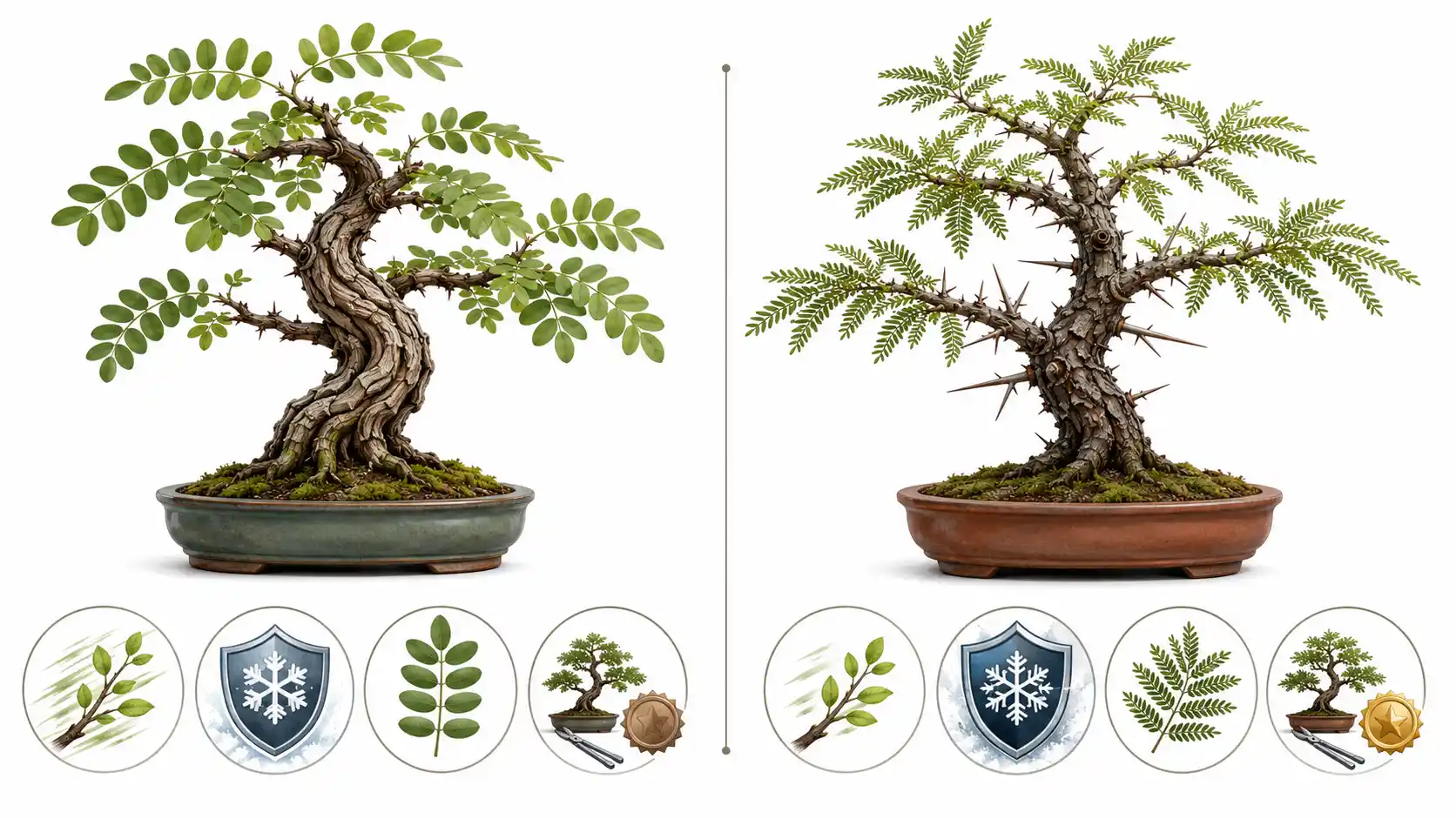
| Feature | Black Locust (Robinia pseudoacacia) | Honey Locust (Gleditsia triacanthos) |
| Leaf type | Compound leaves with small leaflets | Fine compound leaves with smaller leaflets |
| Thorns | Large thorns common on young growth | Large branched thorns on many varieties |
| Growth rate | Very fast | Fast |
| Hardiness | Extremely cold hardy | Cold hardy |
| Bonsai suitability | Excellent for trunk development | Suitable but less commonly used |
Locust Bonsai Tree Care
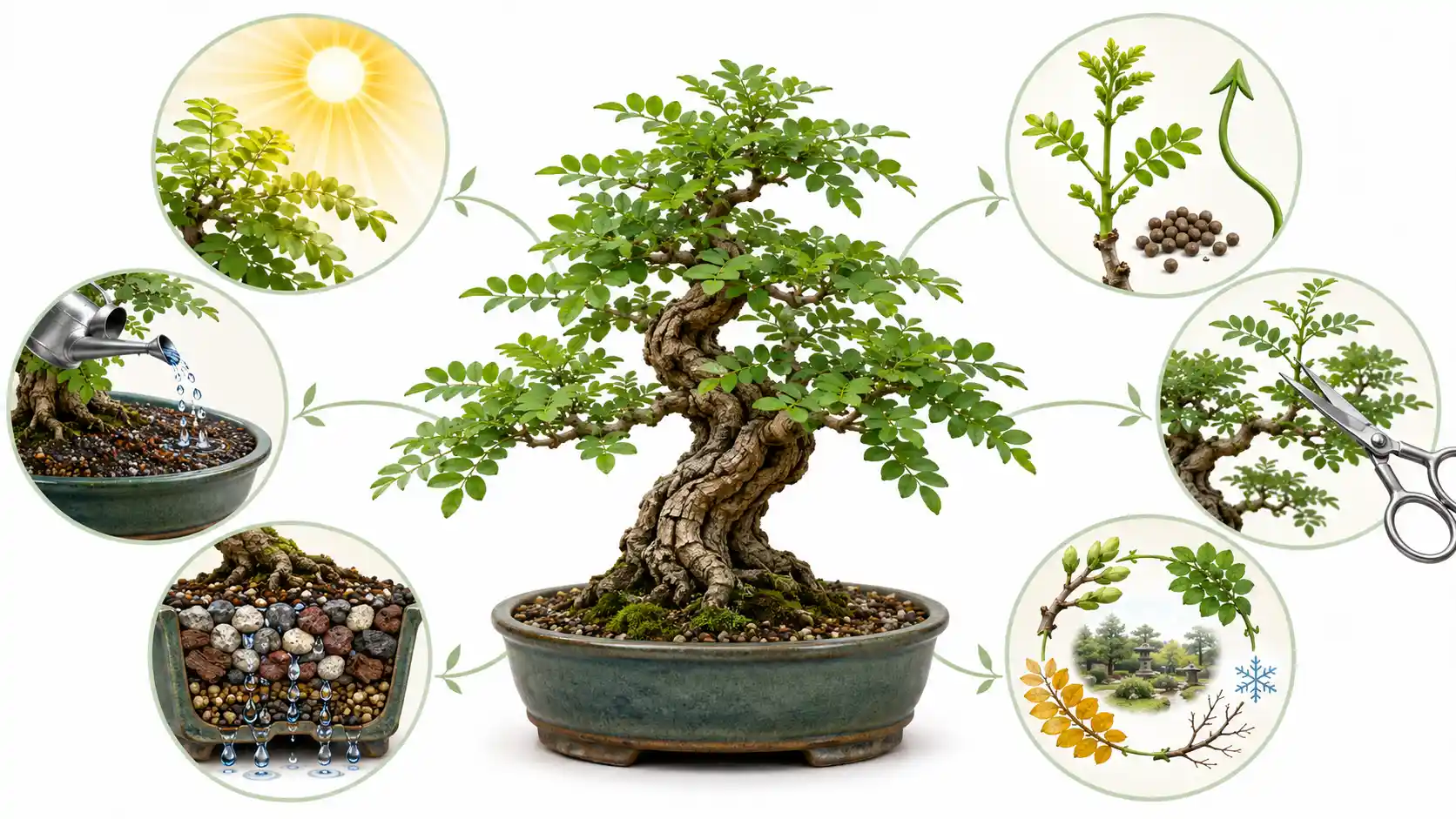
Proper locust bonsai tree care focuses on providing conditions that match the natural environment of black locust. Unlike indoor tropical bonsai, black locust bonsai care requires outdoor cultivation, seasonal changes, and strong sunlight.
The tree’s vigorous growth is an advantage, but it also means growers must manage watering, pruning, fertilising, and root development carefully.
Light and Position Requirements
A locust bonsai tree requires full sun to maintain healthy growth and compact foliage.
Ideally, provide:
- At least 6 hours of direct sunlight daily.
- Outdoor placement throughout the growing season.
- Protection from extreme heat waves when grown in small bonsai pots.
Insufficient light often causes weak, stretched growth and larger leaves. A common beginner mistake is treating black locust like an indoor bonsai and placing it permanently inside a home.
Watering Needs
Black locust bonsai needs consistent moisture but should never remain waterlogged.
Good watering practices include:
- Water when the upper layer of substrate begins to dry.
- Ensure excess water drains freely from the pot.
- Increase watering frequency during hot summer periods.
- Reduce watering during winter dormancy.
Although mature black locust trees are drought tolerant in landscapes, bonsai containers hold limited soil volume, causing roots to dry much faster.
Soil and Fertilising
A well-draining bonsai substrate supports healthy roots and prevents root problems.
Suitable soil characteristics include:
- Good drainage and airflow.
- Neutral to slightly acidic pH.
- A mixture containing inorganic particles such as pumice, akadama, or similar bonsai materials.
During active growth, fertilising can support development, especially when building trunk size. However, avoid excessive nitrogen fertiliser because black locust naturally has nitrogen-fixing abilities and may produce overly vigorous foliage growth.
Elemo Baker recommends balanced feeding during spring and summer while reducing fertiliser during autumn preparation for dormancy.
Pruning a Black Locust Bonsai
When learning how to prune a black locust, timing is important because this species grows aggressively.
The best approach is:
- Perform major structural pruning in late winter or early spring before new growth begins.
- Use growing-season trimming to maintain shape and control shoots.
- Remove unwanted suckers regularly.
Black locust produces strong regrowth, making clip-and-grow techniques effective. However, growers should be careful when pruning because young branches often develop thorns that can injure hands or damage nearby buds.
Root pruning also requires care because black locust belongs to the legume family and can have sensitive root structures. Avoid removing excessive roots during repotting.
Repotting Schedule
Young locust bonsai trees usually benefit from repotting every 2–3 years because they grow quickly and fill containers rapidly.
Older, established specimens can generally be repotted every 3–5 years, depending on:
- Root density.
- Soil breakdown.
- Drainage performance.
- Overall tree health.
Repotting is best performed before strong spring growth begins.
Is a Locust Tree a Good Bonsai Tree? (Pros and Cons)
Yes, a locust tree can be a good bonsai tree, especially for growers who want a hardy deciduous species with rapid trunk development and naturally rugged character. Black locust (Robinia pseudoacacia) is not the easiest beginner bonsai because of its thorns, vigorous growth, and large compound leaves, but its strengths make it valuable bonsai material.
Advantages
The main benefits of using black locust as bonsai material include:
- Fast growth and trunk development: Black locust thickens quickly compared with many traditional bonsai trees, helping growers create mature-looking trunks sooner.
- Rugged bark appearance: Its deeply textured bark gives the impression of an old tree even when the bonsai is relatively young.
- Hardy and adaptable nature: It tolerates cold winters, poor soils, and challenging outdoor conditions.
- Attractive flowers: Mature trees can produce fragrant white flower clusters in late spring or early summer.
- Good pruning response: The species handles hard pruning and regrows strongly from cut areas.
Drawbacks and Problems
While black locust has many bonsai advantages, it also presents several challenges.
Common problems include:
- Large thorns: Young growth can carry sharp thorns that make wiring, pruning, and handling more difficult.
- Leaf size reduction challenges: Black locust has compound leaves that may remain larger than ideal for smaller bonsai styles.
- Root suckering: The tree naturally produces new shoots from roots, requiring regular removal in container culture.
- Brittle branches: Older branches can become prone to snapping, especially during strong winds or rough handling.
- Invasive tendencies: In some regions, black locust can spread aggressively if grown without management.
For these reasons, black locust is often better suited to intermediate bonsai growers who understand vigorous deciduous species.
Root behaviour is an important consideration when selecting trees for gardens and containers. Similar root management principles apply to other Australian landscape trees, such as understanding the spread and growth habits discussed in our guide to Gum Tree Root System: Root Spread, Problems & Safe Distances.
Is Black Locust Toxic to Touch?
No, black locust is generally not considered dangerous from simple contact with healthy skin. The main toxic concerns come from swallowing plant material or injuries involving thorns. The toxic compounds robin and phasin are concentrated mainly in the bark, leaves, seeds, and pods rather than being a major risk from ordinary touching.
However, caution is still recommended when handling the tree.
Potential risks include:
- Eating leaves, bark, seeds, or seed pods.
- Puncture wounds caused by thorns.
- Contact with plant material through broken skin.
Gardeners should wear gloves when pruning or wiring a black locust bonsai to reduce the chance of thorn injuries.
The flowers are generally considered far less concerning than other parts of the plant, but fallen seed pods and bark should be kept away from children and pets that may chew on plant material.
This information is general guidance and does not replace professional medical advice. If accidental ingestion occurs, seek appropriate medical assistance.
Lifespan and Growth Rate of Black Locust
Black locust is known as a fast-growing and long-lived tree species. Its ability to establish quickly is one reason it is commonly used for timber production, erosion control, and bonsai development.
Fast-growing trees are often selected for quick garden establishment, although their growth habits must be considered carefully. For more examples of rapidly developing landscape species, see our guide to Fast Growing Evergreen Trees Australia Guide.
Typical Lifespan
A black locust tree can commonly live around 60–100 years in landscape conditions, although some specimens may survive longer in favourable environments.
A bonsai specimen can have a different lifespan because container cultivation changes the tree’s growth conditions. With proper watering, root management, pruning, and repotting, a black locust bonsai can remain healthy for many decades.
Unlike a wild tree, bonsai longevity depends heavily on:
- Root health.
- Correct seasonal care.
- Protection from extreme environmental stress.
- Regular maintenance.
Growth Rate
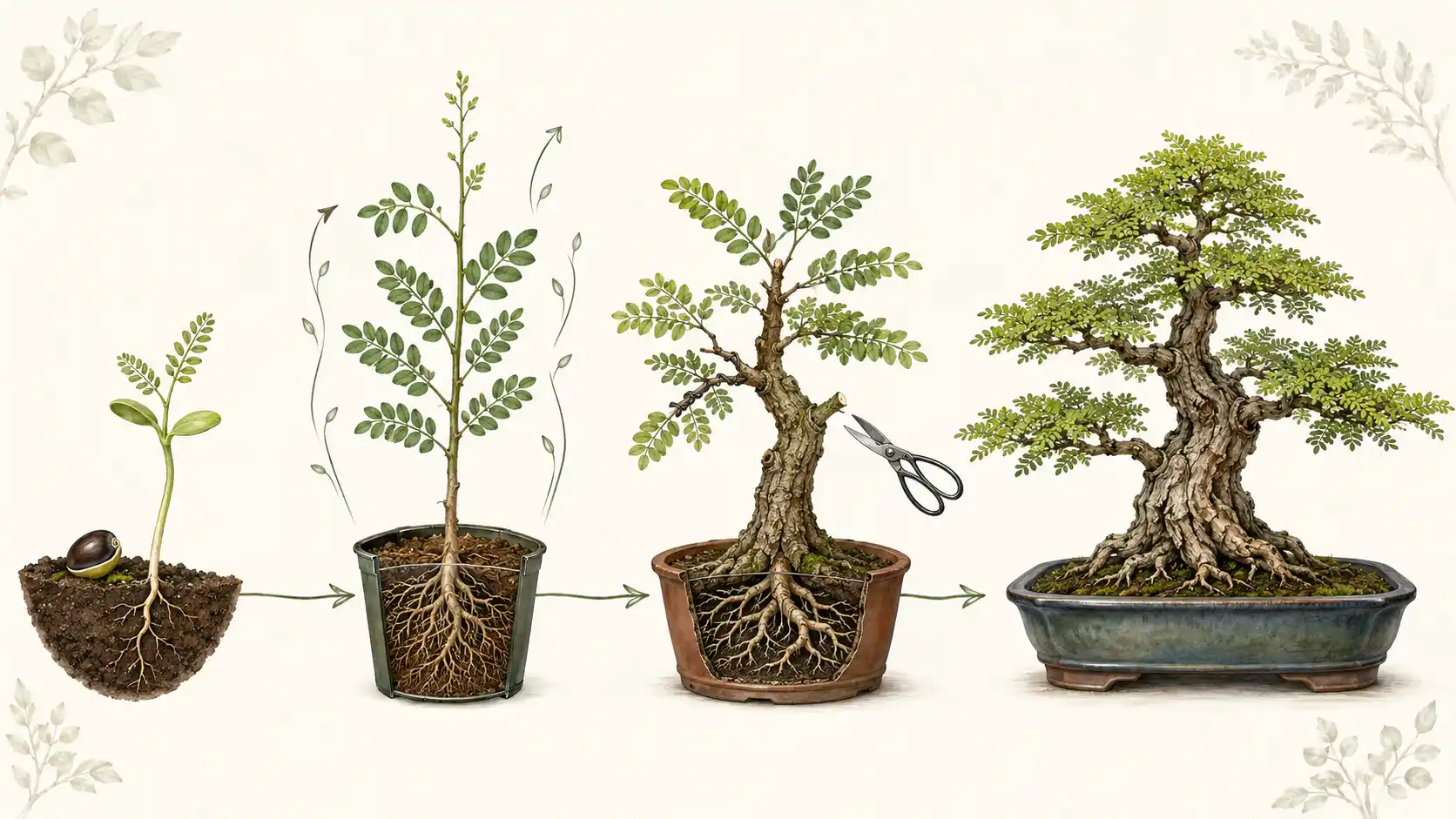
Black locust is considered a fast-growing tree, particularly during its early years.
In open ground, young trees may produce several feet of new growth annually when conditions are favourable.
As a bonsai, growth becomes more controlled because:
- Root space is limited.
- Regular pruning reduces extension growth.
- Container culture slows overall development.
This fast growth is useful when creating a thicker trunk, but it requires consistent maintenance to keep the tree refined.
How Much Does a Black Locust Bonsai Cost?
The cost of a black locust bonsai varies widely depending on age, size, styling quality, and development level. A young black locust pre-bonsai may be inexpensive, while a mature, professionally trained specimen with a thick trunk and refined branching can be significantly more valuable.
The price of bonsai material should not be confused with the value of black locust timber. Black locust wood is valued commercially because of its durability and natural rot resistance, but timber pricing is a separate market from bonsai valuation.
Factors that influence bonsai pricing include:
What Drives Bonsai Value
| Factor | Why It Matters | Example |
| Age | Older trees usually show more mature features | A decades-old bonsai has greater refinement |
| Trunk thickness and taper | A strong trunk creates visual age | Thick base with gradual narrowing increases value |
| Styling and ramification | Developed branches improve appearance | Well-structured canopy requires years of work |
| Species rarity | Less common bonsai material may command higher prices | Unique specimens attract collectors |
| Provenance | History and previous ownership can add interest | Documented heritage trees may be more valuable |
A young nursery-grown black locust may cost relatively little, while advanced bonsai specimens can command hundreds or thousands depending on quality.
General Bonsai Fundamentals Worth Knowing
Understanding general bonsai principles helps growers manage species like black locust more successfully.
What Is the Rule of Three in Bonsai?
The rule of three in bonsai is a traditional design principle that uses three key visual elements to create balance and harmony. It often refers to the relationship between the trunk, primary branch structure, and apex, creating a natural three-point composition.
This principle helps bonsai artists avoid flat or symmetrical designs and encourages a more realistic tree appearance.
Can Bonsai Survive Two Weeks Without Water?
Most bonsai trees cannot reliably survive two weeks without water because their shallow pots contain limited soil volume that dries quickly. Survival depends on factors such as species, pot size, climate, humidity, and season.
Outdoor bonsai placed in hot weather may dry out within days. Even drought-tolerant species like black locust require regular monitoring when grown in containers.
The One Mistake Most Bonsai Beginners Make
The most common beginner mistake in bonsai is poor watering management, especially watering automatically on a fixed schedule instead of checking soil moisture.
Both overwatering and underwatering can damage bonsai roots. Good bonsai care requires observing the soil condition, weather, and tree response.
Why Are Bonsai Seeds Put in the Fridge?
Bonsai seeds from temperate species are often placed in the fridge for cold stratification. This process imitates winter conditions and helps break seed dormancy, improving germination.
Black locust seeds can also benefit from preparation methods such as soaking and cold treatment before planting.
The World’s Most Expensive Bonsai Trees
The most expensive bonsai sales involve rare, highly refined trees rather than ordinary bonsai specimens. A Japanese juniper bonsai reportedly sold for around $2 million in 1981, while a Japanese white pine was sold for approximately $1.3 million in 2011.
These examples represent the extreme upper end of bonsai collecting and are unrelated to typical black locust bonsai pricing.
Locust Bonsai From Seed
Growing a locust bonsai from seed requires patience because developing a mature bonsai takes many years.
Black locust seeds are collected from mature pods and usually require preparation before sowing.
Typical steps include:
- Collecting mature seeds from dry pods.
- Soaking seeds to soften the hard outer coating.
- Using cold stratification to encourage germination.
- Planting seeds in a suitable growing medium.
Seedlings should first be allowed to establish strong roots before beginning serious bonsai training. Early development focuses on trunk growth rather than detailed styling.
Indoor vs Outdoor: Can a Locust Bonsai Be Kept Indoors?
A locust bonsai tree should not be kept indoors permanently. Black locust is a cold-hardy outdoor species that requires seasonal changes, including winter dormancy, to remain healthy.
Indoor-only growing often causes:
- Weak, stretched growth.
- Reduced vigour.
- Increased pest problems.
- Poor seasonal development.
A bright indoor position may only be used temporarily in unusual circumstances, but outdoor placement remains essential for long-term health.
Choosing plants that match their natural growing environment is essential for long-term success. Our Australian Plants Guide: Indoor Houseplants & Garden Design covers how indoor and outdoor plants differ in their environmental needs.
Common Problems and Troubleshooting (Beginner Mistakes)
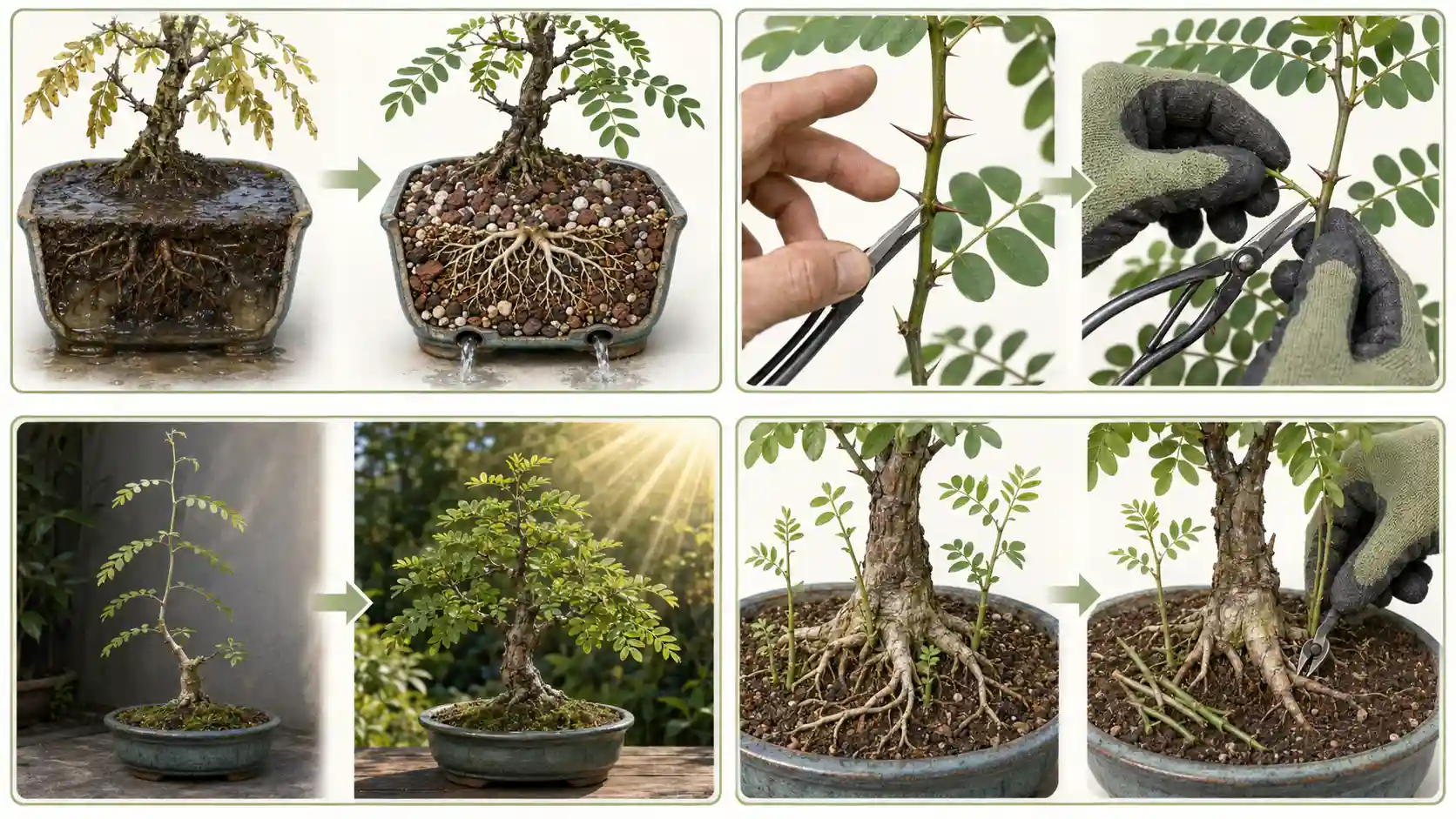
Overwatering and Root Rot
Problem: Poor drainage and constantly wet soil can suffocate roots and encourage root rot.
Solution:
- Repot into a free-draining bonsai substrate.
- Allow appropriate drying between watering.
- Check soil moisture before adding water.
Thorn Damage During Wiring and Pruning
Problem: Sharp thorns can injure growers and damage nearby buds.
Solution:
- Wear protective gloves.
- Handle branches carefully.
- Avoid damaging developing buds during pruning.
Leggy or Oversized Leaf Growth
Problem: Insufficient sunlight or lack of winter dormancy can produce weak growth and larger leaves.
Solution:
- Move the bonsai outdoors.
- Provide full sunlight.
- Maintain natural seasonal conditions.
Root Suckering
Problem: Black locust naturally produces shoots from roots.
Solution:
- Remove unwanted suckers during maintenance.
- Inspect roots during repotting.
- Maintain regular pruning routines.
Along with environmental stress, bonsai growers should monitor plants regularly for insects and disease symptoms. Our Garden Pest Identification Guide for Australian Gardens explains how to recognise common garden pests and plant damage.
Conclusion
A locust bonsai tree is a rewarding choice for growers who appreciate fast trunk development, rugged bark, and hardy outdoor characteristics. Black locust (Robinia pseudoacacia) can create impressive bonsai specimens when grown with proper sunlight, disciplined watering, careful pruning, and regular root management.
Although thorns, vigorous growth, and toxic plant parts require sensible handling, these challenges are manageable with correct techniques. The key to successful black locust bonsai care is respecting the tree’s natural needs as an outdoor, cold-hardy species and allowing time for refinement.
FAQs
Can you bonsai a locust tree?
Yes, black locust (Robinia pseudoacacia) can be trained as bonsai. It is valued for rapid trunk growth, rugged bark, and strong response to pruning.
Is black locust toxic to touch?
Black locust is not generally dangerous from touching intact healthy skin. Toxic compounds are mainly found in bark, leaves, seeds, and pods and are more concerning if swallowed.
How much does a black locust bonsai tree cost?
A black locust bonsai can range from inexpensive young material to expensive refined specimens. Price depends on age, trunk size, styling, and root development.
Can a locust bonsai be kept indoors?
No. Black locust bonsai should be grown outdoors because it requires full sun and winter dormancy.
How long does it take to grow a black locust bonsai from seed?
Growing a black locust bonsai from seed usually takes many years. Early growth focuses on building a strong trunk before detailed styling begins.
What is the biggest mistake beginners make with locust bonsai?
The biggest mistake is incorrect watering, especially overwatering or watering by schedule instead of checking the actual moisture level of the bonsai soil.
1 Comment