

Rainbow Eucalyptus Tree Florida: Growing Guide & Care
Introduction
A rainbow eucalyptus tree Florida growers plant is a tropical evergreen tree known scientifically as Eucalyptus deglupta. Yes, eucalyptus can grow in Florida, but successful growth depends on location, climate, and USDA hardiness zone. Rainbow eucalyptus grows best in USDA zones 9b–11, making South and Central Florida suitable areas for this colourful ornamental tree. Native to the Philippines, New Guinea, and Indonesia, this species is also called the Mindanao gum tree. It is valued for its naturally peeling bark that reveals green, blue, purple, orange, and reddish colours as the trunk matures. While the eucalyptus tree Florida climate can support this species, gardeners must consider its large size and invasive potential in some regions. The botanical classification and natural history of this species are documented in resources about Eucalyptus deglupta, which provide additional information about its native distribution and characteristics.
Quick Summary
- Rainbow eucalyptus grows successfully in Florida mainly within USDA hardiness zones 9b–11, especially South and Central Florida.
- The tree is one of the fastest-growing eucalyptus species and may grow 5–8 feet per year under ideal conditions.
- Planting rainbow eucalyptus is not illegal in Florida, but Eucalyptus deglupta is listed as invasive for landscape use in South Florida by UF/IFAS assessments.
- Mature rainbow eucalyptus trees can reach approximately 100–125 feet tall in the continental United States.
- Proper site selection is essential because large roots and rapid growth can create landscape challenges.
Can You Grow a Rainbow Eucalyptus Tree in Florida?
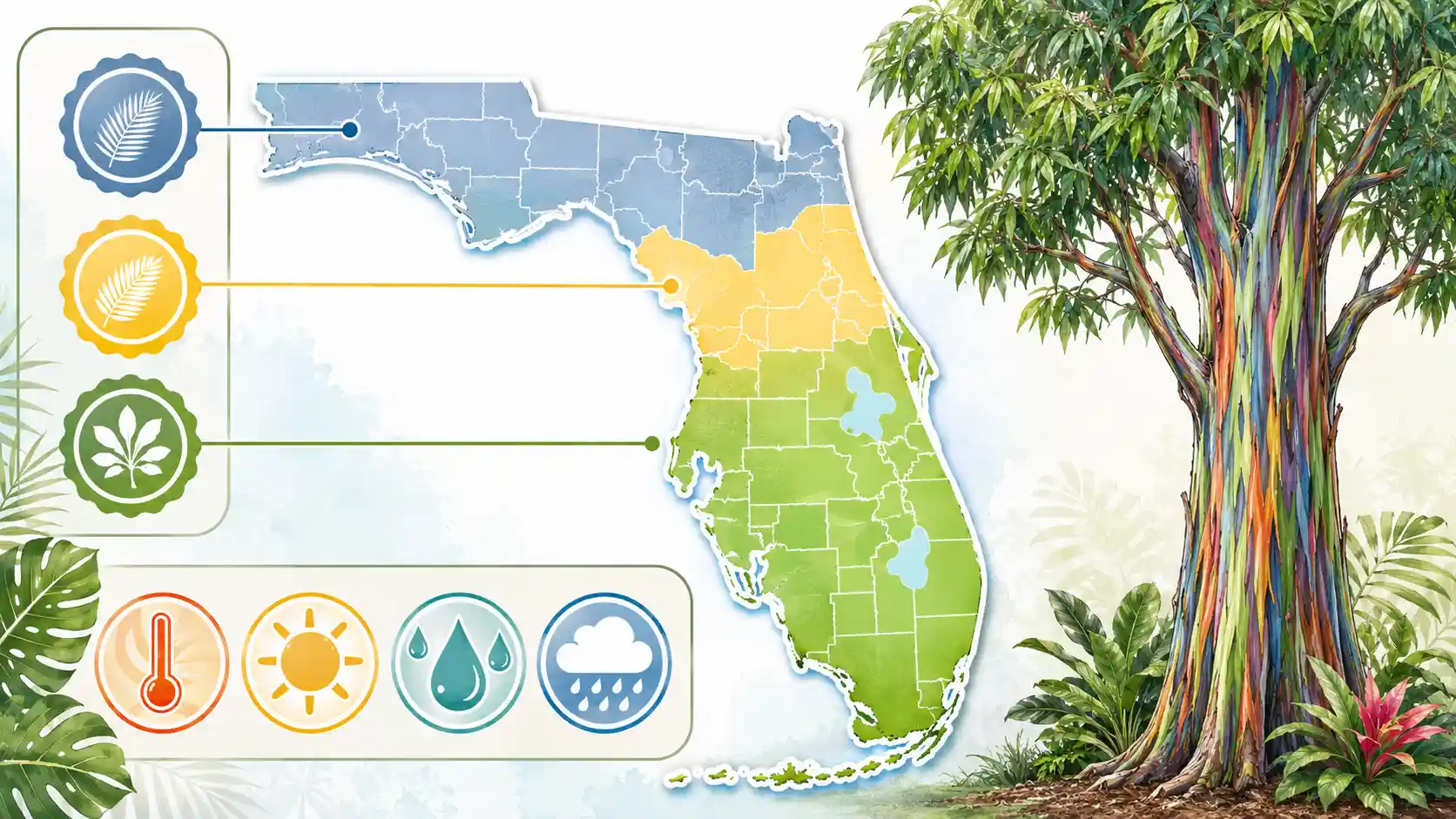
Yes, you can grow a rainbow eucalyptus tree in Florida when the climate provides enough warmth, moisture, and protection from freezing temperatures. The species is naturally adapted to tropical environments, so Florida’s southern regions provide conditions that are much closer to its native habitat than cooler areas of the state.
The tree thrives in warm climates with high humidity, regular rainfall, and long growing seasons. These conditions are common in South Florida and parts of Central Florida. Gardeners growing an eucalyptus tree in Florida should understand that this is not a small backyard plant; it develops into a large landscape tree requiring significant space.
In its native range, Eucalyptus deglupta grows in tropical forests where temperatures remain consistently warm throughout the year. Florida can replicate many of these conditions, but occasional winter cold snaps can limit growth or damage young trees.
Ideal USDA Growing Zone for Rainbow Eucalyptus in Florida
The ideal rainbow eucalyptus growing zone is USDA hardiness zone 9b through 11. These zones indicate areas where minimum winter temperatures are generally mild enough for this tropical eucalyptus species.
Zone suitability matters because rainbow eucalyptus has lower cold tolerance than many other eucalyptus species. Brief exposure to temperatures in the high 20s°F may be tolerated by established trees, but prolonged freezing conditions can cause serious injury or death.
Florida growing zones include:
| USDA Zone | Suitability |
| 9b | Possible with protection from cold snaps |
| 10a–10b | Very suitable |
| 11 | Excellent conditions |
Gardeners in northern Florida should be cautious because repeated winter freezes can prevent the tree from reaching mature size. Selecting a sheltered location, such as a protected garden area away from strong cold winds, can improve survival chances.
Are Rainbow Eucalyptus Trees Actually Found in Florida?
Yes, rainbow eucalyptus trees are found in Florida as cultivated ornamental specimens, especially in botanical gardens, parks, and large private landscapes. However, they are not considered widely naturalised throughout Florida’s wild ecosystems.
The rainbow eucalyptus tree Florida enthusiasts see is usually intentionally planted rather than naturally occurring. The state’s warm climate allows the species to grow well in suitable regions, but it requires human cultivation outside its original tropical habitat.
Is It Illegal or Invasive to Plant Rainbow Eucalyptus in Florida?
No, it is not illegal to plant rainbow eucalyptus in Florida. However, gardeners should understand the difference between legal planting and ecological suitability. The species Eucalyptus deglupta has been assessed as invasive for landscape use in South Florida by UF/IFAS because of concerns about its ability to affect native plant communities in suitable environments.
Before planting, homeowners should check current recommendations from local county extension offices and invasive plant guidance programs, especially if their property is near conservation areas, wetlands, or natural habitats.
The question “are rainbow eucalyptus trees invasive?” does not have a simple yes-or-no answer for every location. The risk depends on climate, habitat conditions, and how the tree is managed.
| Species | Florida Legal Status | Invasive Listing | Recommended Use |
| Eucalyptus deglupta (Rainbow eucalyptus) | Legal to plant | Listed as invasive for South Florida landscape use | Large properties, managed ornamental planting |
| Native Florida trees | Generally preferred near natural areas | Usually lower ecological risk | Wildlife-friendly landscapes |
Rainbow Eucalyptus Growth Rate and Mature Size
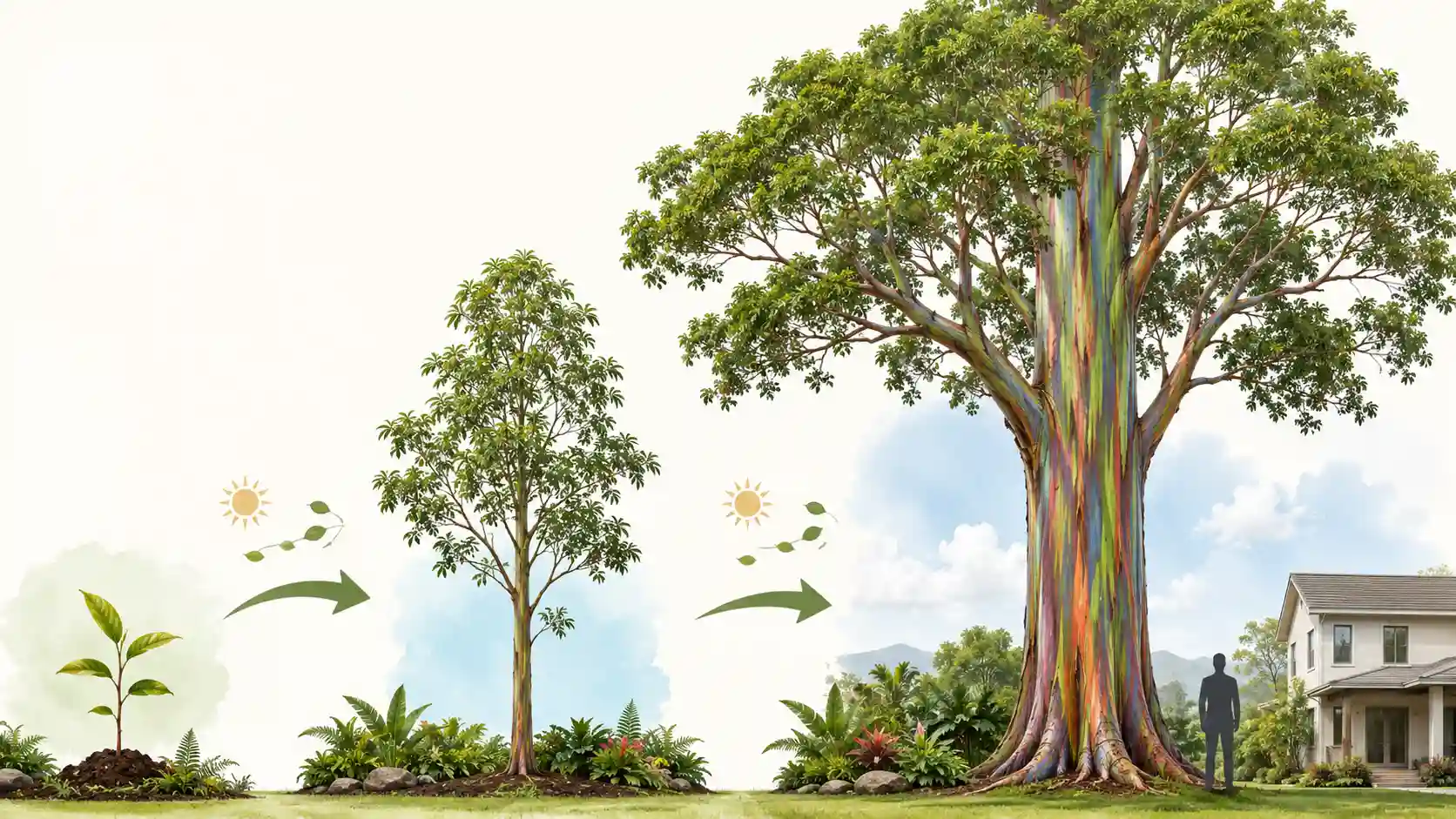
The rainbow eucalyptus tree growth rate is one of its most notable characteristics. This species is considered a very fast-growing tree when planted in suitable Florida conditions with adequate sunlight, water, and nutrients. Rainbow eucalyptus is one example of a fast-growing evergreen tree, but growth speed varies greatly between species and climates. Gardeners comparing rapid-growth options can explore our guide on Fast Growing Evergreen Trees Australia Guide for more suitable landscape choices.
A young tree can establish quickly and may gain several feet of height each year. In ideal conditions, growth rates of approximately 3–8 feet per growing season are possible.
Plant Size
A mature rainbow eucalyptus tree can become extremely large:
- Height in the continental United States: approximately 100–125 feet
- Native tropical range height: up to 250 feet
- Canopy spread: commonly around 6 feet or more depending on conditions
- Indoor or container-grown specimens: remain much smaller due to restricted roots
Because of its eventual size, this tree is better suited for large landscapes rather than small suburban gardens.
Growth Rate
Growth is usually fastest during Florida’s warm, wet season when temperatures, sunlight, and rainfall encourage active development. Growth commonly slows during cooler months because eucalyptus trees reduce metabolic activity during lower temperatures.
Factors affecting growth include:
- Full sunlight exposure
- Consistent moisture
- Soil drainage
- Available root space
- Protection from frost
In our experience growing tropical trees, one of the most common mistakes gardeners make is underestimating how quickly large eucalyptus species outgrow their original planting area. Planning the final mature size before planting prevents future removal problems.
How to Grow Rainbow Eucalyptus in Florida (Care Guide)
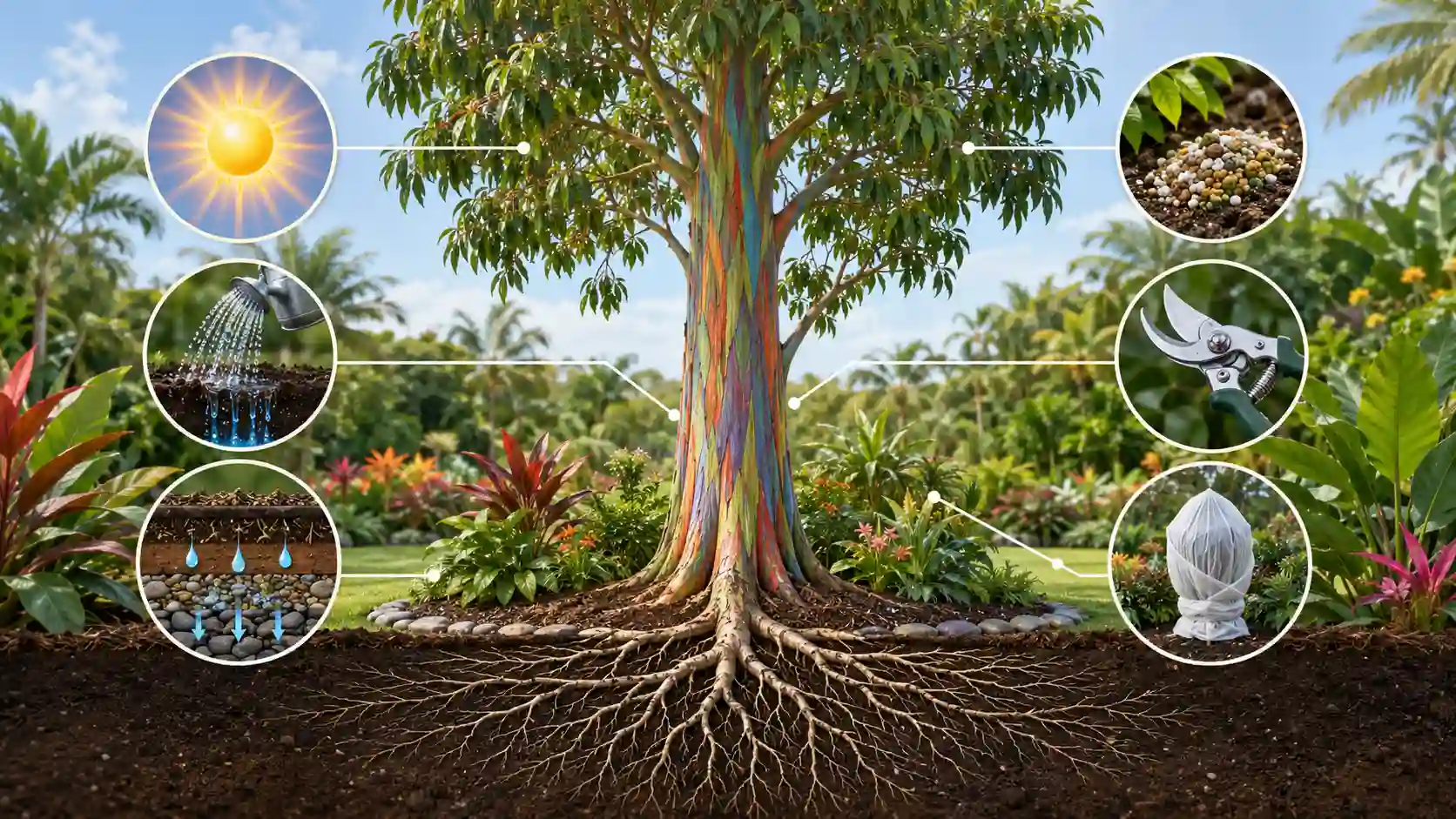
Growing rainbow eucalyptus successfully requires matching its tropical needs with Florida conditions. The best results come from planting healthy seedlings or young trees in locations with full sun, good drainage, and enough space for future growth.
Growing from Rainbow Eucalyptus Seed or Seedling
Rainbow eucalyptus can be grown from rainbow eucalyptus seed or purchased as a young rainbow eucalyptus seedling. Seed propagation is commonly used because the species produces viable seeds under suitable conditions.
For seed starting:
- Soak seeds according to nursery or supplier recommendations.
- Use a moist, well-draining propagation medium.
- Maintain warm temperatures for germination.
- Transplant seedlings after they develop a strong root system.
Young seedlings should be moved outdoors after they become established and temperatures remain consistently warm. Avoid transplanting during periods of cold weather because young plants are more sensitive to temperature stress.
Rainbow Eucalyptus Care Requirements
| Care Factor | Requirement |
| Watering | Deep watering 1–2 times weekly; increase during dry periods |
| Light | Full sun with at least 6 hours of direct sunlight daily |
| Soil | Well-drained soil, slightly acidic to neutral |
| Fertiliser | Balanced slow-release fertiliser in spring |
| Pruning | Remove dead or damaged branches, preferably during dry periods |
| Climate | Warm tropical or subtropical conditions |
Elemo Baker recommends monitoring soil moisture rather than following a fixed watering schedule because Florida soils vary greatly between sandy coastal areas and heavier inland soils. Overwatering poorly drained locations can damage roots despite the tree’s preference for moisture.
Rainbow Eucalyptus Bark — Why Is It So Colourful?
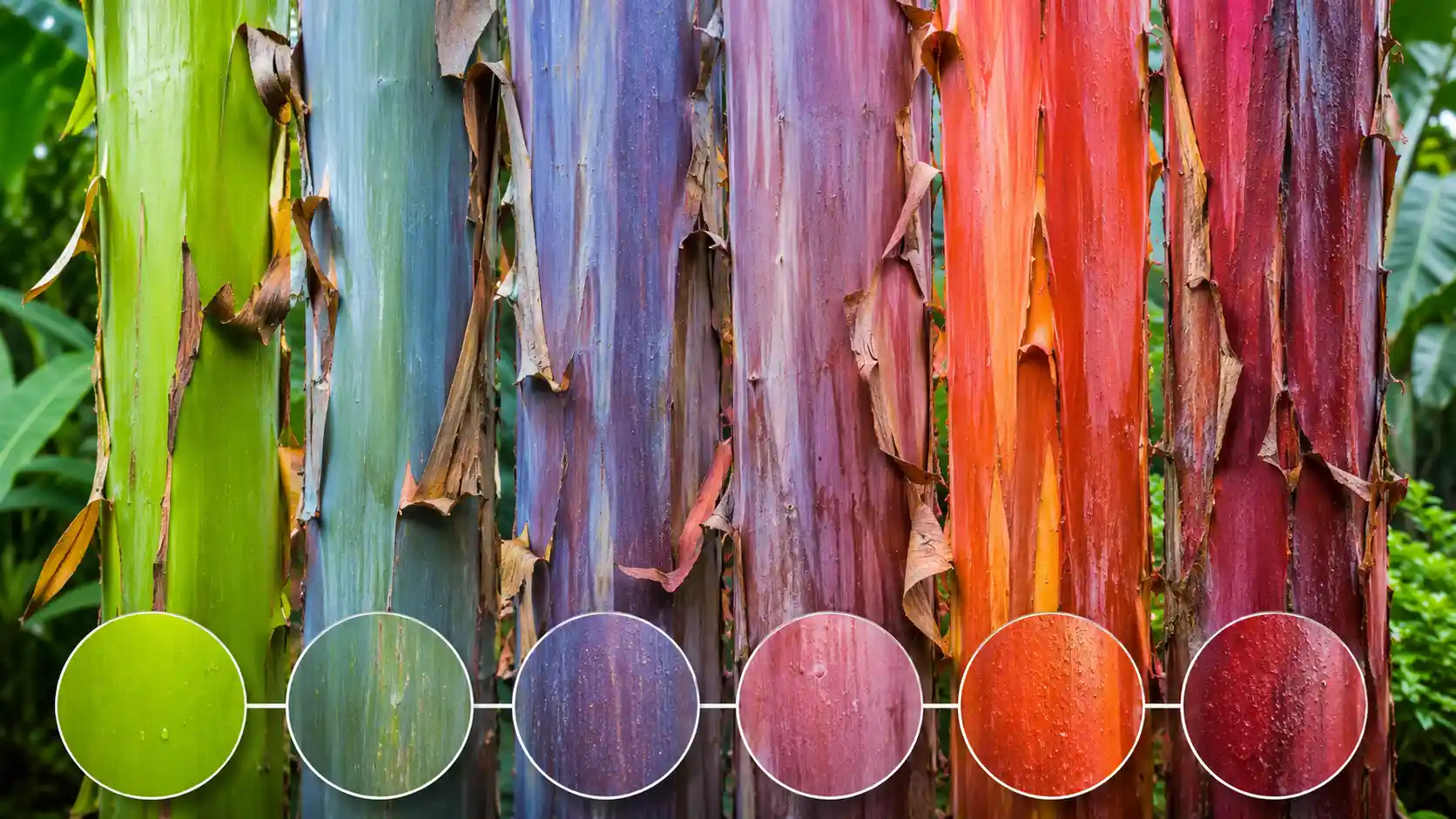
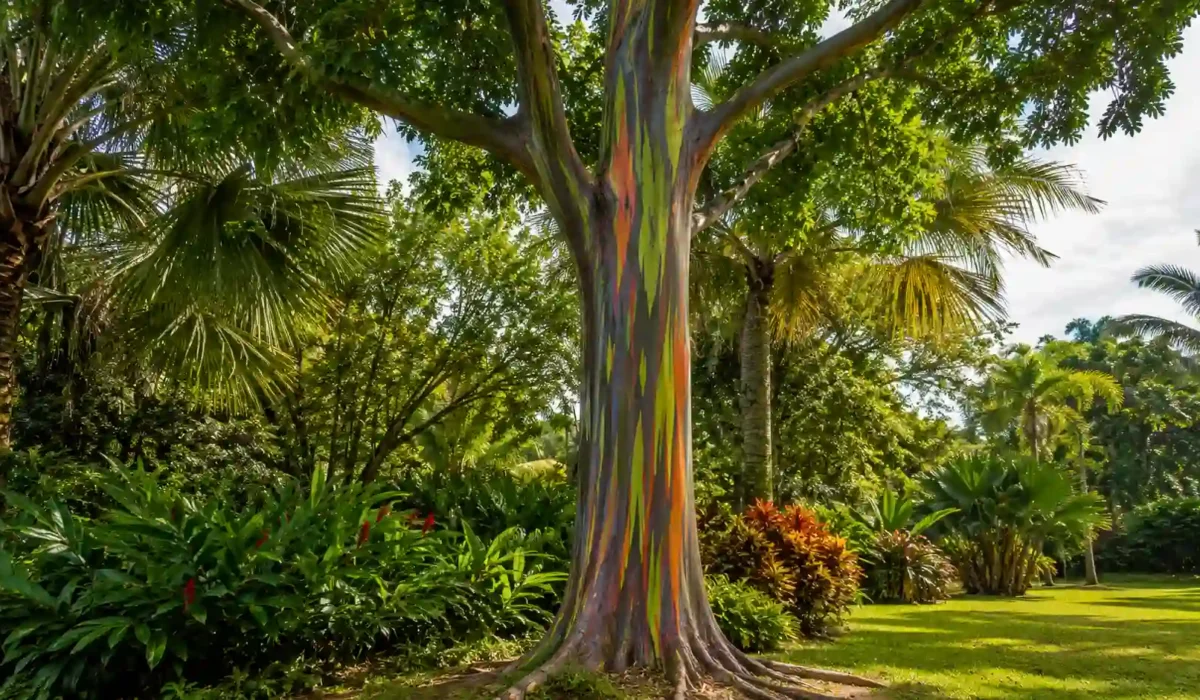
The rainbow eucalyptus tree is colourful because its bark naturally peels away in layers, revealing fresh inner bark with different pigments at different stages of maturity. This process exposes patches of green, blue, purple, orange, pink, and reddish-brown colours, creating the distinctive rainbow effect.
The scientific reason behind the eucalyptus tree color is related to bark development. Young exposed bark contains chlorophyll, which gives it a green appearance. As the bark ages, chemical changes occur, and the colours gradually shift before the outer layer sheds again.
The colour sequence is not permanent. Each section of the trunk changes over time as new bark develops and older bark falls away. Trees growing in tropical climates often display the strongest colours because warm temperatures, humidity, and active growth support continuous bark renewal.
Although pictures of rainbow eucalyptus trees often show extremely bright colours, trees grown outside their native tropical range, including some parts of Florida, may display less intense colouring. Temperature, rainfall, sunlight, and tree age all influence bark brightness.
The inside of a rainbow eucalyptus tree is not naturally rainbow-coloured like the outer trunk. The colourful appearance comes mainly from the external bark layers that peel and reveal changing surfaces. Rainbow eucalyptus is often planted as an ornamental feature tree because of its unusual appearance. Gardeners interested in other visually striking landscape trees can also explore Flowering Trees Australia: Best Species Guide for alternative flowering options.
Rainbow Eucalyptus Lifespan and Longevity
The lifespan of a rainbow eucalyptus tree depends on growing conditions, climate, soil quality, and maintenance. Under favourable tropical or subtropical conditions, Eucalyptus deglupta can live for several decades and continue producing its colourful bark throughout its life.
In Florida landscapes, longevity is influenced by:
- Protection from severe freezes
- Adequate root space
- Proper drainage
- Disease prevention
- Suitable planting location
Because this species grows rapidly, older trees may require regular monitoring for structural stability, especially when planted near buildings, roads, or other infrastructure.
Unlike smaller ornamental plants, rainbow eucalyptus is a long-term landscape commitment. Gardeners should consider the tree’s eventual size and root development before planting.
Common Problems and Disadvantages of Growing Eucalyptus in Florida
Rainbow eucalyptus can be a striking landscape tree, but it also has several disadvantages that should be considered before planting. The main concerns involve its aggressive growth, large root system, cold sensitivity, and ecological impact in certain Florida regions.
Large and Invasive Root Systems
Eucalyptus trees develop extensive root systems that help them access water and nutrients.
When planted too close to structures, roots may create problems by affecting:
- Sidewalks
- Driveways
- Foundations
- Underground pipes
- Drainage systems
Solution: Plant rainbow eucalyptus well away from buildings and hardscaping. Large open areas are more suitable than small residential gardens. Like many eucalyptus species, rainbow eucalyptus develops an extensive root system, so understanding root behaviour is important before planting. A detailed look at Gum Tree Root System: Root Spread, Problems & Safe Distances can help gardeners understand potential root-related landscape issues.
Cold Sensitivity in Florida Winters
Rainbow eucalyptus is one of the more cold-sensitive eucalyptus species. Although mature trees may tolerate brief temperature drops into the high 20s°F, extended frost exposure can cause severe damage.
Solution:
- Plant only in suitable USDA zones
- Use frost protection for young trees
- Choose sheltered planting locations
- Avoid areas with frequent freezes
The question “can rainbow eucalyptus survive winter?” depends mainly on the severity and duration of cold conditions.
Size Problems in Residential Landscapes
A rainbow eucalyptus tree can become much larger than many homeowners expect. A tree planted as a small seedling can eventually dominate a typical suburban yard. Large ornamental trees require careful planning because their mature size and roots can affect surrounding spaces. Similar considerations apply to other large landscape trees such as those discussed in Poinciana Tree Root System: Growth, Problems & Care Guide.
Solution: Reserve this species for:
- Large gardens
- Acreage
- Parks
- Open landscapes
Companion Planting Concerns
Eucalyptus leaves contain natural compounds that may influence nearby plant growth as leaves decompose. Heavy leaf litter can create challenges for some understorey plants.
Solution: Avoid planting sensitive groundcovers or small plants directly beneath mature eucalyptus trees. Maintain adequate spacing between the tree and companion plants.
Rainbow Eucalyptus vs Other Eucalyptus Species in Florida (Comparison)
Different eucalyptus species have different levels of cold tolerance, growth habits, and landscape suitability. Rainbow eucalyptus (Eucalyptus deglupta) is mainly valued for appearance, while other eucalyptus species may be selected for durability or commercial uses.
| Species | Cold Hardiness | Invasive Status | Typical Height | Best Florida Zone |
| Eucalyptus deglupta (Rainbow eucalyptus) | Lower cold tolerance | Listed as invasive for South Florida landscape use | 100–125 ft | 9b–11 |
| Eucalyptus camaldulensis (Red Gum) | More cold tolerant | Can become invasive in some regions | 60–100+ ft | 9–11 |
| Silver Dollar Eucalyptus (Eucalyptus cinerea) | Moderate cold tolerance | Generally lower invasive concern compared with some species | 20–50 ft | 8–11 |
Rainbow eucalyptus is usually chosen for ornamental value because of its colourful bark. Red gum eucalyptus is better known for adaptability and toughness, while silver dollar eucalyptus is often preferred for its attractive rounded foliage.
Buying a Rainbow Eucalyptus Tree or Seedling in Florida
When looking for where to buy a rainbow eucalyptus tree, gardeners should focus on plant quality rather than only size. A healthy seedling from a reputable nursery is often easier to establish than a stressed, oversized tree.
Before purchasing, consider:
- Confirming the botanical identity as Eucalyptus deglupta
- Choosing healthy seedlings with strong root systems
- Avoiding damaged or root-bound plants
- Selecting trees suitable for Florida growing conditions
A genuine rainbow eucalyptus should not be confused with other eucalyptus species that may have similar foliage but do not develop the same colourful bark. Selecting plants that match your climate, available space, and garden design goals is essential for long-term success. For broader planting ideas and design inspiration, see our Australian Plants Guide: Indoor Houseplants & Garden Design.
Seedlings are generally easier to transplant because they adapt faster to new soil conditions. Larger established trees may provide immediate impact but can experience more transplant stress.
Rainbow Eucalyptus Bonsai and Alternative Uses
Rainbow eucalyptus bonsai is possible as a young specimen, but it is not considered an ideal traditional bonsai subject. The species naturally develops a large root system and rapid growth habit, making long-term miniature cultivation challenging.
Successful container-grown specimens require:
- Frequent root management
- Regular pruning
- Appropriate container size
- Careful water monitoring
The tree is also known for timber production in some regions. However, its main value in gardens is ornamental because of its unique peeling bark rather than small-scale wood use.
Conclusion
The rainbow eucalyptus tree Florida gardeners grow can thrive in suitable parts of the state, especially USDA zones 9b–11 where warm temperatures and long growing seasons support healthy growth. This tropical species, also called the Mindanao gum tree, is admired for its colourful peeling bark and exceptionally fast growth.
However, rainbow eucalyptus requires careful planning because mature trees can reach 100–125 feet, develop extensive roots, and may be considered invasive for landscape use in South Florida. Choosing the correct location, providing proper care, and understanding local recommendations are essential for successful cultivation. Choosing the right tree for your landscape requires understanding growth habits, root systems, and climate suitability. Our guide to Best Trees and Shrubs for Australian Gardens explains how to select long-lasting trees and shrubs for different garden settings.
For Florida gardeners with enough space, the rainbow eucalyptus tree can be an impressive ornamental specimen, but it should always be planted responsibly.
FAQs
Can you grow a rainbow eucalyptus tree in Florida?
Yes, you can grow a rainbow eucalyptus tree in Florida, especially in USDA hardiness zones 9b–11. South and Central Florida provide the warm, humid conditions needed for healthy growth, although protection from severe freezes is important.
Is it illegal to plant rainbow eucalyptus in Florida?
No, it is not illegal to plant rainbow eucalyptus in Florida. However, Eucalyptus deglupta is listed as invasive for South Florida landscape use, so gardeners should check local recommendations before planting near natural areas.
How long does it take for a rainbow eucalyptus tree to grow?
A rainbow eucalyptus tree is a fast grower and may add approximately 3–8 feet of height per growing season under ideal conditions. Growth depends on sunlight, water availability, soil quality, and climate.
Can rainbow eucalyptus trees survive a Florida winter?
Rainbow eucalyptus trees can survive Florida winters in suitable zones, especially 9b–11. Brief cold periods may be tolerated, but extended freezing temperatures can damage or kill young trees.
What are the disadvantages of planting a eucalyptus tree?
The main disadvantages include rapid growth, large size, extensive roots, cold sensitivity, and possible effects on nearby plants. Proper spacing and site selection reduce many of these problems.
What is the lifespan of a rainbow eucalyptus tree?
A rainbow eucalyptus tree can live for several decades when grown in favourable conditions with adequate moisture, warmth, and space. Longevity depends heavily on climate and maintenance.
What should you not plant next to a eucalyptus tree?
Avoid planting sensitive small plants directly beside eucalyptus because leaf litter and natural compounds may affect some understorey plants. Keep sufficient spacing between eucalyptus and companion plants.