
Topiary Plants Australia: Best Varieties & Care Guide
According to Elemo Baker, Australia’s most reliable topiary plants are Japanese box (Buxus microphylla var. japonica), which grows successfully across Australia except in hot tropical zones, and native Syzygium australe ‘Elite’, valued because it resists the leaf-dimpling psyllid that troubles other lilly pilly varieties. Westringia fruticosa and Correa alba round out the native options for coastal, salt- and drought-prone gardens.
Privet is rarely used for Australian topiary because it’s classified as a weed in many regions, and true yew performs best only in cool-climate gardens. For quick temporary effects, the twining wire vine (Muehlenbeckia complexa) covers a frame fast but its rapid growth demands frequent reshaping, while Bhutan cypress holds a more consistent, reliable form than the true pencil pine, which varies unpredictably in shape.
By Elemo Baker | Plant Care & Gardening Expert
Last Updated: August 2026
Quick Summary
- Buxus, conifers, lilly pilly and Westringia are among the best topiary plants for Australian gardens.
- Dense foliage, small leaves and steady growth make the easiest plants to shape and maintain.
- Lollipop trees, ball trees and standard plants are closely related forms of topiary.
- Light, regular pruning and well-drained soil help topiary plants stay healthy and symmetrical.
What Are Topiary Plants?
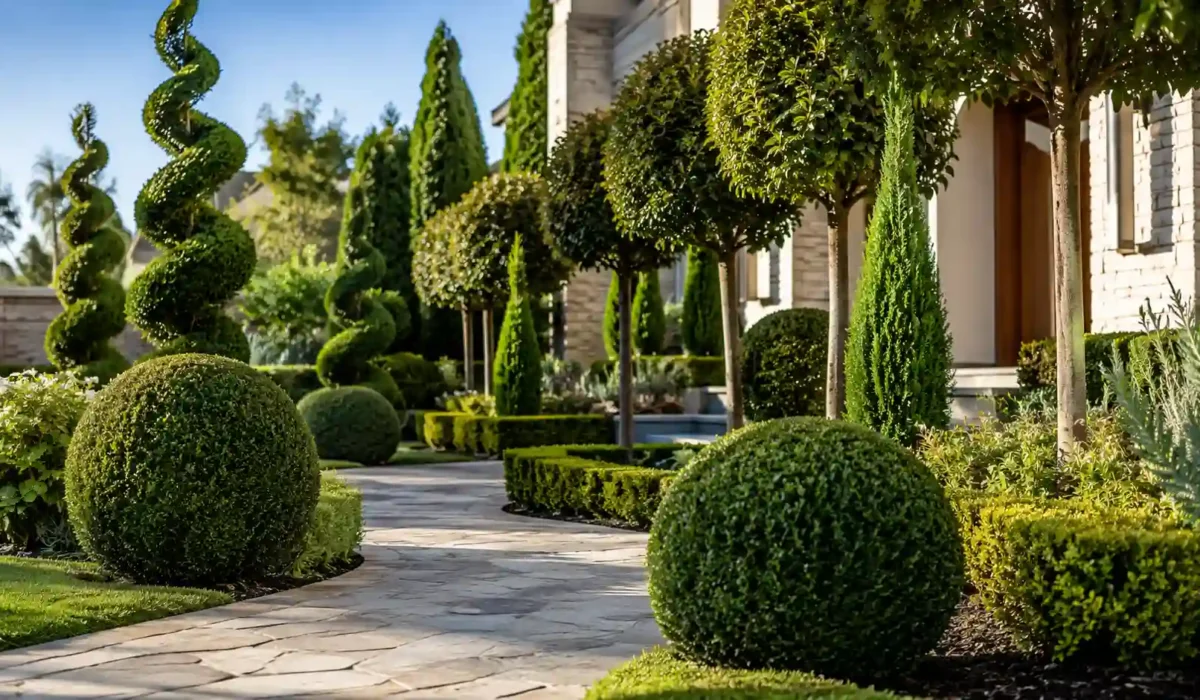
Topiary plants are shrubs and trees that respond well to regular pruning, allowing them to be shaped into ornamental forms. The art of topiary has been practised for centuries and remains popular because it adds structure, balance and year-round greenery to landscapes. Topiary is a traditional horticultural practice that involves training and clipping living plants into decorative forms, a technique that has been used in gardens for centuries.
Most topiary plants are evergreen, meaning they retain their foliage throughout the year. Their dense branching and small leaves make it easier to maintain clean outlines with minimal gaps.
Australian gardeners commonly use topiary to create:
- Ball trees
- Cone-shaped plants
- Spiral topiary
- Lollipop trees
- Standard plants
- Formal hedges
- Decorative entrance features
Searchers often use several different names for these plants, including topiary plants, topiary trees, ball trees, shaped trees, standard plants, and simply topiaries. While the wording differs, these terms generally refer to plants that have been trained or clipped into decorative forms.
Topiary styles generally fall into two categories:
- Structured topiary: Balls, cones, pyramids, cubes and lollipop standards with clean geometric lines.
- Free-form topiary: Spirals, animals, birds and artistic designs that require more advanced pruning skills.
Structured shapes are the most common choice for Australian home gardens because they are easier to maintain and complement both modern and traditional landscapes.
Topiary vs Standard Plants vs Lollipop Trees
Many gardeners use these terms interchangeably, but there are slight differences.
A topiary plant refers to any plant that has been clipped into a decorative shape.
A standard plant is grown with a single clear trunk that supports a clipped canopy above ground level.
A lollipop tree is the common name for a standard topiary with a rounded ball-shaped crown. The appearance resembles a lollipop, giving the plant its popular name.
In practice, most nursery-labelled lollipop trees are simply standard topiary plants shaped into a neat rounded head.
Best Plants for Topiary in Australia
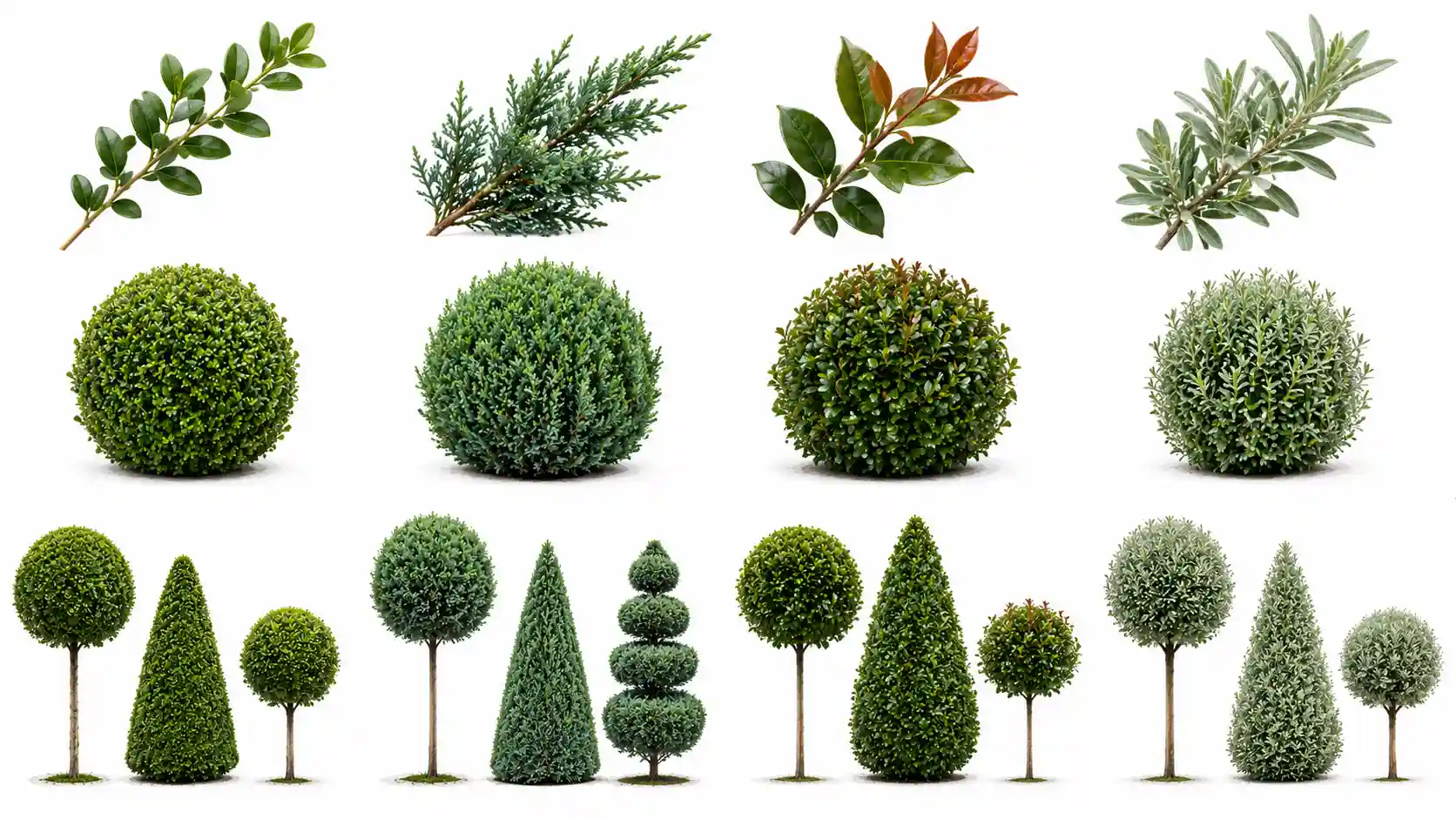
Choosing the right species is the most important step in successful topiary. The best plants develop dense foliage, tolerate repeated pruning and remain attractive throughout the year. Choosing the right species is essential for long-term garden success, and many topiary selections overlap with the best trees and shrubs for Australian gardens, especially evergreen species suited to local climates.
Buxus (Box) Varieties
Buxus has long been regarded as the traditional topiary plant because of its naturally compact growth and small leaves.
Popular varieties include:
- English Box (Buxus sempervirens)
- Japanese Box (Buxus microphylla var. japonica)
- Korean Box (Buxus microphylla var. microphylla)
These plants produce dense branching that allows gardeners to create crisp balls, cones, cubes and formal hedges with relatively little effort.
In our experience growing box plants, regular trimming every few weeks during active growth keeps the foliage thick and prevents open patches from developing.
One challenge with Buxus is its susceptibility to diseases such as box blight and pests in some regions. Because of these concerns, many Australian gardeners now consider native shrubs or conifers as practical alternatives.
Conifers for Topiary
Conifers are excellent choices for larger topiary forms because they naturally produce upright growth and evergreen foliage.
Common options include:
- Juniper
- Thuja
- Cypress
Junipers are particularly valued because they tolerate drought, heat and changing weather conditions once established. Their foliage colour also varies between green, blue-green and silver tones, giving gardeners more design flexibility.
Elemo Baker recommends choosing naturally compact conifer varieties when creating spirals or cones, as they generally require less corrective pruning over time.
Native Australian Alternatives
Australian native plants provide excellent options for gardeners wanting lower-maintenance topiary that suits local conditions.
Popular native choices include:
- Coastal rosemary (Westringia fruticosa)
- Correa alba
- Lilly pilly (Acmena and Syzygium species)
Lilly pillies have become especially popular for clipped balls and standard lollipop forms. Their glossy foliage, colourful new growth and ornamental berries make them attractive throughout the year. Lilly pilly (Syzygium australe) is one of the most versatile native choices for Australian topiary, hedging and screening because it responds well to pruning while producing dense evergreen foliage.
Westringia performs especially well in coastal gardens thanks to its tolerance of salt-laden winds and free-draining soils. It also copes well with light shade, making it suitable for gardens where full sun is limited.
In our experience, native species often recover quickly after light pruning when kept healthy through regular watering during establishment.
Other Popular Choices
Several other evergreen plants also adapt well to topiary in Australian gardens.
These include:
- Citrus
- Myrtle
- Camellia (Camellia sasanqua)
- Evergreen azalea
Camellia sasanqua is particularly valued because it combines attractive flowers with dense evergreen foliage, making it suitable for decorative entranceways and formal garden features. Some evergreen hedge plants, including compact ficus varieties, can also be shaped into formal garden structures when regularly pruned and maintained.
Citrus standards provide both ornamental appeal and edible fruit, while evergreen azaleas suit smaller gardens where compact growth is preferred.
Comparison of Popular Topiary Plants
| Plant Type | Growth Speed | Drought Tolerance | Pest Resistance | Appearance | Preferred Light |
| Buxus | Slow to moderate | Moderate | Moderate | Formal | Full sun to part shade |
| Conifers | Slow | High | High | Formal | Full sun |
| Lilly Pilly | Moderate to fast | Moderate | Good | Formal or informal | Full sun to part shade |
| Westringia | Moderate | High | Excellent | Relaxed natural look | Full sun to part shade |
Topiary Shapes and Forms
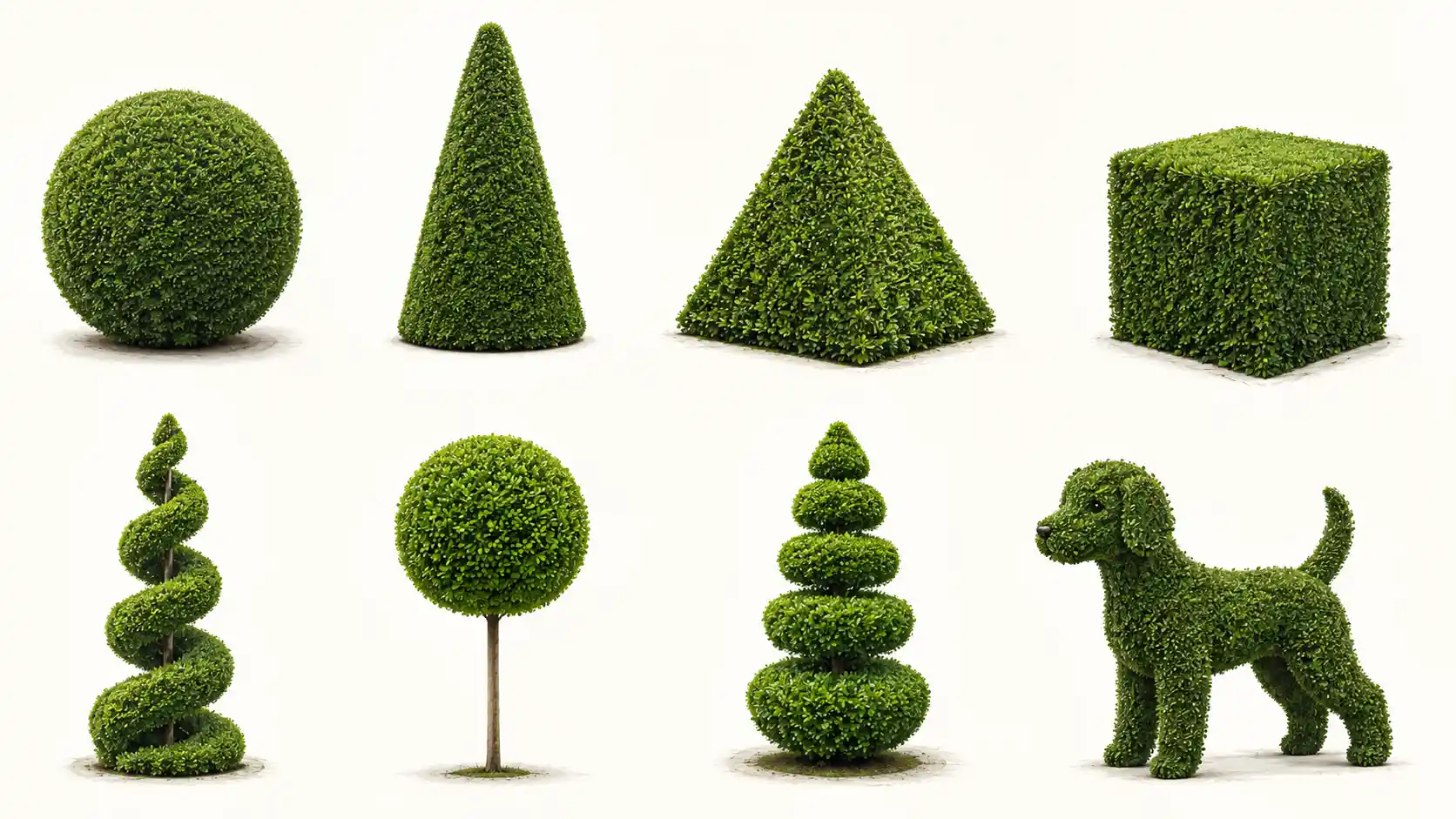
Topiary plants can be trained into a wide range of ornamental shapes, from simple geometric designs to intricate artistic creations. The best shape depends on the plant species, its growth habit and the amount of maintenance you are willing to provide.
Common topiary shapes include:
- Spheres (balls)
- Cones
- Pyramids
- Cubes and squares
- Spirals
- Lollipop (standard) trees
- Animal and decorative figures
For most home gardens, ball and cone shapes are the easiest to maintain because they require only regular light trimming to preserve their outline.
How Lollipop (Standard) Trees Are Made
A lollipop tree is created by training a plant to develop a single, straight trunk with a rounded crown at the top. This process begins when the plant is young and usually takes several growing seasons.
The basic process involves:
- Selecting one strong central stem to become the trunk.
- Removing lower side shoots as the trunk develops.
- Allowing the plant to reach the desired height.
- Encouraging branching at the top.
- Regularly clipping the crown into a rounded ball.
Plants with naturally small leaves and dense branching are the easiest to train into this form.
Some nursery-grown standards are also produced by grafting a compact shrub onto a tall, straight rootstock. This provides an instant lollipop appearance and allows gardeners to purchase mature specimens rather than waiting several years for training.
Depending on the species, standard topiary plants may have crown sizes ranging from compact patio specimens to large feature trees suitable for formal landscapes.
Topiary Plant Size and Growth Rate
The mature size and growth rate of a topiary plant depend on its species, growing conditions and how frequently it is pruned. Regular clipping controls size while encouraging dense foliage.
Mature Size
Topiary plants are available in many sizes, from small potted feature plants to large garden specimens.
Typical mature sizes include:
- Small ball topiary: 30–50 cm wide
- Medium standards: 1–1.5 m tall
- Large standard topiary: 1.5–2 m or more
- Mature topiary balls: 50 cm to over 1 m in diameter
When grown as a standard, Buxus sempervirens commonly reaches around 1.5–2 metres in height with a rounded head approximately 0.5–1 metre wide, depending on pruning.
Most topiary species are best suited to outdoor gardens, courtyards and patios. Plants grown in containers generally remain smaller because root space is restricted, while those planted in garden beds often achieve their full mature size.
Environmental factors that influence growth include:
- Pot size
- Soil quality
- Sunlight
- Water availability
- Wind exposure
- Climate
Growth Rate
Growth speed varies considerably between species.
Generally:
- Junipers are slow-growing and highly tolerant of temperature extremes.
- Buxus grows slowly to moderately, making it ideal for maintaining neat shapes.
- Lilly pillies produce faster growth and may require more frequent trimming.
- Bay trees have a moderate growth rate and benefit from recovery time after heavier pruning.
Most topiary plants produce their strongest flush of growth during spring and summer. This is usually the best time for shaping because fresh growth quickly softens trimmed edges and fills small gaps. Understanding evergreen growth habits helps gardeners choose the right plant size and maintenance level, especially when comparing slow-growing topiary plants with faster-growing evergreen trees used in Australian gardens.
Elemo Baker recommends avoiding severe pruning late in winter or during periods of extreme heat, as plants recover more slowly under stressful conditions.
How to Care for Topiary Plants
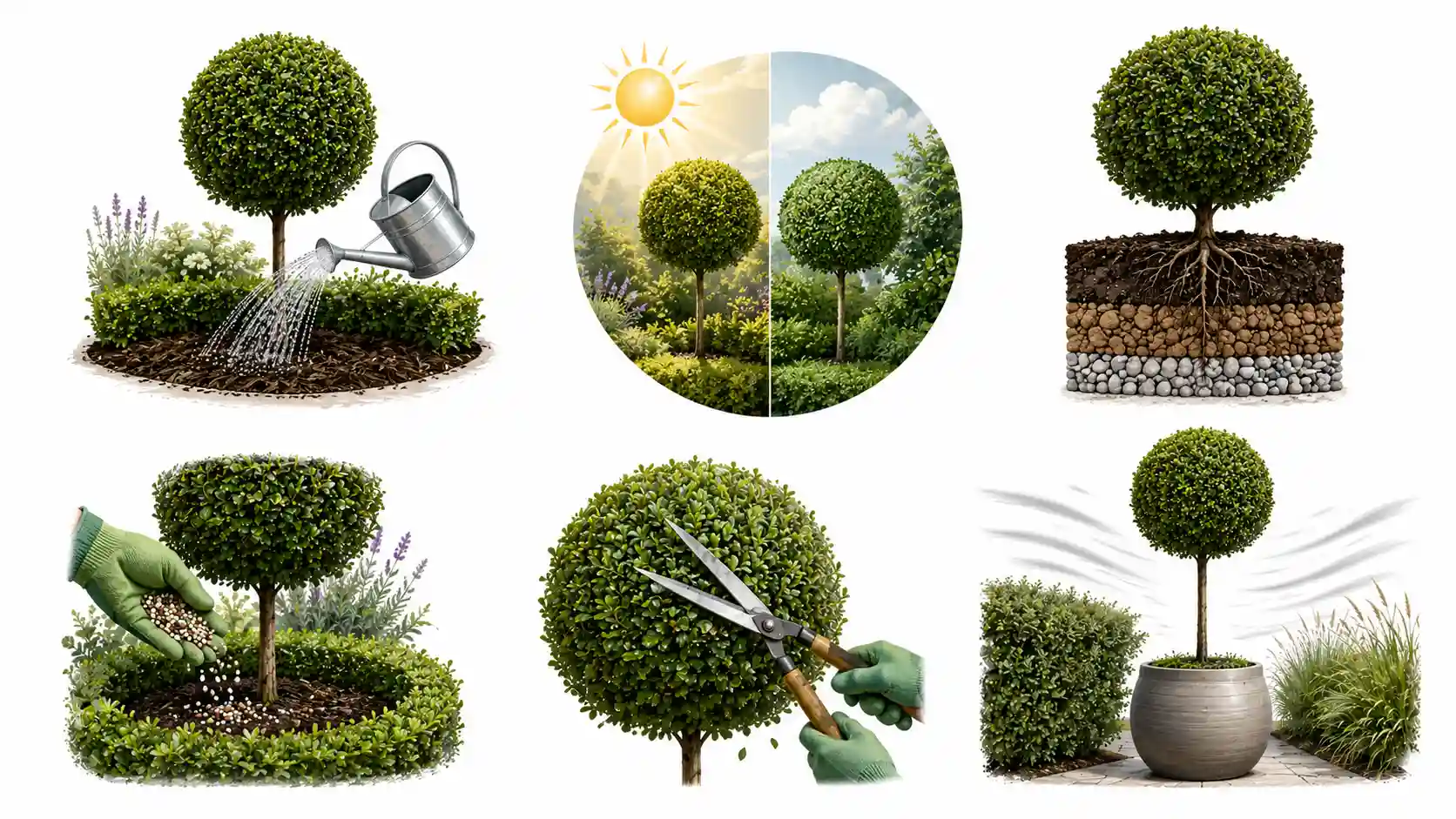
Proper care keeps topiary healthy, dense and easy to shape. While requirements vary slightly between species, most topiary plants benefit from consistent maintenance rather than occasional heavy attention.
Watering
Water newly planted topiary regularly until the root system is well established.
Once established:
- Water deeply during prolonged dry periods.
- Allow excess water to drain freely.
- Avoid permanently wet soil, particularly around conifers.
Container-grown plants usually require more frequent watering than those planted in the ground.
Light
Most topiary plants perform best in:
- Full sun
- Part shade
Native species such as Westringia and Correa generally tolerate more shade than many traditional European topiary plants, making them useful for sheltered courtyards and partially shaded gardens.
Soil
Good drainage is essential for healthy root development.
An ideal soil should be:
- Free-draining
- Rich in organic matter
- Slightly moisture-retentive without becoming waterlogged
Improving heavy clay soils with compost and organic matter can help reduce drainage problems.
Fertilising
Balanced fertiliser applied during spring and autumn encourages healthy new shoots after pruning.
Avoid excessive nitrogen, as rapid soft growth may lose its neat shape more quickly and require additional trimming.
Pruning
Regular light trimming produces a denser, healthier plant than occasional heavy pruning.
Good pruning practices include:
- Trim little and often.
- Remove damaged or dead growth promptly.
- Maintain symmetry by checking the plant from several angles.
- Clean pruning tools before use to reduce disease spread.
In our experience, clipping every few weeks during active growth is easier than trying to restore an overgrown plant after several months.
Wind and Stability
Standard or lollipop topiary plants are naturally top-heavy.
For container-grown specimens:
- Use heavy pots to improve stability.
- Position plants where they are protected from strong winds.
- Stake young standards if necessary until the trunk becomes stronger.
This helps prevent leaning, stem damage and root disturbance during storms.
Common Topiary Problems and How to Fix Them
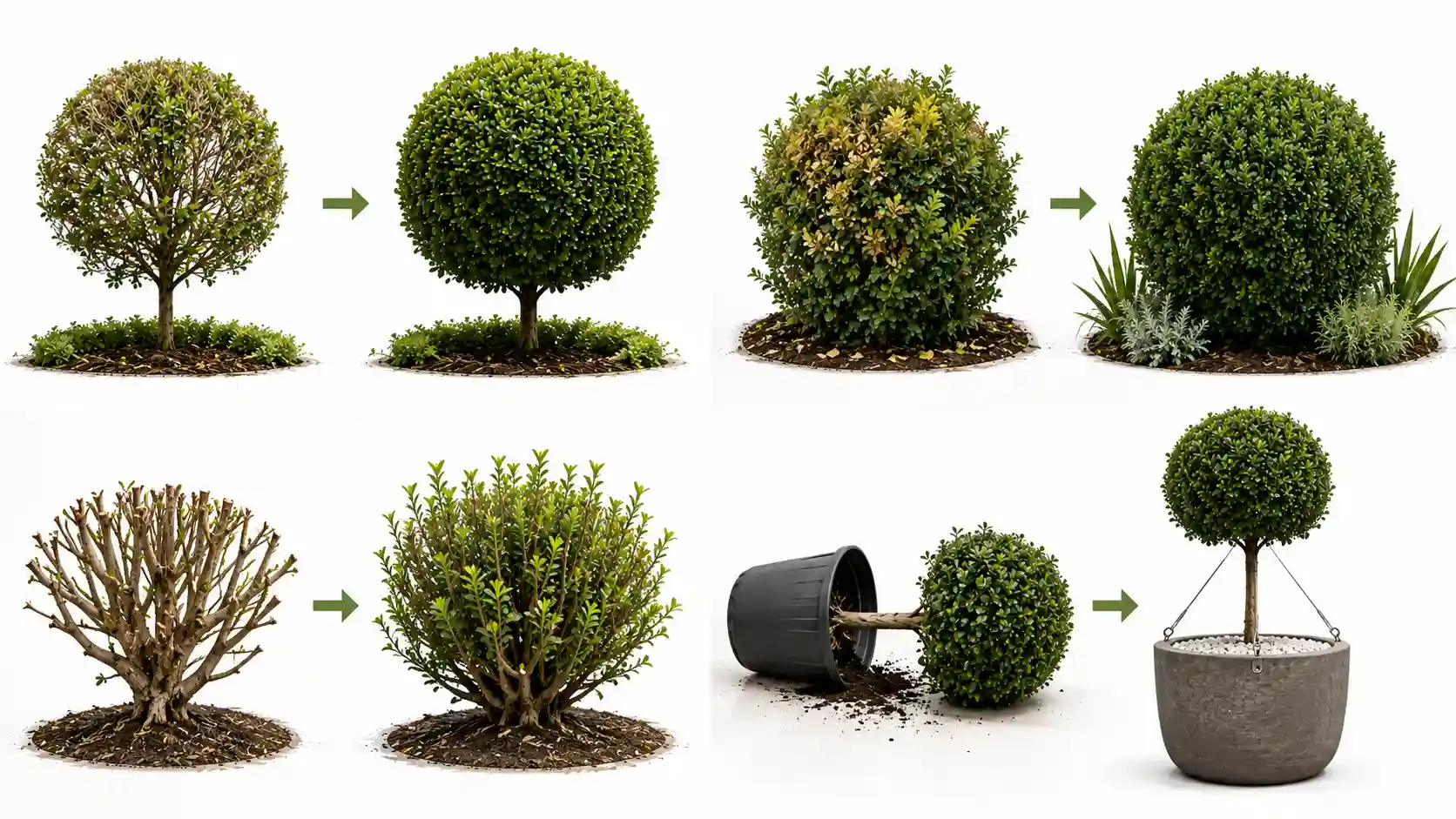
Most topiary problems are caused by inconsistent maintenance, unsuitable growing conditions or pest and disease pressure. Identifying the issue early allows the plant to recover more quickly and maintain its ornamental shape.
| Problem | Common Cause | Solution |
| Sparse or patchy foliage | Infrequent trimming or insufficient light | Prune lightly and regularly, improve light exposure and maintain consistent watering. |
| Box blight or pest damage | Fungal disease or insect infestation on Buxus | Remove affected growth, improve air circulation and consider resistant conifers or native alternatives where problems persist. |
| Slow regrowth after heavy pruning | Excessive removal of foliage | Allow the plant time to recover, water consistently and avoid repeated hard pruning. |
| Topiary falling over in pots | Top-heavy growth or lightweight containers | Use larger, heavier pots, position plants in sheltered areas and stake young standards if required. |
Healthy topiary develops through gradual shaping rather than aggressive cutting. Frequent light trims encourage dense branching and reduce the likelihood of bare patches.
If a Buxus plant repeatedly experiences disease problems, replacing it with a suitable conifer, lilly pilly or Westringia may provide a more resilient long-term solution for Australian conditions.
Beginner Mistakes to Avoid
Many first-time gardeners assume any evergreen shrub can become a successful topiary. In reality, choosing the right species and establishing good pruning habits from the beginning makes a significant difference.
Common mistakes include:
Choosing the Wrong Plant
Fast-growing plants with large leaves often become untidy and require constant correction.
Instead, select species that naturally produce:
- Small leaves or fine foliage
- Dense branching
- Strong tolerance to regular pruning
- Compact growth
Waiting Too Long to Start Shaping
Training should begin while the plant is still young.
Early shaping helps establish:
- A straight trunk
- Even branching
- Balanced growth
- Better long-term symmetry
Correcting an overgrown plant is usually more difficult than maintaining one that has been shaped consistently from the start.
Letting the Crown Become Uneven
Lollipop trees can quickly lose their balanced appearance if one side grows faster than the other.
Simple shaping guides, such as a hoop template or regular visual checks from multiple angles, help maintain a symmetrical rounded crown.
Elemo Baker recommends stepping back several metres while pruning. Viewing the plant from a distance often makes uneven areas much easier to identify before finishing the trim.
Topiary Plants for Pots vs Garden Beds
Topiary performs well in both containers and garden beds, provided the plant is matched to the available space and growing conditions. In larger landscapes, topiary plants can also be combined with low-maintenance fence line plantings to create structured garden boundaries and attractive green screening.
Topiary Plants for Pots
Containers are ideal for:
- Front entrances
- Courtyards
- Patios
- Balconies
- Outdoor entertaining areas
Compact species that perform well in pots include:
- Japanese Box
- Korean Box
- Small junipers
- Westringia
- Compact lilly pilly varieties
Container-grown topiary requires more frequent watering and occasional repotting as the root system develops.
Topiary Plants for Garden Beds
Garden beds provide more root space and allow plants to reach their mature size.
Suitable choices include:
- Larger lilly pillies
- Junipers
- Cypress
- Thuja
- Mature Buxus
- Westringia planted as repeating landscape features
These plants can be used to create:
- Formal pathways
- Garden borders
- Screening
- Feature entrances
- Symmetrical landscape designs
Selecting the right species for your local climate, soil and available space will make long-term maintenance much easier.
Conclusion
Choosing the right topiary plants Australia has to offer begins with selecting species that suit your local climate and garden style. Traditional options such as Buxus, hardy conifers and native Australian plants like lilly pilly, Westringia and Correa all provide excellent choices for creating attractive balls, cones and standard lollipop trees.
Long-lasting topiary is achieved through thoughtful species selection, early training and consistent light pruning rather than occasional heavy cutting. With well-drained soil, suitable sunlight and regular maintenance, topiary plants can provide year-round structure and elegance in Australian gardens for many years.
Frequently Asked Questions
What is the easiest plant to use for topiary in Australia?
Japanese Box (Buxus microphylla var. japonica) is one of the easiest plants for beginners because of its dense foliage, compact growth and excellent response to regular pruning. Lilly pilly and Westringia are also reliable choices for Australian conditions.
Can native Australian plants be used for topiary?
Yes. Native species such as Westringia fruticosa, Correa alba and many lilly pilly varieties respond well to shaping and are well adapted to Australian climates. They are particularly suitable for coastal gardens and areas with free-draining soils.
How often should topiary plants be pruned?
Most topiary plants benefit from light trimming every few weeks during the active growing season. Regular maintenance encourages dense growth and helps preserve the desired shape more effectively than infrequent heavy pruning.
Do topiary plants need full sun?
Most topiary species grow best in full sun to part shade. While many conifers and Buxus prefer brighter positions, native plants such as Westringia and Correa can tolerate semi-shaded locations.
How long does it take to grow a topiary ball or lollipop tree?
The timeframe depends on the plant species and the size you want to achieve. Smaller topiary balls may develop within two to three years, while larger lollipop trees often require several years of careful training and regular pruning.
Are conifers or Buxus better for Australian conditions?
Both are excellent options, but the better choice depends on your location. Buxus creates a classic formal appearance, while many conifers offer greater drought tolerance and fewer disease concerns. In some Australian regions, native alternatives such as lilly pilly and Westringia also provide outstanding performance with lower maintenance.