

Weeping Lilly Pilly Brisbane: Size, Care & Hedge Guide
Introduction
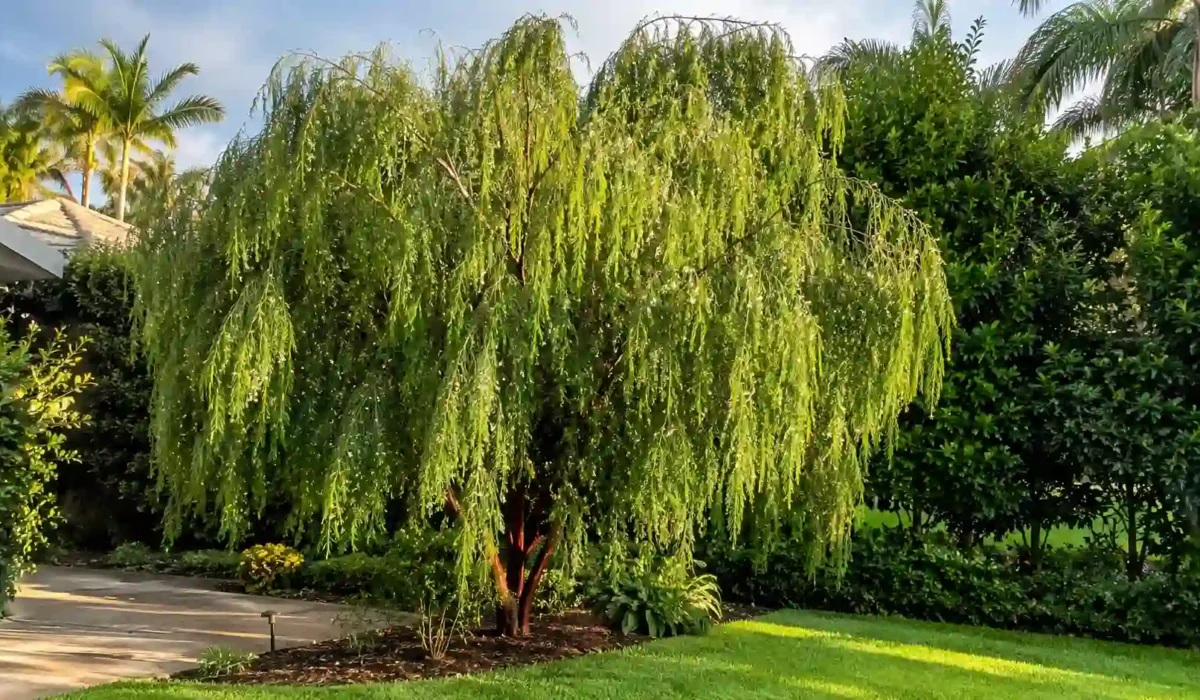
Weeping lilly pilly Brisbane refers to the popular use of Waterhousia floribunda, a large evergreen Australian native tree valued for screening, hedging, and feature planting in subtropical gardens. The weeping lilly pilly is naturally suited to Brisbane’s warm, humid climate, where it can develop dense green foliage and rapid growth when planted in suitable conditions. This guide explains its mature size, growth rate, hedge spacing, care requirements, common pest issues, flowering habits, and where to buy weeping lilly pilly plants in Brisbane.
By Elemo Baker | Plant Care & Gardening Expert
Last Updated: July 2026
Quick Summary
- Waterhousia floribunda (weeping lilly pilly) can reach around 8–20m tall and 5–10m wide when left unpruned.
- In Brisbane’s subtropical climate, it can grow approximately 60–90cm per year with good care.
- For screening hedges, plants are usually spaced 1–1.5m apart to create a dense privacy barrier.
- It prefers full sun to part shade, regular watering during establishment, and well-drained soil.
- Weeping lilly pilly plants are widely available from Brisbane nurseries, online suppliers, and retailers such as Bunnings, depending on seasonal stock.
What Is a Weeping Lilly Pilly?
The weeping lilly pilly is the common name for Waterhousia floribunda, an Australian native evergreen tree from the Myrtaceae family. It is widely grown in Brisbane gardens because of its graceful weeping growth habit, glossy foliage, and ability to form a thick green screen when regularly pruned.
Weeping lilly pilly belongs to the Myrtaceae family, a large plant family that includes many Australian native species such as eucalyptus, tea trees, and bottlebrushes.
This species is commonly selected for large boundary plantings, wind protection, privacy screening, and ornamental garden features. Its dense foliage helps create a natural barrier, making it one of the popular lilly pilly options for suburban landscapes.
Botanical name and synonyms (Waterhousia floribunda / Waterhousea floribunda / Syzygium floribundum)
The accepted botanical name is Waterhousia floribunda, although gardeners may find it listed under older scientific names, including:
- Waterhousea floribunda
- Syzygium floribundum
The spelling difference between Waterhousia and Waterhousea causes some confusion because both names appear in gardening references and plant listings. Searches for “waterhousea lilly pilly” often refer to the same species.
The terms lilly pilly, lillypilly, pillys, and pillies are informal common names used across Australia for several native plants in the Myrtaceae family, particularly species from the Syzygium, Acmena, and Waterhousia groups.
Native origin and where it grows naturally in Australia
Waterhousia floribunda is native to eastern Australia, particularly rainforest and river environments of:
- Queensland
- New South Wales
It naturally grows in moist areas such as creek banks, lowland forests, and subtropical rainforest margins. These origins explain why it performs especially well in Brisbane, where warm temperatures and higher humidity provide similar growing conditions.
Weeping Lilly Pilly Size and Growth Habit
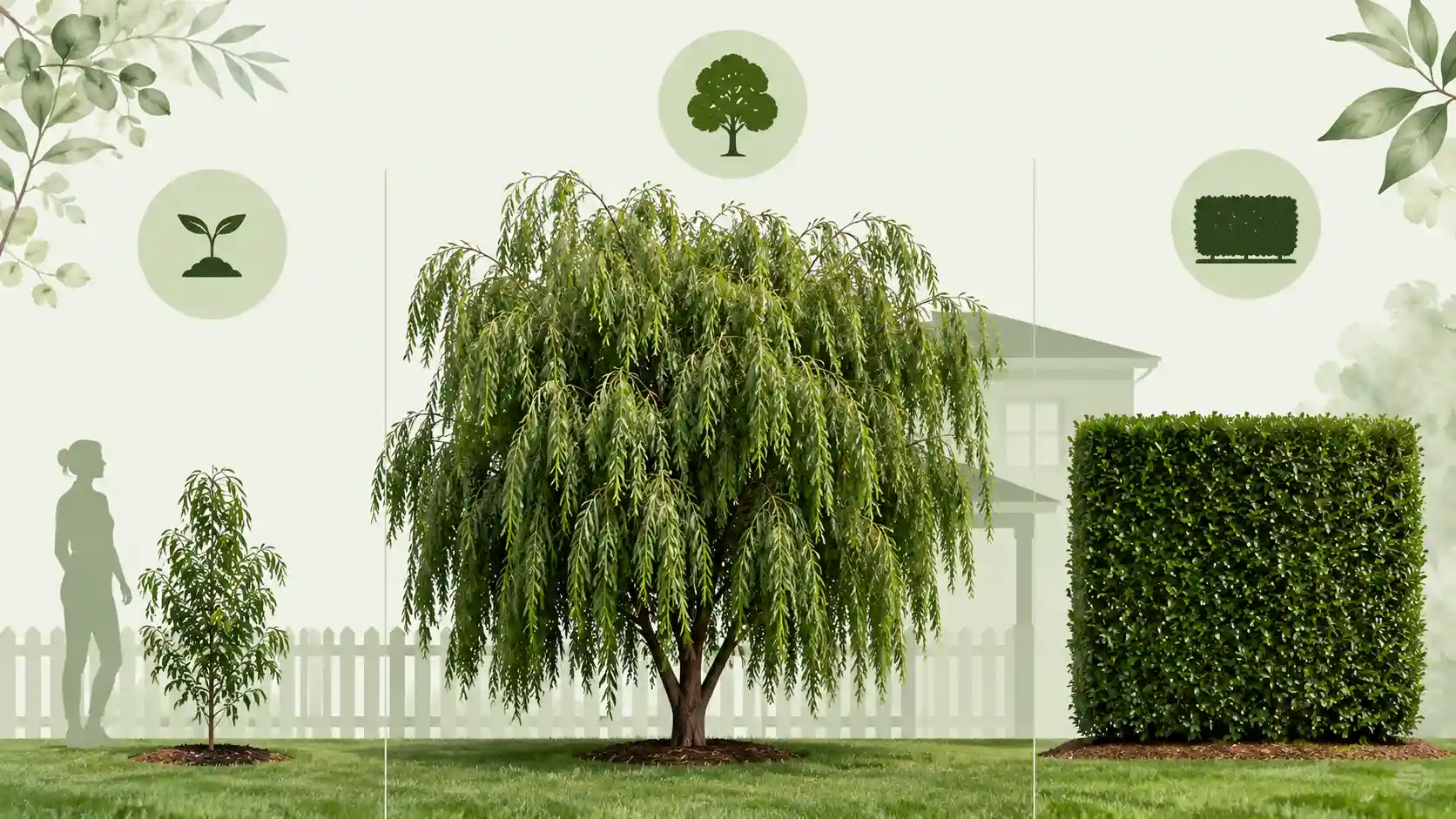
The weeping lilly pilly is a large-growing evergreen tree with a naturally rounded crown and gently drooping branches. Its final size depends heavily on climate, soil quality, available moisture, and whether it is regularly pruned.
If you are planning a privacy screen using several fast-growing species, our guide to Fast Growing Evergreen Trees Australia Guide explains other evergreen options suitable for Australian gardens.
In residential gardens, many homeowners maintain it as a controlled hedge rather than allowing it to reach its full mature tree size.
Mature Height and Width
A mature weeping lilly pilly can vary considerably in size:
| Growing Situation | Typical Size |
| Unpruned garden tree | 8–20m tall |
| Compact landscape planting | Around 8–10m tall |
| Mature width | Approximately 5–10m wide |
| Managed hedge | Usually maintained at 3–5m tall |
In ideal frost-free conditions with deep soil and consistent moisture, Waterhousia floribunda can become a large canopy tree. However, Brisbane gardeners commonly prune it regularly to maintain a manageable screening height.
For narrow suburban gardens, ongoing pruning is important because an unrestricted tree can eventually become much larger than expected.
Growth Rate
Weeping lilly pilly is considered a fast-growing native tree. In Brisbane’s warm subtropical conditions, it can typically add around 60–90cm of growth per year when provided with adequate water, sunlight, and nutrients.
Growth speed is influenced by:
- Soil quality
- Water availability
- Sun exposure
- Plant age
- Seasonal conditions
Plants generally establish fastest during the warmer months when active growth occurs. In cooler regions, growth may slow significantly compared with Brisbane’s climate.
From practical garden observations, young plants often respond strongly once their root systems become established, especially when they receive consistent watering during their first growing season.
Indoor/Pot Growing vs Garden Growing
Weeping lilly pilly can be grown in large containers when young, but it is not a naturally small indoor or patio plant. Because Waterhousia floribunda develops into a large tree, container growing requires realistic expectations.
Growing in pots:
- Works temporarily for young plants
- Requires regular watering because containers dry quickly
- Needs repotting as roots fill the container
- Limits mature size compared with in-ground planting
For long-term growth, planting directly into the garden is usually the better option. Large pots may be suitable for decorative outdoor areas, but this species will eventually require significant space.
Using Weeping Lilly Pilly as a Hedge in Brisbane
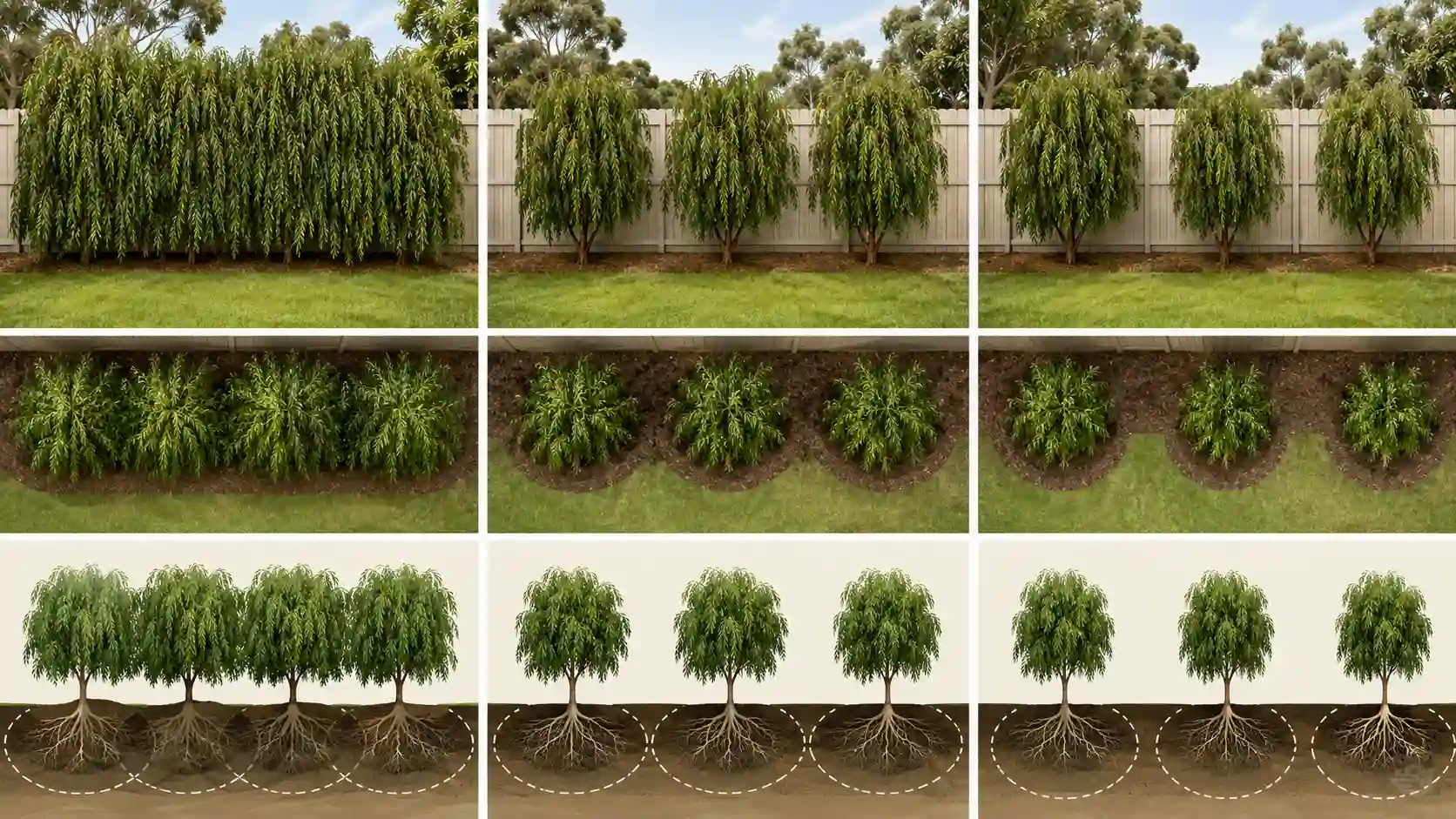
Weeping lilly pilly is widely used as a Brisbane privacy hedge because its dense evergreen foliage creates year-round screening. Its fast growth allows gardeners to establish a tall green barrier relatively quickly compared with many slower-growing native trees.
Hedge Spacing
The recommended spacing for a weeping lilly pilly hedge is generally:
- 1–1.5m apart for a dense screening hedge
- 80cm–1m apart when a faster-forming screen is required
Closer planting creates a quicker visual barrier but increases competition between plants for water and nutrients. Wider spacing reduces planting costs but requires more time for branches to meet and form a continuous hedge.
Pruning for Hedges
Regular pruning encourages thicker branching and maintains a compact hedge shape. The best approach is light and frequent trimming rather than removing large sections at once.
Recommended practices include:
- Prune after flowering, usually during spring or summer
- Trim new growth to encourage branching
- Avoid excessive hard pruning into old wood
- Maintain airflow through the hedge to reduce disease pressure
In Brisbane gardens, consistent trimming is usually more effective than occasional severe cutting because it keeps the foliage dense from the base upwards.
Spacing vs Screening Speed
| Plant Spacing | Screening Result |
| 80cm–1m apart | Faster, denser screen but higher plant competition |
| 1–1.5m apart | Balanced growth and common hedge spacing |
| More than 1.5m apart | Slower filling and more open appearance |
Weeping Lilly Pilly Care Guide
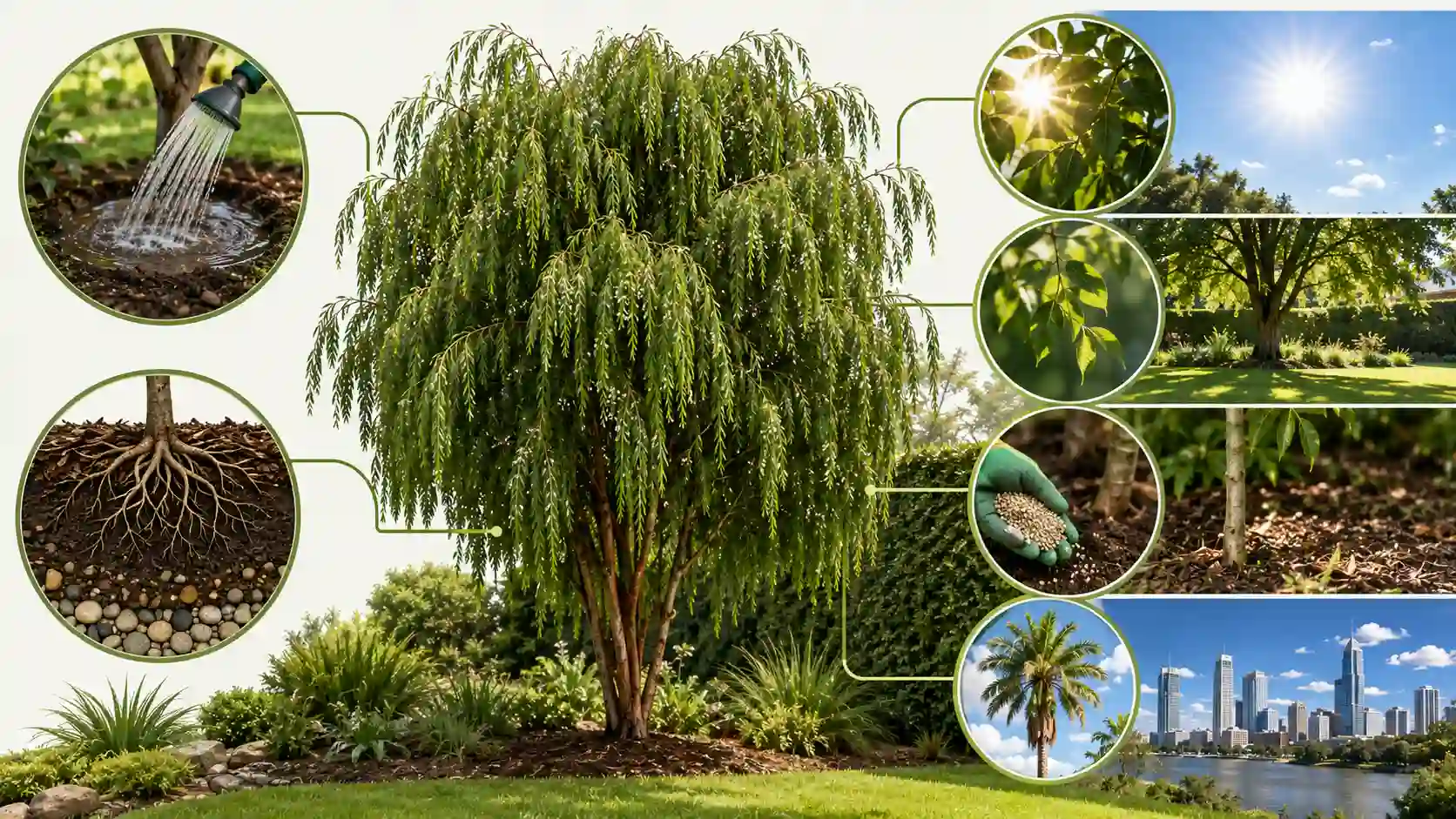
The weeping lilly pilly is a relatively adaptable Australian native tree, but healthy growth depends on providing conditions similar to its natural subtropical environment. In Brisbane gardens, the main care priorities are consistent watering during establishment, adequate sunlight, suitable soil, and controlled fertilising.
Watering
Young weeping lilly pilly plants require regular watering while their root systems establish. During the first 12 weeks after planting, consistent moisture helps encourage deeper root development and reduces transplant stress.
A practical watering approach is:
- Water deeply several times per week after planting, especially during warm weather.
- Gradually reduce watering frequency as roots establish.
- Provide deep, occasional watering during extended dry periods once mature.
- Add mulch around the root zone to help retain soil moisture.
Established trees are more drought-tolerant than young plants, but prolonged dry conditions can reduce growth, cause leaf stress, and weaken screening performance.
Elemo Baker recommends focusing on deep watering rather than frequent shallow watering, as encouraging deeper roots improves resilience during Brisbane’s hotter summer periods.
Light
Weeping lilly pilly grows best in:
- Full sun
- Part shade
Full sun generally produces stronger growth and denser foliage, making it ideal for privacy hedges. It can tolerate some shade, but reduced sunlight may result in slower growth and thinner screening.
For the best hedge performance, plant it where it receives several hours of direct sunlight each day.
Soil
Waterhousia floribunda prefers fertile, moisture-retentive soil with good drainage. It naturally grows near waterways, but it does not perform well in permanently waterlogged conditions.
Suitable soil types include:
- Loamy soil
- Sandy loam
- Improved clay soils with better drainage
Before planting, improve poor soils by adding organic matter such as compost or well-aged mulch. Good soil preparation encourages stronger root establishment and healthier foliage.
Fertilising
A balanced fertilising routine supports steady growth and dense foliage.
Recommended practice:
- Apply a slow-release native fertiliser in spring.
- Follow the product application rates carefully.
- Avoid excessive fertiliser applications.
Too much fertiliser, particularly high nitrogen products, can encourage soft new growth that is more attractive to pests such as psyllids.
A healthy plant with balanced nutrition is generally better able to tolerate common garden stresses.
Climate Tolerance
Weeping lilly pilly is especially well suited to Brisbane’s subtropical climate.
It performs best in areas with:
- Warm summers
- Moderate humidity
- Reliable rainfall or irrigation
- Protection from severe frost
It is not the best choice for very dry inland or outback conditions unless irrigation and soil improvements are provided.
In Brisbane gardens, its natural preference for warm, moist conditions allows it to establish quickly and maintain attractive evergreen foliage throughout the year.
Common Weeping Lilly Pilly Problems (and How to Fix Them)
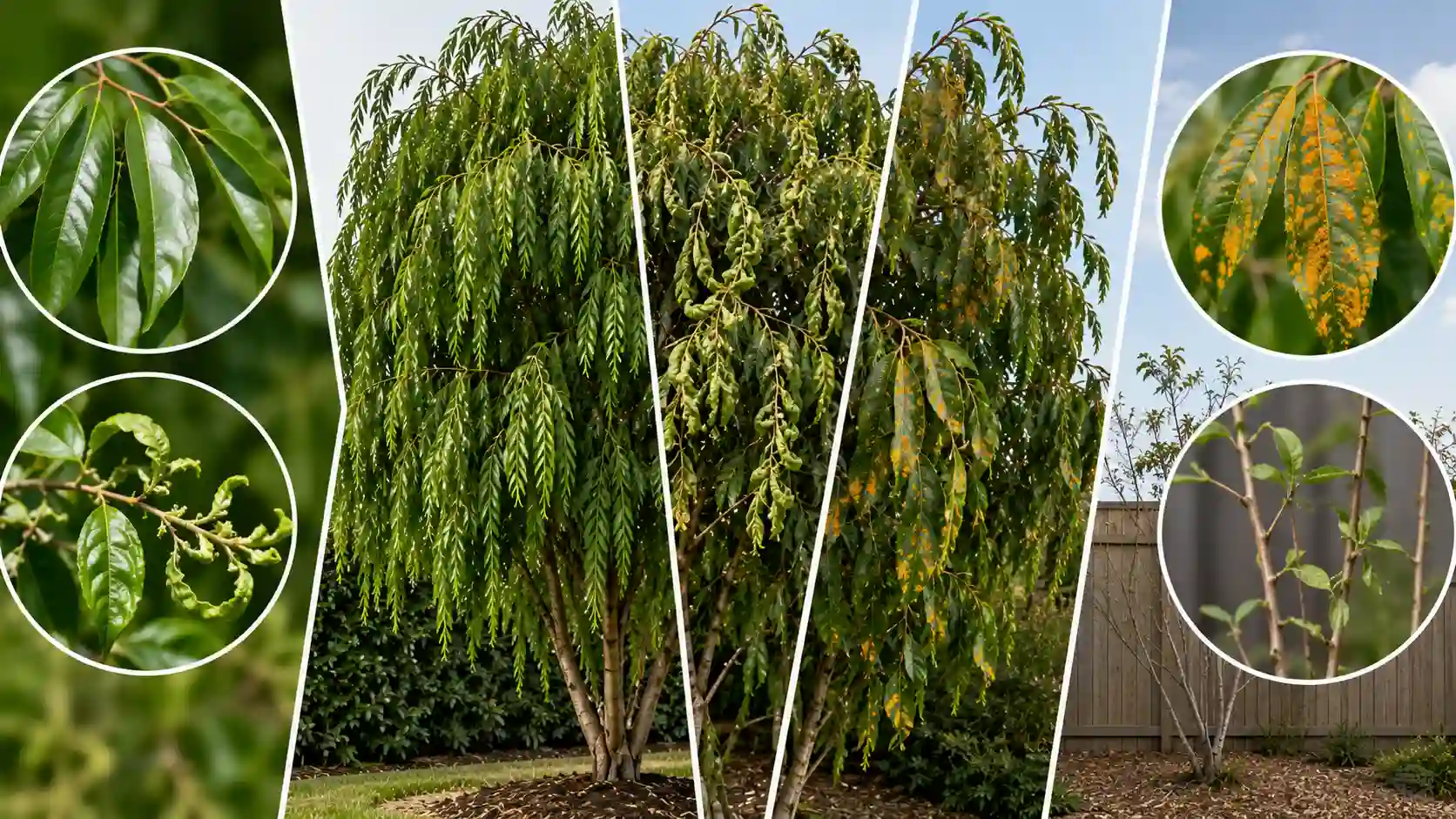
Although weeping lilly pilly is generally hardy, several issues can affect appearance and growth. Most problems are linked to pests, environmental stress, or unsuitable growing conditions.
Psyllid Damage
Psyllid damage is one of the most recognised problems affecting lilly pillies. Psyllids are tiny sap-sucking insects that commonly attack young leaves, causing distorted or raised “bubbly” growth.
Signs include:
- Small pimples or bumps on new leaves
- Curled or distorted foliage
- Reduced new growth quality
Psyllids are often worse when plants produce soft new growth, particularly after excessive fertilising.
Management methods include:
- Pruning affected new growth
- Removing heavily damaged leaves
- Maintaining consistent watering
- Avoiding excessive nitrogen fertiliser
- Choosing more resistant varieties where appropriate
Healthy plants are generally better able to recover from minor infestations.
Myrtle Rust
Myrtle rust is a fungal disease affecting plants in the Myrtaceae family, including many lilly pilly species. It produces distinctive yellow-orange spore patches on leaves, stems, and new shoots.
Common symptoms include:
- Bright yellow or orange powdery spots
- Distorted young leaves
- Reduced shoot development
Management involves:
- Removing severely affected plant material
- Cleaning pruning tools between plants
- Improving airflow around dense hedges
- Monitoring new growth regularly
Good garden hygiene and avoiding unnecessary stress help reduce disease pressure.
Slow Growth or Poor Screening
A weeping lilly pilly hedge that grows slowly or fails to become dense is usually affected by environmental factors rather than the plant itself.
Common causes include:
- Plants spaced too far apart
- Insufficient sunlight
- Poor watering during establishment
- Nutrient deficiencies
- Root competition from nearby plants
To improve screening:
- Check that plants receive enough sunlight.
- Maintain consistent moisture.
- Apply suitable native fertiliser.
- Prune lightly to encourage branching.
Weeping Lilly Pilly vs Psyllid-Resistant Varieties
| Feature | Weeping Lilly Pilly (Waterhousia floribunda) | Psyllid-Resistant Alternatives |
| Growth habit | Large tree with weeping form | Often more compact hedge forms |
| Screening ability | Excellent when pruned | Excellent for formal hedges |
| Psyllid tolerance | Can be affected | Some varieties have improved resistance |
| Maintenance | Requires regular pruning | Often easier for smaller gardens |
Popular alternatives include:
- Syzygium ‘Resilience’
- Acmena smithii
These options are often considered by gardeners who want a lower-risk hedge with improved resistance to psyllid damage. For gardeners concerned about psyllid problems, alternative screening plants such as Acmena Smithii Minor: Size, Growth Rate, Care & Hedge Guide can be worth considering because some cultivars offer improved resistance and easier hedge maintenance.
Correct identification is the first step in managing garden pests, and the Garden Pest Identification Guide for Australian Gardens can help recognise common insect problems affecting ornamental plants.
Weeping Lilly Pilly Flowers and Fruit
Weeping lilly pilly produces attractive seasonal flowers and fruit that add extra interest beyond its evergreen foliage.
The tree develops:
- White to cream fluffy flowers during summer
- Pale green to pinkish-purple berries after flowering
The flowers are produced in clusters and can attract insects, while the berries provide food for native birds.
Although the fruit is not usually the main reason gardeners plant this species, it contributes to its value as a biodiversity-friendly garden tree.
Buying a Weeping Lilly Pilly in Brisbane
Weeping lilly pilly plants are commonly available throughout Brisbane because of their popularity as screening trees and native garden plants.
Gardeners searching for:
- “weeping lilly pilly for sale”
- “lilly pilly for sale Brisbane”
- “mature lilly pilly trees for sale Brisbane”
- “advanced lilly pilly trees for sale”
can usually find options through local nurseries, online plant suppliers, and major gardening retailers.
Where to Buy
Common buying sources include:
- Native plant nurseries
- Online plant retailers offering Brisbane delivery
- Garden centres
- Retailers such as Bunnings (availability varies between stores)
Plant size and seasonal stock levels can influence availability, so checking current nursery listings is recommended.
Tube Stock vs Advanced/Mature Trees
The choice between small plants and advanced specimens depends on budget, patience, and how quickly screening is required.
| Plant Type | Advantages | Considerations |
| Tube stock | Lower cost, establishes strong roots | Takes longer to create a screen |
| Small nursery plants | Faster than tube stock | Moderate establishment time |
| Advanced trees | Instant visual impact | Higher upfront cost and transplant care required |
For large properties requiring immediate privacy, advanced trees can provide faster results. For budget-friendly hedge planting, smaller plants often establish successfully with proper care.
Weeping Lilly Pilly vs Other Lilly Pilly Varieties
Several lilly pilly species are used in Australian gardens. Understanding the differences helps gardeners choose the right plant for their space.
| Feature | Waterhousia floribunda | Syzygium australe | Syzygium luehmannii |
| Mature size | Large tree, 8–20m | Medium to large shrub/tree | Medium tree |
| Growth habit | Graceful weeping canopy | Dense upright hedge form | More compact and ornamental |
| Best use | Screening and feature planting | Formal hedges | Smaller gardens and decorative planting |
| Psyllid susceptibility | Can experience psyllid issues | Varies by cultivar | Varies by cultivar |
For large Brisbane gardens, Waterhousia floribunda provides excellent screening potential. For smaller suburban blocks, compact Syzygium varieties may be easier to maintain. Gardeners comparing different lilly pilly options may also consider Lilly Pilly Australe (Syzygium Australe): Care Guide, especially when choosing a dense screening plant with a different growth habit and maintenance requirement.
Conclusion
The weeping lilly pilly Brisbane gardeners choose, Waterhousia floribunda, is a fast-growing Australian native tree well suited to Brisbane’s warm subtropical climate. Its evergreen foliage, graceful growth habit, and ability to form dense screens make it a popular choice for privacy hedges and feature planting.
Successful growth depends on correct spacing, regular watering during establishment, suitable sunlight, balanced fertilising, and awareness of common issues such as psyllids and myrtle rust. Choosing the right plant size and maintaining regular pruning will help create a healthy, long-lasting hedge or garden feature.
Frequently Asked Questions
How fast does a weeping lilly pilly grow?
A weeping lilly pilly can grow around 60–90cm per year in favourable Brisbane conditions. Growth is fastest when plants receive adequate sunlight, moisture, and suitable soil.
How tall does a weeping lilly pilly grow in Brisbane?
In Brisbane, an unpruned weeping lilly pilly can potentially reach 8–20m tall, although most garden hedges are maintained at around 3–5m through regular pruning.
How far apart should you plant weeping lilly pilly for a hedge?
For a dense hedge, plant weeping lilly pilly approximately 1–1.5m apart. Closer spacing of around 80cm–1m can create a faster-forming screen but requires more maintenance.
Can a weeping lilly pilly be grown in a pot?
Yes, young weeping lilly pilly plants can grow in large pots, but they are not naturally compact plants. As they mature, they usually require either a much larger container or planting into the ground.
Why is my weeping lilly pilly not growing well?
Poor growth is commonly caused by insufficient water, low sunlight, poor soil preparation, wide hedge spacing, or nutrient problems. Checking growing conditions usually identifies the main cause.
Is weeping lilly pilly the same as Waterhousea floribunda?
Yes. Waterhousia floribunda is the accepted name, while Waterhousea floribunda is an older spelling commonly found in plant references. Both names refer to the same species.