
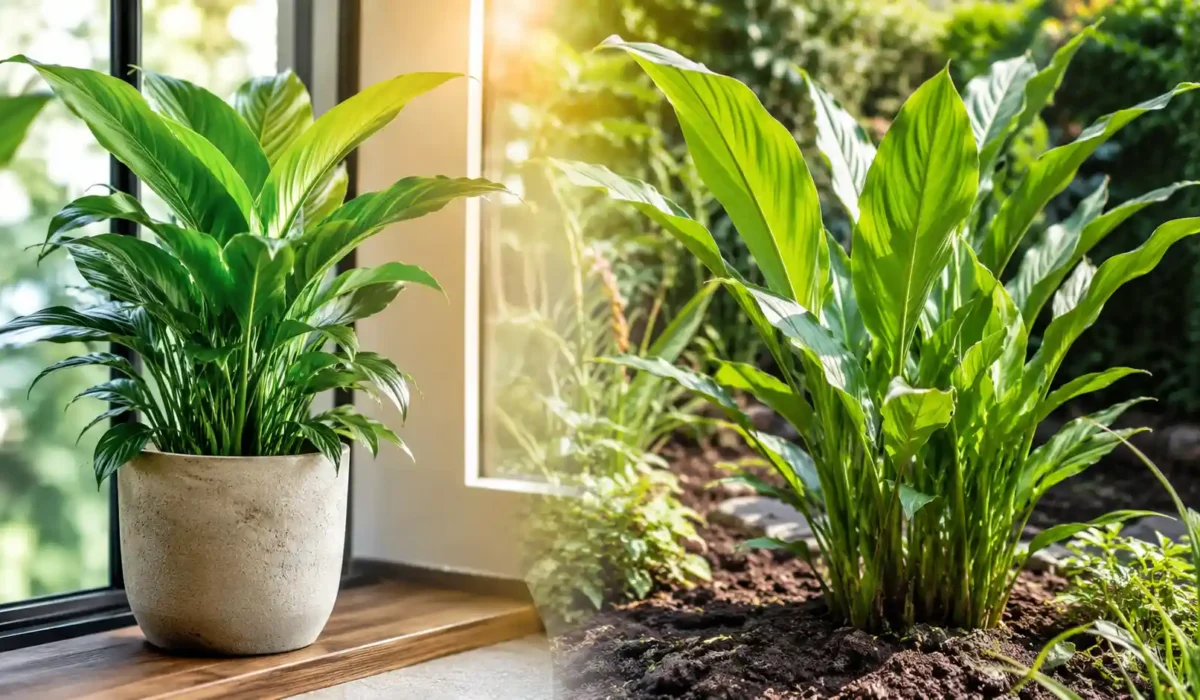
Indoor vs Outdoor Plant Care: Key Differences (Australia)
Indoor plants are grown at a lower light level (less than outdoor plants), do not need as frequent a watering because the evaporation rate is lower, less extreme temperature fluctuations, more air movement, but are kept in a controlled humidity and need seasonal fertilising because they do not grow as fast as outdoor plants. Outdoor plants are exposed to the natural rainfall, a high level of light, a greater range of temperatures, and more air movement, so their roots must be more sturdy and they need to be fertilised seasonally to match their more active growth cycles.
Pests and diseases are also a problem for outdoor plants and many gardeners are turning to companion planting instead of chemical controls. Choosing the appropriate container and drainage of the potting soil is especially important for indoor plants, which are more susceptible to root rot from excess water than are garden soil plants. Indoor plants offer real, science-backed benefits for wellbeing and air quality, but that value only holds if the plant is actually thriving — which depends on getting environment-specific care right.
Quick Summary
- Outdoor plants get natural rainfall, airflow, and full-spectrum sun; indoor plants depend entirely on you for both water and light, so routines can’t be copied across
- Potting mix, fertiliser strength, and pest pressure all differ meaningfully between the two settings
- Your Australian climate zone — tropical, subtropical, temperate, or arid — changes these rules more than generic “seasonal” advice accounts for
- A plant moved between indoors and outdoors needs 1–2 weeks of gradual acclimatisation, or it risks scorch, wilting, or shock — a step most care guides skip entirely
Why the Same Routine Doesn’t Work for Both
The reason a single watering-and-feeding routine fails is environmental, not a lack of effort. Indoor conditions are artificially stable — filtered light through glass, no wind, a consistent temperature year-round. Outdoor conditions fluctuate constantly with weather, season, and time of day. A plant bred for the shifting, wind-exposed outdoors will often sit stagnant indoors from too little light, while a plant suited to indoor stability can scorch or dry out fast once it’s exposed to direct sun and wind.
The Core Differences at a Glance
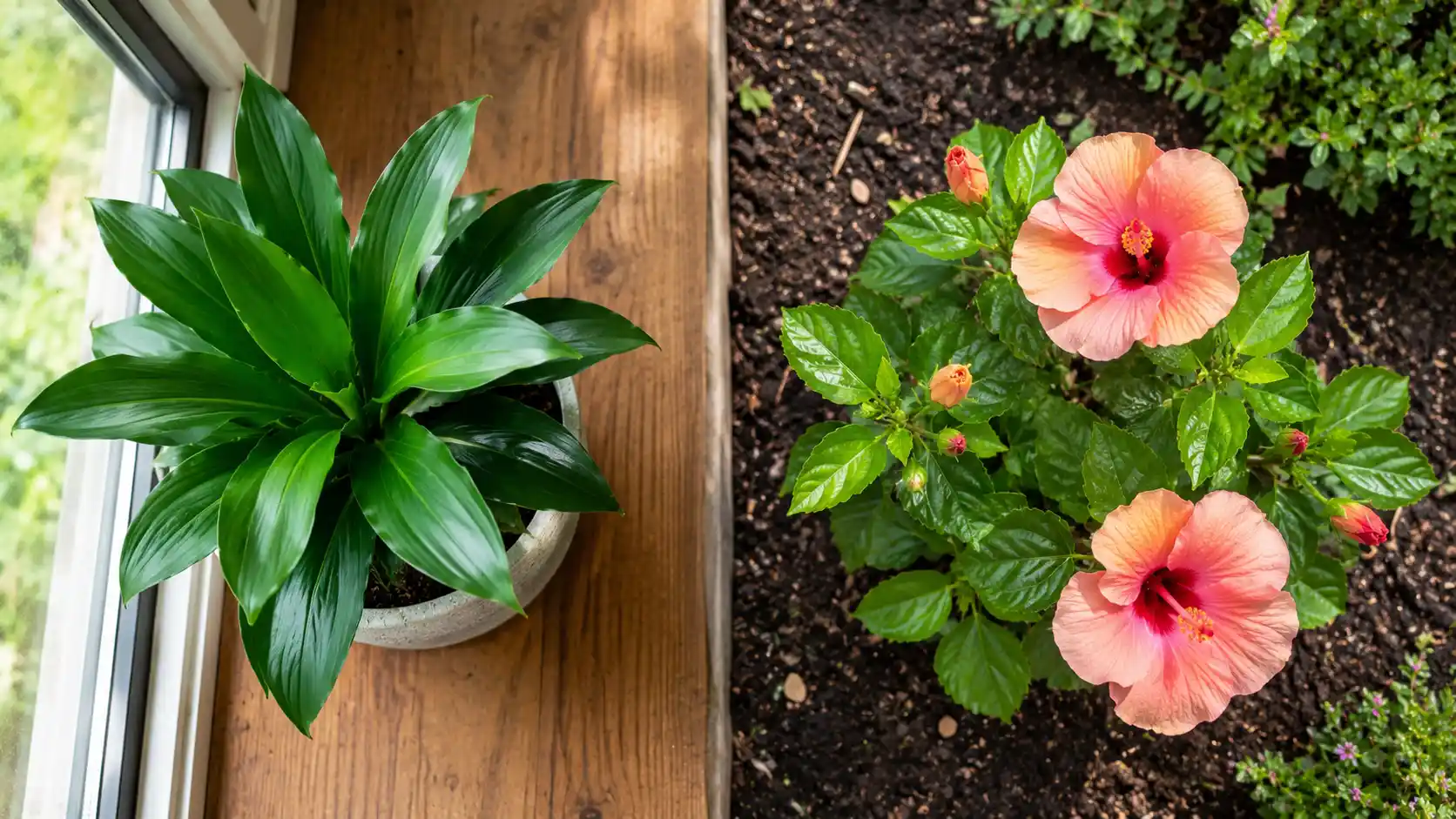
| Factor | Indoor plants | Outdoor plants |
| Light | Bright indirect light or grow lights; glass filters and weakens UV | Direct or full-spectrum natural sun |
| Watering | Entirely dependent on you; enclosed pots are prone to overwatering and root rot | Supplemented by rainfall; needs monitoring in heatwaves and dry spells |
| Soil/potting mix | Free-draining potting mix in a container | Garden soil, often amended with compost or mulch |
| Fertiliser | Diluted, less frequent — limited root volume, no nutrient runoff | Full-strength, tied to seasonal growth cycles |
| Humidity | Often too low (heating/air conditioning) | Follows ambient outdoor humidity |
| Pests | Fungus gnats, spider mites, mealybugs — thrive in stable warm air | Broader pest range, but natural predators help keep numbers down |
| Temperature | Stable year-round | Full seasonal swings, including frost and heat extremes |
Light
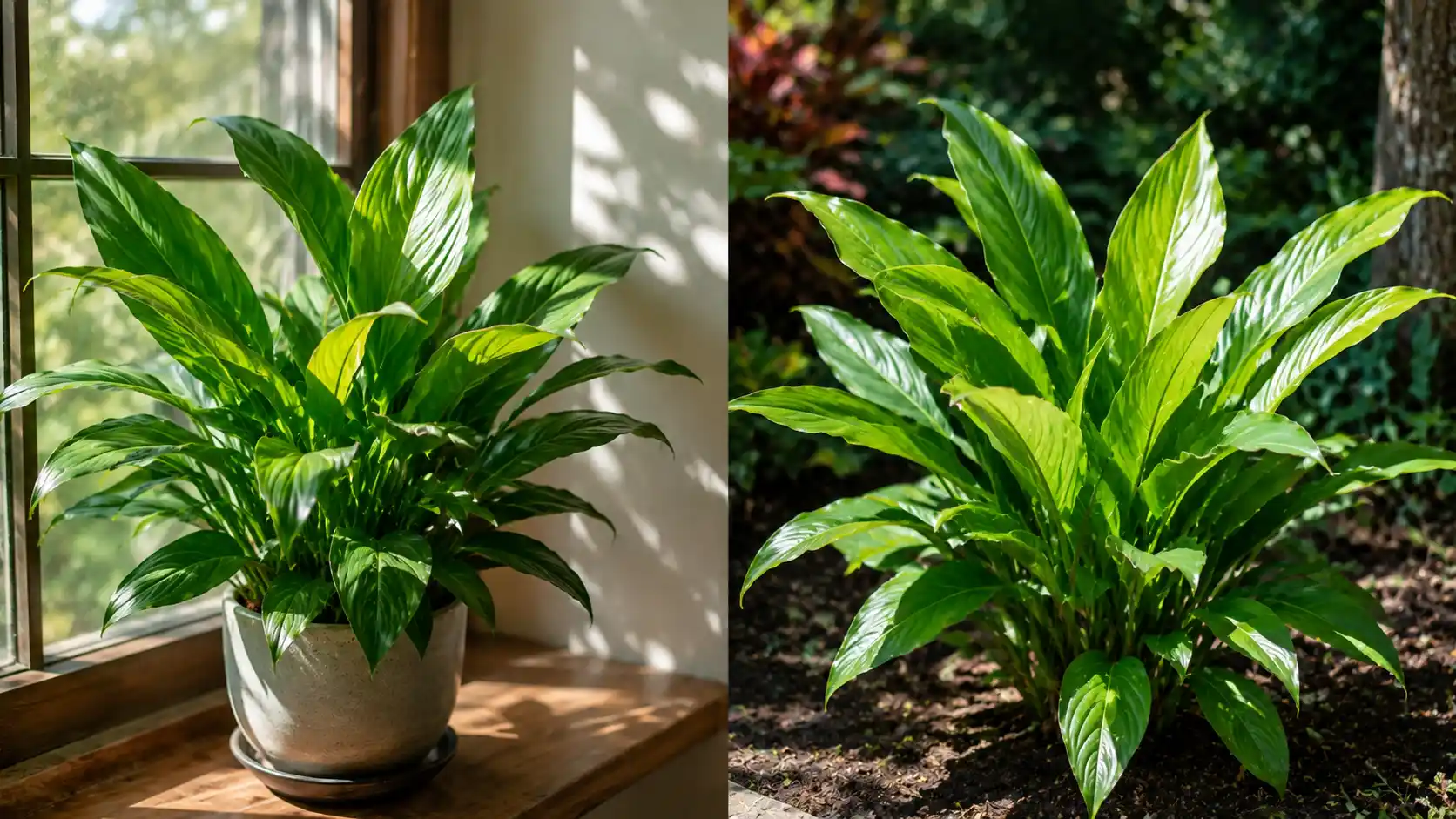
Indoor plants rely on bright indirect light or supplementary grow lights, since window glass filters out a portion of UV and reduces overall intensity. Outdoor plants are exposed to direct or full-spectrum sunlight with no filtering at all. This is why a plant that looks perfectly healthy on a windowsill can develop scorched, bleached patches within days of being placed in full outdoor sun.
Watering
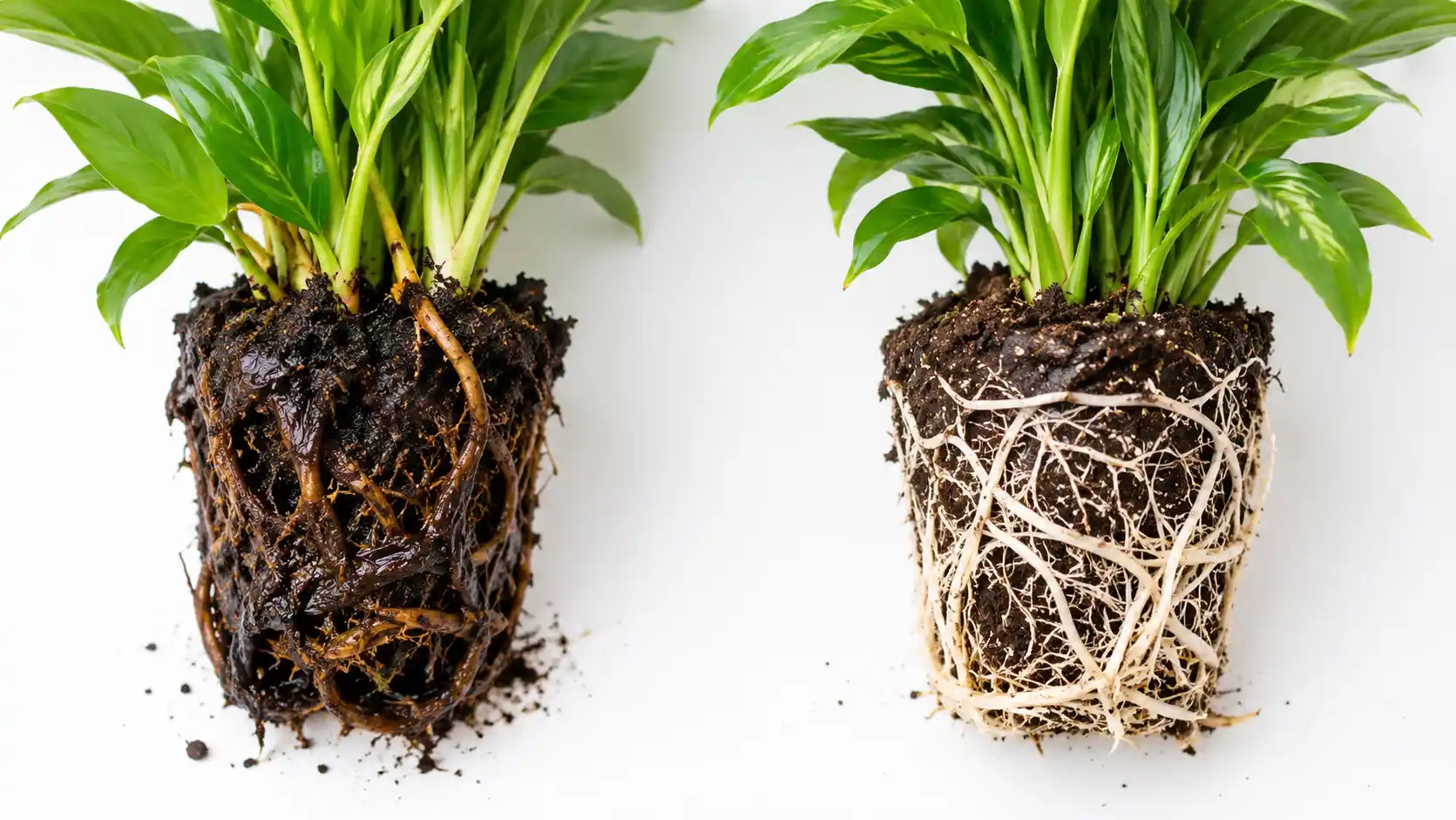
The one thing that kills indoor plants more than anything else is too much water: with pots being enclosed, there is no way for excess water to escape. Rainfall is beneficial for outdoor plants, but during hot weather periods the soil may not be able to retain enough moisture, particularly in containers and raised garden beds and requires close monitoring.
Soil and potting mix
Garden soil compacts in containers and doesn’t drain well and is too dense for use in containers for indoor plants. Most outdoor plants grow in the garden soil, but will appreciate it being more structured and holding moisture through the addition of compost or mulch.
Fertiliser
Indoor plants have limited soil volume with no natural runoff and should be fertilised at a lower concentration and more sparingly. Over-fertilisation indoors will cause salts to accumulate rapidly. Outdoor plants can generally be treated with a full-strength feeding according to their normal growth schedule, as rain will wash out extra nutrients from the soil. For a deeper breakdown of NPK ratios and feeding schedules by plant type, see our Australian garden soil and fertiliser guide.
Humidity and temperature
Tropical-have type houseplants are often adapted to high humidity conditions and tend to suffer from drying conditions in indoors settings, especially in the presence of heating or air conditioning. Outdoor plants are also subject to all the seasonal fluctuations in temperature, including frost in the temperate climates, and extreme heat inland — outdoor plants are not designed for these conditions.
Pests and disease
Indoor plants are more prone to pests that thrive in warm, stable environments, like fungus gnats, spider mites, and mealybugs, which can ramp up without predators to help them control their population. There are more overall pests which affect outdoor plants, but birds, beneficial insects and weather help control populations naturally. If you’re not sure what’s attacking your plant, our garden pest identification guide covers the most common culprits in Australian conditions.
How Your Australian Climate Zone Changes These Rules
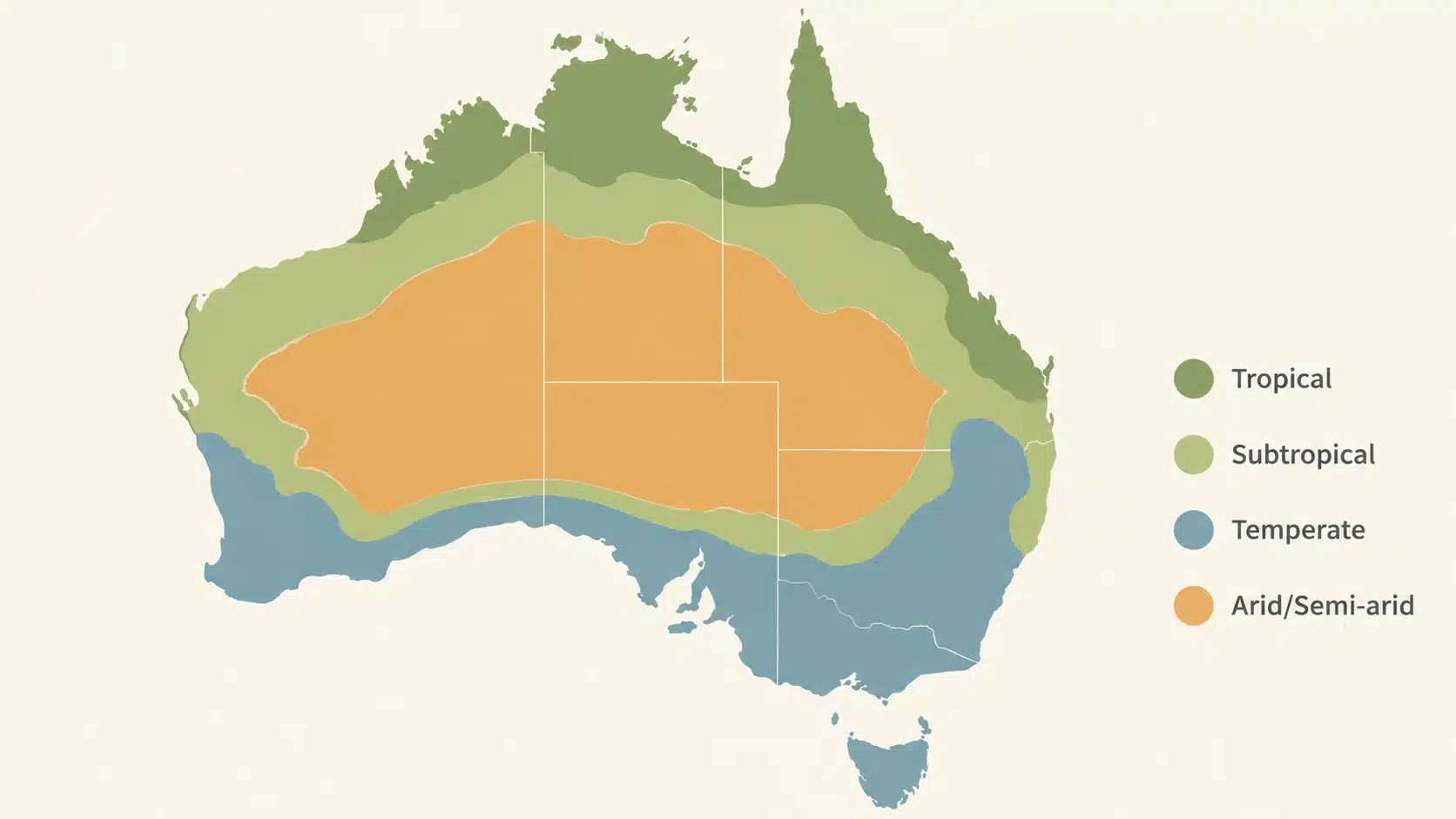
Generic “seasonal” advice written for the Northern Hemisphere doesn’t map cleanly onto Australia, where climate zones vary dramatically across the country.
| Climate zone | Typical conditions | What it means for care |
| Tropical (e.g. Darwin, Cairns) | Hot, humid, wet season/dry season, no frost | Outdoor plants need excellent drainage to handle monsoon rain; indoor plants rarely need extra humidity |
| Subtropical (e.g. Brisbane, Gold Coast) | Mild climate, wet summers, rare frost | Moderate watering adjustments between seasons; frost precautions mostly unnecessary |
| Temperate (e.g. Sydney, Melbourne, Adelaide) | Distinct seasons, light-to-moderate winter frost | Outdoor plants need frost protection or moving indoors over winter; indoor humidity drops with heating |
| Arid/semi-arid (e.g. Alice Springs, Mildura) | Very high summer heat, low rainfall, high evaporation | Outdoor watering needs increase sharply in summer; mulching is essential to retain soil moisture |
In temperate zones, outdoor plants may need frost protection over winter — our guide to frost-tolerant plants for Australia lists the most reliable cold-hardy options. Generic ‘seasonal’ advice written for the Northern Hemisphere doesn’t map cleanly onto Australia, where climate zones — based on the Köppen climate classification system — vary dramatically across the country.
Plants That Thrive in Both Settings vs Strictly One-or-the-Other
Some plants genuinely adapt to either environment, which makes them useful “bridge” choices if you’re not sure where a plant will end up living:
- Works in both: pothos (extremely tolerant of varying light and some neglect), aloe vera (low water needs, adapts to bright indirect or full sun)
- Indoor-only: deep-shade tropical foliage plants bred for low, filtered light — direct sun will scorch them
- Outdoor-only: full-sun-loving natives and cold-hardy shrubs that need more light and airflow than an indoor position can provide
How to Safely Move a Plant Between Indoors and Outdoors
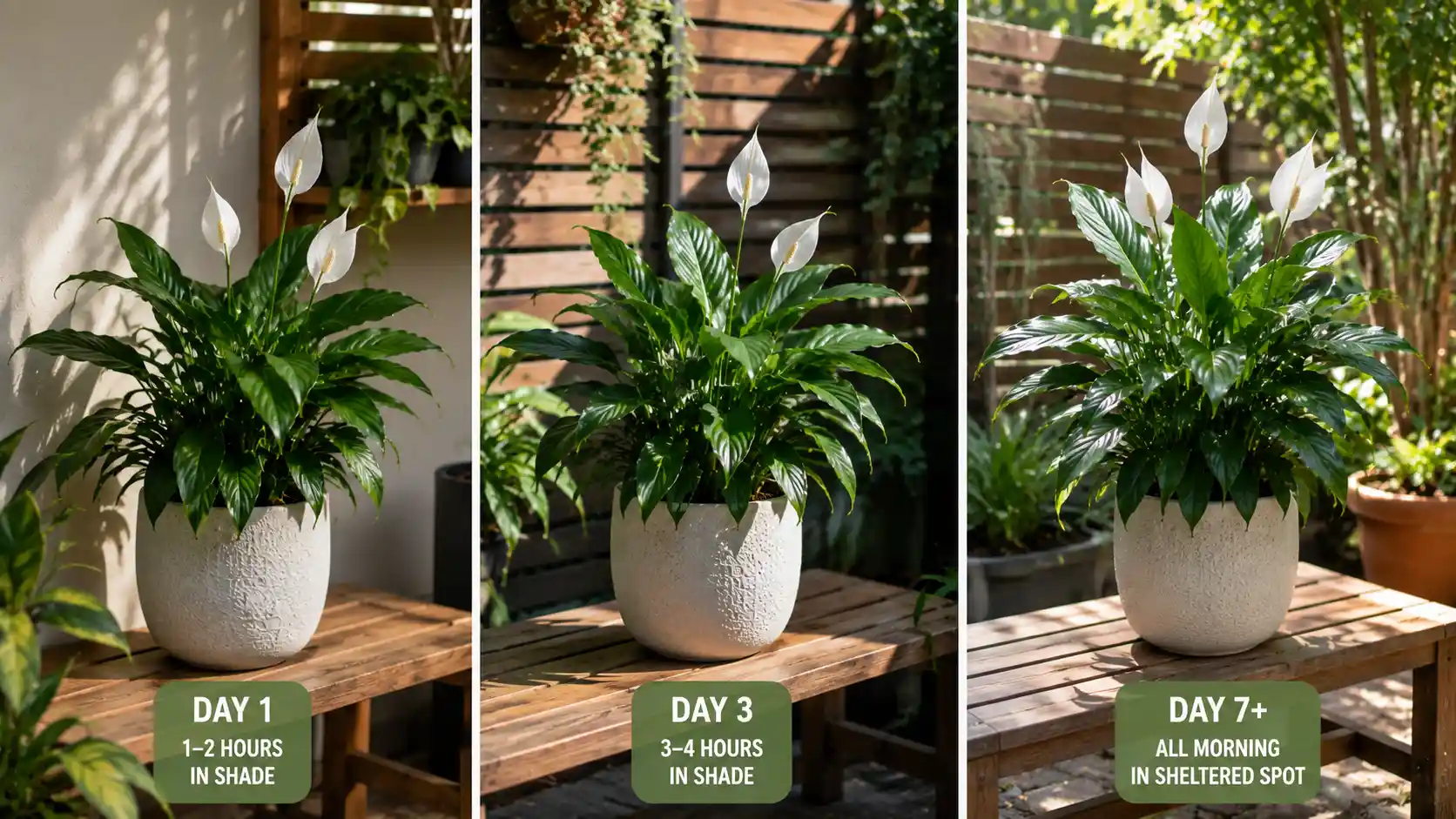
This transition step is where most care guides fall short, yet it’s one of the most common real-world problems readers face.
Moving a plant outdoors:
- Start on an overcast day, never a hot, sunny one
- Place the plant in a sheltered, shaded spot for 2–3 hours on day one
- Gradually increase outdoor time and direct sun exposure over 7–14 days
- Bring the plant back indoors overnight during the first week if temperatures drop
Moving a plant indoors:
- Reduce watering slightly and stop fertilising two weeks before the move
- Gradually reduce the plant’s light exposure over several days rather than shifting it straight into a dim indoor position
- Check thoroughly for pests before bringing it inside, to avoid introducing them to other houseplants
Common Mistakes When Switching a Plant’s Environment
- Moving a plant outdoors on a hot, sunny day → causes leaf scorch → fix by transitioning on an overcast day instead
- Fertilising immediately during acclimatisation → stresses already-adjusting roots → fix by pausing fertiliser for two weeks
- Ignoring pot drainage when moving an indoor plant outside → leads to root rot once rain hits → fix by checking and improving drainage before the move
Troubleshooting: Signs Your Plant Is in the Wrong Environment
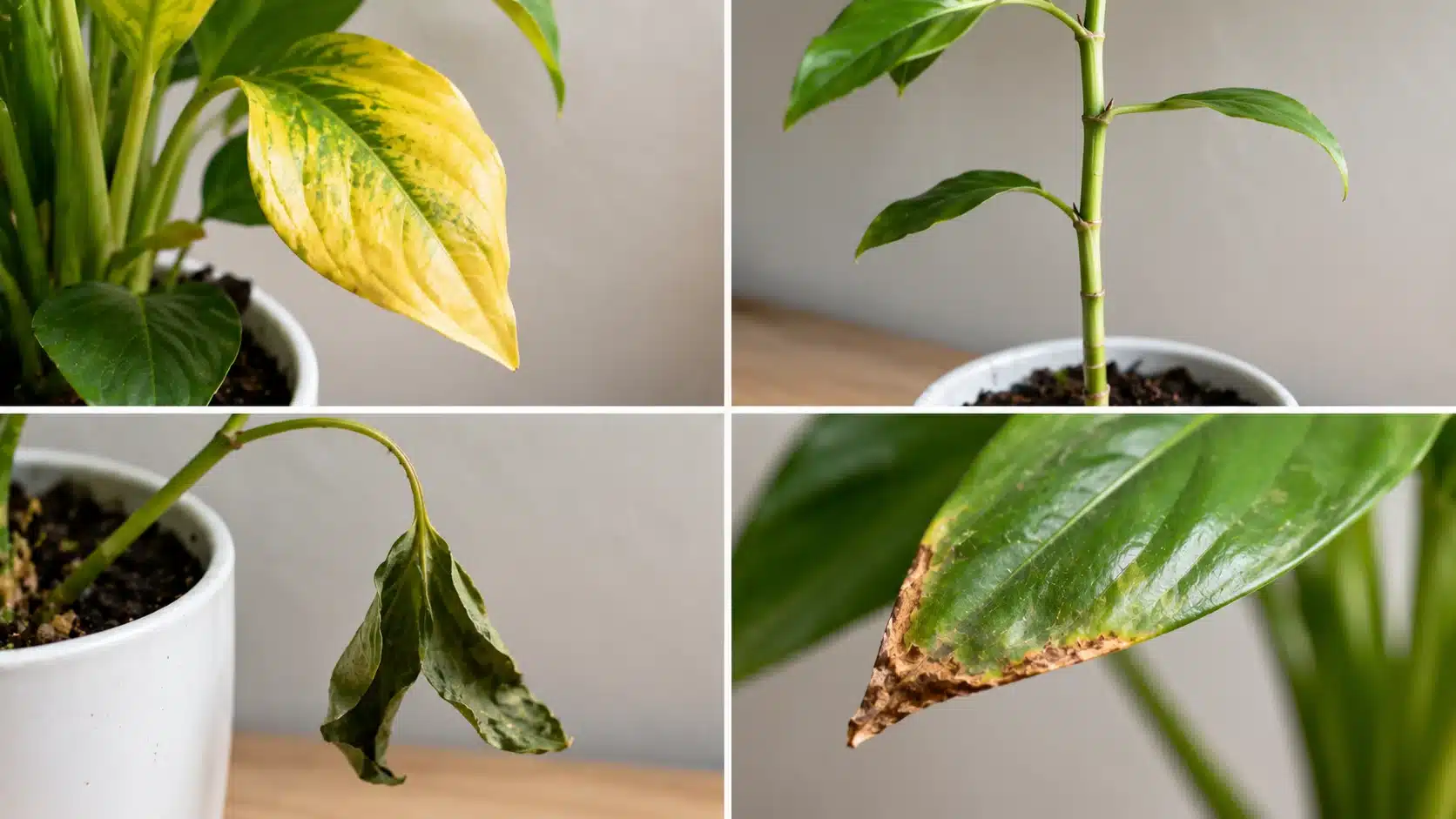
- Yellowing leaves: often overwatering indoors, or underwatering outdoors in heat — see our full guide to yellow leaves on indoor plants for a room-by-room diagnosis.
- Leggy, stretched growth: insufficient light — common indoors, rare outdoors
- Sudden leaf drop after a move: transplant shock from skipping acclimatisation
- Crispy, brown leaf tips: low humidity indoors, or wind/heat stress outdoors
Conclusion
The differences between indoor and outdoor plant care come down to five factors: light, water, soil, humidity, and pest exposure — not simply “inside versus outside.” Once you match a plant’s care to its actual environment, and factor in your Australian climate zone rather than generic seasonal advice, most of the guesswork disappears. And if you ever need to move a plant between the two settings, a gradual 1–2 week acclimatisation period is the difference between a smooth transition and a shocked, damaged plant. For a broader look at building out both your indoor and outdoor plant collection, see our complete Australian plants guide.
For a broader look at how different plant types stack up against each other, check out our full guide to plant comparisons.
FAQs
Can an outdoor plant survive indoors permanently?
Some can, particularly tolerant species like pothos or aloe vera, but most outdoor plants are bred for direct sun and airflow that indoor conditions can’t replicate long-term.
Do indoor plants need less fertiliser than outdoor plants?
Yes — indoor plants have limited soil volume and no natural nutrient runoff, so they need diluted fertiliser applied less frequently than outdoor plants.
How long does it take to acclimatise a plant to a new environment?
Generally 7–14 days of gradual exposure, whether moving a plant outdoors into more light or indoors into lower light and humidity.
Are pests worse indoors or outdoors?
Indoor pests like spider mites and fungus gnats can multiply unchecked without natural predators, while outdoor plants face more pest species overall but benefit from birds and beneficial insects keeping numbers down.
Which plants grow well both indoors and outdoors in Australia?
Pothos and aloe vera are two of the most reliable options, tolerating a wide range of light conditions in either setting.
Does an indoor plant need different soil to an outdoor plant?
Yes — indoor plants need a free-draining potting mix designed for containers, while outdoor plants generally do well in garden soil amended with compost or mulch.
1 Comment