Dwarf Cherry Blossom Tree: Size, Care & Australian Guide
Introduction
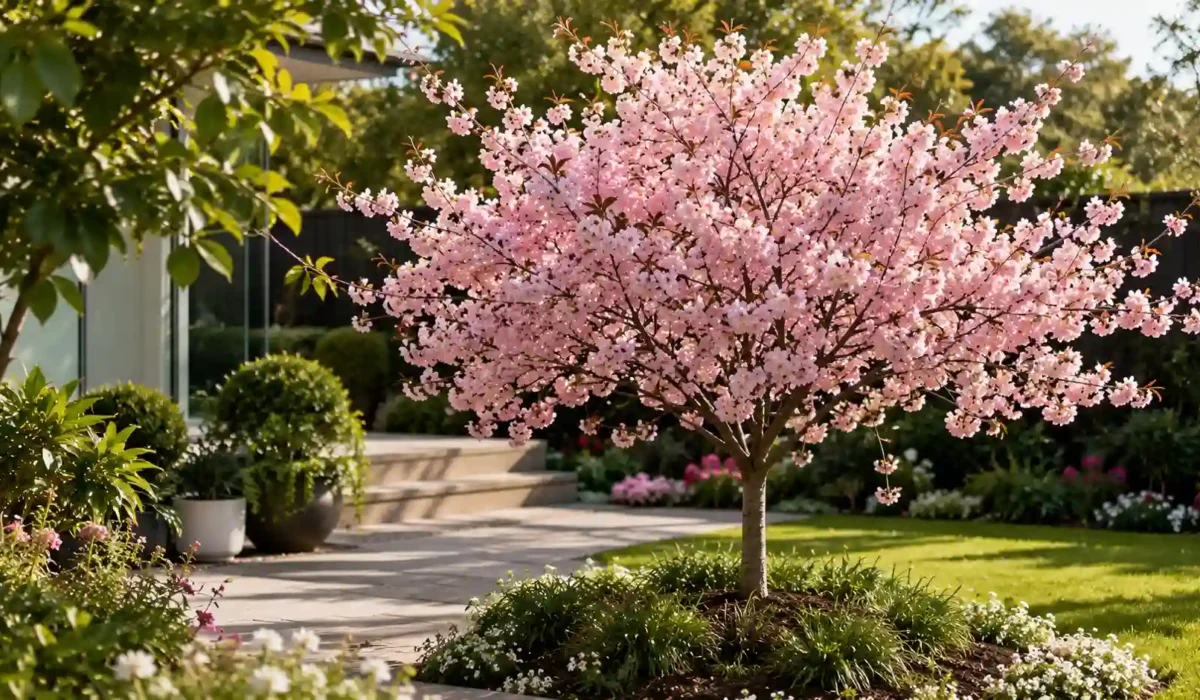
A dwarf cherry blossom tree is a compact ornamental cherry tree bred or grafted to remain much smaller than traditional flowering cherry trees while still producing the spectacular spring blossom display associated with Japanese cherry blossoms. These trees belong to the Prunus genus and are popular in small gardens, courtyards, patios, and container plantings. Their manageable size makes them suitable for homeowners who want the beauty of cherry blossoms without needing a large landscape. This guide explains what dwarf cherry blossom trees are, whether they can be grown successfully in Australia, how large they become, how quickly they grow, and which conditions help them thrive. For gardeners considering other ornamental species, our guide to Flowering Trees Australia covers popular native and exotic flowering trees, including their climate suitability, size and seasonal flowering.
Quick Summary
- A dwarf cherry blossom tree is a compact ornamental Prunus variety, usually reaching 1.5–3 metres, making it suitable for small gardens and pots.
- Several dwarf varieties, including Kojo-no-mai, Kursar, and Snow Showers, can grow successfully in Australia’s cooler and temperate regions.
- Mature size, growth habit, and flower colour vary between cultivars, with weeping, bush-form, and bonsai options available.
- Most common problems result from incorrect watering, poor soil drainage, or unsuitable climate conditions.
- Matching the right cultivar to the local climate is the most important factor for long-term success.
What Is a Dwarf Cherry Blossom Tree?
A dwarf cherry blossom tree is a small ornamental cherry tree from the Prunus genus that has been specifically selected, bred, or grafted to maintain a compact size. Unlike fruit-producing cherry trees grown for harvest, dwarf cherry blossom trees are primarily valued for their decorative flowers, attractive branching structure, and seasonal interest.
The terms dwarf cherry blossom, dwarf cherry tree, ornamental cherry tree, dwarf flowering cherry tree, and dwarf ornamental cherry blossom tree are often used interchangeably. In most cases, they refer to compact flowering cherries grown for their blossoms rather than fruit production.
Most dwarf cherry blossom trees produce abundant pink, white, or occasionally deeper pink-red flowers during late winter or spring. Some varieties may produce small fruits, but these are usually insignificant and not the primary reason gardeners grow them.
In our experience growing ornamental cherries, dwarf varieties are often easier to maintain than larger trees because pruning, watering, and pest monitoring can be performed without specialised equipment.
Dwarf vs Semi-Dwarf vs Standard Cherry Blossom Trees
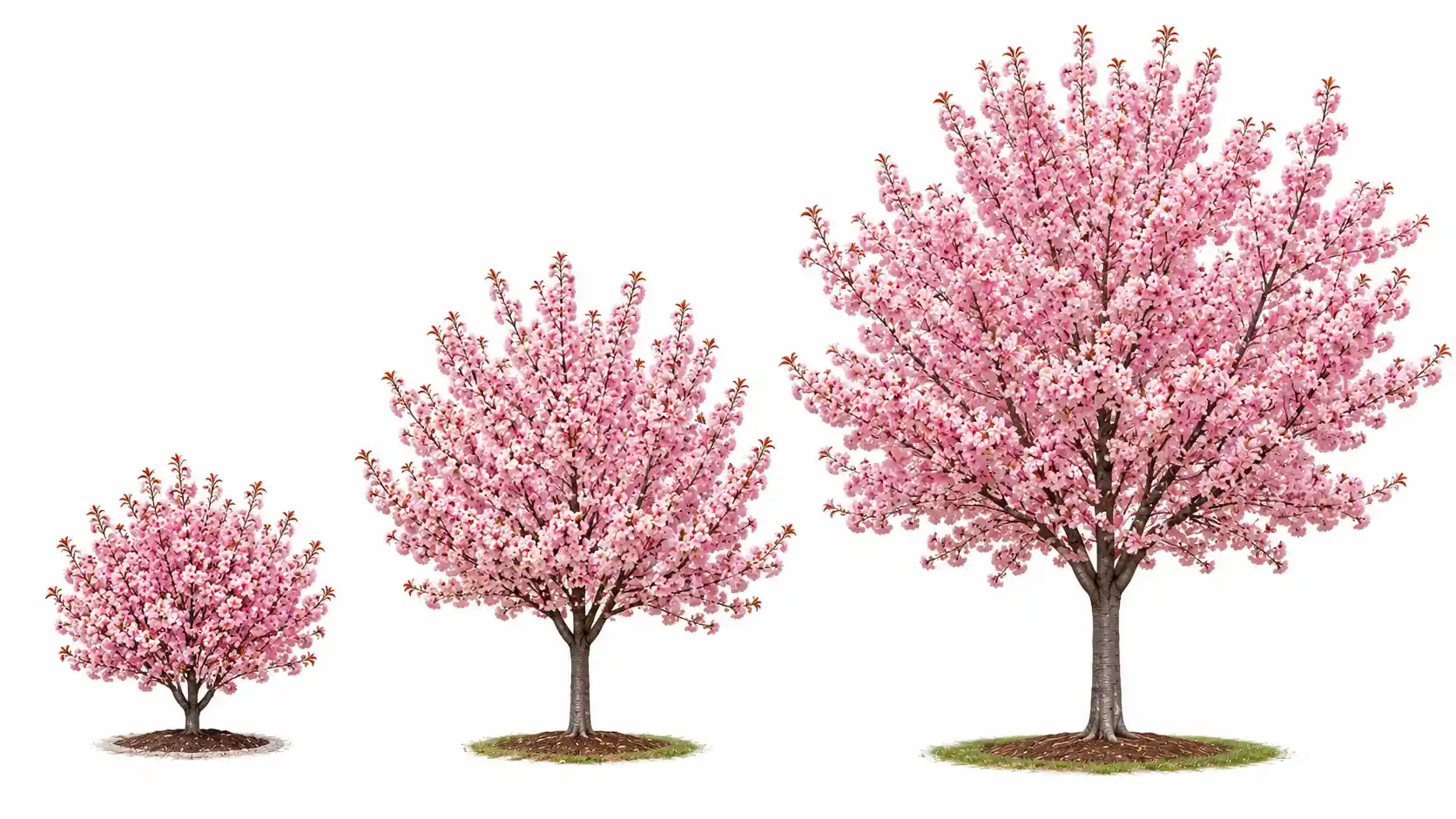
The difference between dwarf, semi-dwarf, and standard cherry blossom trees mainly comes down to genetics and rootstock selection.
Dwarf cherry blossom trees
- Typically grow 1.5–3 metres tall
- Suitable for pots and small gardens
- Require minimal space
- Easier to prune and maintain
Semi-dwarf cherry blossom trees
- Usually reach 3–5 metres tall
- Larger canopy spread
- Suitable for medium-sized gardens
- Often grafted onto size-controlling rootstocks
Standard cherry blossom trees
- Can exceed 6–10 metres depending on species
- Require substantial garden space
- Produce larger canopies and root systems
- Common in parks and public landscapes
Grafting plays an important role in controlling mature size. Many ornamental cherries are grafted onto rootstocks that naturally reduce vigour, allowing gardeners to enjoy flowering displays without managing a full-sized tree.
Can Dwarf Cherry Blossom Trees Grow in Australia?
Yes, dwarf cherry blossom trees can grow successfully in Australia when planted in climates that provide sufficient winter chilling and moderate growing conditions. Many regions of southern Australia support ornamental cherry cultivation, while tropical and very warm coastal areas may struggle to provide the winter conditions required for reliable flowering.
Gardeners interested in other ornamental flowering trees may also enjoy exploring our guide to Purple Flower Tree Australia: Native & Popular Species Guide for additional landscape options suited to Australian conditions.
Australia has become increasingly popular for ornamental cherry cultivation, particularly in cooler and temperate regions where spring blossom displays can closely resemble those seen in Japan.
Elemo Baker recommends selecting cultivars specifically known to perform well in Australian conditions rather than choosing varieties based solely on appearance.
Climate and Chill-Hour Requirements
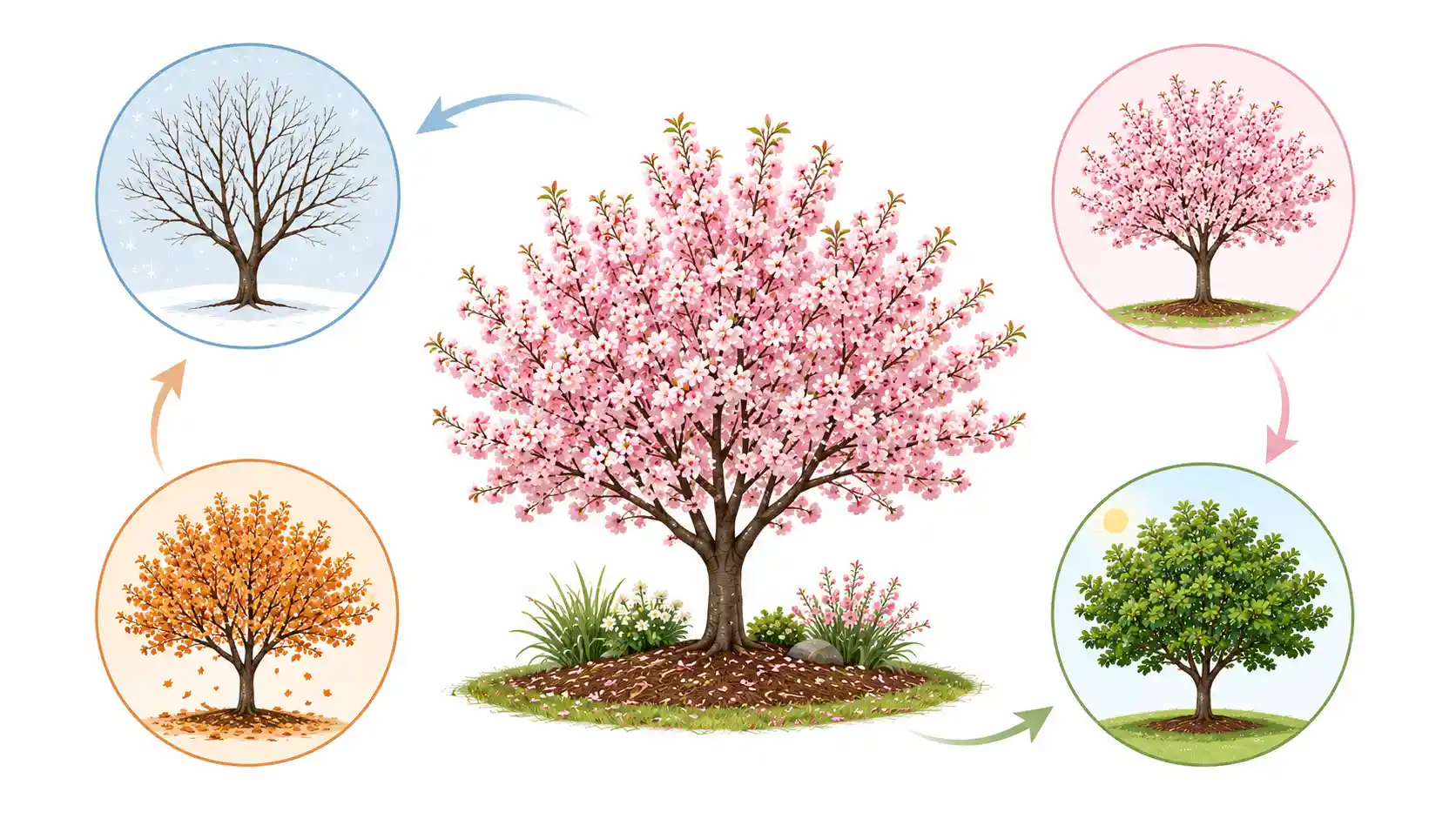
Cherry blossoms require a period of winter dormancy to produce healthy spring flowers. This dormancy is triggered by exposure to cool temperatures commonly referred to as chill hours.
Chill hours represent the amount of time a plant experiences temperatures generally between 0°C and 7°C during winter. While exact requirements vary by cultivar, most ornamental cherries benefit from a meaningful winter cooling period.
Without adequate chill hours, trees may experience:
- Reduced flowering
- Delayed blooming
- Uneven bud development
- Weak seasonal growth
As of 2026, growers continue to prioritise low-chill ornamental cultivars for regions experiencing warmer winters due to changing climate conditions.
Which Australian Climates Suit Them Best
Dwarf cherry blossom trees generally perform best in:
- Cool-temperate regions
- Temperate inland areas
- Elevated districts with cooler winters
- Areas with distinct seasonal changes
Suitable regions often include parts of:
- Victoria
- Tasmania
- New South Wales
- South Australia
- Higher-altitude areas of Queensland
Less suitable areas include:
- Tropical northern Australia
- Humid lowland tropical regions
- Areas with consistently warm winters
While some dwarf cultivars can tolerate mild climates, flowering performance is generally strongest where winter cooling occurs regularly.
How Big Do Dwarf Cherry Blossom Trees Get?
Most dwarf cherry blossom trees reach between 1.5 and 3 metres in height, although some compact cultivars remain smaller while others may approach 4 metres under ideal conditions. The terms mini cherry blossom tree and miniature cherry blossom tree are often used commercially, but mature size varies significantly between cultivars.
Gardeners comparing small ornamental trees may also wish to read our Dwarf Forest Pansy Tree Size, Care & Growth Guide to evaluate size and maintenance requirements.
Typical Mature Height and Width
The average mature dimensions are:
| Type | Height | Width |
| Compact dwarf | 1.5–2 m | 1–2 m |
| Standard dwarf | 2–3 m | 2–3 m |
| Larger dwarf cultivars | 3–4 m | 2–4 m |
Weeping forms may spread wider than they grow tall, creating graceful cascading displays.
Bush-form varieties often develop rounded canopies with similar height and width measurements.
Indoor/Container vs Garden-Planted Size Differences
Dwarf cherry blossom trees generally remain smaller when grown in containers.
Container-grown specimens experience:
- Restricted root development
- Reduced overall growth
- Easier size management
- Slower canopy expansion
Garden-planted trees often achieve their maximum genetic potential because roots can spread more freely.
In our experience, a cultivar that reaches 3 metres in the ground may remain closer to 2–2.5 metres when grown permanently in a large container.
Environmental Factors That Affect Final Size
Several factors influence mature size:
Climate
- Cooler climates may slow growth but improve flowering.
Soil quality
- Nutrient-rich soils support stronger development.
Water availability
- Consistent moisture encourages steady growth.
Sunlight
- Full sun generally promotes better canopy development.
Root restriction
- Containers naturally limit size.
Pruning
- Regular maintenance pruning can help maintain compact dimensions.
Poor drainage, nutrient deficiencies, or prolonged drought may significantly reduce mature size and overall vigour. Comparing growth habits with larger Australian landscape trees such as those covered in our Tuckeroo Tree Growth Rate: Size, Height & Care Guide can help gardeners better understand the compact nature of dwarf cherry blossom trees.
Growth Rate of Dwarf Cherry Blossom Trees
Dwarf cherry blossom trees generally have a moderate growth rate. Most cultivars establish gradually during their first few years before developing a more consistent annual growth pattern.
Although they grow more slowly than many fast-growing ornamental trees, their manageable size is one of their greatest advantages.
Slow, Moderate or Fast Growing?
Most dwarf cherry blossom trees are considered moderate growers.
Typical annual growth ranges from:
- 15–30 cm for slower cultivars
- 30–45 cm for average cultivars
- Up to 60 cm under excellent conditions
Growth speed depends heavily on cultivar selection, climate, soil quality, and maintenance practices.
Dwarf trees prioritise flowering and canopy structure rather than rapid height gain.
Seasonal Growth and Blossom Timing
Cherry blossoms follow a predictable seasonal cycle.
Winter
- Dormancy period
- Chill-hour accumulation
Late Winter to Spring
- Flower buds open
- Spectacular blossom display occurs
Spring to Early Summer
- Active vegetative growth
- New shoots and leaves emerge
Late Summer to Autumn
- Growth slows
- Trees prepare for dormancy
The exact flowering period varies by cultivar and local climate but generally occurs from late winter through mid-spring in suitable Australian regions.
Conditions That Speed Up or Slow Down Growth
Factors that encourage faster growth include:
- Full sunlight
- Well-drained fertile soil
- Consistent watering
- Appropriate fertilisation
- Adequate winter chilling
Factors that slow growth include:
- Heavy clay soils
- Poor drainage
- Excessive shade
- Drought stress
- Warm winters with insufficient chill hours
- Root restriction from undersized containers
Elemo Baker recommends prioritising soil drainage over fertiliser use. In many cases, poor drainage causes more long-term problems for dwarf cherry blossom trees than nutrient deficiencies.
Popular Dwarf Cherry Blossom Tree Varieties
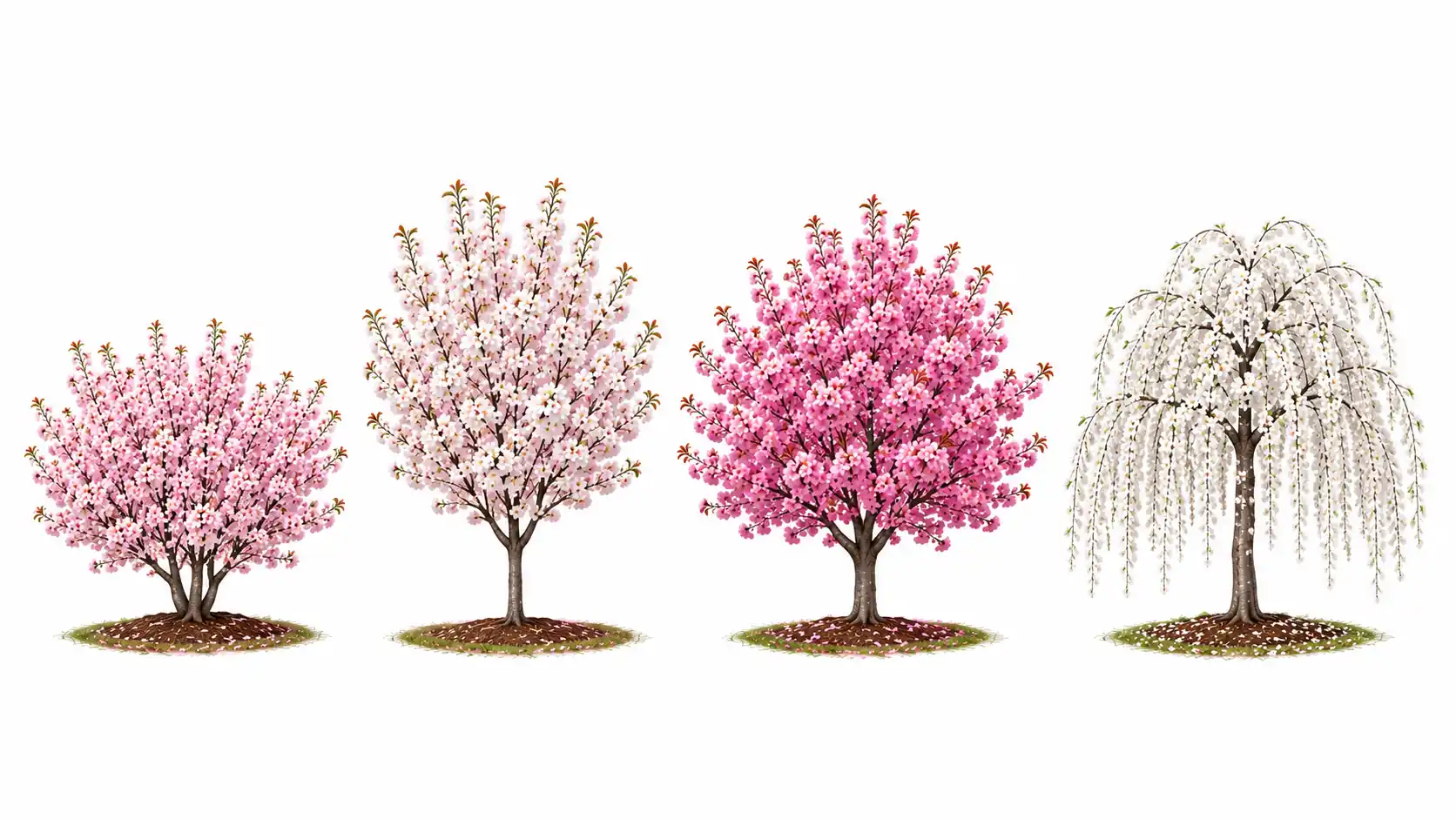
Several dwarf cherry blossom tree cultivars are available for gardeners who want ornamental spring flowers without planting a large tree. Each variety differs in mature size, flower colour, growth habit, and flowering period.
Choosing the right cultivar is often more important than choosing the tree based on flower colour alone. Climate suitability, available space, and maintenance requirements should all be considered before planting.
Similar to selecting between magnolia cultivars discussed in Magnolia Teddy Bear vs Little Gem: Key Differences Explained, choosing the right cherry blossom variety depends on mature size, growth habit, and flowering characteristics.
Prunus ‘Kojo-no-mai’
Prunus incisa ‘Kojo-no-mai’ is one of the most popular dwarf cherry blossom trees for small gardens and containers.
Key characteristics include:
- Mature height of approximately 1.5–2.5 metres
- Distinctive zig-zag branching structure
- Soft pink flowers that gradually fade to near-white
- Excellent suitability for pots and courtyards
- Attractive autumn foliage colours
In our experience growing ornamental cherries, Kojo-no-mai is among the easiest cultivars to manage in restricted spaces because it naturally maintains a compact form.
Dwarf Yoshino Cherry
The Yoshino cherry is famous for its spectacular blossom displays. Dwarf forms provide similar visual appeal while remaining suitable for smaller landscapes.
Features include:
- Delicate pale pink to white flowers
- Rounded growth habit
- Moderate growth rate
- Strong spring floral display
- Suitable for feature planting
Dwarf Yoshino cultivars are often chosen by gardeners seeking a traditional Japanese cherry blossom appearance in a smaller package.
Prunus ‘Kursar’
Prunus ‘Kursar’ is valued for its early flowering period and vibrant colour.
Notable features include:
- Deep pink flowers
- Compact growth habit
- Strong ornamental value
- Reliable spring flowering
- Good cold tolerance
Its richer flower colour makes it stand out among lighter pink and white flowering cultivars.
Prunus ‘Snow Showers’ (Weeping White Dwarf Variety)
Prunus ‘Snow Showers’ is a compact weeping ornamental cherry known for its elegant appearance.
Characteristics include:
- Cascading branches
- White blossoms
- Compact mature size
- Strong landscape appeal
- Suitable as a focal specimen
The graceful weeping habit creates a very different visual effect compared with upright dwarf cherry blossom varieties.
Choosing by Flower Colour — Pink, Red and White
Flower colour is often the main factor gardeners notice, but each colour can contribute a different landscape effect. Many dwarf cherry blossom varieties feature soft pink blooms, making them a popular choice alongside the species featured in our Tree With Pink Flowers Australia: Identification Guide.
| Flower Colour | Appearance | Common Cultivars |
| Pale Pink | Traditional cherry blossom look | Kojo-no-mai, Yoshino |
| Deep Pink | More vibrant display | Kursar |
| White | Elegant and bright | Snow Showers |
| Pink-White Blend | Colour changes during flowering | Kojo-no-mai |
Comparison of Popular Dwarf Cherry Blossom Varieties
| Cultivar | Mature Height | Flower Colour | Growth Habit | Bloom Period |
| Kojo-no-mai | 1.5–2.5 m | Pale pink to white | Bushy | Early to mid-spring |
| Dwarf Yoshino | 2–3 m | Pale pink-white | Upright rounded | Mid-spring |
| Kursar | 2–4 m | Deep pink | Upright | Early spring |
| Snow Showers | 2–3 m | White | Weeping | Mid-spring |
Growth Habits: Weeping, Bush and Bonsai Forms
Dwarf cherry blossom trees are available in several growth forms. Understanding these habits helps gardeners choose the best tree for their available space and desired landscape style.
Dwarf Weeping Cherry Trees
Dwarf weeping cherry trees develop cascading branches that arch gracefully toward the ground.
Benefits include:
- Elegant appearance
- Strong focal-point value
- Suitable for feature gardens
- Attractive year-round branch structure
Weeping varieties are particularly effective near patios, pathways, and water features where their shape can be appreciated from multiple angles.
Bush-Form Dwarf Cherry Blossoms
Bush-form varieties grow as compact shrubs or small rounded trees.
Advantages include:
- Easy maintenance
- Excellent for small gardens
- Suitable for hedging or screening
- Better wind resistance than some weeping forms
These cultivars often fit naturally into cottage-style and contemporary garden designs.
Growing a Dwarf Cherry Blossom Tree as Bonsai
Many dwarf cherry blossom cultivars can be trained as bonsai specimens.
Bonsai cultivation involves:
- Root pruning
- Branch shaping
- Careful watering
- Container restriction
- Long-term maintenance
The naturally compact growth of dwarf varieties makes them particularly suitable for bonsai development.
Elemo Baker recommends beginning with a young, healthy plant rather than attempting to convert a mature garden specimen into bonsai.
How to Care for a Dwarf Cherry Blossom Tree
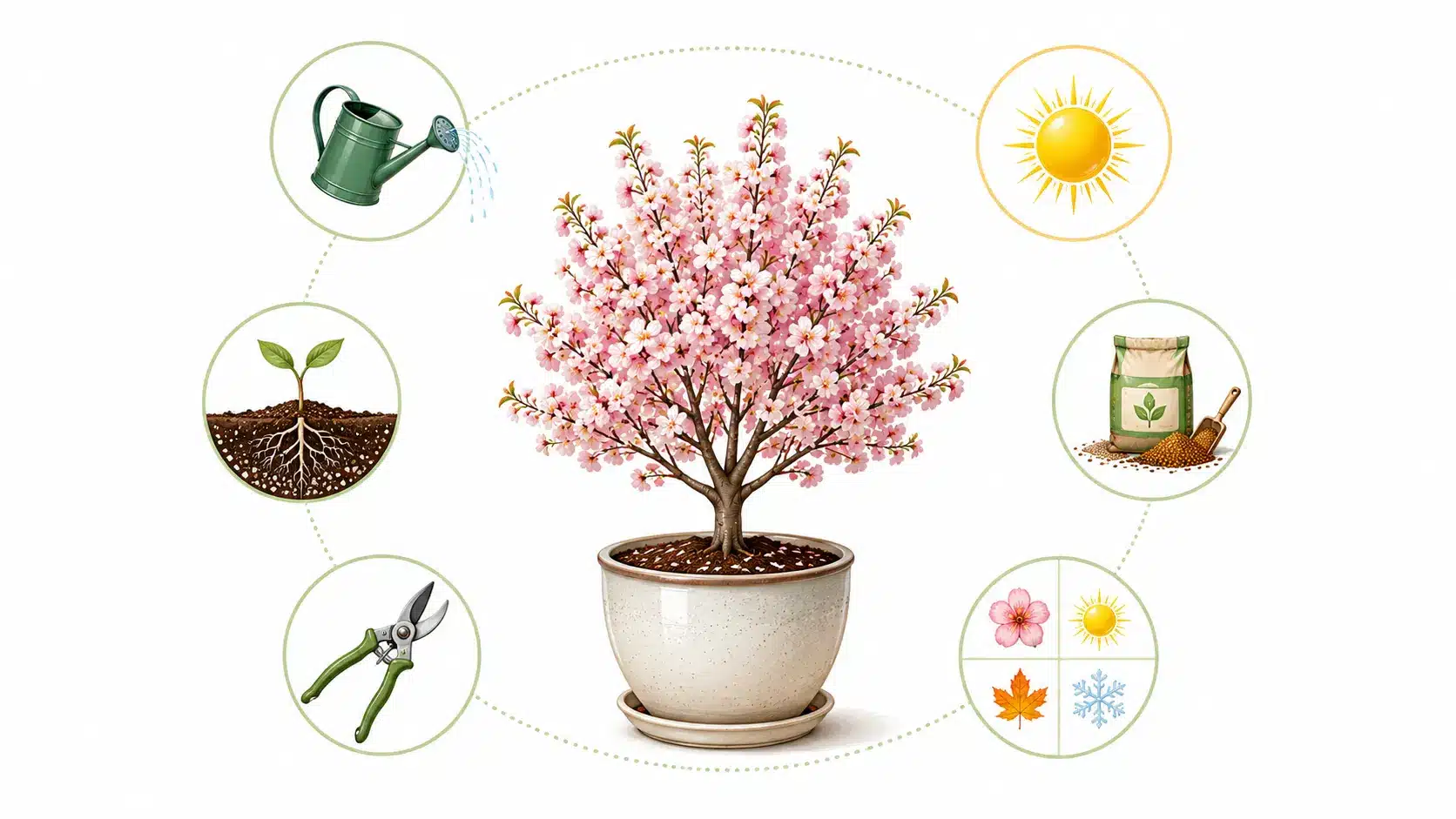
Proper care is essential for maintaining healthy growth and reliable flowering. While dwarf cherry blossom trees are relatively low-maintenance compared with many ornamental trees, they still require suitable growing conditions.
Watering Needs
Dwarf cherry blossom trees prefer consistently moist soil but dislike waterlogged conditions.
General watering guidelines include:
- Water deeply during establishment
- Allow surface soil to partially dry between watering
- Increase watering during prolonged hot weather
- Reduce watering during winter dormancy
One of the most common mistakes beginners make is watering too frequently rather than checking soil moisture first.
Light Requirements
Most dwarf cherry blossom trees perform best in full sun.
Ideal conditions include:
- At least six hours of direct sunlight daily
- Morning sun exposure
- Good air circulation
Insufficient sunlight may reduce flowering and lead to weaker growth.
Soil Preferences
The best soil is:
- Well-draining
- Slightly acidic to neutral
- Rich in organic matter
- Moderately fertile
Heavy clay soils often require improvement before planting.
Adding compost and organic matter can improve both drainage and soil structure.
Fertilising
Cherry blossoms generally benefit from moderate fertilisation.
Suitable practices include:
- Applying balanced fertiliser in early spring
- Using slow-release products where appropriate
- Avoiding excessive nitrogen
Too much nitrogen often produces leafy growth at the expense of flowers.
Pruning
Pruning helps maintain shape, remove damaged growth, and improve airflow.
Recommended pruning practices:
- Prune after flowering
- Remove dead or diseased branches
- Avoid heavy pruning during dormancy
- Maintain the natural growth habit
In our experience, excessive pruning is far more damaging than light maintenance pruning.
Climate Tolerance
Dwarf cherry blossom trees tolerate:
- Cool winters
- Mild to warm summers
- Moderate frost
They generally struggle with:
- Tropical humidity
- Extremely hot climates
- Prolonged drought
- Poorly drained soils
As of 2026, many Australian growers continue to favour low-chill ornamental cherry selections in regions experiencing warmer winters.
Growing a Dwarf Cherry Blossom Tree in a Pot or on a Patio
Container growing is one of the biggest advantages of dwarf cherry blossom trees. Many cultivars perform exceptionally well in large pots when provided with proper care.
Choosing the Right Container and Potting Mix
Select a container that:
- Has drainage holes
- Is proportionate to the tree’s size
- Provides room for root development
- Is stable enough to prevent tipping
A suitable potting mix should contain:
- Premium potting media
- Compost or organic matter
- Materials that improve drainage
Avoid using ordinary garden soil in containers because it can compact and restrict root growth.
Patio and Small-Space Placement Tips
For patio growing:
- Position trees in full sun
- Protect from strong winds
- Ensure good air circulation
- Allow room for canopy development
Dwarf varieties are ideal for:
- Courtyards
- Apartment balconies
- Small suburban gardens
- Outdoor entertaining areas
Placing the tree where spring blossoms can be viewed from windows or outdoor seating areas maximises its ornamental value. If you enjoy growing ornamental plants in containers, you may also find our Money Tree Australia: Care, Meaning & Buying Guide useful for patio and indoor-outdoor gardening inspiration. For broader guidance on matching plants to Australian conditions and garden layouts, see our Australian Plants Guide: Indoor Houseplants & Garden Design.
Companion Planting — What Not to Plant Next to a Cherry Tree
Certain plants can compete aggressively with cherry blossom trees or increase pest and disease risks. Understanding root behaviour is important when planning garden layouts, and our Teddy Bear Magnolia Root System guide provides useful insight into tree spacing considerations.
Avoid planting:
- Large vigorous trees with invasive roots
- Water-hungry shrubs
- Dense groundcovers that trap moisture
- Plants prone to similar fungal diseases
Potential problems include:
- Root competition
- Reduced nutrient availability
- Poor airflow
- Increased disease pressure
Better companions include:
- Low-growing perennials
- Spring bulbs
- Shade-tolerant ornamental plants
- Non-invasive flowering groundcovers
Maintaining adequate spacing around the root zone helps reduce competition and improves overall tree health. When designing mixed garden borders, ornamental cherries can often be combined with screening plants such as those covered in our Photinia Fraseri Robusta: Growth, Care & Hedge Guide, provided adequate spacing is maintained.
Fast-growing screening plants discussed in our Pittosporum Silver Sheen Growth Rate Guide should be positioned carefully to avoid excessive root competition with dwarf cherry blossom trees.
Are Dwarf Cherry Blossom Trees Safe Around Pets?
No, dwarf cherry blossom trees should not be considered completely safe around pets.
Like many members of the Prunus genus, cherry blossom trees contain cyanogenic compounds in certain plant tissues. These compounds can release toxic substances when plant material is chewed or damaged.
Plant parts of concern include:
- Leaves
- Bark
- Seeds
- Stems
Dogs are most at risk if they consume significant quantities of plant material.
Potential symptoms may include:
- Drooling
- Breathing difficulties
- Weakness
- Digestive upset
Fortunately, most dogs do not consume enough cherry tree material to cause serious poisoning, but caution is still recommended.
If a pet is suspected of ingesting large amounts of foliage, bark, or seeds, immediate veterinary advice should be sought.
When planted responsibly and monitored appropriately, dwarf cherry blossom trees can still be grown successfully in pet-friendly gardens, but owners should remain aware of the potential risks.
When Do Dwarf Cherry Blossom Trees Bloom?
Dwarf cherry blossom trees typically bloom from late winter to mid-spring, depending on the cultivar, local climate, and winter chill received. Their flowering period is one of the main reasons gardeners choose them, as the blossoms provide a striking display of colour before or alongside the emergence of new leaves.
Typical Blossom Season in Australia
In Australia, most dwarf cherry blossom trees flower between August and October, although exact timing varies by region and cultivar.
General flowering patterns include:
- Late winter flowering in milder climates
- Early spring flowering in temperate regions
- Mid-spring flowering in cooler areas
Flowering can also be influenced by seasonal weather conditions. A warmer-than-average winter may cause earlier blooming, while extended cool conditions can delay flowering.
In our experience, gardeners often worry when flowering dates vary slightly from year to year. Minor seasonal shifts are normal and do not necessarily indicate a problem with the tree.
Can Dwarf Cherry Blossoms Flower in Summer?
No, dwarf cherry blossom trees do not normally flower in summer.
Cherry blossoms are genetically programmed to bloom after completing their winter dormancy period. The flower buds develop during the previous growing season and require winter chilling before opening in spring.
Occasionally, environmental stress or unusual weather patterns may trigger a small number of out-of-season flowers, but a full summer bloom is uncommon.
Healthy dwarf cherry blossom trees should be expected to flower once annually during their normal spring flowering period.
Common Problems With Dwarf Cherry Blossom Trees
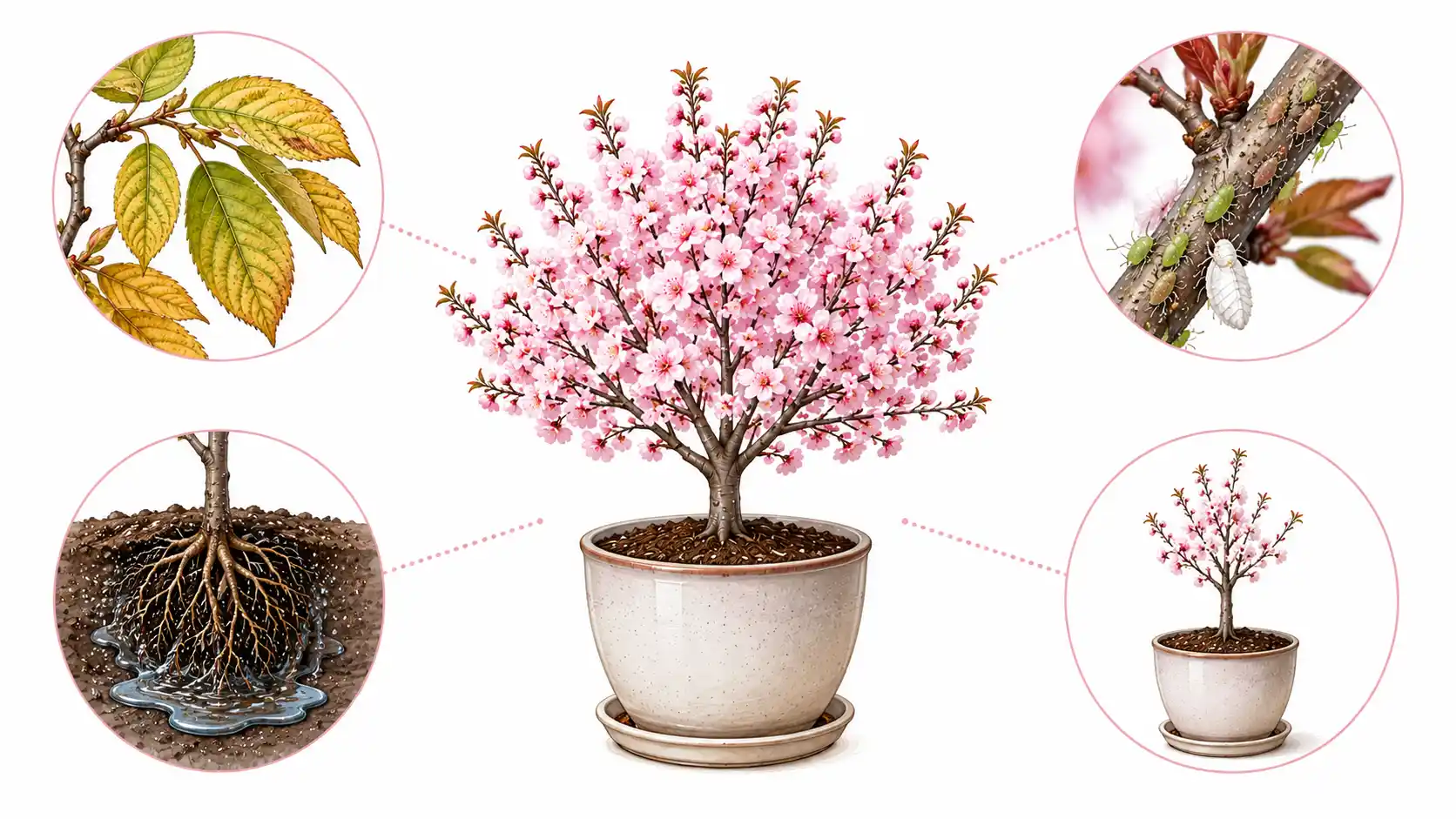
Most problems affecting dwarf cherry blossom trees can be traced to watering practices, soil conditions, climate suitability, or pest activity. Identifying issues early usually prevents long-term damage.
Yellowing Leaves
Yellowing leaves often indicate environmental stress rather than disease.
Common causes include:
- Overwatering
- Poor drainage
- Nutrient deficiencies
- Excessive heat stress
- Root damage
How to fix it:
- Check soil moisture levels
- Improve drainage if necessary
- Apply a balanced fertiliser when appropriate
- Remove severely damaged foliage
How to prevent it:
- Avoid waterlogged soil
- Maintain proper watering routines
- Grow the tree in suitable climatic conditions
Overwatering and Root Issues
Overwatering is one of the most frequent causes of decline in dwarf cherry blossom trees.
Symptoms may include:
- Yellow leaves
- Wilting despite wet soil
- Poor growth
- Root rot
How to fix it:
- Reduce watering frequency
- Improve drainage
- Repot container-grown trees if necessary
- Remove affected roots where possible
How to prevent it:
- Use free-draining soil
- Ensure containers have drainage holes
- Water according to soil moisture rather than a strict schedule
Elemo Baker recommends checking the soil several centimetres below the surface before watering rather than relying solely on the appearance of the top layer.
Pest Infestations
Several pests may occasionally affect dwarf cherry blossom trees.
Common pests include:
- Aphids
- Scale insects
- Caterpillars
- Borers
Symptoms may include:
- Distorted foliage
- Sticky residue
- Leaf damage
- Reduced vigour
How to fix it:
- Remove pests manually where practical
- Encourage beneficial insects
- Apply appropriate horticultural treatments when required
How to prevent it:
- Maintain tree health
- Monitor regularly
- Avoid overcrowding plants
Healthy trees are generally more resistant to pest attacks than stressed specimens.
Slow or Stunted Growth
Slow growth may result from several environmental factors.
Possible causes include:
- Insufficient sunlight
- Poor soil fertility
- Root restriction
- Inadequate chill hours
- Drought stress
How to fix it:
- Improve growing conditions
- Relocate container plants if necessary
- Address soil deficiencies
- Ensure adequate watering
How to prevent it:
- Match the cultivar to the local climate
- Plant in an appropriate location
- Maintain consistent care practices
Because dwarf cherry blossom trees naturally grow more slowly than many ornamental species, expectations should be realistic when evaluating growth rates.
Beginner Mistakes to Avoid When Growing Dwarf Cherry Blossom Trees
Many first-time growers encounter preventable problems because they underestimate the importance of cultivar selection and site preparation.
Common mistakes include:
Choosing the Wrong Climate
One of the biggest mistakes is planting a cultivar that requires more winter chilling than the local climate can provide.
This may result in:
- Poor flowering
- Weak growth
- Reduced long-term performance
Researching local climate suitability before purchasing a tree significantly improves success rates.
Planting in Poorly Drained Soil
Cherry blossom trees dislike permanently wet conditions.
Poor drainage can lead to:
- Root rot
- Yellow leaves
- Reduced flowering
- Tree decline
Improving soil structure before planting is often easier than correcting drainage problems later.
Incorrect Pruning Timing
Pruning at the wrong time can reduce flowering potential.
Common pruning mistakes include:
- Heavy winter pruning
- Excessive branch removal
- Removing developing flower buds
Most ornamental cherries respond best to light pruning shortly after flowering.
Expecting Standard Trees to Stay Small
Many gardeners mistakenly purchase a standard ornamental cherry tree assuming it will remain compact.
Always verify whether a tree is:
- Dwarf
- Semi-dwarf
- Standard
Understanding mature size prevents future problems involving overcrowding and excessive pruning.
Overwatering Newly Planted Trees
New trees require regular watering, but constant saturation can be harmful.
The goal is moist soil, not waterlogged soil.
Establishing a balanced watering routine during the first few years is one of the most important steps in successful cultivation.
Conclusion
A dwarf cherry blossom tree offers the beauty of traditional cherry blossoms in a size suitable for modern gardens, patios, and containers. Most varieties reach only 1.5–3 metres tall, making them an excellent choice for gardeners with limited space. Success depends largely on selecting a suitable cultivar, providing adequate winter chilling, ensuring good drainage, and matching the tree to the local climate.
For many Australian gardeners, particularly those in cool-temperate and temperate regions, dwarf cherry blossom trees can provide reliable spring displays with relatively modest maintenance requirements. Whether you choose a compact bush form, an elegant weeping variety, or a bonsai specimen, selecting the right dwarf cherry blossom tree for your growing conditions is the key to long-term success.
FAQ
Is there such a thing as a dwarf cherry blossom tree?
Yes. A dwarf cherry blossom tree is a compact ornamental cherry tree bred or grafted to remain much smaller than standard flowering cherry trees. Most dwarf varieties grow between 1.5 and 3 metres tall while still producing impressive spring blossoms.
Can dwarf cherry blossom trees grow in Australia?
Yes. Dwarf cherry blossom trees can grow successfully in many parts of Australia, particularly in cool-temperate and temperate regions that provide sufficient winter chill. Performance is generally lower in tropical areas with very mild winters.
How tall do dwarf cherry blossom trees grow?
Most dwarf cherry blossom trees reach between 1.5 and 3 metres in height at maturity. Some compact cultivars remain smaller, while larger dwarf selections may approach 4 metres under ideal growing conditions.
What is the best dwarf cherry blossom tree variety?
The best variety depends on local conditions and personal preferences. Prunus ‘Kojo-no-mai’ is widely regarded as one of the best all-round dwarf cherry blossom trees due to its compact size, attractive branching structure, and reliable flowering.
What is the difference between a dwarf and a semi-dwarf cherry tree?
A dwarf cherry tree typically grows between 1.5 and 3 metres tall, while a semi-dwarf cherry tree often reaches 3–5 metres. Semi-dwarf trees require more space and generally develop larger canopies and root systems.
Are dwarf cherry blossom trees toxic to dogs?
Yes. Like many members of the Prunus genus, dwarf cherry blossom trees contain cyanogenic compounds in their leaves, bark, stems, and seeds. These substances can be harmful if consumed in sufficient quantities by dogs or other pets.
What is the small cherry blossom tree commonly grown in Australia?
One of the most commonly grown small cherry blossom trees in Australia is Prunus incisa ‘Kojo-no-mai’. Other popular options include Prunus ‘Kursar’, dwarf Yoshino cherries, and Prunus ‘Snow Showers’, depending on local climate conditions.
4 Comments