
Teddy Bear Magnolia Landscaping Guide for Australian Gardens
Introduction
Teddy Bear magnolia landscaping is popular throughout Australia because this compact evergreen magnolia provides year-round structure, attractive foliage, fragrant flowers, and excellent screening potential. The Teddy Bear magnolia, scientifically known as Magnolia grandiflora ‘Teddy Bear’, is a dwarf cultivar of the Southern Magnolia that fits comfortably into modern residential landscapes. Its dense growth habit and manageable size make it suitable for hedges, feature planting, privacy screens, and courtyard gardens. This guide explains its size, growth rate, flowering habits, landscaping uses, care requirements, and how it compares with other magnolia varieties commonly grown in Australian gardens.
Quick Summary
- Teddy Bear magnolia is a compact, evergreen cultivar of Magnolia grandiflora suited to hedging, screening, and feature planting.
- Mature size, flowering, and growth rate are the key factors that determine how it’s used in landscaping.
- It is commonly compared to Little Gem and Kay Parris magnolias when choosing a variety for Australian gardens.
- Its dense foliage and manageable growth make it ideal for both small and large landscape designs.
What Is a Teddy Bear Magnolia?
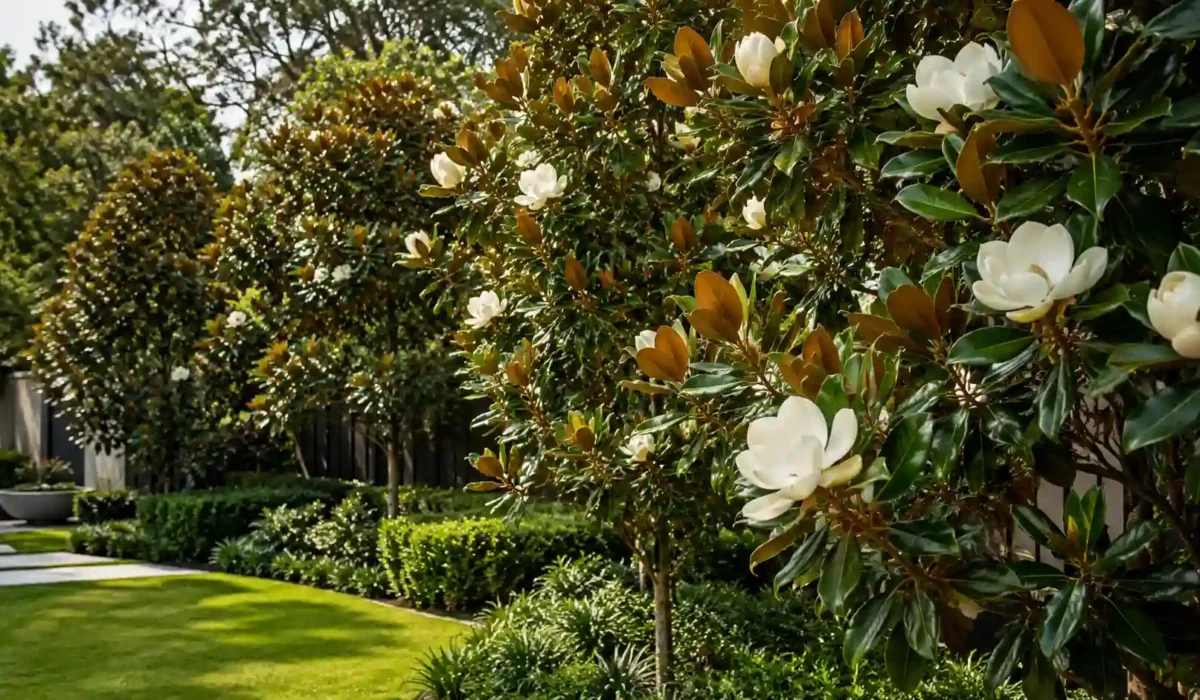
The Teddy Bear magnolia (Magnolia grandiflora ‘Teddy Bear’) is a compact evergreen magnolia cultivar developed from the Southern Magnolia. It is known for its dense upright growth, glossy dark green leaves, and distinctive rusty-brown fuzzy undersides that inspired its “teddy bear” name.
Unlike standard Southern Magnolias, which can grow into very large trees, the Teddy Bear magnolia tree remains considerably more compact. This makes it highly suitable for residential landscapes where space is limited.
As an evergreen magnolia Teddy Bear variety, it provides year-round visual interest. The foliage remains attractive throughout all seasons, making it a popular choice for privacy screens, formal hedges, and feature plantings.
Teddy Bear Magnolia Size and Growth Rate
Mature Height and Width
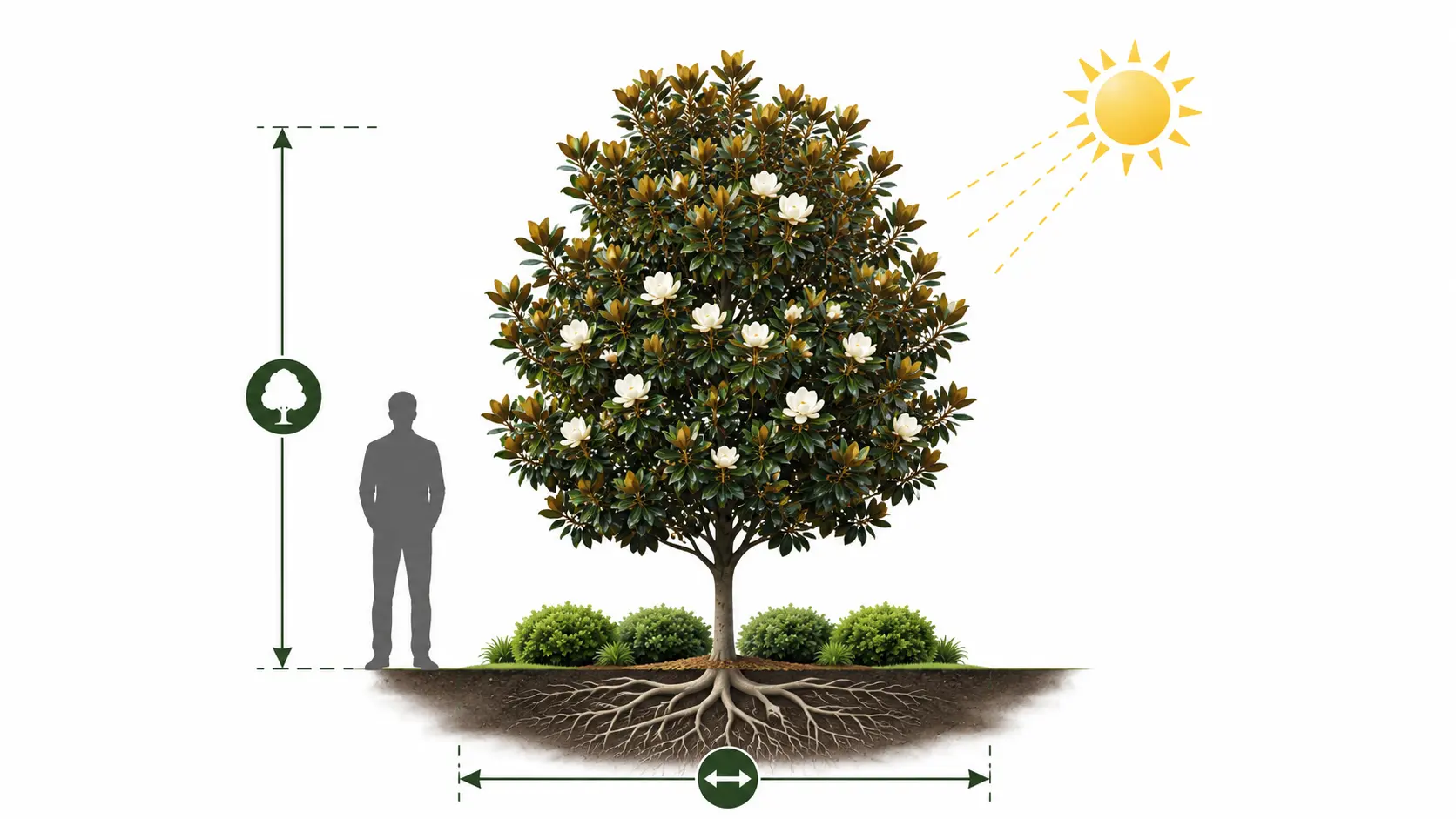
A full grown Teddy Bear magnolia typically reaches between 4 and 6 metres in height and around 2 to 3 metres in width under ideal conditions.
However, final size can vary depending on:
- Climate
- Soil quality
- Water availability
- Sun exposure
- Pruning practices
A full grown Teddy Bear magnolia tree grown in a container usually remains smaller than one planted directly into the ground. Container-grown specimens often reach 2 to 4 metres due to root restrictions.
In our experience growing Teddy Bear magnolias in Australian gardens, plants positioned in full sun with well-drained soil generally achieve their mature size faster and develop denser foliage.
Growth Rate
The Teddy Bear magnolia growth rate is generally considered moderate.
Under favourable conditions, most trees grow approximately 30 to 60 centimetres per year. Growth may be slower during establishment and faster once the root system becomes established.
Factors influencing growth include:
- Sunlight exposure
- Soil fertility
- Water availability
- Temperature
- Mulching practices
For gardeners asking, “Are Teddy Bear magnolias fast growing?”, the answer is that they are moderately fast compared with many ornamental evergreen trees but not as rapid as some screening species.
Most Teddy Bear magnolias take around 8 to 12 years to reach near-mature dimensions.
Root System and Placement Considerations
The Teddy Bear magnolia root system is generally considered non-invasive when compared with many large shade trees. Roots tend to spread outward near the soil surface rather than developing aggressive deep-rooting systems. However, adequate planting distance remains important.
Before planting near buildings or paved areas, it’s helpful to understand the full Teddy Bear Magnolia Root System and how root spread affects long-term landscape planning.
Recommended distances include:
- At least 2 to 3 metres from building foundations
- Away from underground pipes where possible
- Sufficient clearance from paving and retaining walls
Elemo Baker recommends considering the mature canopy spread before planting, especially when designing formal hedges or screening rows.
Teddy Bear Magnolia Flowering
Teddy Bear magnolias typically flower from late spring through summer, although flowering periods can vary slightly across Australian climates.
The Teddy Bear magnolia flower is large, creamy white, and highly fragrant. Individual blooms can reach 15 to 20 centimetres in diameter, creating a striking display against the dark green foliage.
Key flowering characteristics include:
- Large white flowers
- Strong citrus-like fragrance
- Repeated flowering through warm months
- Attractive evergreen backdrop
When do Teddy Bear magnolias flower? Most begin flowering once established, usually within several years of planting. Mature specimens generally produce more abundant blooms than younger trees.
Landscaping with Teddy Bear Magnolias
Teddy Bear Magnolia Landscaping Ideas
Teddy Bear magnolia landscaping ideas often focus on the tree’s dense evergreen foliage and compact shape. Designers often combine evergreen magnolias with deciduous feature trees such as those discussed in the Dwarf Forest Pansy Tree Size, Care & Growth Guide.
Popular landscape applications include:
- Feature trees in front gardens
- Privacy screens
- Formal hedges
- Courtyard plantings
- Poolside landscaping
- Driveway borders
The plant pairs well with:
- Ornamental grasses
- Gardenias
- Agapanthus
- Native Australian shrubs
- Low-growing groundcovers
Its upright growth habit makes it particularly useful in contemporary landscape designs. To create seasonal contrast, Teddy Bear magnolias can be paired with flowering species featured in our Tree With Pink Flowers Australia: Identification Guide.
Using Teddy Bear Magnolia as a Hedge
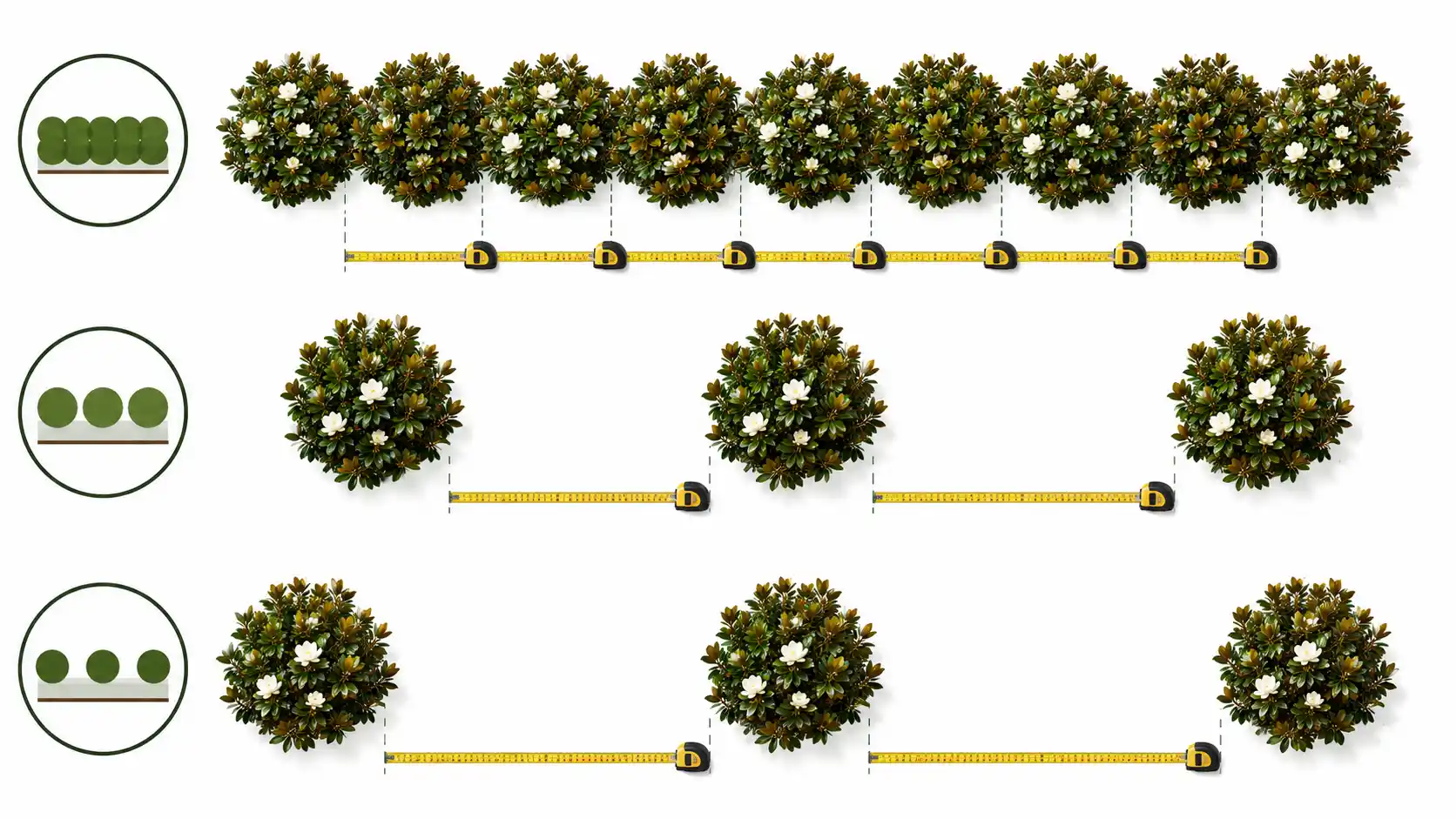
Teddy Bear magnolia hedge plantings are popular because they provide dense year-round screening while maintaining an attractive formal appearance. Regular pruning encourages thicker growth and improved hedge density.
Gardeners comparing evergreen screening options may also want to explore Photinia Fraseri Robusta: Growth, Care & Hedge Guide.
Suggested Hedge Spacing
| Hedge Goal | Spacing Between Plants |
| Dense, formal hedge | 1–1.2 m |
| Informal screen | 1.5–2 m |
| Standalone feature spacing | 2.5 m+ |
Closer spacing creates faster privacy but may require more pruning maintenance over time. Another popular Australian hedging choice is covered in our Pittosporum Silver Sheen Growth Rate Guide, which compares well with Teddy Bear magnolia for privacy planting.
Landscapes that combine evergreen structure and colourful flowering trees often include species highlighted in our Purple Flower Tree Australia: Native & Popular Species Guide.
Growing Teddy Bear Magnolia in Pots
Teddy Bear magnolia in pots can perform well when provided with sufficient root space and proper drainage.
For best results:
- Use a large container
- Select premium potting mix
- Ensure drainage holes remain unobstructed
- Water consistently during hot weather
- Apply slow-release fertiliser annually
Container-grown plants remain smaller than in-ground specimens, making them suitable for patios, balconies, and courtyards.
Landscaping for Australian Climates
Teddy Bear magnolia landscaping Australia projects benefit from the tree’s adaptability across a range of climates.
The variety performs well in:
- Coastal regions
- Temperate climates
- Subtropical areas
- Mild frost-prone locations
As of 2026, Australian growers continue recommending Teddy Bear magnolias for privacy screening due to their combination of heat tolerance, humidity resistance, and evergreen structure. Young plants may require frost protection during establishment, particularly in colder inland regions. For coastal Australian gardens, you may also compare growth habits with the Tuckeroo Tree Growth Rate: Size, Height & Care Guide.
Teddy Bear Magnolia vs Other Magnolia Varieties
Teddy Bear vs Little Gem Magnolia
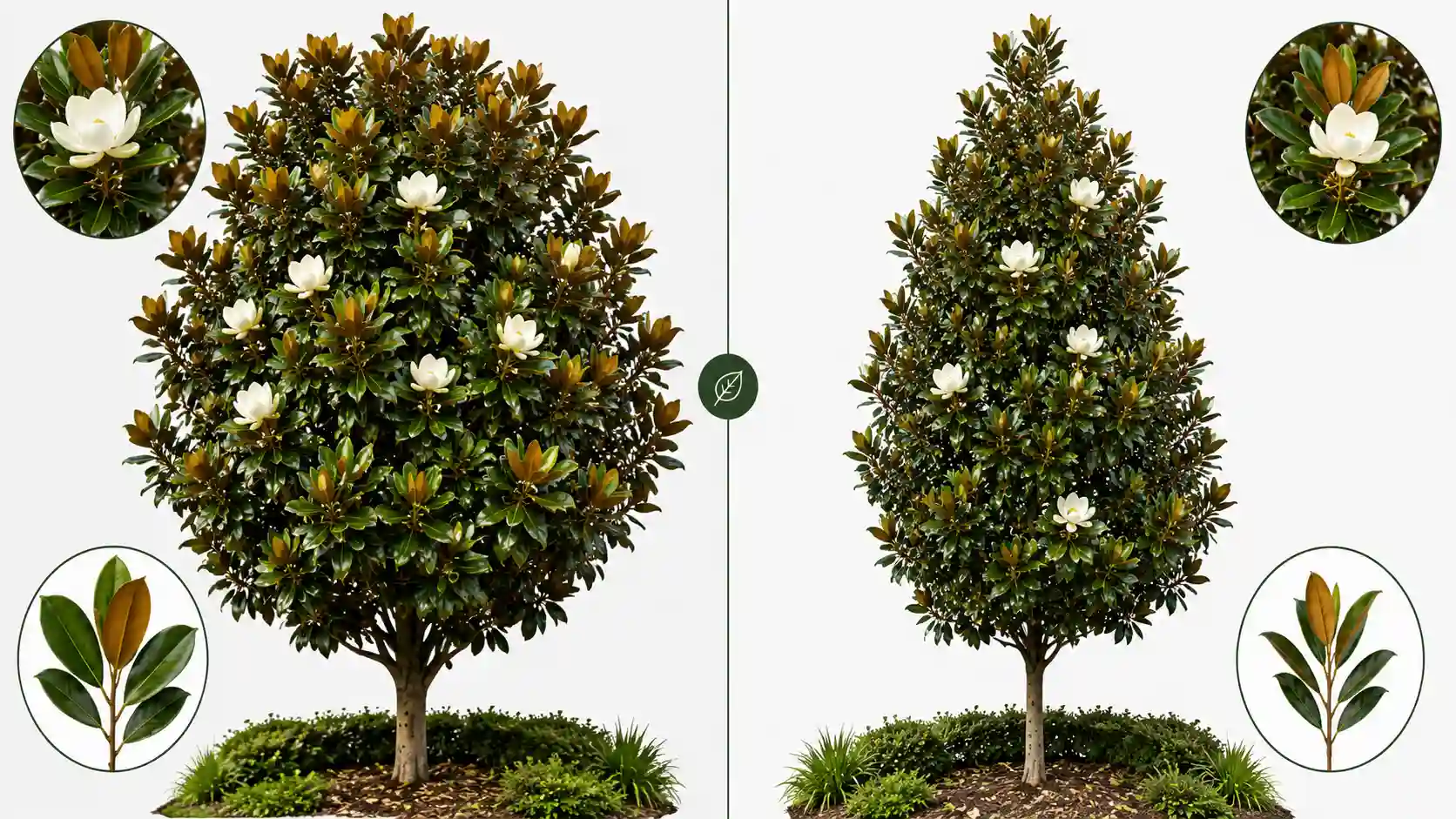
The difference between Teddy Bear and Little Gem magnolia primarily involves size, foliage characteristics, and landscape applications.
| Feature | Teddy Bear | Little Gem |
| Mature height | Compact | Smaller/narrower |
| Leaf size | Larger | Smaller |
| Growth rate | Moderate | Moderate-slow |
| Best use | Hedging, screening | Tight spaces, narrow gardens |
Teddy Bear magnolia vs Little Gem comparisons often favour Teddy Bear for dense screening, while Little Gem is commonly selected for narrow planting areas. For a more detailed cultivar comparison, see Magnolia Teddy Bear vs Little Gem: Key Differences Explained.
Teddy Bear vs Kay Parris Magnolia
The Kay Parris magnolia shares similarities with Teddy Bear but differs in several ways.
Key differences include:
- Kay Parris generally has slightly smaller foliage.
- Teddy Bear often develops a denser screening habit.
- Kay Parris may suit very compact gardens.
- Teddy Bear is frequently preferred for formal hedges.
Garden size and intended landscape use typically determine which variety is most suitable.
Planting and Care Guide
Planting
The best time for Teddy Bear magnolia planting is during autumn or spring when temperatures are moderate.
To plant successfully:
- Choose a sunny location.
- Dig a hole twice the width of the root ball.
- Improve soil if necessary.
- Position the plant at the same depth as its nursery container.
- Backfill carefully.
- Water thoroughly.
Newly planted trees benefit from consistent moisture during their first growing season.
Watering, Light and Soil
Proper Teddy Bear magnolia care depends on balancing water, sunlight, and soil conditions.
Watering requirements:
- Regular watering during establishment
- Deep watering during prolonged dry periods
- Reduced frequency once mature
Light requirements:
- Full sun preferred
- Partial shade tolerated
Soil requirements:
- Well-drained soil
- Slightly acidic to neutral pH
- Organic matter-rich conditions
In our experience, poor drainage causes more problems than temporary dry conditions.
Pruning
Teddy Bear magnolia pruning helps maintain shape, improve density, and control hedge size.
For Australian conditions, pruning is generally best completed after flowering finishes.
Pruning guidelines:
- Remove dead or damaged branches
- Trim lightly to maintain form
- Avoid excessive pruning into old wood
- Shape hedges gradually
Gardeners asking how to prune a magnolia tree Australia should focus on light maintenance rather than aggressive cutting, as magnolias respond best to moderate pruning.
Common Problems and Troubleshooting
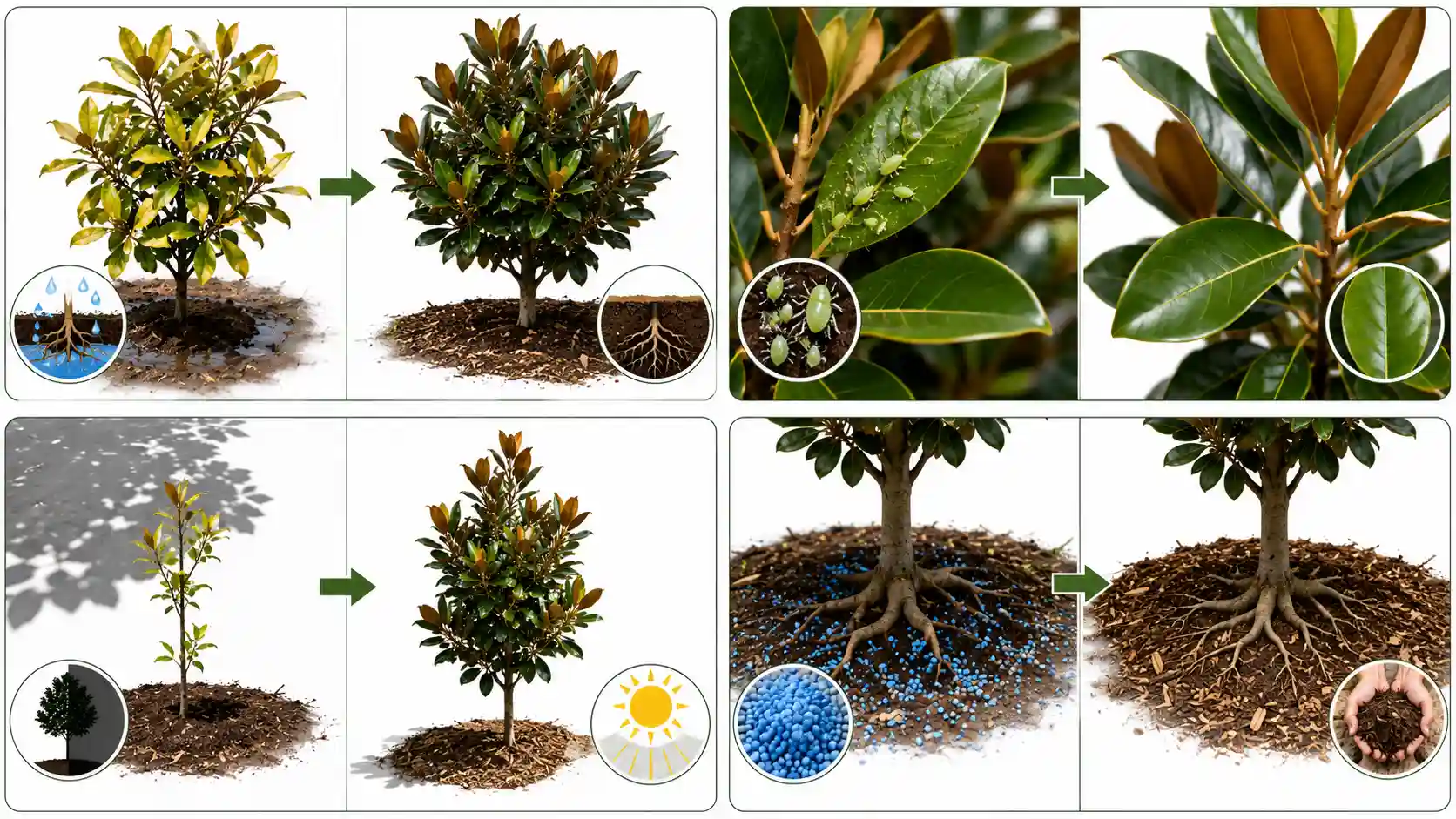
Yellowing Leaves
Possible causes:
- Overwatering
- Poor drainage
- Nutrient deficiencies
Solutions:
- Improve drainage
- Adjust watering schedules
- Apply balanced fertiliser if required
Pest Infestations
Common pests include:
- Scale insects
- Aphids
Solutions:
- Monitor foliage regularly
- Remove infestations early
- Use horticultural oils where appropriate
Slow or Stunted Growth
Potential causes:
- Insufficient sunlight
- Root competition
- Poor soil quality
Solutions:
- Increase light exposure
- Improve soil health
- Reduce competition from nearby plants
Fertilising Mistakes
Common mistakes include:
- Over-fertilising
- Applying fertiliser during stress periods
- Using unsuitable products
Balanced slow-release fertilisers generally provide the most reliable results.
Common Landscaping Mistakes with Teddy Bear Magnolias
Several landscaping mistakes can reduce the long-term success of Teddy Bear magnolias.
Common errors include:
- Planting hedges too closely together
- Ignoring mature root spread
- Selecting the wrong magnolia variety for available space
- Under-watering newly planted hedges
- Failing to consider mature canopy width
- Neglecting formative pruning
Elemo Baker recommends planning around the tree’s mature dimensions rather than its nursery size to avoid overcrowding later.
Conclusion
Teddy Bear magnolia landscaping remains a popular choice because this compact evergreen tree combines attractive foliage, fragrant flowers, manageable growth, and excellent screening potential. Its moderate growth rate, non-aggressive root system, and suitability for hedging make it highly versatile in Australian gardens. Whether used as a feature tree, privacy screen, or formal hedge, Teddy Bear magnolia offers year-round structure and visual appeal. Understanding its mature size, spacing requirements, flowering habits, and care needs helps gardeners make informed landscaping decisions and achieve long-term success.
FAQs
How big do Teddy Bear magnolias grow?
Teddy Bear magnolias typically reach 4 to 6 metres in height and 2 to 3 metres in width when grown in the ground under favourable conditions.
When do Teddy Bear magnolias flower?
They generally flower from late spring through summer, producing large fragrant white blooms.
What’s the difference between Teddy Bear and Little Gem magnolia?
Teddy Bear usually develops larger leaves and denser growth, making it well suited for screening, while Little Gem often suits narrower spaces.
How far apart should you plant Teddy Bear magnolias for a hedge?
For a dense hedge, space plants approximately 1 to 1.2 metres apart. For a looser screen, allow 1.5 to 2 metres.
Can Teddy Bear magnolias be grown in pots?
Yes. They grow successfully in large containers with good drainage, quality potting mix, and consistent watering.
How fast do Teddy Bear magnolias grow?
Most grow around 30 to 60 centimetres annually under suitable conditions and are considered moderately fast-growing.
When is the best time to prune a Teddy Bear magnolia?
The best time is after flowering, typically during late summer or early autumn, depending on local growing conditions.
1 Comment