
Australian Native Purple Flowers: Types, Care & Guide
Introduction
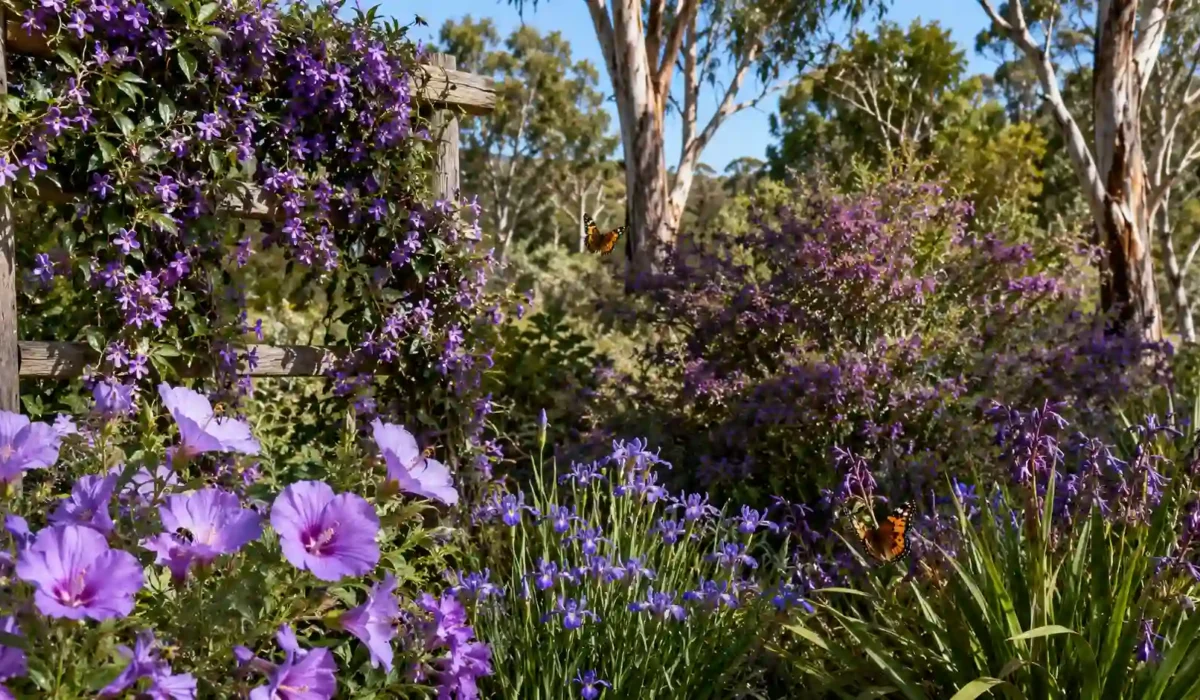
Australian native purple flowers are indigenous flowering plants that naturally occur across Australia and produce blooms ranging from soft lilac and mauve to rich violet and deep purple. Unlike popular but introduced species such as jacaranda and tibouchina, these native plants have evolved to suit Australian climates, making them highly drought-tolerant, relatively low maintenance and valuable for supporting native bees, butterflies, birds and other wildlife. Whether you are searching for australian native purple flowers or looking for purple native flowers Australia to suit a sustainable garden, native species provide beautiful seasonal colour while thriving in local growing conditions.
Quick Summary
- The most common Australian native purple flowers include Hardenbergia violacea, Alyogyne huegelii, Patersonia, Dianella and several purple-flowering Melaleuca species.
- Jacaranda is not an Australian native despite being widely associated with Australian spring landscapes.
- Most native purple flowers perform best in full sun or part shade with well-drained soil and generally require little watering once established.
- Native purple-flowering plants are often preferred because they support local wildlife, tolerate Australian conditions and typically need less maintenance than introduced species.
What Are Australian Native Purple Flowers?
Australian native purple flowers are flowering plants that originated naturally within Australia’s ecosystems rather than being introduced from overseas. Native plants have adapted over thousands of years to local soils, rainfall patterns and climates, making them more resilient in many Australian gardens.
Introduced or naturalised plants may also produce attractive purple flowers, but they evolved elsewhere. While some introduced species thrive in Australia, they do not always provide the same ecological benefits as native plants.
The purple shades seen in many native flowers are created by natural pigments known as anthocyanins, which are responsible for many red, purple and blue colours found in plants. These pigments respond to genetics, soil conditions and sunlight, producing colours that range from pale lavender to rich violet.
Many gardeners use the terms purple, violet, mauve and blue interchangeably. In reality, these colours exist on a spectrum, which explains why some native purple flowers may appear blue under certain lighting conditions or during different stages of flowering.
Purple vs Blue Australian Native Flowers — How They Differ
Australian native blue flowers and purple flowers often overlap because flower colour is influenced by light, soil pH and natural pigmentation. A species may be described differently depending on the observer or botanical reference.
For example, Lechenaultia biloba is frequently listed among Australian native blue flowers, while some forms display violet or purple tones. Likewise, several native iris and flax lily species produce flowers that appear blue in bright sunlight but look distinctly purple in shaded conditions.
When identifying blue flowers in Australia or blue native Australian flowers, it is helpful to focus on botanical identification rather than colour alone.
Types of Australian Native Purple Flowers
Purple Flowering Shrubs
Australian native shrubs provide reliable colour while forming attractive landscape features.
Notable purple flowering shrubs include:
- Alyogyne huegelii (Native Hibiscus): Produces large mauve to purple flowers over an extended flowering season.
- Westringia cultivars: Some ornamental selections display pale lavender blooms against dense grey-green foliage.
- Melaleuca pulchella and Melaleuca nesophila: Known for showy purple flower clusters that attract nectar-feeding birds.
- Hovea species: Feature pea-shaped purple flowers during spring.
In our experience growing native shrubs, planting them in well-drained soil with plenty of sunlight produces more abundant flowering than heavily shaded positions.
Purple Flowering Climbers and Vines
Hardenbergia violacea, commonly called Happy Wanderer, is Australia’s best-known native purple climber.
This evergreen vine produces masses of pea-shaped purple flowers during winter and spring, making it ideal for pergolas, fences and trellises.
Elemo Baker recommends providing a sturdy support structure before planting, as established vines become vigorous and can quickly cover vertical spaces.
Purple Flowering Trees
Many people assume jacaranda is Australia’s signature purple-flowering tree. However, jacaranda is native to South America and is not an Australian native.
True Australian native trees with purple or mauve flowers are less common but include certain mallee eucalypts and selected Melaleuca species that develop mauve flower clusters rather than large trumpet-shaped blooms. If you’re specifically looking for flowering trees rather than shrubs or climbers, see our Purple Flower Tree Australia: Native & Popular Species Guide for more native and ornamental options.
Understanding this distinction helps gardeners choose genuine native species that better support local biodiversity. For year-round structure alongside purple blooms, consider combining native flowering plants with species featured in our Fast Growing Evergreen Trees Australia Guide.
Purple Flowering Ground Covers, Grasses and Small Native Plants
Low-growing native plants add colour without overwhelming smaller gardens.
Popular examples include:
- Patersonia (Native Iris)
- Dianella (Flax Lily)
- Low-growing Scaevola selections
- Compact Viola hederacea forms with violet-toned flowers
These plants work well along pathways, borders and rock gardens while providing habitat for beneficial insects.
Silver-Foliage and Contrast Varieties
Some native plants combine silvery foliage with purple flowers for additional visual contrast.
Veronica perfoliata is valued for its blue-grey leaves paired with purple to violet flower spikes, creating year-round interest even when not flowering.
These combinations are especially effective in contemporary native landscapes where foliage texture is as important as flower colour.
Identifying Australian Native Purple Flowers
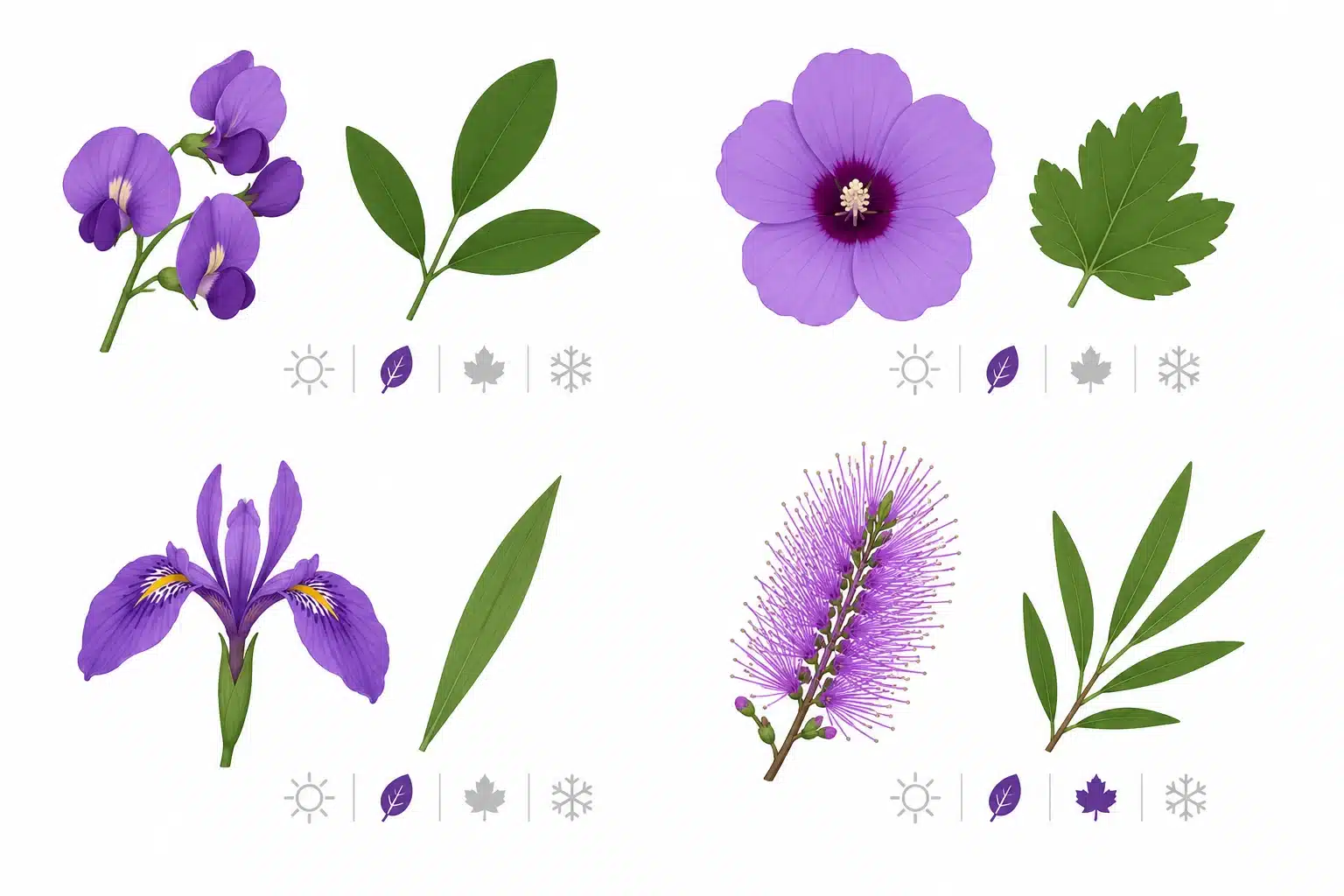
Correct identification relies on more than flower colour.
Look for:
- Flower shape, such as pea-shaped, daisy-like or bottlebrush forms.
- Leaf arrangement and texture.
- Growth habit, including shrub, climber, tree or ground cover.
- Typical flowering season.
- Mature plant size.
These characteristics help distinguish genuine Australian native purple flowers from introduced look-alikes. If you’re also identifying flowering trees by bloom colour, our Tree With Pink Flowers Australia: Identification Guide may help distinguish similar ornamental species.
Comparison: Native vs Non-Native Purple Flowering Plants
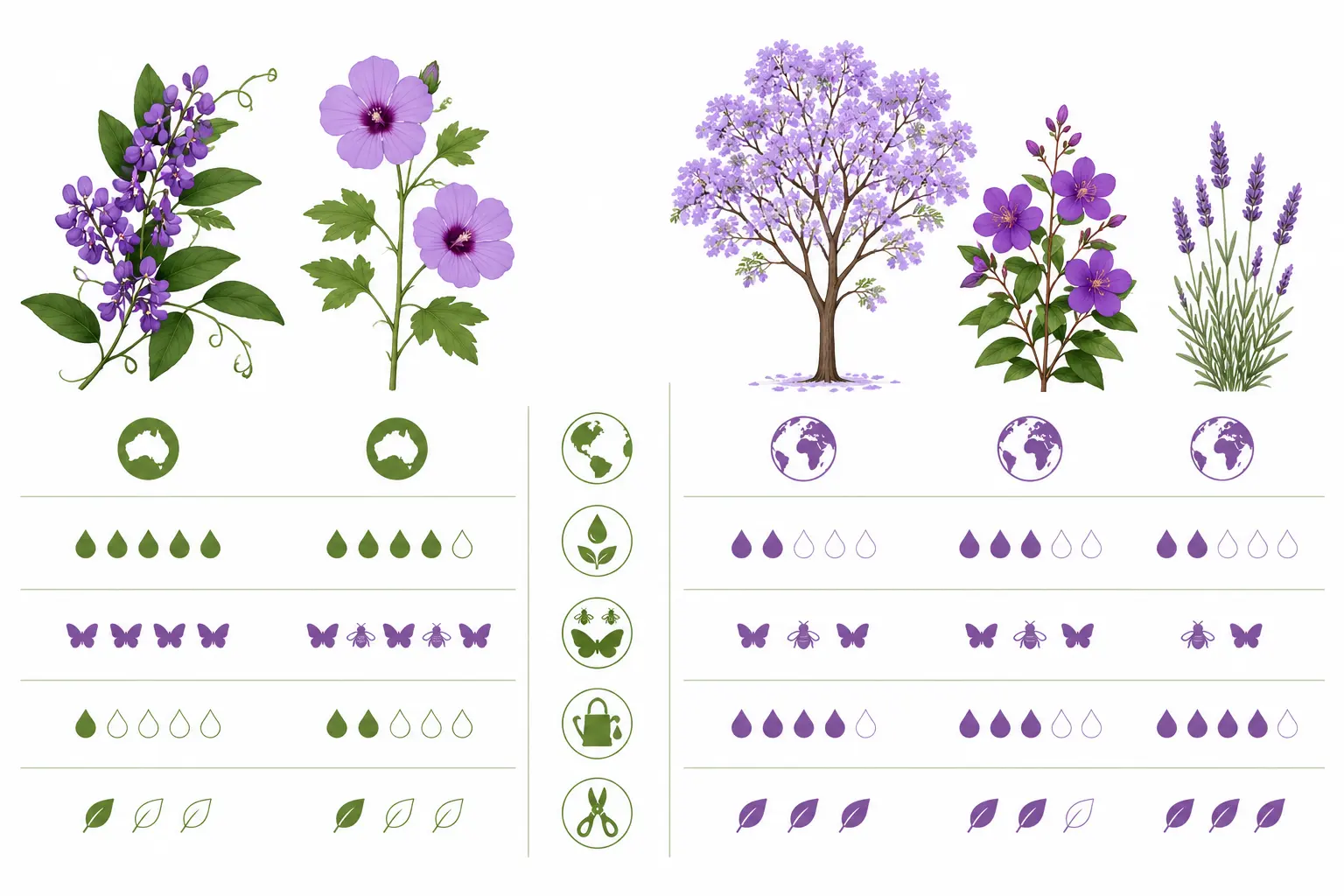
| Plant Name | Native or Introduced | Flower Type | Mature Size | Water/Care Needs | Best Use in Garden |
| Hardenbergia violacea | Native | Pea-shaped | Climbing vine | Low once established | Pergolas and fences |
| Alyogyne huegelii | Native | Hibiscus | Medium shrub | Low to moderate | Feature shrub |
| Melaleuca nesophila | Native | Brush-like clusters | Large shrub | Low | Wildlife gardens |
| Jacaranda | Introduced | Trumpet-shaped | Large tree | Moderate | Shade tree |
| Tibouchina | Introduced | Large purple blooms | Shrub or tree | Moderate to high | Ornamental planting |
| Lavender | Introduced | Flower spikes | Small shrub | Moderate | Cottage gardens |
Native species generally require less supplementary watering, provide greater habitat value and adapt better to Australian environmental conditions than many introduced purple-flowering plants. If you’re comparing native shrubs with popular hedge plants, our Photinia Fraseri Robusta: Growth, Care & Hedge Guide explains another common landscaping choice. If you enjoy growing ornamental plants indoors and outdoors, you may also like our Money Tree Australia: Care, Meaning & Buying Guide.
Where and How Australian Native Purple Flowers Grow (Care Guide)
Light and Soil Requirements
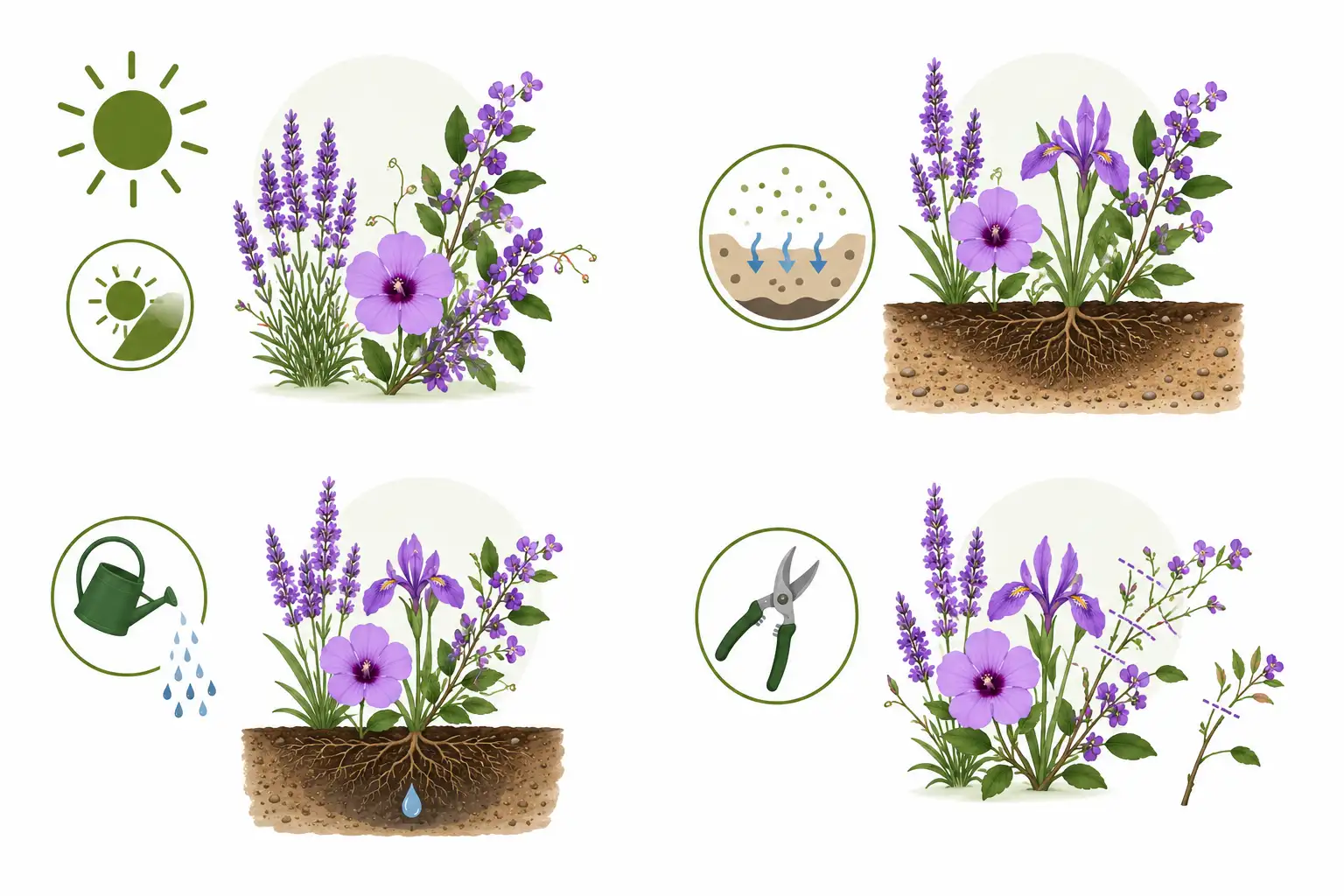
Most Australian native purple flowers grow best in full sun or light afternoon shade.
Well-drained soils are essential because prolonged waterlogging can damage roots. Sandy, loamy and free-draining native garden soils usually produce the healthiest growth.
Avoid applying excessive phosphorus fertiliser, as many Australian native plants are sensitive to high phosphorus levels.
Watering and Drought Tolerance
Once established, many native purple flowers tolerate extended dry periods.
Water deeply but infrequently during establishment. Mature plants generally require supplemental watering only during prolonged drought.
In our experience, deep watering every one to two weeks during hot, dry periods encourages stronger root development than frequent shallow watering.
Pruning and Seasonal Care
Pruning immediately after flowering helps many native shrubs maintain a compact shape and encourages new flowering wood.
Remove dead branches, spent flowers and damaged growth while avoiding excessive cutting into old woody stems.
As of the 2026 growing season, many native plant growers continue recommending light annual pruning rather than severe rejuvenation pruning for most flowering shrubs.
Climate Suitability Across Regions (WA, Eastern Coast and Southern States)
Western Australia supports an exceptional diversity of purple-flowering native plants, many of which are endemic to the region.
The eastern coast favours species tolerant of higher humidity, while southern states support plants that withstand cooler winters and occasional frost.
Choosing species naturally suited to your local climate significantly improves long-term performance.
Common Problems With Purple Native Flowers
- Reduced flowering often results from excessive shade.
Solution: Relocate plants or prune surrounding vegetation to increase sunlight.
- Root rot commonly develops when well-drained species remain in saturated soil.
Solution: Improve drainage and reduce watering frequency.
- Soft-leaved species may attract aphids or sap-sucking insects.
Solution: Encourage beneficial insects and remove infestations early using appropriate horticultural practices.
- Slow establishment may occur in compacted or nutrient-poor soils.
Solution: Improve soil structure before planting and mulch appropriately while keeping mulch clear of stems.
For more native plant troubleshooting tips, read our Woolly Bush Problems: Causes, Solutions and Care Guide.
Beginner Mistakes and Practical Tips
Common beginner mistakes include:
- Planting jacaranda believing it is an Australian native.
- Overcrowding plants without allowing for mature size.
- Selecting species unsuitable for local climate.
- Overwatering drought-adapted natives.
- Skipping soil preparation before planting.
Elemo Baker recommends researching the mature size of each species before planting, as this reduces future pruning and improves long-term garden design.
Best Australian Native Purple Flowers for Different Garden Styles
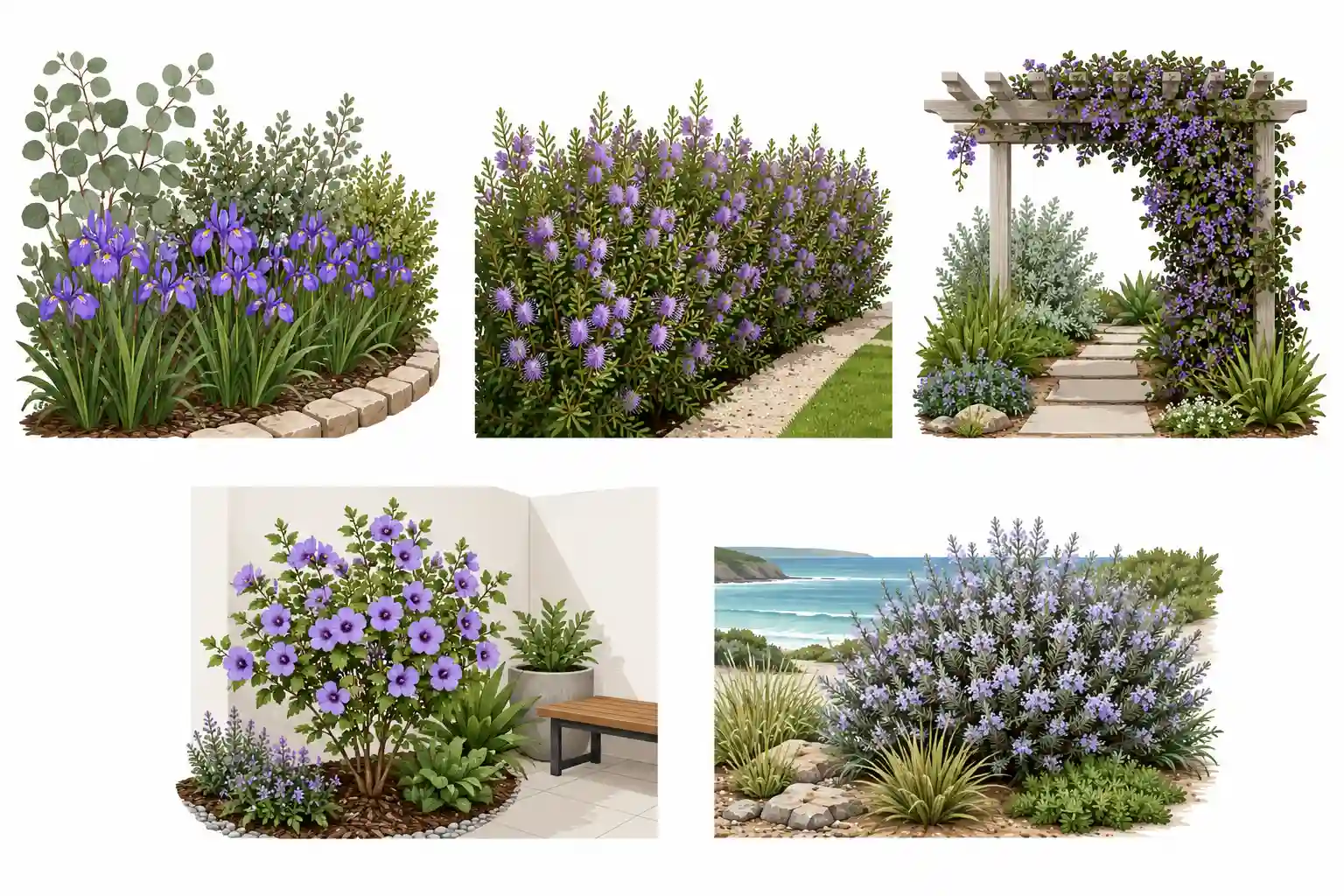
Different gardens benefit from different native species.
- Borders: Patersonia and Dianella.
- Hedges: Westringia and Melaleuca.
- Pergolas and trellises: Hardenbergia violacea.
- Small gardens: Compact native hibiscus cultivars.
- Coastal gardens: Salt-tolerant Melaleuca species and selected Westringia cultivars.
When selecting plants, prioritise species naturally adapted to your region rather than choosing solely for flower colour. To create layered gardens, many homeowners pair flowering natives with screening plants featured in our Pittosporum Silver Sheen Growth Rate Guide.
Purple Native Flowers for Western Australian Gardens
Western Australia is home to numerous endemic purple-flowering natives.
Excellent choices include:
- Alyogyne huegelii
- Melaleuca pulchella
- Lechenaultia biloba
- Various Hovea species
Many Western Australian natives prefer sandy, well-drained soils and thrive in sunny conditions with relatively low rainfall once established. Purple-flowering natives also combine beautifully with evergreen feature trees discussed in our Teddy Bear Magnolia Landscaping Guide for Australian Gardens.
Conclusion
Australian native purple flowers include an impressive range of shrubs, climbers, ground covers and a smaller selection of trees that bring long-lasting colour to Australian gardens. Beyond their attractive blooms, they are valued for their drought tolerance, relatively low maintenance requirements and ability to support native wildlife. They are also frequently confused with introduced plants such as jacaranda, making accurate identification important when creating a genuine native garden. By matching Australian native purple flowers to your local climate, soil and garden style, you can enjoy reliable flowering while contributing to healthier local ecosystems.
FAQs
What Australian flowers are native to purple?
Some of the best-known Australian native purple flowers include Hardenbergia violacea, Alyogyne huegelii, Patersonia, Dianella, Hovea species and several Melaleuca species that produce purple or mauve flowers.
What are the famous native flowers in Australia?
Australia is known for many iconic native flowers, including waratahs, kangaroo paws, banksias, bottlebrushes, grevilleas and native purple-flowering species such as Hardenbergia and native hibiscus.
Is a jacaranda an Australian native?
No. Jacaranda is native to South America. Although it is widely planted across Australia, it is an introduced ornamental tree rather than an Australian native.
What Australian native vine has purple flowers?
Hardenbergia violacea, commonly called Happy Wanderer, is Australia’s best-known native vine with purple flowers. It is widely grown on fences, pergolas and trellises.
What is the difference between Australian native purple and blue flowers?
Purple and blue native flowers often overlap because anthocyanin pigments and environmental conditions influence flower colour. Some species appear blue in bright sunlight and purple under different lighting conditions.
Are Australian native purple flowers easy to grow for beginners?
Yes. Many Australian native purple flowers are well suited to beginners because they are drought-tolerant, require relatively little maintenance and adapt well to Australian growing conditions when planted in suitable soil and light.
7 Comments