

Super Dwarf Cavendish Banana Growing Guide Australia
Introduction
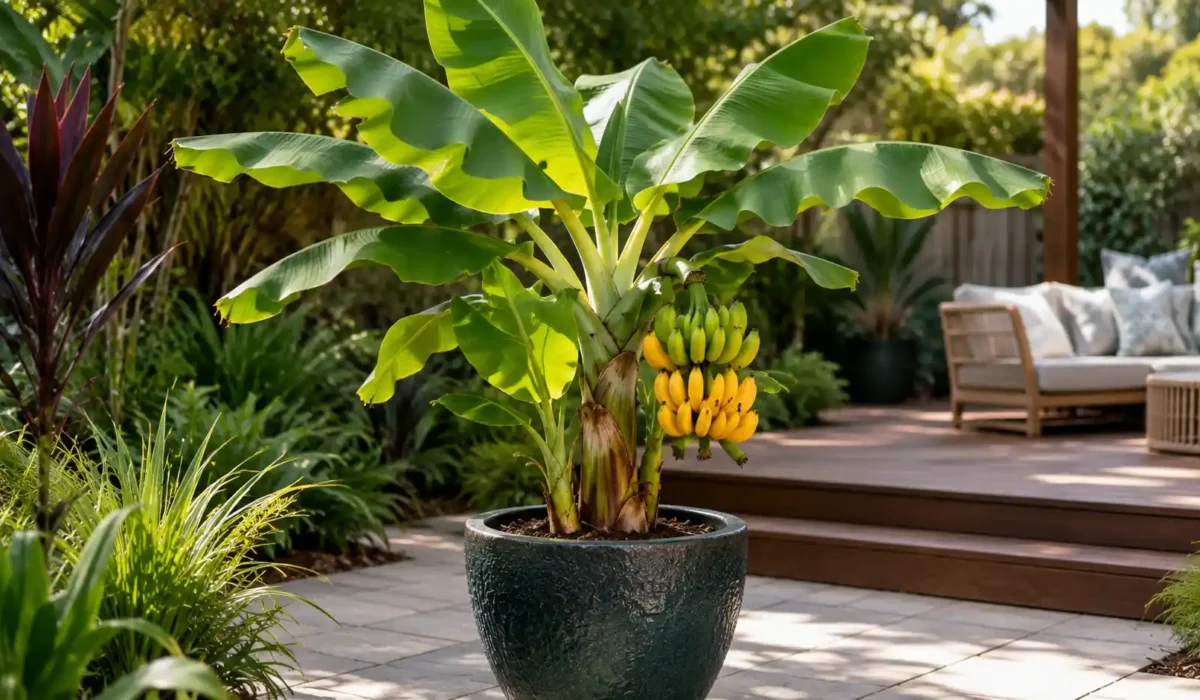
The super dwarf cavendish banana is one of the most compact fruiting banana varieties available for Australian gardeners. Unlike larger banana cultivars, this miniature selection produces true edible Cavendish bananas while remaining small enough for patios, balconies, courtyards, and even bright indoor spaces. It is considerably shorter than both the super dwarf cavendish’s larger relative, the dwarf cavendish banana, and full-sized Cavendish varieties, making it an excellent choice where space is limited. Popular across many Australian climate zones, this cultivar combines ornamental tropical foliage with reliable fruit production when given suitable growing conditions. This guide explains its size, care requirements, growth habits, fruiting cycle, and how to grow it successfully in Australia. If you’re interested in growing other compact fruit trees, you may also like our Money Tree Australia: Care, Meaning & Buying Guide
Quick Summary
- The super dwarf cavendish banana is a compact cultivar that typically reaches 1–1.5 metres in height.
- It produces genuine edible Cavendish bananas and performs exceptionally well in containers.
- It grows successfully across many Australian subtropical, warm temperate, and sheltered tropical regions.
- Full sun, consistently moist soil, regular fertilising, and frost protection are essential for healthy growth and reliable fruiting.
What Is the Super Dwarf Cavendish Banana?
The super dwarf cavendish banana is a specially selected compact form of Musa acuminata grown primarily for its exceptionally short stature while still producing true Cavendish bananas. Unlike ornamental banana species that are valued only for their foliage, this cultivar is a genuine fruiting banana capable of producing sweet, edible fruit similar to the bananas commonly sold in Australian supermarkets.
The Super Dwarf Cavendish belongs to Musa acuminata, one of the primary wild species from which most edible bananas have been developed. Learn more about its botanical background on Wikipedia.
Although its size is dramatically reduced, the fruit retains the familiar flavour, texture, and appearance associated with Cavendish bananas. This makes it highly attractive to home gardeners who want fresh bananas without needing the space required by traditional banana plantations.
One of the most common points of confusion is the term “Cavendish.” Cavendish refers to the fruit type rather than a separate banana species. Whether growing a super dwarf, a dwarf, or a standard Cavendish plant, they all belong to the Cavendish group and produce similar fruit. The primary difference lies in the mature size of the plant rather than the banana itself.
The size hierarchy is straightforward:
- Super Dwarf Cavendish – typically grows 1–1.5 metres tall.
- Dwarf Cavendish – usually reaches 2.5–3.5 metres.
- Standard Cavendish – commonly grows 4–7 metres, depending on conditions and cultivar.
Because of its reduced height, the super dwarf cavendish banana is particularly well suited to:
- Small suburban gardens
- Courtyards
- Apartment balconies
- Large decorative pots
- Greenhouses
- Sunny indoor growing areas
In our experience growing compact bananas, this cultivar offers one of the best combinations of ornamental appeal and productive fruiting. It provides the lush tropical appearance of a banana plant while remaining manageable for gardeners with limited outdoor space.
Unlike many ornamental bananas that rarely produce edible fruit, the dwarf cavendish banana and its super dwarf form are cultivated specifically for harvesting bananas, making them practical as well as attractive landscape plants.
Super Dwarf Cavendish Banana Size and Height
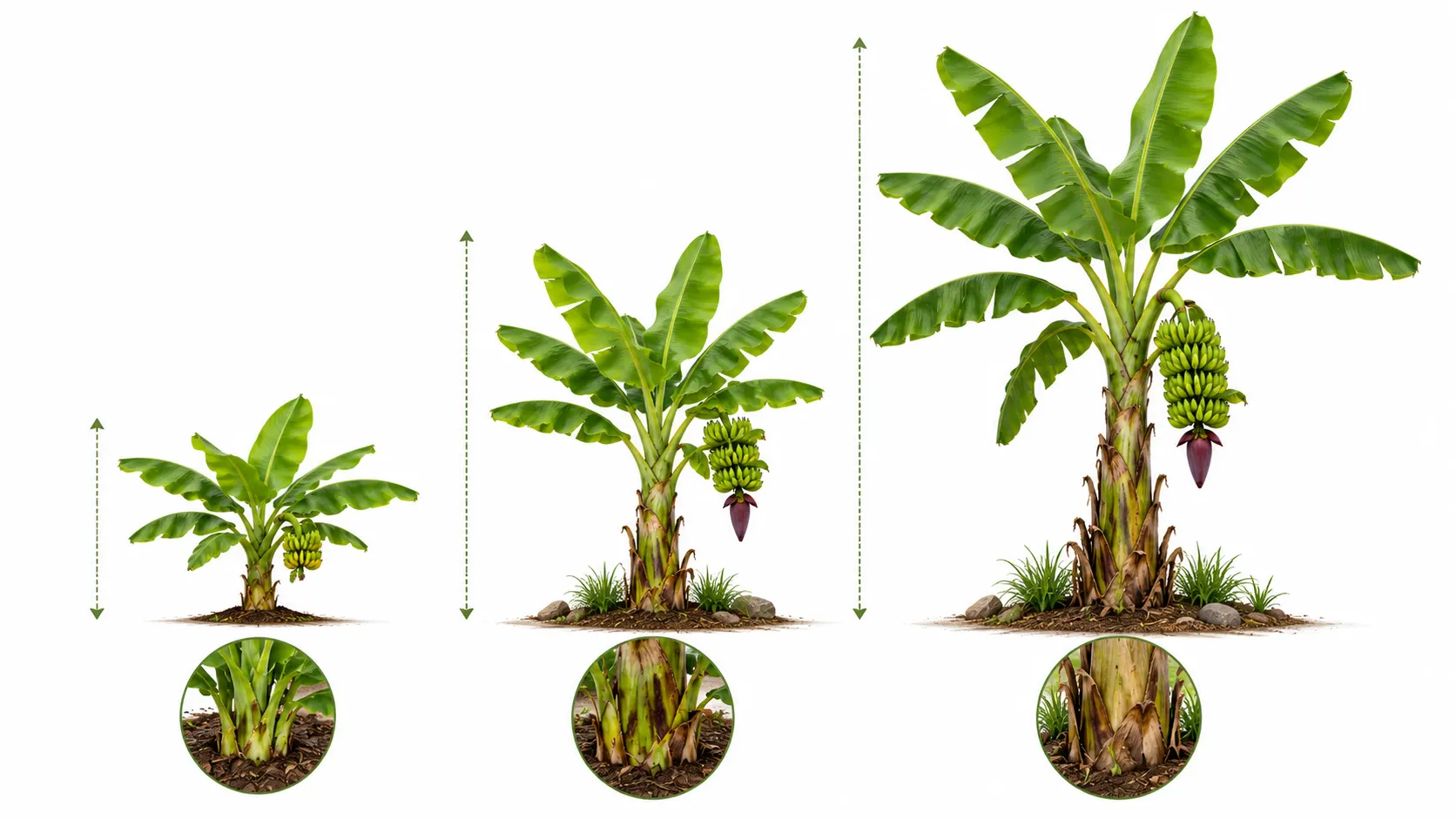
The super dwarf cavendish banana height is its defining characteristic. Under normal growing conditions, mature plants reach approximately 1 to 1.5 metres tall. In exceptionally favourable environments with ideal warmth, nutrition, and moisture, some plants may approach 1.8 metres, although this is less common.
This compact growth habit makes it one of the smallest commercially available fruiting banana varieties.
By comparison, a standard dwarf cavendish banana tree generally grows between 2.5 and 3.5 metres, while full-sized Cavendish bananas often exceed 4 metres in home gardens.
For gardeners planning limited planting spaces, understanding the plant’s overall footprint is just as important as its height.
| Feature | Super Dwarf Cavendish |
| Mature Height | 1–1.5 m (occasionally 1.8 m) |
| Pseudostem Width | Approximately 10–20 cm |
| Leaf Length | Around 0.8–1.5 m |
| Mature Spread | Approximately 1.2–2 m |
| Root System | Shallow but wide-spreading rhizome |
Although compact, the leaves remain broad and lush, giving the plant a distinctly tropical appearance. The pseudostem, which resembles a trunk, is actually formed from tightly wrapped leaf bases rather than woody tissue.
A full grown dwarf cavendish banana tree appears substantially larger than its super dwarf counterpart. Standard dwarf Cavendish plants develop taller pseudostems, longer leaves, and require considerably more garden space. While both varieties produce edible fruit, the super dwarf version is specifically designed for locations where height restrictions or limited growing areas make larger bananas impractical.
Elemo Baker recommends allowing sufficient horizontal space around the plant even though its height remains modest. Healthy banana leaves naturally arch outward, and crowding the plant against walls or fences can reduce airflow and increase leaf damage.
As of the current growing season, Australian home gardeners continue to favour compact fruiting bananas because they fit comfortably into modern suburban gardens, patios, and container displays while still producing worthwhile harvests.
How Big Does a Super Dwarf Banana Tree Get in a Container?
A super dwarf cavendish banana adapts exceptionally well to container growing, making it one of Australia’s most popular miniature banana tree options for patios and balconies.
Growing in a pot naturally restricts root expansion, which can slightly reduce the plant’s ultimate height and overall vigour compared with specimens planted directly into the ground. Most container-grown plants mature between 1 and 1.3 metres, although well-maintained specimens in large containers can still approach their full potential.
For long-term success, choose a container that provides enough space for healthy root development.
General recommendations include:
- Minimum container capacity of 50–70 litres
- Excellent drainage holes to prevent waterlogging
- Heavy or wide-based pots to improve stability against wind
- Premium free-draining potting mix enriched with compost or organic matter
Larger containers generally support:
- Faster establishment
- Improved moisture retention
- Greater nutrient availability
- Larger bunches of fruit
- Healthier sucker development
Smaller pots can successfully maintain an attractive compact plant but usually require more frequent watering, fertilising, and eventual repotting as the rhizome expands.
In our experience, gardeners who begin with generously sized containers avoid many of the growth limitations commonly associated with potted bananas. A spacious container encourages stronger root development, resulting in healthier foliage and more consistent fruit production over time.
Growing Super Dwarf Cavendish Bananas in Australia
The super dwarf cavendish banana grows successfully across many parts of Australia, provided it receives warmth, sunlight, regular watering, and protection from frost. Its compact size makes it suitable for suburban gardens, courtyards, patios, and large containers, allowing gardeners to enjoy home-grown bananas without needing extensive space. Growing bananas alongside other tropical species is a great way to create a lush garden. Our Lemon Myrtle Height and Width: Complete Australian Size Guide explains another popular Australian plant for warm climates.
This cultivar performs best in the following Australian climate regions:
- Subtropical regions – including much of Queensland and northern New South Wales, where warm temperatures encourage rapid growth and reliable fruiting.
- Warm temperate coastal areas – such as coastal New South Wales and parts of Victoria, where plants benefit from summer warmth and winter protection.
- Sheltered tropical regions – including the Northern Territory and far north Queensland, where bananas thrive with adequate moisture and good airflow.
Although often promoted as a hardy garden plant, the dwarf cavendish banana Australia growers favour is still frost-tender. Temperatures around 0°C or below can damage the pseudostem and foliage. In severe frosts, the above-ground portion may die back entirely, although the underground rhizome often survives and sends up new shoots once warmer weather returns. If you’re designing a tropical landscape, consider mixing bananas with suitable flowering plants from our All Year Round Flowering Plants Australia Guide.
For the best performance, choose a planting site that offers:
- At least 6–8 hours of direct sunlight daily
- Shelter from strong winds
- Rich, well-drained soil
- Easy access to regular irrigation
Wind protection is particularly important because banana leaves are naturally large and easily torn. While torn leaves rarely kill the plant, excessive wind damage reduces photosynthesis and can slow growth and fruit production.
Elemo Baker recommends planting near fences, walls, or other windbreaks without placing the plant in a confined area that restricts airflow. A sheltered but sunny position usually produces the healthiest foliage and the fastest growth.
As of the current Australian growing season, maintaining consistent soil moisture throughout spring and summer remains one of the most effective ways to encourage vigorous development and dependable fruit production.
Can You Grow Super Dwarf Cavendish Bananas Indoors?
Yes, the super dwarf cavendish banana can be grown indoors, but it requires very bright conditions to remain healthy and is less likely to produce fruit than outdoor plants.
For indoor cultivation, provide:
- Bright indirect light throughout the day
- Several hours of direct sunlight through a north- or east-facing window where possible
- Warm temperatures between 20–30°C
- Moderate to high humidity
- Good air circulation
Australian homes that rely on air conditioning during summer or heating during winter often have lower humidity levels. Dry indoor air can cause:
- Brown leaf edges
- Slower growth
- Reduced leaf size
- Increased susceptibility to spider mites
Using a humidifier, grouping tropical plants together, or placing the container on a pebble tray can help improve humidity around the plant.
Indoor-grown bananas generally remain attractive foliage plants, but fruit production depends on receiving sufficient light, warmth, and nutrition over an extended period. In most Australian homes, outdoor or greenhouse-grown plants produce fruit far more reliably.
Super Dwarf Cavendish Banana Care Guide
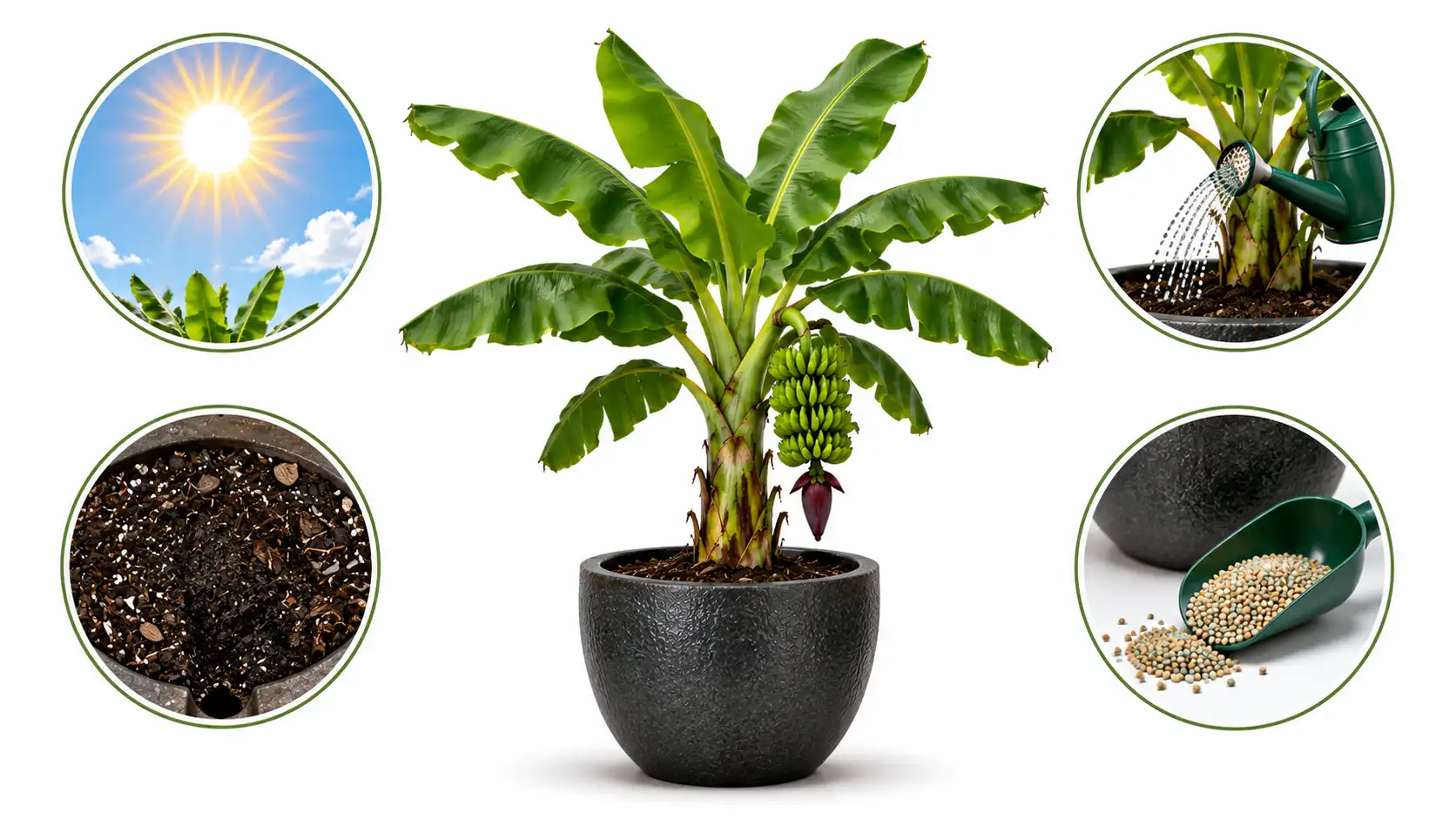
Proper super dwarf cavendish banana care centres on providing abundant sunlight, regular moisture, fertile soil, and consistent feeding. Although compact, this variety has nutritional and water requirements similar to larger fruiting bananas.
Watering Requirements
Bananas are among the thirstiest fruiting plants grown in Australian gardens. Their large leaves lose considerable moisture through transpiration, making consistent watering essential.
Keep the soil evenly moist but never permanently waterlogged.
General watering guidelines include:
| Season | Watering Frequency |
| Spring | 2–3 times per week |
| Summer | Every 1–2 days during hot weather |
| Autumn | Reduce gradually as temperatures cool |
| Winter | Water only when the topsoil begins drying |
Container-grown plants dry out much faster than those planted in the ground and usually require more frequent watering during summer.
Signs of underwatering include:
- Drooping leaves
- Crispy brown edges
- Slow growth
- Premature leaf yellowing
Signs of overwatering include:
- Persistently wet soil
- Yellow leaves
- Soft pseudostem
- Root rot
- Fungal odours
In our experience growing bananas, deep watering early in the morning produces healthier plants than frequent shallow watering. Moisture should reach the full root zone while allowing excess water to drain freely.
Soil and Potting Mix
The super dwarf cavendish banana grows best in fertile, organically rich soil with excellent drainage.
Ideal soil characteristics include:
- Slightly acidic to neutral pH (5.5–7.0)
- High organic matter
- Good moisture retention
- Free drainage
For container-grown plants, a premium-quality potting mix blended with compost, aged manure, and coarse perlite or pine bark provides an excellent balance between moisture retention and aeration. Organic mulch around outdoor banana plants can help conserve moisture and moderate soil temperature, but keep it clear of the pseudostem. Our mulch calculator can help you work out the quantity needed for the planting area.
Australian gardeners with heavy clay soils should improve drainage before planting by incorporating generous quantities of organic matter. Poor drainage significantly increases the risk of root diseases and weak growth.
Elemo Baker recommends applying organic mulch around outdoor plants to conserve moisture, moderate soil temperature, and gradually improve soil fertility. Keep mulch a few centimetres away from the pseudostem to reduce the risk of rot.
Sunlight Needs
Full sun is essential for vigorous growth and dependable fruit production.
Provide at least:
- 6 hours of direct sunlight daily
- Preferably 8 hours or more during the growing season
Adequate sunlight supports:
- Strong leaf production
- Healthy pseudostem development
- Faster flowering
- Better fruit filling
- Increased sugar production within the fruit
Plants grown in excessive shade often develop:
- Pale foliage
- Elongated, weak growth
- Delayed flowering
- Smaller bunches
- Poor fruit quality
In very hot inland regions, afternoon shade during extreme heatwaves may reduce leaf scorch without significantly affecting growth.
Fertilising Super Dwarf Cavendish Bananas
Bananas are heavy feeders and require regular fertilising throughout the growing season. During active growth, nutrients are rapidly used to produce large leaves, flowers, and developing fruit. Healthy bananas also benefit from effective pest management. See our Garden Pest Identification Guide for Australian Gardens to identify common garden pests before they become serious problems.
A balanced fertilising programme typically includes:
- Nitrogen to support vigorous foliage growth
- Phosphorus for healthy root development
- Potassium to encourage flowering and improve fruit quality
Once flower buds begin forming, potassium becomes particularly important because it supports bunch development and fruit filling.
General fertilising schedule:
| Season | Recommendation |
| Spring | Feed every 4–6 weeks |
| Summer | Continue regular feeding |
| Autumn | Reduce applications |
| Winter | Fertilise sparingly in cool climates |
Both general-purpose fruit fertilisers and banana-specific fertiliser products sold throughout Australia can produce excellent results when applied according to label directions.
Avoid over-fertilising, as excessive nitrogen may encourage lush foliage at the expense of flowering and fruit production.
Pruning and Sucker Management
Banana plants follow a unique life cycle.
Each pseudostem:
- Produces leaves.
- Flowers once.
- Develops fruit.
- Dies back naturally after harvest.
This is completely normal and does not indicate that the plant itself has died. The underground rhizome continues living and produces new shoots known as suckers or pups.
Proper sucker management helps maintain continuous production.
For best results:
- Keep one main fruiting stem.
- Retain one strong replacement sucker.
- Remove excess small suckers.
- Cut away dead fruited stems after harvest.
Selecting the healthiest replacement sucker ensures uninterrupted fruit production over successive seasons.
In our experience, allowing too many suckers to develop at once causes unnecessary competition for water and nutrients, often reducing the size and quality of future banana bunches.
Super Dwarf Cavendish Banana Growth Rate
The super dwarf banana tree has a moderate to fast growth rate when provided with warm temperatures, abundant sunlight, consistent moisture, and regular feeding. Under ideal Australian conditions, noticeable new leaf growth may occur every one to two weeks during the warmer months. If you’re comparing growth habits of different Australian plants, our Tuckeroo Tree Growth Rate: Size, Height & Care Guide provides another useful growth-rate reference.
Growth follows a strong seasonal pattern:
| Season | Growth Activity |
| Spring | Rapid new growth begins |
| Summer | Peak growth and strongest leaf production |
| Autumn | Growth gradually slows |
| Winter | Little growth or temporary dormancy in cool regions |
Gardeners in tropical and subtropical Australia generally experience the fastest development because temperatures remain favourable for longer periods.
Most healthy plants produce their first bunch of bananas approximately 9–18 months after planting, depending on:
- Climate
- Plant age at purchase
- Sunlight
- Nutrition
- Water availability
- Overall growing conditions
Plants grown in cooler climates may require additional time before flowering, particularly after cold winters.
As of recent Australian growing recommendations, maintaining uninterrupted growth during spring and summer through consistent watering and feeding remains the most effective way to shorten the time to fruiting. Healthy plants that avoid drought stress and nutrient deficiencies typically establish more quickly and produce stronger flower stems.
Fruiting — What to Expect
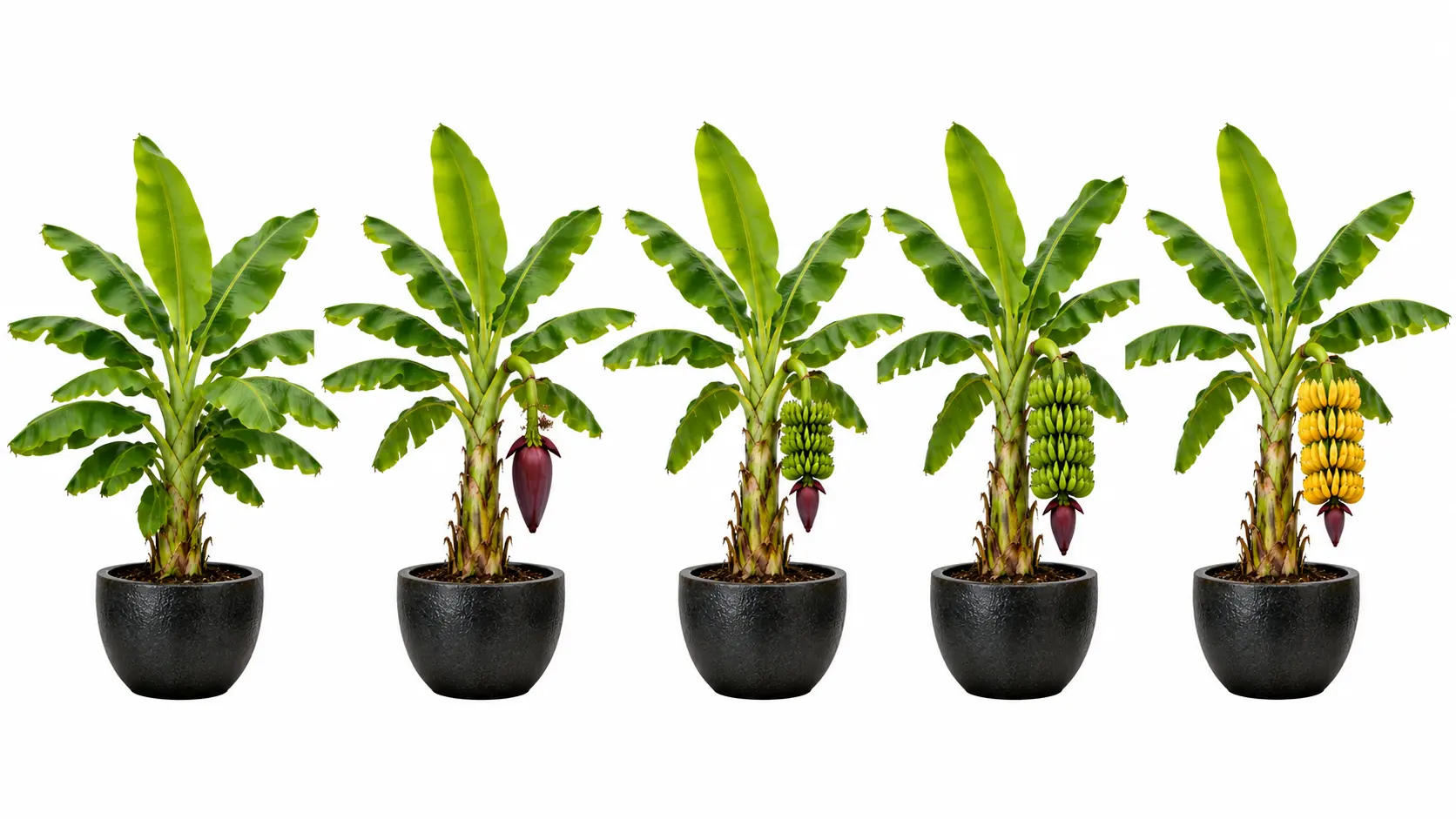
The super dwarf cavendish banana produces true Cavendish bananas despite its compact size. Under favourable Australian growing conditions, healthy plants typically flower within 9–18 months after planting, followed by fruit development over the next 3–6 months, depending on temperature and seasonal conditions.
The fruiting cycle follows a predictable sequence:
- A flower stalk (inflorescence) emerges from the centre of the pseudostem.
- Purple bracts gradually lift and reveal clusters of flowers.
- Female flowers develop into “hands” of bananas.
- The bunch enlarges over several months.
- Fruit ripens from green to yellow after harvest or on the plant in warm climates.
The bananas closely resemble supermarket Cavendish bananas in flavour and texture, although bunches are generally smaller because the plant itself is much more compact.
Typical characteristics include:
- Sweet, creamy Cavendish flavour
- Medium-sized edible fruit
- Smaller bunches than commercial plantations
- Reliable production when well cared for
Once harvesting is complete, the fruited pseudostem has finished its life cycle. Cut it back close to ground level, allowing a healthy sucker to become the next fruiting stem.
In our experience, selecting one vigorous replacement sucker before harvesting helps maintain continuous production and prevents unnecessary competition between multiple shoots.
Super Dwarf Cavendish Banana vs. Other Dwarf Varieties
Although several compact banana varieties are available in Australia, they differ considerably in mature size, fruit flavour, climate preference, and suitability for container growing. The super dwarf cavendish banana is generally the best option for gardeners seeking a genuinely compact fruiting banana that fits comfortably into small gardens or large pots. If you enjoy plant comparison guides, you may also find Soursop vs Custard Apple: Key Differences Explained helpful when comparing tropical fruit plants.
Dwarf Banana Variety Comparison
| Variety | Mature Height | Fruit Flavour | Container Suitable | Climate Preference |
| Super Dwarf Cavendish | 1–1.5 m | Classic Cavendish | Yes | Subtropical / Temperate |
| Dwarf Cavendish | 2.5–3.5 m | Classic Cavendish | Large pots only | Subtropical / Temperate |
| Dwarf Red Dacca | 2–3 m | Rich, sweet | Possible | Tropical / Subtropical |
| Dwarf Ducasse | 2.5–4 m | Sweet, creamy | Large pots only | Subtropical |
| Sugar Banana (Lady Finger) | 3–5 m | Sweet, honey-like | Not ideal | Tropical / Subtropical |
Key Differences
Super Dwarf Cavendish
- Smallest fruiting Cavendish variety
- Excellent for patios and balconies
- Produces genuine Cavendish bananas
- Ideal for container cultivation
Dwarf Cavendish
- Significantly taller than the super dwarf form
- Produces larger bunches
- Better suited to gardens with more space
Dwarf Red Dacca
- Distinctive reddish fruit skin
- Sweeter flavour
- Prefers consistently warm tropical conditions
Dwarf Ducasse
- Also known for its creamy texture
- Performs well in subtropical climates
- Requires more space than the super dwarf variety
Sugar Banana (Lady Finger)
- Taller plant with slender fruit
- Honey-like sweetness
- Less suitable for container growing due to its size
For most Australian gardeners with limited space, the super dwarf cavendish banana offers the best balance of compact growth, ornamental appeal, and dependable fruit production.
Common Problems, Pests, and Troubleshooting
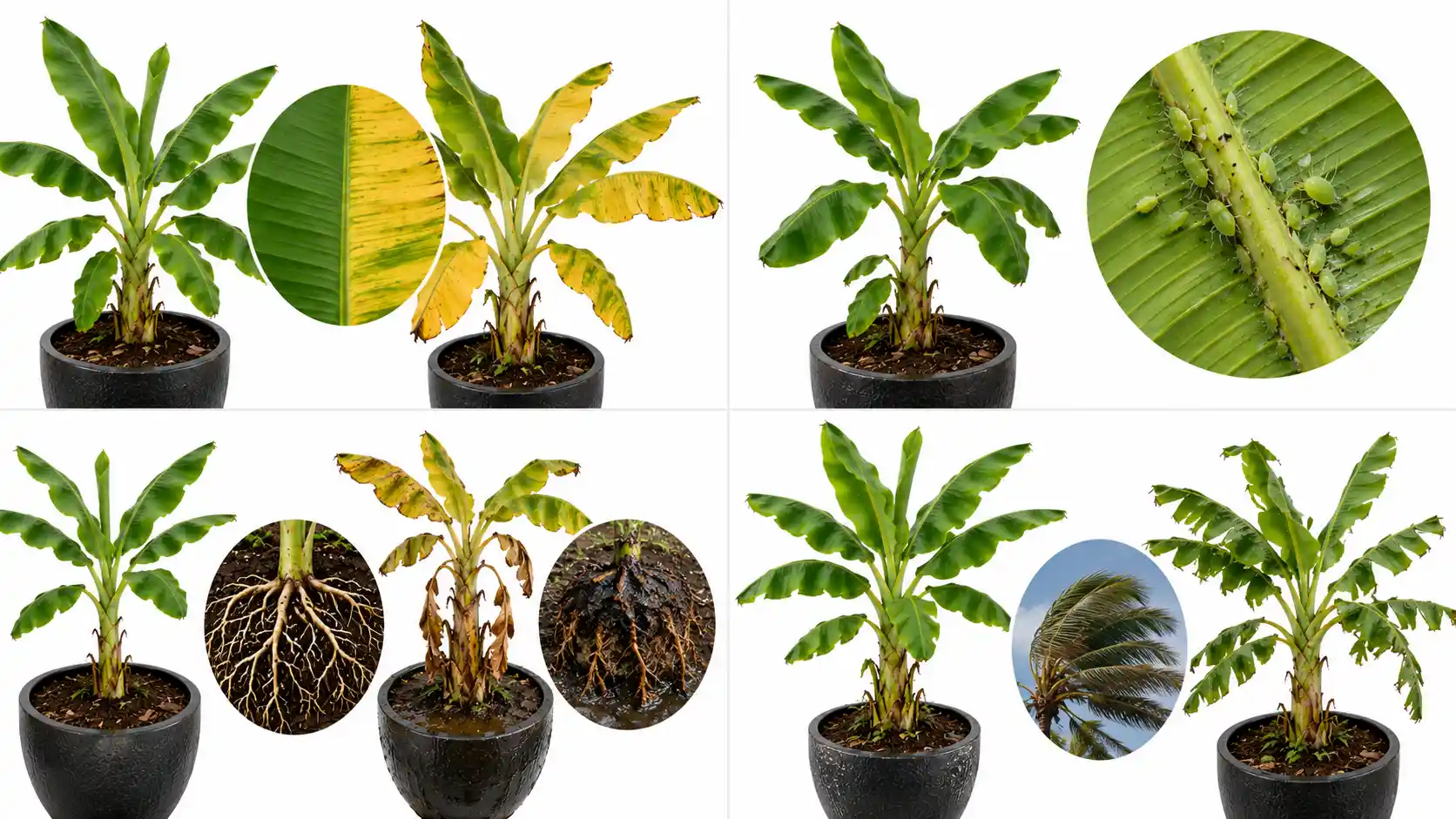
Most growing issues result from incorrect watering, insufficient sunlight, nutrient deficiencies, or environmental stress. Early identification allows problems to be corrected before they affect flowering or fruit production.
Yellowing Leaves
Yellow leaves are not always a sign of disease.
Common causes include:
- Nitrogen deficiency
- Overwatering
- Root damage
- Poor drainage
- Natural ageing of lower leaves
Older leaves naturally yellow and die as new foliage develops. However, widespread yellowing throughout the plant usually indicates a nutritional or watering problem.
To correct yellow leaves:
- Improve drainage if soil remains wet.
- Apply a balanced fertiliser.
- Remove only fully dead foliage.
- Check roots if decline continues.
No Fruit or Slow Fruiting
A healthy banana plant should eventually flower under suitable conditions.
Delayed fruiting commonly results from:
- Too little sunlight
- Cold temperatures
- Poor nutrition
- Insufficient watering
- Immature plants
Most Australian home growers achieve better results by providing:
- At least six hours of direct sunlight
- Regular fertilising during spring and summer
- Even soil moisture
- Protection from winter cold
Elemo Baker recommends avoiding unnecessary pruning of healthy leaves, as the plant relies on its foliage to produce the energy required for flowering and fruit development.
Pests and Diseases
Several pests occasionally affect bananas in Australian gardens.
Common pests include:
- Banana aphids
- Banana weevil borer
- Spider mites
Common diseases include:
- Root rot caused by poor drainage
- Leaf spot diseases during prolonged humid weather
Preventative measures include:
- Maintaining excellent drainage
- Providing good air circulation
- Removing heavily infected leaves
- Monitoring plants regularly
- Encouraging beneficial insects where possible
Organic horticultural oils and insecticidal soaps can help manage minor infestations when applied according to product directions. Many garden pests affect multiple plant species, so our Garden Pest Identification Guide for Australian Gardens can help with broader identification and treatment strategies. (If already linked earlier, skip this second mention.)
Wind Damage and Leaf Tearing
Banana leaves naturally tear in strong winds because of their large surface area.
While torn leaves often appear unsightly, they usually continue functioning and rarely threaten the health of the plant.
Reduce wind damage by:
- Planting near fences or windbreaks
- Growing in sheltered courtyards
- Avoiding exposed hilltops
- Securing container-grown plants during storms
Selecting a protected location before planting is generally more effective than attempting to repair damaged foliage later.
Where to Buy Super Dwarf Cavendish Banana Plants in Australia
The super dwarf cavendish banana is available through many Australian plant suppliers, although availability varies between states and seasons.
Common sources include:
- Independent local nurseries
- Specialist tropical fruit nurseries
- Garden centres
- Online plant retailers
- Community gardening groups and plant swaps
Large hardware-affiliated garden centres, including Bunnings, sometimes stock dwarf banana varieties during the warmer months. However, availability changes throughout the year, and specific cultivars cannot be guaranteed at every location. If you’re planning a productive edible garden, you may also enjoy reading When Do Mulberry Trees Fruit in Australia? for another rewarding fruit tree.
When purchasing a plant, look for:
- A firm, healthy pseudostem
- Bright green foliage
- No obvious pest damage
- A strong root system
- No signs of rot or fungal disease
Avoid plants with:
- Soft or collapsing stems
- Extensive yellow foliage
- Severe insect infestations
- Waterlogged potting mix
Buying from reputable Australian growers also increases the likelihood of receiving correctly identified cultivars that are well suited to local conditions.
Conclusion
The super dwarf cavendish banana is an excellent choice for Australian gardeners seeking a compact tropical fruit plant that produces genuine edible Cavendish bananas. Its mature height of around 1–1.5 metres makes it ideal for patios, courtyards, balconies, and container gardens while still providing attractive tropical foliage and rewarding harvests.
With full sun, consistently moist but well-drained soil, regular feeding, and protection from frost, most gardeners in Australia’s subtropical and warm temperate regions can successfully grow and harvest this compact variety. Whether planted in the ground or a large container, the super dwarf cavendish banana offers an outstanding combination of ornamental value, space efficiency, and productive fruiting, making it one of the best dwarf cavendish banana selections for modern Australian home gardens. For more Australian fruit and plant growing advice, browse our Money Tree Australia: Care, Meaning & Buying Guide and All Year Round Flowering Plants Australia Guide.
Frequently Asked Questions
How tall does a super dwarf cavendish banana grow?
A super dwarf cavendish banana typically reaches 1–1.5 metres in height at maturity. Under ideal growing conditions, some plants may approach 1.8 metres. Container-grown specimens often remain slightly shorter due to restricted root space, whereas standard dwarf Cavendish bananas usually grow between 2.5 and 3.5 metres tall.
How long does it take for a super dwarf cavendish banana to fruit?
Most healthy plants produce their first flowers 9–18 months after planting, depending on climate, plant age, sunlight, watering, and nutrition. After flowering, the bananas generally require another 3–6 months to mature before harvest.
Can super dwarf cavendish banana be grown indoors in Australia?
Yes. The super dwarf cavendish banana can be grown indoors if it receives bright light, warm temperatures, and adequate humidity. A sunny window or enclosed sunroom provides the best conditions. While indoor plants can remain healthy, they are less likely to produce fruit unless they receive sufficient light and warmth throughout the year.
What is the difference between super dwarf cavendish and dwarf cavendish banana?
The primary difference is mature size. A super dwarf cavendish banana usually grows 1–1.5 metres tall, whereas a dwarf cavendish banana commonly reaches 2.5–3.5 metres. Both produce true Cavendish bananas, but the super dwarf variety is significantly better suited to containers, balconies, and smaller gardens.
How do I care for a super dwarf cavendish banana in a pot?
Grow the plant in a container of at least 50–70 litres using a rich, free-draining potting mix. Place it in full sun, water consistently to keep the soil evenly moist, feed regularly during the growing season, and repot when the root system becomes crowded. Good drainage is essential to prevent root rot.
Why isn’t my super dwarf cavendish banana producing fruit?
Lack of fruit is usually caused by insufficient sunlight, cool temperatures, poor nutrition, inconsistent watering, or an immature plant. Ensure the banana receives at least 6 hours of direct sunlight daily, regular fertiliser with adequate potassium, consistent moisture, and enough time to reach flowering maturity. Protecting the plant from frost and maintaining vigorous growth throughout spring and summer will also improve the chances of successful fruiting.
2 Comments