

Anthurium pallidiflorum vs vittarifolium Guide
Introduction
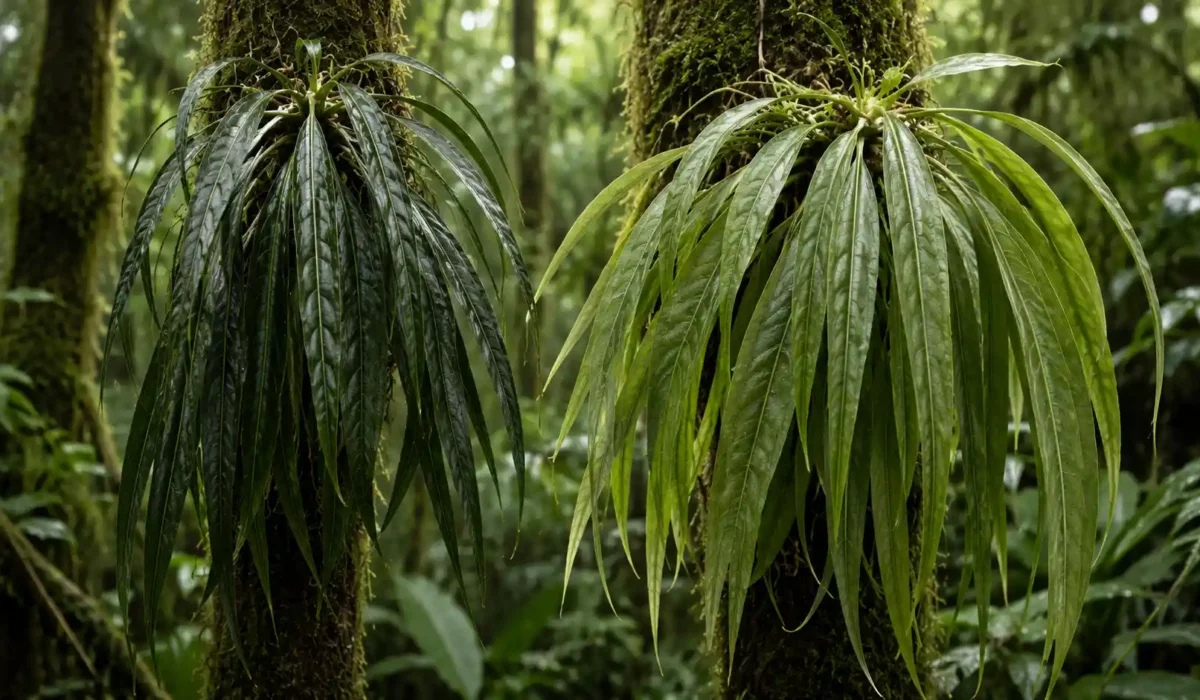
Anthurium pallidiflorum vs vittarifolium are two of the most sought-after strap-leaf anthuriums among Australian collectors, prized for their long, cascading foliage and architectural presence. Both species belong to the pendant anthurium group, characterised by elongated, drooping leaves and an epiphytic growth habit that naturally clings to trees in humid tropical forests.
Despite their popularity, these two species are frequently confused, even by experienced growers. Their juvenile forms are especially similar, and mislabelling in the hobby market adds to the uncertainty. This article provides a clear, side-by-side breakdown to help identify, grow, and distinguish these two closely related aroids with confidence.
Comparing plants side-by-side is one of the best ways to pick the right one for your space — check out our full guide to plant comparisons for more head-to-head breakdowns like this one.
Quick Summary
- Anthurium pallidiflorum and vittarifolium are both strap-leaf anthuriums with long, pendant leaves but differ in leaf width and colour tone.
- Pallidiflorum typically has narrower, darker leaves, while vittarifolium develops broader, lighter green foliage.
- Both are epiphytic aroids that thrive in warm, humid environments with bright indirect light, making them suitable for Australian indoor growing.
- Seedlings are nearly indistinguishable, with clear differences emerging only at maturity.
What Are Strap-Leaf Anthuriums?
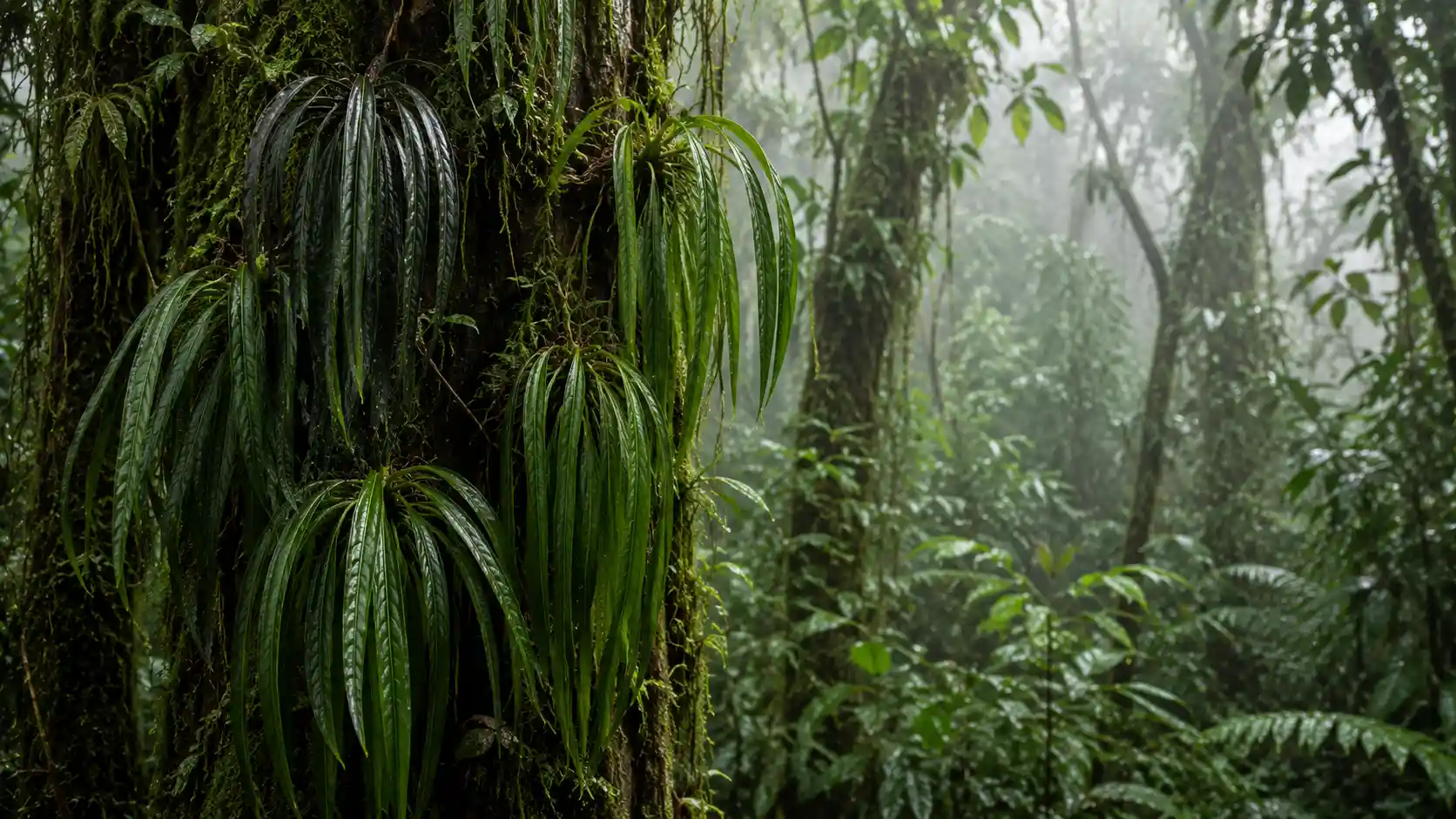
Strap-leaf anthuriums, often referred to as pendant anthuriums or strap anthuriums, are a group of species within the genus Anthurium that produce long, narrow, trailing leaves. These leaves typically hang downward in a cascading form, reflecting their natural epiphytic lifestyle in tropical rainforests. Anthuriums belong to the Araceae family, a group of tropical flowering plants widely documented for their diverse growth forms and epiphytic habits.
This group includes several well-known species such as Anthurium pallidiflorum, Anthurium vittarifolium, Anthurium wendlingeri, Anthurium friedrichsthalii, and Anthurium bakeri. Each shares the same general growth habit but differs in leaf width, texture, and maturity structure.
These plants are valued more for their foliage than their flowers, making them popular among collectors seeking dramatic, sculptural indoor greenery.
Why Are These Species So Commonly Confused?
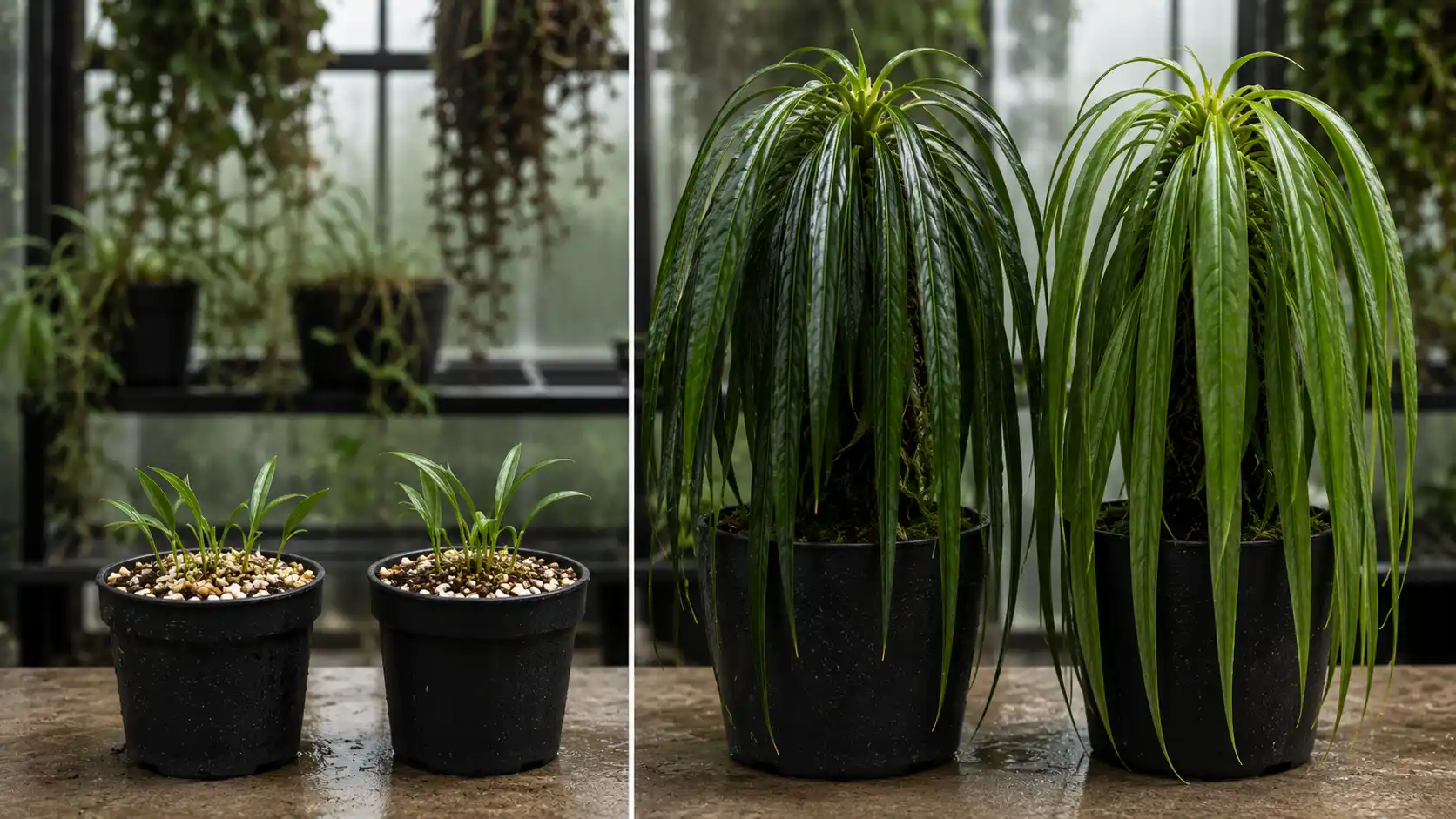
Pallidiflorum and vittarifolium are commonly misidentified because their juvenile stages look almost identical. Seedlings produce small, narrow leaves that do not yet display the defining strap-like characteristics seen in mature plants.
In our experience growing epiphytic aroids, even labelled nursery stock can be inconsistent, especially when propagated from seed. Online communities, including Reddit discussions among aroid collectors, frequently highlight this confusion as one of the most common identification challenges in strap-leaf anthuriums. The problem is compounded by inconsistent naming practices in the global plant trade, where seedlings are often sold before mature traits are visible.
Anthurium Pallidiflorum vs Vittarifolium — Key Differences at a Glance
| Feature | Anthurium Pallidiflorum | Anthurium Vittarifolium |
| Leaf width | Narrower | Broader |
| Leaf colour | Darker green | Lighter green |
| Leaf texture | Smooth, slightly matte | Slightly glossier |
| Mature leaf length | Up to 1m+ | Can exceed 1m |
| Growth habit | Pendant / epiphytic | Pendant / epiphytic |
| Flower appearance | Long, slender spadix | Long, slender spadix |
| Mature size | Medium–large | Medium–large |
| Seedling ID difficulty | High | High |
The most reliable visual distinctions at maturity are leaf width and colour tone. Pallidiflorum tends to appear slimmer and deeper green, while vittarifolium displays a broader, softer green leaf profile.
Anthurium Pallidiflorum — Species Profile
Anthurium pallidiflorum is a strap-leaf species native to the humid tropical forests of Colombia, South America. It grows as an epiphyte, attaching itself to trees where it absorbs moisture and nutrients from the surrounding air and organic debris.
This species is highly valued for its narrow, elongated foliage, which creates a dramatic trailing effect when mature. Among strap-leaf anthuriums, it is one of the most visually refined and architectural forms.
What Does Anthurium Pallidiflorum Look Like at Maturity?
At maturity, Anthurium pallidiflorum narrow leaves can extend over one metre in length while remaining relatively slim compared to other species. The foliage is typically deep green with a smooth, slightly matte surface, and the plant develops a strong pendant growth habit.
Elemo Baker recommends allowing sufficient vertical space, as mature specimens naturally cascade downward rather than growing upright. In indoor conditions, reaching full maturity can take several years, depending on humidity, light, and potting conditions.
The anthurium pallidiflorum mature form is most easily recognised by its consistent leaf narrowing along the entire blade length, creating a ribbon-like effect.
Anthurium Pallidiflorum Flowers
The anthurium pallidiflorum flower is a typical aroid inflorescence consisting of a slender spadix and a small spathe. These flowers are not the primary ornamental feature of the plant and are generally understated compared to its foliage.
In strap-leaf anthuriums, flowering is often infrequent in indoor environments. Most collectors prioritise foliage development rather than floral display, as the leaves provide the primary aesthetic value.
Anthurium Vittarifolium — Species Profile
Anthurium vittarifolium, often referred to as vittarifolium anthurium, is another epiphytic strap-leaf species native to tropical regions of South America. It shares similar environmental preferences with pallidiflorum but differs in its broader leaf structure and lighter colour tone.
Like its close relatives, it grows by anchoring itself to tree trunks and absorbing moisture from humid air.
What Does Anthurium Vittarifolium Look Like at Maturity?
At maturity, anthurium vittarifolium mature plants produce long, strap-like leaves that are noticeably broader than pallidiflorum. The foliage is typically a lighter, fresher green and often appears slightly glossier under bright indirect light.
A common misconception is that vittarifolium remains narrow throughout its life stage. In reality, true mature specimens develop a much fuller leaf width than seedlings suggest. This difference becomes more pronounced as the plant ages under optimal conditions.
Anthurium Vittarifolium Seedling — What to Expect
The anthurium vittarifolium seedling stage is one of the most misleading phases for identification. Early leaves are small, narrow, and lack the distinctive strap morphology, making them nearly identical to anthurium pallidiflorum seedling plants.
This is why misidentification is extremely common. Without verified provenance, seedlings should always be treated as uncertain until mature traits emerge. Growth into true strap-like foliage can take multiple growth cycles, depending on environmental conditions.
Pallidiflorum vs Vittarifolium — Leaf Differences Up Close
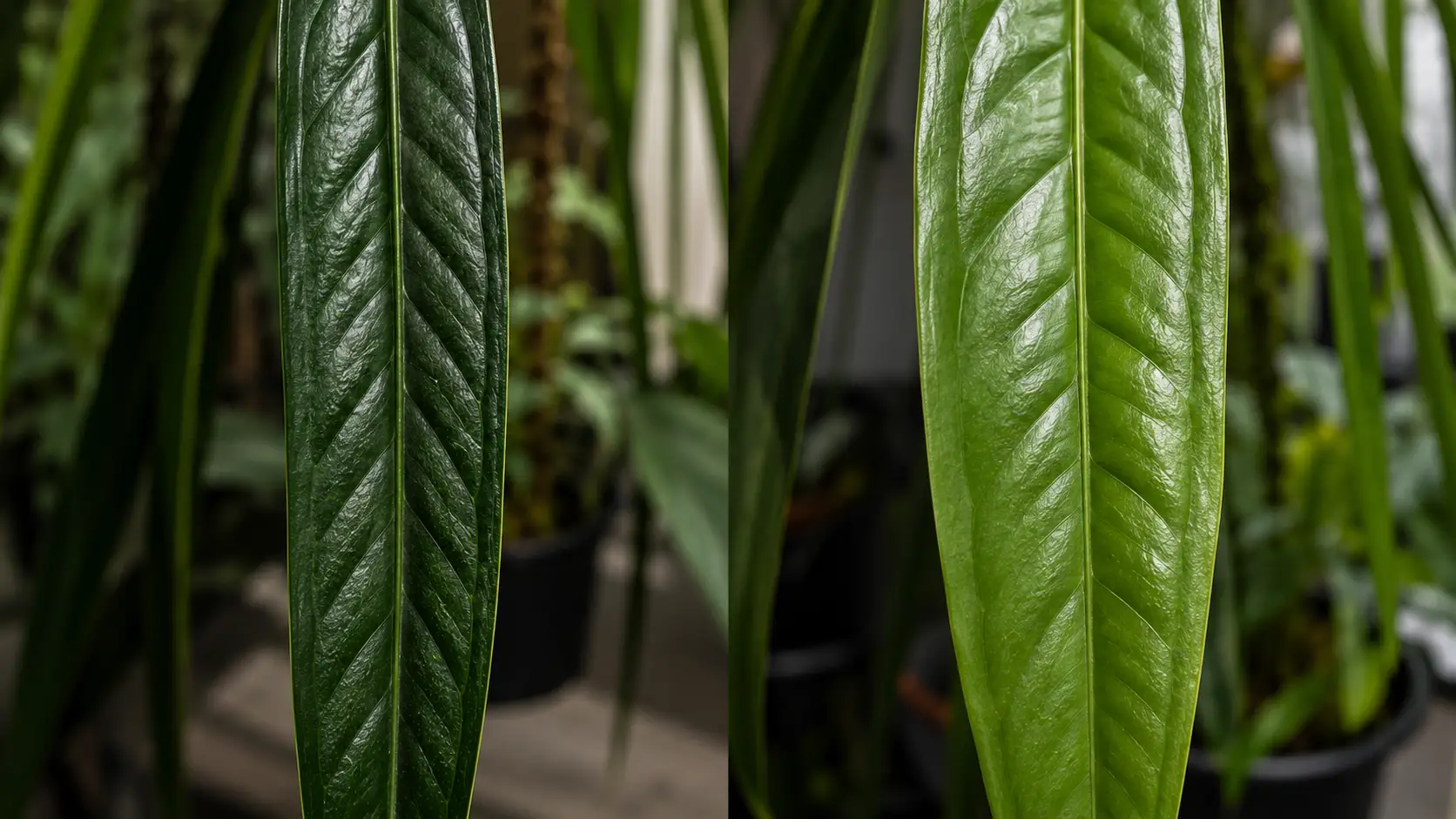
When comparing anthurium pallidiflorum vs vittarifolium leaf structure closely, several subtle but important differences emerge.
Pallidiflorum typically shows a more consistent narrow width from base to tip, while vittarifolium gradually expands into a broader midsection. The midrib of pallidiflorum appears more pronounced due to its slimmer blade, whereas vittarifolium’s wider surface softens this visual effect.
Underside colouring in pallidiflorum is often darker and more uniform, while vittarifolium may display a slightly lighter underside with a softer tonal gradient. Texture also plays a role—pallidiflorum tends to feel more matte, while vittarifolium can appear subtly glossier under humidity.
These differences are most reliable in mature specimens rather than juvenile plants.
How Do These Compare to Other Strap-Leaf Anthuriums?
Strap-leaf anthuriums vary widely in leaf structure, and comparing related species helps clarify identification challenges.
| Species | Leaf Width | Key Distinguishing Feature |
| Pallidiflorum | Narrow | Darkest foliage in the group |
| Vittarifolium | Moderate–wide | Broader, lighter green leaves |
| Wendlingeri | Narrow–moderate | Distinctively ruffled leaf edges |
| Friedrichsthalii | Very narrow | Among the narrowest in the group |
| Bakeri | Moderate | More upright growth than others |
Wendlingeri is most often confused with pallidiflorum due to similar narrow foliage, while friedrichsthalii is frequently mistaken for vittarifolium in juvenile stages. Understanding these overlaps helps narrow down identification in mixed collections. While strap-leaf anthuriums are indoor epiphytes, their architectural foliage structure is often compared visually to outdoor hedging species like Ficus hillii ‘Flash’ in landscape design.
Anthurium Pallidiflorum vs Vittarifolium Care Guide
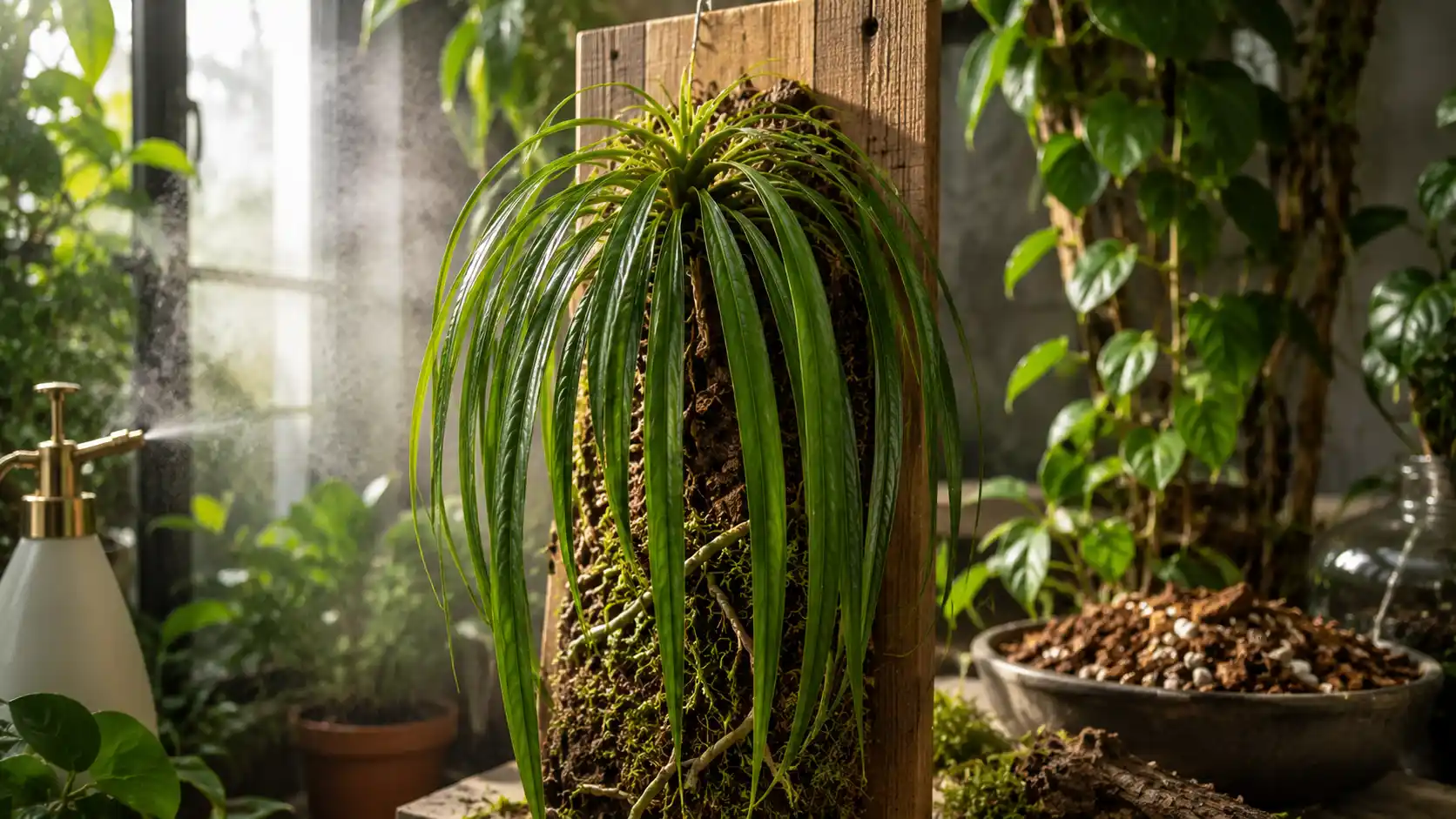
Both species share nearly identical care requirements due to their epiphytic nature and tropical origin.
Light Requirements
Both plants prefer bright, indirect light. In Australian homes, this typically means positioning them near north- or east-facing windows with filtered sunlight. Direct afternoon sun should be avoided, as it can scorch the thin strap leaves. These plants are often used in shaded design zones similar to those discussed in driveway plant ideas for Australian homes, where filtered light conditions are essential for healthy growth.
Insufficient light leads to slower growth, reduced leaf size, and paler foliage over time. If you are comparing tropical foliage plants for your home, our Australian Plants Guide: Indoor Houseplants & Garden Design provides broader plant-selection and placement ideas.
Watering and Humidity
As epiphytes, both species require a well-draining substrate and should never sit in water. The mix should be allowed to dry slightly between waterings.
Humidity levels of 60–80% are ideal. In drier Australian climates, especially during summer heatwaves, growers often use humidifiers or grouping techniques to maintain stable moisture levels around the foliage. Their humidity requirements are similar to other tropical indoor species like the super dwarf Cavendish banana, which also thrives in consistently warm, moist environments.
Potting Mix and Container Choice
A chunky, airy mix is essential. Common components include bark, sphagnum moss, perlite, and charcoal. Standard potting soil is unsuitable as it retains too much moisture.
Terracotta pots, hanging baskets, or mounted setups are commonly used to support their pendant growth habit.
Fertilising
Both species are light feeders. A diluted, balanced fertiliser applied monthly during the growing season is sufficient.
In our experience growing strap-leaf anthuriums, over-fertilising often causes more harm than benefit, leading to salt buildup and root stress.
Temperature and Climate Suitability in Australia
These species thrive in warm, humid conditions typical of tropical and subtropical regions such as Queensland and northern New South Wales.
In cooler regions like Victoria, Tasmania, and the ACT, indoor cultivation requires added humidity control and protection from cold draughts and air conditioning, which can stress foliage and slow growth significantly. In shaded garden areas, they are sometimes grouped with other tropical foliage species featured in low-maintenance fence line planting in Australia for their structural leaf appeal.
Variegated Forms — Pallidiflorum and Vittarifolium Variegated
Variegated forms such as anthurium pallidiflorum variegated and anthurium vittarifolium variegated are highly sought after by collectors due to their rarity and visual contrast.
Variegation appears as patches of white, cream, or lighter green within the leaf tissue. These forms are rare and often command significant price premiums in the collector market. However, stability can be unpredictable, and not all variegated traits persist consistently over time.
Care requirements remain the same, but variegated specimens typically require slightly higher light levels to maintain coloration.
Common Problems with Strap-Leaf Anthuriums (and How to Fix Them)
Yellowing Leaves
Yellowing is most commonly caused by overwatering. Nutrient deficiency or low light may also contribute. Adjust watering frequency first, then evaluate light levels and fertilisation.
Root Rot
Root rot develops when roots remain in overly wet conditions. Early signs include wilting despite moist soil. Treatment involves removing affected roots and repotting in fresh, airy mix. Unlike common outdoor issues discussed in garden pest identification guides for Australian gardens, most strap-leaf anthurium problems are physiological rather than pest-related.
Brown Leaf Tips
Low humidity is the primary cause in Australian indoor environments. Increasing humidity through humidifiers or plant grouping can reduce further damage.
Slow or No New Growth
Insufficient light, low temperatures, or root-bound conditions are common causes. Seasonal slowing during winter is normal for both species.
Buying Anthurium Pallidiflorum and Vittarifolium in Australia
Both species are generally not available in mainstream retailers such as Bunnings and are instead sourced through specialist aroid growers, online plant communities, and collector networks across Australia. Collectors often source rare plants through the same specialist growers who also supply fruiting exotics such as the feijoa tree in Australia, highlighting the overlap in niche plant markets.
When searching for anthurium pallidiflorum australia or other strap-leaf varieties, buyers should prioritise verified identification, healthy root systems, and mature growth where possible. Seedlings carry a higher risk of mislabelling, which is a frequent issue in the collector market.
Conclusion
Anthurium pallidiflorum and vittarifolium are closely related strap-leaf anthuriums that share nearly identical care requirements but differ in leaf width, colour tone, and subtle morphological traits. While seedlings are difficult to distinguish, mature plants reveal clear structural differences.
Both species are excellent choices for Australian indoor plant collections when provided with warm temperatures, high humidity, and bright indirect light. If identification is uncertain, the most reliable approach is to focus on optimal care conditions rather than the label itself, as both species thrive under the same environmental setup.
Frequently Asked Questions
What is the easiest way to tell anthurium pallidiflorum and vittarifolium apart?
The most reliable method is comparing mature leaves. Pallidiflorum is typically narrower and darker green, while vittarifolium is broader and lighter in tone.
Can anthurium pallidiflorum and vittarifolium be grown outdoors in Australia?
They can grow outdoors in tropical and subtropical regions with shaded conditions, but are best grown indoors in cooler Australian climates.
Why do pallidiflorum and vittarifolium seedlings look identical?
Seedlings have not yet developed their mature strap-leaf characteristics, making early-stage identification unreliable without verified provenance.
How long do anthurium pallidiflorum and vittarifolium take to mature indoors?
Both species are slow-growing and may take several years to reach mature leaf size under ideal indoor conditions.
Is anthurium vittarifolium the same as philodendron vittarifolium?
No. They are different genera. Anthurium vittarifolium is an aroid in the Anthurium genus, while Philodendron vittarifolium is a separate species.
Are variegated vittarifolium and pallidiflorum worth the price premium?
They are rare and visually striking, but variegation can be unstable. Buyers should weigh aesthetic value against cost and long-term growth reliability.