

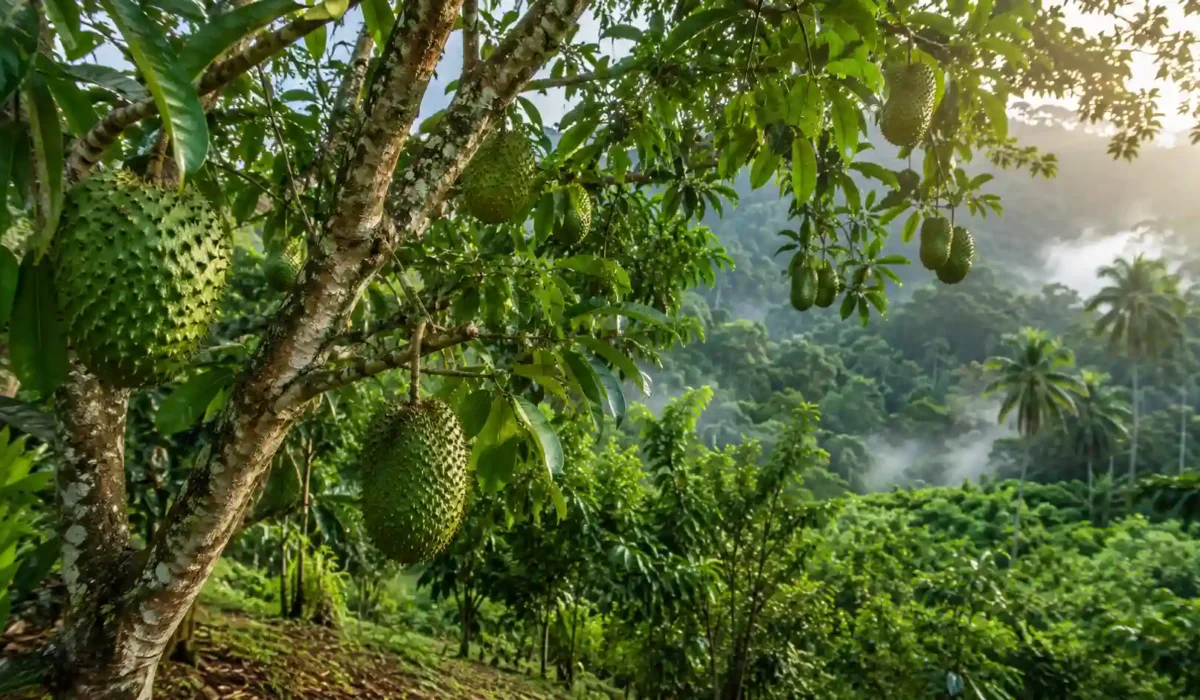
Where Does Soursop Grow: Climate & Regions Guide
Introduction
Where does soursop grow is a question closely tied to climate suitability, as soursop (Annona muricata) is a tropical fruit tree native to Central America and the Caribbean. It thrives only in warm, humid environments where temperatures remain consistently high year-round. This frost-tender evergreen cannot survive prolonged cold or freezing conditions, making it strictly limited to tropical and subtropical regions worldwide. Today, it is widely cultivated across Southeast Asia, Africa, and parts of Australia, but remains absent from most temperate climates without greenhouse protection.
Quick Summary
- Soursop grows best in tropical and subtropical climates with no frost risk.
- Native to the Caribbean, Central America, and northern South America.
- Now cultivated in Southeast Asia, Africa, and tropical Australia.
- In Australia, growth is limited mainly to Far North Queensland.
- Cannot survive cold climates like the UK without greenhouse conditions.
Natural Habitat and Native Range of Soursop
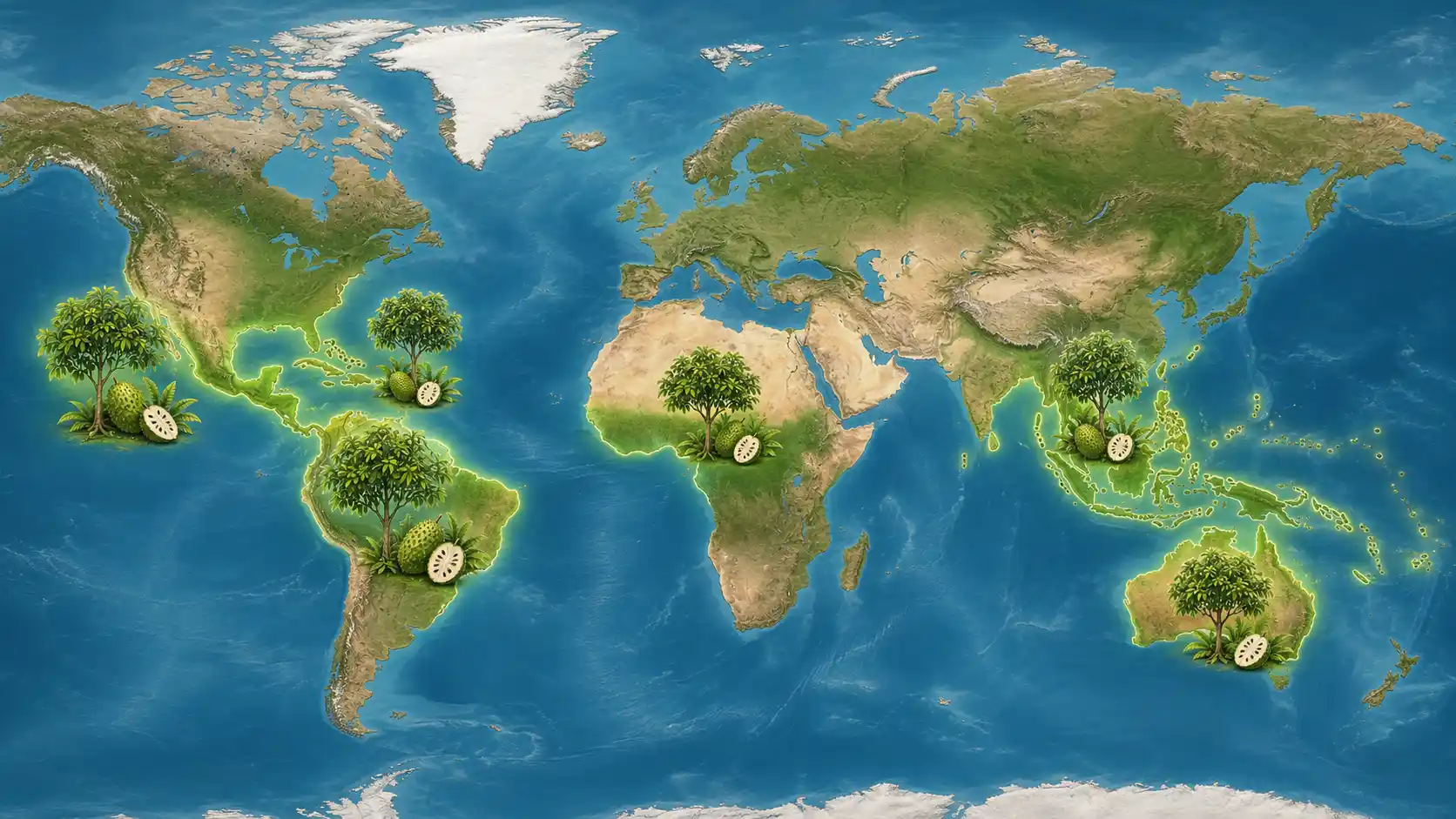
Soursop (Annona muricata), also known as guanabana or corossol, originates from the tropical regions of Central America and the Caribbean. It naturally grows in lowland rainforests where temperatures remain warm and humidity is consistently high throughout the year. Over time, human cultivation spread soursop into northern South America, where similar tropical conditions support healthy growth and fruit production. Soursop belongs to a broader group of tropical flowering and fruiting species commonly featured in guides such as flowering trees in Australia, which highlight climate-dependent growth patterns. Soursop (Annona muricata) is a tropical species in the Annonaceae family, widely documented in botanical references such as Wikipedia for its distribution across tropical America and global cultivation.
As a species adapted to stable tropical ecosystems, soursop trees are not naturally found in regions with seasonal frost or prolonged cold periods. Their biological structure is designed for continuous growth cycles rather than dormancy.
Countries Where Soursop Is Commonly Grown
Soursop is now widely cultivated across tropical regions, including:
- Caribbean islands such as Jamaica, Trinidad, and Puerto Rico
- Central American countries like Costa Rica and Panama
- Northern South America, including Colombia and Venezuela
- Parts of Africa, including Nigeria and Ghana
- Southeast Asia, especially the Philippines (locally called guyabano)
- India, particularly in southern tropical zones
Climate and Growing Conditions Soursop Needs
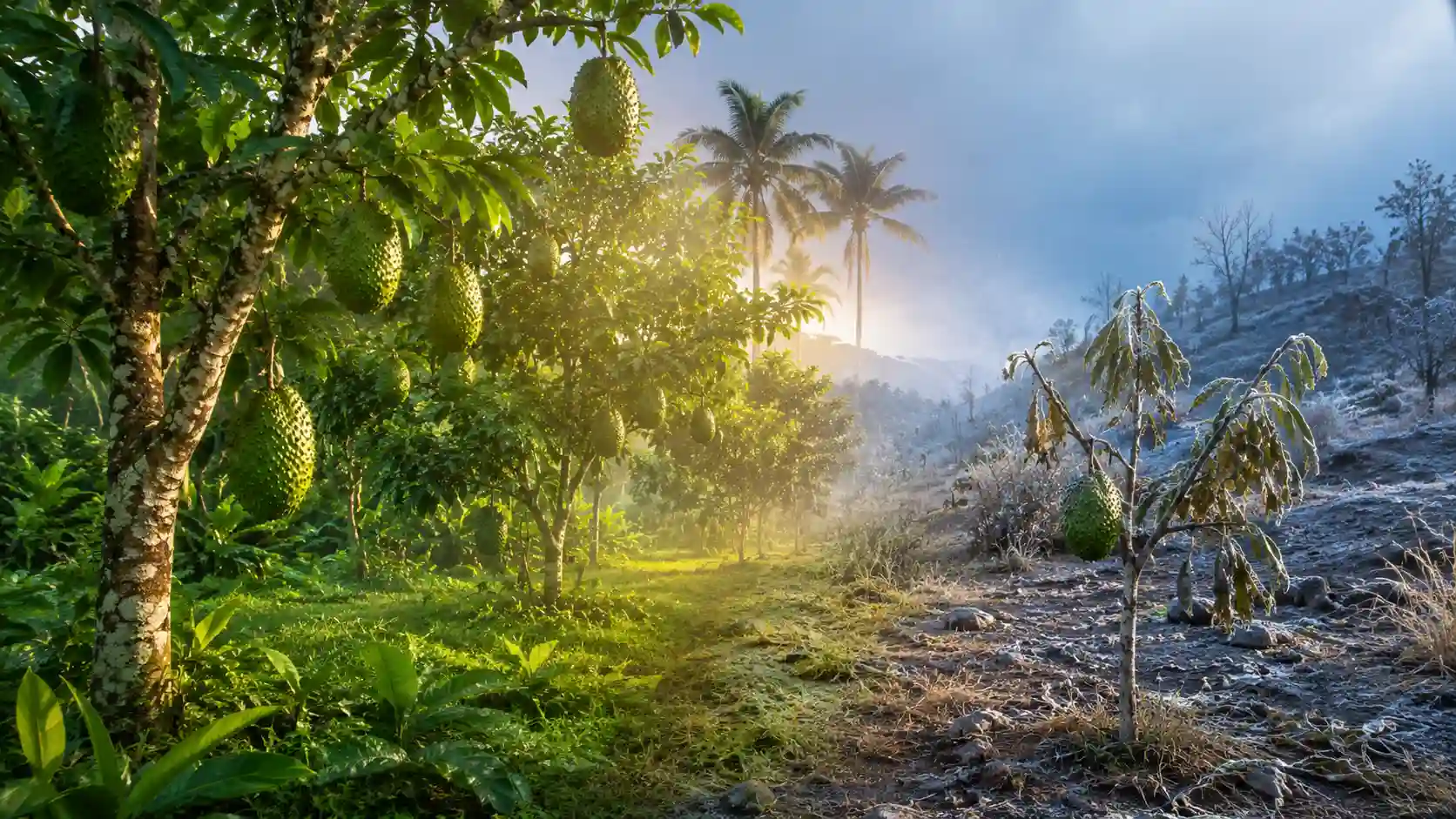
Soursop requires a stable tropical to subtropical climate with warm temperatures, high humidity, and well-distributed rainfall. Its natural habitat explains why it struggles in cooler regions: the tree evolved in environments without frost or extended dry seasons. For optimal growth, conditions must remain consistently warm and moist. This warm-climate requirement is similar to other tropical fruit trees like mango, which also depends on consistent heat and humidity for reliable fruiting.
Temperature and Frost Tolerance
Soursop trees are extremely sensitive to cold. Temperatures below 5°C can cause severe damage, while frost exposure often results in leaf drop or tree death. Ideal growth occurs between 25°C and 30°C. Even short cold spells can stunt growth or prevent fruiting entirely, which is why cultivation is restricted to frost-free regions.
Soil, Sunlight and Water Requirements
Soursop thrives in:
- Well-drained, slightly acidic soil (pH 5.5–6.5)
- Full sun exposure for strong flowering and fruiting
- Moderate but consistent watering to prevent drought stress
Waterlogging should be avoided as it increases the risk of root rot, particularly in humid climates.
Where Does Soursop Grow in Australia?
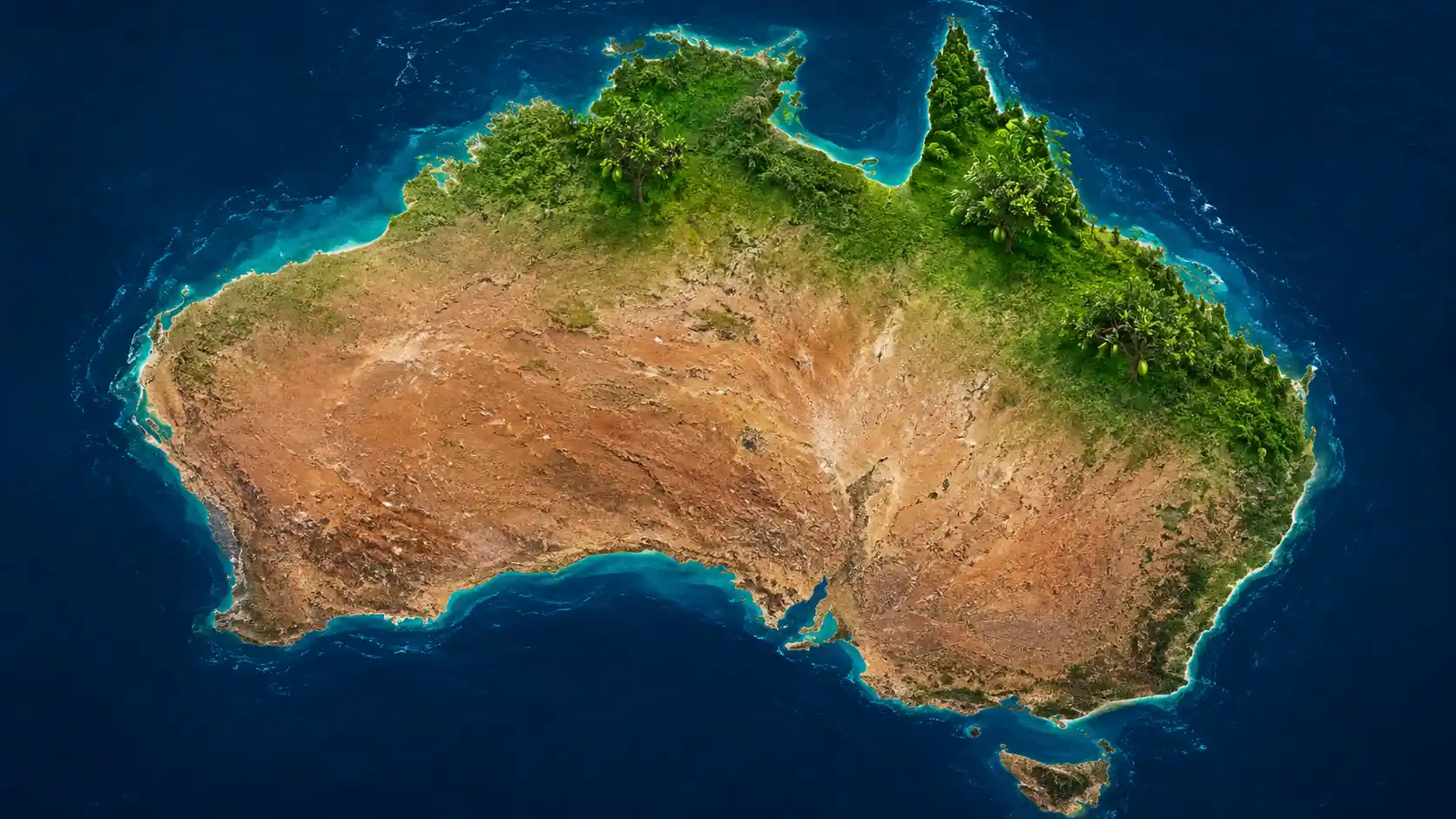
In Australia, soursop grows only in frost-free tropical and subtropical regions. The main growing area is Far North Queensland, where humidity and temperature conditions closely resemble its native habitat. Limited cultivation also occurs in parts of the Northern Territory. In Australia, soursop is limited to tropical zones, similar to other fruiting species such as Feijoa, which also performs best in warmer, frost-free regions.
Outside these regions, soursop cannot survive in the ground due to cold winters in southern states such as New South Wales, Victoria, and South Australia.
Growing Soursop in Home Gardens vs Greenhouses in Australia
Home gardeners in marginal climates sometimes grow soursop in large containers or protected environments. In our experience growing tropical fruit trees in subtropical conditions, container-grown soursop performs best when:
- Moved indoors during cold weather
- Grown in heated greenhouses in winter
- Planted in sheltered microclimates near warm walls
Without protection, exposure to even mild frost can quickly damage young trees.
Can Soursop Grow in Cooler or Temperate Climates?
Soursop cannot grow outdoors in temperate climates such as the UK due to its strict tropical requirements. The tree cannot tolerate frost or prolonged cold, making outdoor cultivation impossible in most European conditions.
In the UK, soursop is not commonly grown as a fruiting tree.
Instead, it is typically:
- Imported fresh from tropical regions
- Sold frozen or canned
- Occasionally grown in heated greenhouses by specialist growers
Even in controlled environments, fruit production remains challenging due to limited light and warmth.
Soursop Tree Size and Growth Rate
Soursop trees vary in size depending on climate and growing conditions.
- Mature height: 3–6 metres, occasionally up to 9 metres in ideal tropical environments
- Canopy width: broad and spreading in open tropical conditions
- Container growth: significantly smaller due to restricted root space
Growth rate is:
- Moderate to fast in tropical climates
- Slower in subtropical or marginal conditions
- Influenced heavily by temperature and soil fertility
How Many Years Until a Soursop Tree Bears Fruit?
Soursop trees typically begin fruiting within 3–5 years when grown from seed. Grafted trees may produce fruit earlier, depending on growing conditions and care quality.
Soursop Care Guide
| Care Factor | Requirement |
| Light | Full sun |
| Water | Regular, consistent moisture; avoid waterlogging |
| Soil | Well-drained, slightly acidic |
| Fertiliser | Balanced fruit-tree fertiliser during growing season |
| Pruning | Light pruning to improve airflow |
| Climate | Frost-free tropical/subtropical zones |
In our experience, consistent watering during flowering stages significantly improves fruit set, especially in humid climates. Elemo Baker recommends avoiding over-fertilisation, as excessive nitrogen can reduce flowering. Like other tropical plants such as Monstera, soursop thrives in warm, humid environments but struggles in cold or dry indoor conditions without proper care.
What Does Soursop Taste Like and How Is It Eaten?
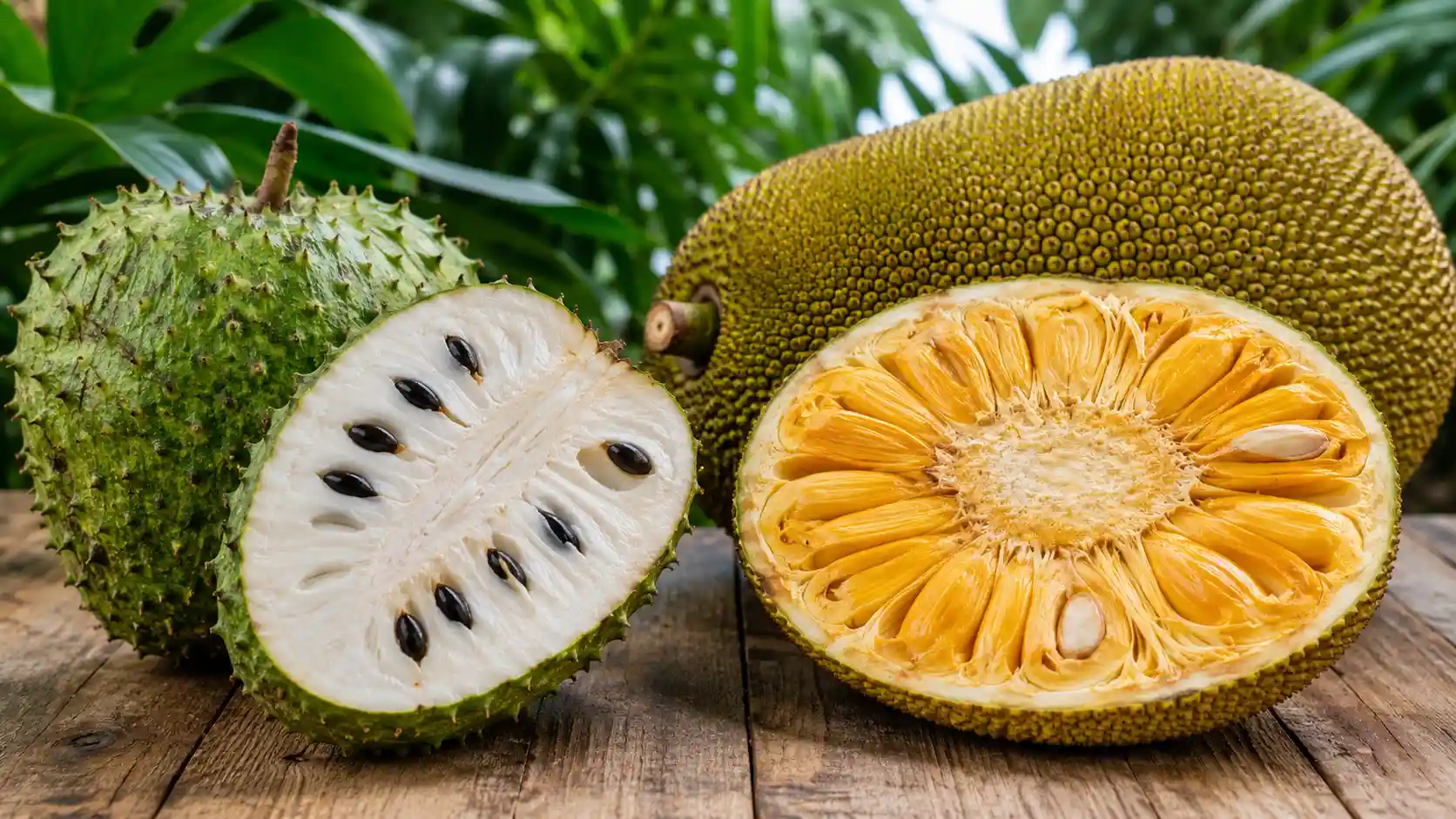
Soursop has a unique flavour described as a blend of strawberry, pineapple, and citrus with a creamy texture. It is aromatic, slightly tangy, and naturally sweet when fully ripe.
Common uses include:
- Eating fresh pulp
- Blending into juices and smoothies
- Making ice creams and desserts
- Preparing traditional beverages
Soursop vs Similar Tropical Fruits
| Feature | Soursop | Jackfruit |
| Family | Annonaceae | Moraceae |
| Taste | Tangy, creamy | Sweet, fibrous |
| Size | Medium, spiky green fruit | Very large, bumpy rind |
Soursop and jackfruit are not the same; they belong to different plant families and have distinct textures and flavours.
Soursop Leaves and Traditional Use
Soursop leaves have been used in traditional practices across various tropical cultures. They are commonly prepared as herbal infusions or teas in folk traditions. However, these uses are cultural and not medically prescriptive.
Who Should Be Cautious With Soursop
Certain groups are advised to exercise caution with soursop leaf consumption, particularly in concentrated forms. As with all herbal products, it is recommended to consult a qualified healthcare professional before use, especially during pregnancy or when managing existing health conditions.
Why Is Soursop Restricted or Less Common in Some Countries?
Soursop is not illegal in countries like the US or Australia. However, plant quarantine and biosecurity regulations restrict the import of fresh fruit and plant material. These measures exist to prevent pests and diseases from entering local agriculture systems.
As a result, fresh soursop is less commonly available in non-tropical countries, though frozen and processed forms are widely sold.
Common Problems Growing Soursop Outside the Tropics
Cold damage occurs when temperatures drop below tolerance levels, causing leaf drop and dieback. This can be prevented by using greenhouses or protected microclimates.
Poor fruiting is often caused by insufficient warmth or pollination. Hand pollination and increased heat exposure can improve results in marginal climates.
Root rot develops when soil is poorly drained. Improving drainage and reducing watering frequency helps prevent this issue.
Beginner Mistakes When Trying to Grow Soursop
Common mistakes include planting soursop in frost-prone regions, underestimating its tropical requirements, and selecting exposed garden sites. Many beginners also expect fruiting in cool climates, which is unrealistic without controlled environments. For gardeners exploring broader plant selection, many tropical species including soursop are also covered in comprehensive guides like Australian Plants Guide, which explains suitable climate zones and plant compatibility.
Conclusion
Where does soursop grow is ultimately determined by climate, as this tropical fruit tree thrives only in warm, humid, frost-free regions. Native to Central America and the Caribbean, soursop is now grown across Southeast Asia, Africa, and limited tropical zones of Australia such as Far North Queensland. Its strict sensitivity to cold makes it unsuitable for temperate climates like the UK without greenhouse cultivation. Understanding its environmental needs is essential before attempting to grow or source this tropical fruit.
FAQs
Where does soursop grow best?
Soursop grows best in tropical climates with warm temperatures, high humidity, and no frost risk.
Can soursop grow in Australia outside the tropics?
No, it cannot grow outdoors outside tropical and subtropical regions like Far North Queensland.
Can you grow soursop in the UK?
Only in heated greenhouses; outdoor cultivation is not possible due to cold temperatures.
How long does a soursop tree take to bear fruit?
Typically 3–5 years from seed, or sooner if grafted.
Is soursop illegal to grow or import?
No, it is not illegal, but import restrictions apply due to biosecurity laws.
What is the English name for soursop fruit?
Soursop is the common English name; it is also known as guanabana in Spanish-speaking regions.
2 Comments