
Purple Marigold Flower: Are Purple Marigolds Real?
Introduction
A true purple marigold flower does not exist naturally because marigolds cannot produce the pigments required for genuine violet or purple blooms. Many people search for purple marigolds expecting a real purple-flowering Tagetes variety, but most plants sold or shown online are actually deep red, burgundy, mahogany, or digitally altered images. This guide explains the science behind marigold colours, why purple marigolds are a common misconception, what varieties are genuinely available, and which purple flowering plants can provide the colour gardeners are looking for.
By Elemo Baker | Plant Care & Gardening Expert
Last Updated: July 2026
Quick Summary
- True purple marigold flowers do not naturally exist because marigolds lack anthocyanin pigments responsible for purple and blue shades.
- Most “purple marigold” listings refer to dark red, burgundy, or mahogany marigold varieties.
- Marigolds naturally produce yellow, orange, red, and bi-colour flowers.
- Purple-looking marigold images are often caused by lighting, filters, or photo editing.
- Gardeners wanting real purple blooms should choose other purple flowering plants instead.
Are Purple Marigolds Real?
No, true purple marigolds are not real. Marigolds from the genus Tagetes cannot naturally produce the violet, blue, or purple pigments required for a genuine purple flower. This is a genetic limitation of the plant rather than a problem with soil, fertiliser, sunlight, or growing conditions. Similar colour misconceptions also occur with other flowers, such as purple sunflowers, where unusual colours are often confused with edited images or rare-looking varieties.
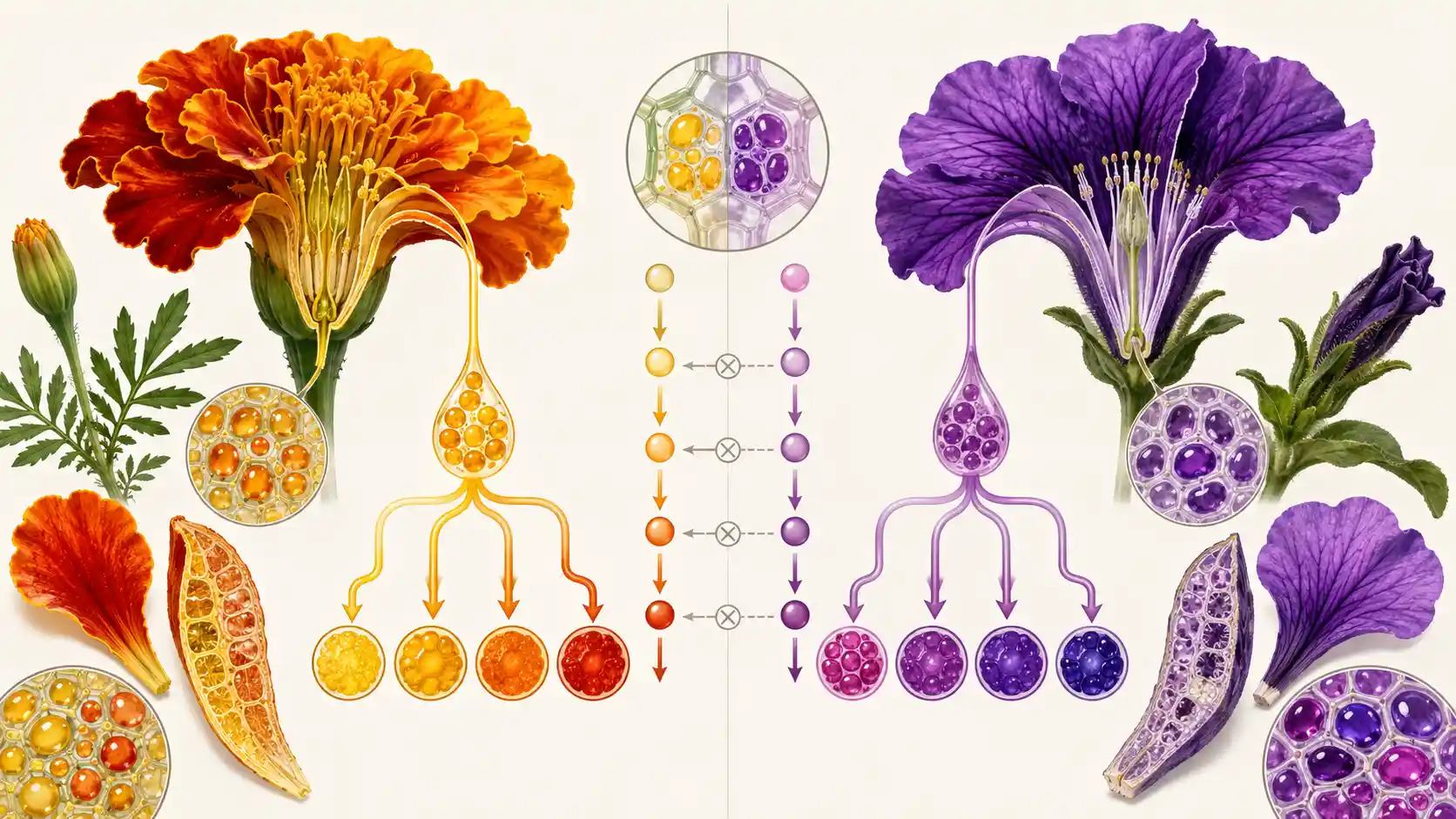
Marigolds mainly produce carotenoid pigments, which create yellow, orange, and many red tones. They do not naturally produce significant amounts of anthocyanins, the pigment group responsible for blue, violet, and purple colours in many flowering plants.
Why Marigolds Can’t Produce True Purple Pigment
Flower colour depends on genetics and pigment pathways inside plant cells. In marigolds:
- Carotenoids create yellow, gold, orange, and reddish shades.
- Anthocyanins create purple, blue, and violet colours in other plants.
- Tagetes species lack the genetic pathway needed for true purple pigmentation.
This applies across common marigold species and cultivars, including African marigolds (Tagetes erecta) and French marigolds (Tagetes patula).
What People Are Actually Buying or Seeing
Many products marketed as purple marigold flower seeds or purple India marigold seeds are not genuine purple varieties. Buyers are usually purchasing dark-coloured marigolds or encountering misleading images. Similar colour confusion can happen with other unusual marigold claims, including pink marigolds, where naming and appearance may differ from traditional marigold colours.
The confusion often comes from attractive marketing names, unusual lighting, or enhanced photographs rather than actual flower genetics.
Deep Red, Maroon and “Black” Marigold Varieties
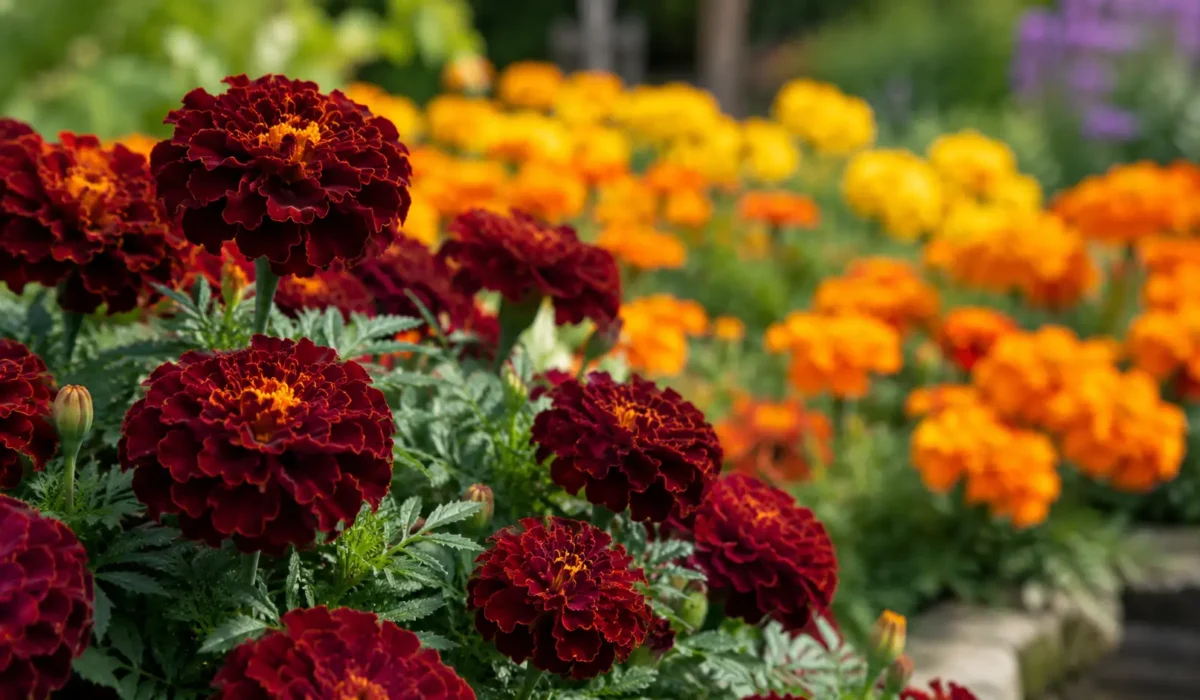
Some marigolds appear almost purple because they have extremely dark red, burgundy, or mahogany petals. These are sometimes marketed as “black marigolds” or “purple marigolds.”
However, these flowers are not truly black or purple.
They are usually:
- Deep crimson
- Dark mahogany
- Burgundy-red
- Brownish-red
These varieties can create a purple-like appearance in shaded gardens or evening light.
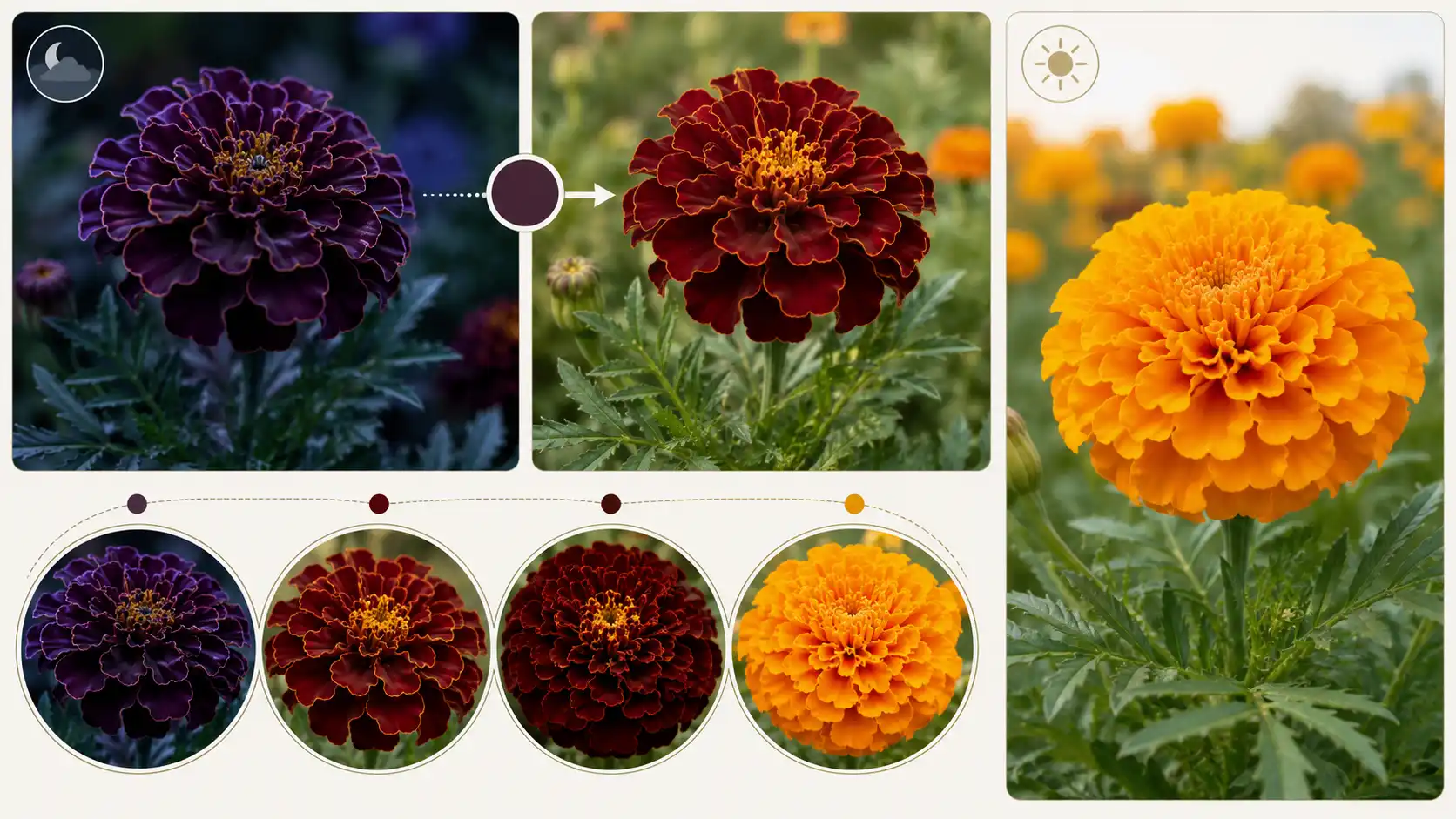
Why Some Online Photos Show Purple Marigolds
Purple-looking marigold images are often caused by:
- Low evening light that shifts red tones toward violet
- Camera colour processing
- Filters and editing software
- Bright screen displays altering colour perception
A genuine marigold flower should still show yellow, orange, red, or mixed warm tones under natural daylight.
Marketed Colour vs Genetically Possible
| Marketed Colour | Actual Colour | Why It Looks Purple |
| Purple marigold | Burgundy or dark red | Deep pigments reflect violet tones |
| Black marigold | Mahogany red | Very dark petals appear almost black |
| Violet marigold | Edited or enhanced image | Digital colour adjustment |
| Purple-orange marigold | Red-orange combination | Lighting changes appearance |
Genuine Marigold Colours
Marigolds naturally provide a wide range of warm colours. While a purple marigold flower is unavailable, many varieties offer dramatic shades that create similar visual depth. Among the closest natural alternatives to a purple-looking marigold are deep red varieties, which can create rich garden displays similar to the colours many gardeners expect.
Common Marigold Colours: Yellow, Orange, Red and Bi-Colours
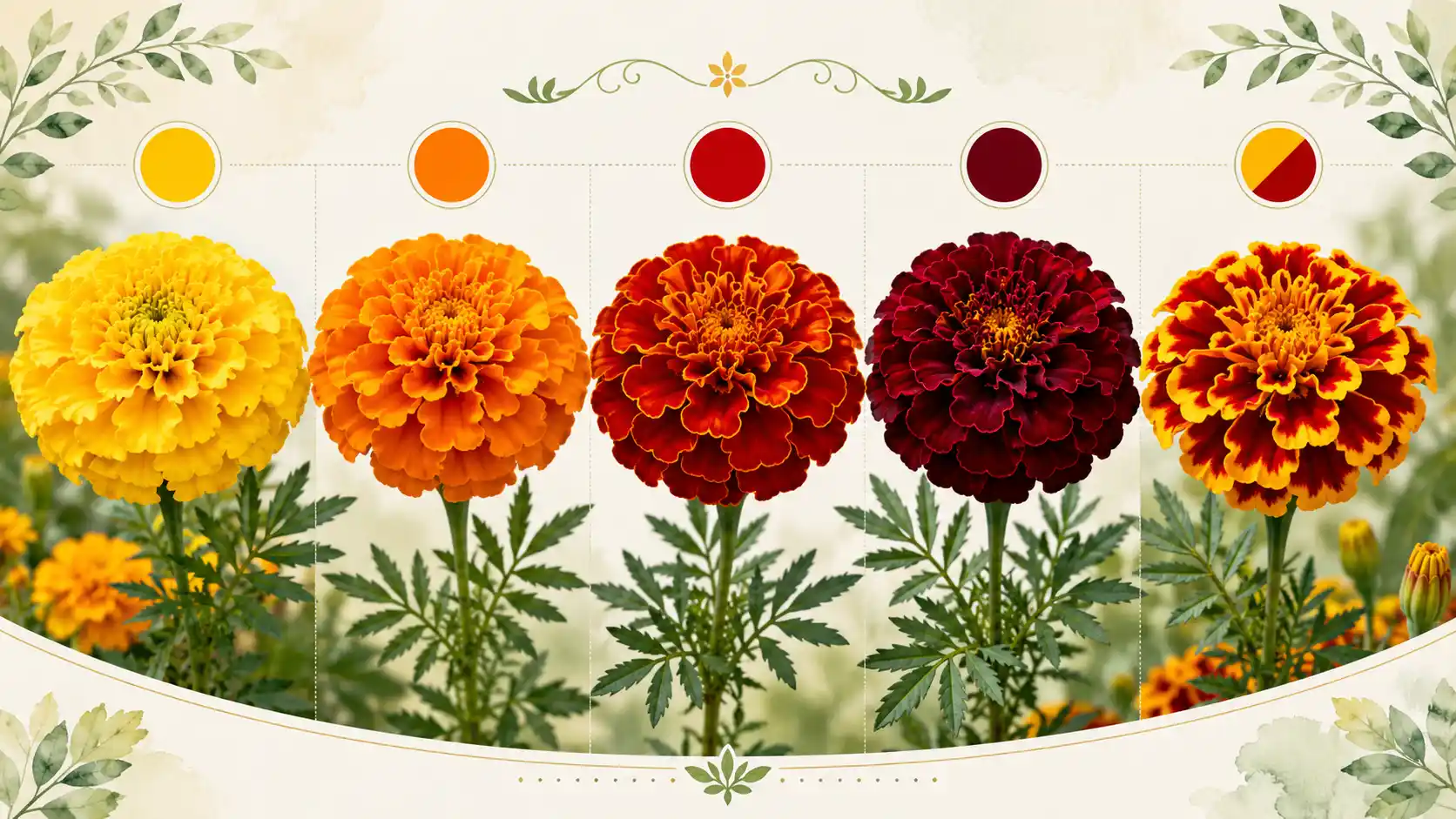
Common natural marigold colours include:
- Yellow: Bright lemon and golden shades
- Orange: One of the most common marigold colours
- Red: Usually deep red-orange or mahogany tones
- Bi-colours: Mixed yellow, orange, and red patterns
Some dark red varieties are the closest visual alternative to purple because their rich colouring can appear violet in certain conditions.
| Marigold Colour | Typical Appearance |
| Yellow | Bright golden petals |
| Orange | Warm orange and copper shades |
| Red | Deep red-orange tones |
| Burgundy | Dark wine-like appearance |
| Bi-colour | Combination of yellow, orange, and red |
The Two Main Types of Marigolds
Marigolds belong mainly to the genus Tagetes, which includes several popular garden species. Their species differences influence flower size, growth habit, and available colours.
African Marigolds (Tagetes erecta)
African marigolds produce some of the largest flowers, often reaching 5–10 cm wide.
They are known for:
- Large rounded blooms
- Tall growth habits
- Strong yellow, orange, and golden colours
- Long-lasting summer flowering
Despite their name, they are native to Mexico and Central America.
French Marigolds (Tagetes patula)
French marigolds are smaller and more compact. They are popular for borders, containers, and vegetable gardens.
Characteristics include:
- Smaller flowers
- Bushier growth
- Red, orange, yellow, and bi-colour blooms
- Good heat tolerance
The English or pot marigold is different from Tagetes. It belongs to the genus Calendula, not Tagetes, which can sometimes add to marigold colour confusion.
Are Marigolds Annual or Perennial?
Marigolds are usually grown as annual plants in most Australian climates. They complete their life cycle within one growing season, although they may self-seed and return the following year in suitable conditions.
In warmer frost-free areas, some marigolds may survive longer, but most gardeners treat them as seasonal flowering plants.
What Do Purple Marigolds Symbolise?
Purple marigolds do not have traditional botanical symbolism because true purple marigolds do not exist. However, people sometimes combine general marigold meanings with the symbolic associations of the colour purple.
General Marigold Symbolism
Marigolds are commonly associated with:
- Warmth and positivity
- Celebration
- Remembrance
- Protection in cultural traditions
Different cultures use marigolds in festivals and ceremonies because of their bright colours and long-lasting flowers.
Marigold as the October Birth Flower
Marigold is often recognised as an October birth flower.
It is traditionally linked with:
- Creativity
- Passion
- Warmth
- Strong emotional connections
The purple colour symbolism of creativity and dignity may be applied to imagined purple marigolds, but it is not based on an actual purple marigold variety.
Common Problems That Affect Marigold Colour and Health
Colour changes in marigolds are usually caused by environmental factors rather than the plant becoming purple.
Pests and Animals That Damage Marigolds at Night
Common nighttime pests in Australian gardens include:
- Slugs and snails: Create holes in leaves and damaged petals
- Earwigs: Feed on soft plant tissue
- Possums: May eat leaves and flowers
Signs of damage include irregular leaf holes, missing petals, and chewed stems.
Prevention methods include:
- Removing hiding places around plants
- Checking plants after sunset
- Using physical barriers where needed
Environmental Causes of Leaf or Petal Discolouration
Marigold colour and health may change because of:
- Cold stress
- Nutrient imbalance
- Excessive sunlight
- Water stress
Purple-tinged foliage can sometimes occur from stress-related pigment changes, but it does not mean the plant has produced purple flowers.
What Animals Do Marigolds Repel?
Marigolds are often used in companion planting because their scent may discourage some pests.
They are commonly associated with reducing problems from:
- Certain nematodes in soil
- Some insect pests
However, marigolds are not a guaranteed animal repellent and should be part of a broader garden management approach.
What Should Not Be Planted Near Marigolds?
Marigolds are generally compatible with many garden plants, but gardeners should avoid overcrowding them with plants requiring very different conditions.
Avoid planting marigolds where:
- Poor air circulation encourages fungal problems
- Plants require heavy shade
- Soil remains constantly wet
Beginner Mistakes When Growing Marigolds for Colour
Common mistakes include:
- Buying seeds labelled “purple marigold” without checking the variety
- Trusting edited online photos
- Expecting dark red varieties to look purple in full sunlight
- Confusing marigolds with genuine purple flowering plants
Purple Marigold Flower Care Guide
Since purple marigolds are actually dark red or burgundy varieties, their care requirements are the same as other Tagetes plants.
Watering Needs
Water regularly when young plants establish roots. Mature marigolds prefer slightly dry soil between watering rather than constantly wet conditions.
Light Requirements
Marigolds perform best in full sun, usually requiring at least 6 hours of direct sunlight daily.
Soil Preferences
Use well-draining soil with moderate fertility. Waterlogged soil can cause root problems.
Fertilising Practices
Avoid excessive nitrogen fertiliser because it can encourage leaves rather than flowers.
Pruning and Deadheading
Removing faded flowers encourages continued blooming throughout the growing season.
Climate Tolerance (Australian Conditions)
Marigolds tolerate warm Australian conditions well but may struggle with frost and extreme cold.
Genuine Purple Flower Alternatives
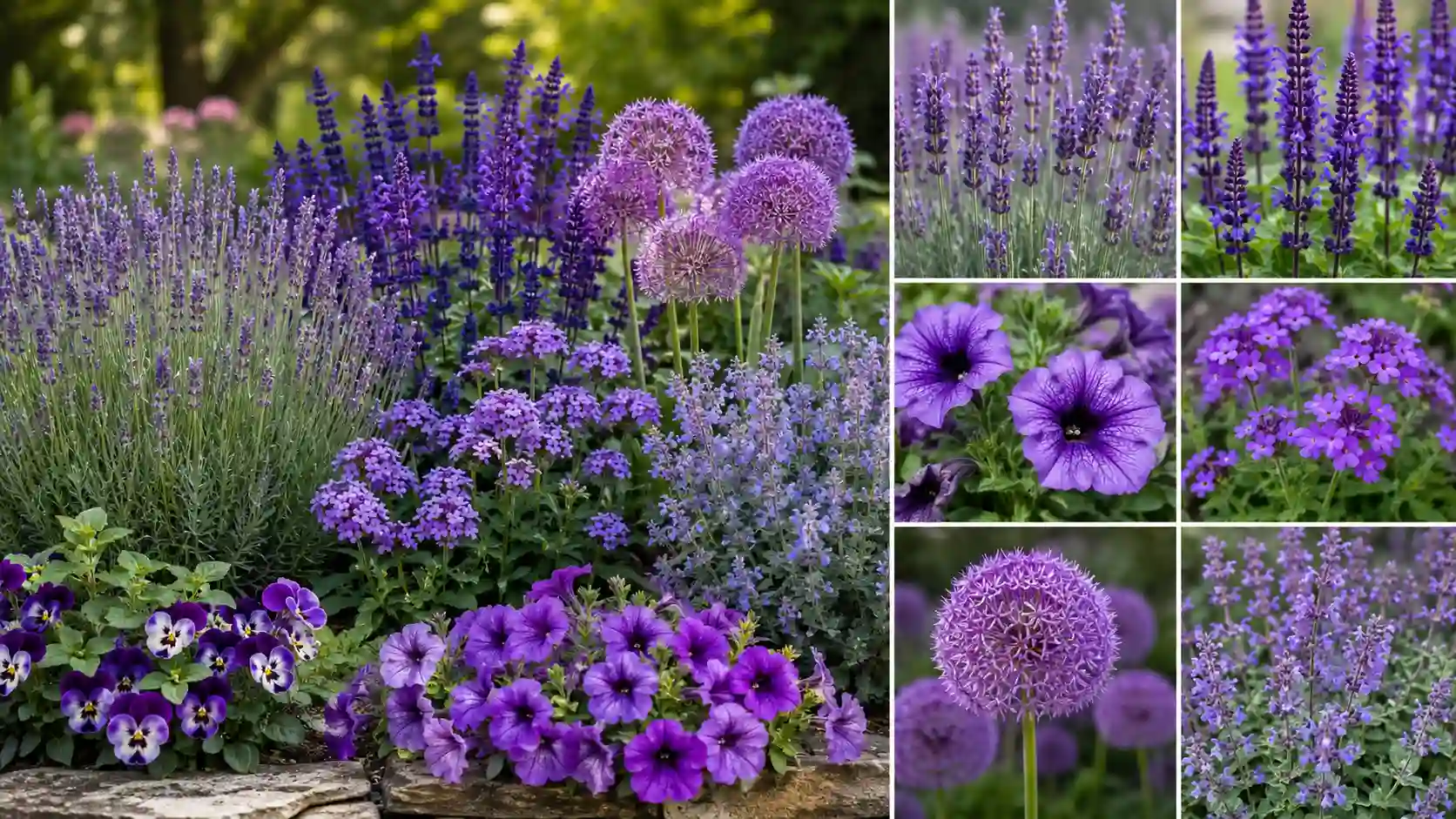
Gardeners wanting true purple blooms can choose plants that naturally produce purple pigments, including:
- Lavender (Lavandula)
- Petunias (Petunia)
- Salvia (Salvia)
- Verbena (Verbena)
- Purple flowering Australian native plants
Choosing the right flowering plants for Australian gardens also depends on climate, garden design, and plant selection, which are covered in our complete Australian plants guide.
These plants provide genuine purple flowers rather than marigold-like colour illusions. For gardeners who want authentic purple blooms, exploring Australian native purple flowers can provide naturally occurring violet shades that suit local growing conditions.
Conclusion
A true purple marigold flower does not exist naturally because Tagetes plants lack the pigment pathway needed to create purple blooms. Most purple marigold claims refer to deep red, burgundy, or edited images rather than genuine varieties. Marigolds remain valuable garden plants because of their bright yellow, orange, red, and bi-colour flowers, easy care, and adaptability. For gardeners seeking authentic purple flowers, choosing naturally purple flowering plants is the best solution.
Frequently Asked Questions
Are there really purple marigolds?
No, true purple marigolds do not naturally exist. Most purple marigold claims refer to dark red varieties or edited images.
What do purple marigolds symbolise?
Purple marigolds are not based on a real flower variety, but purple colour symbolism is sometimes associated with creativity, dignity, and imagination.
Why is marigold the October flower?
Marigold is considered an October birth flower because of its traditional associations with warmth, passion, remembrance, and creativity.
What is the spiritual meaning of marigold?
Marigolds are commonly associated with celebration, positivity, remembrance, and cultural traditions involving honour and respect.
What should not be planted near marigolds?
Marigolds should not be planted in areas with poor drainage, heavy shade, or conditions unsuitable for sun-loving plants.
What animals do marigolds repel?
Marigolds may help discourage some soil pests and insects, but they are not a complete pest-control solution.
Are marigolds annual or perennial?
Marigolds are usually annuals, although they may self-seed and return in suitable warm climates.
1 Comment