

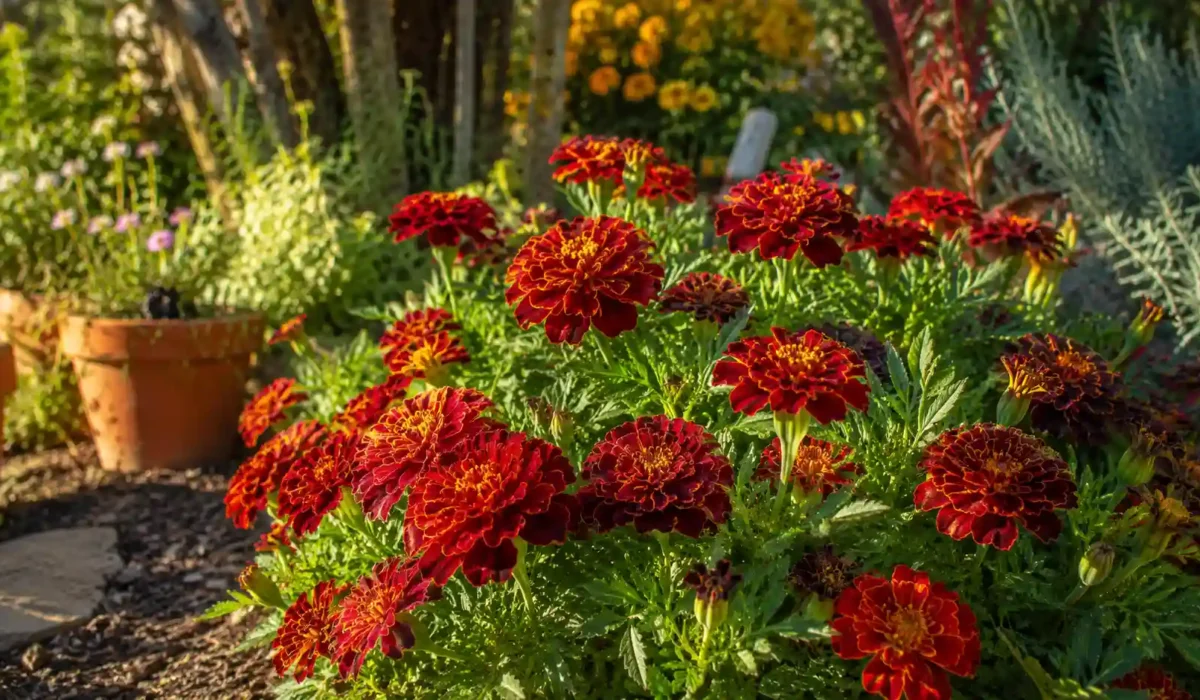
Red Marigold Flower Guide Australia
Introduction
The red marigold flower is a bold, warm-season annual increasingly popular in Australian gardens for its deep crimson to burgundy tones and strong ornamental presence. While marigolds are commonly associated with bright orange and yellow blooms, true red varieties do exist, although they are less frequently seen in mainstream garden centres. This rarity makes them especially desirable for gardeners seeking richer, more dramatic colour palettes in borders, pots, and vegetable gardens. In Australia’s warm climate, red marigolds perform reliably when grown in full sun and well-drained soil.
By Elemo Baker | Plant Care & Gardening Expert
Last Updated: June 2026
Quick Summary
- Red marigold flowers are bold, warm-season annuals available in deep crimson to burgundy shades, including cultivars like Durango Red marigold
- They are annuals that complete their lifecycle in one season but may self-seed in favourable conditions
- Red marigolds symbolise passion, courage, warmth, and remembrance across multiple cultures
- They are less common than orange and yellow marigolds, making them highly valued in ornamental gardens
- They thrive in Australian climates with full sun, low maintenance, and minimal watering once established
Are Red Marigolds Real? Understanding True Red Varieties
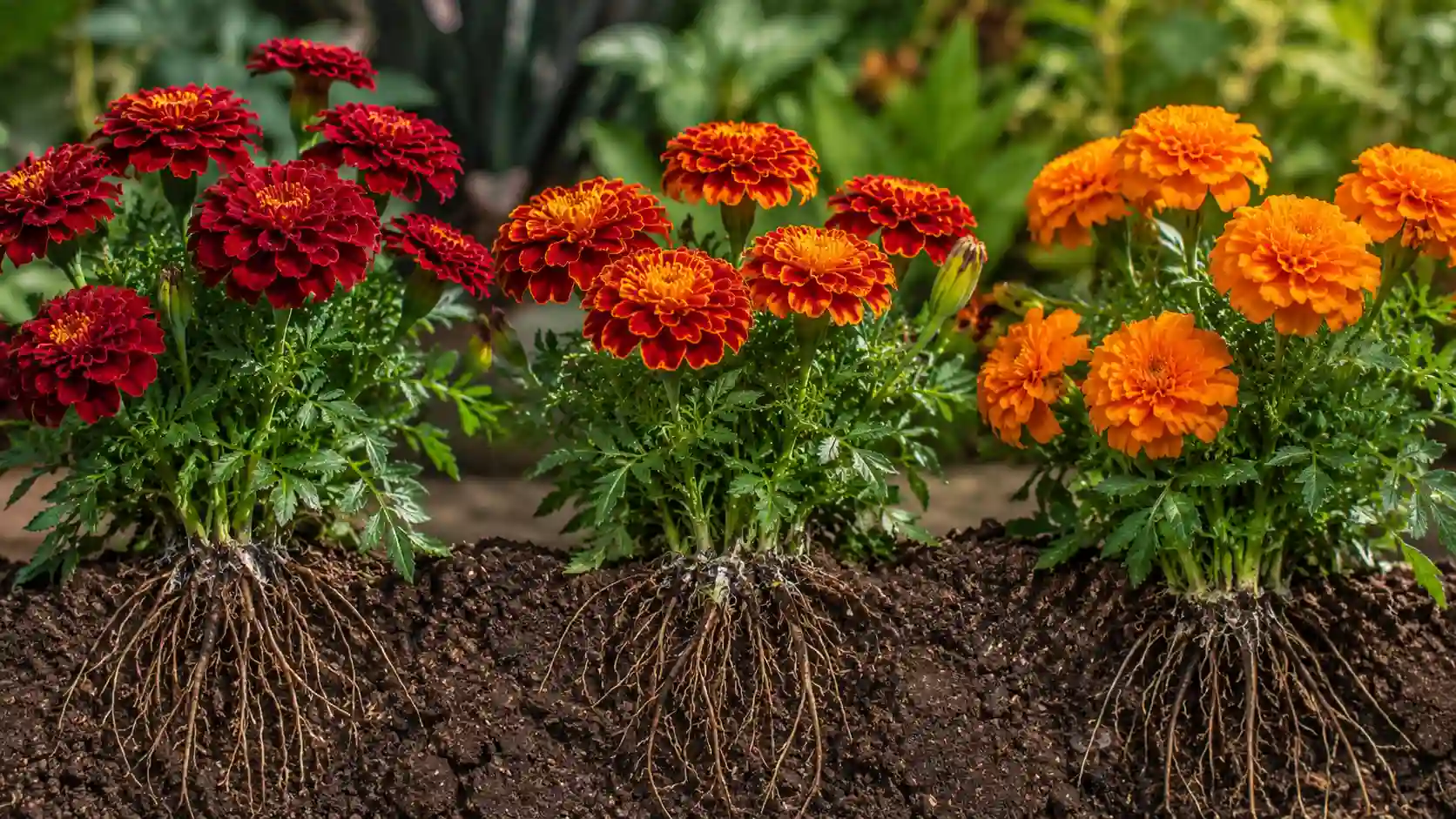
Yes, red marigolds are real, but their colour range is more accurately described as deep orange-red, crimson, or burgundy rather than pure red. Traditional marigolds rarely produce true red pigmentation due to genetic limitations in the Tagetes genus.
Breeding advancements have introduced richer tones, especially in modern French marigold lines. One of the most recognised examples is Durango Red marigold, which is widely considered a benchmark for true red colouring. Other cultivars such as Cottage Red and select red French marigolds also display similar hues.
In our experience growing marigolds in Australian conditions, red-toned varieties intensify in colour when exposed to strong sunlight, particularly during summer.
What Are Red Marigolds Called? Common Varieties and Types
Marigolds belong mainly to two species groups:
- African marigolds (Tagetes erecta)
- French marigolds (Tagetes patula)
Red varieties are primarily found in French marigolds, which produce smaller but more colour-diverse flowers.
Common red cultivars include:
- Durango Red marigold
- Cottage Red marigold
- Red French marigold selections (often labelled “Marigold Red” in seed catalogues)
In seed catalogues, “marigold red” usually refers to a colour category rather than a single genetic line, meaning shades can vary significantly between suppliers. Importantly, purple marigolds do not naturally occur, and pink tones are extremely rare or selectively bred. For broader botanical classification, marigolds belong to the genus Tagetes in the Asteraceae family, as described in botanical references such as Wikipedia.
French Marigold vs. African Marigold: Which Produces Red Flowers?
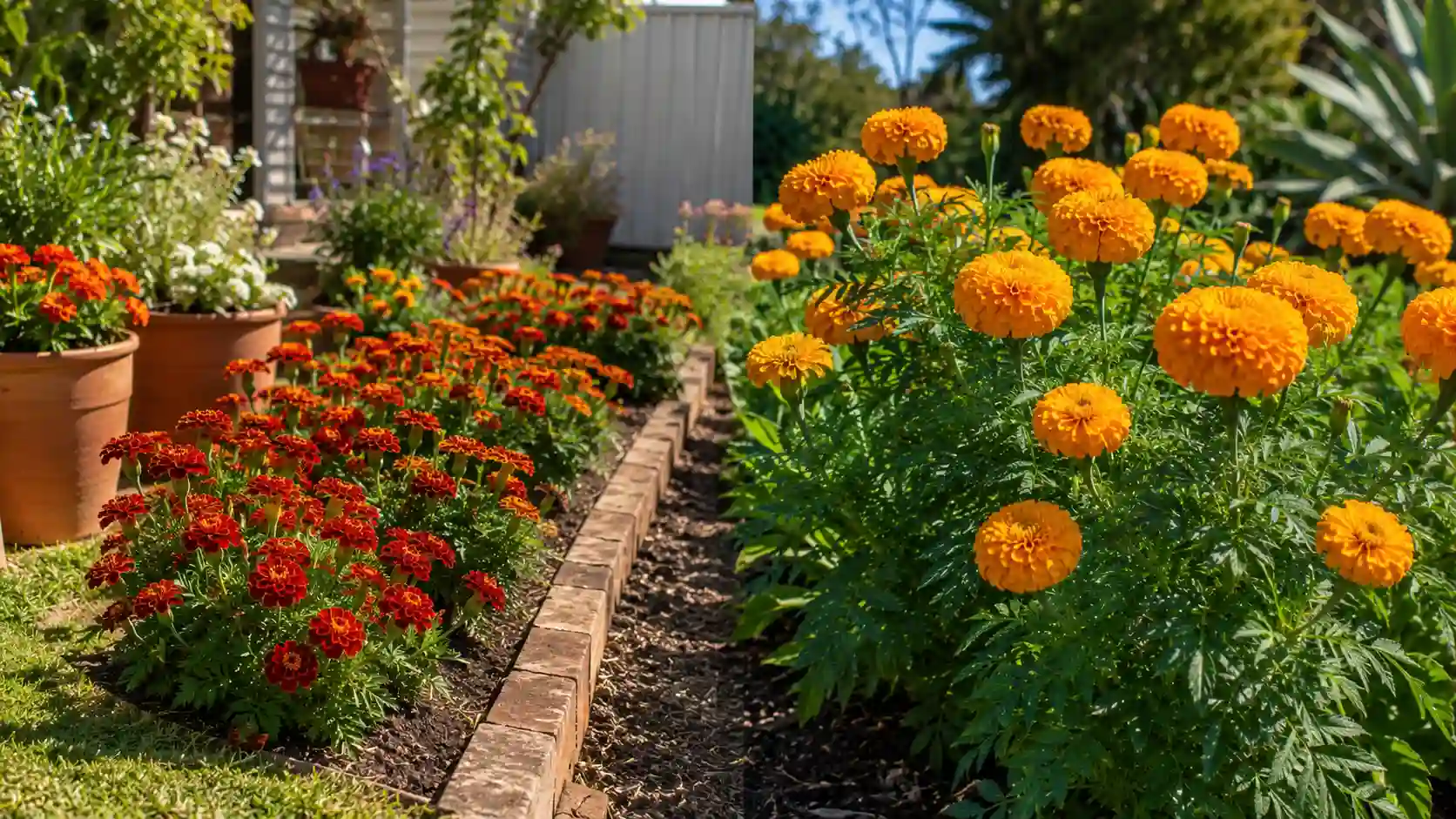
French marigolds are far more likely to produce convincing red tones compared to African marigolds.
Comparison Table
| Feature | French Marigold | African Marigold |
| Height | 20–30 cm | 50–90 cm |
| Flower size | Small–medium | Large |
| Red varieties available | Yes (Durango Red, Cottage Red) | Rare |
| Best use | Borders, pots, edging | Feature beds, cut flowers |
| Australian suitability | Excellent | Excellent |
French marigolds are compact and genetically more diverse in flower colour, making them ideal for red cultivars. African marigolds, while impressive in size, generally produce yellow and orange shades.
Are Red Marigolds Rare?
Red marigolds are considered uncommon rather than truly rare. They are less frequently stocked in Australian garden centres compared to orange and yellow varieties.
However, availability is improving:
- Commonly available via online seed suppliers
- Occasionally stocked at major retailers like Bunnings
- Easily sourced from specialist nurseries
The key distinction is that while seedlings may be limited, seeds are widely accessible, allowing gardeners to grow red marigolds reliably from scratch.
Red Marigold Flower Meaning and Symbolism
Red marigolds carry layered cultural symbolism tied to colour psychology and traditional flower meanings.
Key symbolic meanings include:
- Passion and strong emotional energy
- Courage and determination
- Warmth and positive remembrance
Cultural contexts:
- In Mexican traditions such as Día de los Muertos, marigolds guide ancestral spirits
- In Hindu ceremonies, they represent purity and devotion
- In Victorian flower language, they symbolise grief and remembrance
- In Christianity, marigolds are associated with the Virgin Mary and themes of purity
They are also the birth flower for October, representing transition and harvest themes. Like the symbolism seen in other popular ornamental plants such as the Money Tree, marigolds also carry strong associations with prosperity, luck, and emotional wellbeing in garden culture.
What Does the Red Marigold Symbolise Specifically?
Red marigolds amplify general marigold symbolism through the emotional intensity of the colour red.
Specifically, they represent:
- Passionate affection
- Bold emotional expression
- Strong personal resolve
In tattoo symbolism, red marigold designs often represent remembrance combined with strength after loss or transformation.
How to Grow Red Marigold Flowers in Australia
Red marigolds grow well across most Australian climates, particularly in spring and summer.
Planting guidelines:
- Sow after the last frost in cooler regions
- In tropical areas, they can grow nearly year-round
- Prefer full sun and warm soil
In subtropical and temperate zones, spring planting ensures strong flowering through summer. While marigolds are fast-growing annuals, gardeners often pair them with fast-growing evergreen trees to create layered, year-round structure in Australian landscapes.
Are Marigolds Annuals or Perennials?
Most marigolds are annuals, meaning they complete their life cycle in one growing season.
However:
- They often self-seed in suitable conditions
- Some Tagetes species behave as short-lived perennials in frost-free climates
In Australia:
- Temperate zones: treated strictly as annuals
- Tropical zones: may persist longer but still decline after flowering cycles
Self-seeding allows natural regrowth without replanting.
Red Marigold Flower Height and Growth Habit
Red marigolds vary by type:
- French marigolds: 20–30 cm tall
- Taller hybrid forms: up to 60 cm
They are:
- Fast-growing
- Bushy and compact
- Flowering within 8–10 weeks from seed
Their growth habit makes them ideal for borders, containers, and vegetable garden edging.
How to Grow Red Marigolds from Seed
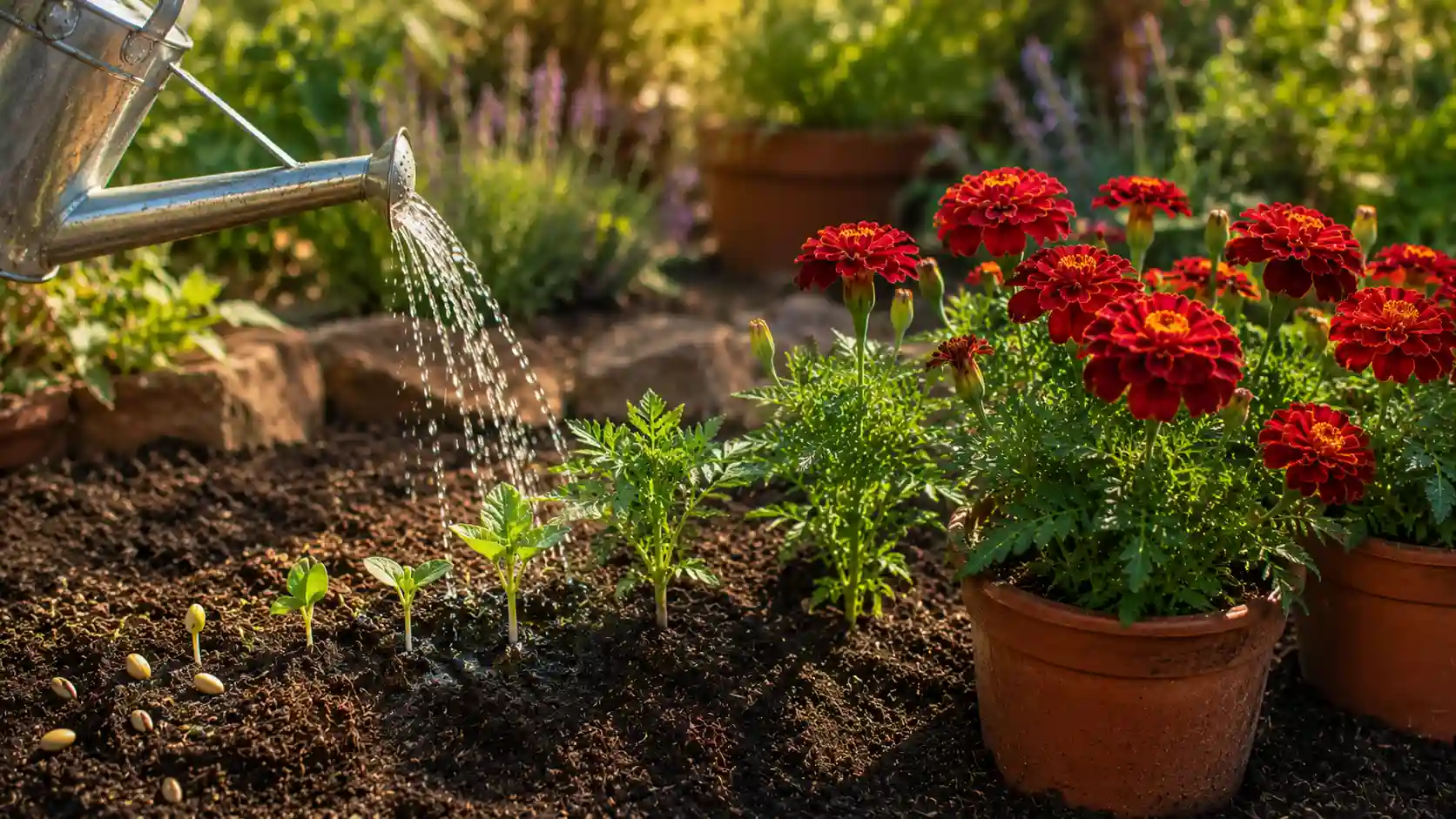
Red marigold seeds are easy to germinate under warm conditions.
Steps:
- Sow seeds 5–10 mm deep in seed-raising mix
- Germinate in 5–10 days at warm temperatures
- Thin seedlings to avoid overcrowding
- Transplant after seedlings develop 2–3 true leaves
They can be sown directly into garden beds in warm Australian regions or started indoors in cooler areas.
Care Guide for Red Marigold Flowers
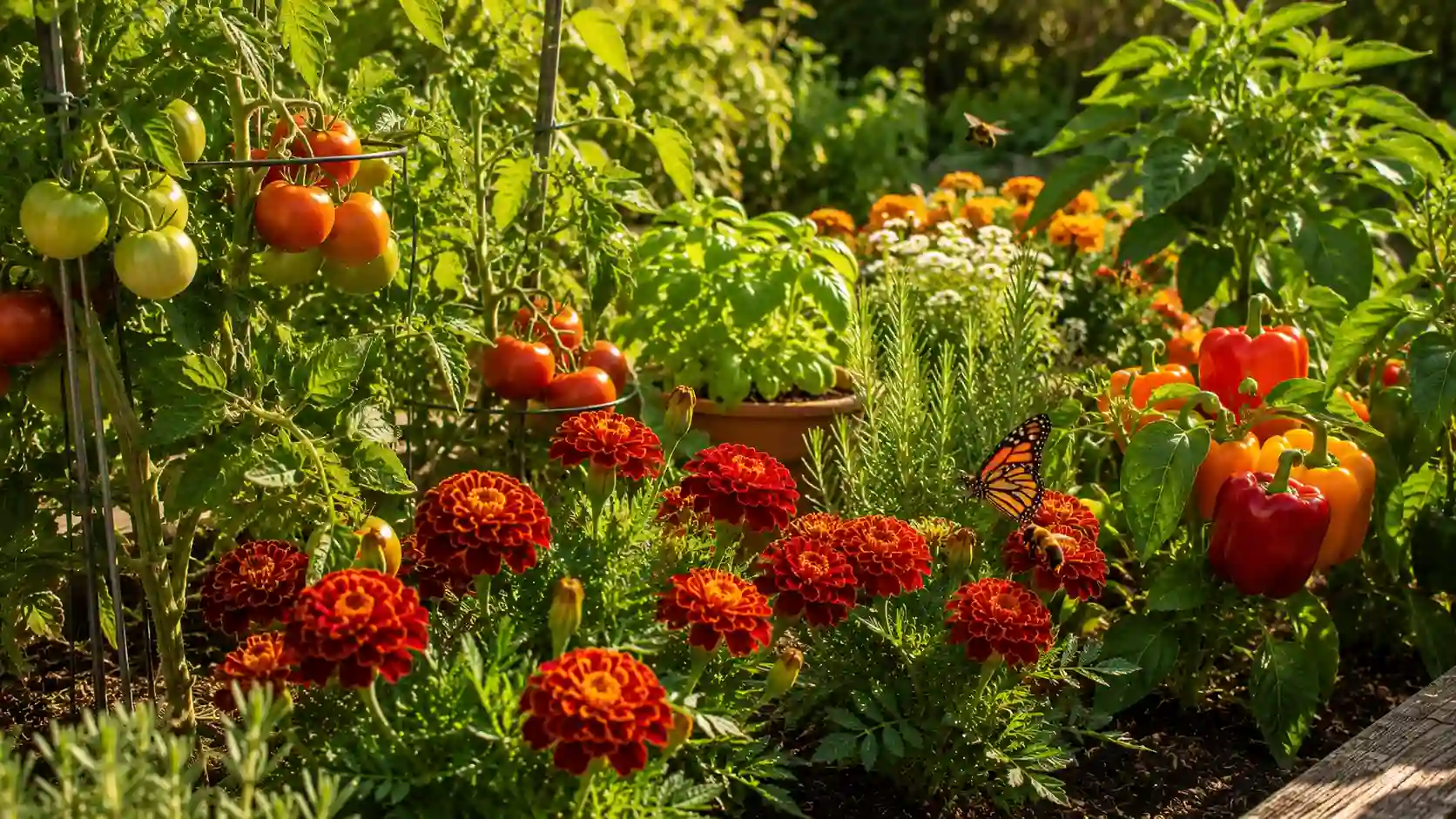
Red marigolds are low-maintenance once established.
Key care needs:
- Watering: Moderate; drought-tolerant once mature
- Light: Minimum 6 hours full sun daily
- Soil: Well-drained, moderately fertile soil
- Fertiliser: Light feeding; excess nitrogen reduces flowering
- Pruning: Regular deadheading extends blooming
- Climate: Heat-tolerant, frost-sensitive
Elemo Baker recommends avoiding rich compost-heavy soils, as this encourages foliage over flowers. Just like indoor plants such as Monstera varieties require balanced light for healthy variegation, marigolds also depend heavily on full sun exposure to maintain strong colour and flowering performance.
What Not to Plant Near Marigolds
While marigolds benefit many plants, they can inhibit certain crops due to root secretions.
Avoid planting near:
- Some legumes
- Certain brassicas (in sensitive soil conditions)
However, they are beneficial near:
- Tomatoes
- Capsicums
- Eggplants
They also help reduce nematodes and deter aphids in vegetable gardens.
What Animals Eat Marigolds at Night?
Common pests in Australian gardens include:
- Slugs and snails (chewed leaf edges)
- Caterpillars (irregular holes)
- Possums (larger missing sections)
Control methods:
- Organic slug traps
- Copper barriers
- Netting for possums
- Manual removal of caterpillars
For a broader understanding of common garden pests affecting flowering plants, see general pest patterns explained in Australian gardens, including insects and nocturnal feeders.
Red Marigold Flower Benefits: Skin, Healing, and Medicinal Uses
It is important to distinguish between medicinal calendula and ornamental marigolds.
| Use | Calendula (Calendula officinalis) | Tagetes (Garden Marigold) |
| Skin healing/scars | Yes, well documented | Limited evidence |
| Pest deterrence | Moderate | Strong |
| Edible flowers | Yes | Some varieties |
| Ornamental use | Yes | Primary use |
Calendula is traditionally used in infused oils and creams for skin repair, while Tagetes is valued more for garden pest control and visual appeal. Similar to lavender plants often grown for calming and therapeutic garden benefits, marigolds are valued more for their ecological and ornamental roles than direct medicinal use.
Common Problems with Red Marigold Plants
Common issues include:
- Yellowing leaves: Overwatering or poor drainage
- Leggy growth: Insufficient sunlight
- Grey mould (Botrytis): High humidity conditions
- Spider mites: Dry, dusty environments
- Poor flowering: Excess nitrogen or low light
Early intervention and proper spacing usually resolve most issues.
Conclusion
Red marigold flowers offer Australian gardeners a unique combination of rarity, resilience, and vibrant colour. With cultivars like Durango Red marigold and Cottage Red, true red tones are now accessible without difficulty. These annuals thrive in full sun, require minimal maintenance, and self-seed under favourable conditions. Their symbolic richness and practical garden benefits make them a valuable addition to borders, pots, and vegetable beds. For gardeners seeking bold seasonal colour, red marigolds remain a reliable and rewarding choice.
FAQs
1. Are red marigolds rare?
They are uncommon but widely available through seed suppliers and select nurseries in Australia.
2. Do marigolds come back every year in Australia?
They are annuals, but they may self-seed depending on conditions and climate zone.
3. What do red marigolds symbolise?
They represent passion, courage, remembrance, and emotional strength across multiple cultures.
4. What is the difference between French and African marigolds?
French marigolds are smaller and produce red varieties, while African marigolds are larger and mostly yellow or orange.
5. What should not be planted near marigolds?
Some legumes and brassicas may be affected, though they benefit many vegetable crops like tomatoes.
6. Is marigold good for skin and scars?
Calendula is the medicinal species used for skin healing, not ornamental Tagetes marigolds.
7. Why is marigold the October birth flower?
It symbolises autumn transition, harvest themes, and emotional warmth associated with October seasons.