
Pink Fern Leaf Peony: Care, Size & Growing Guide
Introduction
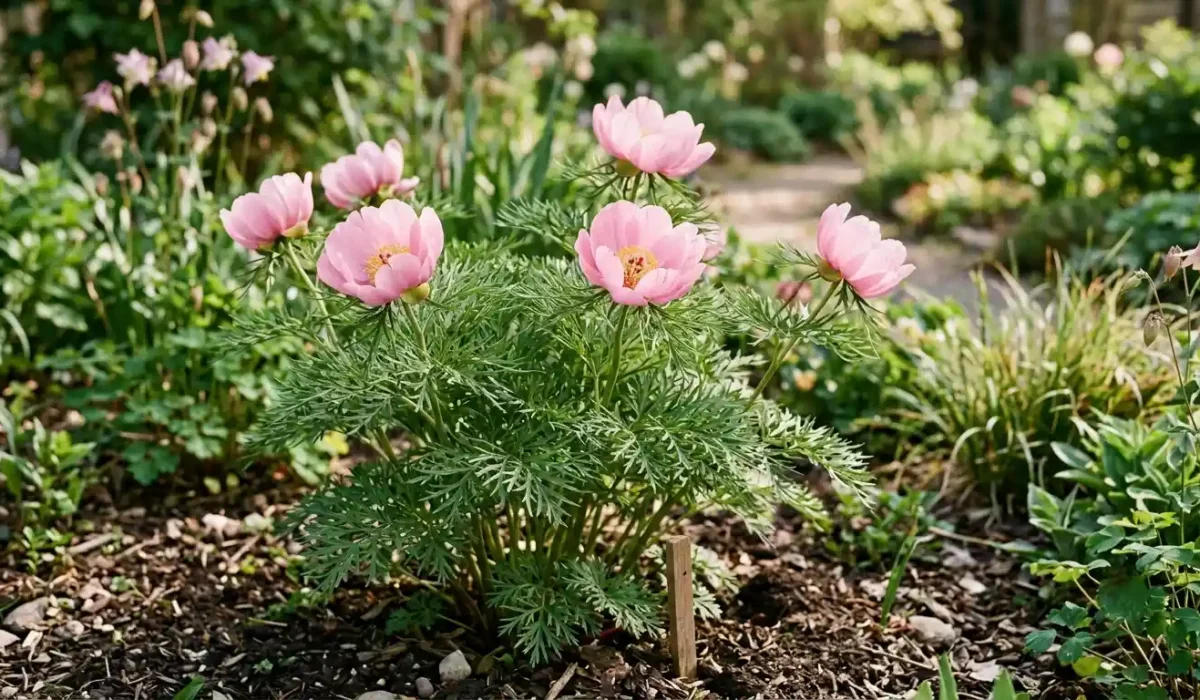
Pink fern leaf peony is a rare form of fern leaf peony (Paeonia tenuifolia), a herbaceous perennial admired for its finely dissected, feathery foliage and exceptionally early spring flowers. Unlike common garden peonies, it forms compact mounds of fern-like leaves that remain attractive even after flowering. Often called fernleaf peony, fern peony, or peony fern leaf, this species is prized by collectors because it grows slowly, is less widely available, and requires patience to establish. Gardeners often want to know why it costs more than traditional peonies and how to grow it successfully. This guide explains its botanical background, care requirements, growth habits, and suitability for Australian gardens.
Quick Summary
- Pink fern leaf peony (Paeonia tenuifolia) is a rare, early-flowering perennial with delicate fern-like foliage.
- It costs more than common peonies because it grows slowly and is difficult to propagate.
- It performs best in full sun, well-drained soil, and regions with cool winter dormancy.
- Mature plants typically reach 30–45cm in height and form neat clumps.
What Is a Fern Leaf Peony?
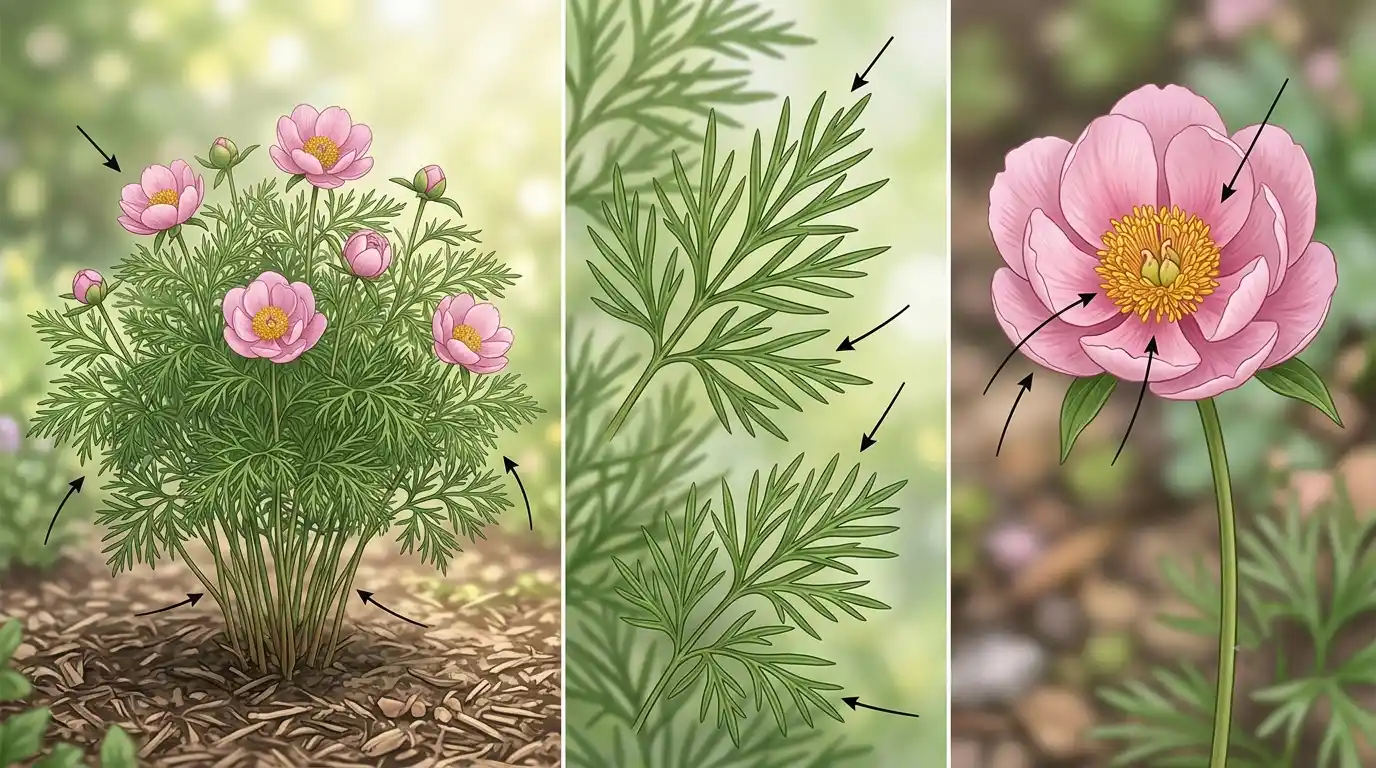
A fern leaf peony is a genuine botanical species, Paeonia tenuifolia, native to Eastern Europe and parts of southern Russia. It is not a hybrid or gardening myth. Unlike larger peonies, fern peonies are recognised by their soft, thread-like foliage and early spring blooms that appear before most other peony species.
The species belongs to the genus Paeonia, a group of flowering plants widely recognised for their ornamental value and long history in gardens. More botanical information is available through the Wikipedia page about Paeonia.
Fern Leaf Peony vs Common Garden Peony
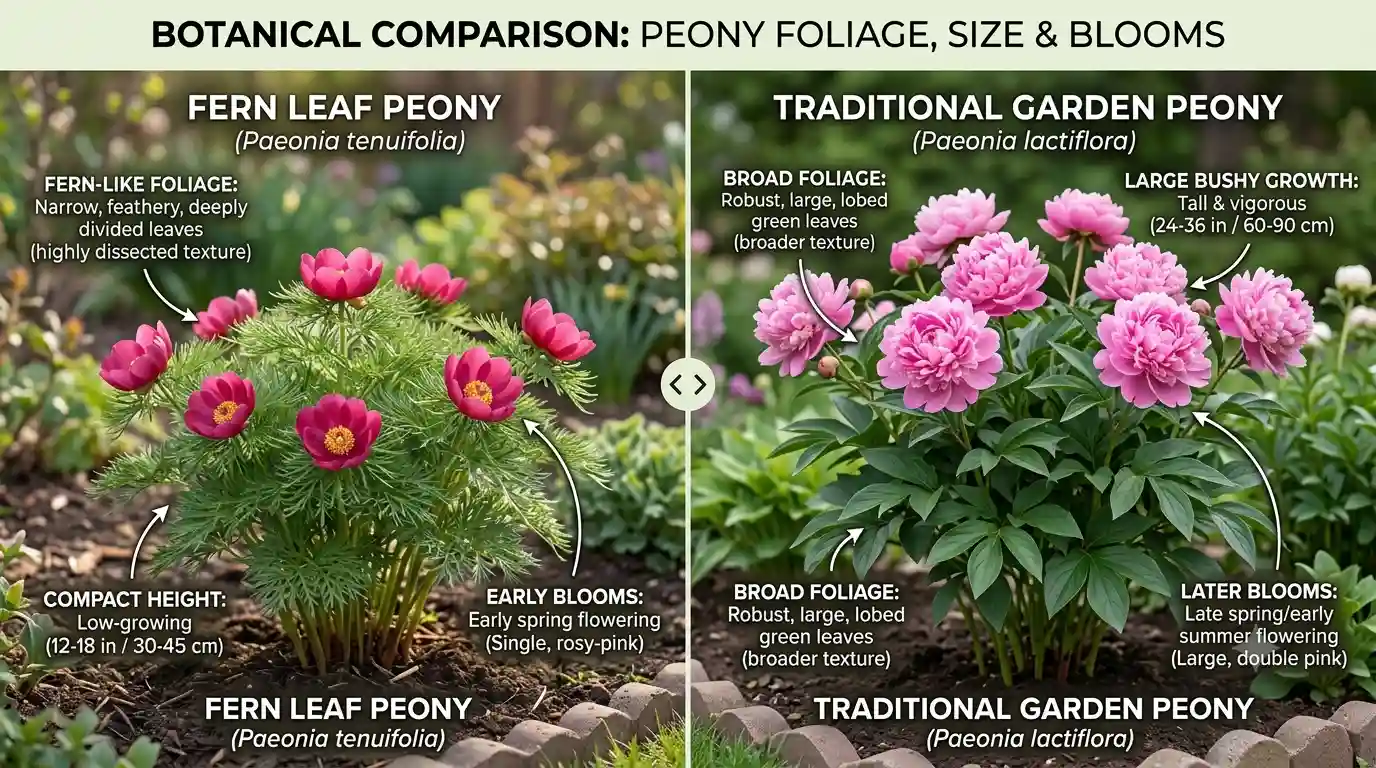
| Feature | Fern Leaf Peony | Common Garden Peony |
| Foliage | Fine, fern-like | Broad, divided leaves |
| Height | 30–45cm | 60–100cm |
| Bloom time | Early spring | Late spring |
| Availability | Rare | Common |
| Price | Higher | Lower |
Fern leaf peonies remain compact, flower earlier, and are generally harder to find than standard herbaceous peonies.
Is a Fern Leaf Peony a Perennial?
Yes. Fern leaf peonies are long-lived herbaceous perennials. They die back naturally during winter dormancy and produce fresh shoots each spring. With minimal disturbance, healthy plants can thrive in the same location for decades.
Why Are Fern Leaf Peonies So Expensive?
Fern leaf peonies command premium prices because production is naturally slow and demand often exceeds supply.
Key reasons include:
- Slow root division and propagation.
- Plants often require three or more years to reach flowering size.
- Specialist nurseries produce limited stock.
- High demand from collectors and landscape designers.
- Imported plants increase overall costs.
In our experience growing perennial ornamentals, patience is essential with fern leaf peonies. Although the initial investment is higher, mature plants reward gardeners with reliable flowering for many years.
Fern Leaf Peony Colors and Varieties
Fern leaf peonies are available in several attractive forms, although colour options are more limited than those of common peonies. Because fern leaf peonies have a relatively short blooming window, many gardeners combine them with other seasonal flowering plants. Explore our guide to All Year Round Flowering Plants Australia for ideas on creating longer-lasting colour in garden spaces.
What Colors Do Fern Peonies Come In?
Common colours include:
- Soft pink
- Deep crimson red
- Rare double-flowered forms
Fern Leaf Peony Varieties
One of the best-known cultivars is Paeonia tenuifolia ‘Early Scout’, valued for its compact habit and attractive pink-red blooms. Single-flowered varieties display a natural appearance, while double forms have fuller blossoms that are especially prized by collectors. Red fern peonies remain the most familiar colour form, while pink selections are less common.
Gardeners looking for more pink-flowering options can also compare the fern leaf peony with other ornamental species in our Pink Flowering Shrub Identification Australia Guide.
What Is the Rarest Color of Peonies?
Among all peonies, true near-black and very dark crimson flowers are considered the rarest. Within fern leaf peonies, double-flowered selections and uncommon pink forms are generally the most sought after due to limited commercial availability.
Pink Fern Leaf Peony Size and Growth Habit
Pink fern leaf peonies remain relatively compact throughout their lives.
- Mature height: 30–45cm
- Mature spread: 30–45cm
- Naturally forms dense clumps
- Space plants around 45–60cm apart
Growth is slow during the first few years, but established plants become increasingly vigorous. Elemo Baker recommends avoiding unnecessary transplanting because mature clumps resent disturbance.
How to Care for Fern Leaf Peonies
Light and Soil Requirements
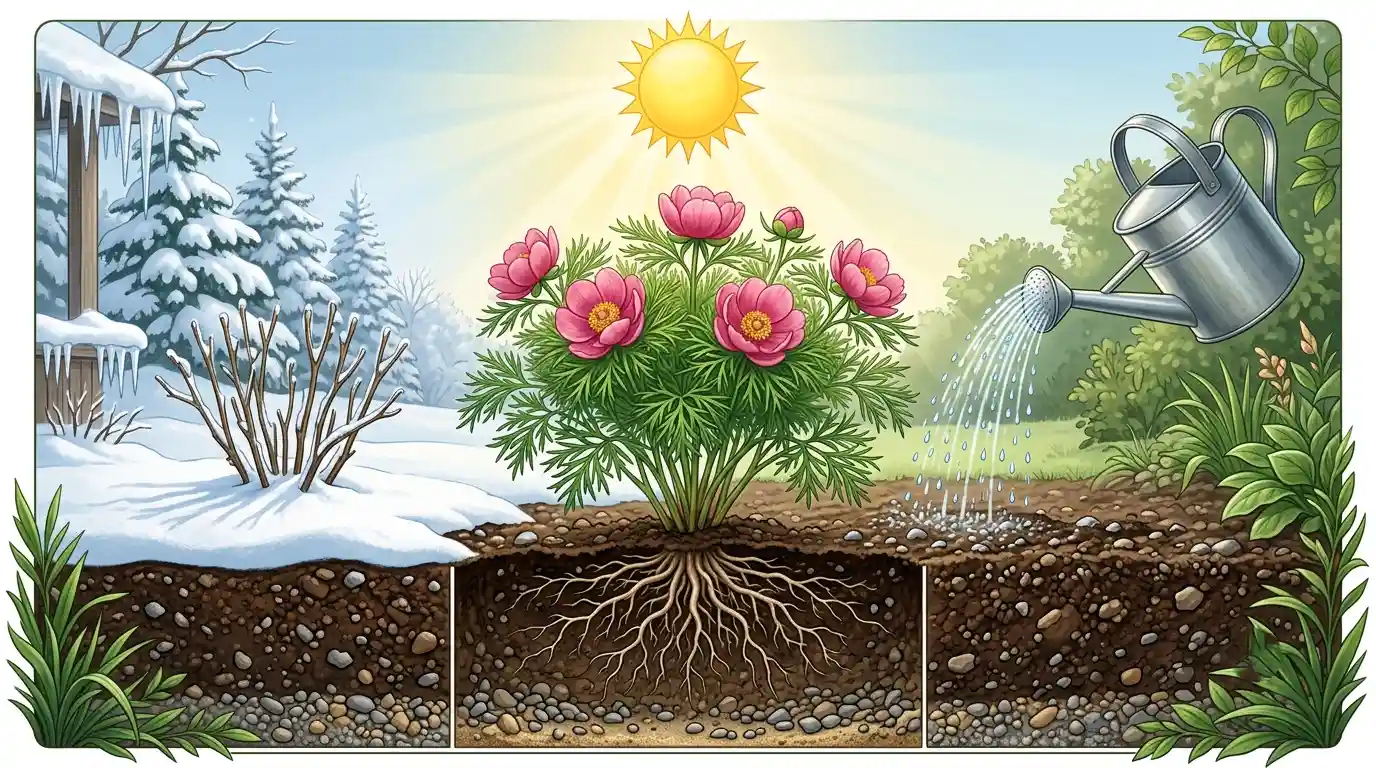
Fern leaf peonies perform best in full sun with fertile, well-drained soil. Slightly alkaline soils encourage healthy root development, while heavy clay should be improved with compost and coarse organic matter.
Watering and Fertilising
Provide moderate watering during active growth while avoiding waterlogged conditions. Once established, plants tolerate short dry periods better than constantly wet soil.
Apply a balanced fertiliser in early spring before flowering. Avoid excessive nitrogen, which encourages leafy growth at the expense of flowers.
Climate Tolerance and Winter Dormancy
Fern leaf peonies require a cold winter dormancy period to flower consistently. As of recent growing recommendations, gardeners in cooler Australian regions continue to achieve the most reliable flowering because adequate winter chill supports healthy bud development.
Do Peonies Do Better in Pots or in the Ground?
Long-term, fern leaf peonies perform better in the ground because their deep root systems establish more naturally.
| Feature | Pots | Ground |
| Root space | Limited | Excellent |
| Drainage control | Easier | Depends on soil |
| Winter protection | Easier to move | Natural dormancy |
| Long-term growth | Moderate | Excellent |
Planting, Transplanting and Dividing Fern Leaf Peonies
Best Time to Plant or Move Fern Leaf Peonies
Autumn is the ideal planting season. Planting before winter allows roots to establish before dormancy and encourages stronger spring growth.
Can You Divide a Fern Leaf Peony?
Yes, but only mature plants should be divided. Division is best completed during autumn dormancy. Fern leaf peonies divide more slowly than common peonies because their root systems develop gradually.
How to Propagate Fern Leaf Peony
Propagation is possible by:
- Root division (preferred)
- Seed propagation (slow and variable)
Division produces plants that remain true to the parent variety, whereas seedlings may vary in appearance and require several years to bloom.
Companion Planting — What Not to Plant Next to Peonies
Large evergreen trees can create excessive shade and root competition around peonies, so gardeners should carefully plan plant placement. See our Fast Growing Evergreen Trees Australia Guide to understand tree size and spacing considerations before planting.
Avoid planting fern leaf peonies beside:
- Large shrubs with aggressive roots
- Fast-growing trees
- Dense groundcovers that trap moisture
- Tall plants that create excessive shade
- Moisture-loving perennials requiring constant irrigation
These companions compete for nutrients, reduce sunlight, or increase disease risk through excessive soil moisture. When designing garden borders, choosing plants with compatible growth habits is important. Our guide on Low-Maintenance Plants for Fence Line in Australia provides ideas for selecting suitable plants for structured garden spaces.
Common Problems With Fern Leaf Peonies
Why Are My Fern Peonies Not Blooming?
Fern peonies usually fail to bloom because they receive insufficient winter chill, too much shade, transplant shock, or have immature root systems.
Improve flowering by:
- Providing full sun.
- Allowing time for establishment.
- Avoiding excess nitrogen fertiliser.
- Leaving plants undisturbed whenever possible.
Do Fern Peonies Attract Ants?
Yes. Ants are attracted to the sugary nectar produced on flower buds. They do not damage the plant and are considered harmless visitors rather than pests.
What Are the Downsides of Peonies?
Some disadvantages include:
- Slow establishment
- Short flowering period
- Higher purchase price
- Limited nursery availability
- Sensitivity to repeated transplanting
Fern Leaf Peonies vs Roses — Which Is Better?
Neither plant is universally better; each suits different gardening goals.
| Feature | Fern Leaf Peony | Rose |
| Bloom season | Early spring | Multiple seasons |
| Maintenance | Low | Moderate to high |
| Disease issues | Generally fewer | More common |
| Garden role | Feature perennial | Flowering shrub |
Fern leaf peonies offer elegant foliage and low maintenance, while roses provide a much longer flowering season.
Growing Pink Fern Leaf Peony in Australia
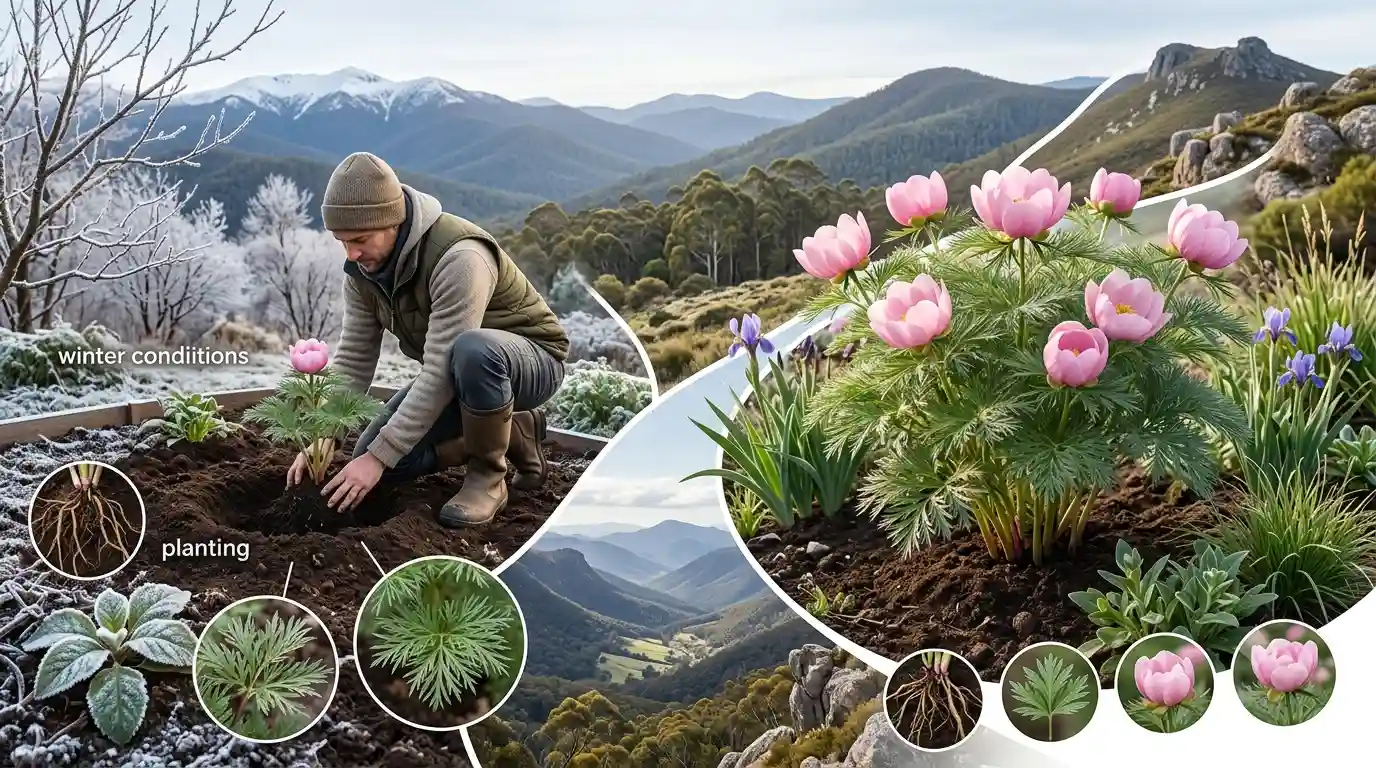
Pink fern leaf peonies can be grown successfully in Australia, particularly in cooler regions.
Best growing areas include:
- Tasmania
- Victoria
- NSW Highlands
- Cooler parts of South Australia
Winter chill remains essential for dependable flowering. In warmer climates, flowering may become inconsistent because dormancy requirements are reduced.
When purchasing plants, choose reputable specialist nurseries offering true-to-type Paeonia tenuifolia selections. In our experience, investing in healthy, established plants significantly improves long-term success compared with purchasing very small divisions.
While pink fern leaf peony is mainly suited to outdoor garden beds, understanding broader plant selection principles can help gardeners create balanced landscapes. Our Australian Plants Guide: Indoor Houseplants & Garden Design covers how different plants can be combined for attractive indoor and outdoor spaces.
Conclusion
Pink fern leaf peony is a distinctive herbaceous perennial valued for its finely divided foliage, compact habit, and elegant early-season blooms. Although it costs more than common peonies because of slow propagation and limited availability, its longevity and ornamental value make it an excellent investment. With full sun, free-draining soil, proper winter dormancy, and patience during establishment, gardeners can enjoy this remarkable species for decades. Purchasing plants from reputable specialist growers is the best way to ensure healthy, true-to-type specimens.
FAQs
Why are fern leaf peonies so expensive?
They are slow to propagate, require several years to mature, and are produced in limited numbers, making them rarer than common peonies.
Is a fern leaf peony a perennial?
Yes. Fern leaf peonies are herbaceous perennials that return each spring after winter dormancy.
Are fern peonies real?
Yes. Fern leaf peonies are the genuine species Paeonia tenuifolia, native to Eastern Europe and Russia.
Do fern peonies attract ants?
Yes, but ants feed only on nectar found on flower buds and do not harm the plant.
What is the best month to plant peonies?
Autumn is generally the best time because roots establish before winter dormancy.
Can you divide a fern leaf peony?
Yes. Mature plants can be divided during autumn, although they grow and recover more slowly than common peonies.
Do peonies do better in pots or in the ground?
For long-term health and flowering, peonies generally perform better in the ground where their roots have sufficient space to develop.