

Best Citrus Trees for Pots in Australia (By Climate Zone)
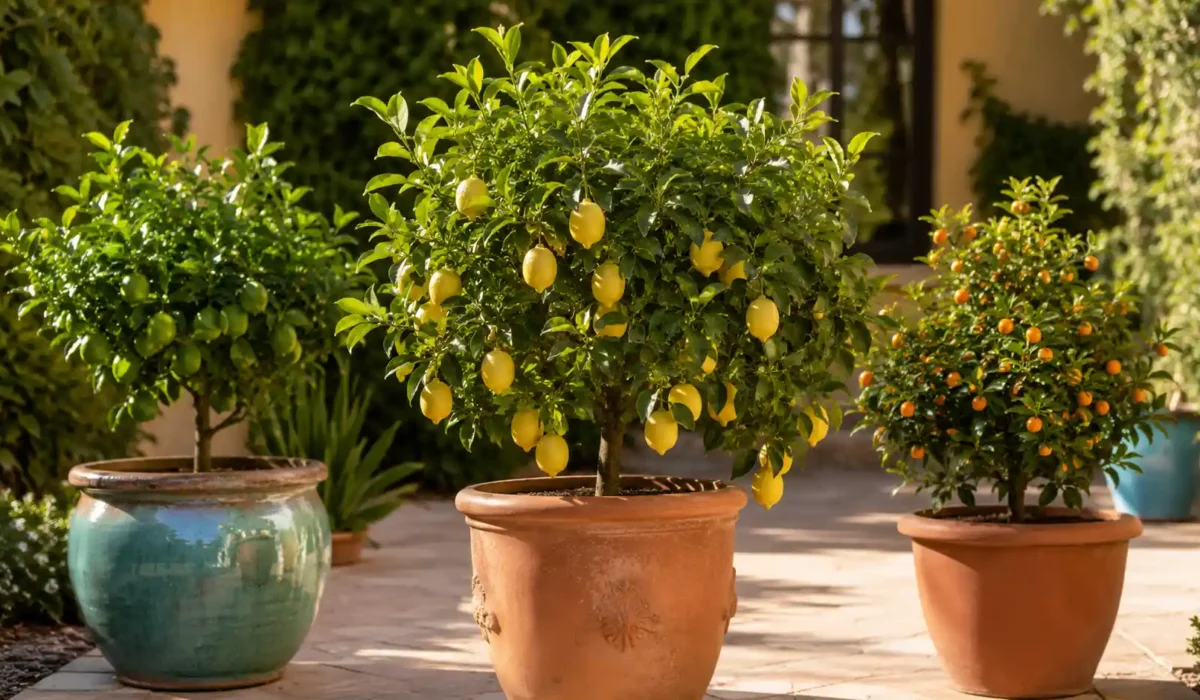
According to Elemo Baker, the best citrus trees for Australian pots are dwarf varieties grafted onto Flying Dragon rootstock: Dwarf Meyer lemon, kumquat, Tahitian or Bearss lime, and Emperor mandarin. Choose a pot at least 40-50cm wide with excellent drainage, use premium citrus potting mix, and position in six or more hours of full sun daily.
Flying Dragon rootstock keeps trees to roughly half their normal size and often speeds up fruiting by a year or two, unlike seed-grown citrus, which can take years and won’t grow true to the parent variety. Kumquats tolerate part-shade better than other citrus, making them a fallback for less sunny courtyards, while Meyer lemons cope best with Australia’s cooler southern winters. If you’re still deciding whether citrus is the right starting point, our guide to dwarf fruit trees for pots in Australia covers the wider shortlist before you commit.
By Elemo Baker | Plant Care & Gardening Expert
Quick summary:
- Citrus variety choice should be matched to your climate zone first — tropical, subtropical, temperate or cool/frost-prone — not chosen on taste alone.
- The minimum viable pot size for a dwarf citrus is 100L, not the 40cm pot many guides suggest; standard-rootstock trees need closer to 200L.
- Rootstock (like the popular dwarfing “Flying Dragon”) matters far more in open ground than in a container, where the pot itself does much of the size-limiting work.
- Grafted trees fruit within 2–3 years; seed-grown citrus can take 7+ years and won’t grow true to the parent variety.
Which Citrus Actually Thrives in a Pot Where You Live?
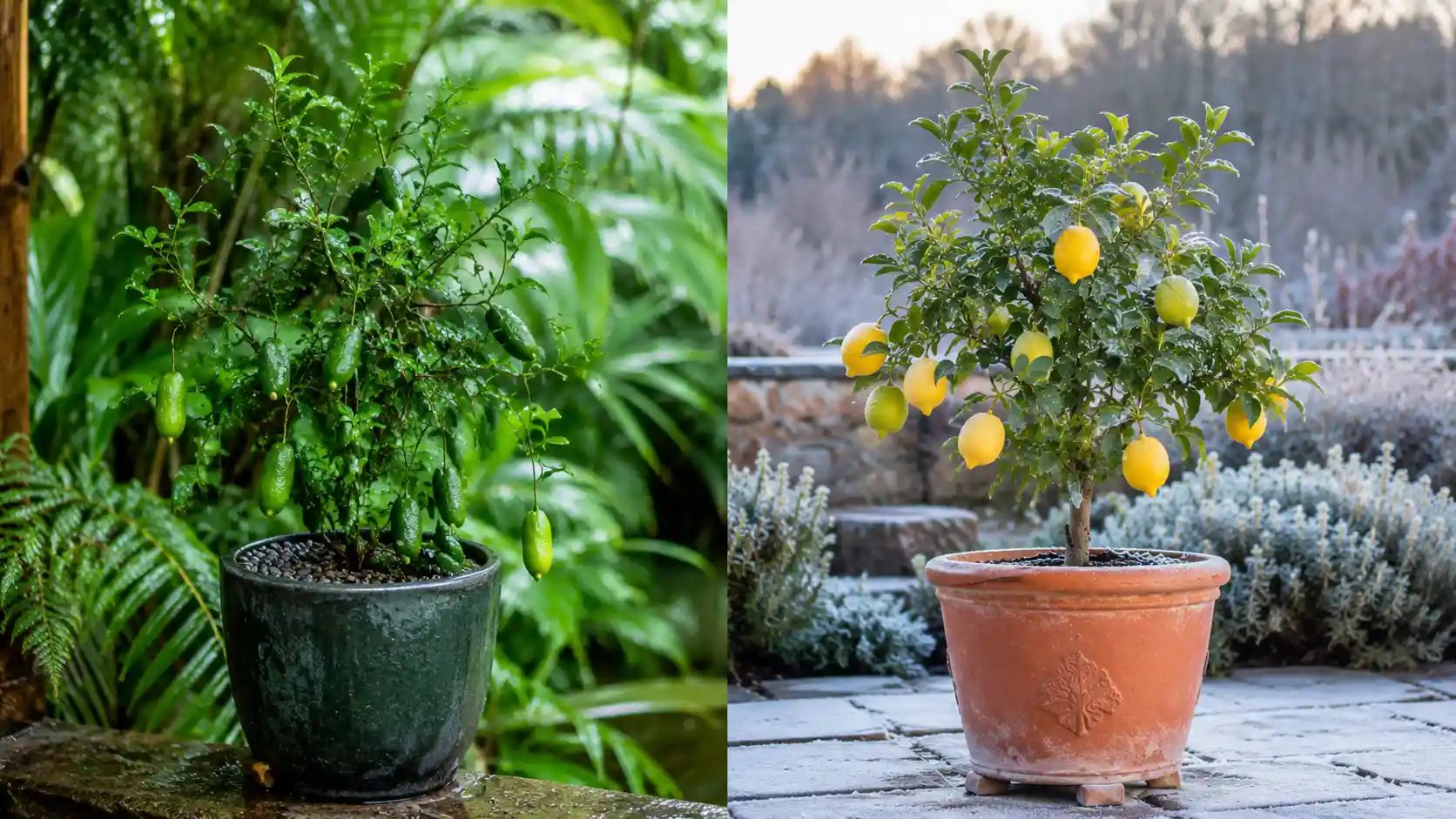
The single biggest reason potted citrus underperforms isn’t poor care — it’s a variety chosen for the wrong climate. A pot offers less thermal buffering than open soil, so cold sensitivity, heat tolerance and humidity needs matter more in a container than they do for the same tree planted in the ground.
Climate-zone matrix:
| Climate zone | Best-fit varieties | Recommended rootstock | Key limitation |
| Tropical & subtropical (Cairns, Darwin, Brisbane) | Finger lime, kaffir/makrut lime, pomelo, West Indian (Key) lime | Trifoliata or Flying Dragon | High humidity can encourage fungal leaf issues |
| Temperate (Sydney, Melbourne, Adelaide, Perth) | Meyer lemon, Eureka or Lisbon lemon, Tahitian lime, Imperial or Emperor mandarin | Flying Dragon | Needs a full-sun, sheltered position |
| Cool & frost-prone (Canberra, Tasmania, inland/highland areas) | Meyer lemon (most cold-tolerant), cumquats | Flying Dragon | Needs to be moveable for winter shelter |
Meyer lemon and cumquats are the closest thing to an “anywhere in Australia” pick, tolerating a wider temperature range than most citrus. Finger lime and kaffir lime, by contrast, want consistent warmth and sulk badly through a cold southern winter in a pot. Not sure which lemon suits you — see our Eureka lemon vs Meyer lemon comparison for the practical differences in flavour, hardiness and pot performance.
Rootstock — Does It Even Matter in a Pot?
Most retail advice tells you to look for citrus grafted onto a dwarfing rootstock like “Flying Dragon” before you buy. That advice is correct for open ground — but it’s worth knowing that not everyone agrees it matters once a tree is container-grown. Gardening Australia’s Ian Tolley has argued that dwarfing rootstock is largely wasted effort in a pot, because the container itself already restricts root volume and does the size-limiting job that the rootstock does in the ground. Rootstock refers to the root system a fruiting variety is grafted onto — a technique used to control vigour, size and disease resistance independently of the fruiting variety itself.
The practical middle ground: rootstock still affects vigour, disease resistance and how forgiving a tree is of erratic watering, so it’s not irrelevant. But it isn’t the main lever controlling size in a container — pot volume is. If you’re choosing between two otherwise-similar grafted trees, rootstock is a reasonable tiebreaker, not the decision.
Grafted vs Seed-Grown — Why It Matters for Pot Performance
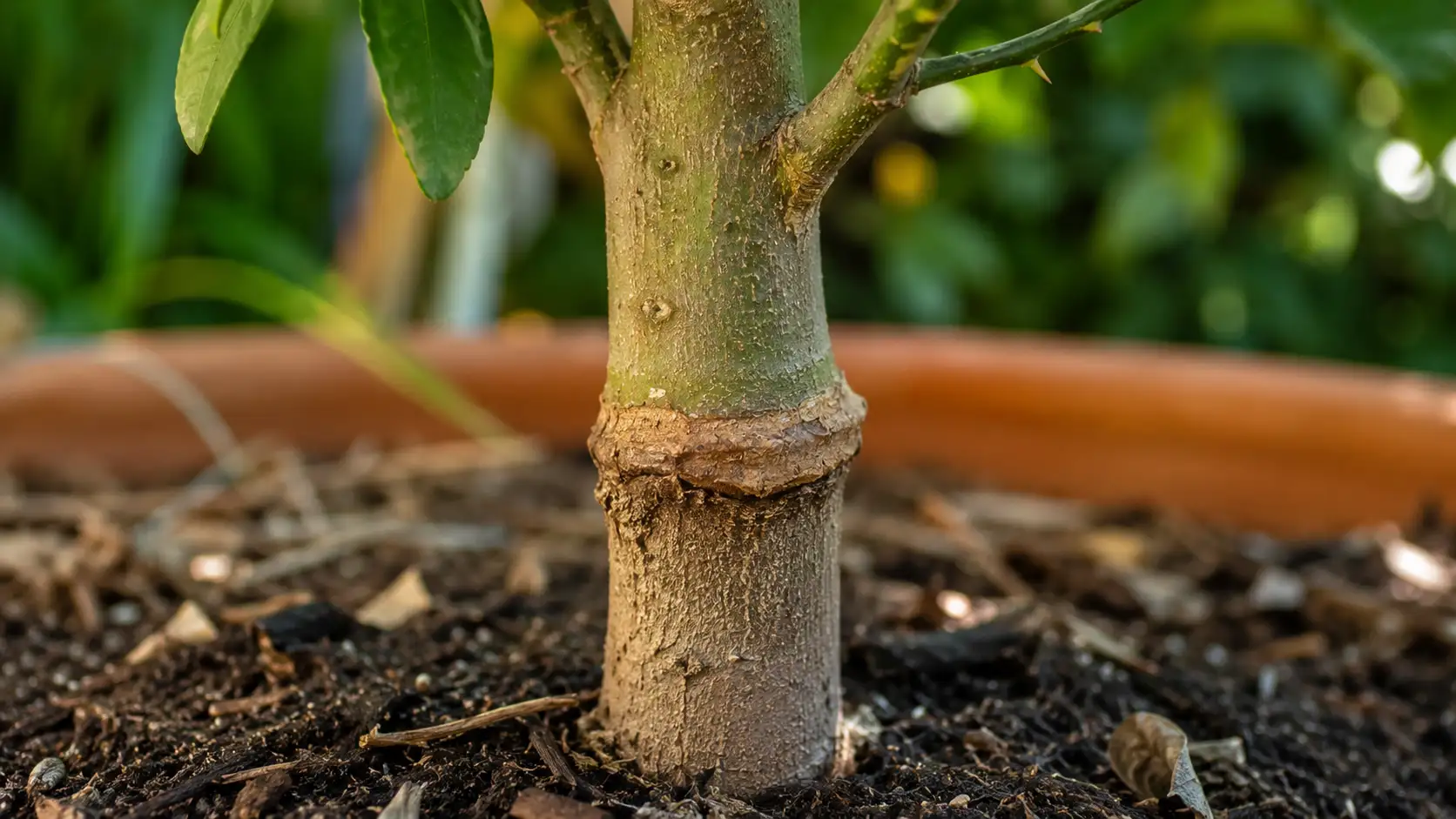
Buy a grafted, named-variety tree — not a seed-grown one. Seed-grown citrus can take seven or more years to produce fruit and, because citrus doesn’t reliably grow true from seed, you may not even get fruit resembling the parent plant. A two-to-three-year-old grafted tree from a reputable nursery will typically fruit within a couple of years and gives you a predictable, known variety.
When you’re at the nursery, look for the graft union — a visible knob or angled scar low on the trunk — and check the plant tag for a rootstock name. A tag listing only the fruiting variety with no rootstock reference is often (though not always) seed-grown or ungrafted stock.
What Pot Size Do You Actually Need?
Undersized pots are the single most common reason potted citrus stalls. A cramped root system can’t support the canopy or fruit load, regardless of how well you feed it.
Pot-size progression:
| Stage | Pot size | Typical timeframe |
| Starter (young grafted tree) | Nursery pot or ~40–60cm diameter | Year 0–2 |
| Establishing | 100L minimum (dwarf/Flying Dragon rootstock) | Year 2–5 |
| Long-term maturity | Up to 250L | Year 5+ |
Trees on standard (non-dwarfing) rootstock need closer to 200L rather than 100L at the establishing stage. (For the fuller logic behind matching container volume to root-ball size across species, see our container and root-sizing guide.)
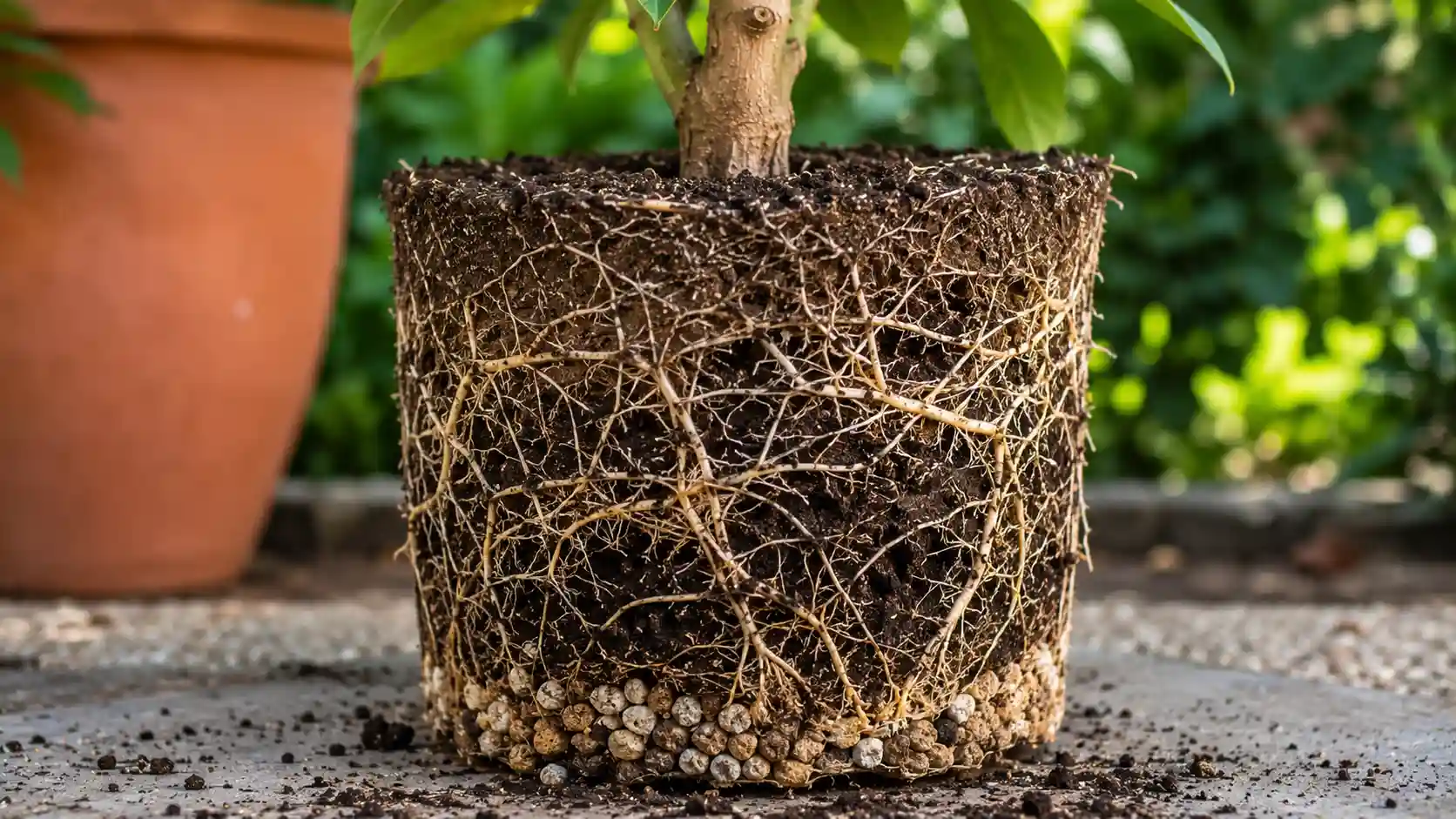
Repot when roots begin circling the base of the pot or the potting mix has visibly slumped and lost volume — usually every two to three years — rather than on a fixed yearly schedule.
Potting Mix, Drainage and Feeding
Citrus are shallow-rooted and heavy feeders, and both problems — waterlogging and nutrient starvation — happen faster in a pot than in open ground.
- Use a free-draining, citrus-specific potting mix (or a coir-pine bark-perlite blend with added compost).
- Drill or check for multiple drainage holes; a single central hole is rarely enough for a large container.
- Feed with a citrus-specific fertiliser roughly every four to six weeks through the growing and fruiting season, tapering off over winter.
- Watch for pale, yellowing new growth as an early sign of nitrogen or trace-element deficiency — container plants exhaust nutrients in their mix faster than garden soil replenishes them.
For a deeper breakdown of NPK ratios and feeding schedules beyond citrus, see our Australian garden soil and fertiliser guide.
Sun, Position and Cold Protection
Citrus require at least 6 hours of direct sunlight a day and would benefit from morning/early afternoon sun. Root surface in containers is much more exposed to temperature changes than the root surface of plants in the ground because the temperature of the pot wall will rise and fall rapidly compared to the surrounding soil — and this could result in heat stress and frost damage to potted citrus before in-ground citrus plants.
On cool or frosty nights, or in cooler or frost prone regions, keep citrus in a pot that can be moved (shifted), such as against a warm, sheltered wall, or under frost cloth, or under frost cloth and shifted, rather than depending on the position to keep citrus from being harmed by frost.
How Long Until First Fruit, and Keeping Size in Check
A grafted, container-grown citrus can begin to bear fruits in 2 to 3 years. In the pot, pruning is primarily for size and shape and is not a means of promotion or encouraging fruit production; excessive pruning for the sake of fruit production often results in fewer fruits. Prune lightly after main harvest to manage size, dead or crossing growth and to refrain from heavy pruning in late autumn and winter, when new growth could be exposed to cold.
Growing a cumquat specifically?
Our dedicated kumquat pruning guide covers timing and method in more detail than the general rules above.
Common Potted Citrus Problems
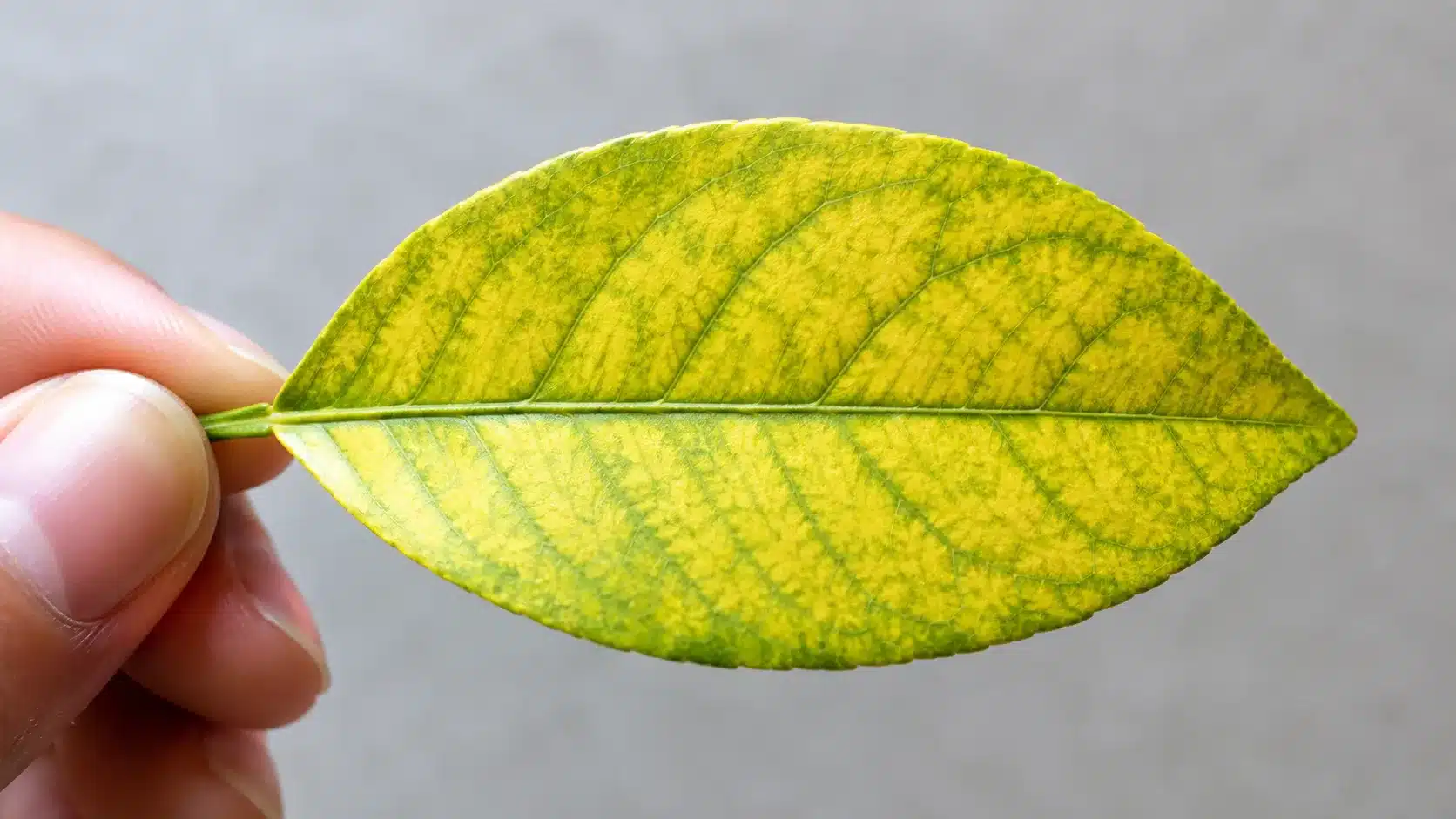
- Yellowing leaves: Often confused as one problem, but overwatering and nitrogen or magnesium deficiency look similar. Check drainage and soil moisture first — soggy mix points to overwatering; deficiency symptoms usually show as yellowing between the leaf veins rather than the whole leaf.
- Poor fruit set: Usually insufficient sun, inconsistent feeding during flowering, or limited pollinator access on an enclosed balcony.
- Root-bound decline: A pot-specific problem — roots circling the container base restrict water and nutrient uptake even when care is otherwise correct. The fix is repotting, not more feeding.
- Citrus leaf miner and gall wasp: Common on stressed or overcrowded citrus; prevention through healthy, unstressed growth matters more than reactive spraying.
Beginner Mistakes That Kill Potted Citrus
- Starting in a pot that’s too small and never sizing up
- Buying seed-grown stock without realising it
- Skipping drainage checks on an otherwise attractive pot
- Under-feeding once fruit sets, when nutrient demand is highest
- Ignoring early root-bound signs until the tree has already declined
Conclusion
There’s no single citrus tree that’s the best fit for a pot in Australia, it depends on the climate zone in which you live and will be whichever variety is suitable, planted in a pot that can accommodate it for long-term years. Zone to variety first, then size pot properly from the beginning (100L minimum, up to 250L), and assume feeding and watering are a container gardening activity instead of a garden activity. Once the sequence is correct, a potted citrus will bear for more than 10 years. This guide sits within our broader Fruit Trees and Edible Plants for Australian Gardens pillar, covering variety selection, care and troubleshooting across the site’s edible-plant content.
FAQs
What is the best citrus tree to grow in a pot in Australia?
Meyer lemon and cumquats are the most reliably successful across the widest range of Australian climates, tolerating more cold and inconsistency than lime or mandarin varieties.
Do I need a dwarf rootstock for potted citrus?
It helps but matters less than in open ground — the pot itself limits root volume and size. Rootstock is more relevant to vigour and disease resistance than to keeping the tree small.
What is the minimum pot size for a citrus tree?
100L for a dwarf variety on dwarfing rootstock; closer to 200L for standard rootstock.
How long does a potted citrus tree take to fruit?
A grafted tree typically fruits within two to three years; seed-grown citrus can take seven years or more.
Why are my potted citrus leaves turning yellow?
Usually overwatering/poor drainage or a nitrogen or magnesium deficiency — check soil moisture before assuming it’s a feeding issue.
Can citrus trees survive frost in pots?
Most varieties struggle with hard frost, but a pot’s portability is an advantage — move it to a sheltered spot or against a warm wall over winter.
How often should I repot a citrus tree?
Every two to three years, or when roots visibly circle the pot base or the potting mix has slumped and lost volume — not on a fixed annual schedule.
1 Comment