

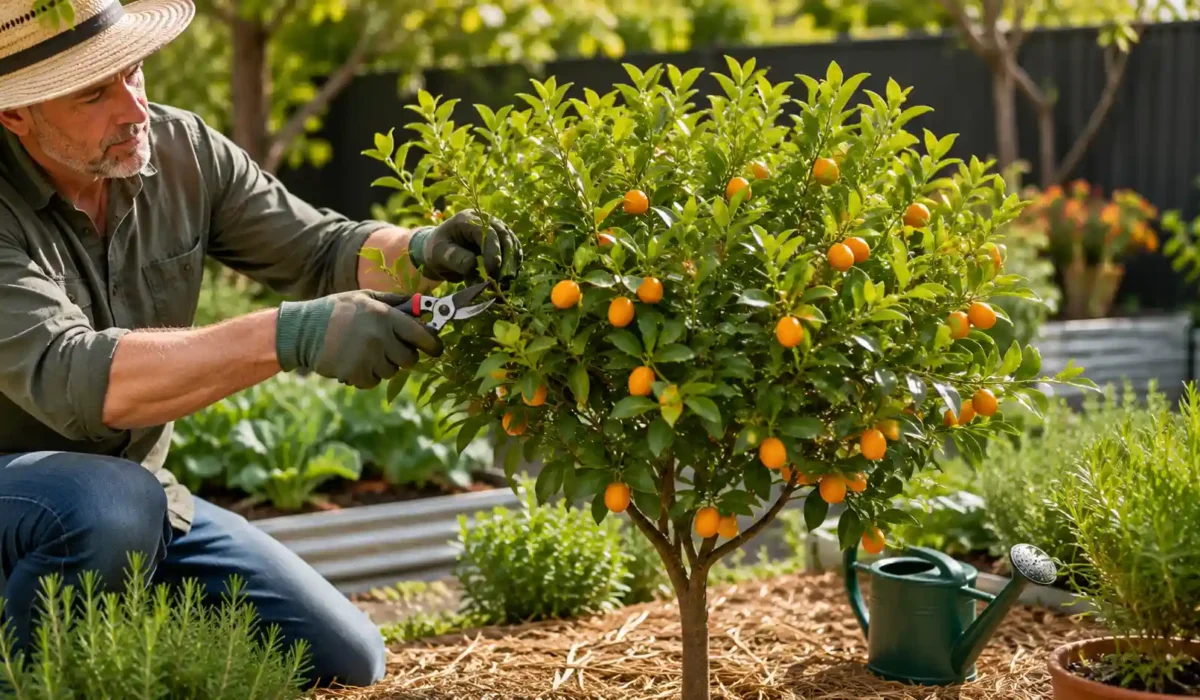
How to Prune a Kumquat Tree: Timing & Methods
Introduction
Knowing how to prune a kumquat tree involves using light, selective cuts rather than heavy structural pruning. A kumquat tree generally needs less pruning than many other citrus trees, but correct timing and technique help maintain airflow, sunlight exposure, shape, and long-term fruiting health. The best approach is to remove only unnecessary growth, including dead, damaged, diseased, or crossing branches, while protecting productive fruiting wood. In Australian gardens, kumquat pruning is usually carried out after harvesting and before the spring growth flush. Avoiding excessive cutting helps the tree remain productive, healthy, and naturally shaped.
Quick Summary
- Kumquat trees need only light, selective pruning — heavy cutting is unnecessary and may reduce fruit production.
- The best pruning time is usually straight after harvest and before spring flowering, typically late winter to early spring in most Australian regions.
- Remove dead, damaged, diseased, crossing branches, and suckers growing below the graft.
- Avoid removing more than 20–30% of the canopy in one pruning session.
Why Prune a Kumquat Tree?
A kumquat tree does not strictly require pruning to produce fruit, but light pruning improves its overall health, structure, and productivity. Kumquats naturally develop a compact growth habit, and excessive pruning can remove valuable fruiting branches.
Kumquats are one of many productive plants suitable for Australian gardens, and choosing the right varieties is important when planning a home orchard. For more ideas, explore our guide to fruit trees for Australian gardens and learn which species perform well in different climates.
Pruning a kumquat tree is mainly done to improve airflow, allow sunlight to reach inner branches, maintain a manageable size, and prevent overcrowded growth. These benefits are especially important for potted kumquat trees, where limited space can quickly lead to dense foliage.
When caring for a kumquat tree, selective pruning helps create a balanced canopy while encouraging strong new growth. In our experience growing citrus plants, kumquats respond best when gardeners avoid aggressive shaping and focus on small maintenance cuts each year.
Key benefits of pruning include:
- Improved airflow: Removing crowded branches reduces humidity inside the canopy and lowers the risk of fungal problems.
- Better sunlight penetration: Light reaches more leaves and developing fruit when the canopy is not overly dense.
- Disease prevention: Removing damaged or infected wood helps stop problems from spreading.
- Better shape control: Regular light trimming keeps trees attractive and easier to manage.
- Renewal of fruiting wood: Removing weak growth allows the plant to focus energy on stronger branches.
Kumquat trees (Citrus japonica or Fortunella in older classifications) belong to the Rutaceae family, the same botanical family as other citrus plants. You can also learn more about the botanical history and classification of kumquats through the Wikipedia overview of kumquat. Unlike some vigorous citrus varieties, kumquats usually maintain a naturally smaller form, making them suitable for gardens and containers.
When to Prune a Kumquat Tree
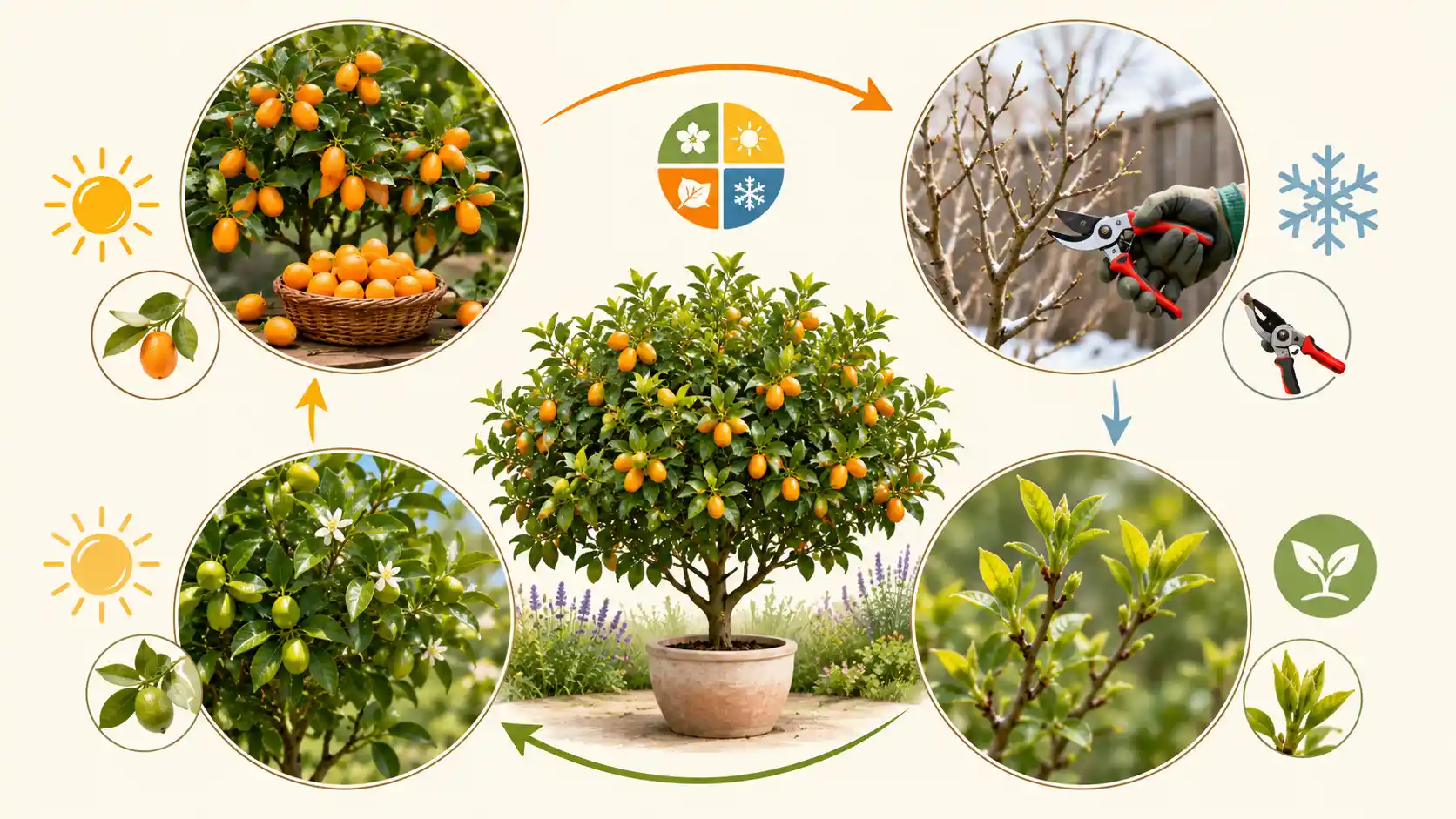
The best time to prune a kumquat tree is generally after the fruit harvest and before the spring growth flush begins. In most parts of Australia, this means late winter to early spring, depending on local climate conditions. Citrus pruning timing is often linked to harvest cycles, and the same seasonal approach applies to many backyard fruit trees. Understanding fruiting periods, such as when mulberry trees produce fruit in Australia, can help gardeners plan their seasonal maintenance tasks.
Pruning after harvest allows gardeners to remove unnecessary growth without interfering with the main fruiting cycle. It also gives the tree time to heal pruning wounds before producing new seasonal growth.
The kumquat fruiting season varies by climate, but many Australian-grown kumquats produce fruit from late autumn through winter. Pruning immediately after fruiting allows the tree to redirect energy into healthy new shoots.
Correct timing is important because pruning at the wrong time may:
- Remove developing flower buds.
- Encourage soft new growth during frost periods.
- Stress the tree during extreme heat.
- Reduce the next season’s fruit production.
Elemo Baker recommends checking local seasonal conditions rather than following a fixed calendar date. A warm coastal garden and a frost-prone inland area may require slightly different pruning schedules.
Kumquat Pruning Times by Region
| Region | Best Pruning Window | Key Consideration |
| NSW / Sydney | Late winter to early spring after harvest | Avoid pruning during sudden cold periods; mild winters allow flexible timing. |
| VIC / Melbourne | Late winter to early spring | Protect fresh cuts from frost and delay pruning if severe cold is expected. |
| WA / Perth | Winter to early spring | Consider dry conditions and avoid pruning during heat stress periods. |
| Subtropical / Tropical Zones (QLD, NT) | After main harvest or during cooler months | Avoid humid wet periods when disease pressure is higher. |
When Not to Prune Kumquat or Citrus Trees
Avoid pruning kumquat or other citrus trees during periods when the plant is under stress or actively producing important growth.
Do not prune during:
- Heavy flowering periods: Cutting branches during flowering may remove potential fruiting sites.
- Active fruit development: Removing healthy branches can reduce the current crop.
- Heatwaves: Extreme temperatures increase moisture loss and stress after pruning.
- Frost-risk periods: Fresh cuts and new growth can be damaged by freezing temperatures.
For citrus trees generally, including lemons, oranges, and limes, the same principle applies: prune when the tree is healthy and actively able to recover, rather than during environmental stress.
How to Prune a Kumquat Tree Step-by-Step
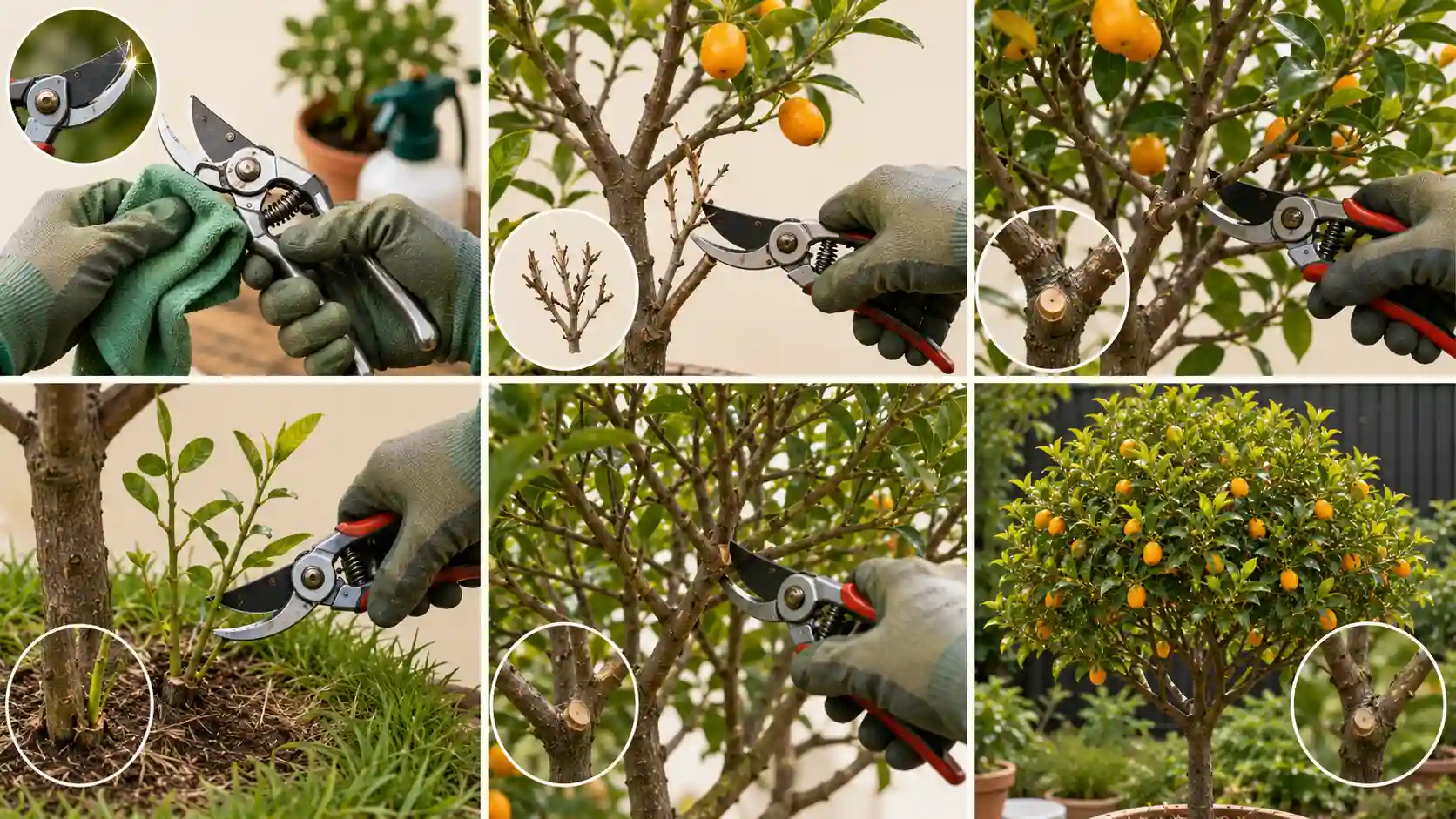
Learning how to prune a kumquat tree correctly involves making small, intentional cuts rather than removing large sections of the canopy. The goal is to improve the tree’s structure while keeping as much healthy fruiting wood as possible.
Before pruning, gather clean, sharp tools such as bypass secateurs for small branches and pruning saws for thicker limbs. Disinfecting tools before and after cutting helps reduce the spread of citrus diseases.
Follow these steps when pruning a kumquat tree:
- Disinfect pruning tools
Clean secateurs and saw blades before cutting. Dirty tools can transfer fungal or bacterial pathogens between plants. - Remove dead, damaged, diseased, and crossing branches
Start with the “3 D’s” of pruning:- Dead branches that no longer contribute to growth.
- Damaged branches caused by storms, pests, or mechanical injury.
- Diseased wood showing signs of infection.
- Also remove branches that rub against each other because constant friction can create wounds.
- Remove suckers and water sprouts
Remove vigorous shoots growing from below the graft union. These suckers usually come from the rootstock and do not produce desirable kumquat fruit.
Water sprouts are fast-growing vertical shoots that often appear after stress or previous heavy pruning. They usually create weak growth and overcrowding. - Thin crowded interior growth
Remove selected inner branches to open the centre of the canopy. Better airflow and light penetration help maintain healthier foliage and improve fruit development. - Lightly shape the canopy
Trim uneven growth to maintain a balanced, natural shape. Avoid forcing the tree into an artificial shape through excessive cutting. - Clean up after pruning
Remove fallen leaves, infected branches, and pruning debris from around the tree. Diseased material should not be left near the plant because it may encourage pest or disease problems.
A common mistake beginners make is treating kumquats like ornamental hedges and trimming them heavily. In practice, kumquat trees usually perform better when gardeners make small annual adjustments rather than major cuts every few years.
What is the 1/2/3 Rule of Pruning?
The 1/2/3 rule of pruning is a general horticultural guideline that helps gardeners make safer pruning decisions. It refers to removing no more than around one-third of the tree’s growth at a time, avoiding branches that are too large compared with the remaining structure, and prioritising the removal of unhealthy growth first.
For kumquat trees, this guideline should be applied conservatively because they naturally require minimal pruning. Removing approximately one-third of the canopy is usually considered the upper limit, not a target.
A safer order is:
- Remove dead, damaged, and diseased wood first.
- Remove unwanted suckers and crossing branches.
- Thin crowded areas only if needed.
- Make minor shaping cuts last.
Heavy pruning can reduce fruiting because kumquat trees produce fruit on healthy mature growth. Preserving productive branches should always be the priority.
How Far Back Can You Prune a Citrus Tree?
A citrus tree should generally not have more than 20–30% of its canopy removed in one pruning session. Kumquats often need even less because they naturally stay compact and respond well to light maintenance.
When making cuts:
- Cut just outside the branch collar, the slightly swollen area where a branch connects to the trunk or larger branch.
- Do not leave long stubs because they heal slowly and can attract pests.
- Do not cut into the branch collar because this damages the tree’s natural healing zone.
Kumquats differ from vigorous citrus such as lemons because they usually do not need aggressive size reduction. Lemon trees often produce long shoots that require more regular shaping, while kumquats generally need only selective thinning.
Pruning Kumquat Trees in Pots vs in the Ground
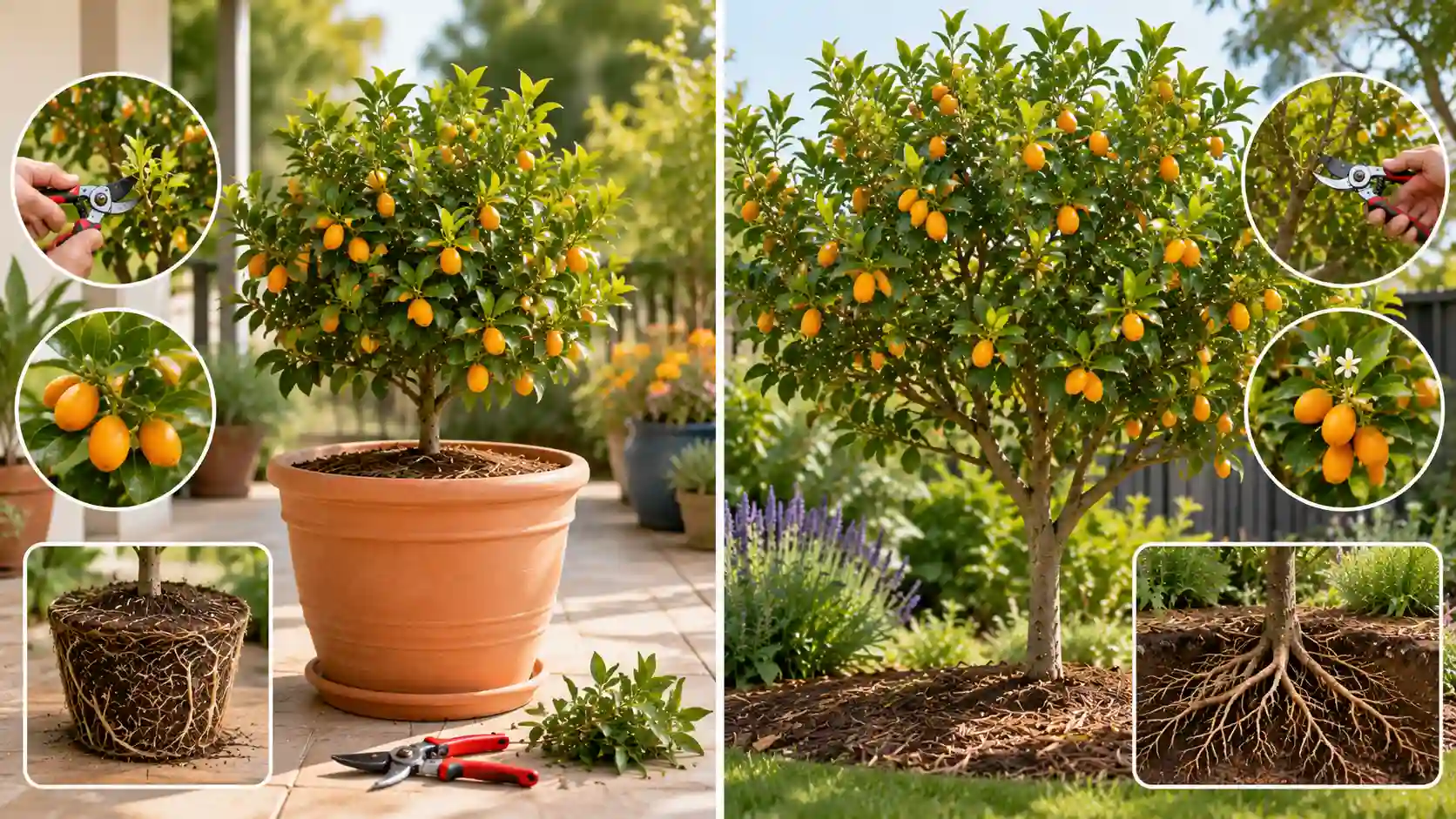
Pruning requirements differ depending on whether a kumquat tree grows in a container or directly in garden soil. A potted kumquat tree usually needs more frequent light maintenance because its available root space limits natural growth.
| Feature | Kumquat Tree in Pots | Kumquat Tree in Ground |
| Pruning frequency | Light trimming more regularly | Usually once after harvest or as needed |
| Main goal | Control size and maintain shape | Improve structure and airflow |
| Growth limitation | Restricted by container size | More space allows larger growth |
| Common issue | Root-bound growth and overcrowding | Excessive canopy density |
Growing kumquats in pots requires balancing foliage growth with the container’s limited root system. When roots become crowded, the tree may show slower growth, yellowing leaves, or reduced fruit production.
In-ground kumquat trees generally have more freedom to develop a natural canopy. Pruning focuses more on removing unwanted branches rather than restricting overall size.
How to Keep a Kumquat Tree Small
To keep a kumquat tree small, combine container management with regular light pruning. The goal is controlled growth rather than severe cutting.
Helpful methods include:
- Growing the tree in a suitably sized pot.
- Removing long shoots before they become thick branches.
- Trimming lightly after harvest each year.
- Root pruning during repotting when the plant becomes root-bound.
- Avoiding excessive fertiliser that encourages weak, rapid growth.
A healthy small kumquat tree should still have enough leaves to support fruit production. Removing too much foliage can weaken the plant and reduce future harvests.
Comparing Kumquat Pruning to Other Citrus
Kumquat pruning is generally lighter than pruning many other citrus varieties. While all citrus trees benefit from removing damaged growth and improving airflow, their growth habits affect how much pruning they require.
| Citrus Type | Pruning Frequency | Canopy Removal | Ideal Timing | Growth Habit |
| Kumquat | Light annual maintenance | About 20–30% maximum | After harvest before spring growth | Compact, naturally bushy |
| Lemon | Regular shaping may be needed | Moderate pruning when required | After fruiting or late winter | Vigorous, spreading growth |
| Orange | Occasional maintenance | Light to moderate | After harvest or before active growth | Rounded canopy |
| Lime | Regular light trimming | Light annual pruning | After harvest or cooler periods | Fast-growing, dense growth |
For gardeners researching when to prune lemon trees in Melbourne, when to prune lemon trees in Perth, or when to prune citrus trees in Australia, the same general principles apply: avoid stressful periods, remove unhealthy wood first, and maintain a balanced canopy.
While kumquats require minimal pruning, other citrus varieties may have different growth habits and maintenance needs. Gardeners comparing citrus options can also learn more through our guide on Eureka lemon vs Meyer lemon differences.
Lemon trees often require more attention because they produce vigorous shoots, while kumquats naturally need less intervention.
Common Pruning Mistakes to Avoid
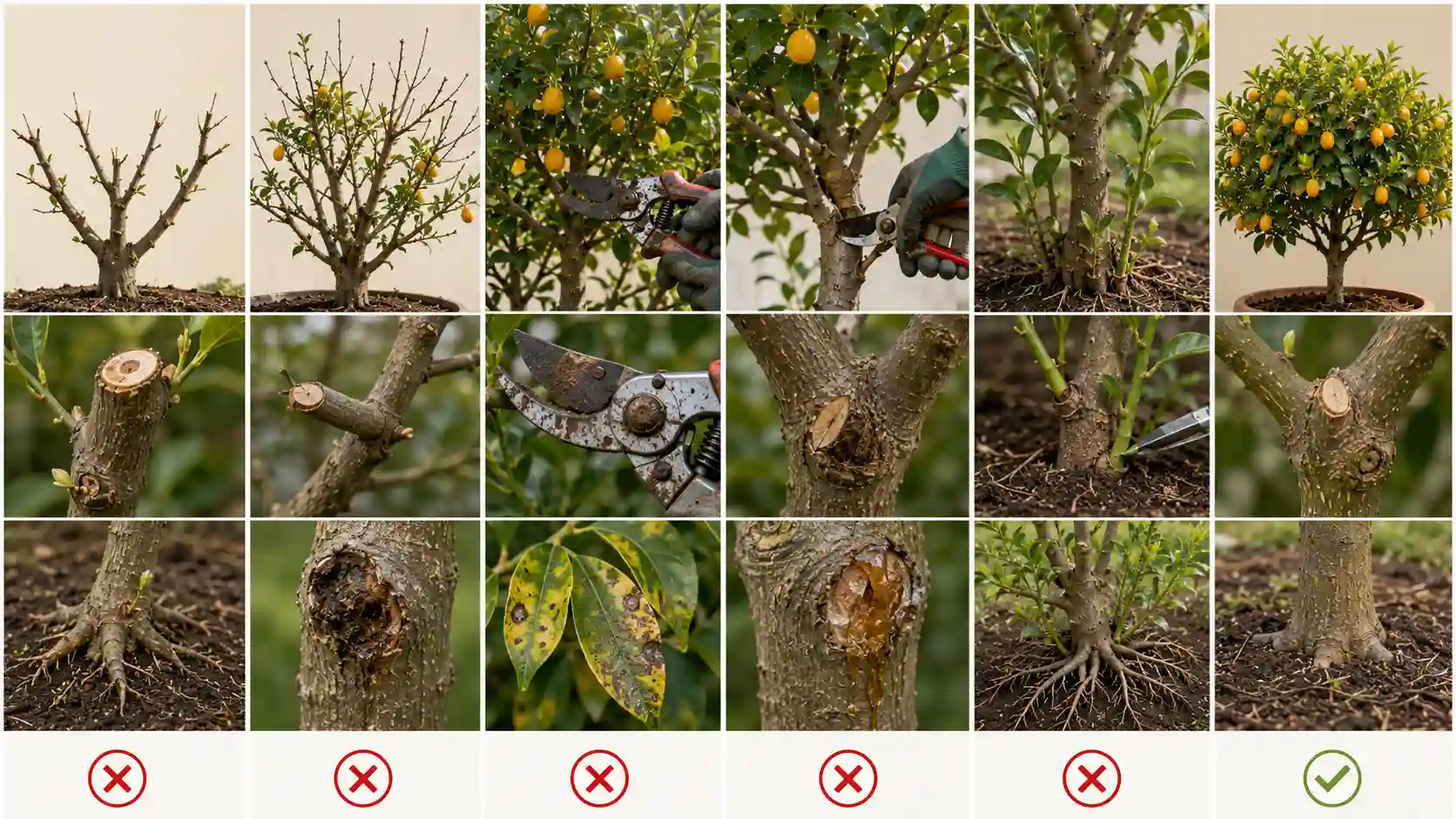
Correct pruning protects a kumquat tree’s health, but poor techniques can reduce fruit production, encourage disease, or permanently damage the plant. The biggest pruning mistake is removing too much growth at once. Kumquats rely on healthy leaves and mature branches to produce energy for flowering and fruiting.
Common mistakes include:
- Over-pruning or giving an “all-over haircut”
Topping or removing large sections of the canopy is not recommended for kumquat trees. Cutting off nearly all branches can severely stress the tree because it removes the leaves needed for photosynthesis. In extreme cases, stripping the entire tree can lead to decline or death. - Leaving branch stubs
Long stubs left after pruning do not heal properly and can become entry points for pests and diseases. Cuts should be made close to the branch collar without damaging it. - Pruning during flowering or fruiting
Removing branches during active flowering or fruit development can reduce the next harvest because productive growth may be removed. - Using dirty tools
Unclean pruning tools can spread pathogens between citrus plants. Always disinfect blades before and after pruning, especially when removing diseased branches. - Ignoring suckers below the graft
Rootstock suckers can grow quickly and compete with the kumquat variety above the graft. These shoots should be removed early. - Cutting the branch collar
The branch collar contains natural protective tissues that help the tree seal pruning wounds. Cutting into this area slows healing and increases the risk of decay.
The only form of pruning generally not recommended for citrus trees is unnecessary severe pruning, especially topping. Citrus trees respond best to selective maintenance rather than drastic reshaping.
Common Kumquat Tree Problems and Pruning-Related Fixes
Many kumquat tree problems are linked to growing conditions, but pruning can help prevent some issues by improving airflow and removing damaged growth. Correct identification is important because pruning alone will not solve every plant problem.
Yellowing Leaves
Yellow leaves on a kumquat tree may result from:
- Overwatering.
- Poor drainage.
- Nutrient deficiencies.
- Root stress.
Pruning may improve airflow around the foliage, but the main solution is correcting the growing environment. Kumquats prefer well-draining soil and should not remain waterlogged.
Citrus Gall Wasp Swellings
Citrus gall wasp can cause swollen areas on young citrus branches. In affected regions, pruning and removing infested branches before adult wasps emerge can help reduce future infestations.
Dispose of affected material properly rather than leaving it near the tree.
Slow Growth or Poor Fruiting After Incorrect Pruning
A kumquat tree that has been heavily pruned may produce excessive leafy growth but fewer flowers and fruit. This happens because the tree needs time to rebuild its foliage and energy reserves.
The solution is patience, balanced feeding, adequate sunlight, and avoiding further heavy pruning until the tree recovers.
Pest Issues from Overcrowded Canopies
Dense foliage can create hiding places for pests such as:
- Aphids.
- Scale insects.
- Citrus leaf miner.
Selective thinning improves visibility and airflow, making pest monitoring easier. However, pruning should support pest management rather than replace proper treatment methods. Pruning can improve airflow and make pests easier to detect, but identifying the exact pest is important for effective control. Our garden pest identification guide for Australian gardens explains common garden pests and their signs.
Do Coffee Grounds or Epsom Salts Help Kumquat Trees?
Coffee grounds and Epsom salts are common home gardening topics, but they should not replace proper citrus nutrition.
Coffee grounds contain organic matter and small amounts of nitrogen. They may contribute to soil improvement when composted, but adding large amounts directly around citrus trees can create imbalanced soil conditions.
Epsom salts provide magnesium and sulphur, which are nutrients involved in plant processes. They may help when a genuine magnesium deficiency exists, but routine use is not always necessary.
For reliable kumquat nutrition, a balanced citrus fertiliser designed for citrus plants is generally the more dependable option. Soil testing and observing plant symptoms are better approaches than applying supplements without a clear need.
Kumquat Tree Care Beyond Pruning
Pruning is only one part of maintaining a healthy kumquat tree. Good ongoing care supports strong growth, flowering, and fruit production. Similar to kumquats, many edible garden plants require balanced watering, feeding, sunlight, and seasonal maintenance. Gardeners interested in expanding their edible landscape can also explore our Feijoa tree Australia growing guide.
Important care requirements include:
- Watering: Keep soil consistently moist but avoid waterlogging. Container-grown kumquats usually need more frequent watering than established garden trees.
- Sunlight: Kumquats perform best with full sun, ideally receiving several hours of direct sunlight daily.
- Feeding: Apply a suitable citrus fertiliser during active growth periods according to label instructions.
- Frost protection: Young trees and potted plants may need protection from severe frost conditions.
As of 2026, Australian gardeners are increasingly focusing on climate-aware citrus care, including improving soil drainage, protecting roots from temperature extremes, and adjusting watering practices during hotter seasons.
Conclusion
Pruning a kumquat tree is a simple maintenance task based on timing, restraint, and careful selection rather than heavy cutting. The best approach is to prune after harvest and before spring growth begins, removing dead, damaged, diseased, or crossing branches while keeping healthy fruiting wood.
Learning how to prune a kumquat tree correctly helps maintain airflow, shape, and long-term productivity. For most Australian gardeners, light annual pruning combined with proper watering, sunlight, and feeding is enough to keep kumquat trees healthy.
The key takeaway is simple: remove what the tree does not need, protect productive branches, and avoid aggressive pruning.
Kumquat pruning follows the same core principles that apply across citrus and fruiting plants. Browse our full pruning and maintenance guide for tool selection, timing, and aftercare across every plant type.
FAQs
Should a kumquat tree be pruned every year?
A kumquat tree does not require heavy annual pruning, but light yearly maintenance can be beneficial. Removing dead, damaged, diseased, or overcrowded branches after harvest helps maintain a healthy structure.
What is the best month to prune a kumquat tree in Australia?
The best month depends on the region, but pruning is usually ideal from late winter to early spring after harvest and before new spring growth begins. In many Australian areas, this falls between August and September.
Can you prune a kumquat tree in summer?
Summer pruning is possible for small maintenance cuts, such as removing damaged branches or suckers, but major pruning should generally be avoided during hot weather because it can stress the tree.
Do kumquat trees need heavy pruning to fruit well?
No. Kumquat trees usually fruit well with minimal pruning. Heavy pruning can remove productive branches and reduce flowering and fruit development.
How do I stop my kumquat tree from getting too tall?
To keep a kumquat tree shorter, use regular light trimming, remove overly long shoots after harvest, grow it in an appropriate container if needed, and avoid allowing unwanted vertical growth to dominate.
Is it normal for a kumquat tree to drop leaves after pruning?
A small amount of leaf drop after pruning can occur because the tree is adjusting to reduced foliage. However, heavy leaf loss may indicate excessive pruning, watering problems, temperature stress, or another underlying issue.