

Plant Comparisons: Choosing Between Similar Plants (AU Guide)
You’re standing in front of two plants that look almost identical, or you’ve got two browser tabs open comparing varieties you’d never heard of a week ago — and you need to pick one. Maybe it’s two hedge plants that look the same size on the label but grow completely differently once they’re in the ground. Maybe it’s two lemon trees, two lychee varieties, or two houseplants that a nursery worker swears are “basically the same thing.”
They’re rarely the same thing.
Plant comparisons matter because the cost of getting them wrong isn’t small. A hedge that grows twice as fast as you expected means a pruning schedule you didn’t sign up for. A “pet-friendly” plant that turns out to be the toxic look-alike is a vet bill and a scare. A fruit tree chosen for the wrong Australian climate zone can sit in the ground for two years and never fruit. Most comparison guides online treat this as a trivia exercise — a quick table of differences and a shrug. We think it deserves more, because the decision you’re making isn’t “which plant is objectively better,” it’s “which plant is better for my garden, my climate, and my household.”
This guide does two things. First, it lays out the six factors that decide any plant comparison, so you can apply the same thinking whether you’re choosing between hedges, houseplants, or fruit trees. Second, it organises every specific comparison we’ve published — indoor plants, hedges, ornamentals, and fruiting varieties — into one place, so you can go straight to the pairing you’re actually trying to decide on. The verdicts and growing notes throughout are drawn from hands-on experience by our resident grower, Elemo Baker, rather than recycled from generic overseas plant guides that don’t account for Australian conditions.
Quick Summary
- Every plant comparison comes down to six factors: climate zone suitability, light and water needs, mature size and growth rate, toxicity and safety, care difficulty, and Australian availability or naming.
- Climate zone — tropical, subtropical, temperate, or arid — is usually the single biggest factor for Australian growers, and it’s the one most overseas comparison guides get wrong for our conditions.
- Plants that look alike or share a genus can still have very different mature sizes, growth speeds, and toxicity levels. Never assume similarity in appearance means similarity in care.
- We’ve published in-depth, numbers-based comparisons across indoor plants, hedges, ornamentals, and fruit trees — this page is the hub that links to all of them.
Why Plant Comparisons Matter Before You Buy
Most plant-buying mistakes don’t happen because someone picked a bad plant. They happen because someone picked the wrong one of two similar plants — and didn’t realise it until months later.
This shows up in a few predictable ways:
- Look-alike confusion. Two plants that look nearly identical at nursery size can diverge completely as they mature — different heights, different spreads, different sun tolerance.
- Naming confusion. Common names get reused loosely across Australian nurseries, and two genuinely different species can end up sold under the same casual label.
- Same-use substitution. Two plants marketed for the same job (a hedge, a houseplant, a shade tree) don’t always perform the same job equally well in your specific conditions.
Because these mix-ups are so common, we treat plant comparisons as their own content category on LeafyHeaven — not one-off posts, but a growing library. This page is the entry point: the framework first, then the full set of head-to-head comparisons.
The 6 Factors That Decide Any Plant Comparison
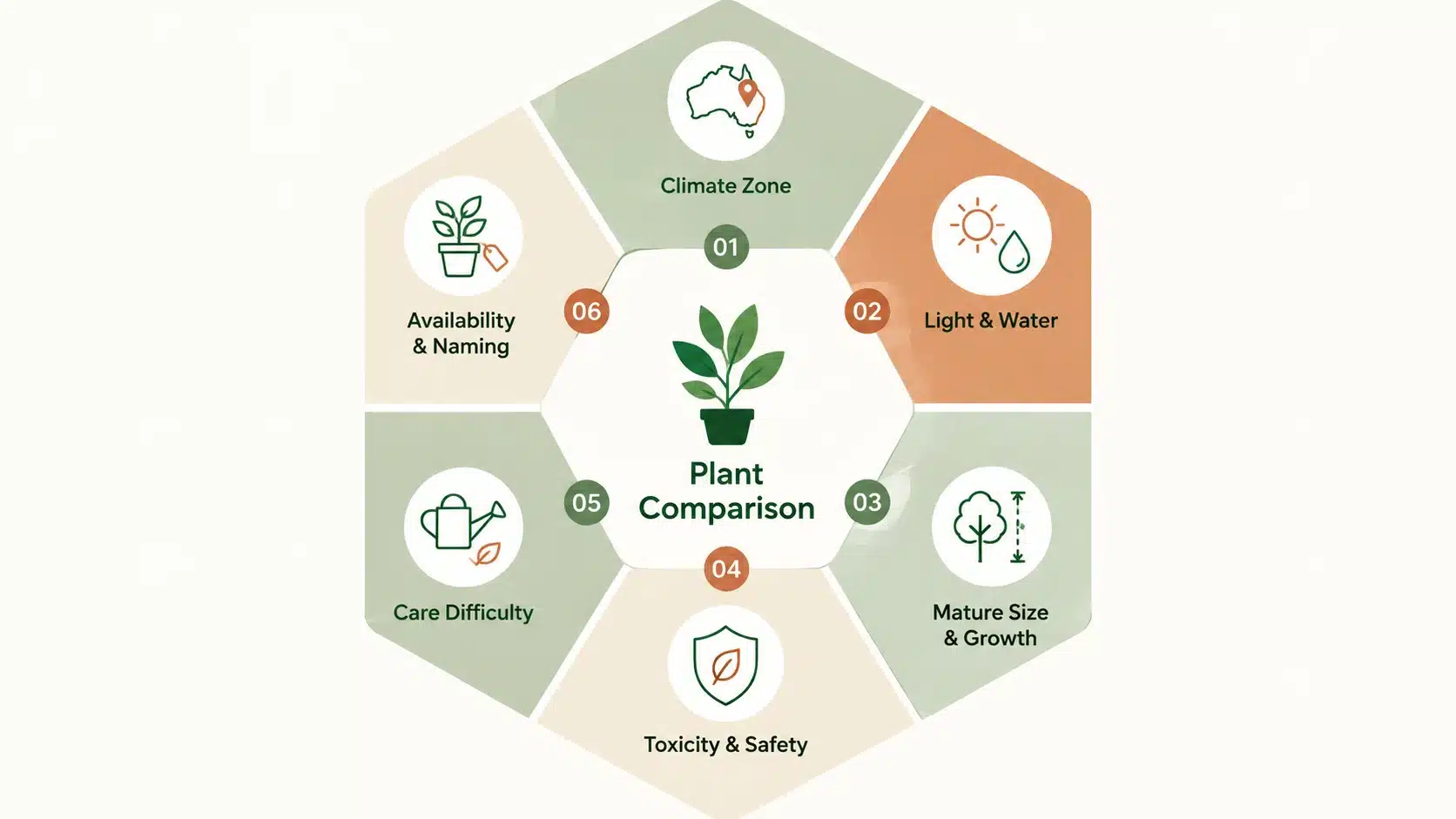
Before diving into individual comparisons, it helps to know what you’re actually weighing. These six factors show up in almost every “which plant should I choose” decision, and the right answer changes depending on which factor matters most for your situation.
Climate Zone Suitability
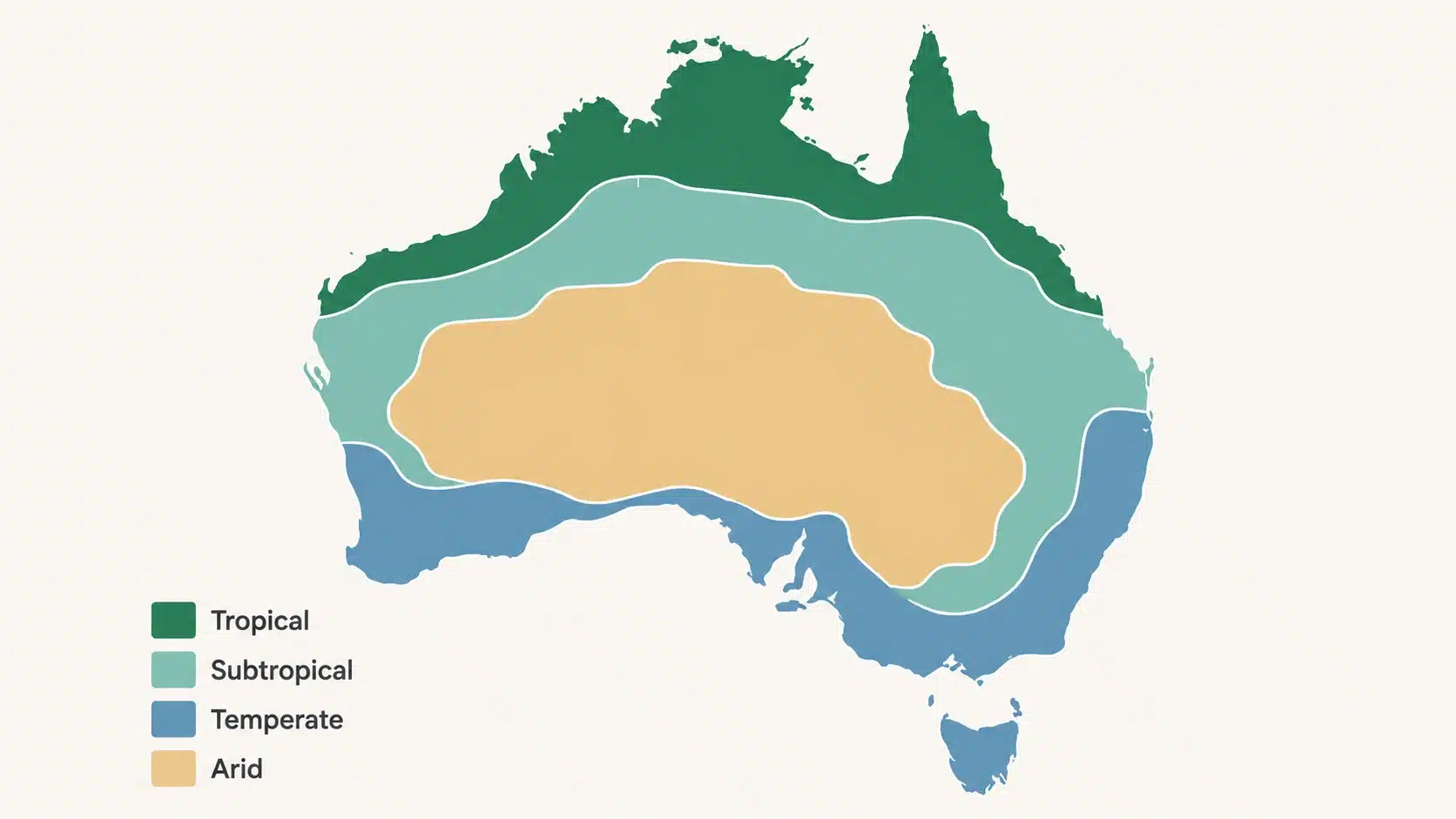
Most plant advice you’ll find online is written for UK or US hardiness zones, which don’t map cleanly onto Australian conditions. What matters here is whether a plant suits a tropical, subtropical, temperate, or arid zone — and you can check which zone you’re actually in using the Bureau of Meteorology’s climate maps. A plant that thrives in Cairns can sulk or die in Melbourne, regardless of what a US-based comparison chart says. Whenever you’re comparing two plants, check which of these broad zones each one is actually bred for and where you sit.
Light & Water Needs
Two plants marketed as similar can have meaningfully different light tolerance (full sun vs part shade) and water requirements (drought-tolerant vs consistently moist soil). This factor also depends heavily on whether the plant is grown indoors or outdoors, since indoor conditions change light intensity, humidity, and watering frequency dramatically compared to an outdoor bed. We’ve broken down exactly how those care requirements diverge in our guide to indoor plant vs outdoor plant care differences, which is worth reading before you assume a plant’s outdoor care sheet applies to a potted version indoors, or vice versa.
Mature Size & Growth Rate
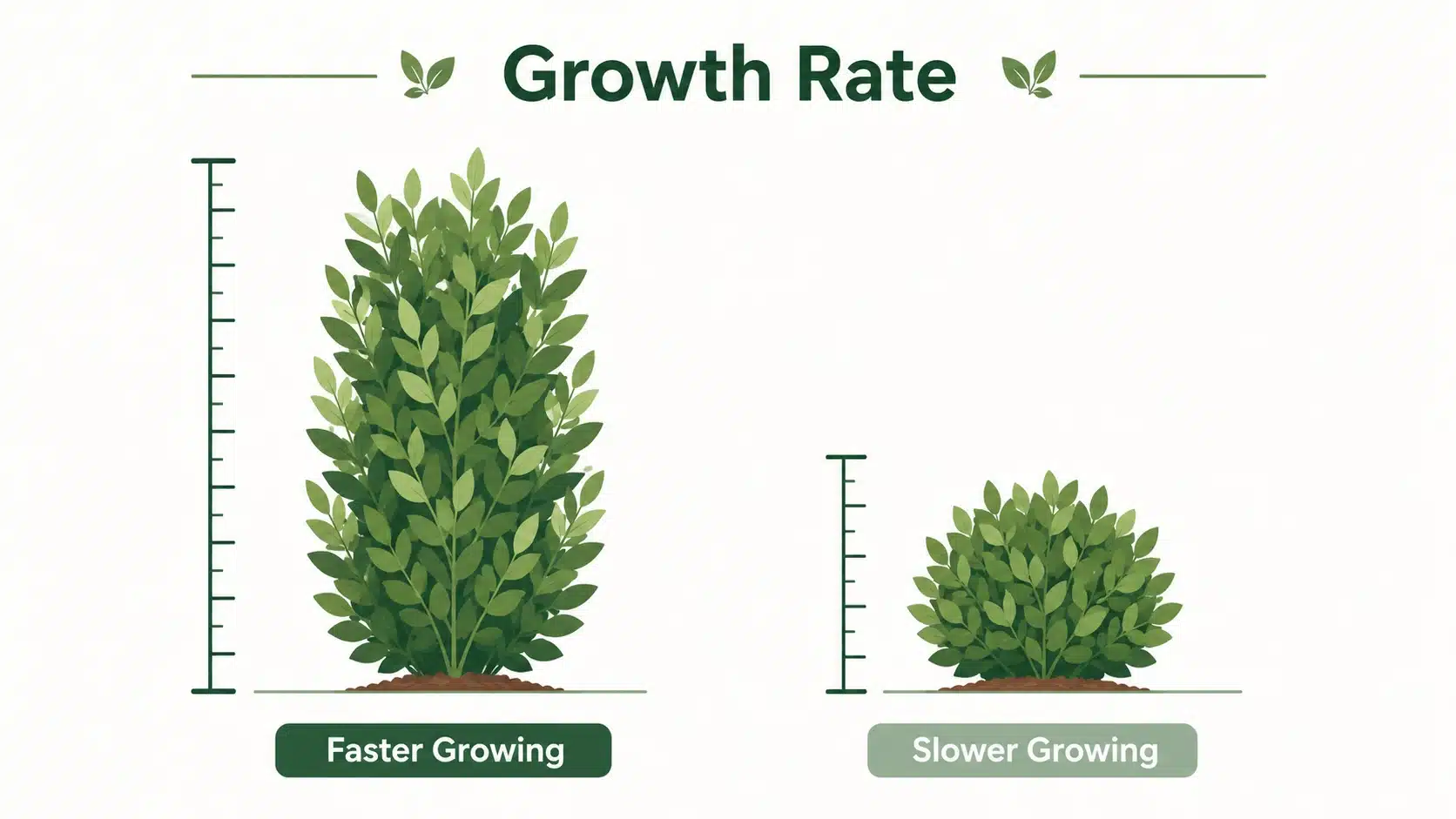
This is the factor gardeners underestimate most often, especially with hedging and screening plants. Two plants can look the same size at point of sale and then grow at completely different rates, or top out at very different mature heights. If you’re choosing a hedge, growth rate and eventual size should usually outweigh how the plant looks on day one.
Toxicity & Pet/Child Safety
Similar-looking plants — especially within the same genus or family — can have very different toxicity profiles. This is one of the most consequential factors to get right if you have pets or young children, and it’s worth confirming for both plants in any comparison, not just the one you’re leaning toward. If you have pets, it’s worth checking a plant against a dedicated resource like the RSPCA’s guide to plants poisonous to pets before assuming two similar-looking plants carry the same risk.
Care Difficulty
Some plants forgive inconsistent watering, low light, or a missed feed. Their look-alikes sometimes don’t. If you’re a beginner grower, difficulty should weigh more heavily than appearance, especially for indoor plants where conditions are harder to correct once they go wrong.
Availability & Naming in Australia
Finally, check what’s actually available and what it’s called here. Some varieties commonly compared in overseas content aren’t widely stocked at Australian nurseries or Bunnings, while others are sold under a different common name than the one used internationally, which can cause you to compare the wrong plants entirely.
Indoor Plant Comparisons
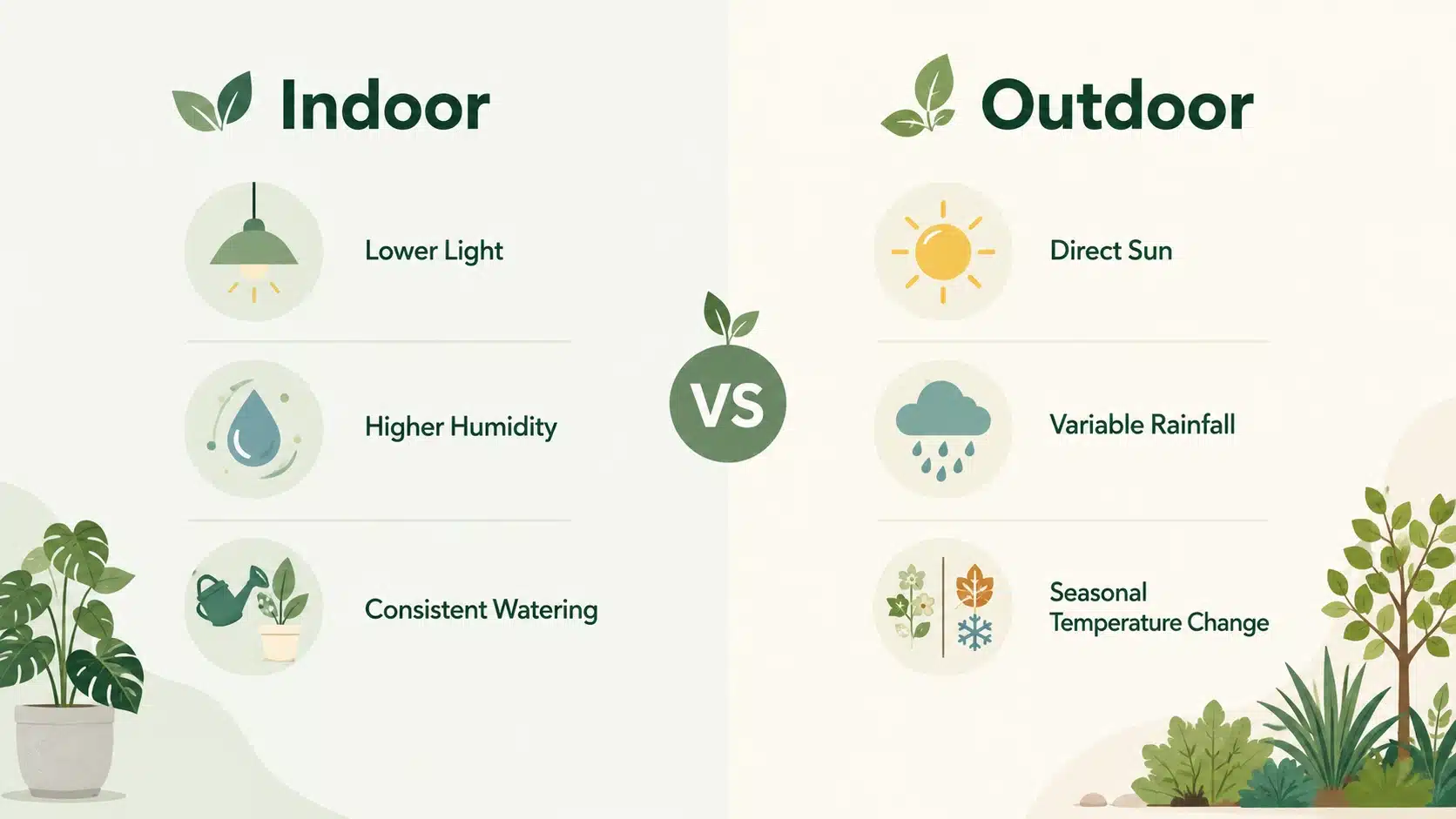
Indoor look-alikes are some of the most commonly confused plants, largely because houseplant marketing leans on a handful of popular genera and their many similar-looking varieties. A good example is the comparison between Anthurium pallidiflorum and Anthurium vittarifolium, two anthurium varieties that are frequently mixed up by name but differ in leaf shape, growth habit, and care needs once you look closely. If you’re deciding between similar houseplants generally, it’s also worth reading how indoor care differs from outdoor care in the first place, since that context changes how much weight to put on light and humidity differences between two indoor candidates — see our indoor vs outdoor plant care comparison for that groundwork.
Outdoor & Hedge Plant Comparisons
Outdoor structural plants — hedges, screens, and ground covers — are where growth rate and mature size matter most, because mistakes here are expensive and slow to fix. Our most detailed hedge comparison, Lilly Pilly vs Photinia, walks through exactly this trade-off: both are popular Australian hedging choices, but they diverge in growth speed, pest resistance, and long-term maintenance in ways that matter far more than their similar appearance at nursery size.
Ground covers bring a different kind of confusion — not “which one grows better” but “which one is actually in my garden.” Our guide to Creeping Charlie vs Wild Violet exists precisely because these two low-growing plants are routinely mistaken for one another, and misidentifying a spreading ground cover can mean the difference between a plant you want and one you’re fighting to remove.
In Elemo’s own trial hedge, the Photinia consistently pushed 40–50cm of new growth a season against the Lilly Pilly’s steadier 20–30cm — enough of a gap that the ‘faster’ plant actually meant three extra prunings a year, not zero.
Flowering & Ornamental Plant Comparisons
Ornamental plants are usually chosen for appearance first, which makes naming confusion especially costly — you can end up with the wrong bloom size, wrong mature footprint, or wrong growth habit entirely. Magnolia Teddy Bear vs Little Gem compares two compact magnolia varieties that are often shelved next to each other at nurseries but suit noticeably different garden sizes.
Vining ornamentals have their own naming problem. Mandevilla and dipladenia are frequently sold interchangeably despite being genuinely different plants with different care needs — our breakdown of the difference between Mandevilla and Dipladenia is one of the clearest examples on the site of how much a common name can mislead a buyer.
Fruit Tree & Fruiting Plant Comparisons
This is where LeafyHeaven goes further than most plant comparison content online, which tends to stop at houseplants and never touches fruiting varieties. Fruit tree comparisons carry real stakes: climate suitability and time-to-fruit determine whether you’re eating anything at all.
Citrus is the most searched fruit tree comparison we cover, and for good reason — Eureka Lemon vs Meyer Lemon is a genuinely useful decision, not a trivial one, since the two lemons differ in flavour, cold tolerance, and fruiting pattern.
Tropical fruit comparisons are similarly underserved elsewhere. Green Lychee vs Red Lychee covers flavour and ripening differences that matter if you’re planting for harvest rather than looks. Yellow Passion Fruit vs Purple is another climate-dependent choice — the two varieties don’t perform identically across Australian growing zones. And Soursop vs Custard Apple compares two tropical fruits that are often grouped together by unfamiliar buyers despite having distinct flavour profiles, tree sizes, and climate needs.
How to Use These Comparisons to Choose the Right Plant for You
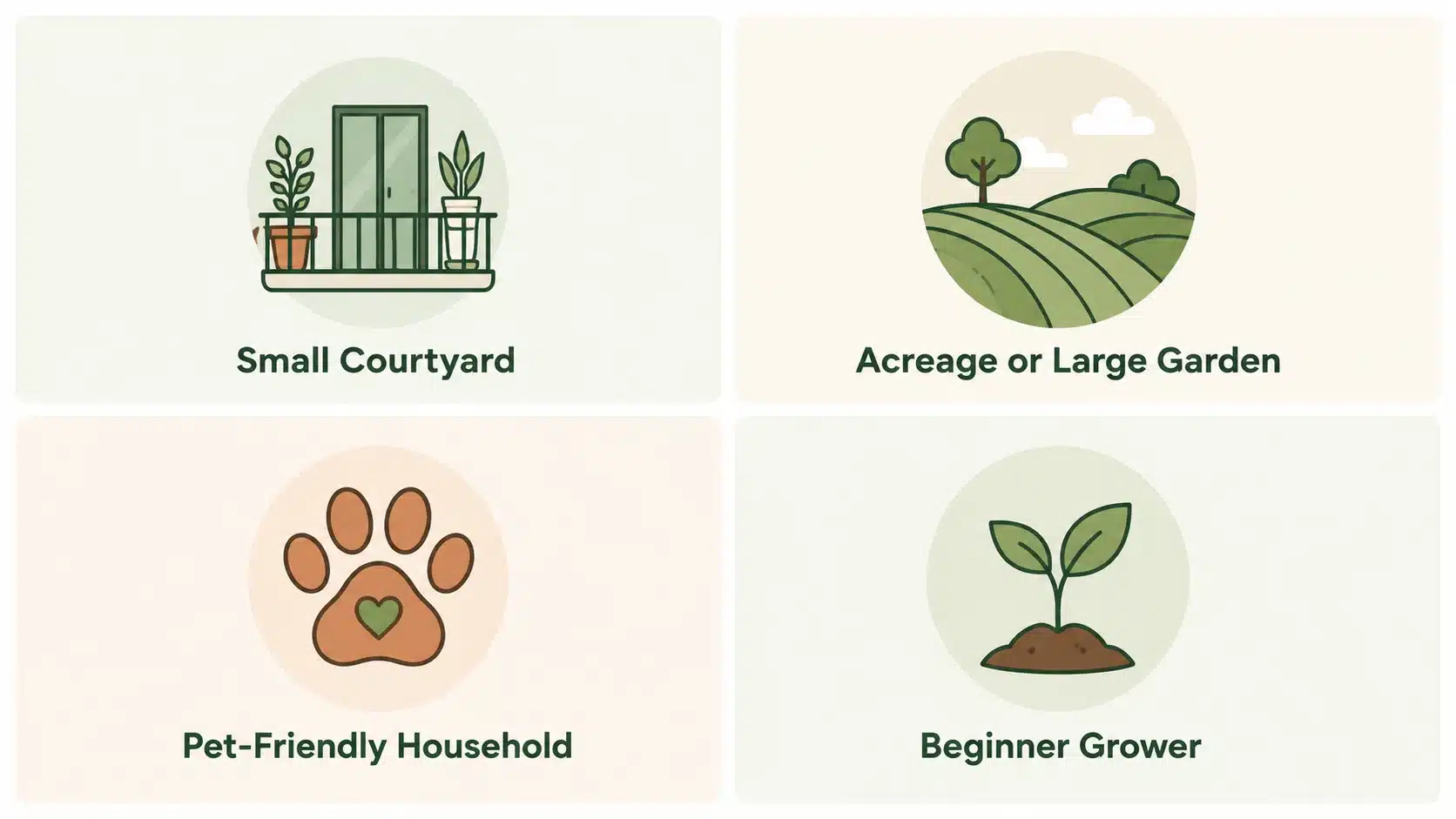
The six factors above matter differently depending on what you’re actually trying to achieve. Here’s how to weight them for common situations.
Small Courtyard or Balcony
Mature size and growth rate should dominate your decision. A plant that “can be pruned to size” is still a plant you’ll be pruning constantly — favour naturally compact varieties over ones you’ll need to fight.
Acreage or Large Garden
Here, growth rate matters less and climate zone suitability matters more, since you likely have room to accommodate a larger mature footprint. Focus comparisons on which plant is genuinely better suited to your local conditions rather than which one is smaller.
Pet-Friendly Households
Toxicity should override every other factor. If one plant in a comparison has any ambiguity around pet safety, treat that as a decision point on its own, regardless of how it compares on appearance or care difficulty.
Beginner Growers
Weight care difficulty heavily. Choose the more forgiving plant in any comparison, even if the other option is marginally more attractive — a plant you can keep alive beats a plant that looks better in photos.
Choosing With Confidence
Every comparison on this page comes back to the same idea: there’s rarely an objectively “better” plant, only a plant that’s better suited to your climate zone, your space, and your household. Run any pairing you’re considering through the six factors above, weight them according to your situation — courtyard, acreage, pets, or beginner — and then dig into the specific comparison that matches what you’re deciding between, whether that’s a hedge, a houseplant, an ornamental, or a fruit tree, using the links throughout this guide.
FAQs About Choosing Between Similar Plants
How do I know if two plants are actually different species or just different names for the same plant?
Check the botanical (Latin) name, not just the common name — common names are reused loosely across Australian nurseries, while the botanical name tells you definitively whether you’re comparing two species or one species sold under two labels.
What’s the most important factor to consider when comparing two similar plants?
For most Australian gardeners, climate zone suitability should come first, since a plant unsuited to your zone will underperform regardless of how it compares on other factors.
Are plant comparisons different for indoor vs outdoor plants?
Yes — indoor conditions change light intensity, humidity, and watering needs enough that a comparison based on outdoor performance won’t reliably predict how the same two plants behave in a pot indoors.
How do Australian climate zones affect which plant “wins” in a comparison?
A plant that’s the clear winner in a tropical zone comparison can be the worse choice in a temperate or arid zone, so the “better” plant genuinely depends on where you’re growing it.
Why do nurseries sometimes sell mislabelled or confusingly named plants?
Common names travel faster than botanical accuracy, and popular look-alike genera (like mandevilla and dipladenia) get grouped together commercially even when they’re botanically distinct.
Is a faster-growing plant always the better choice for hedges and screening?
Not necessarily — faster growth usually means more frequent pruning and maintenance, so it’s only the better choice if you’re prepared for that upkeep.
How can I tell if a plant is safe for pets before choosing between two options?
Check the toxicity profile for both plants specifically, since visually similar plants can differ significantly in toxicity even within the same genus.
6 Comments