
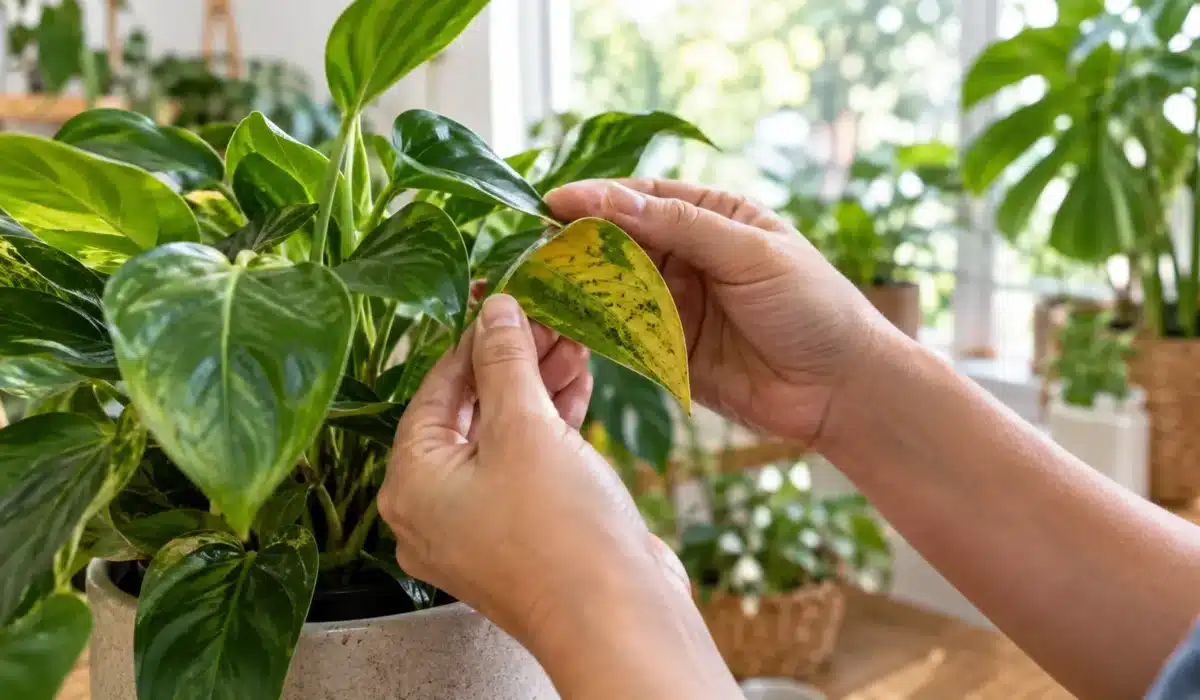
Plant Problems & Troubleshooting: Diagnose Any Symptom
Most plant problems fall into one of five categories: watering, pests, disease, environmental stress, or normal ageing — and figuring out which one you’re dealing with is usually the difference between a quick fix and a dead plant. If you’ve noticed yellowing, spots, wilting, dropped leaves, or visible bugs, this guide gives you a repeatable process for narrowing down the cause, whether the plant is indoors or in an Australian garden. Rather than a list of possible causes with no way to choose between them, you’ll find a step-by-step diagnostic method, a symptom-to-cause reference table, and guidance adjusted for Australian climate conditions — from summer heat stress in Brisbane and Perth to dry indoor heating through a Melbourne or Hobart winter.
Quick Summary
- Most plant symptoms trace back to one of five causes: watering, pests, disease, environmental stress, or normal ageing.
- Where a symptom appears — new growth vs. old leaves, one plant vs. several, leaf tips vs. whole leaves — narrows the cause quickly.
- Overwatering and underwatering often look identical from a distance; the soil and root condition tell the real story.
- Some yellowing, leaf drop, and dormancy is completely normal, not a sign of decline.
- A small number of symptoms (mushy stems, rapid collapse, a foul smell from the soil) need action today; most others can be monitored for a few days.
- Indoor and outdoor plants respond differently to Australian seasonal conditions, and the diagnosis should account for that.
How to Diagnose a Plant Problem in 5 Steps
Before searching for what might be wrong, run through this process. It takes a couple of minutes and rules out entire categories of causes.
- Identify where the symptom appears. New growth, old growth, one side of the plant, the stem, or the roots — each location points toward different causes. Nutrient issues and pests often show first on new growth; natural ageing shows on the oldest leaves first.
- Note what else is happening. Has watering changed recently? Was the plant repotted, moved, or exposed to a temperature swing? Most problems have a trigger within the last two to four weeks.
- Check if it’s normal ageing or dormancy first. A single yellowing lower leaf, seasonal leaf drop, or a resting period after flowering is often not a problem at all — see the next section.
- Match the symptom plus any other clues to a likely cause. Use the diagnosis matrix below as a starting point, then read the relevant section for detail.
- Decide urgency. Mushy, foul-smelling stems or roots, rapid wilting with wet soil, or sudden total collapse need action today. A single spotted leaf or slow yellowing can usually be monitored for a few days while you address the likely cause.
Is It Actually a Problem, or Normal Plant Behaviour?
Not everything that looks alarming is a problem. Plants naturally shed their oldest leaves as they age, and many species — orchids in particular — go through a dormant resting phase that can look a lot like decline to an inexperienced eye. A dormant orchid typically has firm, unshrivelled roots and a stable (not worsening) appearance, while a genuinely declining one keeps deteriorating week to week. If you’re unsure whether your orchid is resting or in trouble, our guide to what a dormant orchid actually looks like walks through the visual differences in detail.
Other normal events that are commonly mistaken for problems: a flush of yellow lower leaves after a growth spurt, flower and petal drop once blooming finishes, and a temporary pause in growth over winter. If the plant is otherwise firm, the new growth looks healthy, and nothing is spreading or worsening, it’s very likely normal.
The Plant Symptom Diagnosis Matrix
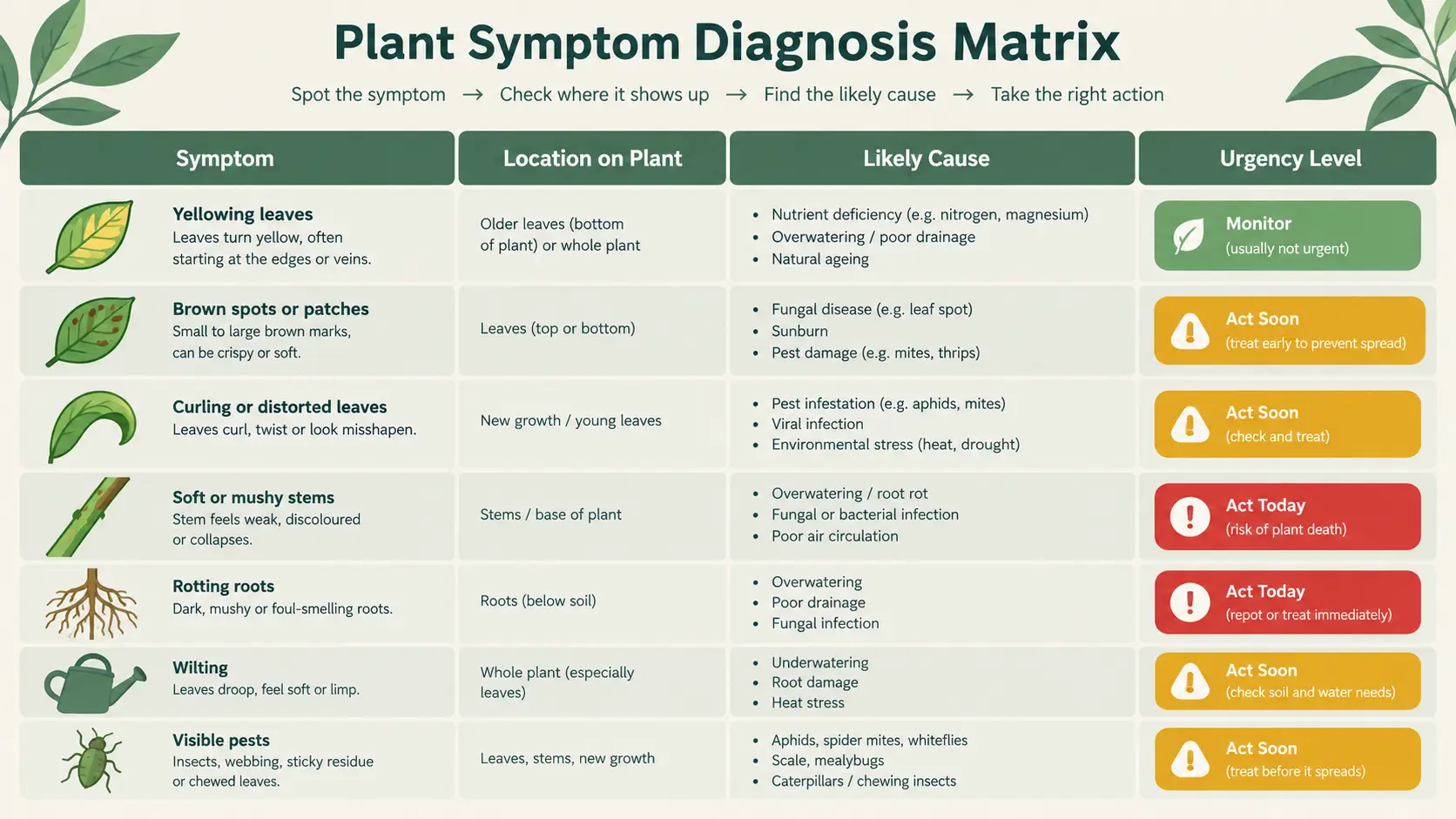
Use this table as a quick reference. Find your symptom, check where it’s occurring, and use the “likely cause” column to jump to the relevant section below.
| Symptom | Where It Appears | Likely Cause | Urgency |
| Yellowing leaves | Older/lower leaves, gradual | Natural ageing, or slight under/overwatering | Monitor |
| Yellowing leaves | New growth, spreading fast | Overwatering, root stress, or nutrient issue | Act soon |
| Brown spots | Scattered across leaf surface | Fungal or bacterial leaf spot | Act soon |
| Brown, mushy stem or base | At the base or main stem | Rot (often from overwatering) | Act today |
| Wilting, soil dry | Whole plant | Underwatering | Act today |
| Wilting, soil wet | Whole plant | Overwatering / root rot | Act today |
| Sudden total leaf drop | Whole plant | Shock (temperature, move, repotting) or root stress | Act soon |
| Sticky residue, tiny bugs | Leaf undersides, stems | Sap-sucking pests (aphids, scale, mealybug) | Act soon |
| Crisp brown leaf edges/patches | Leaves facing direct sun | Heat stress or sunburn | Monitor/act soon |
| Stunted new growth | Whole plant, slow | Environmental stress, nutrient deficiency, or root-bound pot | Monitor |
Yellowing, Browning, and Leaf Discolouration
Discolouration is the single most common plant complaint, and it’s also the symptom with the widest range of possible causes — which is exactly why location and pattern matter more than the colour itself.
Yellow Leaves on Indoor Plants
Yellowing on indoor plants can come from overwatering, underwatering, insufficient light, or simple old-leaf shedding, and the pattern usually tells you which. For a full breakdown of indoor-specific causes and how Australian indoor conditions (aircon, heating, lower winter light) factor in, see our detailed guide to yellow leaves on indoor plants in Australia.
Brown Spots on Leaves
Brown spotting is typically fungal or bacterial in origin, though sunburn and chemical damage can look similar. Anthurium is a common example where distinguishing between fungal leaf spot and simple leaf scorch changes the treatment entirely — our anthurium leaf-spot guide covers how to tell them apart on that specific plant.
Yellow or Brown Stems
Stem discolouration is worth treating differently from leaf discolouration, because it more often signals rot rather than a simple watering or light issue. If the stem is yellowing but still firm, see our guide to orchid stems turning yellow; if it’s turning brown, soft, or mushy, that’s a more urgent sign covered in our guide to orchid stems turning brown.
Wilting, Drooping, and Leaf Drop
Wilting has two opposite causes — too little water or too much — and telling them apart is covered in the next section. Leaf drop is a related but distinct symptom: it can be gradual (ageing, low light) or sudden (shock from a move, temperature change, or root disturbance).
When a Plant Loses All Its Leaves
A plant that drops most or all of its leaves in a short period has usually experienced a shock event rather than a slow decline. Bird of paradise is a good example of a plant that can go fully bare after stress, then often recover — see our guide to a leafless bird of paradise for what to check before assuming the worst.
Overwatering vs Underwatering: Telling Them Apart
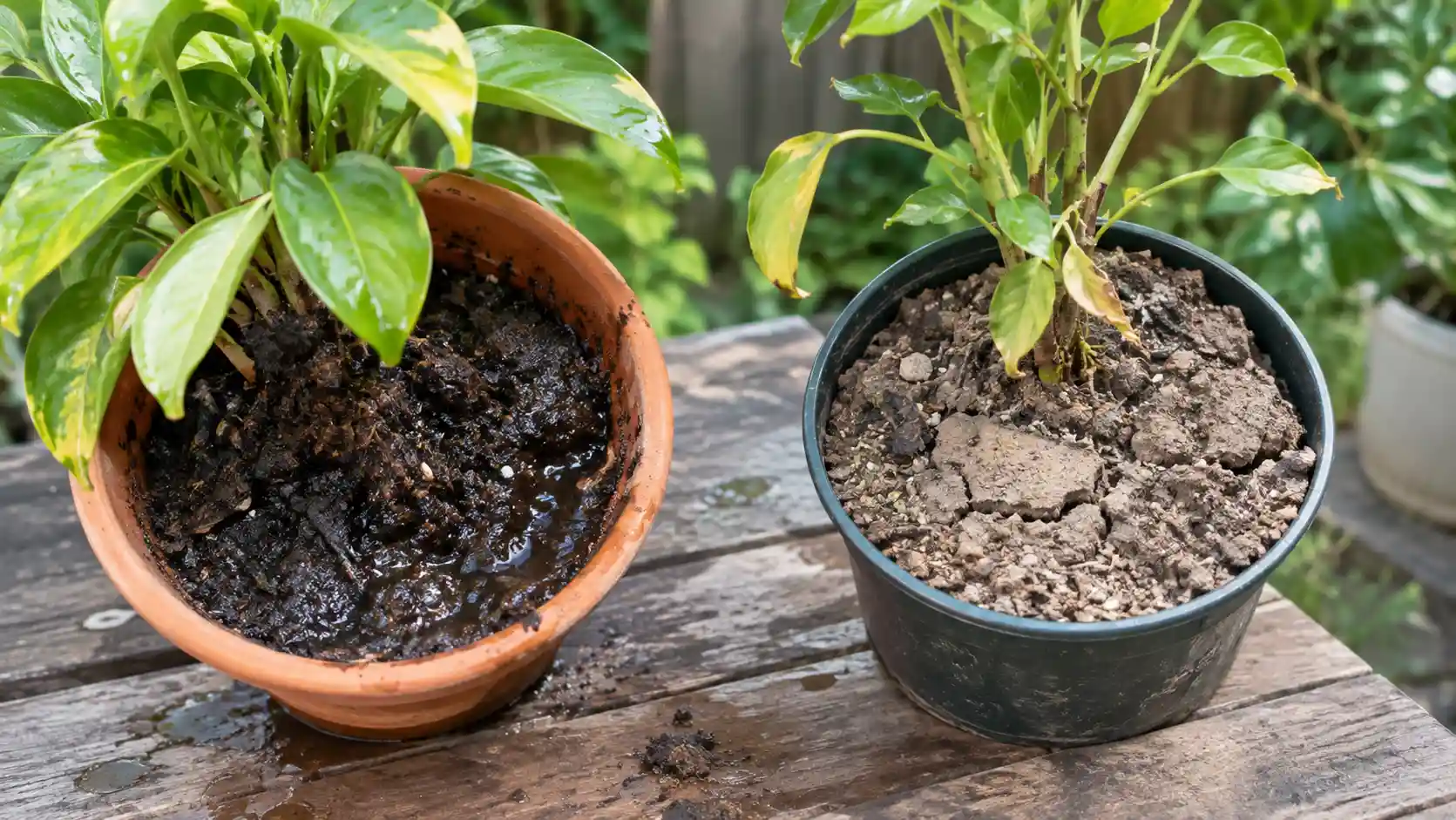
This is the most common diagnostic confusion in plant care, because both can produce wilting, yellowing, and leaf drop. The soil and root condition — not the leaves — give the real answer.
Underwatered plants typically have dry, light potting mix that pulls away from the pot edge, leaves that feel dry, crisp, or papery, and they usually perk back up within hours of a thorough watering.
Overwatered plants typically have consistently wet or soggy soil, leaves that feel soft and limp rather than crisp, and roots that — if checked — are brown, black, or mushy rather than firm and pale. Overwatering is also the leading path to root rot, covered in more detail below.
If you’ve ruled out both extremes and the plant is still declining, the cause is more likely disease, pests, or an environmental factor — our broader look at why indoor plants decline works through the fuller list of causes for indoor cases specifically.
Pests: Identifying and Treating Common Problems
Identifying Garden Pests
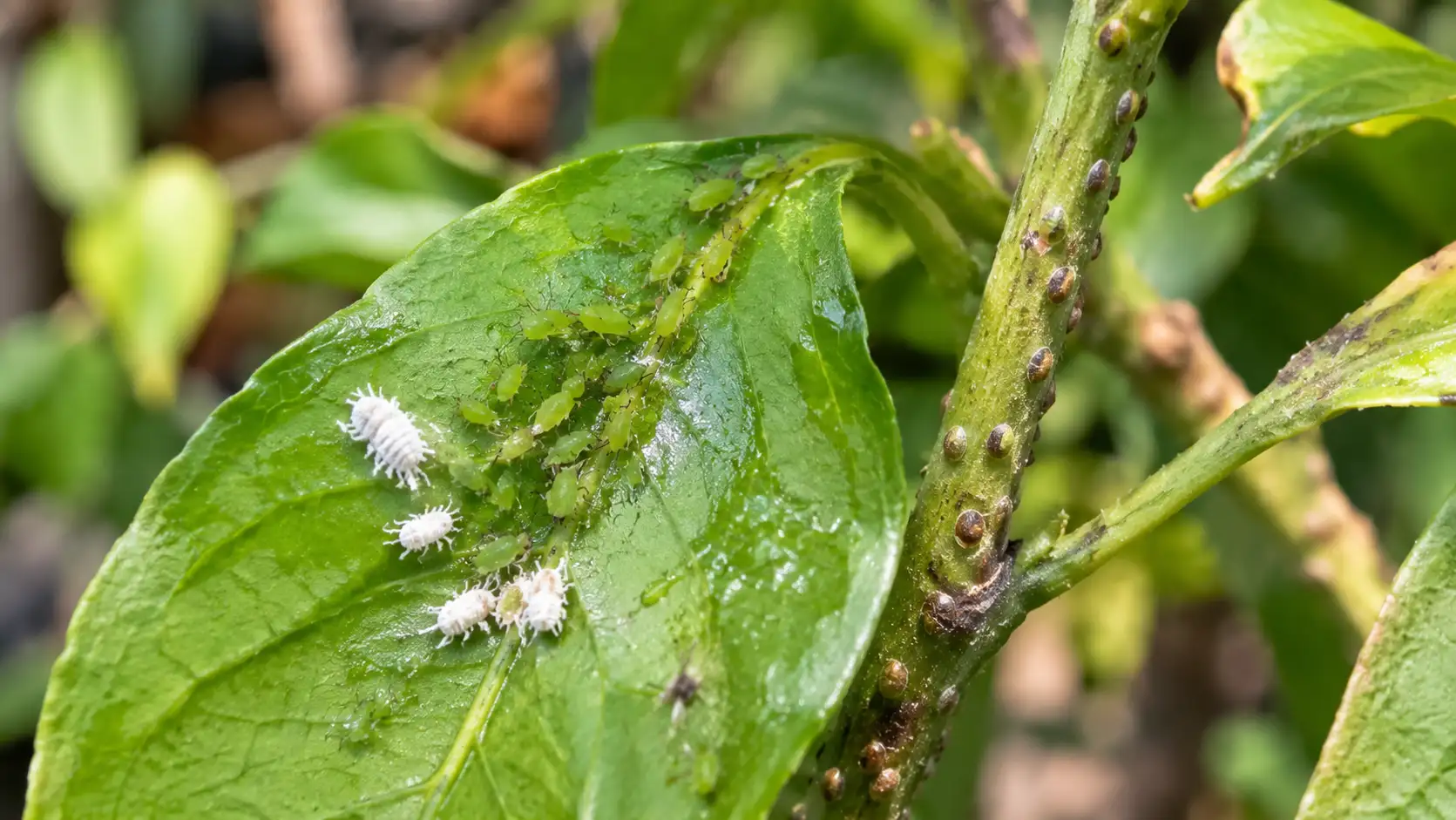
Sap-sucking insects — aphids, scale, and mealybugs — are among the most common pests in Australian gardens, and all three produce similar symptoms: sticky honeydew, sooty mould, distorted new growth, and weakened plants. The Western Australian Department of Primary Industries and Regional Development’s guide to identifying aphids, mealybugs and scales breaks down the visual differences between them, which is a useful reference before you commit to a treatment. For a broader walkthrough of Australian garden pests beyond sap-suckers, see our full garden pest identification guide.
Pests on Hedging Plants
Dense hedging plants create sheltered conditions that some pests favour, and lilly pilly is one of the most commonly affected hedge species in Australian gardens. Our guide to common lilly pilly pests and their treatment covers the specific pests to check for and how to treat them without damaging the hedge.
Disease and Fungal Problems
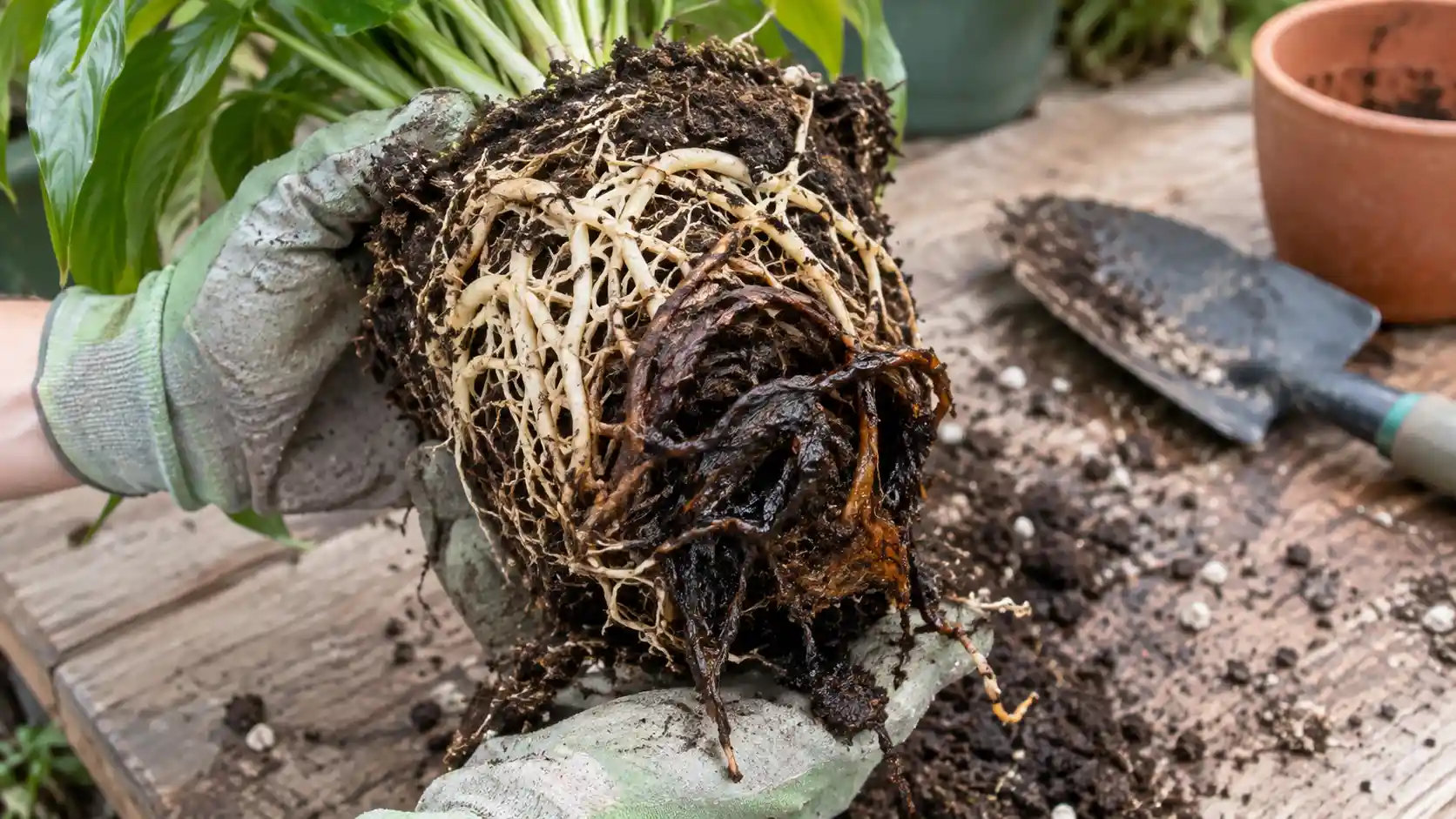
Fungal and bacterial diseases are frequently mistaken for watering problems because the above-ground symptoms overlap so closely — wilting, yellowing, and stunted growth can all result from either. Root rot is the most serious and common example: it’s typically caused by Phytophthora, a soil-borne water mould that thrives in waterlogged conditions and destroys root tissue from the inside out. Agriculture Victoria’s information on Phytophthora root and trunk rot describes the telltale signs, including bark that darkens and a sickly-sweet odour at the base of an infected plant.
If a plant’s symptoms don’t clearly match any of the causes in this guide, or a valuable or established plant is involved, a professional diagnosis is worth the cost. The Royal Botanic Garden Sydney’s PlantClinic plant disease diagnostic service accepts samples from home gardeners as well as industry, and can identify pathogens that are difficult to distinguish by eye alone.
Environmental and Seasonal Stress (Australian Conditions)
Australia’s climate range — from tropical and subtropical zones through temperate and cool-highland areas to arid and frost-prone regions — means the same symptom can have very different seasonal triggers depending on where you garden.
Heat and Sun Stress
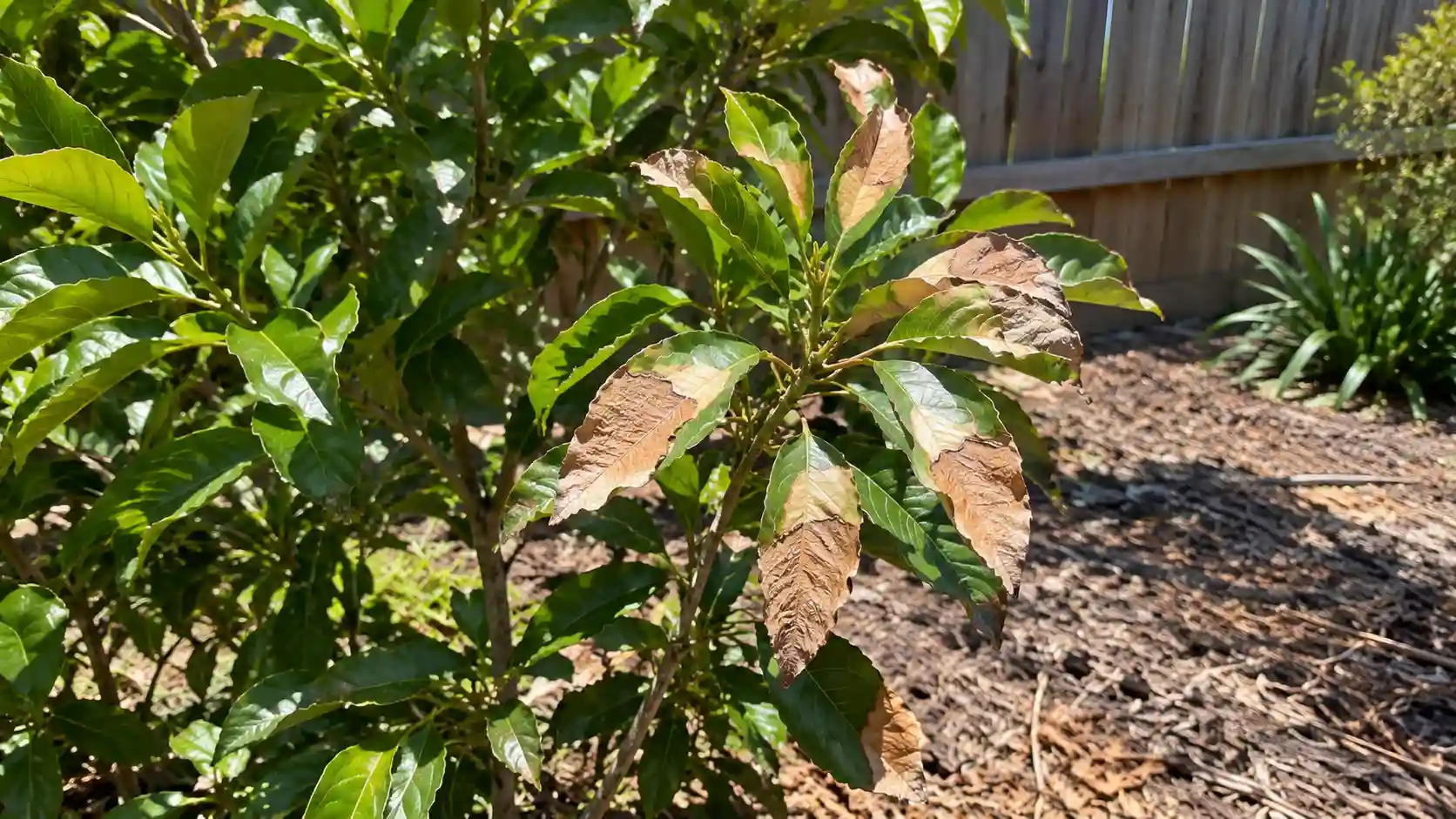
Extended heat and direct sun exposure can cause crisp, pale, or brown patches on leaves (leaf scorch or sunburn), wilting even when soil moisture is adequate, and premature leaf or bud drop. This is a particular risk in Queensland, Northern Territory, and inland summer conditions, and even shade-tolerant natives can be affected if suddenly exposed to full sun. Woolly bush is one native species where heat and environmental stress are common underlying causes of decline — see our guide to common woolly bush problems for the specifics.
Seasonal and Tree-Specific Stress
Outdoor trees face their own seasonal stress patterns — frost damage in cool climates, waterlogging after heavy rain, or drought stress over a dry summer — and the right diagnosis often depends on the specific tree. Flowering ash is one example where a distinct set of seasonal and environmental issues commonly arise; our guide to flowering ash tree problems in Australia covers what to look for through the seasons.
Indoor plants have their own version of seasonal stress: dry heating in southern winters can cause the same crisp, browning leaf edges as underwatering, while humidity swings between seasons can trigger both fungal issues and leaf drop.
Handling Sap, Toxicity, and Safety While Treating Plants
Diagnosing and treating a problem plant sometimes means pruning, cutting back, or handling damaged growth — and for a small number of species, that brings a genuine skin or eye safety risk. Firestick plant (Euphorbia tirucalli) is a well-known example: its milky sap is corrosive and can cause burning, blistering, and — if it reaches the eyes — temporary vision loss. Queensland’s Poisons Information Centre profile on Euphorbia tirucalli recommends rinsing any eye exposure with water for 15 minutes and seeking medical attention. If you’re dealing with sap exposure while treating this plant specifically, our guide to firestick plant sap on skin covers what to do. As a general rule, wear gloves and avoid touching your face when pruning any plant with milky or unfamiliar sap.
Preventing Future Plant Problems
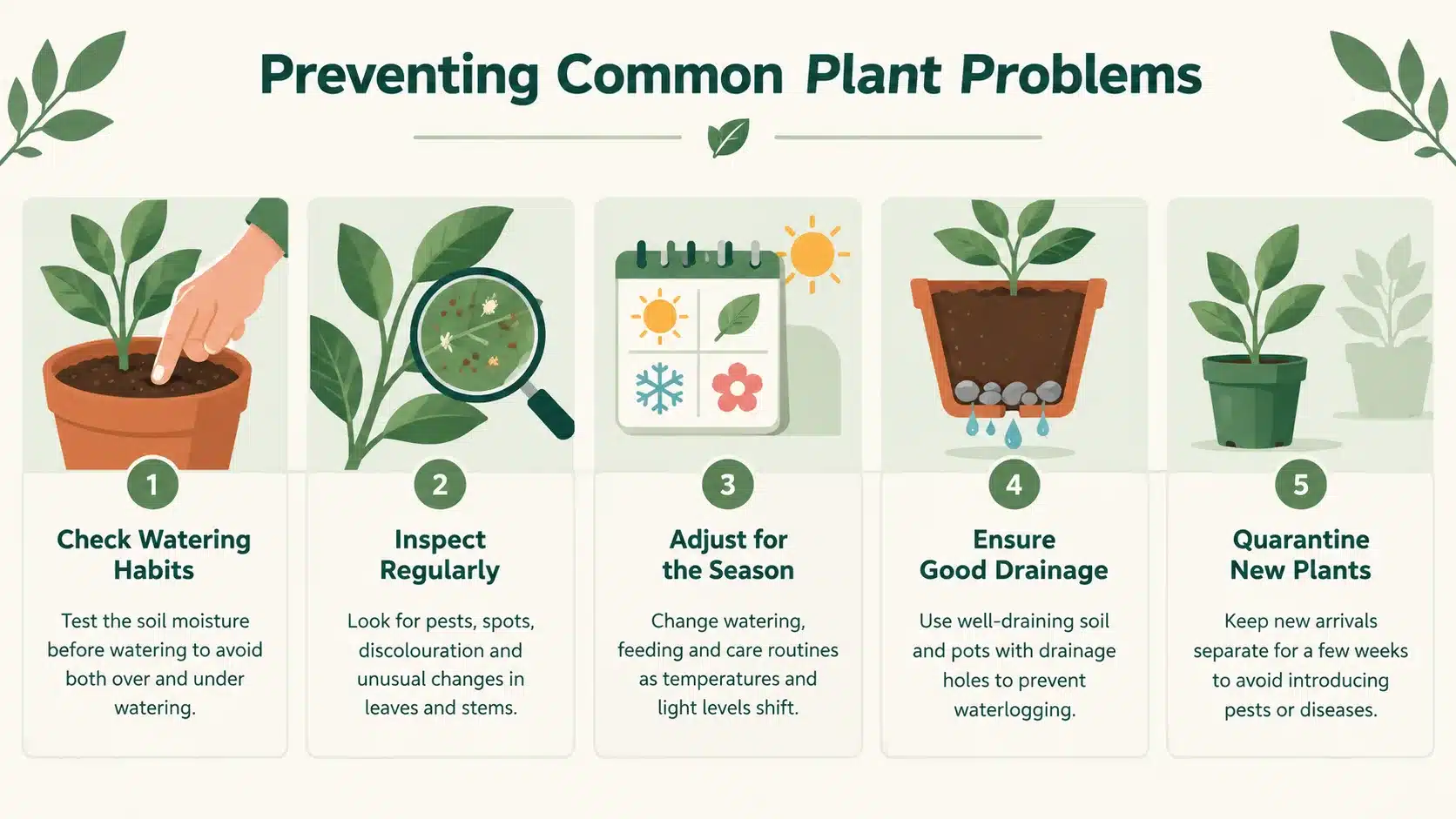
Most recurring plant problems come down to a small number of habits:
- Check soil moisture before watering, rather than watering on a fixed schedule — a simple finger test or moisture meter avoids the most common cause of both over- and underwatering.
- Inspect leaf undersides and new growth regularly, since this is where pests and early disease symptoms usually appear first.
- Adjust watering seasonally, increasing frequency in hot, dry periods and reducing it in cooler months or when indoor heating dries the air.
- Improve drainage in pots and garden beds prone to waterlogging, since poor drainage is behind most root rot cases.
- Quarantine new plants for a couple of weeks before placing them near others, to catch pests or disease before they spread.
Conclusion
Most plant problems are diagnosable once you know where to look, and catching an issue early is consistently the biggest factor in whether a plant recovers. Work through the five-step process, check the diagnosis matrix, and use the sections above to confirm what you’re seeing before choosing a treatment. If you’ve narrowed things down to a specific plant or symptom — an orchid stem, a lilly pilly under pest pressure, or a bird of paradise that’s dropped its leaves — the linked guides throughout this article go into the detail needed to fix that exact case.
FAQs
How do I know if my plant is dying or just going dormant?
A dormant plant is stable — it stops growing but doesn’t continue to decline — while a dying plant keeps getting worse week over week. Check that roots are still firm and new growth (when it resumes) looks healthy.
What’s the fastest way to tell overwatering from underwatering?
Check the soil, not the leaves. Dry, pulling-away soil points to underwatering; consistently wet or soggy soil points to overwatering.
Is yellowing always a bad sign?
No. A single yellowing lower leaf on an otherwise healthy plant is often just natural ageing.
How urgent is it if my plant has brown, mushy stems?
Very — this usually indicates rot in progress and should be addressed the same day, including trimming affected tissue and correcting drainage or watering.
Do indoor and outdoor plants get the same problems?
Many of the same root causes apply, but the triggers differ — indoor plants are more affected by light and indoor humidity/heating, while outdoor plants face weather extremes, frost, and a wider range of pests.
Can heat stress cause the same symptoms as underwatering?
Yes, and the two often occur together, since hot conditions dry soil out faster. Checking soil moisture directly is the best way to separate the two.
When should I worry about pests vs just watch and wait?
If pests are visibly spreading, producing sticky honeydew, or affecting new growth, treat promptly. A few isolated insects on an otherwise healthy plant can often be monitored first.
How often should I check my plants for early signs of trouble?
A quick visual check — leaves, undersides, soil, new growth — every week or two catches most problems early enough to fix easily.