
Blue Moonflower at Night: Meaning, Care & Facts
Introduction
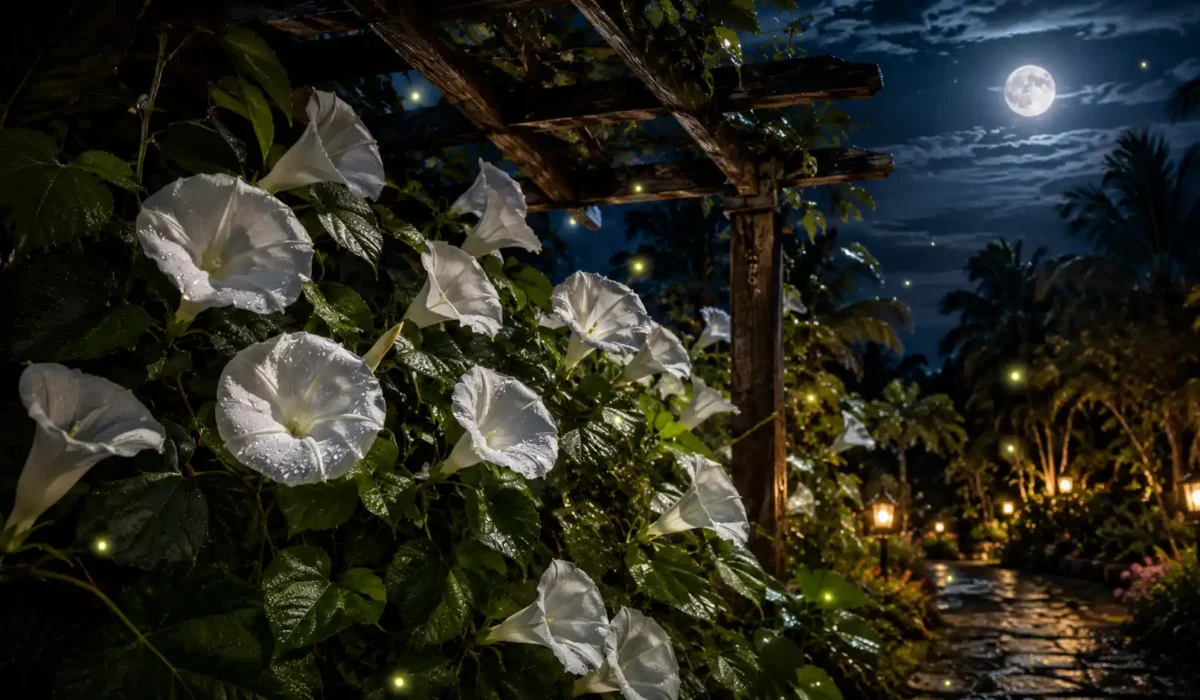
Blue moonflower at night commonly refers to Ipomoea alba, a fast-growing night-blooming vine known for its large, fragrant white flowers that open after sunset and close by morning. It belongs to the morning glory family (Convolvulaceae) and is widely grown for ornamental vertical gardening. The term “blue moonflower” is often used loosely for bluish-toned morning glory relatives or colour-shifted lighting effects at dusk. Importantly, moonflower is sometimes confused with Datura species, which are highly toxic and unrelated. Understanding this distinction is essential for safe gardening and accurate identification. If you are exploring more ornamental plants suited for Australian gardens, you can also see our guide on Australian Plants Guide: Indoor Houseplants & Garden Design for broader landscaping ideas and plant selection strategies.
Quick Summary
- Blue moonflower opens at dusk and closes by mid-morning due to light-sensitive flowering behaviour.
- The name “moonflower” applies to both Ipomoea alba (ornamental vine) and toxic Datura, so identification is critical.
- Moonflowers do not glow; they only reflect moonlight and appear luminous at night.
- Each bloom lasts one night, but the plant produces flowers continuously through the warm season.
What Is a Blue Moonflower?
A blue moonflower is typically a reference to Ipomoea alba, a tropical climbing vine known for its large trumpet-shaped flowers that bloom at night. It grows rapidly in warm climates and is commonly trained on fences, pergolas, and trellises. The plant produces heart-shaped leaves and long vines that can reach several metres in a single season. For other fast-growing ornamental species used in Australian landscapes, you may also find Fast Growing Evergreen Trees Australia Guide helpful when planning vertical greenery and screening plants.
Moonflower vs Moon Flower vs Moonflower Blue — Naming Explained
The terms blue moonflower, moon flower, moonflower blue, and blue moon flower are consumer variations referring to similar ornamental vines. Most commonly, they describe Ipomoea alba or related morning glory species.
- “Moonflower” = standard name for Ipomoea alba
- “Blue moonflower” = marketing term or bluish morning glory relatives
- “Moonflower blue” = search variation, not a separate species
True Ipomoea alba is white-flowered, while blue tones usually come from related species or lighting effects at twilight.
Moonflower Colours
Moonflowers are mostly associated with white blooms, but related species show variation.
Common colours include:
- White (most common in Ipomoea alba)
- Pale lavender-blue
- Light purple
- Soft pink tones in related morning glories
White flowers dominate because they reflect low light effectively, improving night pollinator visibility.
Why Does the Moonflower Bloom at Night?
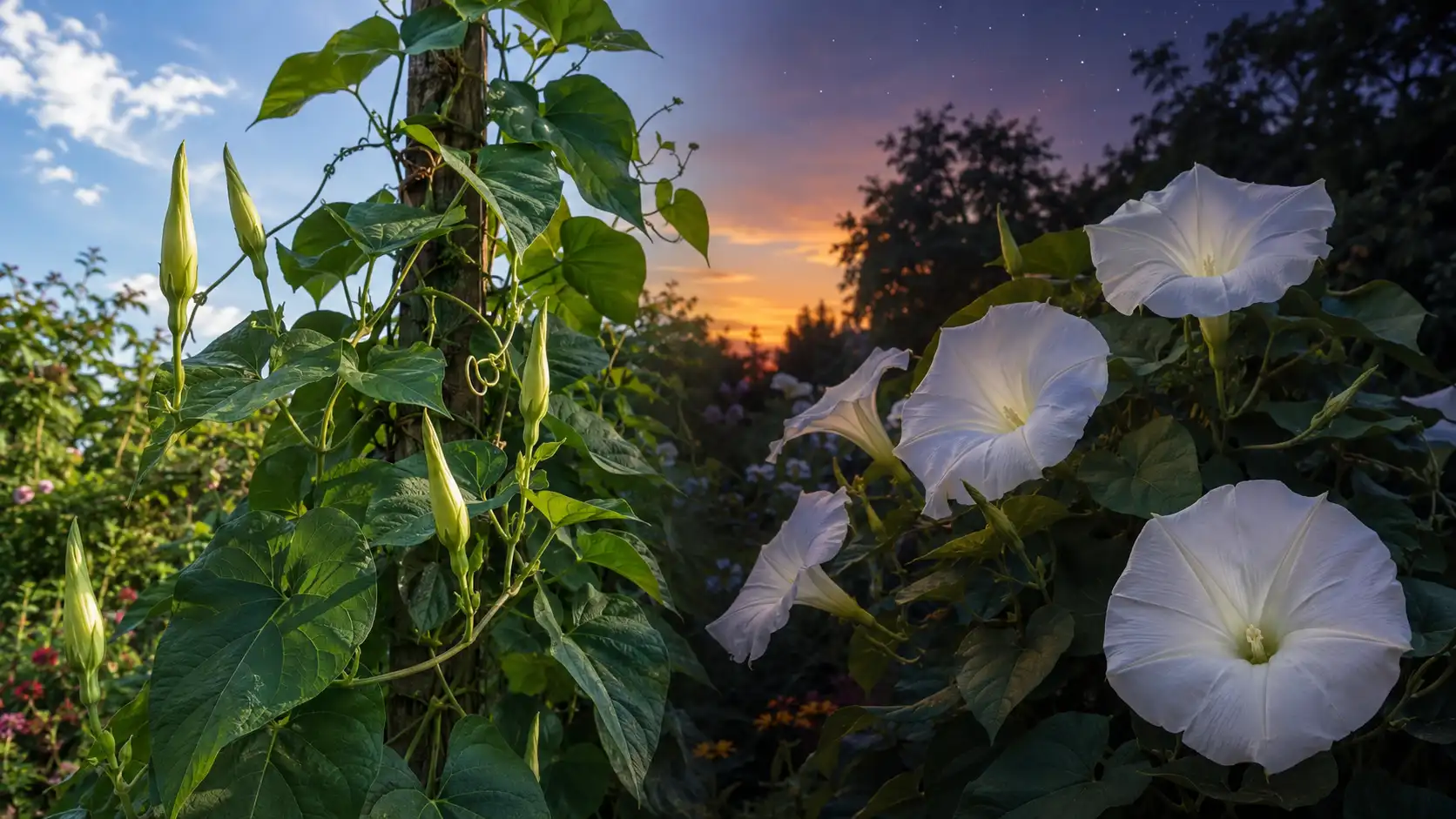
Moonflowers bloom at night due to photoperiodism, a biological response to light changes. As daylight fades, internal plant hormones trigger flower opening. This adaptation helps attract night-active pollinators like sphinx moths. To understand the biological mechanism behind this behaviour, photoperiodism is a key plant response described in detail in botanical science literature.
Night blooming offers advantages:
- Reduced competition with daytime flowers
- Increased moth pollination efficiency
- Cooler temperatures reduce water loss
What Time of Day Does Moonflower Bloom?
Moonflowers follow a predictable cycle:
- Dusk: Buds begin loosening
- Sunset to evening: Flowers open rapidly
- Night: Full bloom and fragrance release
- Morning: Flowers close and wilt
Does Moonflower Only Bloom Once?
Each flower blooms only once for a single night. However, the vine produces many buds continuously, ensuring repeated flowering across the season.
Does Moonflower Glow in the Dark?
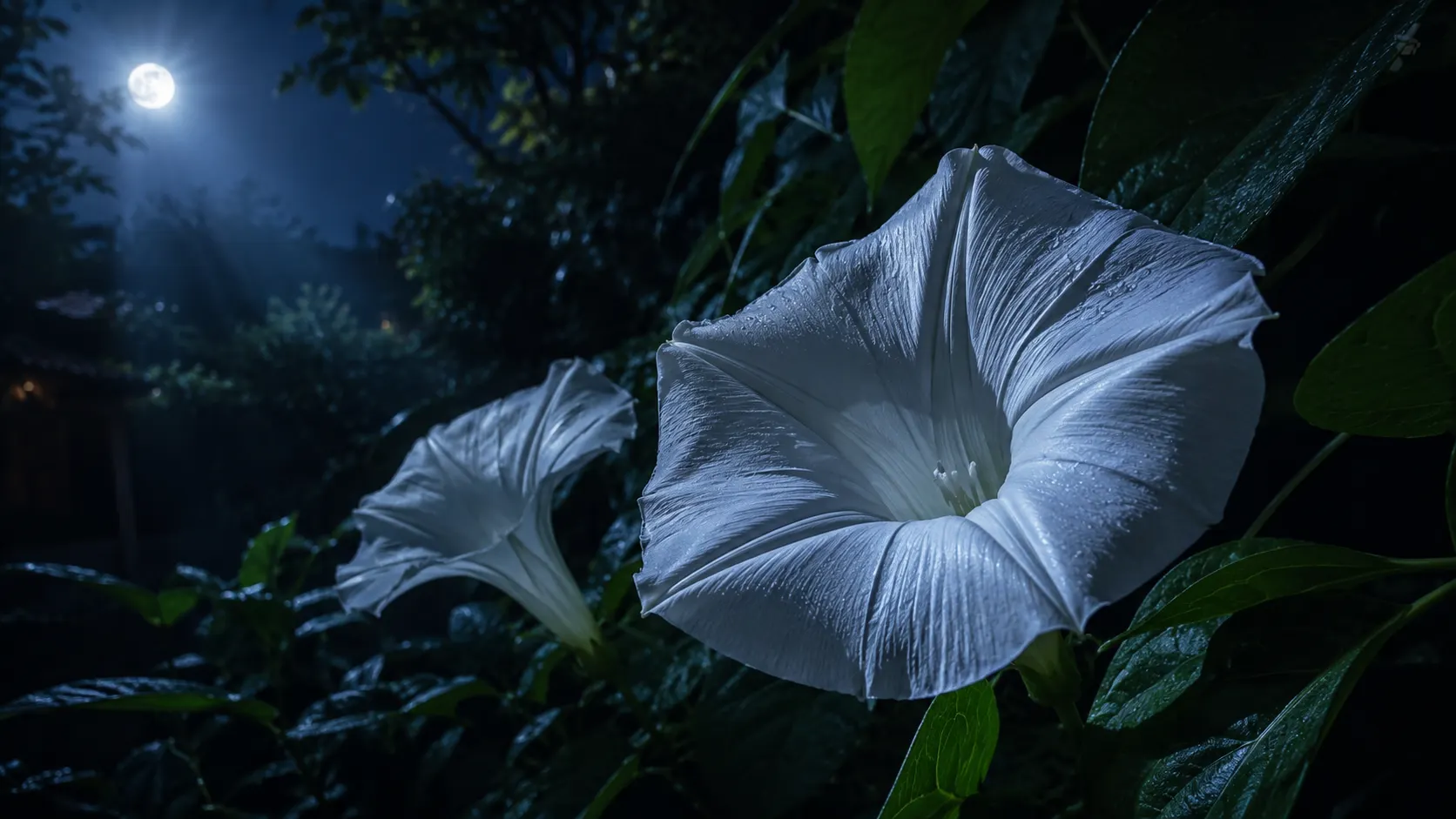
Moonflowers do not produce light. Their glowing appearance is an optical illusion caused by reflective white petals under moonlight or artificial lighting. Unlike bioluminescent organisms, they have no light-emitting properties.
Flowers may appear bright because:
- White petals reflect light efficiently
- Large open blooms catch ambient light
- Dark surroundings enhance contrast
What Happens to the Moonflower During Daytime?
During daylight, moonflower blooms close permanently and do not reopen. The vine continues growing leaves and producing new buds for the next night.
Typical daytime behaviour:
- Closed or wilted flowers
- Active vine and leaf growth
- Formation of new buds
Spent blooms naturally fall off or dry out.
Other Night-Blooming “Moon” Flowers
What Two Flowers Bloom Only at Night?
Two well-known night bloomers are:
- Moonflower vine (Ipomoea alba)
- Queen of the Night (Epiphyllum oxypetalum)
You may also explore related flowering plant comparisons like Magnolia Teddy Bear vs Little Gem: Key Differences Explained to understand how flowering behaviour varies across ornamental species.
What Is the Queen of the Night Flower?
The Queen of the Night is a night-blooming cactus producing large fragrant flowers that open once per year or seasonally. Unlike moonflower vines, it is a succulent epiphyte and not a climber.
Comparison Table
| Feature | Moonflower (Ipomoea alba) | Queen of the Night (Epiphyllum) | Evening Primrose |
| Plant type | Vine | Cactus | Herbaceous plant |
| Bloom time | Nightly in season | Rare, occasional | Evening |
| Flower life | One night | One night | 1–2 days |
| Fragrance | Strong | Strong | Mild |
Moonflower Meaning and Symbolism
Moonflowers symbolise mystery, renewal, and nighttime beauty. They are often associated with dreams, intuition, and the feminine lunar cycle.
What Does Moonflower Symbolise?
Moonflowers represent:
- Mystery and transformation
- Nighttime beauty
- Emotional depth and intuition
Moonflower Meaning in Love
In love symbolism, moonflowers represent quiet devotion and emotional connection rather than romantic declarations like roses.
The Folklore of Moonflowers
Moon gardens featuring night-blooming plants were historically designed for reflection and spiritual calm. Moonflowers were believed to connect humans with lunar energy.
“Forget-Me-Not” Birth Month Note
Forget-me-not flowers are linked to different cultural birth month traditions and are unrelated to moonflowers.
The “Poor Man’s Rose”
This folk name typically refers to carnations, not moonflowers, due to their affordability and layered petals.
Is Moonflower Poisonous?
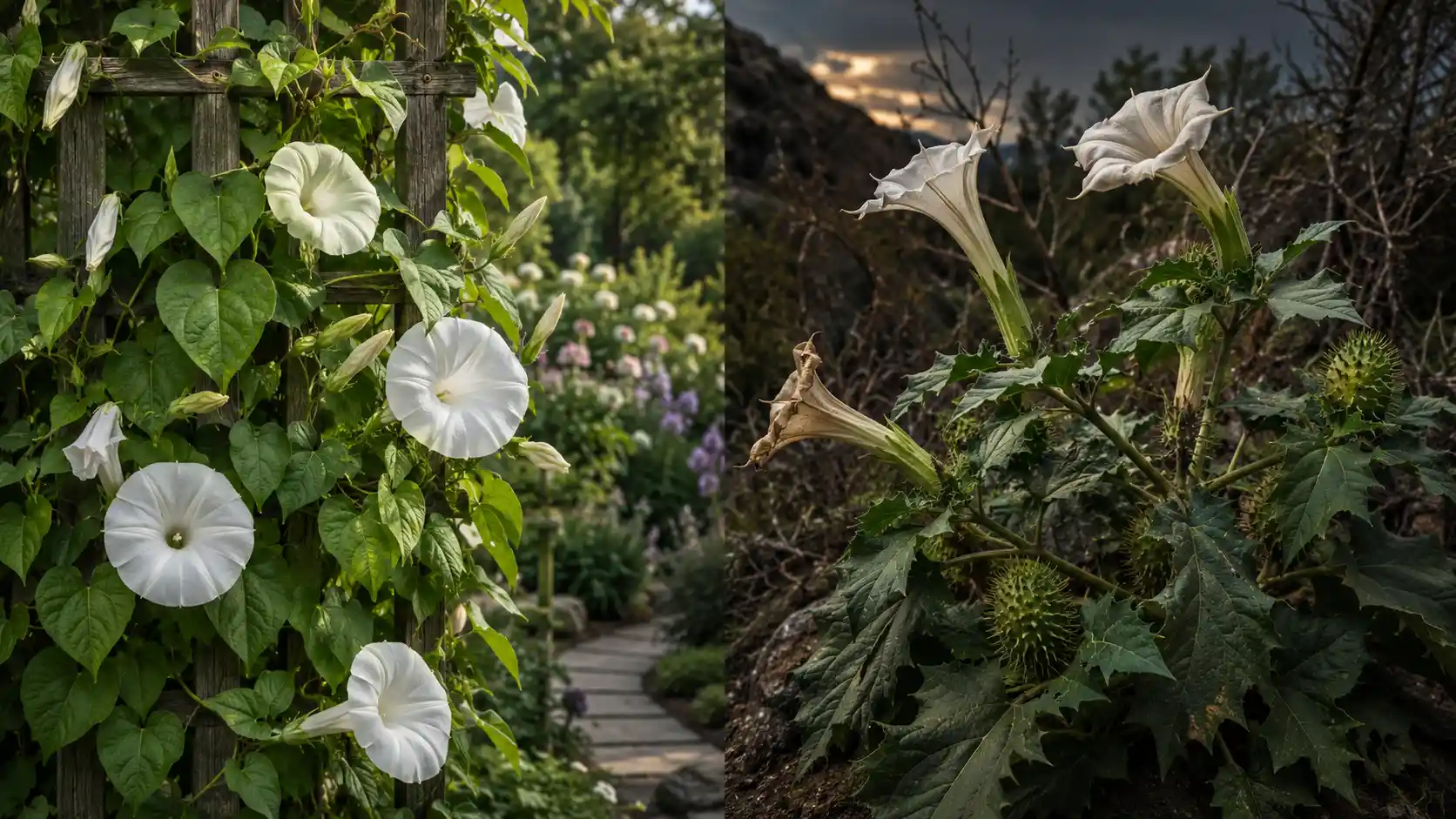
Moonflower safety depends on species. Ipomoea alba is mildly toxic if seeds are ingested in quantity, while Datura species are highly toxic and dangerous.
Key distinction:
- Ipomoea alba (moonflower vine): mild toxicity in seeds
- Datura (often also called moonflower): highly poisonous, hallucinogenic, and dangerous
Comparison Table
| Feature | Ipomoea alba | Datura |
| Toxicity | Low–moderate | High |
| Risk | Seed ingestion | All parts dangerous |
| Use | Ornamental vine | Toxic ornamental, restricted in some areas |
| Confusion | Often mistaken identity | Often mislabelled as moonflower |
Safety guidance:
- Avoid ingesting seeds
- Keep away from pets and children
- Seek medical advice if ingestion occurs
Growing Blue Moonflower
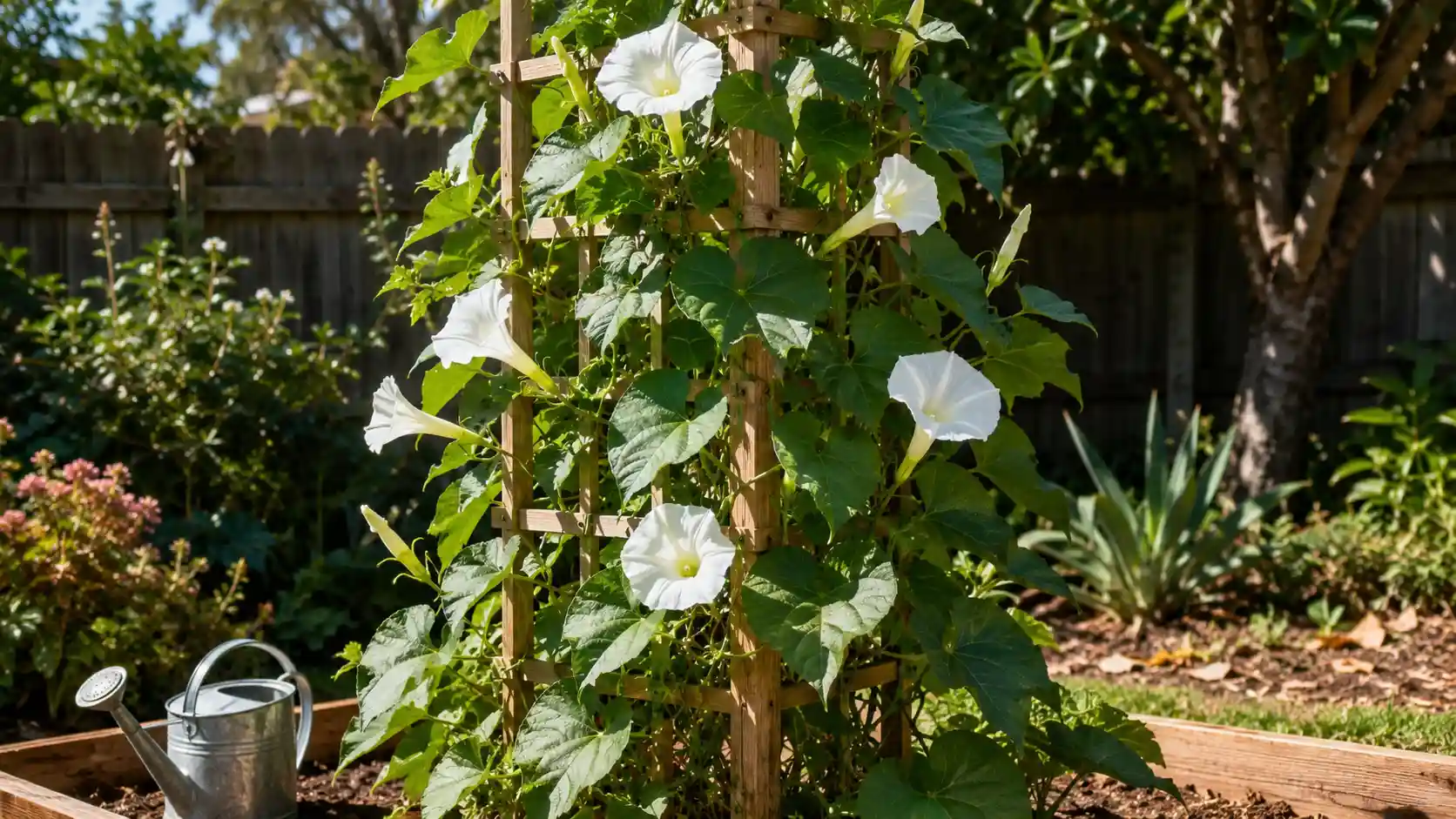
Blue moonflower thrives in warm, sunny conditions and is ideal for vertical gardening.
Plant Size
Vines can reach 3–6 metres in a single season with strong support structures.
Growth Rate
Growth is fast once established, especially in warm Australian summers.
Care Guide
- Watering: Regular but not waterlogged
- Light: Full sun for best growth
- Soil: Well-drained fertile soil
- Fertiliser: Light feeding during growth phase
- Support: Requires trellis or fencing
- Climate: Frost-sensitive in cooler regions
For more garden-friendly structural planting ideas, see Tuckeroo Tree Growth Rate: Size, Height & Care Guide, especially if you are designing layered outdoor garden spaces.
Growing From Seed
Seeds germinate better when:
- Lightly nicked or soaked overnight
- Sown in spring after frost risk passes
- Kept warm and moist during germination
Common Problems
- No blooms: Too much nitrogen or insufficient sun
- Yellow leaves: Overwatering or poor drainage
- Poor germination: Hard seed coat not treated
- Pests: Aphids or spider mites controlled with organic sprays
Similar care challenges and leaf health issues are also discussed in Brown Spots on Anthurium Leaves: Causes and Treatment, which helps understand common plant stress signals.
Differences From Other Night Bloomers
Moonflowers differ from other night bloomers due to:
- Vine growth habit
- Continuous seasonal flowering
- Large trumpet-shaped blooms
- Strong climbing structure compared to cactus or herb plants
Conclusion
Blue moonflower at night refers mainly to Ipomoea alba, a night-blooming vine valued for its luminous-looking flowers and fast growth. It is often confused with toxic Datura, making correct identification essential. With proper care, it provides repeated seasonal blooms and is a striking addition to Australian gardens. Its symbolic association with mystery and nighttime beauty makes it both ornamental and culturally meaningful.
FAQs
Why does the moonflower bloom at night?
It blooms at night due to photoperiodism, responding to decreasing light and attracting night pollinators.
Does moonflower glow in the dark?
No, it only reflects light and appears luminous.
What time does moonflower bloom?
It opens at dusk and closes by morning.
Does moonflower only bloom once?
Each flower blooms once, but the plant produces many blooms.
Are moonflowers poisonous?
Seeds of Ipomoea alba can be toxic in quantity; Datura is highly toxic.
What is the difference between moonflower and Datura?
Moonflower is a vine with mild toxicity; Datura is a highly poisonous plant.
What is the Queen of the Night flower?
It is a night-blooming cactus that flowers rarely but spectacularly at night.