
Goosefoot Plant Benefits: Uses, Nutrition, Edibility & Safety Guide
Introduction
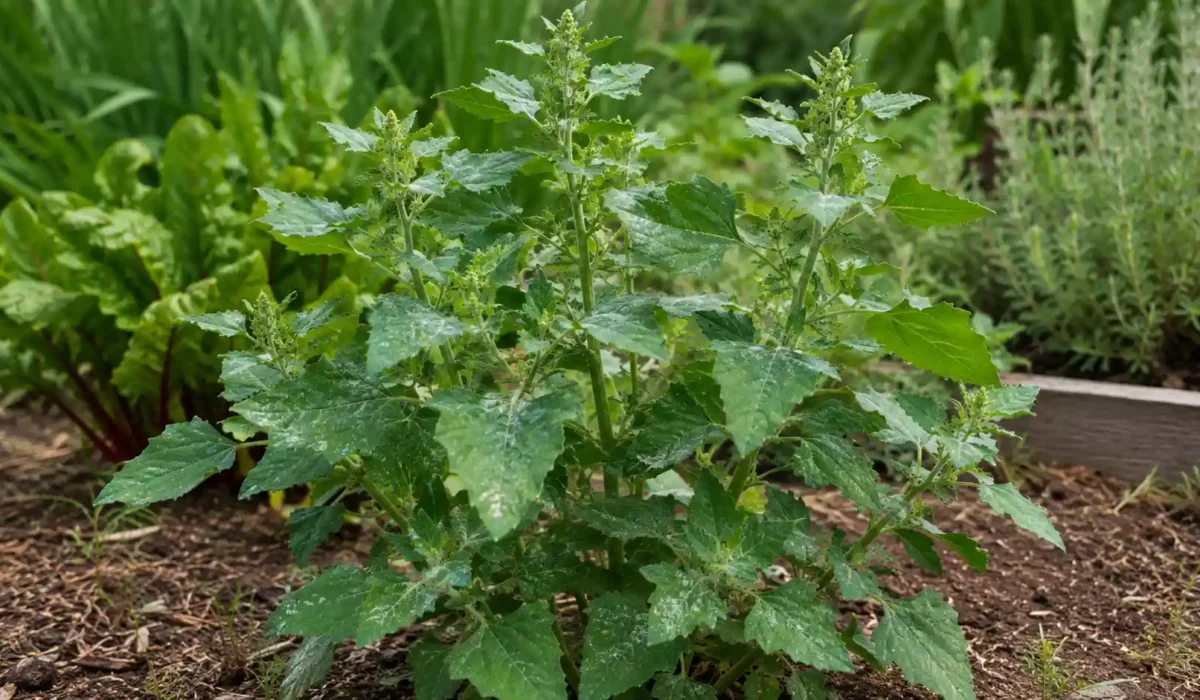
Goosefoot plant benefits come from its role as an edible, nutrient-rich wild green known scientifically as Chenopodium album. Also called fat hen, lamb’s quarters, white goosefoot, and bathua, this plant is a traditional food crop and a common backyard weed in many regions. Goosefoot belongs to the same plant family as spinach and quinoa and has been used for centuries as a leafy vegetable and seed source. In Australia, it may appear naturally in gardens, disturbed soils, and rural areas, making correct identification important before use. This guide explains what goosefoot is, whether it is safe to eat, its nutritional value, traditional uses, and how it can be prepared.
By Elemo Baker | Plant Care & Gardening Expert
Last Updated: July 2026
Quick Summary
- Goosefoot (Chenopodium album) is an edible wild green related to spinach and quinoa.
- Leaves, stems, and seeds can be used as food when correctly identified and properly prepared.
- Goosefoot contains natural compounds such as oxalates and saponins, so it is generally eaten in moderation.
- Common names include fat hen, lamb’s quarters, white goosefoot, and bathua.
What Is the Goosefoot Plant?
The goosefoot plant (Chenopodium album) is an edible annual herb from the Amaranthaceae family, which also includes spinach, beetroot, and quinoa. It is widely distributed across Europe, Asia, North America, and Australia, where it often grows naturally in gardens, farmland, roadsides, and disturbed soils. Goosefoot belongs to the Chenopodium genus, a group of plants with a long history of agricultural and culinary importance. More botanical background about this plant group can be explored through the Wikipedia overview of Chenopodium.
The name “goosefoot” comes from the shape of its leaves, which often resemble the outline of a goose’s footprint. The plant is commonly classified as a weed because it grows easily without cultivation and can spread through self-seeding.
Although considered a weed in many gardens, Chenopodium album has a long history as a useful wild green. Its leaves have traditionally been eaten as a vegetable, while its seeds have been used similarly to grains in some cultures.
Other Names for Goosefoot
Goosefoot has many regional names depending on location and cultural use:
- Fat hen / fat hen weed – Common names used in the United Kingdom and Australia because of its ability to grow as a common agricultural weed.
- Lamb’s quarters (lambsquarters) – A widely used name in North America.
- White goosefoot – Refers to the pale, powdery appearance often found on young leaves.
- Bathua plant – A traditional name used in India, where the leaves are commonly used in cooking.
- Fathen – Another spelling of fat hen, especially found in Australian agricultural contexts.
Is Goosefoot the Same as Goosegrass?
No, goosefoot and goosegrass are different plants. Goosefoot refers mainly to Chenopodium album, while the name goosegrass may refer to unrelated species such as Galium aparine (cleavers) or Eleusine indica (a grassy weed).
The similarity in common names can cause confusion, but these plants belong to different botanical groups and have different characteristics. Correct identification is essential when discussing edible wild plants.
Is Spinach a Type of Goosefoot?
Spinach is not a type of goosefoot, but the two plants are closely related. Both belong to the Amaranthaceae family, which explains why their leaves can have similar culinary uses.
Spinach (Spinacia oleracea) and goosefoot (Chenopodium album) are separate species. However, their shared family relationship means both are considered leafy green vegetables with comparable uses in cooking.
What Does Goosefoot Look Like? (Identification)
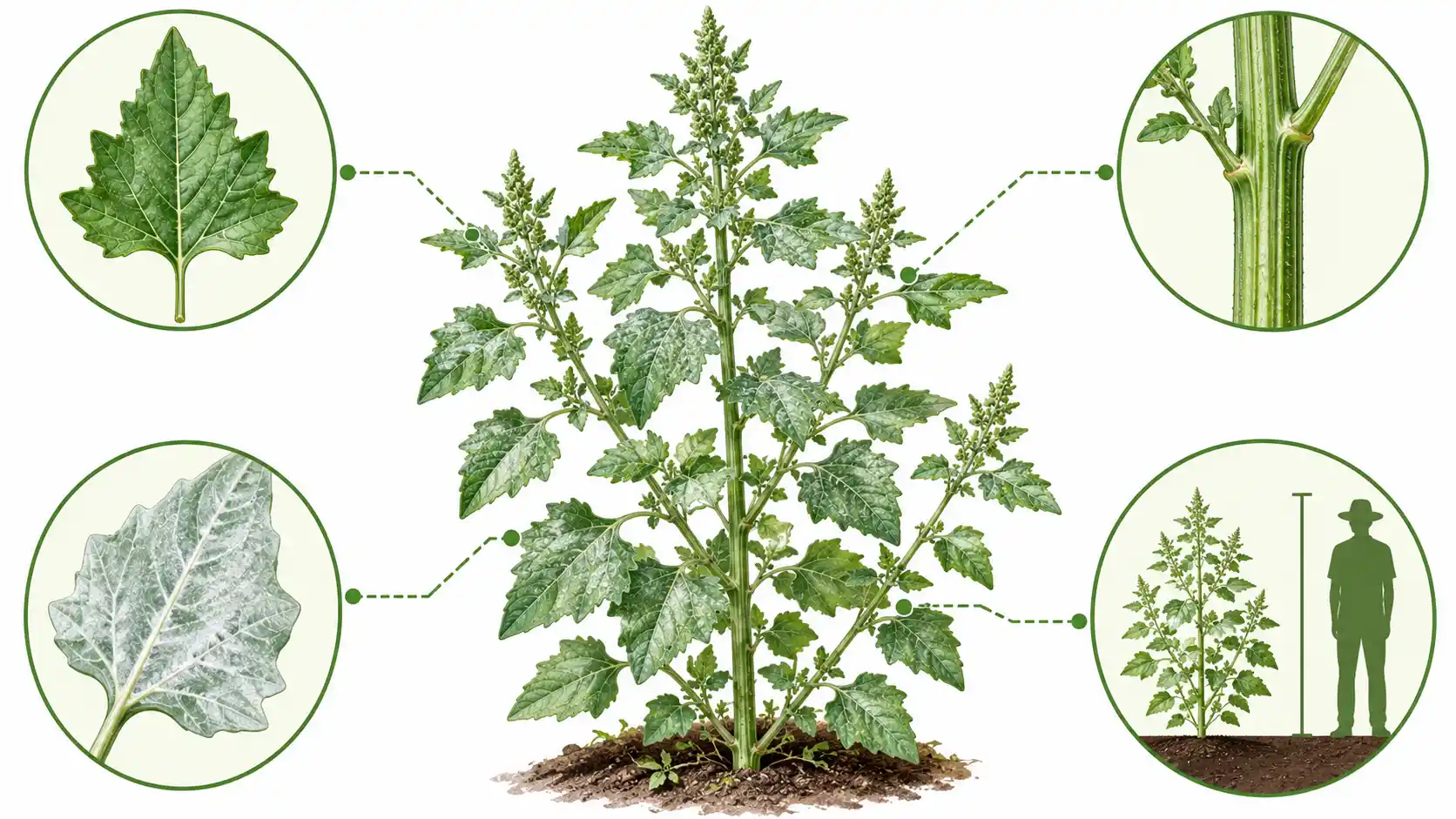
Goosefoot is identified by its distinctive leaf shape, powdery coating, and upright growth habit. The plant commonly develops diamond-shaped or irregularly triangular leaves with toothed edges.
Typical identification features include:
- Leaves: Diamond or goose-foot-shaped leaves with a slightly uneven edge.
- Leaf coating: Young leaves often have a white, flour-like powdery coating, especially on the underside.
- Stems: Upright stems may have green or reddish colouring with noticeable ridges or stripes.
- Height: Mature plants commonly grow around 30 cm to 1.5 metres tall depending on soil, moisture, and growing conditions.
Young goosefoot plants usually have softer leaves and a milder flavour, while older plants may develop stronger flavours and tougher textures.
In practical gardening experience, checking multiple plant features together is more reliable than relying on a single characteristic. Leaf shape, stem structure, and growth location should all be considered before identification.
Is Goosefoot Edible?
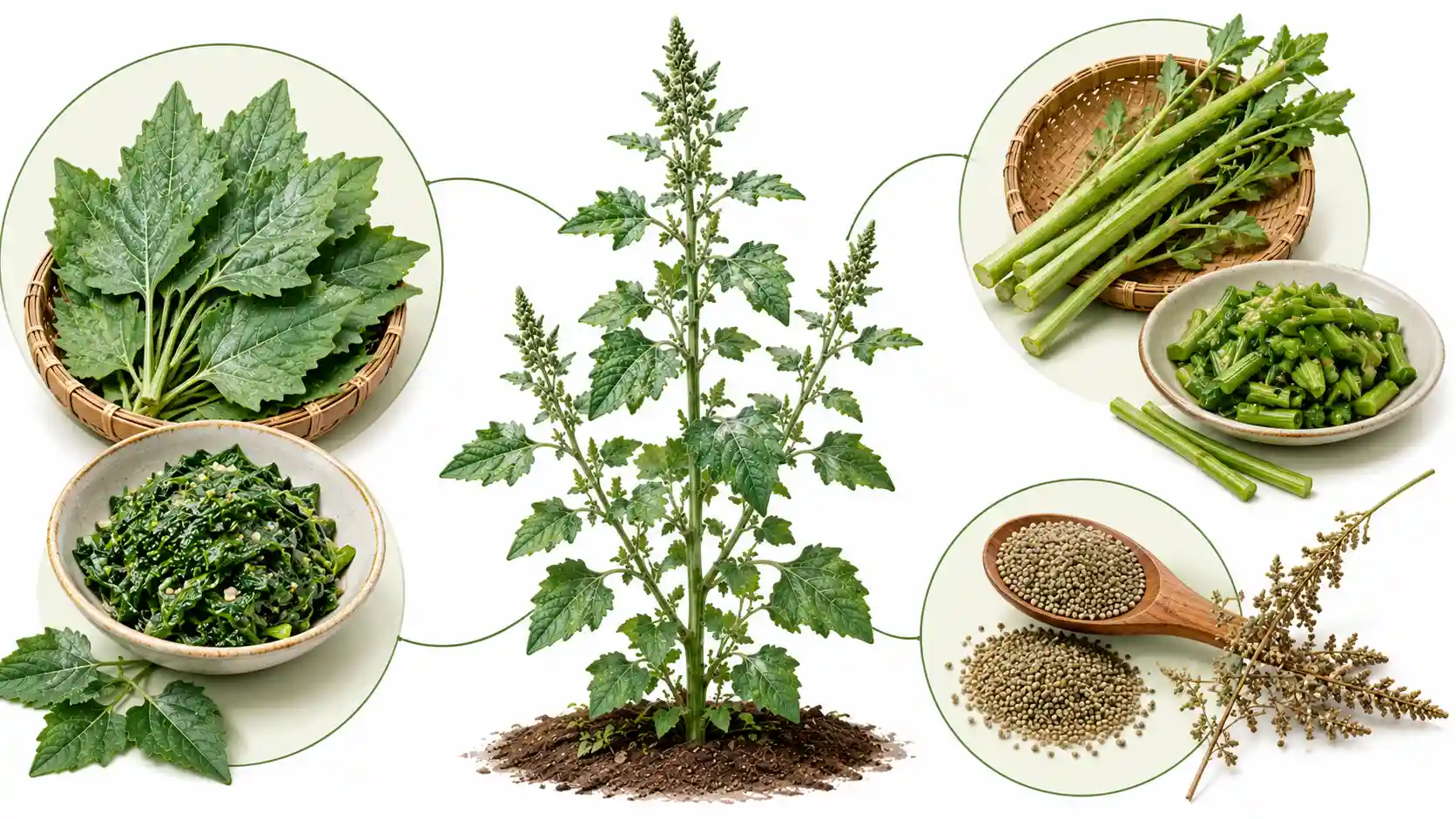
Yes, goosefoot is considered an edible plant when it is correctly identified as Chenopodium album. The leaves, young stems, and seeds have all been used as food in different cultures.
Goosefoot leaves are commonly cooked like spinach, while the seeds can be collected and prepared similarly to small grains. However, wild plant identification requires care because unrelated plants may grow in the same environments.
General edible plant safety practices include:
- Confirming the plant’s identity before eating.
- Avoiding plants collected from contaminated areas such as roadsides treated with chemicals.
- Washing leaves thoroughly before preparation.
Some related species, such as clammy goosefoot (Chenopodium pumilio), are different plants and may have stronger flavours or different culinary qualities.
What Are the Nutritional Benefits of Goosefoot?
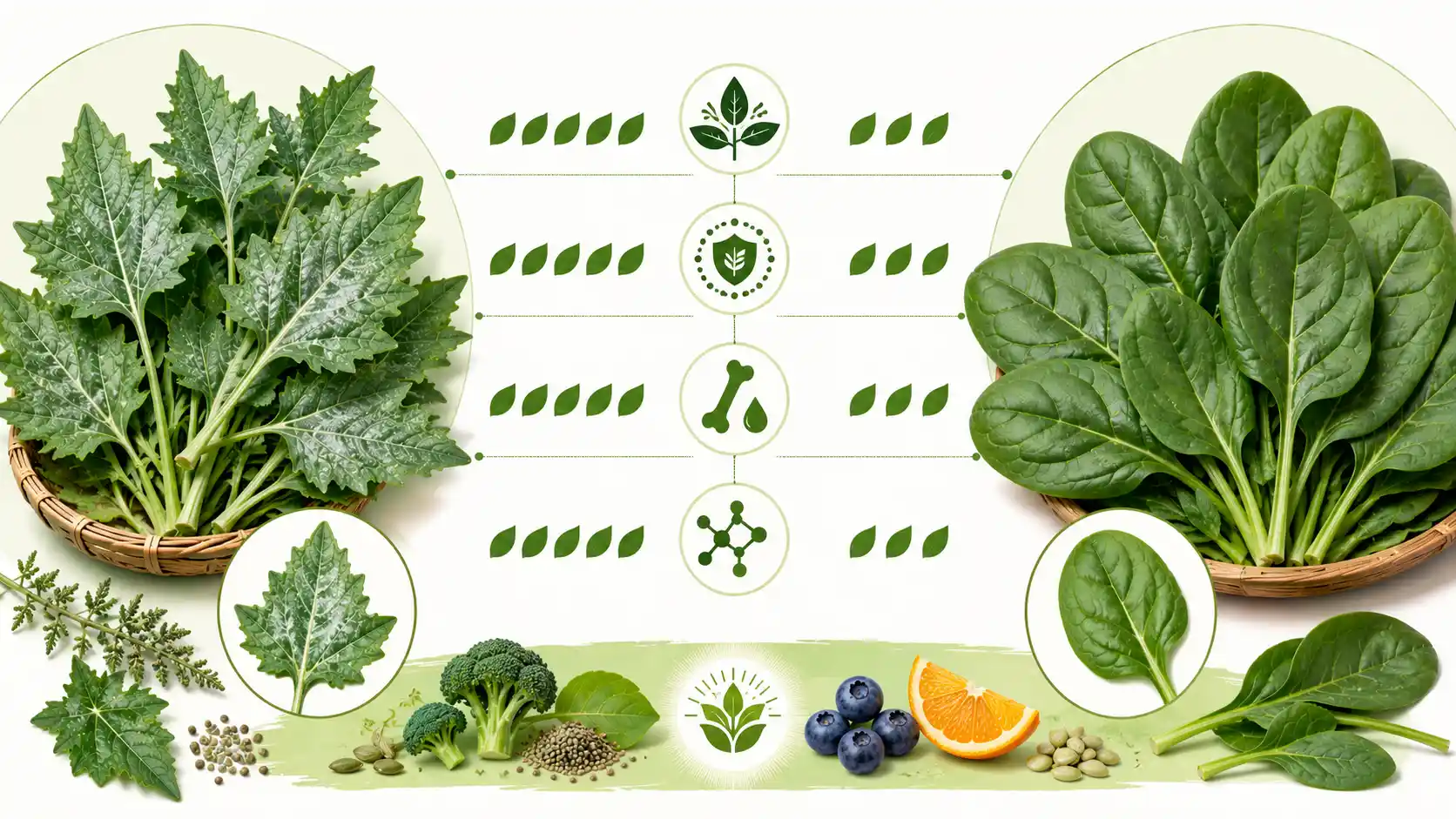
The nutritional benefits of goosefoot come from its naturally occurring vitamins, minerals, fibre, and plant-based compounds. Like many leafy greens, it contributes nutrients that support a varied diet. Like other plant-based foods such as avocado leaves, goosefoot has been traditionally explored for its nutritional properties. Learn more in our guide covering avocado leaves benefits, uses, tea, and safety considerations.
Goosefoot leaves are generally compared with spinach because both provide leafy green nutrition. However, the exact nutrient content varies depending on growing conditions, plant age, and preparation methods.
Goosefoot Nutritional Snapshot (General Reference)
| Nutrient | General Role | Comparison Note vs Spinach |
| Fibre | Supports normal digestion and adds bulk to meals | Similar to many leafy greens |
| Vitamin A compounds | Associated with plant pigments and normal nutrition | Also found in spinach |
| Vitamin C | A common nutrient in fresh leafy vegetables | Levels vary with freshness and cooking |
| Minerals such as calcium and magnesium | Important dietary minerals | Present in many green vegetables |
| Plant protein from seeds | Provides additional nutrients when seeds are used | Seeds are more concentrated than leaves |
Goosefoot should be viewed as a nutritious wild vegetable rather than a replacement for a balanced diet. Its value comes from being a diverse edible green that can add variety to meals.
What Is Goosefoot Used For?
Goosefoot has been used traditionally as a food plant, wild vegetable, and occasional garden resource. The leaves are the most commonly used part, while the seeds have also been valued as a grain-like food source in some cultures. Many plants have a long history of traditional uses beyond ornamental gardening. Similar examples can be found in our article about Leaf of Life plant benefits, uses, tea, and care.
Common goosefoot uses include:
- Leafy vegetable: Young leaves are cooked and used similarly to spinach in soups, curries, stir-fries, and vegetable dishes.
- Seed food source: Mature seeds can be collected and prepared as a small grain or ground into flour.
- Traditional herbal use: In some cultures, goosefoot has been traditionally used in folk practices. These uses are historical and should not be considered medical advice or a substitute for professional healthcare.
- Garden and soil role: Because goosefoot grows quickly and produces organic matter, it can contribute to natural plant diversity in some garden environments.
In Australia, goosefoot may appear naturally in disturbed soil, compost areas, or garden beds. Some gardeners remove it as a weed, while others allow selected plants to grow as a useful edible wild green. Plants provide value beyond their appearance, whether they are grown indoors or used as edible greens. Explore more benefits in our guide to the science-backed reasons indoor plants are valuable.
What Is Goosefoot Tea?
Goosefoot tea refers to a traditional preparation made by steeping plant material in hot water. In some regions, herbal preparations using goosefoot have been part of traditional practices.
However, goosefoot tea should be understood mainly as a cultural preparation rather than a proven health treatment. Plant identification, cleanliness, and appropriate preparation are important considerations when using any wild plant.
How Do You Cook and Eat Goosefoot?
Goosefoot is most commonly eaten after cooking because heat helps soften the leaves and reduce some naturally occurring compounds found in the plant.
Common preparation methods include:
- Washing young leaves thoroughly to remove soil and surface residue.
- Cooking leaves by steaming, boiling, or sautéing.
- Adding cooked greens to soups, curries, and vegetable dishes.
- Preparing mature seeds as a grain-like ingredient.
Raw young leaves may be eaten in small amounts by some people, but large quantities of raw goosefoot are generally avoided because the plant naturally contains compounds such as oxalates.
Simple Ways to Use Goosefoot
- Cooked greens: Use young leaves as a spinach substitute in cooked meals.
- Soups: Add chopped leaves to vegetable soups for extra greens.
- Seed dishes: Prepare cleaned seeds similarly to small grains.
- Flour: Ground seeds may be mixed into other flours for traditional recipes.
- Tea preparation: Used traditionally in some cultures as a steeped herbal drink.
In practical gardening experience, younger leaves usually provide better texture and flavour because mature leaves can become tougher and more bitter.
Goosefoot vs Spinach and Other Greens
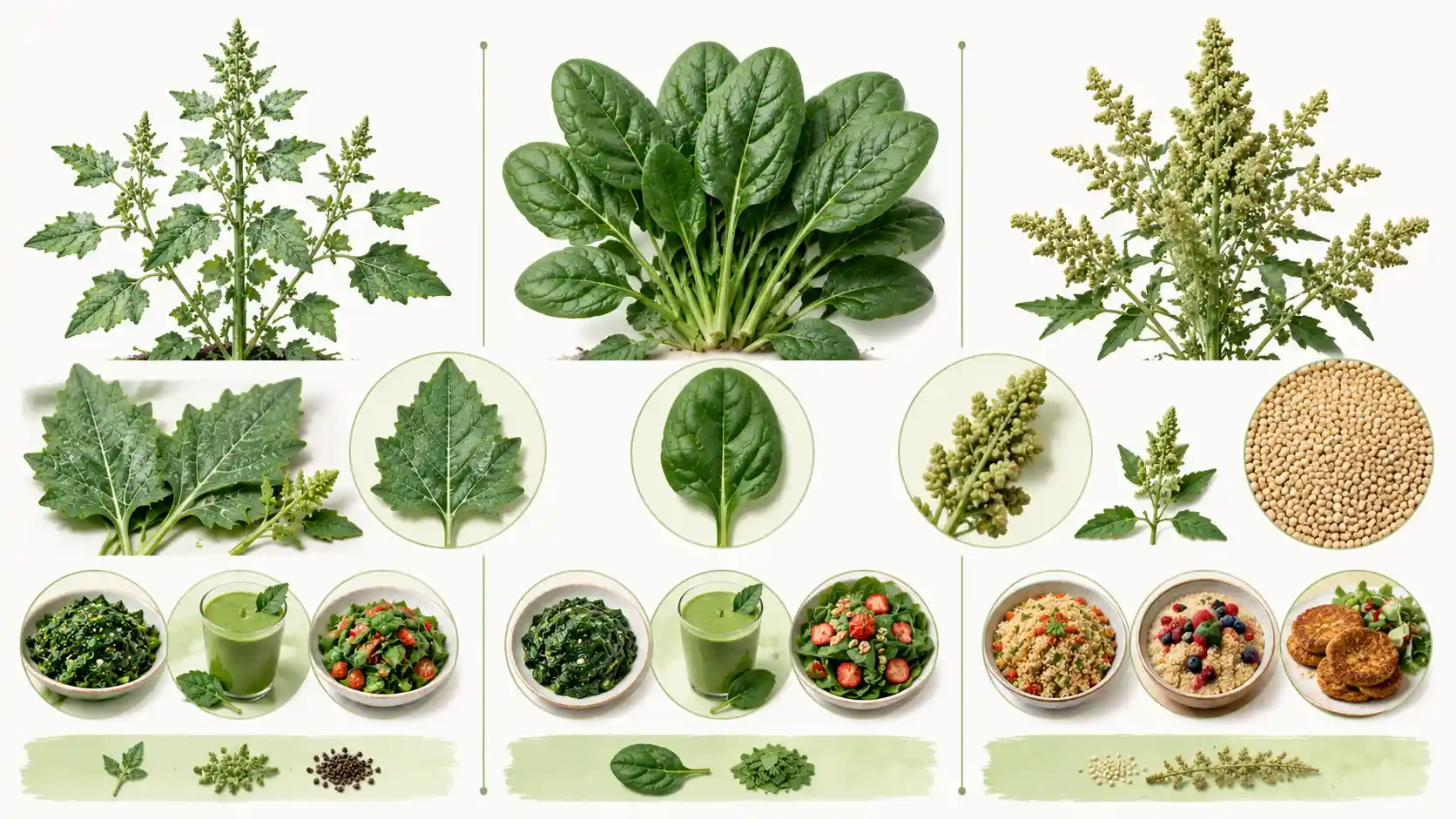
Goosefoot, spinach, and quinoa are related plants with different culinary roles. Goosefoot is often compared with spinach because both provide edible leaves, while quinoa is related because its seeds are used as a grain-like food.
| Feature | Goosefoot (Chenopodium album) | Spinach (Spinacia oleracea) | Quinoa (Chenopodium quinoa) |
| Plant family | Amaranthaceae | Amaranthaceae | Amaranthaceae |
| Main edible parts | Leaves, young stems, seeds | Leaves | Seeds |
| Flavour | Mild to earthy, stronger when mature | Mild, slightly sweet | Nutty seed flavour |
| Common use | Wild green, cooked vegetable | Fresh or cooked leafy vegetable | Grain substitute |
| Growing habit | Often grows as a wild plant or weed | Usually cultivated | Usually cultivated as a seed crop |
The relationship between these plants shows why goosefoot is sometimes described as a “wild relative” of familiar food crops.
Is the Goosefoot Plant Poisonous? Safety Considerations
The goosefoot plant is not generally considered poisonous when correctly identified as Chenopodium album and prepared appropriately. However, like many edible wild plants, it contains naturally occurring compounds that should be considered.
Goosefoot contains:
- Oxalates: Natural compounds found in many leafy vegetables.
- Saponins: Plant compounds that occur in some edible species.
Because of these compounds, goosefoot is generally treated as a food to eat in moderation rather than in excessive amounts. Cooking and proper preparation are common practices when using wild greens.
People who need to manage dietary oxalate intake may wish to seek guidance from a qualified health professional before regularly consuming high-oxalate foods.
The most important safety factor is correct identification. Confusing goosefoot with unrelated plants can create unnecessary risks, which is why reliable identification is essential.
Common Mistakes and Problems When Growing or Foraging Goosefoot
Although goosefoot is easy to grow, mistakes can occur when collecting or managing this plant.
Mistake 1: Misidentifying the Plant
Why it happens: Many wild plants can have similar leaf shapes, especially during early growth stages.
How to fix it: Check several characteristics together, including leaf shape, powdery coating, stem appearance, and overall growth pattern.
How to prevent it: Use reliable plant identification resources and avoid eating any plant unless identification is certain.
Mistake 2: Harvesting Old, Bitter Leaves
Why it happens: Mature goosefoot leaves become tougher and may develop stronger flavours.
How to fix it: Choose younger leaves and tender growth.
How to prevent it: Harvest regularly during active growth periods rather than waiting until plants mature fully.
Mistake 3: Eating Unwashed Leaves
Why it happens: Wild plants may contain soil particles, dust, or surface residue.
How to fix it: Wash leaves carefully before cooking.
How to prevent it: Harvest from clean areas away from polluted locations or chemical treatments.
Mistake 4: Confusing Goosefoot With Goosegrass
Why it happens: Similar common names create confusion.
How to fix it: Remember that goosefoot is Chenopodium album, while goosegrass refers to unrelated plants.
How to prevent it: Focus on botanical identification rather than common names alone.
Correct identification is important not only for edible plants but also for managing garden growth. Our garden pest identification guide for Australian gardens provides additional help with recognising common garden issues.
When and How to Harvest Goosefoot
The best time to harvest goosefoot depends on the intended use. Young leaves are usually preferred for cooking because they are softer and have a milder flavour.
General harvesting guidance includes:
- Young leaves: Best collected before flowering when the plant is actively growing.
- Mature leaves: Can still be used but may require more cooking.
- Seeds: Harvest when seed clusters mature and become dry.
In Australian climates, growth patterns vary by region. Goosefoot commonly grows during warmer growing periods when moisture and soil conditions are suitable. Seasonal rainfall, temperature, and local conditions influence when plants appear and how quickly they develop.
Elemo Baker recommends observing plants throughout the season because growth stages provide useful clues about the best harvesting time.
Is Goosefoot a Weed? Growing Goosefoot in an Australian Garden
Yes, goosefoot is often classified as a weed because it grows naturally, produces many seeds, and can spread easily. However, its classification depends on perspective. A plant considered a weed in one setting may be valued as an edible wild green in another. Understanding how different plants behave in Australian conditions can help gardeners make better choices. Our guide to Australian plants for indoor houseplants and garden design explains how native and introduced plants fit into different garden environments.
Goosefoot grows well in:
- Full sun to partial shade.
- Disturbed soils and garden areas.
- Nutrient-rich soil with adequate moisture.
In Australia, fat hen (Chenopodium album) may appear in gardens, farms, compost areas, and other disturbed locations. Some gardeners remove it to reduce competition with cultivated plants, while others manage small populations intentionally.
Because goosefoot can self-seed, allowing it to grow requires monitoring to prevent unwanted spread.
Conclusion
Goosefoot plant benefits come from its nutritional value, traditional food uses, and role as an edible wild green. Known scientifically as Chenopodium album, this plant is related to spinach and quinoa and has been used in many cultures as a leafy vegetable and seed source.
Goosefoot can provide fibre, vitamins, minerals, and culinary variety when correctly identified and properly prepared. However, responsible use is important because wild plants require accurate identification and moderation.
The key takeaway is that goosefoot is a useful nutrient-containing green that can be safely enjoyed when correctly recognised, cleaned, cooked appropriately, and included as part of a balanced diet.
For a deeper dive into how houseplants support your health at home, check out our complete guide to indoor plant benefits and natural wellness.
Frequently Asked Questions
What is the herb goosefoot used for?
Goosefoot is mainly used as a cooked leafy vegetable, seed food source, and traditional wild green. Its leaves can be prepared like spinach, while its seeds may be used similarly to small grains.
Can you eat goosefoot plants?
Yes, goosefoot plants (Chenopodium album) are edible when correctly identified. The leaves, stems, and seeds can be used as food after proper preparation.
What is goosefoot tea?
Goosefoot tea is a traditional preparation made by steeping goosefoot plant material in hot water. It is mainly associated with cultural herbal practices rather than established medical uses.
What is another name for the goosefoot plant?
Common names for goosefoot include fat hen, fat hen weed, lamb’s quarters, white goosefoot, bathua, and fathen.
Is a goosefoot plant poisonous?
Goosefoot is not generally considered poisonous when correctly identified, but it contains natural compounds such as oxalates and saponins. It is usually eaten in moderation and prepared properly.
How do you cook goosefoot?
Goosefoot is commonly cooked by steaming, boiling, or sautéing young leaves. It can also be added to soups, vegetable dishes, and traditional recipes.
Why is it called goosefoot?
It is called goosefoot because its leaves often resemble the shape of a goose’s footprint.
Is spinach a type of goosefoot?
No, spinach is not a type of goosefoot. However, both plants belong to the Amaranthaceae family and are closely related botanically.
1 Comment