Ivory Curl Tree Sydney: Size, Growth Rate & Care Guide
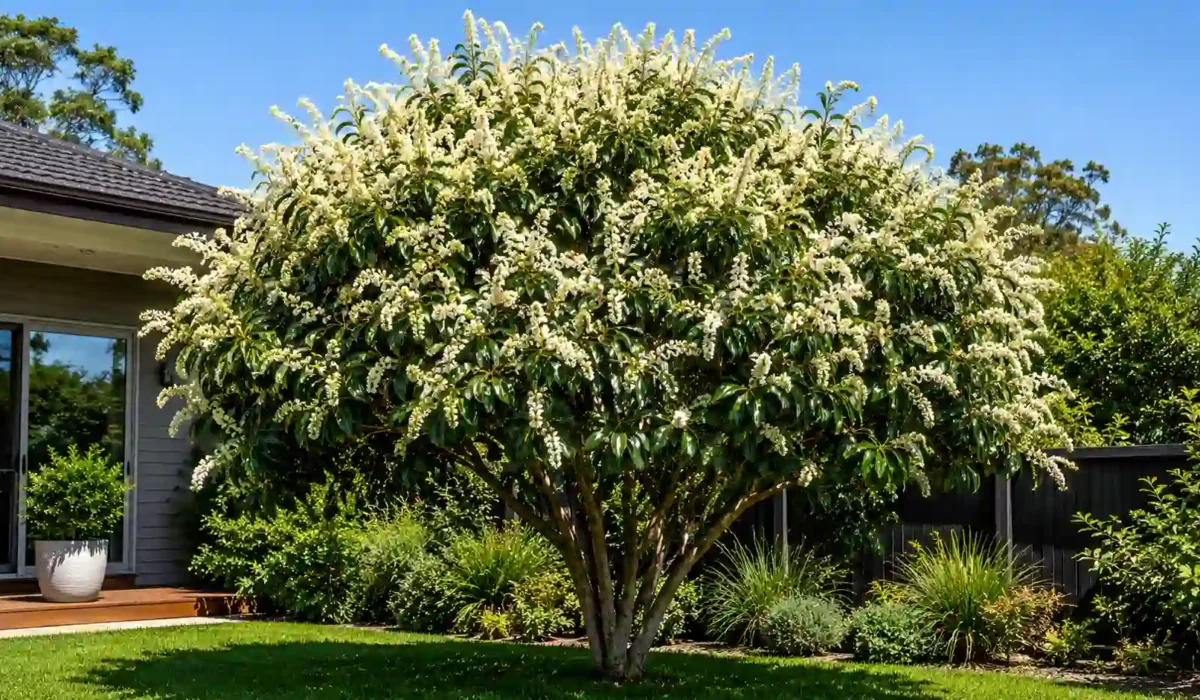
Buckinghamia celsissima, the ivory curl tree, grows well as far south as Sydney but reaches only 7 to 8 metres tall there, compared with 30 metres in its native Queensland rainforest habitat, notes Elemo Baker. This Proteaceae species produces fragrant, creamy-white flower racemes from summer into early autumn and needs full sun, frost protection and well-drained, moist soil to thrive.
Being a Proteaceae, the ivory curl tree is phosphorus-sensitive and shouldn’t be fed standard high-phosphorus fertilisers. Its nectar-rich blooms draw honeyeaters, bees and butterflies, while juvenile leaves are often irregularly lobed before maturing into glossy, silvery-backed foliage. It also has poor salt tolerance, making exposed coastal frontlines a less reliable planting spot than sheltered Sydney gardens.
By Elemo Baker | Plant Care & Gardening Expert
Last Updated: August 2026
Quick Summary
- Buckinghamia celsissima typically reaches 6–8 metres in Sydney, much smaller than its 25–30 metre rainforest height in Far North Queensland.
- It is a fast-growing evergreen Australian native with a generally non-invasive root system, making it suitable for many suburban gardens.
- The tree performs best in full sun to part shade and well-drained soils, including sandy soils.
- Once established, it tolerates light frost and suits many Sydney microclimates.
- Regular watering during establishment and light pruning after flowering help maintain healthy growth and an attractive canopy.
What Is an Ivory Curl Tree?
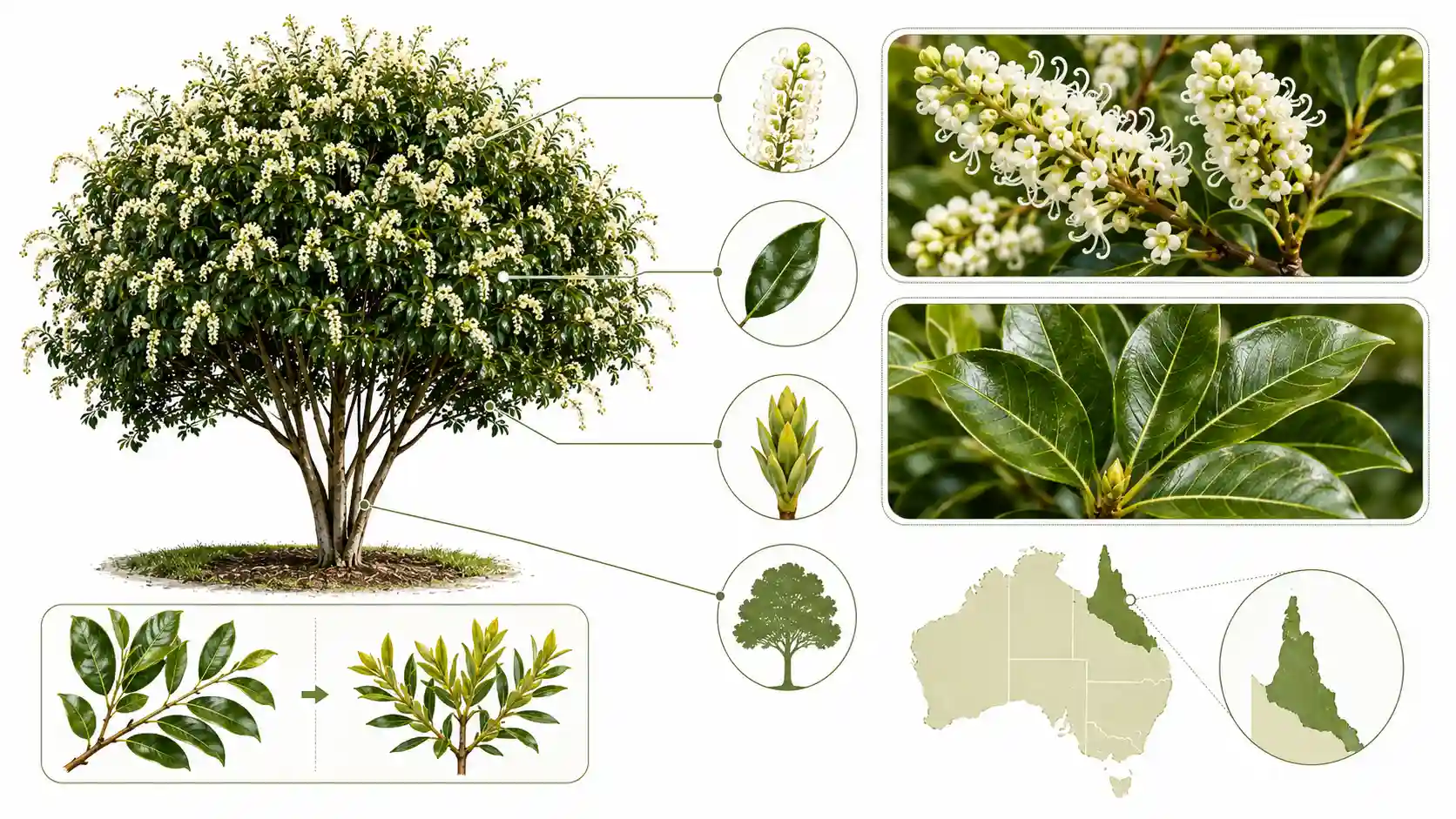
The ivory curl tree is the common name for Buckinghamia celsissima, an evergreen flowering tree in the Proteaceae family. Native to the wet tropical rainforests of northeastern Queensland, it is widely planted throughout eastern Australia as a feature tree, shade tree and street tree. Its long, creamy-white flower spikes appear during summer and attract birds, bees and other beneficial pollinators.
Buckinghamia celsissima belongs to the Proteaceae family, a diverse group of flowering plants that includes many well-known Australian native species.
The ivory curl tree is one of many attractive flowering species used in Australian gardens. Our Flowering Trees Australia: Best Species Guide covers more options for adding seasonal colour and wildlife value to landscapes.
The tree is valued for its glossy green foliage, upright growth habit and adaptability to urban landscapes. In Sydney, it remains much smaller than in its natural rainforest habitat, making it well suited to residential gardens.
A common question is “Is Ivory Curl a grevillea?” The answer is no. Although the flowers resemble the bottlebrush-like flower spikes seen on many grevilleas, the ivory curl tree belongs to the separate genus Buckinghamia. Both genera are members of the Proteaceae family, which explains their similar floral appearance, but they are botanically different plants.
In our experience growing Australian native ornamentals, ivory curl trees establish reliably when planted in a sunny location with free-draining soil. Their combination of ornamental flowers and relatively compact size makes them easier to manage than many larger rainforest species.
Buckinghamia — Genus and Varieties
The genus Buckinghamia contains only two recognised species.
- Buckinghamia celsissima – the well-known ivory curl tree commonly grown in Australian gardens and streets.
- Buckinghamia ferruginiflora – a much rarer species restricted to parts of northern Queensland and seldom available through commercial nurseries.
For home gardeners, Buckinghamia celsissima is almost always the species available for planting. Unlike many ornamental trees, there are no widely sold cultivated varieties or named ornamental cultivars that differ significantly from the straight species. Most nursery stock is propagated from the naturally occurring species, providing consistent growth, flowering and foliage characteristics.
Because there are few cultivated forms, gardeners can generally expect similar performance regardless of where healthy nursery-grown trees are purchased.
Ivory Curl Tree Size in Sydney
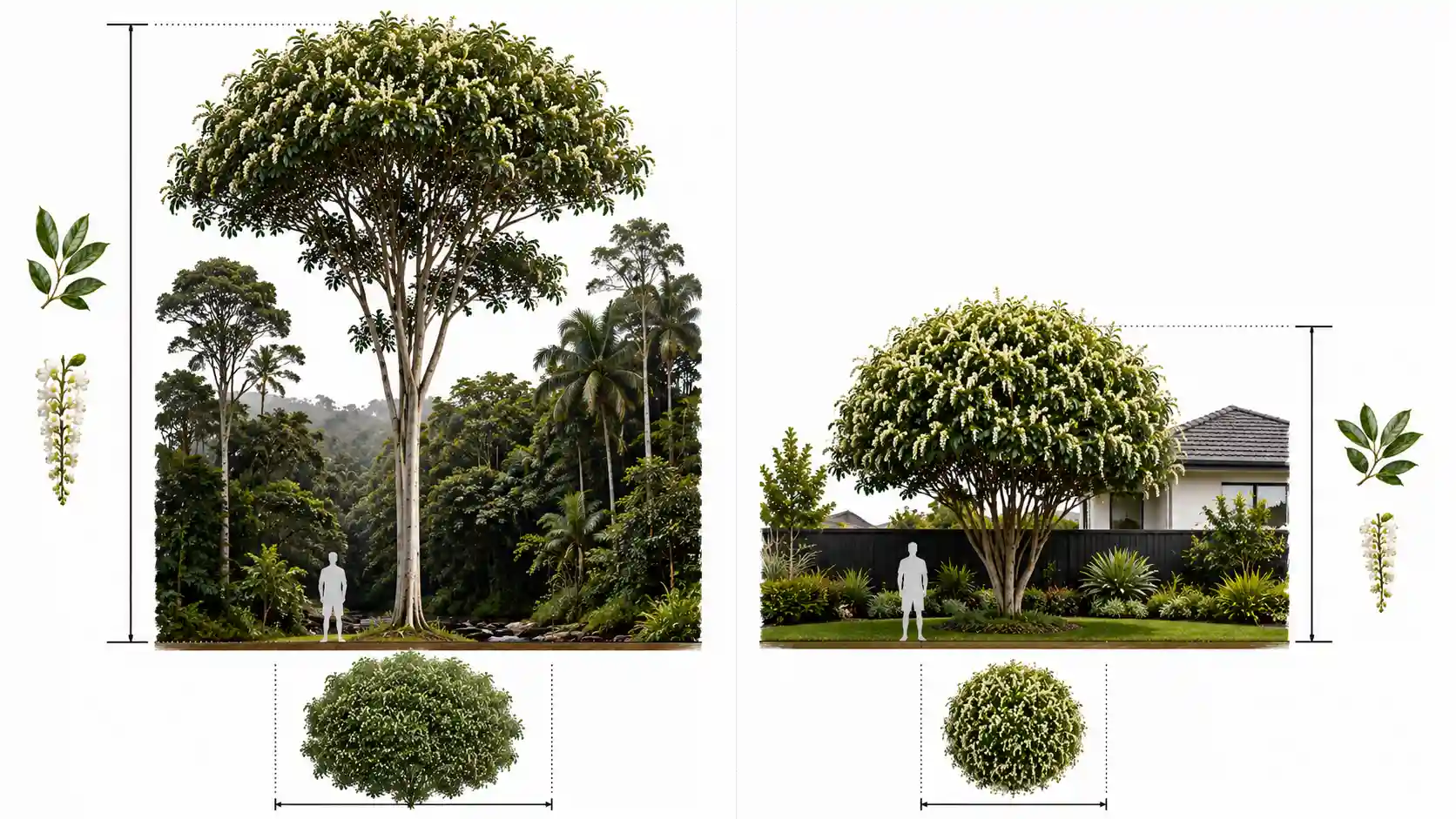
The size of an ivory curl tree in Sydney differs significantly from its size in its native rainforest environment. In the tropical rainforests of Far North Queensland, Buckinghamia celsissima can grow to 25–30 metres tall as part of the forest canopy.
Under Sydney’s cooler temperate climate and typical residential growing conditions, mature trees generally reach 6–8 metres, although some healthy specimens may approach 10 metres over many years. Their canopy usually spreads 3–6 metres, producing a rounded, dense crown that provides shade without overwhelming an average suburban garden.
The smaller mature size results from cooler winters, less humidity and the more restricted growing conditions found in cultivated landscapes compared with tropical rainforests.
Elemo Baker recommends allowing adequate space around the tree before planting, even though it remains much smaller than its rainforest counterpart. Good spacing improves airflow, encourages an even canopy and reduces long-term maintenance.
Table — Ivory Curl Tree Height by Setting
| Setting | Typical Height | Typical Spread |
| Native rainforest (Far North Queensland) | Up to 25–30 m | Varies |
| Sydney and temperate gardens | 6–8 m | 3–6 m |
| Pruned as hedge or screen | 2–4 m (maintained) | Dense, narrow |
How Fast Do Ivory Curl Trees Grow?
The ivory curl tree is generally considered a fast-growing to moderately fast-growing Australian native, especially during its establishment years. Under favourable conditions, Buckinghamia celsissima produces vigorous new growth in spring and summer, allowing it to develop into an attractive feature tree within a relatively short time.
If you are comparing other quick-growing evergreen options for Australian landscapes, our guide to Fast Growing Evergreen Trees Australia explains suitable species, growth habits and maintenance requirements.
Growth speed depends on several environmental factors, including:
- Regular watering during establishment.
- Full sun or light afternoon shade.
- Well-drained, fertile soil.
- Warm temperatures throughout the growing season.
- Adequate spacing for root and canopy development.
In Sydney, most healthy trees produce their strongest growth from spring through early autumn, with growth slowing considerably during winter. Trees planted in compacted, poorly drained or heavily shaded locations typically grow more slowly.
In our experience, consistent watering during the first few months after planting makes the greatest difference to establishment. Once the root system develops, the tree usually becomes much more resilient and maintains steady annual growth.
Growing Conditions — Sunlight, Soil and Water
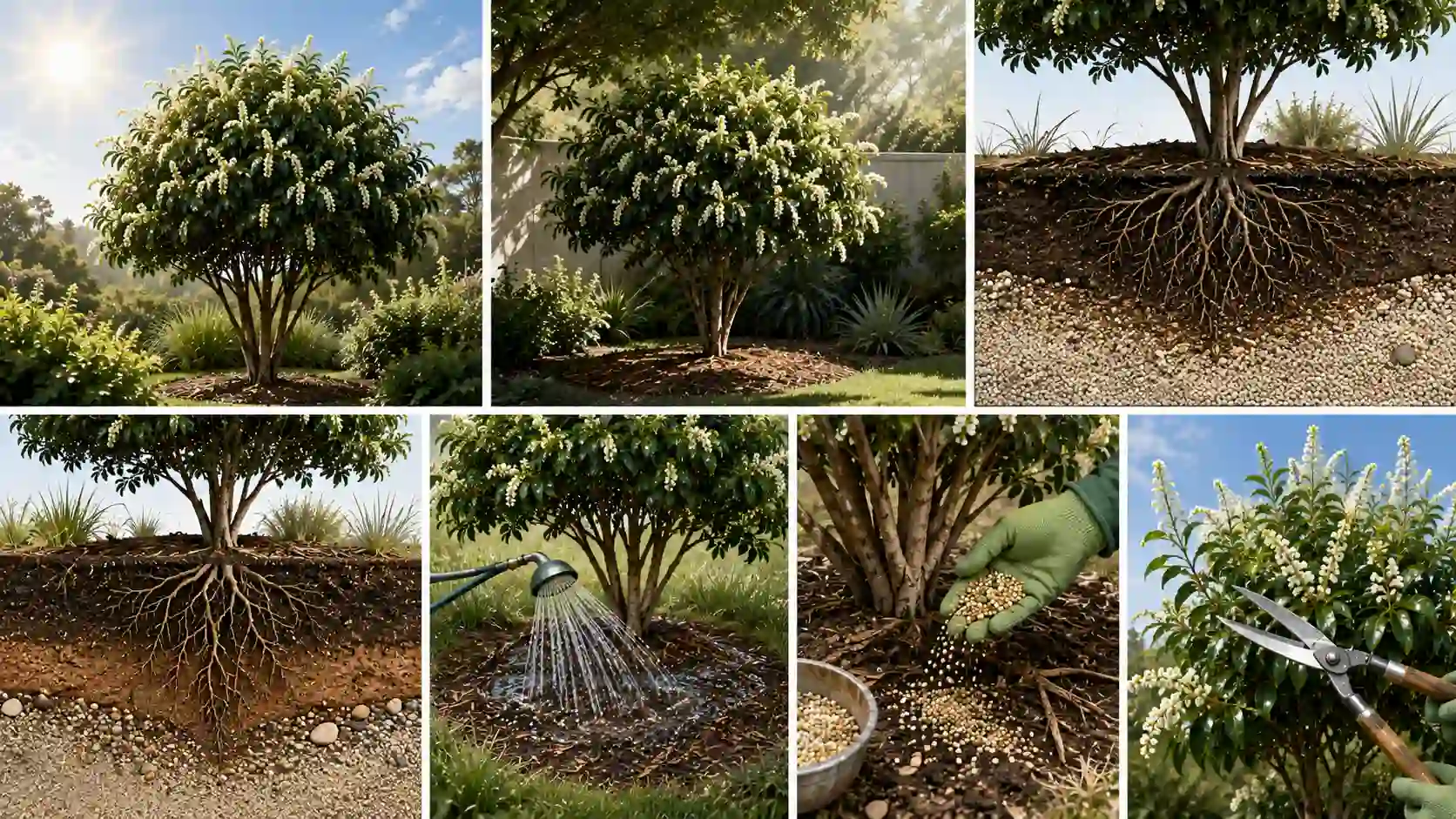
The ivory curl tree adapts well to Sydney’s climate when planted in suitable conditions. Although naturally found in tropical rainforest margins, it performs exceptionally well in many suburban gardens because it tolerates a range of soil types and seasonal conditions.
Sunlight
The ivory curl tree grows best in full sun to part shade.
For the strongest flowering and densest canopy:
- Plant in at least 6 hours of direct sunlight each day.
- Light afternoon shade is acceptable in hotter western Sydney locations.
- Avoid deep shade, which can reduce flowering and produce sparse growth.
Soil
Buckinghamia celsissima prefers well-drained soil but adapts to several soil types commonly found across Sydney.
Suitable soils include:
- Sandy soil.
- Loam.
- Clay loam with good drainage.
- Slightly acidic to neutral soils.
The tree dislikes constantly waterlogged ground because excessive moisture reduces oxygen around the roots and may contribute to root decline.
Water
Newly planted trees require regular watering while establishing.
A practical watering schedule is:
- Water deeply 2–3 times each week during the first 10–12 weeks, depending on rainfall.
- Reduce watering gradually as new growth becomes consistent.
- Mature trees generally tolerate short dry periods once established.
Although drought tolerant after establishment, prolonged dry weather may reduce flowering and slow growth. Deep, occasional watering during extended dry spells helps maintain healthy foliage.
Cold Hardiness and Frost Tolerance
Many gardeners ask whether the ivory curl tree is suitable for Sydney’s winters. The answer is yes.
While it originates from tropical Queensland, established trees tolerate light frost, making them suitable for most Sydney suburbs. Young trees benefit from temporary frost protection during their first winter if planted in colder inland areas.
As of recent horticultural recommendations, protecting newly planted native trees with mulch and maintaining even soil moisture through their first year continues to improve establishment success in temperate climates.
Table — Ivory Curl Tree Care Requirements
| Factor | Requirement |
| Sunlight | Full sun to part shade |
| Soil | Well-drained; sandy, loam or clay loam |
| Water | Regular while establishing; drought-tolerant once mature |
| Frost tolerance | Tolerates light frost once established |
| Fertiliser | Slow-release native fertiliser in spring |
| Pruning | Light prune after flowering to maintain shape |
Are Ivory Curl Tree Roots Invasive?
No. Ivory curl tree roots are generally considered non-invasive and non-aggressive, making the species well suited to suburban gardens, nature strips and many residential landscapes.
Unlike some vigorous shade trees that produce large surface roots, Buckinghamia celsissima develops a relatively well-balanced root system that normally follows moisture and soil conditions rather than aggressively lifting paving or seeking out plumbing.
Understanding root behaviour is important when selecting backyard trees. For comparison, our guide on the Gum Tree Root System: Root Spread, Problems & Safe Distances explains how larger Australian trees differ in root growth and spacing needs.
This makes it suitable for planting:
- In smaller backyards with adequate planting space.
- Near patios and paved areas when sensible clearance is maintained.
- Along residential streets.
- Beneath many overhead power lines due to its moderate mature height.
- As a feature tree in modern landscape designs.
Although the roots are considered non-invasive, gardeners should still avoid planting any tree immediately beside house foundations, retaining walls or underground services. Providing sufficient growing space allows both the roots and canopy to develop naturally.
Elemo Baker recommends following the spacing advice provided by local councils or qualified arborists when selecting a permanent planting location.
Common Ivory Curl Tree Problems (and How to Fix Them)
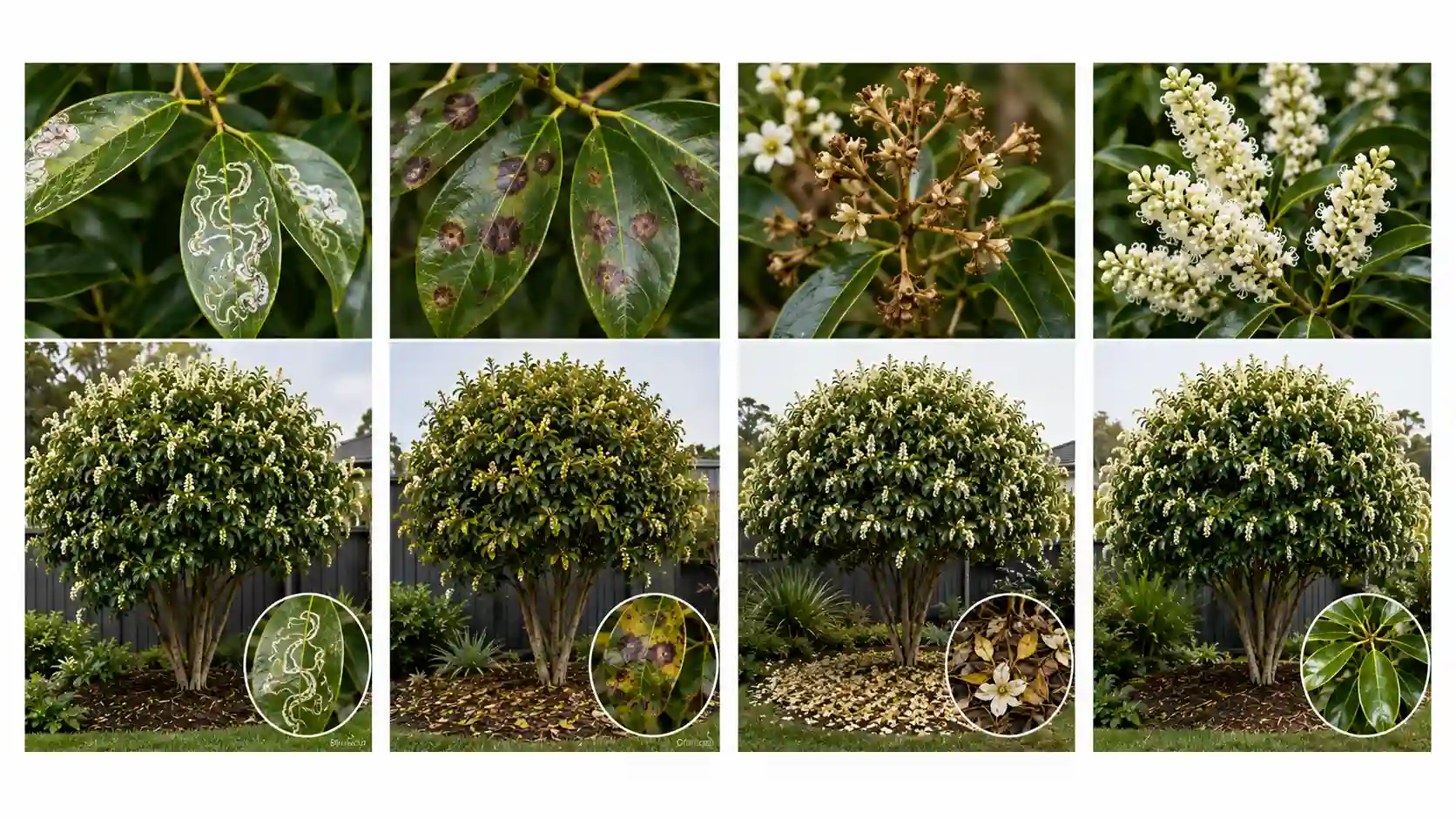
The ivory curl tree is generally regarded as a low-maintenance native tree, but like most ornamentals, it can occasionally experience pest or disease issues. Fortunately, most problems are minor when identified early and managed with good gardening practices. Correct pest identification is the first step in effective treatment. Our Garden Pest Identification Guide for Australian Gardens helps gardeners recognise common insects and plant damage symptoms.
Leaf Damage and Pests
The most commonly reported problems include leaf miner insects and fungal leaf spotting.
Leaf miner
Cause: Small larvae feed inside the leaf tissue, creating winding tunnels or pale patches.
How to fix it:
- Remove heavily affected leaves.
- Encourage beneficial insects that naturally reduce pest numbers.
- Use an appropriate targeted treatment if infestations become severe.
Prevention:
- Inspect new growth regularly.
- Maintain overall tree health through correct watering and nutrition.
- Avoid unnecessary stress caused by drought.
Fungal leaf spotting
Cause: Humid conditions, poor airflow and prolonged moisture on foliage encourage fungal development.
How to fix it:
- Remove infected leaves where practical.
- Improve air circulation with selective pruning.
- Avoid wetting foliage during irrigation whenever possible.
Prevention:
- Plant with adequate spacing.
- Water the soil rather than the leaves.
- Prune lightly after flowering to maintain an open canopy.
Leaf and Flower Drop
Many new gardeners mistake seasonal leaf or flower drop for a serious problem. In most cases, this is a completely normal part of the tree’s annual growth cycle.
After flowering, the ivory curl tree naturally sheds:
- Spent flowers.
- Older leaves.
- Small amounts of seasonal foliage.
This temporary litter is not usually a sign of poor health. Regular raking beneath the tree keeps the area tidy while allowing the tree to continue its natural growth cycle.
Excessive leaf drop outside the normal flowering season, however, may indicate drought stress, poor drainage or prolonged overwatering. Checking soil moisture before watering is one of the simplest ways to avoid these issues, as established ivory curl trees generally perform better in well-drained soil than in constantly wet conditions.
Choosing and Buying an Ivory Curl Tree
If you’re looking for an ivory curl tree for your Sydney garden, choosing a healthy nursery specimen is more important than selecting the tallest plant. A well-established young tree with a strong root system often adapts better after planting than an oversized specimen that has become root-bound.
For gardeners planning a low-maintenance boundary planting, our guide to Low-Maintenance Plants for Fence Line in Australia provides additional ideas for suitable screening and garden choices.
When inspecting a tree, look for:
- Healthy, glossy green leaves with no significant yellowing or pest damage.
- A straight, well-formed trunk without cracks or wounds.
- Even branching with a balanced canopy.
- Roots that are firm and white rather than circling heavily inside the pot.
- A pot size that matches the tree’s height, indicating healthy root development.
The ivory curl tree is commonly available through Australian native plant nurseries and many major garden centres and hardware chains in the Sydney region. Availability may vary seasonally, so checking with local suppliers before visiting can be helpful.
Rather than focusing on the largest tree available, selecting a vigorous, healthy specimen and planting it during the cooler months often leads to better long-term establishment.
Ivory Curl Tree vs Other Backyard Trees
For homeowners comparing trees for backyard planting, the ivory curl tree is often considered alongside the Persian silk tree because both remain a manageable size and produce attractive summer flowers. However, they differ in several important ways.
The ivory curl tree offers the advantage of being an Australian native with a generally non-invasive root system and evergreen foliage. The Persian silk tree, while admired for its pink flowers, is deciduous and may develop more vigorous roots in some growing conditions.
Gardeners wanting year-round greenery, wildlife-friendly flowers and lower maintenance often find the ivory curl tree better suited to Sydney’s suburban landscapes.
Table — Ivory Curl Tree vs Persian Silk Tree
| Feature | Ivory Curl Tree | Persian Silk Tree |
| Height (Sydney) | 6–8 m | 6–8 m |
| Root system | Generally non-invasive | Can be invasive |
| Flowering | Summer, cream flower spikes | Summer, pink puff flowers |
| Native to Australia | Yes | No (introduced) |
Beginner Mistakes and Practical Tips
Many ivory curl trees thrive for decades with minimal attention, but a few common mistakes can slow growth or reduce flowering.
Overwatering Established Trees
Although young trees need consistent moisture, established ivory curl trees dislike constantly wet soil. Excessive watering can reduce oxygen around the roots and encourage root problems.
Allow the soil surface to dry slightly between deep watering sessions, particularly during cooler months.
Planting Too Close to Structures
Even though the root system is considered non-invasive, adequate planting space remains important. Leave enough room for the canopy to mature without crowding buildings, fences or neighbouring plants.
Skipping the Establishment Watering Period
One of the most common causes of poor establishment is inconsistent watering during the first three months after planting.
Deep, regular watering during this period encourages deeper root growth and improves drought tolerance later.
Ignoring Post-Flower Pruning
Light pruning immediately after flowering helps maintain a balanced canopy, removes damaged branches and improves air circulation.
Avoid heavy pruning, as excessive removal of healthy growth may reduce flowering during the following season.
In our experience, annual light maintenance produces a fuller, healthier tree than infrequent, severe pruning.
Conclusion
The ivory curl tree Sydney gardeners value is an attractive, fast-growing Australian native that combines ornamental beauty with practical landscape performance. While Buckinghamia celsissima can reach impressive heights in its natural Far North Queensland rainforest habitat, it usually grows to a manageable 6–8 metres in Sydney, making it well suited to suburban gardens.
Its evergreen foliage, spectacular cream flower spikes, generally non-invasive root system and tolerance of light frost make it an excellent choice for many residential landscapes. With full sun, well-drained soil, regular watering during establishment and light pruning after flowering, the tree remains healthy and attractive for many years.
For Sydney gardeners seeking a reliable native feature tree, the ivory curl tree offers an excellent balance of manageable size, low maintenance and seasonal flowering.
Australian gardeners looking for suitable landscape plants can also explore our guide to Best Trees and Shrubs for Australian Gardens, which covers native and ornamental species suitable for different climates and garden sizes.
FAQs
Do ivory curl trees grow fast?
Yes. Ivory curl trees are generally considered fast-growing to moderately fast-growing. They produce their strongest growth during spring and summer when planted in full sun with well-drained soil and adequate moisture during establishment.
Is the ivory curl tree cold hardy?
Yes. Established ivory curl trees tolerate light frost, making them suitable for most Sydney climates. Young trees may benefit from temporary frost protection during their first winter.
How tall can ivory curl trees grow in Australia?
In their native rainforest habitat of Far North Queensland, they can reach 25–30 metres. In Sydney gardens, mature trees usually grow 6–8 metres, with some reaching around 10 metres under favourable conditions.
Are ivory curl tree roots invasive?
No. The root system is generally regarded as non-invasive and non-aggressive. When planted with appropriate spacing, it is suitable for many suburban gardens, streetscapes and smaller backyards.
Is Ivory Curl a grevillea?
No. Although the flowers resemble grevillea flower spikes, the ivory curl tree is Buckinghamia celsissima, a separate genus within the Proteaceae family.
What kind of soil is best for ivory curl trees?
Ivory curl trees perform best in well-drained soil, including sandy soil, loam and clay loam. They prefer slightly acidic to neutral conditions and should not be planted in areas that remain waterlogged for long periods.