

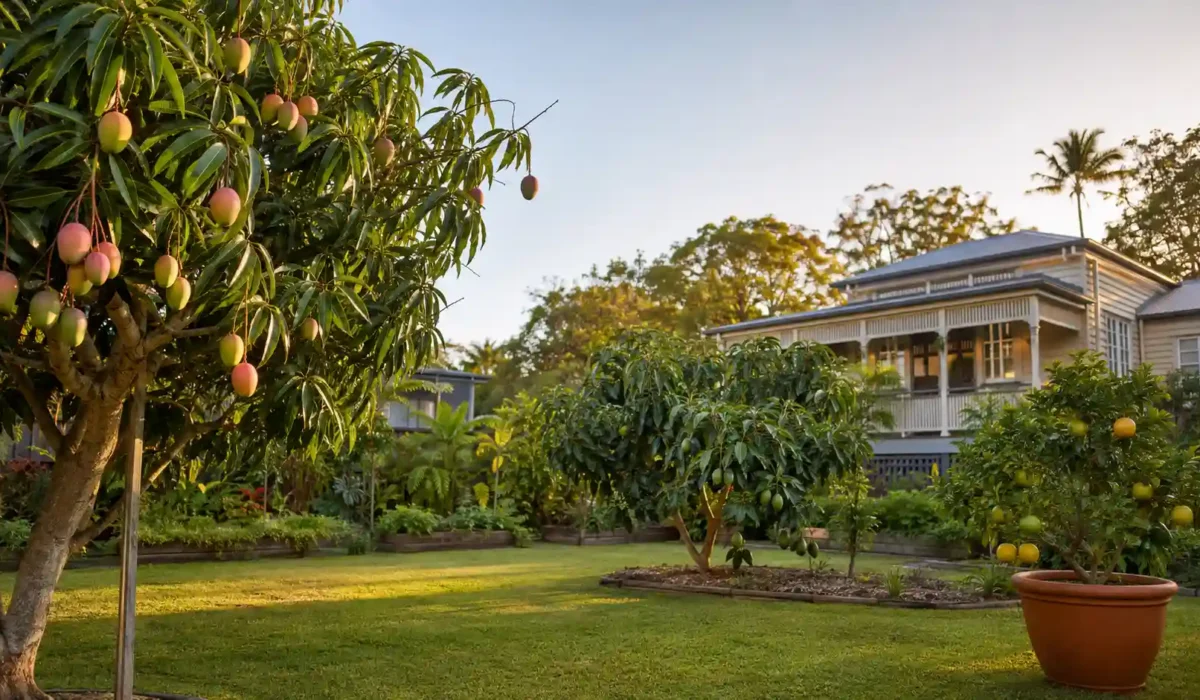
Best Tropical Fruit Trees for Brisbane Backyards (Guide)
Elemo Baker says the subtropical climate of Brisbane is ideal for mango, avocado, banana, papaya, lychee and dragon fruit, and they particularly thrive in a backyard environment, provided they get plenty of sunshine, well-drained soil and are shielded from frost during the first two years.
Light winter frosts still occur in small areas of the westside of Brisbane and on high-lying areas, meaning that there is a greater variety of species that will fruit successfully in these areas with a north-facing wall or courtyard microclimate. Papaya plants are short-lived, and only live for about 3-4 years before needing to be replaced, whereas dragon fruit has to be trellised or planted on a post because it climbs as a cactus.
By Elemo Baker | Plant Care & Gardening Expert
Quick summary
- Brisbane is subtropical, not fully tropical — most “tropical” species (mango, avocado, jackfruit, black sapote, lychee) fruit reliably here; a few genuinely equatorial species need real microclimate help.
- Yard size, soil drainage, frost-pocket location and fruit fly pressure decide fruiting success more than species choice alone.
- Grafted trees typically fruit in 2–4 years; seed-grown trees of the same species can take 5–8+ years — worth knowing before you buy.
- Small blocks aren’t ruled out: dwarf varieties, large pots, and multi-grafted or espaliered trees make most of this list workable on a standard suburban lot.
Is Brisbane Actually Tropical? The Subtropical Reality Check
Brisbane’s climate is classified as subtropical: warm, humid summers, mild winters, and frost that’s rare but not impossible depending on where you are. That’s different to genuinely tropical regions like Cairns or Darwin, which stay warm year-round and follow a wet-season/dry-season pattern rather than four loose seasons.
For fruiting, this mostly matters at the edges. Species that evolved for constant equatorial warmth and humidity — some mangosteen and rambutan varieties, for instance — are marginal in Brisbane at best, usually needing a warm, sheltered microclimate and still cropping unreliably. But the trees most backyard growers actually want — mango, jackfruit, black sapote, lychee, avocado — are well within Brisbane’s range and fruit consistently once their site conditions are right. The subtropical label isn’t a warning against growing tropical fruit here; it’s a reminder that a handful of species need extra help and the rest just need the right spot.
The Four Real Constraints That Decide What Will Fruit
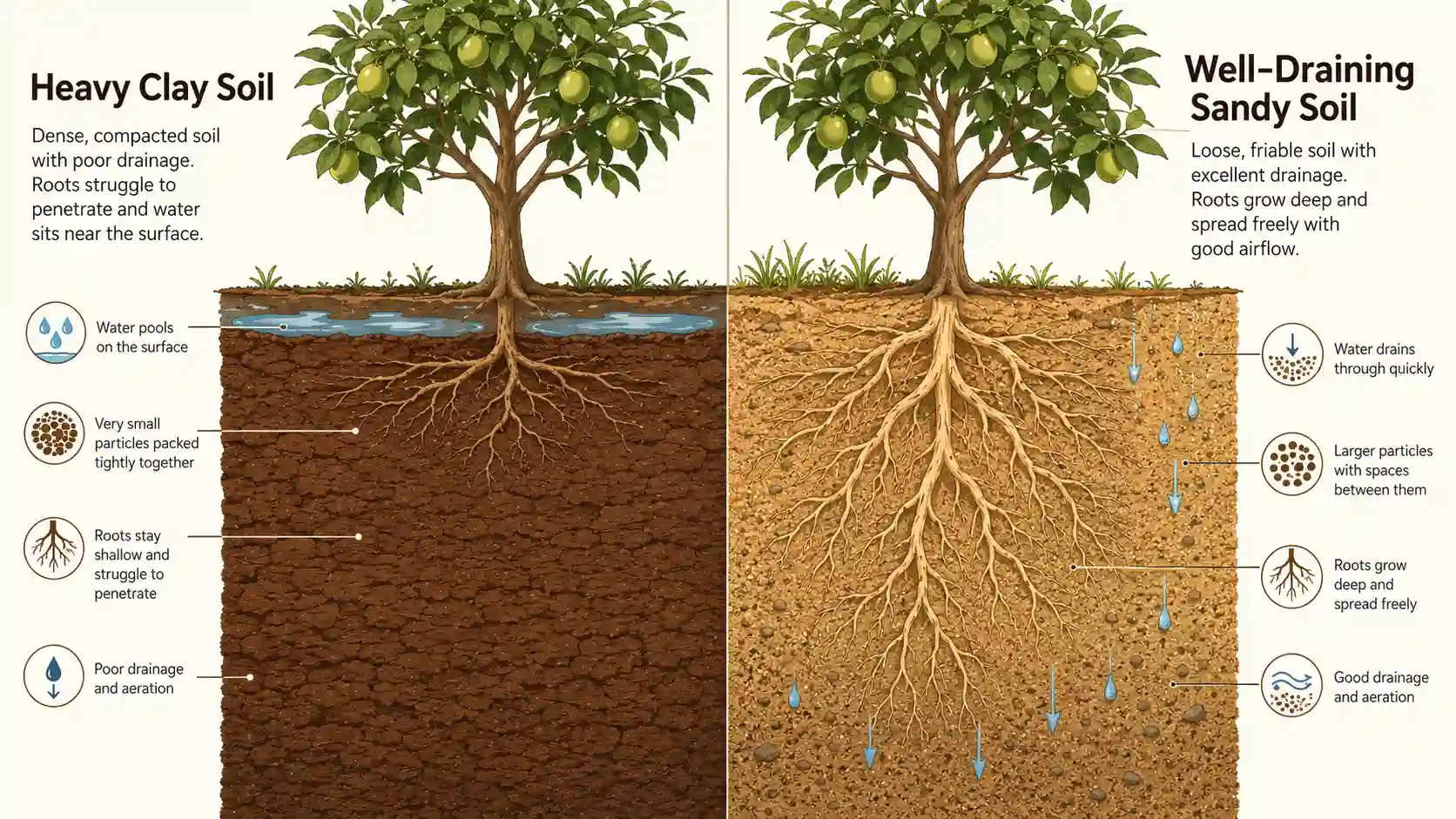
A perfectly climate-suited tree still fails if it’s planted in waterlogged clay, crammed into too small a space, sitting in a frost pocket, or left completely unmanaged against Queensland fruit fly. These four factors do more to determine success than species selection.
Yard size. A small courtyard or narrow side yard rules out a full-size mango or jackfruit unless you’re committed to hard annual pruning — but it doesn’t rule out tropical fruit altogether. Dwarf mango and avocado cultivars, mulberry kept pruned to size, jaboticaba, dragon fruit and papaya all suit compact spaces.
Soil type. Brisbane’s soil varies suburb to suburb, with heavier clay common across much of the western and southern areas and better-draining, sandier profiles closer to the bay. Avocado and black sapote are the two species most likely to struggle in unimproved clay — both are sensitive to waterlogging and benefit from raised beds or mounded planting where drainage is poor. If you’re not sure which category your yard falls into, our Australian garden soil & fertiliser guide walks through how to identify your soil type and improve it before planting.
Frost exposure. Inner-city and bayside Brisbane suburbs are essentially frost-free. But cold air is denser than warm air and drains downhill on clear, still winter nights, pooling in low-lying or elevated western pockets — areas like Karana Downs, Pullenvale, Samford Valley, Fig Tree Pocket and Brookfield can see occasional radiant frost that bayside gardens simply don’t. If you’re in one of these pockets, it’s worth checking your specific block’s exposure before planting a genuinely frost-tender species in an open, low spot. If your block sits in one of these cooler pockets, our guide to frost-tolerant plants for Australian gardens covers hardier options worth considering alongside your fruit tree planting.
Queensland fruit fly (Bactrocera tryoni). QFF is active roughly November to March and hits thin-skinned, sweet fruit hardest. It shouldn’t be an afterthought — it’s worth factoring into which trees you plant and how you plan to manage them from day one.
Matching Trees to Your Yard
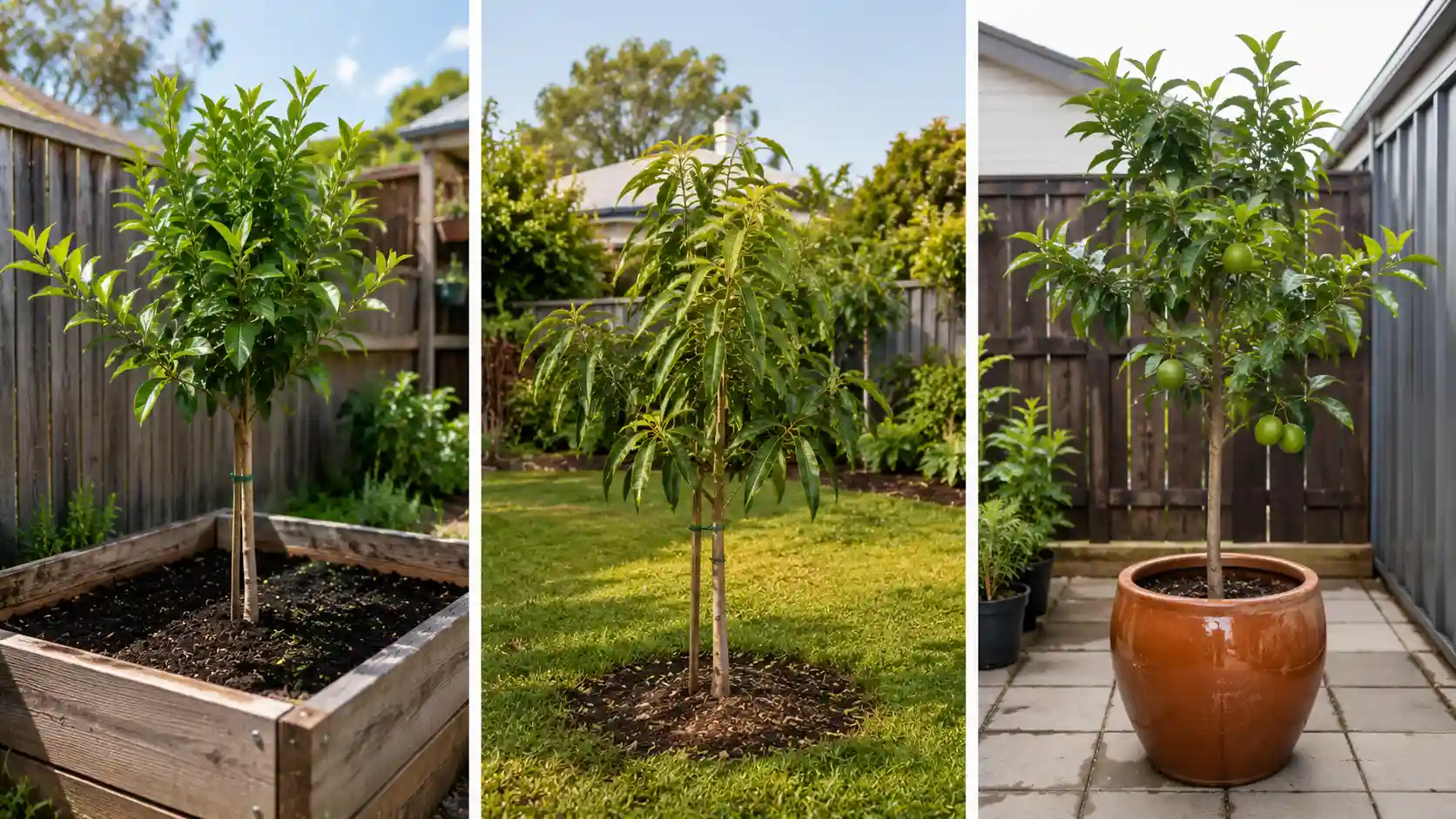
Once you know your yard size, soil and frost exposure, most Brisbane backyards can support several productive trees using the right form — dwarf, multi-graft, espalier, or large pot — rather than assuming a standard-size tree is the only option.
Small and narrow yards suit dwarf mango (like ‘Alison Red’), dwarf avocado (‘Wurtz’), mulberry kept pruned to around 2–2.5m, jaboticaba, dragon fruit and papaya — all manageable in a compact footprint and, as a bonus, easier to net against fruit fly than a full-size tree.
Trees that genuinely need space — full-size mango, jackfruit, avocado, lychee — can still work in a smaller yard if you commit to annual summer pruning to keep them at a manageable, nettable height, rather than letting them reach their natural mature size.
Ground vs raised bed vs large pot comes down to drainage and frost risk. Ground planting suits well-draining sites and larger trees; raised beds are the better call for drainage-sensitive species in clay-affected soil (avocado, black sapote, citrus, lychee); large pots suit renters, tiny courtyards, or frost-pocket gardeners who want the option to move a tree to shelter on a cold night. For a deeper look at which varieties handle container life best, see our guide to dwarf fruit trees for pots in Australia.
Multi-grafting and espalier are worth considering on very small blocks — a multi-grafted “fruit salad” tree carries several varieties on one root system, and espaliering trains a tree flat against a fence or wall, both multiplying what a tight space can hold.
Comparison: Time to First Fruit by Species
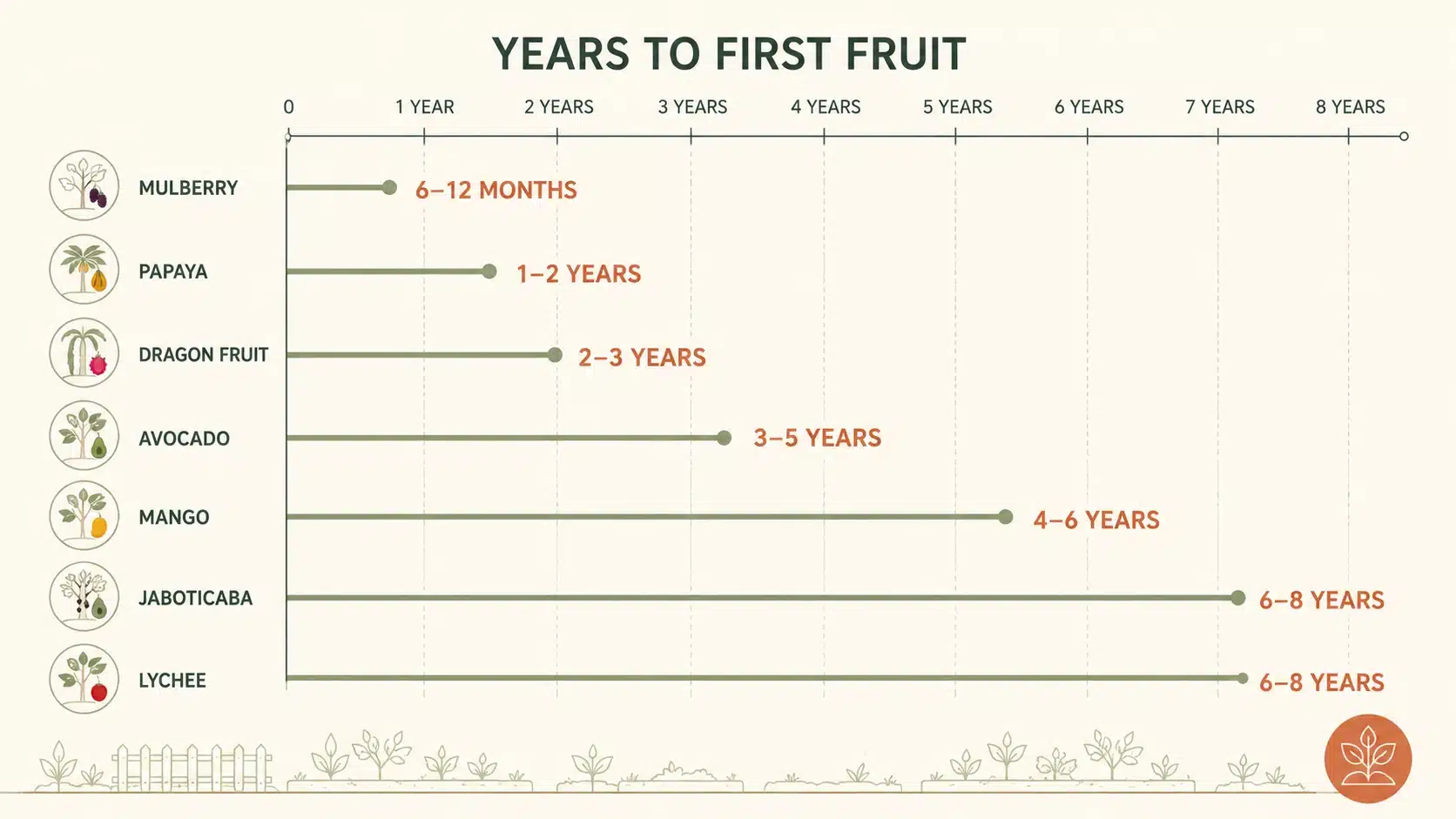
| Species | Grafted or Seed-Grown | Realistic Years to First Fruit | Space Needed | Frost Sensitivity | Fruit Fly Risk |
| Mango | Grafted | ~3–4 years | Large (dwarf cultivars smaller) | Low | Moderate |
| Mango | Seed-grown | ~5–8 years | Large | Low | Moderate |
| Avocado | Grafted | ~2–3 years | Large (dwarf cultivars smaller) | Moderate | Low |
| Avocado | Seed-grown | ~3–4 years | Large | Moderate | Low |
| Jaboticaba (standard) | Grafted/cutting | ~4–8 years | Small–medium | Low | Low |
| Jaboticaba (‘Precoce’) | Grafted | ~2–3 years | Small | Low | Low |
| Lychee | Grafted | Several years; slower in clay | Medium–large | Low | Moderate |
| Mulberry | Cutting-grown | Under 12 months | Small (with pruning) | Low | High |
| Papaya | Seed/seedling | 6–12 months | Small | Low | Moderate |
| Dragon fruit | Cutting-grown | ~12–18 months | Small (climbing) | Low | Low |
Figures are general guides drawn from horticultural sources rather than Brisbane-specific trials — actual timing varies with tree size at planting, care and individual seasons. Curious about mulberry specifically? When do mulberry trees fruit in Australia? breaks down the timeline in more detail.
Fruit Fly-Smart Variety Selection and Management
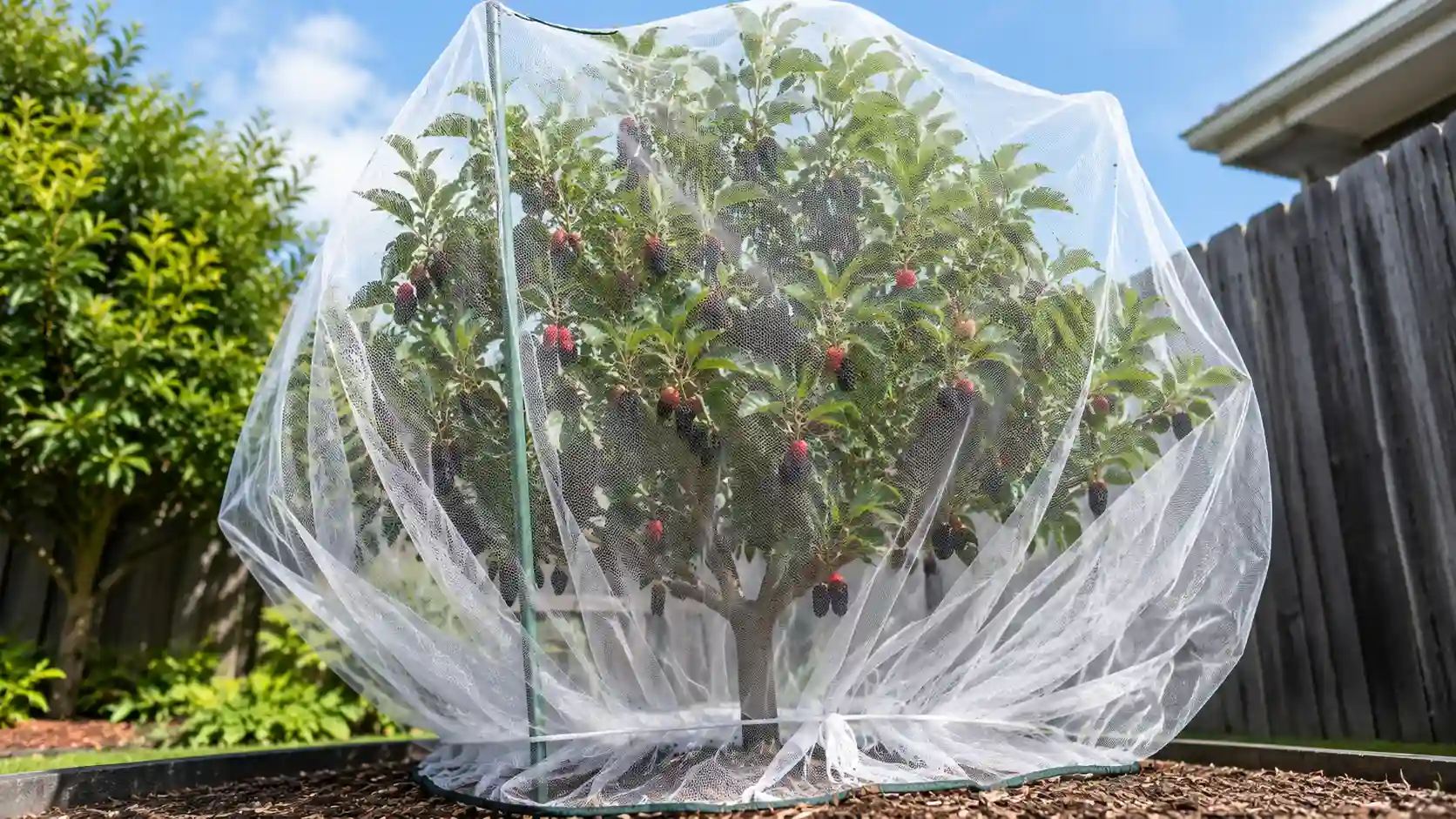
Choosing lower-risk species and building exclusion into your plan from day one — rather than reacting after the first ruined harvest — is the single biggest lever for hassle-free fruit in Brisbane. QFF lays eggs in fruit from the point of pollination onward, so netting needs to go on once flowering finishes, not once fruit starts to ripen. Fine insect-exclusion netting fitted over a whole tree (or bagged around individual fruit) is the most reliable method, and this is exactly where keeping trees small via dwarf varieties or summer pruning pays off — a 2m mulberry or dwarf mango is far easier to net than a full-size one. Thin-skinned, sweet fruit like mulberry and papaya tend to face the highest pressure; avocado and citrus generally see less. If you’re seeing damage you’re not sure is fruit fly, our garden pest identification guide can help confirm what you’re dealing with.
Common Beginner Mistakes That Waste Years
- Planting a full-size mango or jackfruit with no pruning plan, then running out of space within a few seasons.
- Ignoring soil drainage, losing avocado or black sapote to root rot in wet clay that was never improved or mounded.
- Buying seed-grown trees expecting grafted fruiting timelines — the gap can be several extra years.
- Assuming “Brisbane is frost-free” without checking whether a specific block sits in a known cooler or low-lying pocket.
- Skipping fruit fly exclusion until after the first infested harvest, rather than planning netting in from planting day.
Quick Care Basics Once You’ve Chosen Your Trees
Most tropical fruit trees in Brisbane want full sun, consistent moisture (especially while establishing), and a spring feed with a balanced fertiliser once actively growing. Pruning to control size is worth doing annually for any tree kept smaller than its natural mature height — for a deeper dive into timing and technique, see our fruit tree pruning calendar. For citrus specifically, including pot-grown options, our guide to the best citrus varieties for pots covers rootstock and container sizing in more detail.
Conclusion
Brisbane’s subtropical climate suits the overwhelming majority of tropical fruit trees people want to grow here — the real question isn’t whether a species can survive Brisbane, but whether your yard’s size, soil, frost exposure and fruit fly pressure are accounted for. Start with those four constraints, match tree form (dwarf, multi-graft, espalier, pot or ground) to your actual space, and most Brisbane backyards can realistically support a productive, low-drama patch of tropical fruit.
FAQs
Is Brisbane’s climate tropical or subtropical for growing fruit trees?
Brisbane is subtropical — mild, mostly frost-free winters and hot humid summers, but without the constant year-round warmth of a true tropical climate. Most popular tropical fruit trees still fruit reliably here.
What tropical fruit trees fruit fastest in Brisbane?
Mulberry, papaya and dragon fruit are among the quickest, often fruiting within 12–18 months of planting, compared with several years for species like mango or jaboticaba.
Can avocado and black sapote handle Brisbane’s clay soil?
Not well without help — both are drainage-sensitive and tend to do better in raised beds or mounded planting where the underlying soil is heavy clay.
Do any Brisbane suburbs get frost, and does it affect tropical fruit trees?
Bayside and inner-city Brisbane are essentially frost-free, but elevated or low-lying western pockets — such as Karana Downs, Pullenvale, Samford Valley or Brookfield — can see occasional radiant frost on clear winter nights, which is worth checking before planting frost-tender species in an exposed spot.
What’s the best way to protect fruit trees from Queensland fruit fly?
Fine insect-exclusion netting fitted after flowering, kept clear of the fruit itself, is the most reliable method — and it’s far easier on a tree kept small through dwarf varieties or annual pruning.
Can tropical fruit trees be grown in pots in Brisbane?
Yes — large pots suit dwarf varieties, renters, tight courtyards, and gardeners in frost-pocket suburbs who want the flexibility to move a tree to shelter.
How much space does a mango or jackfruit tree really need in a backyard?
Full-size trees need a genuinely large footprint, but dwarf cultivars or a committed annual summer pruning regime can keep either species manageable in a smaller yard.
1 Comment