

Lemon Myrtle Height and Width: Complete Australian Size Guide
Introduction: Lemon Myrtle Height and Width — What to Expect From This Australian Native
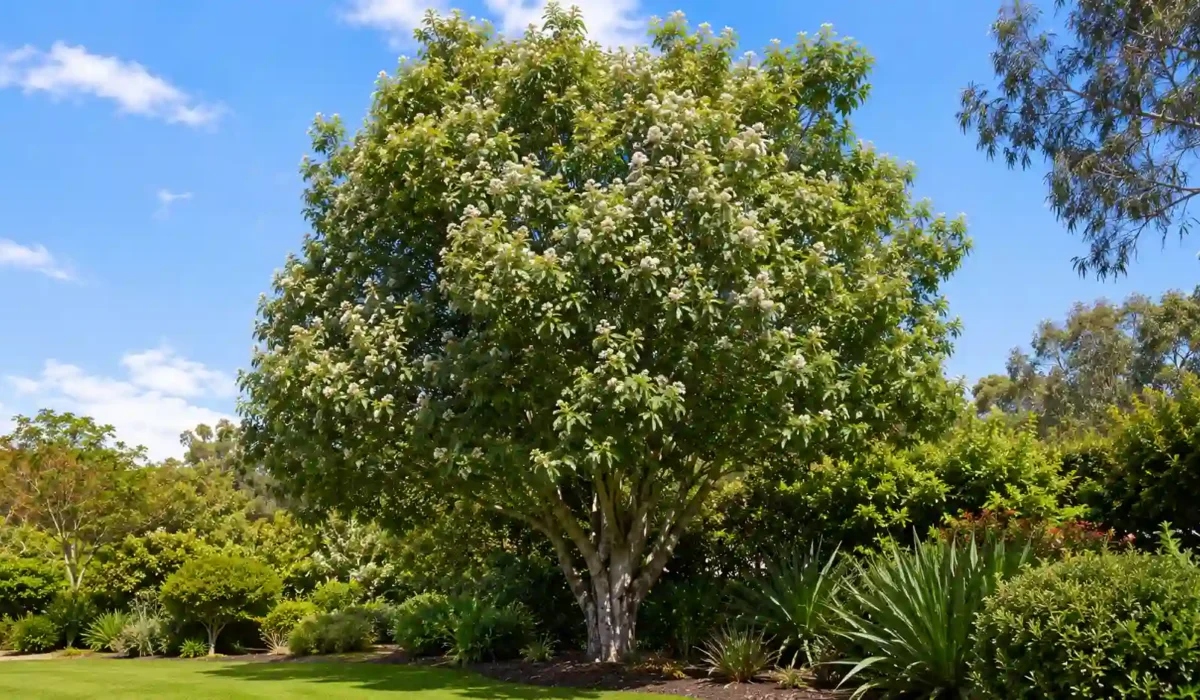
Lemon myrtle height and width vary depending on where the plant is grown, the climate, and how it is maintained. In most Australian home gardens, Backhousia citriodora typically reaches 3–8 metres in height and 2–4 metres in width, while specimens growing naturally in Queensland rainforests can exceed 20 metres. Valued for its fragrant foliage, attractive white flowers, and versatile growth habit, lemon myrtle serves as both an ornamental landscape tree and a culinary herb. Whether you plan to grow it as a hedge, feature tree, or container plant, understanding its mature size helps you choose the right planting location and long-term care approach.
By Elemo Baker | Plant Care & Gardening Expert
Quick Summary
- Lemon myrtle (Backhousia citriodora) generally grows 3–8 metres tall and 2–4 metres wide in Australian gardens.
- In its native Queensland rainforest habitat, mature trees can exceed 20 metres in height.
- Dwarf lemon myrtle varieties remain under 2 metres, making them suitable for small gardens and containers.
- This evergreen Australian native grows relatively quickly under warm, humid conditions and is widely used as a hedge, privacy screen, or specimen tree.
What Is Lemon Myrtle? (Backhousia Citriodora Overview)
Backhousia citriodora, commonly known as lemon myrtle or lemon-scented myrtle, is an evergreen Australian native belonging to the Myrtaceae family. It is prized for its highly aromatic leaves, which contain one of the highest natural concentrations of citral, giving the plant its distinctive lemon fragrance.
Lemon myrtle belongs to the Myrtaceae family, one of the largest plant families in Australia, which also includes eucalyptus, bottlebrushes, lilly pilly, and tea trees.
Despite its name, lemon myrtle is not a lemon or citrus tree. This common misunderstanding often arises because of its lemon scent. Unlike lemonade trees or other citrus varieties, lemon myrtle is a rainforest species native to eastern Australia.
Its natural distribution is centred in the subtropical rainforests of coastal Queensland, where it grows beneath warm, humid conditions with reliable rainfall. Over time, it has become one of Australia’s most widely cultivated native herbs thanks to its ornamental value and culinary versatility.
For thousands of years, Aboriginal Australians traditionally used the fragrant leaves for flavouring foods and for various cultural and medicinal purposes. Today, the leaves continue to be harvested for cooking, herbal teas, spice blends, and essential oil production.
The plant is also easily recognised by its:
- Glossy evergreen foliage
- Strong lemon aroma when leaves are crushed
- Dense upright branching habit
- Clusters of creamy-white flowers during summer
- Attractive smooth bark on mature trees
These characteristics make native lemon myrtle equally suitable for ornamental gardens and edible landscapes.
Lemon Myrtle Height and Width: Full Size Guide
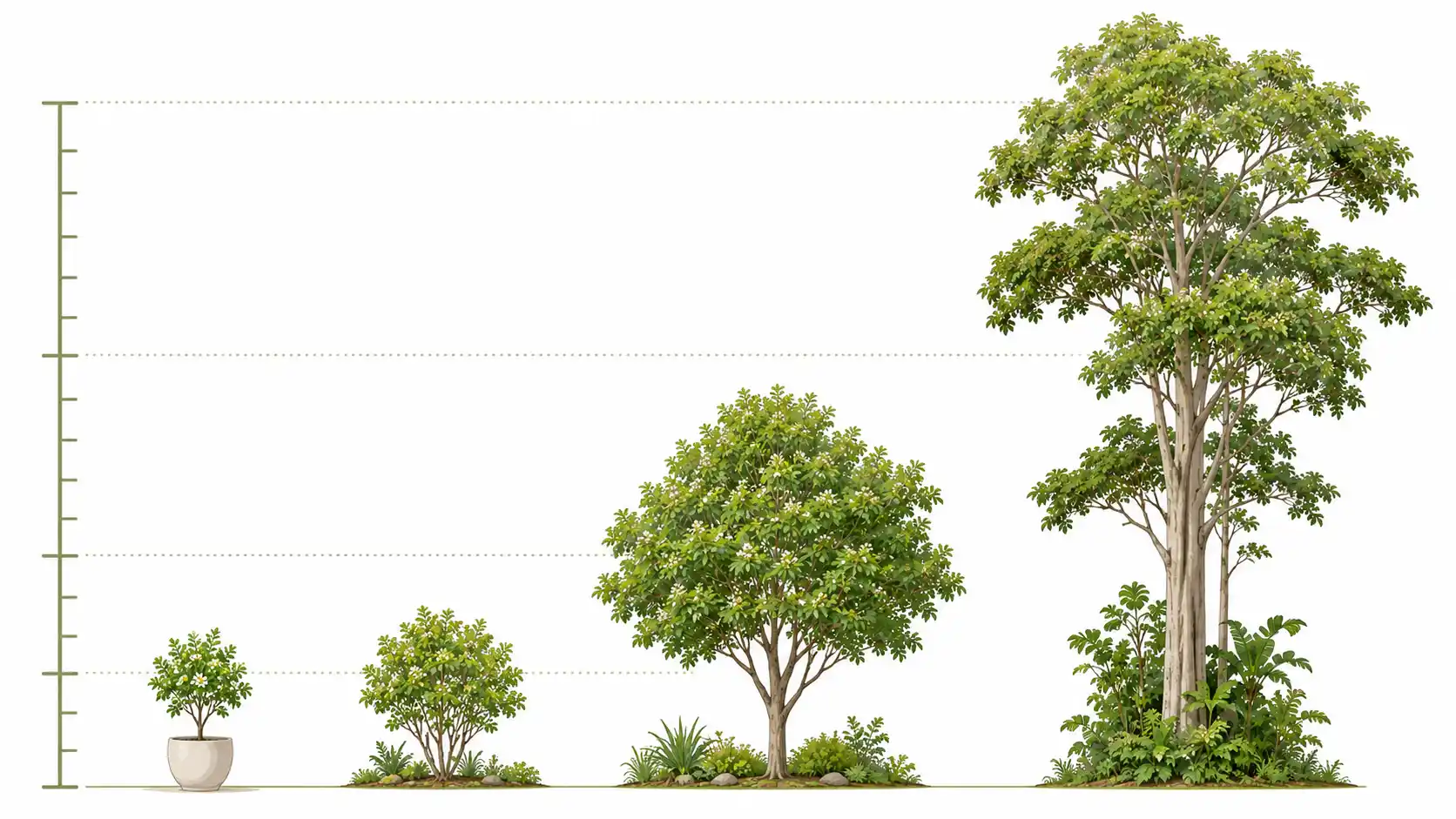
Lemon myrtle typically grows 3–8 metres tall and 2–4 metres wide in cultivated Australian gardens. Its ultimate size depends on climate, soil quality, water availability, and pruning practices. Trees growing naturally in rainforest environments become significantly larger than those maintained in suburban gardens or containers. If you’re comparing Australian native landscape trees, our Tuckeroo Tree Growth Rate guide explains how another popular native differs in mature size and growth habit.
Lemon Myrtle Size at a Glance
| Setting | Typical Height | Typical Width |
| Garden (in-ground) | 3–8 metres | 2–4 metres |
| Native rainforest habitat | Up to 20+ metres | 4–6+ metres |
| Dwarf variety (in-ground) | 1–2 metres | 1–1.5 metres |
| Container / pot-grown | 1–2 metres | 0.5–1 metre |
How Tall Does Lemon Myrtle Grow?
In most residential gardens, lemon myrtle reaches between 3 and 8 metres tall. Without regular pruning, mature trees commonly settle at around 4–6 metres, providing excellent shade while remaining manageable for most suburban properties.
Under ideal rainforest conditions throughout Queensland, mature specimens can exceed 20 metres in height. These naturally occurring trees benefit from fertile soils, consistent rainfall, and competition for sunlight, encouraging much taller growth than cultivated garden plants.
Several factors influence mature height, including:
- Local climate
- Soil fertility
- Water availability
- Sunlight exposure
- Pruning frequency
- Available root space
In our experience growing lemon myrtle, regular light pruning from a young age encourages a fuller canopy while helping maintain a practical height for harvesting leaves and garden maintenance.
How Wide Does Lemon Myrtle Grow?
Lemon myrtle generally develops a canopy 2–4 metres wide at maturity. Although it forms a reasonably broad crown, its growth habit remains naturally upright and compact compared with many native shade trees.
Its relatively narrow width makes it suitable for:
- Side boundaries
- Narrow gardens
- Privacy screening
- Feature planting
- Mixed native landscapes
Unlike trees with sprawling crowns, lemon myrtle produces dense vertical growth that responds well to shaping.
Elemo Baker recommends allowing adequate space around young plants even though they appear compact initially. Mature branches gradually fill out over several years, creating a dense evergreen canopy that benefits from good airflow.
Dwarf Lemon Myrtle: Height, Width, and Best Uses
Dwarf lemon myrtle refers to compact cultivars developed specifically for smaller landscapes, courtyards, patios, and container gardening. These selections retain the fragrant foliage and ornamental appeal of the species while remaining much easier to manage. For another compact ornamental tree suitable for smaller gardens, see our Dwarf Forest Pansy Tree Size, Care & Growth Guide.
Most dwarf varieties grow approximately:
- Height: 1–2 metres
- Width: 1–1.5 metres
Their naturally compact size makes them an excellent choice for urban Australian gardens where space is limited.
Common uses include:
- Courtyard feature plants
- Patio containers
- Balcony gardens
- Low evergreen hedges
- Entryway landscaping
- Kitchen gardens
One of the most common questions gardeners ask is whether a lemon myrtle can be kept small. The answer is yes. Choosing a dwarf cultivar is the simplest solution, although standard forms also respond very well to regular annual pruning.
Container-grown plants naturally remain smaller because restricted root systems limit overall growth. This makes pots an effective long-term option for gardeners who want the fragrance and edible leaves without accommodating a full-sized tree.
In our experience, dwarf varieties establish more quickly in decorative pots and require less frequent structural pruning than standard trees, making them ideal for low-maintenance landscapes.
How Fast Does Lemon Myrtle Grow?
Lemon myrtle is generally considered a moderately fast-growing Australian native when provided with suitable growing conditions. Most healthy plants produce approximately 30–60 centimetres of new growth each year.
Growth is most vigorous during:
- Spring
- Early summer
- Mid-summer
Growth slows considerably during cooler months, particularly in regions experiencing lower temperatures.
Several environmental factors influence growth speed:
- Warm temperatures
- High humidity
- Consistent soil moisture
- Fertile, well-drained soil
- Full sun or light afternoon shade
- Protection from frost
Plants growing in poor soils, shaded positions, or areas affected by prolonged frost often develop more slowly.
As of 2026, Australian growers continue to recommend improving soil organic matter before planting to encourage faster establishment and healthier long-term growth. Mulching around the root zone also helps conserve moisture and moderate soil temperatures during summer.
Elemo Baker recommends avoiding excessive nitrogen fertilisers. Balanced native-formulated fertilisers encourage steady, healthy growth without producing weak, overly soft foliage that may become more susceptible to environmental stress.
Where Does Lemon Myrtle Grow in Australia?
Lemon myrtle is native to the subtropical and tropical rainforests of coastal Queensland, where it naturally grows beneath warm, humid conditions with consistent rainfall. In the wild, Backhousia citriodora thrives from central to south-eastern Queensland, making it a true Australian native. If you’re selecting evergreen species for privacy or landscaping, our Fast Growing Evergreen Trees Australia Guide compares several excellent Australian options.
Today, lemon myrtle is widely cultivated well beyond its native range because of its ornamental value, fragrant foliage, and edible leaves. While Queensland remains the ideal growing region, the plant adapts successfully to many other parts of Australia when provided with suitable growing conditions.
Lemon myrtle commonly grows in:
- Queensland (its native range)
- Coastal and northern New South Wales
- Sheltered areas of Victoria
- Coastal regions of Western Australia
- Mild parts of South Australia with frost protection
Climate has a direct influence on lemon myrtle height and width. Trees growing in warm, humid regions generally become larger and establish more quickly than those grown in cooler climates.
Ideal growing conditions include:
- Warm to subtropical temperatures
- Moderate to high humidity
- Well-drained fertile soil
- Reliable rainfall or supplementary irrigation
- Protection from prolonged frost
Although mature plants tolerate short dry periods once established, young trees perform best with consistent moisture during their first few growing seasons.
One common question is whether lemon myrtle is frost tolerant. While mature specimens can survive occasional light frosts, young plants are considerably more sensitive. Extended freezing temperatures may damage foliage, slow growth, or kill new shoots. Gardeners in cooler parts of Australia should plant lemon myrtle in sheltered microclimates and provide frost protection during winter. Before choosing a position for lemon myrtle or other landscape plants, see our Australian Plants Guide: Indoor Houseplants & Garden Design for broader planting inspiration.
In our experience growing lemon myrtle, planting near a north-facing wall or within a protected courtyard significantly improves winter survival in cooler regions.
Using Lemon Myrtle as a Hedge or Screen
Lemon myrtle is one of Australia’s most attractive evergreen screening plants. Its naturally dense foliage, upright growth habit, and aromatic leaves make it highly effective as both an informal privacy hedge and a formally clipped screen. Another excellent screening option is covered in our Photinia Fraseri Robusta: Growth, Care & Hedge Guide, which compares well with lemon myrtle for evergreen privacy planting.
Unlike many native trees that develop open canopies, lemon myrtle produces dense branching from an early age. With regular pruning, it forms a thick green wall that provides year-round privacy.
Benefits of using lemon myrtle as a hedge include:
- Evergreen foliage throughout the year
- Dense branching for effective screening
- Pleasant lemon fragrance after rain or pruning
- Attractive white flowers during summer
- Excellent response to trimming
- Native species suitable for wildlife-friendly gardens
For hedge planting, space trees approximately 1–1.5 metres apart. This distance allows neighbouring plants to grow together while maintaining adequate airflow.
A regularly maintained hedge typically reaches:
- Height: 2–4 metres
- Width: 1–2 metres
Dwarf cultivars are equally suitable for creating lower borders or formal hedges below 1.5 metres.
Many gardeners also ask whether lemon myrtle loses its leaves during winter. The answer is no. Lemon myrtle is a fully evergreen species that retains its glossy foliage throughout the year, making it ideal for permanent privacy screening.
Elemo Baker recommends pruning lightly once or twice each year rather than carrying out heavy cuts every few years. Frequent light trimming encourages dense branching and produces a more attractive hedge over time.
Where Is the Best Place to Plant a Lemon Myrtle Tree?
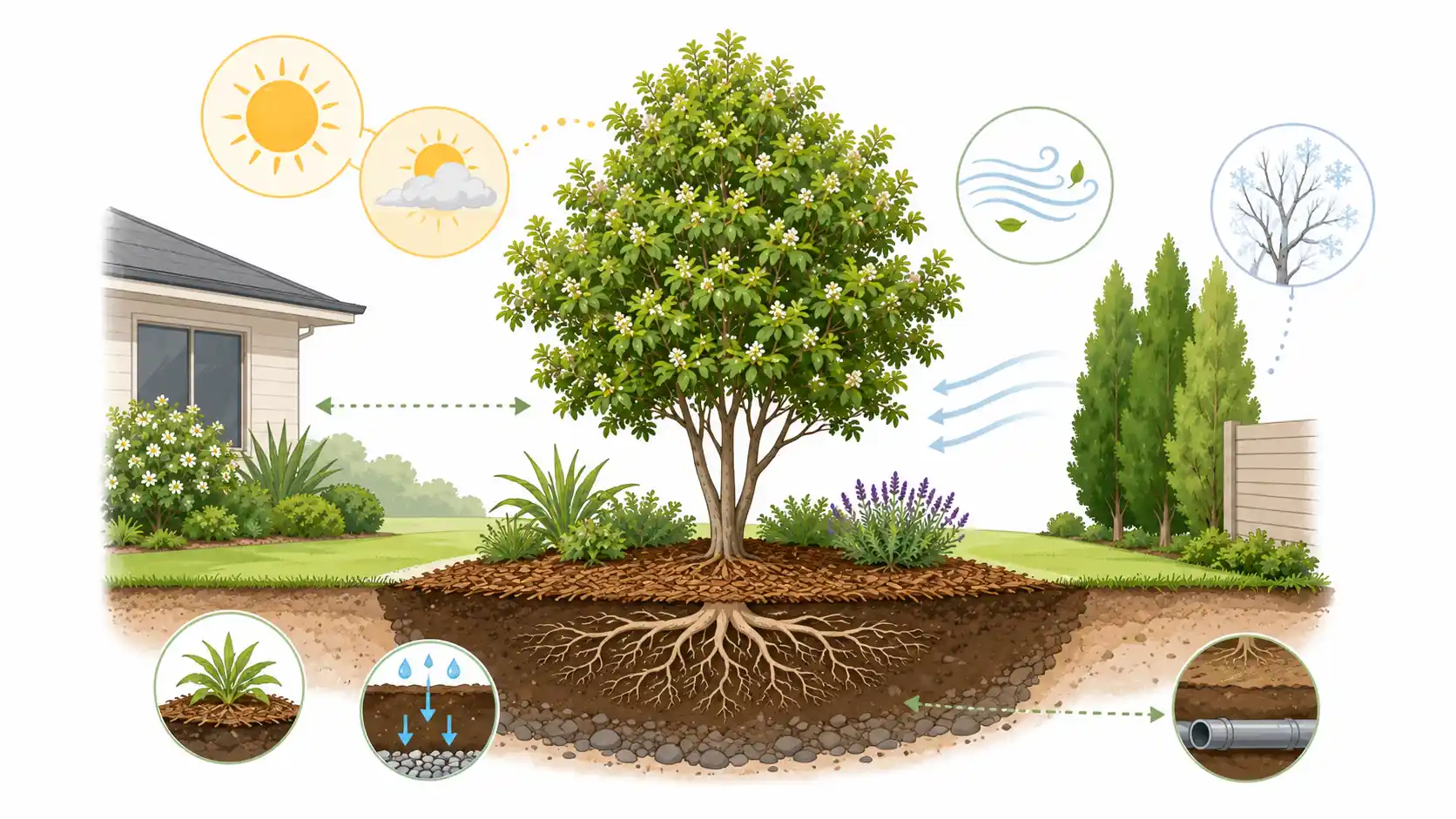
The best place to plant a lemon myrtle tree is in full sun to part shade, with protection from strong winds and heavy frost, in well-drained, organically rich soil.
Selecting the right location has a significant impact on long-term growth, mature size, flowering, and overall plant health.
An ideal planting position provides:
- At least six hours of sunlight daily
- Good air circulation
- Shelter from strong drying winds
- Free-draining soil
- Slightly acidic soil conditions
- Room for mature growth
Although lemon myrtle adapts to partial shade, trees growing in full sun generally develop denser foliage and stronger branching.
Do Lemon Myrtle Have Invasive Roots?
No. Lemon myrtle roots are not considered highly invasive. They form a relatively fibrous root system rather than the aggressive roots associated with some large shade trees.
As a general gardening guideline, plant lemon myrtle approximately 2–3 metres away from:
- House foundations
- Underground pipes
- Retaining walls
- Swimming pools
- Large paved areas
This spacing allows healthy root development while reducing the likelihood of future maintenance issues.
Can I Plant a Lemon Tree Close to My House?
This question often causes confusion because lemon myrtle is not a citrus tree.
A true lemon tree (Citrus limon) has different growth habits and care requirements from lemon myrtle (Backhousia citriodora).
For lemon myrtle, planting around 2–3 metres from buildings provides sufficient space for the mature canopy while maintaining easy access for pruning and harvesting.
What Not to Plant Next to a Lemon Myrtle Tree?
Avoid planting lemon myrtle alongside species with completely different environmental requirements.
Examples include:
- Plants requiring very dry soil
- Highly frost-sensitive tropical species in exposed locations
- Large trees that create heavy shade
- Vigorous root competitors
Companion planting works best with Australian natives and other species that appreciate evenly moist, well-drained soil.
As of 2026, many Australian native plant growers continue recommending mixed native plantings that share similar watering and soil requirements, reducing maintenance while promoting healthier garden ecosystems.
Growing Lemon Myrtle in Pots
Growing lemon myrtle in containers is an excellent option for gardeners with limited space or those living in cooler climates where plants may benefit from sheltered positions.
Although standard lemon myrtle can be grown in pots, dwarf cultivars are generally the preferred choice for long-term container culture.
Choose a container with a minimum diameter of 40–50 centimetres to provide adequate room for root development.
For best results:
- Use a premium native plant potting mix.
- Ensure excellent drainage.
- Select pots with multiple drainage holes.
- Apply mulch to reduce moisture loss.
- Repot every few years if necessary.
Container-grown lemon myrtle requires more frequent watering than plants established in garden soil because potting mixes dry out more quickly.
During warmer months:
- Check soil moisture regularly.
- Water deeply when the top few centimetres become dry.
- Avoid allowing the pot to remain waterlogged.
Feed container plants with a slow-release native fertiliser during the growing season. Products formulated for Australian native plants generally contain lower phosphorus levels, making them more suitable for members of the Myrtaceae family.
Managing plant size is straightforward. Regular light pruning encourages compact branching while preventing the tree from becoming oversized for its container.
In our experience, rotating potted lemon myrtle every few weeks promotes even growth and helps maintain a balanced canopy.
Lemon Myrtle Care Guide
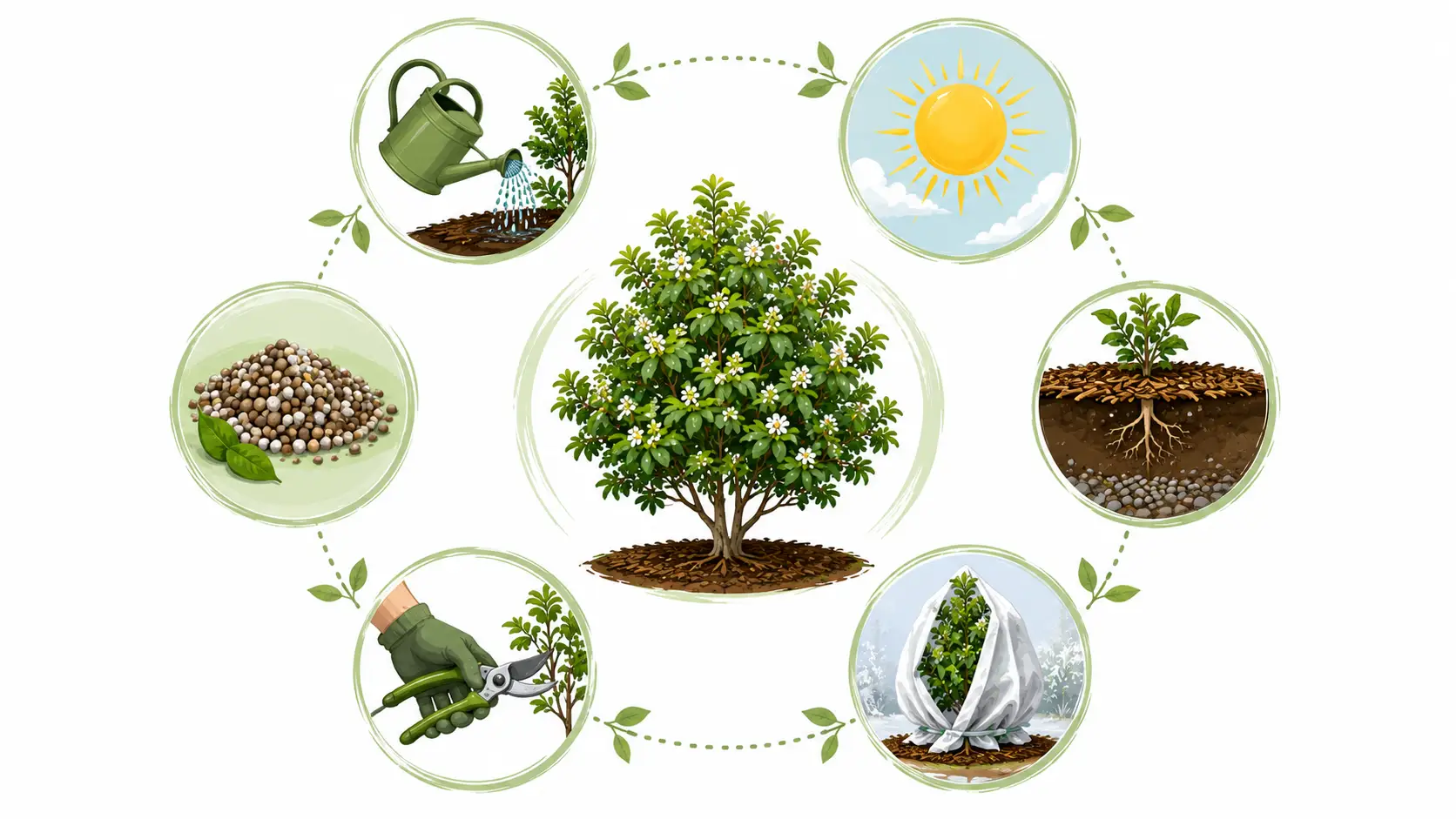
Healthy lemon myrtle plants are relatively easy to maintain once established. Providing the right combination of water, sunlight, soil, nutrition, and pruning encourages vigorous growth and long-term health. If you’re deciding between popular hedge plants, our Pittosporum Silver Sheen Growth Rate Guide explains how its growth rate compares with lemon myrtle.
Watering
Young lemon myrtle trees require regular deep watering while establishing their root systems.
General watering recommendations include:
- Water consistently during the first one to two years.
- Allow the soil surface to dry slightly between watering.
- Increase watering during extended hot, dry periods.
- Reduce watering during cooler months.
Established trees become reasonably drought tolerant but continue to perform best with occasional deep watering during prolonged dry weather.
Avoid permanently wet soil, as excessive moisture increases the risk of root rot.
Light Requirements
Lemon myrtle performs best in full sun but also tolerates part shade.
Plants receiving abundant sunlight generally produce:
- Denser foliage
- Stronger branching
- Better flowering
- Faster overall growth
Trees grown in excessive shade often become more open and may develop slower growth.
Soil and Fertilisation
Lemon myrtle prefers:
- Slightly acidic soil
- Well-drained conditions
- High organic matter
- Moderate fertility
Heavy clay soils should be improved before planting by incorporating organic material to enhance drainage.
Use fertilisers specifically formulated for Australian native plants. These products contain lower phosphorus levels that suit the nutritional requirements of many native species.
Avoid excessive fertiliser applications, which can encourage weak growth and reduce overall plant resilience.
Pruning Lemon Myrtle
Regular pruning helps maintain the desired height and width while encouraging dense branching.
Many gardeners ask what happens when the top of a lemon myrtle tree is cut.
When carried out correctly, topping or tip pruning encourages the tree to produce multiple new shoots below the cut, resulting in a fuller, bushier canopy.
The best time to prune is after flowering in late summer or autumn.
Pruning objectives vary depending on the plant’s purpose:
- Hedge plants benefit from regular shaping.
- Feature trees require selective structural pruning.
- Container plants respond well to light annual trimming.
- Young trees develop stronger branching with early formative pruning.
Elemo Baker recommends removing no more than one-third of the canopy during any single pruning session to minimise stress while maintaining healthy growth.
Climate and Frost Tolerance
Lemon myrtle is best suited to Australia’s warm temperate, subtropical, and tropical regions.
Young plants are particularly vulnerable to frost, while mature trees tolerate occasional light frosts with less damage.
Gardeners in cooler climates can improve survival by:
- Planting in protected locations
- Applying organic mulch around the base
- Covering young plants during frost events
- Avoiding cold, low-lying frost pockets
- Growing plants in containers that can be moved to sheltered positions during winter
Providing suitable protection during the establishment phase significantly improves long-term growth and overall plant performance.
Lemon Myrtle Propagation
Lemon myrtle propagation is most commonly achieved through seed or semi-hardwood cuttings. While both methods are successful, commercial growers and experienced home gardeners generally prefer cuttings because they produce plants identical to the parent tree.
Propagation by Seed
Growing lemon myrtle from seed is possible, but it requires patience. Seed-grown plants may vary slightly in growth habit, vigour, and leaf characteristics compared to the parent plant.
Basic steps include:
- Collect fresh seed from mature capsules.
- Sow seeds in a free-draining propagation mix.
- Keep the growing medium evenly moist but not waterlogged.
- Maintain warm temperatures and good humidity.
- Place trays in bright, indirect light until germination.
Seed propagation is useful for conservation projects and growing larger numbers of plants but is less predictable for home gardeners wanting consistent results.
Propagation by Semi-Hardwood Cuttings
Semi-hardwood cuttings are the preferred propagation method because they preserve the characteristics of the selected cultivar.
The best time to take cuttings is late spring to early summer, when healthy new growth has begun to firm.
For successful propagation:
- Select healthy, disease-free shoots.
- Cut 10–15 cm lengths just below a leaf node.
- Remove the lower leaves.
- Dip the base into rooting hormone if desired.
- Insert cuttings into a well-draining propagation mix.
- Maintain high humidity and consistent warmth.
- Keep the medium moist until roots develop.
In our experience growing lemon myrtle, maintaining high humidity around newly struck cuttings significantly improves rooting success. A simple propagation dome or clear plastic cover can help reduce moisture loss while roots establish.
Propagation of lemon myrtle also supports broader efforts to increase the availability of Australian native plants in home landscapes, helping preserve native biodiversity while encouraging sustainable gardening.
Common Problems With Lemon Myrtle (And How to Fix Them)
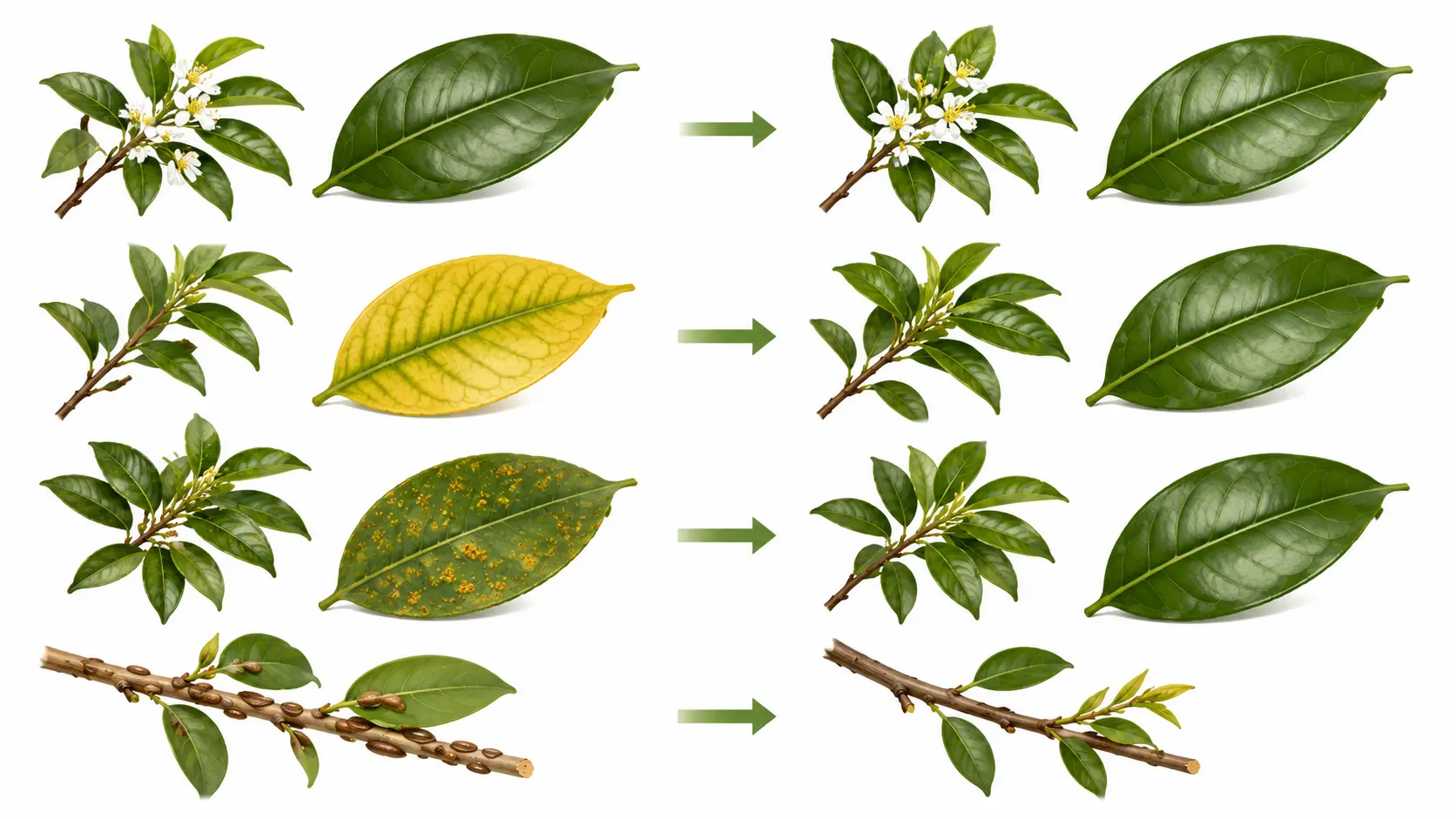
Lemon myrtle is generally a resilient tree when grown in suitable conditions. However, environmental stress, poor drainage, pests, and disease can occasionally affect its health. Understanding the underlying cause allows problems to be corrected before permanent damage occurs. Many Australian native plants experience similar growing challenges, which are also discussed in our Woolly Bush Problems guide.
Lemon Myrtle Leaves Turning Yellow
Yellowing leaves are among the most common issues encountered by gardeners.
Possible causes include:
| Cause | Solution |
| Overwatering | Reduce watering and allow soil to drain properly. |
| Poor drainage | Improve drainage or transplant to a better location. |
| Iron deficiency | Apply chelated iron according to product instructions. |
| Magnesium deficiency | Use an appropriate magnesium supplement if required. |
| Waterlogged roots | Correct irrigation practices and improve soil structure. |
Leaves usually regain healthy colour once the underlying issue is addressed and new growth develops.
Slow Growth or Stunted Lemon Myrtle
Slow growth often indicates that one or more environmental conditions are limiting plant development.
Common causes include:
- Frost damage
- Heavy clay soil
- Insufficient sunlight
- Poor soil fertility
- Compacted soil
- Root stress
- Prolonged drought
To improve growth:
- Relocate plants if heavy shade is the problem.
- Improve soil with compost or organic matter.
- Water deeply during dry periods.
- Protect young trees from frost.
- Apply a native-specific slow-release fertiliser during the growing season.
As of 2026, Australian horticultural recommendations continue to emphasise soil preparation before planting as one of the most effective ways to encourage vigorous establishment and long-term growth.
Elemo Baker recommends checking drainage before adding fertiliser, as poor drainage is often the primary cause of weak growth rather than nutrient deficiency.
Pest and Disease Issues
Although lemon myrtle experiences relatively few serious pest problems, several issues deserve attention.
Myrtle Rust (Austropuccinia psidii)
Myrtle rust is one of the most significant diseases affecting members of the Myrtaceae family throughout Australia.
Symptoms include:
- Bright yellow spores
- Leaf distortion
- Stunted new growth
- Premature leaf drop
- Reduced plant vigour
Young foliage is particularly susceptible.
Management strategies include:
- Monitoring new growth regularly.
- Removing heavily infected material where appropriate.
- Improving air circulation.
- Applying registered fungicides if necessary.
- Purchasing healthy nursery stock.
Early identification greatly improves the chances of successful management.
Scale Insects
Scale insects feed by sucking sap from stems and leaves.
Common signs include:
- Sticky honeydew
- Sooty mould
- Reduced plant vigour
- Small brown or white bumps on stems
Light infestations can often be controlled using horticultural oil or by manually removing affected branches.
Psyllids
Psyllids occasionally attack new growth, causing distorted leaves and reduced vigour.
Maintaining healthy growing conditions and encouraging beneficial insects usually helps keep populations under control without the need for aggressive chemical treatments.
Lemon Myrtle vs Similar Native Trees: How Do They Compare?
Several Australian native plants have lemon-scented foliage, leading to frequent confusion among gardeners. Although these species share aromatic leaves, they differ significantly in mature size, growth habit, and practical uses. If you’re exploring other ornamental Australian trees, our Tree With Pink Flowers Australia: Identification Guide introduces many attractive native flowering species.
| Feature | Lemon Myrtle | Lemon-Scented Gum | Lemon-Scented Tea Tree |
| Botanical name | Backhousia citriodora | Corymbia citriodora | Leptospermum petersonii |
| Mature height (garden) | 3–8 m | 15–25 m | 3–5 m |
| Suitable for hedging | Yes | No | Yes |
| Edible leaves | Yes | No | No |
| Native to Queensland | Yes | Yes | Yes |
For gardeners designing native landscapes, our Australian Native Purple Flowers guide complements lemon myrtle with colourful flowering species.
Lemon Myrtle vs Lemon-Scented Gum
Although both trees produce lemon-scented leaves, they are very different plants.
Lemon myrtle:
- Smaller mature size
- Dense evergreen canopy
- Excellent for hedges
- Edible aromatic leaves
Lemon-scented gum:
- Much taller tree
- Smooth white trunk
- Better suited as a feature or shade tree
- Leaves not used for culinary purposes
Lemon Myrtle vs Lemon-Scented Tea Tree
These two native species are more similar in size but differ in their primary uses.
Lemon myrtle is valued for:
- Culinary applications
- Essential oil production
- Dense screening
- Larger glossy leaves
Lemon-scented tea tree is commonly grown for:
- Ornamental flowers
- Wildlife habitat
- Native garden diversity
Lemon Myrtle Is Not a Citrus Tree
Many people mistakenly confuse lemon myrtle with lemonade trees or other citrus hybrids.
The distinction is simple:
- Lemon myrtle belongs to the Myrtaceae family.
- Lemon and lemonade trees belong to the Rutaceae family.
Despite sharing a lemon fragrance, they are entirely unrelated species with different botanical characteristics, care requirements, and growth habits.
What Are the Benefits of Lemon Myrtle?
Lemon myrtle offers a combination of ornamental, culinary, and cultural benefits that make it one of Australia’s most valued native plants.
Culinary Uses
The leaves have an intense natural lemon flavour and are widely used fresh or dried in:
- Herbal teas
- Baking
- Seafood dishes
- Marinades
- Sauces
- Desserts
- Spice blends
Because of their high citral content, only small amounts are usually needed to provide a strong citrus flavour.
Essential Oil Production
Lemon myrtle is also cultivated for its highly aromatic essential oil.
The oil is widely used in:
- Natural cleaning products
- Aromatherapy
- Fragrances
- Personal care products
Its distinctive lemon aroma is one of the strongest naturally occurring citrus scents found in Australian native plants.
Traditional Aboriginal Uses
For thousands of years, Aboriginal Australians used lemon myrtle leaves for practical and cultural purposes.
Traditional uses included:
- Flavouring food
- Preparing aromatic infusions
- Various traditional medicinal applications
These historical uses demonstrate the long-standing significance of Backhousia citriodora within Australia’s native flora.
This information reflects traditional knowledge and should not be interpreted as medical advice.
Ornamental Value
Beyond its edible leaves, lemon myrtle is an outstanding landscape tree.
Its ornamental features include:
- Glossy evergreen foliage
- Fragrant leaves throughout the year
- Dense growth habit
- Attractive white flower clusters during summer
- Excellent suitability for hedges and screening
In our experience, flowering lemon myrtle attracts a variety of beneficial pollinating insects while adding seasonal interest to Australian native gardens, making it an attractive choice for both biodiversity and visual appeal. Lemon myrtle is also an excellent choice when exploring flowering trees in Australia, particularly for gardeners interested in native species with fragrant foliage and attractive seasonal blooms.
Conclusion: Understanding Lemon Myrtle Height and Width for Australian Gardens
Lemon myrtle is a versatile Australian native that combines attractive evergreen foliage, fragrant leaves, and manageable growth with excellent landscape value. In most home gardens, lemon myrtle height and width typically reach 3–8 metres tall and 2–4 metres wide, while dwarf varieties remain around 1–2 metres, making them suitable for compact gardens and containers.
Its mature size can be managed effectively through thoughtful variety selection, regular pruning, and suitable growing conditions. Whether grown as a privacy hedge, ornamental specimen tree, edible garden feature, or potted plant, Backhousia citriodora adapts well to many Australian landscapes when provided with warm conditions, well-drained soil, and appropriate care.
In our experience, gardeners who allow adequate planting space from the beginning and carry out light annual pruning enjoy healthier plants, denser foliage, and easier long-term maintenance. With proper care, lemon myrtle remains an attractive, productive, and long-lived addition to Australian gardens.
Frequently Asked Questions
Q1: How tall does a lemon myrtle tree grow in Australia?
A lemon myrtle tree typically grows 3–8 metres tall in Australian gardens. In its native Queensland rainforest habitat, mature trees can exceed 20 metres under ideal growing conditions. Local climate, soil quality, rainfall, and pruning all influence the final height.
Q2: How wide does a lemon myrtle tree grow?
Most mature lemon myrtle trees develop a canopy 2–4 metres wide. Their naturally upright growth habit means they usually grow taller than they do wide, making them suitable for relatively narrow gardens. Dwarf varieties generally spread only 1–1.5 metres.
Q3: How fast does lemon myrtle grow?
Lemon myrtle is considered moderately fast growing, producing approximately 30–60 centimetres of new growth each year under warm, humid conditions with fertile, well-drained soil and consistent moisture.
Q4: Can you keep a lemon myrtle small?
Yes. Lemon myrtle can be kept compact by choosing a dwarf cultivar, growing it in a container, or carrying out regular light pruning. Annual maintenance encourages dense branching while controlling both height and width.
Q5: Does lemon myrtle have invasive roots?
No. Lemon myrtle roots are not considered invasive. As a sensible landscaping practice, plant trees approximately 2–3 metres away from buildings, retaining walls, underground pipes, and other permanent structures to allow adequate root development.
Q6: Is lemon myrtle evergreen?
Yes. Lemon myrtle is a fully evergreen Australian native. It retains its glossy aromatic leaves throughout the year rather than shedding them during winter, making it an excellent choice for year-round screening and ornamental planting.
Q7: Where is lemon myrtle native to in Australia?
Lemon myrtle is native to the subtropical and tropical rainforests of coastal Queensland. Although naturally occurring only in this region, it is now widely cultivated across Queensland, New South Wales, Victoria, Western Australia, and other suitable Australian climates.
Q8: What is the best place to plant a lemon myrtle tree?
The ideal location is full sun to part shade in well-drained, slightly acidic, organically rich soil. Choose a position sheltered from strong winds and heavy frost, and provide sufficient space for the tree to reach its mature size.
3 Comments